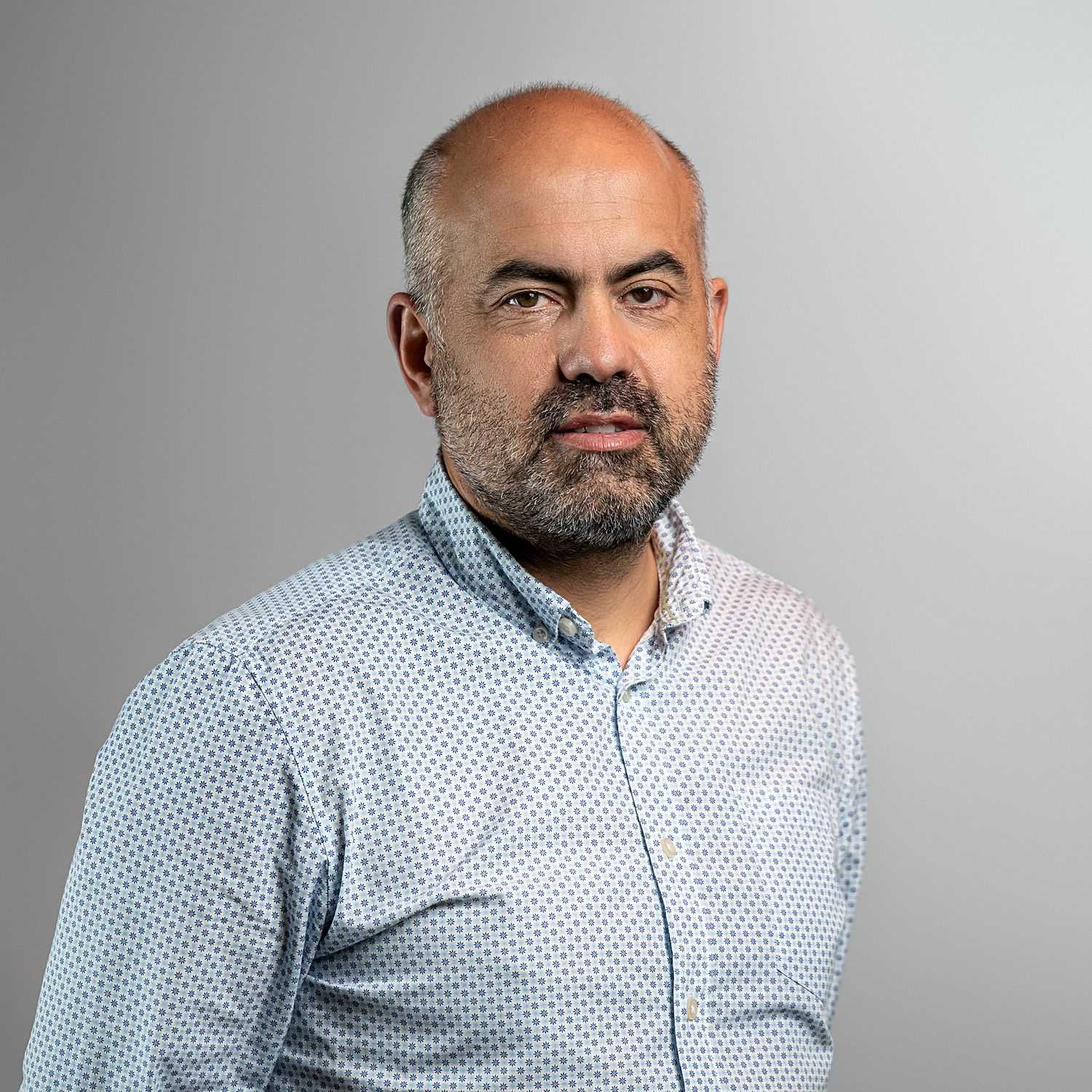
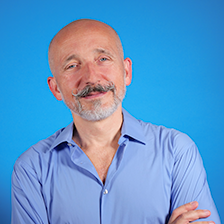
Ageno Pulido is an Associate Professor in the Department of Computer Science at the Universitat Politècnica de Catalunya (UPC), affiliated with the Barcelona School of Informatics. They specialize in areas such as Artificial Intelligence, Natural Language Processing, and Computational Linguistics. Their research groups include the TALP Center for Language and Speech Technologies, the GPLN Natural Language Processing Group, and IDEAI-UPC, focusing on intelligent data science and AI applications. Research interests emphasize advanced NLP techniques, machine learning methodologies, and their integration into real-world systems. Collaborations span interdisciplinary projects in computational linguistics and AI-driven solutions. Active in both academic and applied research, Pulido contributes to multiple research initiatives and innovation projects since the 1990s.
Nicolas Eduardo Mylonakis Pascual is a Computer Science researcher at the Department of Computer Science, Barcelona School of Informatics, Universitat Politècnica de Catalunya. With a Doctorate in Computer Science, he maintains active research in formal methods for service-oriented computing, specializing in graph-based approaches to system modeling and verification. His research interests focus on service-oriented programming , recommendation systems , and graph transformation . He has developed theoretical frameworks for business process modeling using symbolic graphs, created semantics for ambient calculus variants applicable to service-oriented computing, and contributed to formal verification methods for graph transformation systems. His work bridges theoretical computer science with practical applications in distributed systems and business process management. Analysis of his publication trends reveals a consistent focus on graph-based formal methods spanning over three decades. His research evolved from foundational work on type checking and semantic verification in the 1990s to sophisticated graph transformation systems for service-oriented computing in the 2000s and 2010s, culminating in recent work on logical approaches to graph databases. His publications demonstrate strong collaboration patterns, particularly with Fernando Orejas (15 joint publications) and other researchers in the ALBCOM research group. As a member of the ALBCOM research group (Algorithms, Bioinformatics, Complexity and Formal Methods), he contributes to the Department of Computer Science's research profile in theoretical computer science and formal methods. His work has been supported by competitive R&D projects including 'Modelos y métodos basados en grafos para la computación en gran escala' and 'Modelos y métodos computacionales para datos masivos estructurados' under Spain's National Research Plan.
Albert Oliveras Llunell is affiliated with the Universitat Politècnica de Catalunya (UPC), where he works in the Department of Computer Science under the School of Informatics (Facultat d'Informàtica de Barcelona, FIB). His research focuses on Logic and Programming, as indicated by his membership in the UPC LOGPROG research group. Contact details include his institutional email (oliveras@cs.upc.edu) and ORCID (0000-0002-5893-1911). His academic production includes 112 total activities, with 49 indexed journal articles and 22 presentations at conferences (based on the latest data). His work spans competitive and non-competitive R&D projects, doctoral theses, and scientific committee memberships.
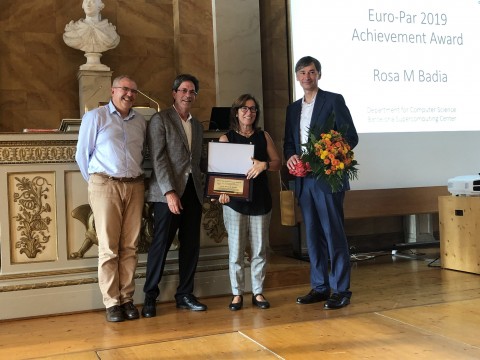
Rosa M. Badia is a Research Professor at the Universitat Politècnica de Catalunya · BarcelonaTech (UPC), affiliated with the Faculty of Computer Science of Barcelona (FIB) and serving as leader of the Workflows and Distributed Computing group at the Barcelona Supercomputing Center (BSC). Her work focuses on advancing high-performance computing (HPC), parallel processing, and distributed systems, contributing significantly to the visibility of the BSC and the Euro-Par conference series. Her research spans critical areas in computational science, including workflow optimization and scalable computing paradigms, aligning with trends in distributed systems and parallel computing. She has played a pivotal role in organizing workshops, chairing sessions, and co-authoring over 17 papers at Euro-Par, highlighting her sustained impact on the field. Scientific Awards: Euro-Par Achievement Award 2019 Rosa Badia actively mentors teams and collaborates on initiatives to promote women in technical careers, emphasizing the importance of conferences like Euro-Par for fostering global research partnerships.
David Carrera is an Associate Professor in the Department of Computer Architecture at the Faculty of Informatics of Barcelona (FIB), Universitat Politècnica de Catalunya (UPC), and serves as the head of the Data-Centric Computing group at the Barcelona Supercomputing Center (BSC-CNS). His research focuses on holistic integration of emerging supercomputing technologies, infrastructure management and optimization for data-intensive workloads, and collaboration with global industry leaders in Computer Science. Areas of expertise include task placement strategies, performance modeling for heterogeneous workloads, and data location strategies for data analytics. He founded the start-up NearbyComputing SL (2018), specializing in orchestration of 5G and IoT services. His work emphasizes technology transfer and industrial collaboration. Scientific Awards & Grants: Agustín de Betancourt y Molina Medal (2018) ERC Starting Grant (HiEST project, 2014) ICREA Acadèmia Award (2015) ERC Proof of Concept (Hi-OMICS, 2017) MIT-Spain "la Caixa" Seed Fund (2018)
Dr. Oier Lakuntza Irigoien is a Senior Researcher at CIC energiGUNE, specializing in computational modeling of electrochemical energy storage materials. He is affiliated with the Modelling and Computational Simulation research group and focuses on predicting atomic/electronic structures of novel battery materials using density functional theory (DFT) and data-mining tools. Education: PhD in Theoretical and Computational Chemistry (cum laude), University of Basque Country (2012) BSc in Chemistry, University of Basque Country (2007) Research Interests: Dr. Lakuntza’s work centers on Li-ion and Na-ion battery materials , particularly layered oxides and olivines. His methods include supercell modeling, pymatgen automation, and Python/Fortran code development for analyzing ion substitution effects. Key contributions involve stability analysis of cathodes and polymer electrolytes. Scientific Awards: Spanish Ministry Juan de la Cierva grant (2017) Cum laude PhD distinction (2012) Labs & Collaborations: Previously worked with Feliu Maseras at ICIQ (2014-2017). Currently collaborates with interdisciplinary teams at CIC energiGUNE, including experimentalists like Teófilo Rojo and computational experts like Javier Carrasco. His work bridges theoretical predictions with practical battery material development.
Marcos de Lucas Medina is an Assistant Researcher at IMDEA Nanociencia, joining in December 2024 while pursuing his PhD. His work focuses on ultrafast photophysics of nanostructures using femtosecond-resolved transient absorption spectroscopy to study electronic and vibrational relaxation pathways. His academic background includes: BSc in Chemistry from Complutense University of Madrid (2019–2023), specializing in high-resolution Raman spectroscopy of non-equilibrium supersonic jet systems and quantum simulations. MSc in Chemical Science and Technology (2023–2024), featuring classical molecular dynamics simulations of electrolytic solutions and IRMPD spectroscopy research at Radboud University's FELIX Laboratory. His research integrates experimental ultrafast techniques—such as pump-probe spectroscopy developed at Complutense University's Center for Ultrafast Lasers—with computational methods including Ab initio Molecular Dynamics. Key interests span nanomaterial photophysics, molecular relaxation dynamics, and advanced spectroscopic methodologies for probing non-equilibrium states. No scientific awards were documented in the source material. Advising and grant activities are unreported, consistent with his early-career researcher status. He contributes to IMDEA Nanociencia's Pump-probe and photoinduced absorption spectroscopy group, building on prior experience with High Harmonic Generation setups for photoelectron/photoion detection at Complutense University.
Gabriel Molina Terriza is a Research Professor at the Material Physics Center (MPC) in Donostia/San Sebastián, Spain, affiliated with the University of the Basque Country (EHU/UPV) and the DIPC . He leads the Quantum Nanophotonics Laboratory , focusing on quantum light-matter interactions at the nanoscale.
Yolanda Castillo Escario is a researcher at the Institute for Bioengineering of Catalonia , specializing in the Biomedical Signal Processing and Interpretation group. Her work focuses on leveraging smartphone sensors and machine learning to assess sleep disorders, trunk function in spinal cord injury patients, and respiratory diagnostics through cough acoustics. Key research areas: Sleep-disordered breathing, Spinal cord injury rehabilitation, Smartphone-based health monitoring Recent publications highlight her contributions to deep learning for apnea detection , accelerometry for sleep position analysis , and acoustic profiling of respiratory diseases . Her interdisciplinary approach bridges biomedical engineering, neuroscience, and mobile health technologies. As part of IBEC's collaborative initiatives, she works with hospitals and industry partners to translate research into practical applications. Her projects include clinical trials for spinal cord injury rehabilitation and epidemiological studies on respiratory disease patterns.
Juan Jose Lopez Jimenez is a Substitute Professor at the Faculty of Informatics , Universidad de Murcia, affiliated with the Software Engineering research group and the Department of Computer Science and Systems Engineering. His work focuses on virtual teaching systems and knowledge-based intelligent feedback mechanisms. Education: Doctorate (PhD) in Computer Science from Universidad de Murcia (2023) Research Interests: Specializing in software engineering, computer languages, and systems with an emphasis on enhancing virtual education through intelligent feedback models. His doctoral research addressed the integration of common knowledge in virtual teaching environments. Collaborations: Supervised by Dr. José Luis Fernández Alemán and Dr. José Ambrosio Toval Álvarez, Lopez Jimenez contributes to the field of informatics and software systems.
Géza Giedke is an Ikerbasque Research Professor at the Donostia International Physics Center (DIPC) in Donostia-San Sebastián, Spain. His research focuses on the interface between quantum information theory and solid-state physics, with particular emphasis on implementing quantum information processing in physical systems and exploring fundamental aspects of quantum theory. Dr. Giedke's research interests span three main areas: quantum information theory (including entanglement and quantum channels), implementation of quantum information processing in solid-state and quantum optical systems, and the dynamics of open quantum systems . His work bridges theoretical quantum information with practical physical implementations, particularly using nanoscale structures like graphene nanoribbons and quantum dots. His recent publications reveal a strong trend toward quantum materials for quantum information applications , with increasing focus on graphene-based nanostructures, spin systems, and topological effects. The research shows a clear progression from fundamental quantum information theory toward concrete physical implementations, with significant contributions to understanding entanglement in solid-state systems, quantum transport phenomena, and the development of quantum devices. Dr. Giedke actively leads research projects including the recently granted GRAFIQ project ( "Harnessing quantum spin states, dynamics, and transport in graphene-based nanostructures" ) and the TENINT project ( "Tensor network methods for interacting electrons in quasi-1d graphene nanostructures" ). He has supervised numerous PhD students and postdoctoral researchers, building a strong research group focused on quantum information in condensed matter systems. He is actively involved in the quantum information community, having organized workshops including the "Nanotechnology meets Quantum Information" summerschool series and the "Basque Quantum Science and Technology Workshop" . Dr. Giedke also participated in the Benasque Quantum Information Workshop's "Future of Quantum Information" sessions as a moderator.
Enrique De Miguel Ambite is a Professor at Camilo José Cela University teaching Computer Engineering, Management and Technology programs, and serves as Digital Research Director at FUNDITEC specializing in Artificial Intelligence, Cybersecurity, and Blockchain. With over 20 years of academic experience, he directs bachelor's and master's theses while leading European research initiatives. Educational background includes Telecommunications Engineering and Informatics Master's degrees from University of Alcalá, plus ongoing PhD studies in Applied Artificial Intelligence. He also holds a Master's in Business Administration and Technology. Research focuses on: Behavioural AI for cybersecurity frameworks and Trustworthy AI systems Enhanced UEBA (User Entity Behavioural Analysis) and Zero-Trust architectures Human-AI interaction models analyzing cognitive biases in decision environments Current research integrates AI with Industrial 4.0 for SME cybersecurity, emphasizing predictive maintenance through non-intrusive methodologies and human-AI collaborative problem-solving in complex industrial systems. Advising & Funding: Thesis director for bachelor's/master's programs Coordinator of EU H2020 VOJEXT project (ID:952197) on human-robot cognition Participant in IRON-IA, PATAFEST, Cybersec, ESPADIN, and AGRISOL initiatives Professional leadership includes Chairing Castilla-La Mancha's AI Commission for Telecommunications Engineers and representing Spain at international forums like Mobile World Congress after 22 years at Telefónica in Big Data/Cybersecurity innovation.
Antonio García Loureiro is a Full Professor in the Department of Electronics at the University of Santiago de Compostela (USC), Spain. His research focuses on high-performance computing applications in semiconductor device simulation, photovoltaics, and wireless power transmission. He leads multiple research projects including rePowerSiC and HiPerHC2DA, and has extensive collaborations with international institutions. Dr. García Loureiro received his MSc in Electronic Physics and PhD in Electronics and Computer Science from the University of Santiago de Compostela in 1994 and 1999, respectively. He has been a visiting researcher at the Edinburgh Parallel Computing Centre (UK) and the Device Modeling Group at the University of Glasgow (UK). His primary research interests span high-performance computing for semiconductor device simulation, photovoltaic systems, and wireless power transmission technologies. He specializes in parallelization and optimization of numerical simulators for semiconductor devices, transistors, and solar cells. His work bridges the gap between computational methods and practical electronic device design, with applications in energy harvesting and conversion systems. Recent publications reveal a strong trend toward machine learning applications in semiconductor device modeling and optimization of laser power converters. His research group has made significant contributions to III-V nitride-based optical photovoltaic converters, silicon carbide systems for space applications, and high-efficiency photovoltaic technologies. The work spans from fundamental semiconductor physics to practical engineering applications in wireless power transmission. Dr. García Loureiro has received support for numerous research projects including: rePowerSiC: High-Efficiency High-Power Laser Beaming In-Space Systems Based On Sic (2024-2028) HiPerHC2DA: High Performance, Heterogeneous and Cloud Computing for Demanding Applications (2023-2026) Ultra-Efficient Micro-Scale New Generation Hybrid Concentrator Photovoltaic Systems (2020-2023) Network on variability in Nanoelectronics (2014-2016) He leads a research team focused on semiconductor device simulation and photovoltaic technologies, with strong connections to international research groups working on high-performance computing applications in electronics. His laboratory utilizes advanced computational resources for semiconductor device modeling and optimization.
Patricia Sánchez Holgado is a Researcher at the University of Salamanca within the Faculty of Communication , specifically the Department of Sociology and Communication . She earned her PhD in 2021 with a thesis on La comunicación de la ciencia de datos en España (Data Science Communication in Spain), supervised by Dr. Carlos Arcila Calderón. Research Interests: Science communication mechanisms Social media dynamics in academic contexts Hate speech detection and analysis Big data and AI public perception Recent Publications demonstrate expertise in longitudinal analysis of climate change communication on Twitter (2019-2022), AI adoption factors in Spain using UTAUT models, and hate speech detection methodologies. Her work bridges computational techniques with social science perspectives, particularly through sentiment analysis and automated classification of online discourse. Collaborations include significant projects with the Observatorio de la Comunicación Mediática del Cambio Climático and the DataScienceSpain initiative. She contributes to the academic community through editorial roles in journals like Disertaciones and participates in international conferences such as TEEM. Her research methodology combines machine learning approaches with traditional social science frameworks, focusing on intersections between technology, ethics, and public discourse.
Tomislav Rimac is a Lecturer at ESCI-UPF (Escola Superior de Comerç Internacional - Universitat Pompeu Fabra). His research focuses on leveraging entrepreneurship for positive social change and sustainable development, with expertise in business models, international strategies, and institutional dynamics. PhD in Business Administration and Management (IESE Business School) MBA (University of Toronto) BASc in Electrical Engineering and Computing (University of Zagreb) He has led multinational research projects funded by the European Commission (SELUSI and SEFORÏS) and collaborated with the OECD on entrepreneurship and social innovation initiatives. Formerly, he founded a social enterprise in Toronto and worked in Canadian banking and international IT/engineering consultancy sectors. Teaching areas include: Culture and Organization of International Business (Master of Science in International Business) Digital Business Models and Strategies (Master’s in International Digital Marketing) International Strategic Management (Master in International Management) International Strategy (Bachelor’s in International Business and Marketing) No-Code AI and ML for International Digital Marketing No-Code AI and ML for International Managers