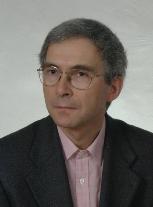
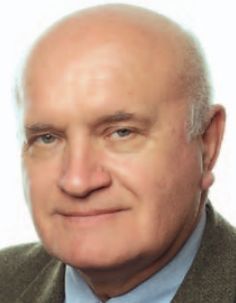
Dr. Piotr Dragon is an Assistant Professor at the Department of Social Psychology, Institute of Psychology, Jagiellonian University , and a member of the Centre for Social Cognitive Studies in Kraków. He holds dual degrees in Psychology (2010) and Sociology (2011) from Jagiellonian University, with a doctorate in Psychology (2015).
Somnath Ghosh is the Michael G. Callas Chair Professor at Johns Hopkins University, holding joint appointments in the Departments of Civil & Systems Engineering, Mechanical Engineering, and Materials Science & Engineering. He directs the Computational Mechanics Research Laboratory (CMRL) and founded the Center for Integrated Structure-Materials Modeling and Simulations (CISMMS). His research focuses on multiscale computational mechanics, materials science, and integrated computational materials engineering (ICME). Key areas include additive manufacturing, fatigue and fracture mechanics, machine learning, and uncertainty quantification. Education includes a B.Tech. from IIT Kharagpur, M.S. from Cornell University, and Ph.D. from the University of Michigan. Ghosh has led major initiatives like NASA’s Space Technology Research Institute for Additive Manufacturing (IMQCAM) and the Air Force-funded Center of Excellence in Integrated Materials Modeling (CEIMM). He has authored over 300 peer-reviewed publications, three books, and is a Fellow of multiple societies, including the AAAS, ASME, and TMS. Award highlights include the Theodore von Karman Medal (2025), J.N. Reddy Medal (2024), and Nathan M. Newmark Medal (2013). His work bridges theory and industry applications in aerospace, automotive, and defense sectors. Labs under his leadership (CMRL and CISMMS) develop digital twins and advanced modeling tools for materials qualification and design.
John Hughes, PhD, is an Associate Professor and Chair of the Department of Biostatistics and Health Data Science at Lehigh University's College of Health. With nearly 30 years of experience in higher education, he has held positions at institutions including Frostburg State University, the University of Minnesota, and Pennsylvania State University. His methodological research focuses on statistical models for dependent data, Bayesian methods, and spatial and spatiotemporal analysis. He has developed numerous software packages for R and Perl, including copCAR , ngspatial , and krippendorffsalpha . Dr. Hughes' interdisciplinary work spans environmental health, bioimaging, vaccine hesitancy, and spatial epidemiology of HPV-related cancers. He has consulted for organizations such as the Courage Kenny Research Center and Temple University. His education includes a PhD in Statistics from Penn State University and an MS in Applied Computer Science from Frostburg State University. His research emphasizes statistical computing and the application of advanced models to health data. Recent work includes methodologies for agreement coefficients, environmental noise measurement, and spatial analysis of vaccination refusal patterns. Dr. Hughes teaches courses in biostatistics, data science, and programming, reflecting his dual role as a teacher-scholar. Professional contributions include software development, collaborative research projects, and academic leadership. His work bridges computational innovation and real-world health challenges, positioning him as a key figure in modern biostatistical research.
Dr. Szymon Woziwodzki is a Professor at the Poznań University of Technology, working within the Faculty of Chemical Technology, specifically at the Institute of Chemical Technology and Engineering. His academic career spans over two decades, with significant contributions to chemical engineering, particularly in mixing technology and process equipment design. His educational background includes: M.Sc. Eng. from Poznań University of Technology (1999), Faculty of Chemical Technology, specializing in Polymer Technology Ph.D. in technical sciences in the field of chemical technology from Poznań University of Technology (2003) Habilitation of technical sciences in the discipline of chemical and process engineering from West Pomeranian University of Technology in Szczecin (2017) Professor Woziwodzki's research focuses on mechanical mixing, rheology, design of process equipment, process simulations (Aveva Simulation Platform), gas and liquid purification processes, flow regulators, Industry 4.0, and digital twin technology. His work bridges theoretical understanding with practical industrial applications, particularly in the areas of multiphase mixing systems and process equipment design. The research consistently addresses challenges in unsteady mixing processes and their applications across chemical, pharmaceutical, and environmental engineering fields. His recent publications (2022-2024) demonstrate a continued focus on unsteady mixing phenomena, with particular emphasis on gas-liquid systems, mathematical modeling of mixing processes, and the application of digital technologies for process monitoring and optimization. The research spans from fundamental fluid dynamics to practical industrial implementations, showing increasing integration of Industry 4.0 concepts with traditional chemical engineering principles. Professor Woziwodzki serves on multiple university committees including as chairman of the Faculty Program Council for Chemical and Process Engineering, member of the Faculty Committee for Evaluation of Academic Teachers, and member of the Chemical Sciences Discipline Council. He is also a member of the Polish Society of Technical Rheology and has served as Guest Editor for a Special Issue on Multiphase Flows in Energies (MDPI). He actively supervises doctoral research, with recent dissertations focusing on unsteady gas-liquid mixing and hydraulic-oscillatory mixing analysis using image processing techniques. His research group collaborates with institutions including Opole University of Technology and University of Opole, demonstrating strong connections across the Polish academic community in chemical engineering.
Joanna Dolińska is an Assistant Professor at the Faculty of Artes Liberales, University of Warsaw, specializing in linguistics with a focus on computational linguistics, language documentation, sociolinguistics, and historical linguistics. She has held prestigious research positions including Post-Doctoral Fellowships at the Smithsonian Institution (USA) and Max Planck Institute for Geoanthropology (Germany), as well as visiting researcher appointments at University of Cambridge, University of Groningen, Mahidol University, and University of Strasbourg. Dr. Dolińska earned her PhD in Comparative Altaic Linguistics from the University of Warsaw in 2019, following Master's degrees in Applied Linguistics (2011) and Oriental Studies (2015), and a Bachelor's degree in Oriental Studies (2012). Her academic journey included study periods at the National University of Mongolia, University of Leipzig, and University of Duisburg-Essen. Her research interests center on the application of natural language processing tools to low-resource languages, with particular focus on Mongolic and Tungusic languages, minority languages of Thailand and Alaska, and the Altaic language family. Dr. Dolińska leads the project "Interdependence of multilingualism and biodiversity in the Chiang Mai and Satun provinces in Thailand" at the University of Warsaw, and has been intensively studying Thai language for the past two years. Her scholarly work demonstrates a consistent focus on language documentation, computational approaches to linguistic analysis, and the preservation of endangered languages. She has published extensively on Mongolic languages, particularly Dagur, and has contributed significantly to the debate on the Altaic language family hypothesis through comparative analysis of grammatical structures. Dr. Dolińska has received recognition through research stays at prestigious institutions worldwide, including recent appointments at the Smithsonian Institution (2023-2024), Mahidol University (2023), University of Groningen (2023), University of Strasbourg (2023), University of Cambridge (2022), and Max Planck Institute for Geoanthropology (2020-2021). She actively collaborates with language communities in Thailand, Myanmar, and other regions with linguistic diversity, focusing on community-based approaches to language preservation and the development of digital tools for minority languages. Her work bridges theoretical linguistics with practical applications for language documentation and revitalization.
Dr. Ahmed Abdeen Hamed is a former Assistant Professor of Data Science and Artificial Intelligence at Norwich University and a former Research Team Leader in Clinical Data Science. He holds a Ph.D. from the University of Vermont (2014) and has extensive industry experience in pharmaceutical research. His work focuses on computational methods for drug discovery, network analysis, and AI-driven healthcare solutions, particularly in drug repurposing for diseases like COVID-19. He has developed algorithms such as MolecRank and NeoNet, and holds a patent for specificity-based molecule ranking systems. Education: PhD in Data Science (University of Vermont, 2014). Research Interests: Network-based drug discovery, biomedical informatics, AI in healthcare, clinical data science, and combating misinformation using machine learning. His recent work emphasizes leveraging clinical trials and biomedical literature to predict treatment efficacies through computational frameworks. Key Contributions: First inventor on a molecule ranking patent (2021), co-developer of the CovidX algorithm for drug repurposing, and supervisor of PhD students/postdoctoral fellows. Collaborates with Sano teams to advance clinical research through AI. Awards: FastCompany Most Creative (2016) Industry Impact: Contributed to a multi-million dollar grant for a recommendation engine startup. Labs/Teams: Currently part of Sano's research teams, focusing on computational clinical research and interdisciplinary collaborations.
Dominik Bień is an Adjunct Professor at the Institute of Political Sciences within the Faculty of Social Sciences at the University of Gdańsk . He can be contacted via email at dominik.bien@ug.edu.pl or by phone at +48 58 523 41 69 in room D507. Academic Role : Adjunct Professor Research Focus : Political theory, historical analysis of academic institutions, social movements, and AI applications in humanities His work spans the history of the University of Gdańsk, political ideologies (e.g., KOR, Wolnych Związków Zawodowych Wybrzeża), and methodological innovations like AI in political and historical research. Recent publications examine institutional memory, labor movements, and computational tools for analyzing political discourse. As Deputy Dean for Student Affairs at the Faculty of Social Sciences, he contributes to academic administration. His interviews and archival studies highlight critical transitions in Polish higher education and political thought during the 20th century.
Robert Czechowski, PhD , is an Assistant Professor at the Faculty of Information and Communication Technology , Wrocław University of Science and Technology , Poland, stationed in the Department of Telecommunications and Teleinformatics . His office is located in building D-20, room 421, and he holds regular consultation hours on Tuesdays 14:00–15:00, Wednesdays 15:00–17:00, and Thursdays 13:00–15:00. His research portfolio is centred on securing the next generation of electrical power systems. Core interests include: Cyber-security architectures for smart grids and micro-grids Artificial-intelligence-driven intrusion detection and prevention systems (IDS/IPS) Network protocols and time-synchronisation security in SCADA environments Simulation of information flow in complex, dynamically reconfigurable networks IPv4/IPv6 network design and security policy enforcement in power-system automation Database and expert-system solutions for real-time energy-management and fraud detection Between 2014 and 2019 he authored or co-authored more than fifteen peer-reviewed works. The publications reveal a clear longitudinal trend: early work established foundational security policies and good-practice guidelines, while later studies pivot toward advanced AI/ML techniques for anomaly detection and risk quantification in smart-metering infrastructures. A recurring theme is the integration of communication-protocol security (IEC 61850, PLC, IPv4/IPv6) with higher-level cyber-physical risk governance. Scientific recognitions: None explicitly mentioned in the supplied text. Advising & Grant activities: The provided material does not list specific doctoral or master’s students, nor does it enumerate funded projects. Laboratories & Teams: He conducts research within the Department of Telecommunications and Teleinformatics, leveraging university laboratories and the wider ICT Faculty infrastructure, although no dedicated lab name is specified.
Dr. Łukasz Baran is an Assistant Professor at the Department of Theoretical Chemistry , Maria Curie-Skłodowska University (UMCS), Lublin, Poland. He earned his PhD in Chemical Sciences (2022) with a dissertation on computer simulations of molecular self-assembly processes on solid surfaces. His current research focuses on interfacial behavior of water in liquid/crystalline forms and the influence of confinement curvature on patchy particle systems, combining molecular dynamics and advanced Monte Carlo simulations. Current Affiliation: Maria Curie-Skłodowska University (UMCS), Lublin, Poland Additional Affiliation: Complutense University of Madrid, Spain (PostDoc, 2024-) His research spans self-assembly mechanisms , ice friction phenomena , and 2D supramolecular networks , with applications in nanoscience and materials chemistry. Recent work includes studies on colloidal diamond formation, ice premelting layers, and confinement effects on Janus particles. His publications have appeared in high-impact journals like Nanoscale , PNAS , and Journal of Chemical Physics . Scientific Awards Ministry Scholarship for Young Researchers (2022) START Scholarship by Foundation for Polish Science (2020) Best PhD Thesis Award, UMCS Faculty of Chemistry (2022) Dr. Baran has secured significant grants including NCN PRELUDIUM 20 (2022-2025) and the "Diamentowy Grant" (Diamond Grant) (2018-2021). His work has been featured in Polish media (TVP Lublin) and international outlets like phys.org . He collaborates with researchers across Europe, including teams in Madrid and Lublin.
Prof. Dr. hab. Marek Pawlak is a tenured Professor at the Department of Business Management , Institute of Journalism and Management , Faculty of Social Sciences , John Paul II Catholic University of Lublin . He holds academic degrees including MBA, Technical University of Lublin (1980) PhD, Technical University of Gdańsk (1987) Hab. PhD, Institute of Organization and Management in Industry, Warsaw (1997) Professor, Institute of Organization and Management in Industry, Warsaw (2009) His research focuses on Corporate Governance Computer Sciences Application in Management Business Ethics Strategic Management Project Management . His recent publications analyze generational changes in family business leadership, tax haven usage by multinational corporations, and moral development indices of future leaders. He has coordinated international projects like TEMPUS JEP 04214 and received grants from the Polish Ministry of Science and Higher Education on topics including genetic algorithms for production scheduling and CSR impact on consumer behavior. He has served as a Vice-Dean at both Technical University of Lublin and John Paul II Catholic University of Lublin. Professional activities include multiple Erasmus+ teaching assignments at Spanish institutions (Universidad Francisco de Vitoria, University of Seville) and industry consultancy roles. His scientific work spans 40+ years with over 140 publications, including books like Zarządzanie projektami (PWN, 2006) and Zarządzanie grupą przedsiębiorstw (KUL, 2015).
Dr. Wojciech Józef Janicki is a Professor at Maria Curie-Skłodowska University in Lublin, Poland, where he serves as Director of the Institute of Socio-Economic Geography and Spatial Economy and Head of the Department of Socio-Economic Geography within the Faculty of Earth Sciences and Spatial Management. His research focuses on political geography, demography and development, with particular emphasis on migration policy, demographic policy, national and ethnic minorities, international conflicts, global problems, and regional development. His work bridges theoretical geography with practical policy implications, especially regarding migration and demographic challenges in Eastern Europe and at the EU's external borders. He has developed an interdisciplinary approach that increasingly integrates psychological perspectives on societal fears with traditional geographical analysis. His recent publications demonstrate a strong focus on migration policy, demographic challenges, and regional development, with an increasing attention to psychological aspects of societal fears. His 2024 edited volume "Fear/Less" represents a significant interdisciplinary contribution examining societal fears from multiple perspectives, reflecting his expanding research horizon beyond traditional geography. Dr. Janicki is actively engaged in public policy discourse as evidenced by his membership in several important bodies: Member of the Government Population Council since 2024 Member of the Committee on Demographic Sciences of the Polish Academy of Sciences since 2019 Member of the Scientific Council of the Polish Geopolitical Society since 2024 Member of the Editorial Board of Global Population Perspectives since 2025 His academic contributions extend to public engagement through numerous podcasts and lectures where he discusses migration, demography, and societal fears. His ORCID profile shows an h-index of 9 (Google Scholar), 4 (Scopus), and 3 (Web of Science), with a total of 44 publications and a ministerial score of 1,110. He maintains an active consultation schedule for students during the 2024/2025 academic year.
Damian Niwinski is a Professor in the Institute of Informatics at the Faculty of Mathematics, Informatics and Mechanics, University of Warsaw, Poland. He is a member of the Automata Theory Group and actively contributes to research and academic life at the university. His research interests include logic, automata theory, fixed point calculi, information theory, complexity, and games . These areas represent core topics in theoretical computer science, with applications in formal verification, programming languages, and computational logic. He has supervised several PhD students, including Filip Murlak, Eryk Kopczyński, Michal Strojnowski, Szczepan Hummel, and Marcin Przybyłko, indicating a strong commitment to academic mentorship and the development of future researchers in his field. Prof. Niwinski is involved in editorial work as a member of the editorial board of Fundamenta Informaticae and organizes the Automata Theory Seminar , further demonstrating his leadership and engagement in the academic community. He maintains a public academic presence through his Google Scholar profile and personal website, where he shares his papers and talks.
Magdalena Baborska-Narożny serves as an Associate Professor in the Department of Architecture and Visual Arts at the Faculty of Architecture, Wrocław University of Science and Technology. Her work bridges architectural design, building physics, and social science to address critical challenges in residential performance and sustainability. Her research focuses on: Building performance evaluation through in-situ measurements Thermal comfort and ventilation in low-energy and historical housing Social dimensions of balcony use and heritage conservation Energy efficiency transitions in Polish residential contexts Occupant behavior impacts on building performance Analysis of her 2021-2025 publications reveals consistent emphasis on real-world building performance gaps, particularly examining ventilation strategies, overheating risks, and heritage adaptation challenges. Her methodology combines field measurements in Polish housing with occupant surveys and computational modeling, often comparing international approaches to heritage conservation and energy transitions. Key contributions include quantifying bedroom ventilation effectiveness, analyzing balcony integration in historical tenements, and evaluating solid fuel heating transitions. No scientific awards were documented in the provided sources. Information regarding academic advising relationships and research grant acquisitions was not present in the available materials. No specific laboratory affiliations or research team structures were identified in the source documentation.
Prof. Tadeusz Andruniów serves as a full Professor at the Institute of Advanced Materials within the Faculty of Chemistry at Wrocław University of Science and Technology. His research program integrates quantum chemical methodologies with photobiological systems, focusing on light-induced processes in biological chromophores. With continuous publication output from 2004 to 2025, he maintains an active research trajectory evidenced by contributions to high-impact journals including the Journal of the American Chemical Society and Proceedings of the National Academy of Sciences. His core research interests encompass: Quantum Chemistry of Biological Systems Photoisomerization Dynamics in Rhodopsin Resonance Raman Spectroscopy Two-Photon Absorption Phenomena Protein-Chromophore Interactions Computational Photobiology These interests drive his investigations into excited-state behavior, energy storage mechanisms, and spectroscopic signatures of chromophores in complex biological environments. Analysis of his 2020-2025 publications reveals three dominant research thrusts: (1) Precision modeling of two-photon absorption in rhodopsin and fluorescent protein chromophores using high-level coupled-cluster methods; (2) Elucidation of protein environmental effects on spectroscopic properties through QM/MM simulations; and (3) Extension of computational frameworks to abiotic systems like sequence-defined polyurethanes. His work consistently demonstrates methodological innovation in handling excited-state dynamics and nonlinear optical properties. While specific grant details and student supervision records are not documented in available sources, his collaborative publication pattern involving international co-authors indicates active research networking. His technical contributions to computational protocols for artifact removal in polarizable embedding calculations and quantum region optimization represent significant methodological advances for the field.
Prof. Kazimierz Bęcek is affiliated with the Wrocław University of Science and Technology as a faculty member in the Faculty of Geoengineering, Mining and Geology , specifically within the Department of Geodesy and Geoinformatics . His research spans multiple domains including geodesy, remote sensing, and geomatics, with a strong focus on elevation data analysis and environmental monitoring. Ecology Photogrammetry Remote Sensing Geodesy Geomatics Prof. Bęcek's work primarily investigates geospatial data accuracy, environmental dynamics, and geodetic methodologies. He has contributed significantly to elevation model validation, land subsidence detection, and vegetation collapse analysis through advanced remote sensing techniques. Recent publications highlight his expertise in Digital Elevation Model evaluation , LiDAR data processing , and environmental monitoring using satellite observations. His research extends to climate-ocean interactions and real-time geospatial mapping challenges. Contact: kazimierz.becek@pwr.edu.pl Physical address: ul. Na Grobli 15, 50-421 Wrocław, building L-1 (Geocentrum), room 366