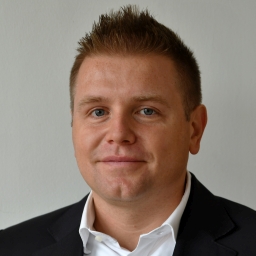
Dr hab. Wojciech Janicki is a full Professor at the Institute of Social and Economic Geography and Spatial Management within the Faculty of Earth Sciences and Spatial Management at Maria Curie-Skłodowska University (UMCS) in Lublin, Poland. He serves as Director of the Institute and Head of the Department of Social and Economic Geography. Current affiliations: Governmental Council on Population (since 2024), Polish Academy of Sciences Committee on Demographic Sciences (since 2019), Polish Geopolitical Society Scientific Council (since 2024) Editorial role: Global Population Perspectives (since 2025) Research interests focus on political geography, demography, and regional development , with particular emphasis on migration studies, national/ethnic minorities, international border conflicts, and global population challenges. His work addresses demographic policy formation, migration management, and the socioeconomic impacts of population shifts in Eastern and Central-Eastern Europe. Recent publications demonstrate interdisciplinary engagement with migration policy implementation (2025), adaptive geofencing technology for transport security (2024), and demographic anxiety analysis through edited volumes (2024). Article trends show consistent focus on EU integration challenges, borderland development, and population policy contradictions. Scientific recognition includes: Governmental Council on Population membership Polish Academy of Sciences demography committee Editorial board of international journal Strategic advisory roles Advising involves directing research on migration legality frameworks, coal region transitions, and spatial management projects. Grants likely relate to EU cohesion policy and cross-border development initiatives given his publication patterns.
Rafał Biedrzycki is an Assistant Professor at The Institute of Computer Science within Warsaw University of Technology's Faculty of Electronics and Information Technology. His research focuses on optimization algorithms, evolutionary computation, and machine learning applications. He holds a PhD in Information Science (2009) and a D.Sc. (2024). Key research interests include evolutionary algorithms (e.g., Differential Evolution, CMA-ES), optimization techniques for real-world problems (e.g., compressor scheduling, optical networks), and algorithm benchmarking. He has contributed to improving constraint-handling methods and hybrid algorithm designs. Received team awards for scientific achievements from Warsaw University of Technology (2019, 2023) and teaching excellence (2021, 2024). Active in interdisciplinary projects, including the DAFNE initiative for data fusion systems (2010-2011). Supervises research in optimization, machine learning, and computational electromagnetics. His work bridges theoretical algorithm development with practical applications in engineering and data analysis. Recent efforts include analysis of CEC competition algorithms and parameter-tuning methodologies.
Michał Paweł Skrzypczak is an Associate Professor at the Institute of Informatics, Faculty of Mathematics, Informatics, and Mechanics, University of Warsaw. He is actively involved in teaching and academic service, with a focus on theoretical computer science and formal methods. His research interests lie primarily in theoretical computer science , particularly program semantics , program verification , logic in computer science , and automata theory . These interests are reflected in his long-standing teaching of advanced courses such as Program Semantics and Verification , Logics for Computer Scientists , and Automata on Infinite Trees . While no publications are listed in the provided text, the consistent engagement with formal methods and mathematical logic across multiple courses over more than a decade suggests a sustained research trajectory in foundational aspects of computing. Scientific Awards: No awards listed. He has contributed to the academic development of students through teaching and exercise sessions, particularly in core theoretical subjects. Though no formal advisees are listed, his role as an instructor in graduate-level courses indicates mentorship responsibilities. He is affiliated with the Institute of Informatics at the University of Warsaw, which serves as his primary academic unit. There is no mention of specific research labs or teams, but his collaborations with researchers like Prof. Andrzej Tarlecki and Prof. Paweł Urzyczyn suggest integration into a strong logic and semantics research group.
Filip Sondej is a Researcher at the Department of Cognitive Science within the Faculty of Philosophy at Jagiellonian University in Krakow, Poland. His work bridges cognitive science and artificial intelligence, focusing on critical safety aspects of modern language models and multi-agent systems. His primary research interests include AI safety, LLM unlearning techniques, Chain-of-Thought faithfulness, AI conflict resolution, and digital sentience. Sondej's work addresses fundamental challenges in ensuring that increasingly powerful language models behave safely and align with human values. Analysis of Sondej's publication record reveals a strong interdisciplinary focus combining cognitive neuroscience methodologies with AI safety research. His recent work demonstrates a clear trajectory from traditional cognitive neuroscience investigations toward cutting-edge AI safety mechanisms, particularly in developing methods for removing unsafe behaviors from language models while maintaining functionality. The publications show sophisticated integration of neural network analysis with human cognitive processes. Sondej collaborates extensively with researchers including Anna Grabowska and Magdalena Senderecka, appearing as co-author on multiple publications in high-impact journals such as NeuroImage, Cerebral Cortex, and Journal of Cognitive Neuroscience. His research program bridges theoretical cognitive science with practical AI safety applications.
Roman Matuszewski is a retired Associate Professor at the University of Bialystok, affiliated with the Faculty of Philology's Department of Applied Linguistics. His research focuses on automated reasoning, formalized mathematics, and the Mizar Project, which he has been involved with since its inception in 1973. He holds a PhD in Computer Science from Shinshu University (2000) and has held academic positions at multiple institutions, including part-time roles at Bogdan Janski University. Education: PhD in Computer Science (2000), Master of Science in Mechanics (1975), Engineer (1973), all from Polish institutions. His work emphasizes formal proof systems, mathematical knowledge management, and education integration of automated reasoning tools. Research interests include automated deduction, formal proof verification, and the application of these methods to mathematics education. His contributions to the Mizar Mathematical Library and its 50-year history (celebrated in 2023) are foundational for interactive theorem proving. Key awards include the Silver Cross of Merit (2004) and multiple Rector’s prizes. He has organized major conferences like MKM2004 and served on program committees for events such as IJCAR and Tableaux. Grants include leadership roles in EU-funded projects like TYPES and CALCULEMUS. His work bridges computer science and mathematics through formalized systems, impacting both research and education.
Dr. Michał Kalisz is an Assistant Professor in the Department of Computer Science at the John Paul II Catholic University of Lublin, affiliated with the Faculty of Philosophy. His work bridges theoretical computer science with practical applications in artificial intelligence (AI) across education and business domains. Research Focus: AI ethics, educational technology, business informatics, and knowledge representation. Academic Contributions: Recently presented four conference papers between 2023-2024, exploring AI's role in education (opportunities/threats, knowledge limits), public AI literacy, and business applications. Professional Engagement: Acted as a reviewer for the Annals of Social Sciences , led international workshops (USA, Europe), and participated in the Lublin Science Festival.
Dr hab. Jarosław Chodak is an Adjunct Professor at the Department of Sociology of Social Change, Institute of Sociology, Faculty of Philosophy and Sociology at Maria Curie-Skłodowska University. His academic career spans teaching and research activities focused on political sociology, social movements, and digital sociology. He is actively involved in the European Social Survey consortium and serves as a researcher at the Center for Artificial Intelligence and Computer Modeling at UMCS. His research interests include: Political Sociology Social Movements and Contention Sociology of Disinformation Digital Sociology ICTs in Social Mobilization His publications focus on transformative social processes, with notable works on nonviolent revolutions and digital activism. Current projects involve analyzing disinformation dynamics and leveraging computational modeling for sociological research.
Milena Stróżyna is an Assistant Professor at the Department of Economic Informatics in the University of Economics in Poznan , Poland. Her work focuses on data modeling, AI applications in disinformation detection, and maritime data analysis . Email: milena.strozyna@ue.poznan.pl Research interests span: Data Modeling & Analysis : Extracting insights from diverse data sources, ensuring quality, and implementing ERP systems Disinformation Studies : Developing AI tools for fake news detection and semantic mapping of misinformation topics Maritime Data Science : Crisis impact analysis in shipping, anomaly detection in maritime transport Scientific Contributions include: Pioneering OpenFact system for information verification Creating adversarial text detection methods Leading research on generative AI risks in information integrity Notable Awards : 2018: Most innovative article at NATCON conference Multiple first-place international competition wins with OpenFact system (2022-2024)
Dr. Eng. Katarzyna Jasińska is affiliated with the Department of Management and Entrepreneurship at Wrocław University of Economics. Her work focuses on Industry 4.0, ICT sector dynamics, project management, and digital transformation. She has conducted extensive research on topics such as robotic process automation (RPA), AI implementation, and organizational adaptation to technological changes. Her research interests span across: Industry 4.0 adoption and its implications for businesses Digital transformation challenges in service and manufacturing sectors Project management methodologies in ICT enterprises RPA and AI integration in organizational processes Key contributions include case studies analyzing Polish companies' adaptation to Industry 4.0 post-pandemic challenges, cybersecurity frameworks, and innovative project management approaches. Her work emphasizes bridging the gap between technological innovation and practical implementation in real-world business contexts.
Professor Daniel Gryko leads a prominent research group at the Institute of Organic Chemistry, Polish Academy of Sciences, specializing in advanced functional dyes and photochemistry. His work bridges fundamental organic synthesis with practical applications in bioimaging, molecular electronics, and nanomaterials. With over 150 publications and numerous high-impact grants, including an ERC Advanced Grant and multiple Horizon Europe projects, Gryko has established himself as a leader in the field of novel chromophore design. Gryko's research focuses on developing innovative fluorescent dyes with exceptional photophysical properties, particularly exploring fluorescence of nitroaromatics, two-photon absorption phenomena, and excited-state intramolecular proton transfer (ESIPT). His group specializes in several key structural platforms including corroles, diketopyrrolopyrroles, pyrrolo[3,2-b]pyrroles, dipyrrolonaphthyridinediones, porphyrins, and coumarins. Recent work has centered on creating strongly emitting helicenes, quadrupolar dyes with unique symmetry-breaking properties, and developing specialized fluorophores for super-resolution microscopy applications. Analysis of Gryko's recent publications reveals a strong emphasis on molecular design strategies for controlling photophysical behavior. His group frequently employs π-expansion techniques, heteroatom doping, and strategic substitution patterns to tune emission properties. A significant portion of their work focuses on overcoming traditional limitations in fluorophore design, such as the non-fluorescence of nitroaromatics, through innovative molecular architectures. Gryko has received prestigious recognition including an ERC Advanced Grant for the ARCHIMEDES project targeting NIR-II emission efficiency, multiple Horizon Europe grants, and the TEAM grant from the Foundation for Polish Science supporting development of fluorescent probes for super-resolution microscopy. His group's work has resulted in numerous publications in top-tier journals including Journal of the American Chemical Society , Chemical Science , and Angewandte Chemie . Professor Gryko actively mentors a diverse research team including PhD students, postdoctoral researchers, and collaborators worldwide. His group has secured substantial funding including Horizon Europe grants for PhotoBrane and APACE projects, ERC funding, and multiple Polish National Science Centre grants. Current projects focus on developing novel fluorescent probes for super-resolution microscopy, creating bio-mimetic sunlight-pumped lasers, and designing photo-switchable membranes for molecular separation. The Gryko group operates a well-equipped laboratory focused on organic synthesis and photophysical characterization. Their work spans from fundamental molecular design to practical applications in bioimaging and materials science. Recent expansions of their research program include development of probes for detecting SARS-CoV-2 proteases, demonstrating the group's ability to pivot toward addressing pressing societal challenges.
Michał Paweł Michalak is an Assistant Professor at AGH University of Science and Technology in Kraków, affiliated with the Faculty of Geology, Geophysics and Environmental Protection and Department of Geoinformatics and Applied Informatics. His research spans computational geometry in geological modeling, machine learning applications in Earth sciences, statistical epidemiology, and ecclesiological dynamics. Doctoral degree from University of Silesia in Katowice Developed GeoAnomalia software suite combining C++, R, and ParaView Created unbiased risk metrics (WCSIR) for infectious disease surveillance Research focuses on: Subsurface geological modeling using combinatorial algorithms and machine learning; Spatial epidemiology emphasizing testing heterogeneity bias; Ecclesiological dynamics analyzing factional theological interactions. His 2020/37/N/ST10/02504 grant project received 'very good' evaluation for developing angular distance metrics in geological contacts. Scientific contributions include: 2025 Solid Earth paper on fault-related structure detection 2025 Frontiers in Public Health work on global pandemic risk evaluation 2023 AGH Rector award recipient Developer of open-source geological analysis tools Collaboration network includes Harvard University, Technische Universität Freiberg, and University of Texas at Austin. Currently teaching GIS modeling, optimization methods, and geoinformatics systems. Maintains a personal website with open data access.
Dr. Katarzyna Jesse-Józefczyk is an Assistant Professor at the Institute of Mathematics, University of Zielona Góra, Poland. She maintains an office in Room 509 A-29 and can be contacted at k.jesse-jozefczyk@im.uz.zgora.pl. Her academic profile combines teaching responsibilities with diverse research activities across theoretical and applied mathematics. Her primary research interests include: Graph Theory (graph coloring, computational complexity of graph algorithms, coalitions and safe sets in graphs) Stochastic Inclusions and Multivalued Stochastic Equations with applications in economics and biological sciences Multivariate Linear Models and Analysis Game Theory (stochastic, multigenerational, and large games) Approximation Theory using Fourier series Preference Models using graded and interval relations Dr. Jesse-Józefczyk's work bridges theoretical mathematics with practical applications in secure data transmission, e-business, and space communication. She actively participates in the Center for Applications of Mathematics and Computer Science (OZMI), contributing to interdisciplinary research projects focused on sustainable energy, healthy society initiatives, and innovative industrial technologies. Her teaching portfolio includes algorithms and data structures, computer programming courses (both introductory and advanced), object-oriented programming, and database systems curriculum.
Prof. Wojciech Sobieski is a faculty member at the Department of Mechanics and Fundamentals of Machine Design within the Faculty of Technical Sciences at the University of Warmia and Mazury in Olsztyn . His research focuses on fluid mechanics, numerical modeling, and porous media analysis, with applications in environmental engineering, hydraulic systems, and 3D printing. Academic Rank: Professor Scientific Discipline: Mechanical Engineering Key Research Areas: Tortuosity Analysis, Multiphase Flow, DEM Simulations His recent publications highlight advancements in computational methods for granular porous media, fluid flow modeling, and thermodynamic applications. Notable trends include the use of the Waterfall Algorithm for geometric analysis and sensitivity studies of numerical models like the Eulerian multiphase approach. He has contributed to understanding Forchheimer's laws and cavitation phenomena in hydraulic systems. Prof. Sobieski oversees the PathFinder Project , a research initiative focused on numerical modeling of porous media. His laboratory maintains infrastructure for multiphase flow simulations and particle-scale modeling. He has supervised 2 doctoral students to completion but currently has no active advisees.
Konrad Kowalczyk is an Associate Professor at AGH University of Science and Technology in Krakow, Poland, where he heads the Signal Processing Group within the Faculty of Computer Science, Electronics and Telecommunications. With extensive international experience from institutions including Queen's University Belfast, Stanford University, and Fraunhofer Institute, he has established himself as a leading researcher in audio and speech signal processing. His academic journey includes B.Eng. and M.Sc. degrees from AGH University (2005), a Ph.D. from Queen's University Belfast (2009), and a Habilitation in ICT from AGH University (2020). B.Eng. and M.Sc. in Electronics and Telecommunications, AGH University of Krakow (2005) Ph.D. in Electronics, Queen's University Belfast, UK (2009) Habilitation (D.Sc.) in Information and Communication Technology, AGH University of Krakow (2020) Kowalczyk's research spans multiple cutting-edge areas in audio processing, with particular focus on speech and audio signal processing enhanced by machine learning techniques. His work integrates deep neural networks with traditional signal processing methods to address challenges in array signal processing , speech enhancement , and speaker recognition . The research group he leads explores innovative applications in distributed signal processing for IoT , acoustic event detection , and spatial audio rendering , bridging theoretical advances with practical implementations. His recent publications demonstrate a clear trend toward integrating deep learning with traditional signal processing techniques, particularly in speaker diarization, source separation, and robust speech recognition. The research increasingly focuses on real-world applications requiring reverberation-robust processing , distributed microphone array systems , and end-to-end neural architectures that can operate in challenging acoustic environments. There's a noticeable shift toward more complex, integrated systems that combine multiple signal processing tasks. Stanislaw Staszic Medal for best graduate of AGH (2005) IEEE Best Student Paper Contest finalist (2007) AES Student Technical Paper Award winner (2008) Best Student Paper Award at IWAENC conference (2014) Best Paper Awards at IEEE SPA conferences (2016, 2019) Polish Ministry of Science Scholarship for Distinguished Young Scientists (2016-2019) Prime Minister Award for outstanding scientific achievements (2020) As Principal Investigator, Kowalczyk leads multiple significant research projects including "Acoustic Intelligence" (2024-2028) funded by National Science Center, and "Deep extraction for robust speech recognition" (2023-2028). He has successfully secured funding from prestigious programs including First TEAM from the Foundation for Polish Science, and EU FP7 projects. His research group actively supervises Ph.D., M.Sc., and B.Eng. students, with strong connections to international institutions including Aalto University and IEEE Signal Processing Society. The research output includes numerous journal publications, conference papers, patents, and software implementations that have advanced the field of audio signal processing. Kowalczyk leads the Signal Processing Group at AGH University, which focuses on developing innovative solutions for speech and audio processing challenges. The group maintains strong collaborations with international institutions including Aalto University (Finland), and participates in European research initiatives. Their work spans theoretical development through practical implementation, with applications ranging from medical voice assistants to distributed acoustic sensor networks.
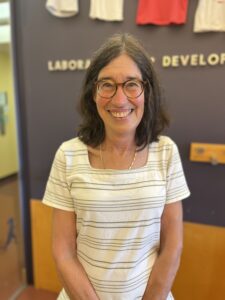
Elizabeth Spelke is the Marshall L. Berkman Professor of Psychology at Harvard University and an investigator at the NSF-MIT Center for Brains, Minds and Machines. She leads the Spelke Lab, which conducts behavioral research on infants and preschool children to understand the origins of uniquely human cognitive capacities such as formal mathematics, symbolic representation, and object taxonomy. Education: B.A. in Social Relations from Radcliffe College (1971), Ph.D. in Psychology from Cornell University (1978). Professional Experience: Faculty positions at the University of Pennsylvania, Cornell University, MIT, and Harvard University since 2001. Her research focuses on core knowledge systems in infancy, including understanding of objects, actions, people, places, number, and geometry. She collaborates with computational cognitive scientists to model infant cognition and with economists to apply findings to educational interventions. Her work integrates developmental, comparative, and cross-cultural perspectives. Her recent publications span topics such as early math learning, social evaluation in toddlers, goal inference, and the interplay between language and conceptual development. Trends in her recent work include experimental field studies, interdisciplinary collaborations, and theoretical synthesis of core knowledge frameworks. National Academy of Sciences (USA), 1999 American Academy of Arts and Sciences, 1997 National Academy of Sciences Prize in Psychological and Cognitive Sciences, 2014 C.L. de Carvalho-Heineken Prize for Cognitive Sciences, 2016 George A. Miller Prize, Cognitive Neuroscience Society, 2018 Mentor Awards from APS and APA, 2021 Spelke has mentored numerous researchers and collaborated widely across disciplines. Her lab’s work is supported by major grants from the NSF and other institutions. She has pioneered the use of behavioral methods to study infant cognition and has been instrumental in translating cognitive science into educational practice. She directs the Spelke Lab at Harvard, which investigates core cognitive systems through behavioral experiments with infants and young children. The lab explores how innate knowledge structures interact with experience to produce complex human cognition.