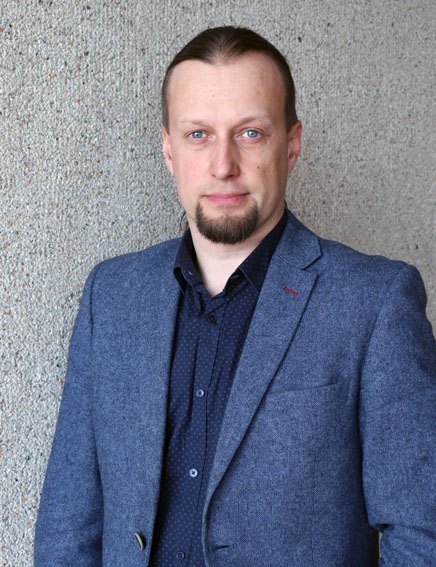
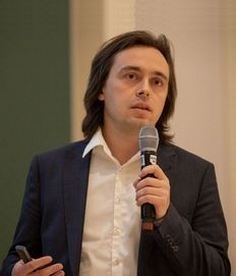
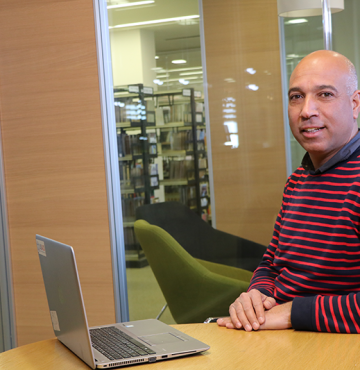
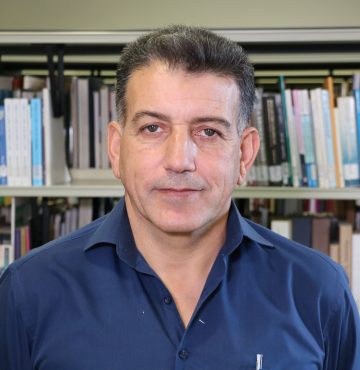
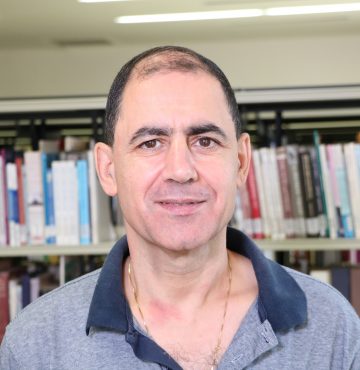
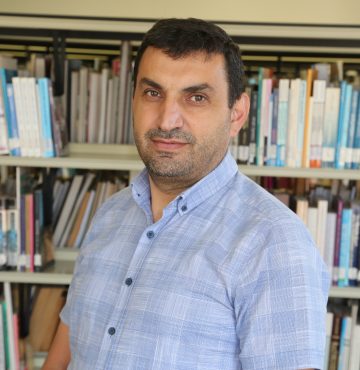
Giedrius Graževičius is a Lecturer at Vilnius University. He works at the Institute of Mathematics and Informatics (address: Akademijos St. 4, Vilnius). His role is primarily educational, though specific details about his research areas or publications are not provided in the available data.
Sandra Virbukaite is a Lecturer at Vilnius University's Department of Lecturers. She is currently pursuing doctoral studies (2020–2024) at Vilnius University Institute of Data Science and Digital Technologies, focusing on deep learning methods for identifying pathological changes in fundus images under Dr. Jolita Bernatavičienė. Master’s degree in Applied Statistics (Vilnius Gediminas Technical University, 2011) Bachelor’s degree in Engineering Informatics (Vilnius Gediminas Technical University, 2009) Recent certificates from Oxford University's Machine Learning Summer Schools (2023–2024) and DeepLearn 2021 Summer Her research centers on medical imaging and artificial intelligence applications for eye disease detection, particularly glaucoma through optic disc and cup segmentation . Analysis of her 15 most recent publications (2020–2024) shows focus areas in convolutional neural networks , image preprocessing , and segmentation accuracy in fundus imaging. Presenter at 8 major conferences including DAMSS (2021–2022), WSCG (2022), and AI Technologies in Medicine (2023–2024) Contributor to 5 peer-reviewed publications in IEEE Access and Nonlinear Analysis: Modelling and Control She teaches Database Query Languages at Vilnius University since 2020, demonstrating both pedagogical and research expertise in applied statistics and deep learning domains.
Gediminas Navickas is a Lecturer at Vilnius University's Institute of Data Science and Digital Technologies (DMSTI) within the Faculty of Mathematics and Informatics, specializing in the Image and Signal Analysis Group. His work bridges academic research with practical applications in Lithuanian language technologies. His primary research focuses on automatic Lithuanian speech recognition, speech signal processing, speech synthesis methods and algorithms, and speech synthesis quality assessment. Navickas has made significant contributions to developing speech technologies specifically for the Lithuanian language, addressing the challenges of resource scarcity compared to more widely spoken languages. His work demonstrates strong interdisciplinary connections between computer science, linguistics, and cognitive science. Navickas's publication record reveals a consistent trajectory of innovation in speech technology, with recent work emphasizing cognitive approaches to evaluating synthetic speech, particularly examining differences in perception between blind and sighted users. His research has evolved from foundational work on neural network architectures for speech synthesis to comprehensive studies on speech corpus development and accessibility applications. He has been instrumental in major EU-funded projects including the LIEPA series (2013-present), which have developed comprehensive speech recognition and synthesis systems for Lithuanian. These projects have produced practical applications ranging from educational robots to voice-controlled mobile services and assistive technologies for the visually impaired. Member of Lithuanian Computer Society (LIKS) Council Member of IEEE organization Active participant in COST actions including UniDive and Multi3Generation Navickas regularly engages with the public through media appearances on LRT radio and television, where he explains complex speech technology concepts to general audiences. His science communication efforts demonstrate a commitment to making technical research accessible and relevant to Lithuanian society.
Marius Liutvinavičius serves as a Lecturer at Vilnius University, based at Akademijos Street 4 in Vilnius. He is affiliated with the university's research institute housing specialized groups including Blockchain and Quantum Technologies, Artificial Intelligence, and Global Optimization. His scholarly focus centers on Computer Science and Digital Technologies, with research spanning Data Science methodologies, Artificial Intelligence systems, and Blockchain applications as inferred from the institute's structural framework. This aligns with Lithuania's national emphasis on advancing quantum and cyber-physical systems research. No awards, student supervision, or publication records are documented in available institutional listings.
Vytautas Pugačevskis serves as a Lecturer at Vilnius University, based at Akademijos Street 4 in Vilnius. He is actively affiliated with the university's research institute focused on digital technologies and computational sciences. His research spans Computer Science and Data Science , with contextual alignment to the institute's specialized groups including the Artificial Intelligence Laboratory and Blockchain and Quantum Technologies Group . This positions his work within emerging computational methodologies and intelligent systems development. The institute's structure highlights cross-disciplinary collaboration through units like the Cognitive Computing Group and Global Optimization Group, suggesting an environment conducive to innovative technical research.
Assoc. Prof. Dr. Vilma Zubaitienė is a Senior Researcher in the project at Vilnius University's Blockchain and Quantum Technologies Group. She works at Universiteto St. 5, room 202, Vilnius.
Professor Matviychuk Andriy Viktorovych is a leading academic and practitioner at Vadym Hetman Kyiv National Economic University, where he serves as Professor at the Department of Mathematical Modeling and Statistics. He holds multiple concurrent roles including General Director of the KNEU Science Park and Director of the Institute of Modeling and Information Technologies in Economics. He has 24 years of scientific and pedagogical experience. His research focuses on artificial intelligence, complex system modeling, financial time series forecasting, and economic risk modeling using neuro-fuzzy technologies. His recent publications demonstrate expertise in environmental modeling, human capital analysis, and financial market dynamics. 2024 - Editor-in-Chief of "Neuro-fuzzy modeling technologies in economics" (Scopus-indexed) 2024 - Completed advanced training in Data Science at KNEU 2024 - International scientific and pedagogical internships Scientific awards include: Honorary sign 'For Scientific and Educational Achievements' (2018) Honorary sign 'Outstanding Educator of Ukraine' (2015) President of Ukraine grants for young scientists (2014, 2012) National Academy of Sciences of Ukraine Prize (2006) M.Fedorenko International Scientific Fund grants (2009, 2004) He serves as head of the Specialized Academic Council for doctoral dissertation defenses and participates in multiple editorial boards of Ukrainian academic journals. His language proficiency includes English, and his personal interests span history, philosophy of religion, and skiing.
Ahmad Atiyha is a Lecturer in the Department of Technology under the Faculty of Science at Bethlehem University . His academic role focuses on technology education and applied sciences. Email: AATIYHA@bethlehem.edu
Mohammed Abu Ayyash is an Assistant Professor at the Department of Technology within the Faculty of Science at Bethlehem University . His academic work focuses on technology integration in education, software applications for pedagogical purposes, and digital literacy advancement. Office: S-202 Phone Ext: 2282 Email: mayyash@bethlehem.edu
Mr. Mo'ath Al Skakiyya is a Lecturer at the Department of Engineering, Faculty of Science, Bethlehem University. His role focuses on teaching and academic contributions within the engineering discipline.
Nader Abu Saad, M.Sc., is a Lecturer in the Department of Technology under the Faculty of Science at Bethlehem University. He has been affiliated with the university’s academic staff and contributes to teaching and research initiatives in technology-related domains.
Rawan Gedeon is an Assistant Professor at the Department of Technology within the Faculty of Science at Bethlehem University . Her email contact is rawang@bethlehem.edu . Her research interests align with the Technology department, focusing on Information Technology , Computer Science , and Educational Technology .
Suhail Odeh is an Associate Professor at Bethlehem University's Faculty of Science, Department of Technology. He serves as Chairperson of the Department of Software Engineering. His academic career focuses on software engineering and technology education. The department emphasizes interdisciplinary research and application of technological solutions in education and industry. Contact: sodeh@bethlehem.edu
Anas Samara, Ph.D., is an Assistant Professor at Bethlehem University, affiliated with the Faculty of Science and the Department of Technology . His academic role focuses on teaching and research within technological disciplines. University: Bethlehem University College: Faculty of Science Department: Department of Technology Rank: Assistant Professor
Rytis Jurkonis is a Research Fellow at the Institute of Biomedical Engineering, Kaunas University of Technology (KTU), where he has been employed since 2000. He teaches clinical engineering modules in the Department of Electronics Engineering and conducts research at the intersection of ultrasound physics and biomedical applications. His academic credentials include: Bachelor of Electronics Engineering, KTU (1993) Master of Electronics Engineering, KTU (1995) PhD in Electrical and Electronics Engineering, Technology Sciences, KTU (2000) Jurkonis specializes in ultrasound wave-tissue interaction modeling, ultrasonic biomedical signal processing, and clinical engineering methodologies. His work develops electronic technologies for biological and medical applications, particularly focusing on non-invasive diagnostic systems and therapeutic enhancement through microbubble cavitation. Recent efforts target improving ultrasound-based tissue characterization and drug delivery efficiency. Analysis of his 2012-2017 publications reveals consistent innovation in ultrasound elastography for tissue elasticity measurement, microbubble-mediated sonoporation for drug delivery, and RF signal processing for ocular diagnostics. His research bridges engineering principles with clinical practice, emphasizing quantitative metrics for therapeutic efficacy and diagnostic accuracy in biomedical systems. He has secured significant research funding including the Eurostars NICDIT project (2008-2011) for non-invasive eye tumor diagnosis, and two Lithuanian Research Council projects: MIP 119/2010 on electroporation-enhanced drug delivery (2010-2012) and MIP 034/2013 on microbubble cavitation parameters for sonoporation efficiency (2013-2015). International collaboration features prominently in his work through research stints at Lund University and Linkoping University in Sweden. His methodology integrates laboratory experimentation with computational modeling to advance biomedical ultrasound applications, with publications appearing in Ultrasound in Medicine & Biology, Molecular Pharmaceutics, and Archives of Acoustics.