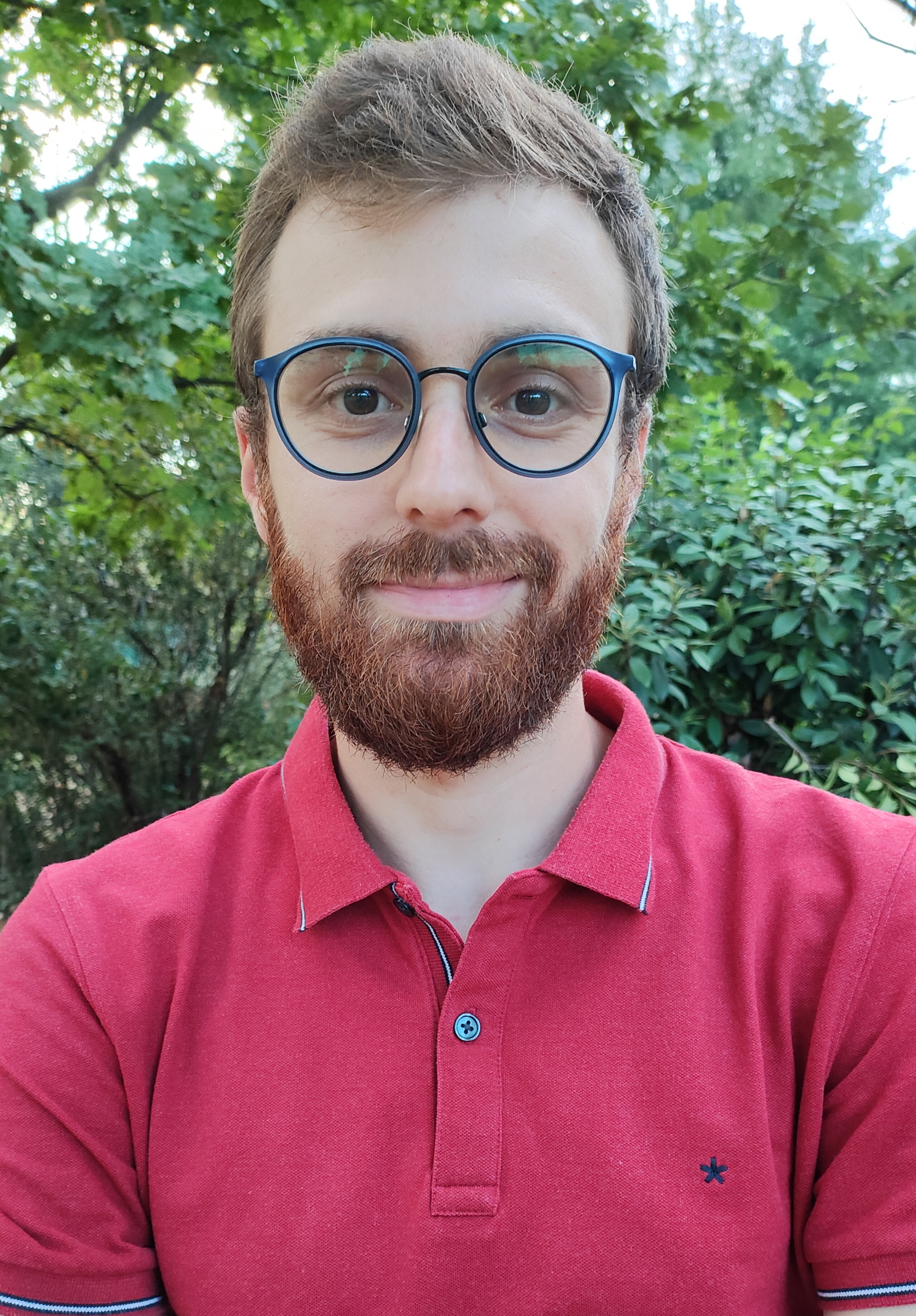
Antonio Cosma is a faculty member at the Department of Business Sciences, University of Bergamo. He holds a Doctorate in Economics and a Master’s in Financial Economics from Université catholique de Louvain. His research focuses on microeconometrics, financial econometrics, and semi/non-parametric statistical methods. Doctorate: Economics, Université catholique de Louvain Master’s: Financial Economics, Université catholique de Louvain His work analyzes conditional moment restrictions, tail dependence in global markets, and wavelet-based estimation techniques. Publications appear in journals like Journal of Financial and Quantitative Analysis and Bernoulli , with a focus on computational finance and statistical modeling for economic data. Recent articles investigate stochastic volatility in American options, stratification effects in econometric inference, and diversification risks in hedge fund markets. He teaches Elementi di Matematica and Strumenti per la Misurazione del Rischio at the University of Bergamo.
Gabriele Salvatore Giarrusso is a PhD candidate and part-time lecturer at the Department of Control and Computer Engineering (DAUIN), Politecnico di Torino. His academic journey includes a BSc in Biomedical Engineering (2021) and an MSc in Mechatronic Engineering (2023), where his thesis focused on REM sleep behavior disorder diagnosis using machine learning. Education: Bachelor's in Biomedical Engineering (Politecnico di Torino, 2021) Master's in Mechatronic Engineering (Politecnico di Torino, 2023) PhD in Computer and Systems Engineering (Politecnico di Torino, 2023–2026) Research: AI-powered infrared spectroscopy for non-invasive vital sign monitoring Diabetes mellitus detection via breath analysis Advanced machine learning in biomedical signal processing Publications Trends: Focus on REM sleep disorder diagnostics Integration of EEG and AI Development of stage-agnostic models Emphasis on portable health monitoring systems Awards: Concetto Arena Memorial Award (2024) for MSc thesis excellence Teaching: Course collaborator in Computer Science and Aerospace Engineering Labs: Member of SMILIES (reSilient computer architectures and LIfE Sciences) research group
Giulia Masi is a Ph.D. candidate in Computer and Systems Engineering at Politecnico di Torino, Department of Control and Computer Science (DAUIN), specializing in data science, computer vision, and AI applications for Parkinson’s disease rehabilitation and remote monitoring. She also serves as an external lecturer and teaching assistant, contributing to Computer Science courses in the Aerospace Engineering program. University: Politecnico di Torino Department: Control and Computer Science (DAUIN) Academic Rank: Lecturer Her research integrates life sciences and technology, focusing on neurodegenerative diseases like Parkinson’s. She employs neurophysiological signals, biosignal processing, and serious games to study emotional and motor symptoms, aiming to reduce clinicians' workload through automation. Giulia’s recent publications highlight trends in RGB-D sensor validation, deep learning for hand tracking, and semi-supervised approaches for Parkinson’s assessment. These works span conferences like IEEE EMBC and journals such as Electronics and Artificial Intelligence in Medicine , emphasizing clinical AI and remote monitoring. She is a member of the SMILIES research group, which focuses on resilient computer architectures and life sciences collaborations. Her educational background includes a Master’s in Biomedical Engineering at Politecnico di Torino (2021), where her thesis automated REM sleep without atonia scoring—a critical task for early Parkinson’s detection. Prior to her Ph.D., she worked as a research fellow in the Neuroscience Department at the University of Turin, analyzing neurophysiological signals for quantitative symptom measurements.
Umberto Mosca is a Ph.D. student in Artificial Intelligence at the Department of Control and Computer Science (DAUIN) of Politecnico di Torino , enrolled in the 40th cycle (2024-2027). He also serves as an External Lecturer and/or Teaching Assistant at DAUIN. Research Interests His research focuses on the intersection of Biomedical Engineering and Artificial Intelligence , particularly on leveraging Machine Learning for medical diagnostics. Key projects include RBD automatic detection through HRV (2024-2026), which uses heart rate variability and electromyography to identify REM Sleep Behaviour Disorder as a precursor to degenerative diseases. He is an inventor of the patented Method for determining RBD sleep conditions for the diagnosis of degenerative diseases , highlighting his work in Health Informatics and Signal Processing . Teaching Course Collaborator for Computer Science (2025/26 Academic Year). Collaborator for Aerospace Engineering courses. Research Groups Member of SMILIES - reSilient computer architectures and LIfE Sciences .
Cristiano Pegoraro Chenet is a researcher affiliated with the Department of Control and Computer Engineering (DAUIN) at Politecnico di Torino. He holds the academic rank of Researcher and contributes to teaching as an external collaborator for the Algorithms and Programming course in the Electronic and Communications Engineering Bachelor’s program. Research Interests : Focused on resilient computer architectures, hardware-based malware detection, and design diversity techniques for fault tolerance. His work intersects machine learning, security, and embedded systems, particularly in cloud computing and RISC-V architectures. Publications : Active in IEEE conferences and journals, with a recent survey in IEEE ACCESS analyzing hardware malware detection methods. His research includes contributions to the Horizon Europe Vitamin-V project and experiments on radiation-hardened mixed-signal systems. Collaborations : Works with the SMILIES research group at DAUIN, engaging in international projects with institutions across Europe.
Marco Rondina is a Lecturer at the Polytechnic University of Turin , specifically within the Department of Control and Computer Science (DAUIN) . He is also a PhD student in Control and Computer Engineering , expected to graduate in 2026. His work bridges Data Ethics , Responsible AI , and Software Engineering . PhD Student: 2022–2025 Guest Researcher: Weizenbaum Institute, TU Berlin (2025) Marco's research focuses on data fairness to promote responsible AI development, addressing algorithmic bias , dataset documentation , and ethical data practices . His publications analyze gender stereotypes in LLMs, fairness in car insurance pricing, and biases in facial analysis systems for marginalized groups like people with Down syndrome. His recent articles emphasize neural-symbolic AI , data quality , and empirical evaluation frameworks for ethical compliance. He has received the Quality Award Template 2025 and actively contributes to teaching as a Teaching Assistant in courses like Business Information Systems and Data Ethics and Data Protection . Scientific Awards Quality Award Template 2025 Marco collaborates with the Internet Media Group (IMG) at DAUIN and participates in initiatives like the Nexa Center for Internet and Society . His outreach includes talks on AI ethics, algorithmic audits, and data discrimination risks.
Luca Dellafiora is an Associate Professor at the Department of Food and Pharmaceutical Sciences, University of Parma, specializing in Food Chemistry (SSD CHIM/07-B). He leads international mobility coordination for the Master's Degree in Human Nutrition Sciences and manages internship programs. His research focuses on hybrid in silico/in vitro approaches to assess chemical risks and benefits in foods, particularly xenobiotics and mycotoxins. Education PhD in Food Science and Technology (2015), University of Parma Master's in Molecular Biology (2011), University of Parma Bachelor's in Biology (2008), University of Parma Research Interests Prof. Dellafiora investigates chemical and chemico-toxicological aspects of food compounds using computational and experimental methods. Key areas include mycotoxin metabolism , bioactive compound interactions , endocrine disruption , and food risk assessment . His work addresses detoxification strategies and masked mycotoxin analysis. Recent publications highlight trends in in silico modeling for toxin-receptor interactions, foodborne pathogen adhesion , and molecular mechanisms of contaminants . Articles span computational toxicology, mycotoxin research, and food safety innovations. Coordinates Telephone: 902073 Office: Science Park Area 17/A, Chemical Building Email: luca.dellafiora@unipr.it
Rodolfo Metulini is a Researcher (RTD-B) in Statistics for Experimental and Technological Research (SECS-S/02) at the Department of Economics, University of Bergamo. He serves as Principal Investigator for the PRIN/PNRR project 'SIGNUM: Study of mobile phone signals for evaluating mobility-environment interconnections in Lombardy'. His career includes postdoctoral positions at the University of Brescia, Scuola Superiore Sant'Anna Pisa, and IMT Lucca. PhD in Statistical Methodology for Scientific Research (2013), University of Bologna Former Researcher at University of Salerno (RTD-A) Metulini's research spans three primary domains: travel flow analysis using gravity models and spatial interaction approaches for international trade studies; sports analytics focusing on player movement dynamics and marginal utility in football/basketball; and urban mobility modeling through mobile phone data with complex seasonality time series models. His methodological innovations combine matrix completion techniques with functional data clustering for environmental-socioeconomic applications. Recent research trends demonstrate cross-sectoral expertise in applying statistical learning to diverse domains: 1) environmental risk assessment using mobile network data for flood exposure forecasting; 2) urban policy analysis through counterfactual modeling of traffic restrictions; and 3) economic modeling for CO2 emissions prediction. His technical approach integrates dynamic harmonic regression with VARX models for mobility forecasting. As thesis advisor for Computer/Mechanical Engineering students, Metulini promotes data-driven approaches in mobility and sports domains. His publications in journals like Annals of Operations Research and Optimization Letters showcase interdisciplinary methodology combining statistical theory with practical applications in environmental risk management and sports performance analysis.
Raffaele Argiento is a Full Professor of Statistics at the Department of Economics, University of Bergamo since September 2021. His academic career focuses on advanced statistical methodologies with applications across various domains including environmental science, public health, and data analysis. His research is prominently featured in high-impact statistical journals and conference proceedings. Argiento's research interests center around Bayesian statistical methods, particularly in functional data analysis, nonparametric Bayesian modeling, and clustering techniques. His work demonstrates expertise in developing innovative statistical approaches for complex data structures, including spatio-temporal data, categorical variables, and high-dimensional datasets. His research has significant applications in environmental monitoring (particularly air pollution analysis), public health (obesity rate modeling), and seismic monitoring through crowdsourced data. His methodological contributions include advancements in mixture models, partition models, and computational algorithms for statistical inference. His recent publication record shows a strong trend toward developing computationally efficient Bayesian methods for real-world applications. The research spans from theoretical developments in nonparametric Bayesian statistics to practical implementations for environmental monitoring, health data analysis, and functional data processing. His work demonstrates a consistent focus on bridging theoretical statistical advancements with practical applications across multiple scientific domains. Professor Argiento teaches several advanced statistical courses at the University of Bergamo, including Applied Statistical Modelling , Probability and Statistics , and Statistical Models for both undergraduate and graduate programs in Economics and Data Analysis. His teaching reflects his research expertise, emphasizing modern statistical methodologies and computational approaches.
Carla Nardelli is an Associate Professor in the Department of Economic Sciences at the University of Bergamo. Her research focuses on mathematical methods of economics, actuarial sciences, and financial risk management, particularly in portfolio optimization and stochastic modeling. Academic Rank: Associate Professor Department: Economic Sciences Email: carla.nardelli@unibg.it Her research spans portfolio theory, risk analysis, and mathematical economics, with a specialization in quantitative finance. She has explored topics like possibilistic mean-variance models, simulated copulas for risk management, and fractional calculus applications in financial laws. Recent publications address comparative studies of portfolio selection methods, risk modeling, and advanced mathematical approaches to economic and financial stability. Her work integrates theoretical and applied frameworks to analyze financial systems and optimize investment strategies.
Radoslaw Niewiadomski is a Researcher at the Department of Computer Science, Bioengineering, Robotics, and Systems Engineering (DIBRIS) within the Polytechnic School of the University of Genoa, Italy. He teaches Affective Computing for the Master's Degree Program in Digital Humanities - Interactive Systems and Digital Media and Fundamentals of Computer Science for the Bachelor's Degree Course in Computer Engineering. His research spans Affective Computing, Human-Computer Interaction, and Social Robotics, with specific focus on nonverbal communication, embodied interaction, sonification techniques, and facial expression recognition. He employs machine learning and computer vision to develop systems that interpret human affect and social behavior in collaborative contexts, often integrating psychology and engineering principles for socially embodied applications. Analysis of his 2024 publications reveals strong interdisciplinary trends bridging robotics, emotion recognition, and human-centered design. Key research threads include social robotics applications for dining companionship and full-body improvisation, technical innovations in unsupervised learning for vitality forms, and dataset development for expression intensity analysis. His work consistently addresses real-world social interaction challenges through multimodal sensing and interactive system design. No scientific awards were mentioned in the provided documentation. No information regarding student advising relationships or research grant funding was provided in the source materials.
Luisa Mich is an Associate Professor in the Department of Industrial Engineering at the University of Trento, Italy, holding this position since 2002 after progressing from Research Fellow (1983-1987) to Researcher (1988-2001). She teaches Enterprise Information Systems, Tourism Information Systems, and Web Strategies across multiple departments including Economics, Humanities, and Mathematics, while pioneering ICT integration at the university since 1989. Education: PhD in Physics, University of Trento (1983), thesis: "Theory and experimentation on interaction in human systems" Scientific High School Diploma, Marcelline Institute, Bolzano (1976) Her research centers on Requirements Engineering innovations including the award-winning 7Loci meta-model for web presence strategy and enhanced creativity techniques surpassing traditional brainstorming. Current work integrates Natural Language Processing with legal document analysis and web reputation monitoring, demonstrating strong interdisciplinary connections between computer science, tourism management, and semantic technologies. Recent publications (2022-2025) reveal a decisive shift toward AI-driven business process development and tourism applications, with semantic technologies bridging legal compliance and requirements engineering. Key trends include agentic AI systems, optimized creativity techniques for requirements elicitation, and ontology-based personalization frameworks – all addressing practical challenges in destination management and customer experience. Scientific Recognition: While lacking major prizes, her expertise is validated through editorial board roles (Journal of Information Technology & Tourism, Journal of e-Learning) and leadership in professional societies including ACM, IEEE, and IFITT. Advising and Grants: Mich has supervised approximately 100 theses across scientific and humanities disciplines, including doctoral programs in Information Technology and Materials Science. Her grant leadership includes the European WEE-NET project (2005-2008) establishing Web Engineering networks and Papyrus (2008-2010) for cultural digital libraries, alongside consultancy for tourism boards like Suedtirol and Visit Trentino. Research Infrastructure: She co-founded Trento's Department of Information and Communication Technology and directed the Computer Science and Organisations program. Her ECDL certification initiative (1998-2010) became Italy's first university-adopted ICT certification, while her "ICT and tourism" research group drives destination management innovations through the Trentino Tourism System.
Michela Tonti is a researcher specializing in French linguistics at the University of Bergamo, with extensive expertise in corpus linguistics, computer-assisted discourse analysis, and legal terminology. Her academic journey includes a PhD in Translation, Interpreting, and Intercultural Studies from the University of Bologna (2019), where she focused on brand names in everyday discourse. Her research interests span multiple interconnected domains including corpus linguistics, computer-assisted discourse analysis, rhetoric and metaphor-based argumentation, referential semantics, commercial onomastics, and terminology studies with particular emphasis on neonymy in European law, accounting, and gender equality. Since 2020, she has expanded her work into neural translation through significant European projects. Tonti's publication record demonstrates consistent evolution from traditional linguistic analysis toward cutting-edge AI applications in language processing. Her recent work (2023-2025) shows increasing focus on the intersection of artificial intelligence and inclusive language practices, particularly examining how systems like ChatGPT handle intralingual translation for gender-inclusive writing and legal terminology standardization across European languages. Winner of the 2019 SUSLLF prize for her monograph 'Le nom de marque dans le discours au quotidien: prisme lexiculturall et linguistique' Recipient of research funding through European and national projects focusing on multilingual AI systems As project coordinator for the Italian and French language groups of the Empowering Multilingual Inclusive Communication (E-MIMIC) initiative, Tonti leads cross-institutional collaboration between the University of Bergamo, University of Bologna, and Polytechnic University of Turin. Her work bridges theoretical linguistics with practical AI applications, particularly in developing expert-annotated datasets for inclusive communication systems. She maintains active research partnerships with multiple Italian universities through the PRIN 2022 project framework.
Antonio Trifiro' is an Associate Professor at the University of Messina, Department of Mathematical and Computer Sciences, Physical Sciences and Earth Sciences, with a specialization in Experimental Physics of Fundamental Interactions and Applications (PHYS-01/A). He has served as Associate Professor since November 1, 2014, and holds multiple leadership roles including Manager of the linear electron accelerator at the University of Messina and Manager of the TECNA Territorio Research Center. His research focuses on experimental nuclear and particle physics, with particular emphasis on heavy ion collisions, accelerator physics, and radiation processing. He leads the Messina group for the ALICE experiment at CERN's LHC and serves on the Users Committee of the Southern National Laboratories (INFN). His work spans fundamental research on particle interactions and applied research in radiation processing technologies. Analysis of his recent publications (2024-2025) reveals a strong focus on heavy ion collision physics at the LHC, particularly through the ALICE experiment. His research examines particle production mechanisms, quark-gluon plasma properties, and detector development. He also maintains significant involvement in educational outreach, particularly through the Extreme Energy Event Project which engages high school students in cosmic ray research. As a scientific leader, Trifiro' manages multiple research initiatives including the FUSION experiment (2023-2025) for Messina and Catania, and previously directed the Linear Electron Accelerator at the University of Messina (2013-2022) and the TECNA Research Center. His laboratory work centers on radiation processing applications and linear electron accelerator technologies. His educational background includes a PhD in Physics (Nuclear Curriculum) from the University of Messina (2000) and a Laurea Cum Laude in Physics from the same institution (1996). He teaches courses in nuclear physics and particle physics, including 'Istituzioni di Fisica Nucleare' and 'Laboratorio di Fisica Nucleare e Particellare'.
Kasim Sinan Yildirim is an Associate Professor in the Department of Information Engineering and Computer Science at the University of Trento, where he conducts research at the intersection of embedded systems, Internet of Things (IoT), and wireless communication technologies. His work focuses on developing innovative hardware and software solutions for resource-constrained and energy-limited environments. His research interests include: Hardware and software design for batteryless and intermittently powered embedded systems Energy harvesting and transient computing Wireless sensor networks and self-organizing networks Backscatter and visible light communication Edge learning and inference Distributed algorithms and real-time computing The absence of published articles in the provided text prevents analysis of publication trends. However, his research direction emphasizes sustainable, low-power computing paradigms essential for next-generation IoT deployments. There are no listed scientific awards in the provided information. Dr. Yildirim advises students and contributes to academic training, though specific advisees are not listed. There is no mention of external grants or funded projects in the provided text. He is involved in research related to advanced embedded and cyber-physical systems, particularly focusing on novel computing models for batteryless devices and sustainable IoT infrastructures.