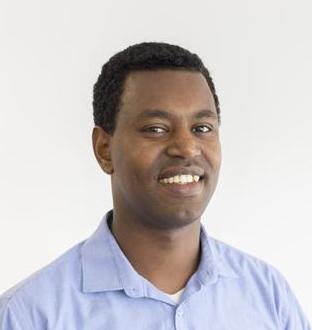
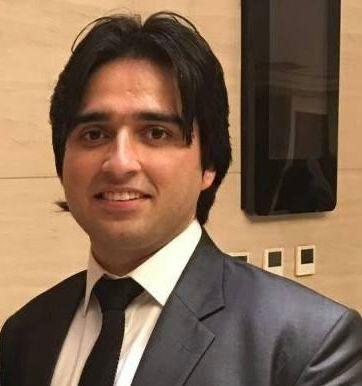
Professor Tomas Ward is a Full Professor in the School of Computing at Dublin City University. His research develops neurotechnology and brain-computer interfaces for healthcare applications, including EEG-based art preference decoding, motor imagery classification, and Long COVID symptom monitoring. Recent work focuses on digital health interventions for clinical trials, athlete pain assessment frameworks, and self-powered wearable sensors. Publications demonstrate expertise in translating neuroengineering concepts into clinical and sports medicine applications.
Professor Mark Roantree leads the Data Engineering & Governance research challenge at Dublin City University's Insight Centre for Data Analytics. With €3.5M+ secured funding and 150+ publications, his multidisciplinary research develops analytical solutions for climate science, agriculture, health, and human performance. He has graduated 23 research students and currently supervises PhDs in graph analytics, climate modeling, and health data systems. Research applications include: Physics-informed neural networks for ecological modeling Sports analytics using wearable sensors Healthcare data integration for chronic diseases FAIR climate data management
Martin Crane is Professor and Head of School at Dublin City University School of Computing. Funded Investigator in ADAPT Centre, with PhD in Mechanical Engineering from Trinity College Dublin. Research spans computational finance, complex systems modeling, and high-performance computing applications. Key research areas: Time series analysis in finance/biology Complex systems in finance, immunology, and lifelogging Wavelet methods for market analysis Parallel computing for large-scale simulations Current projects examine cryptocurrency dynamics, healthcare analytics, and brain tumor segmentation using deep learning. Leads FinTech Fusion initiative exploring financial technology applications. Authored significant works on random matrix theory filters for portfolio optimization and agent-based HIV modeling.
Alessandra Mileo is Associate Professor and Data Science Programme Chair at Dublin City University's Faculty of Engineering and Computing. As a Principal Investigator at the Insight SFI Research Centre for Data Analytics, her research focuses on neurosymbolic AI, explainability, and representation learning. Education includes an M.Sc. and Ph.D. in Computer Science from the University of Milan. Current research investigates methods combining knowledge-driven and data-driven AI approaches to enhance explainability and reduce bias in machine learning systems. Research leadership includes EU projects like CityPulse (IoT stream processing) and industry collaborations on Internet of Everything infrastructures. Teaches data science courses and supervises multiple PhD students.
Dr. Marija Bezbradica serves as Associate Professor and COMBUS Programme Board Chair at Dublin City University's School of Computing. Her research bridges computational finance, educational analytics, and complex systems modeling. Key research areas include financial risk modeling using Bayesian methods, educational data mining for programming courses, and healthcare analytics for infection control. She holds affiliations with ADAPT (FinTech research), ARC-SYM (complex systems modeling), and Lero (software engineering). Recent publications demonstrate cross-disciplinary applications, spanning cryptocurrency market analysis, hospital readmission prediction, and synthetic data generation for medical conditions. Work frequently employs machine learning, graph-based methods, and advanced statistical modeling. No information is available regarding awards, supervised students, or specific laboratory facilities.
Hyowon Lee is Assistant Professor in the School of Computing at Dublin City University's Faculty of Engineering and Computing. He holds a PhD in Computer Science from Dublin City University and specializes in Human-Computer Interaction (HCI), particularly user experience design for novel applications across platforms including multitouch walls, interactive tabletops, and augmented reality systems. His research examines how HCI principles can be adapted for emerging technologies to improve usability and mitigate cognitive overload. Current projects investigate interaction design for AR/VR environments and usability issues in day-to-day applications. Professor Lee has designed over 60 interactive applications with 10 long-term deployments, authoring 160+ peer-reviewed publications including the monograph 'Living Digital 2040'. A Fellow of AdvanceHE (FHEA) with Universal Design for Learning certification, he develops active learning methods for large classes and serves on DCU's Challenge-Based Learning Working Group. His work has received 2,200+ citations (h-index 27) and includes patented interaction techniques for multimedia systems. Honors and Awards: Albert College Fellowship (2002) LIRG Postgraduate Prize runner-up (1997) Soong Sil University Full Scholarship (1990-1995)
Yalemisew M Abgaz is an Assistant Professor at Dublin City University's School of Computing within the Faculty of Engineering and Computing. He coordinates the university-wide Data Literacy and Analytics module and researches semantic web technologies, software engineering, NLP, and computational creativity. His publications demonstrate interdisciplinary approaches, including semantic enrichment of cultural heritage, microservices decomposition, educational technology, and bias in NLP. Recent work examines gender bias in Amharic language models and microcurriculum-as-a-service design. Abgaz leads the ChIA project applying semantic tools to cultural data at the Austrian Academy of Sciences and collaborates with Lero Research Centre on software architecture. He mentors PhD candidates in computer vision applications for cultural heritage and microservice vulnerability analysis.
Dr. Muhammad Salman Pathan is an Assistant Professor in the School of Computing at Dublin City University (DCU), part of the Faculty of Engineering and Computing. His academic journey includes a PhD in Software Engineering from Beijing University of Technology (2019), supported by the China Scholarship Council (CSC) scholarship, and a Marie Sklodowska-Curie COFUND Action fellowship (2020) at University College Dublin (UCD) as a Research Scientist. From 2022 to 2024, he was a Senior Postdoctoral Researcher and Team Lead on the EPA-funded CircAI project at Maynooth University. Education: PhD in Software Engineering, Beijing University of Technology (2019) Marie Curie Fellowship, University College Dublin (2020) Research Interests: Dr. Pathan focuses on AI applications in sustainability, digital health, telecommunications, and IoT security. His work bridges machine learning with real-world challenges, including weather forecasting, circular economy frameworks, and AI-driven solutions for agriculture and environmental protection. He has published over 40 peer-reviewed papers, achieving 600+ citations, and collaborates with industry partners like Irish Manufacturing Research and Circuleire. Publications & Impact: His recent work emphasizes AI’s role in sustainability, including digital twin technologies for circular economies and AI-enhanced agricultural productivity. He has also explored cybersecurity solutions for IoT systems, integrating blockchain and federated learning. Awards & Contributions: China Scholarship Council (CSC) Scholarship Marie Sklodowska-Curie COFUND Action Fellowship Guest Editor for journals like Electronics (MDPI) and Frontiers in Communications Teaching & Mentorship: He contributes to teaching and mentoring students at undergraduate and graduate levels, fostering academic and professional growth. His career also includes roles as a journal reviewer and conference organizer, advancing academic rigor in AI and communications. Labs & Collaborations: Central to his work is the CircAI project at Maynooth University, where he led efforts to apply AI for environmental sustainability. He continues to engage with interdisciplinary teams to address global challenges through innovative technical solutions.
Dr. Annalina Caputo is an Assistant Professor in the School of Computing at Dublin City University and Academic Lead for the part-time MSc in Artificial Intelligence program. Since 2022, she serves as Assistant Head for Research Management. She is a funded investigator in the ADAPT and I-Form research centres, leading the Proactive Experience & Agency challenge. Her research spans Natural Language Processing, Information Retrieval, and Machine Learning, with applications in personalization systems. Dr. Caputo holds a Ph.D. in Computer Science from the University of Bari Aldo Moro, where she researched Semantics and Information Retrieval. She previously held research positions at Trinity College Dublin as an EDGE COFUND Marie Curie Fellow and at the University of Bari. She has participated in numerous evaluation campaigns including CLEF, SemEval, and WSDM Cup. Her current research focuses on Intelligent Information Access, Text Representation, Temporal Dynamics in IR, Personalized Retrieval, Semantic IR, Quantum IR, Cross-Language Retrieval, Question Answering, and Recommender Systems in NLP and Additive Manufacturing contexts. Dr. Caputo serves as Guest Editor for the Special Issue on Knowledge Graphs for Search and Recommendation and is General Co-Chair for ECIR 2023. Her recent publications demonstrate strong focus on transformer-based recommender systems, NLP applications in healthcare/manufacturing, and interactive retrieval systems.
Dr. Mark Humphrys is an Assistant Professor at Dublin City University's School of Computing within the Faculty of Engineering and Computing. He holds a BSc in Mathematics and Computer Science from University College Dublin, a PhD in Computer Science from the University of Cambridge, and completed postdoctoral work at the University of Edinburgh. His research spans Artificial Intelligence, Reinforcement Learning, JavaScript-based educational platforms, and multi-agent systems. His research focuses on: Action selection methods in autonomous agents Reinforcement learning architectures JavaScript-based AI education platforms (Ancient Brain) Multi-author hybrid AI systems Turing Test implementations Urban mobility and transportation modeling Analysis of his recent publications reveals strong emphasis on: Educational technology innovations using JavaScript frameworks Financial market impacts on labor economics Distributed AI system architectures Urban transportation solutions and predictive modeling Human-computer interaction paradigms He has supervised 4 PhD students to completion and maintains the Ancient Brain coding platform hosting over 11,000 user projects. His work has received 686 citations with an h-index of 11. Dr. Humphrys leads several projects including Ancient Brain (JavaScript coding education), World-Wide-Mind (distributed AI research), and maintains research groups exploring multi-agent systems and transportation analytics.
Dr. Lili Zhang is an Assistant Professor in the School of Computing at Dublin City University, specializing in data analytics and computational modelling of human and machine decision-making. She leads research on developing an open-access 3-D gamification platform for Ecological Momentary Neurocognitive Assessment. Her work also explores using cognitive psychology and game theory to understand and steer Large Language Models (LLMs). She completed her PhD in 2023, focusing on smartphone-based ecological momentary assessment for enhancing phenotyping of human decision-making in clinical settings. She holds an MSc in Instrumental Science and Technology from Harbin Institute of Technology in China. Her research spans Computational Modelling, Ecological Momentary Assessment, Human Decision-making, Machine Behaviour analysis, Large Language Models, and Intelligent Computing. Recent publications focus on optimization algorithms, decision-making modeling, and computational psychiatry applications.
Gerard Marks is an Assistant Professor in the School of Computing at Dublin City University's Faculty of Engineering and Computing. Limited additional information is available from provided sources.
Dr. Luca Rossetto serves as Assistant Professor in the School of Computing within Dublin City University's Faculty of Engineering and Computing. His research focuses on advanced multimedia retrieval systems and interactive technologies. Primary research domains include multimedia information retrieval, virtual reality interfaces, and multimodal systems design. Recent work explores human-computer interaction paradigms for video retrieval systems and knowledge representation frameworks for large-scale multimedia datasets. Publications demonstrate consistent focus on retrieval system architecture and evaluation, with emerging emphasis on VR-based interfaces and multimodal learning techniques. Recent papers frequently address efficiency optimization and user-centered design in complex information systems. No awards or supervised students are documented. Laboratory affiliations include the vitrivr multimedia retrieval engine development team.
Renaat Verbruggen is an Assistant Professor at Dublin City University's School of Computing within the Faculty of Engineering and Computing. He specializes in software engineering with research interests spanning software testing methodologies, privacy frameworks, and ethical considerations in computing systems. His academic background includes a B.Comm, Master in Management Science from UCD, and a Master in Applied Information Systems from Katholieke Universiteit Leuven. Verbruggen teaches courses like Professional and Research Practice (CA640), Systems Analysis (CA214), and Software Process Quality (CA650), emphasizing SSADM, UML, and Agile approaches. His industry collaborations include action-research projects with Microsoft, Ericsson, and other multinationals focusing on software metrics, object-oriented testing, and legacy system integration. Through publications examining rapid application development, security testing, and dementia-related assistive technologies, his work bridges academic research and practical industry solutions. Verbruggen maintains active engagement in software engineering communities through lectures and workshops.
Ray Walshe is an Assistant Professor at the School of Computing within Dublin City University's Faculty of Engineering and Computing. His research focuses on standardization frameworks for emerging technologies including Artificial Intelligence, Big Data, IoT, and Cloud Computing. He holds leadership roles in international standards bodies including ISO/IEC JTC1 SC42 (AI), Big Data Value Association, and United Nations standards groups. Dr. Walshe's research examines the circular relationship between innovation, disruption, and standardization across digital domains. Key interests include developing reference architectures for big data systems, ethical AI implementation, and leveraging technology for sustainable development goals. His work connects technical specifications with policy frameworks and global governance. Through projects funded by SFI, EI, EU FP7 and Horizon 2020, he explores applications of cloud infrastructure, data analytics pipelines, and IoT ecosystems. Recent publications demonstrate a strong focus on ICT standardization landscapes, QoE-driven network resource management, and blockchain-enabled decentralized science models. As Digital Leader for the World Economic Forum and expert for multiple international organizations, Dr. Walshe contributes to technology policy development while maintaining active research in biocomputation, bioinformatics, and agent-based simulation systems.