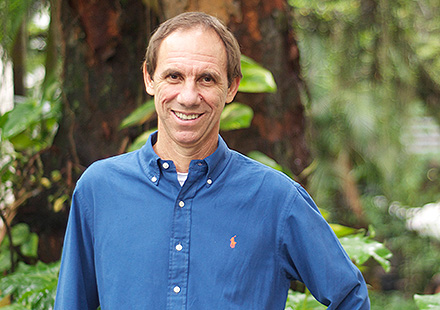
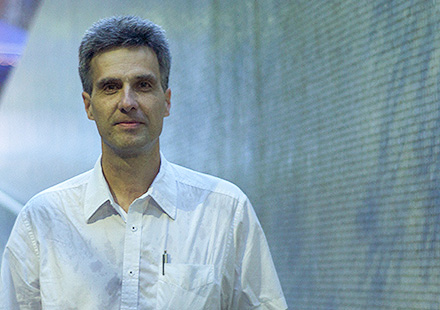
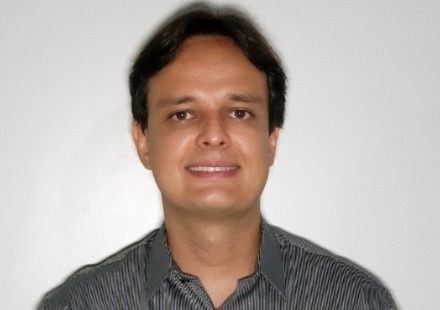
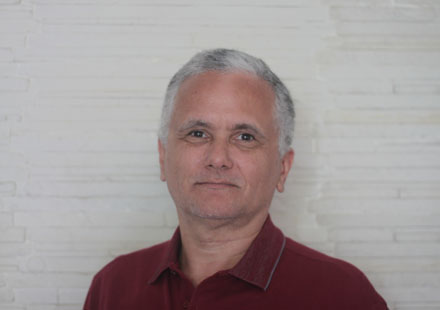
Marcus Poggi is an Associate Professor at the Pontifical Catholic University of Rio de Janeiro (PUC-Rio), specializing in Computer Science with research emphases on Computational Theory, Optimization, and Automatic Reasoning. His work extends to Industrial Automation, Decision Support Systems, Operations Research, and Algorithm Analysis, conducted in collaboration with the Galgos laboratory and ExACTa Greyhounds. Education: PhD in Applied Mathematics (Ecole Polytechnique de Montreal, 1993), Master's in Electrical Engineering (PUC-Rio, 1988), Bachelor's in Electrical Engineering (PUC-Rio, 1983) Grants: CNPq Productivity Grant Level 1C Contact: Room 421 RDC, +55 21 3527-1500 ext. 4339 His research integrates theoretical and applied approaches to solve complex industrial and operational challenges. Academic profiles are available on Google Scholar, DBPL, and ORCID.
Markus Endler is an Associate Professor at the Department of Computer Science, Pontifical Catholic University of Rio de Janeiro (PUC-Rio), and coordinator of the Laboratory for Advanced Collaboration (LAC). He holds a Doctor of Natural Sciences (Dr. rer. nat.) in Computer Science from Technische Universität Berlin (1992), a Master’s in Computer Science from PUC-Rio (1987), and a Bachelor's in Mathematics from PUC-Rio (1984). Education Bachelor's in Mathematics, PUC-Rio (1984) Master’s in Computer Science, PUC-Rio (1987) Doctor of Natural Sciences (Dr. rer. nat.) in Computer Science, TU Berlin (1992) His research focuses on Distributed Systems, with specialization in middleware for Mobile and Pervasive Computing, Adaptive Software, and the Internet of Things. He emphasizes practical software development to support applications in these areas, leading to collaborations with companies like Microsoft Research, Oi, Boeing, and Petrobrás. His work also includes scalable distributed middleware, context awareness, mobile collaboration, and data stream analysis. Scientific awards include the CNPq Productivity Grant Level 2. He founded the LAC laboratory at PUC-Rio in 2002, which fosters student collaboration and long-term software development projects. His career spans academic roles at IME/USP (1994–2000), where he established the Parallel and Distributed Computing Laboratory (LCPD), and PUC-Rio since 2001.
Paulo Ivson Netto Santos is a Professor in the Department of Computer Science at the Pontifical Catholic University of Rio de Janeiro (PUC-Rio) and serves as a project manager at the Tecgraf Institute. His work bridges academic research and industrial application across Oil and Gas, Civil Construction, Manufacturing, and Logistics sectors. Educational background: Bachelor's in Computer Engineering (2006, PUC-Rio) Master's in Computer Science with emphasis on Computer Graphics (2008, PUC-Rio) PhD in Computer Science (2018, PUC-Rio) Research interests span Computer Graphics and Artificial Intelligence , with specialized focus on 3D Visualization, Computational Geometry, and Deep Learning applications. His work integrates Industry 4.0 and Building Information Modeling (BIM) concepts through the Genesis Institute to develop eco-sustainable Digital Twin solutions for construction and asset management. Professional engagements: Tecgraf Institute: Leads R&D&I projects in collaboration with Electrical Engineering, Industrial Engineering, and Civil Engineering departments Genesis Institute: Drives innovation in digital transformation for industrial lifecycle management Active in startup collaborations and cross-departmental initiatives at PUC-Rio
Alexandre Malheiros Meslin is a Tenured Professor at the Computer Science Department of PUC-Rio (Pontifical Catholic University of Rio de Janeiro), with contact email meslin@puc-rio.br . He is affiliated with technological innovation centers and laboratories such as LAC (Laboratory Collaborator Gist LAC) . Research Interests Computer Science Technological Innovation Software Engineering Data Structures Algorithms Computational Systems Laboratories Meslin is associated with the LAC (Laboratory Collaborator Gist LAC) , contributing to technological innovation and research initiatives.
Ana Carolina Letichevsky is a Tenured Professor in the Computer Science Department , focusing on technological innovation and software engineering. While the specific institution name is not explicitly stated, her work connects with research lines in artificial intelligence and computational systems. Role: Tenured Professor Department: Computer Science Research Interests: Technological innovation, software engineering, and artificial intelligence
Anderson Oliveira da Silva serves as a Tenured Associate Professor II and Technical Consultant at the Department of Computer Science (DI) of Pontifical Catholic University of Rio de Janeiro (PUC-Rio). He holds dual administrative roles as the university's Information Security Manager and Personal Data Officer. His academic responsibilities span undergraduate Computer Science programs and postgraduate Latu Sensu specializations in Information Systems and Computer Networks. His educational background includes: Computer Engineering degree (1995) from PUC-Rio Master of Science in Computer Science (1999) from PUC-Rio Doctor of Science in Computer Science (2009) from PUC-Rio Professor da Silva specializes in Information Security, Network Administration, Computer Network Performance Analysis, and IoT Security. His research focuses on practical security implementations across network architectures, with emphasis on wireless networks, TCP/IP infrastructure, and secure application systems. He has developed comprehensive course materials covering cryptography, secure communications, authentication techniques, and network defense strategies through multiple handouts and laboratory exercises. His teaching portfolio includes Information Security, Network Administration and Management, Network Security, TCP/IP Architecture, and Operating Systems across various academic programs. He employs a hands-on approach with detailed laboratory practices covering Java security implementations, certificate authorities, and network protocol configurations. Professor da Silva maintains active research collaborations through two primary laboratories: Telemedia Laboratory with Professor Sérgio Colcher, focusing on Information Security and Network Performance Analysis Laboratory for Advanced Collaboration (LAC) and Great Ideas for Small Things Laboratory (GIST) with Professor Markus Endler, specializing in IoT Security As an academic advisor, he has supervised numerous graduate projects since 2003, guiding students through research on intrusion detection systems, firewall technologies, VPN implementations, wireless security, and network management tools. His professional presence includes a personal website (http://www.inf.puc-rio.br/~anderson/), Lattes CV profile, and LinkedIn profile.
Andrew Diniz da Costa is a Professor and Researcher at the Computer Science Department of Pontifical Catholic University of Rio de Janeiro (PUC-Rio), where he has worked since 2014. He is also a mentor in the Apple Developer Academy | PUC-Rio program and collaborates with the Software Engineering Laboratory (LES). His expertise spans software engineering, education, and innovation. Education: Bachelor's, Master's, Doctorate, and Postdoctoral degrees in Computer Science from PUC-Rio (2002-2013) Technical Schooling at IBPI (1999-2001) Andrew specializes in software architecture, processes, requirements, and quality, with a focus on integrating pedagogical methodologies like Challenge-Based Learning (CBL) into technology education. He leverages Apple technologies to enhance in-person, remote, and hybrid learning experiences, emphasizing practical, motivating iOS development training. Scientific Awards: Apple Distinguished Educator (2023) With over 20 years of software development experience, he has mentored hundreds of iOS developers through the Apple Developer Academy. His work bridges software engineering research and educational innovation, emphasizing collaborative methodologies and real-world applications. Research Affiliation: Software Engineering Laboratory (LES), PUC-Rio
Claudia Ferlin is a Tenured Professor affiliated with the Computer Science Department. Her contact email is claudia.ferlin@gmail.com . Research Interests Her work aligns with core areas in Computer Science , particularly focusing on Technological Innovation and Software Engineering . Details about specific projects or subfields are not explicitly provided in the available data.
Edmundo Bastos Torreão is a Tenured Professor in the Department of Computer Science at Pontifical Catholic University of Rio de Janeiro (PUC-Rio). His research spans multiple areas of Computer Science, with a focus on Algorithms , Artificial Intelligence , Software Engineering , Databases , Computer Networks , and Systems . These interests reflect the diverse research landscape within the department. Details regarding his educational background, scientific awards, student advising activities, research grants, and laboratory affiliations were not included in the provided text.
Edison Pignaton de Freitas is an Associate Professor at the Institute of Informatics of the Federal University of Rio Grande do Sul (UFRGS) since 2014. His research focuses on computer networks, distributed systems, avionics, AI, robotics, and IoT. He holds a PhD from Halmstad University (2011) and has collaborated with institutions like Linköping University and Ruhr Universität Bochum. Previously, he worked at the Brazilian Army (2004–2013) on defense systems and interned at Airbus on the A380 avionics project. Education: Bachelor's in Computer Engineering, Military Institute of Engineering (Brazil, 2003) MSc in Computer Science, UFRGS (Brazil, 2007) PhD in Sensor Networks, Halmstad University (Sweden, 2011) Research interests include tactical edge networks, unmanned platforms, missile navigation, aerospace defense systems, and multi-agent systems. He maintains international collaborations and has experience in specification engineering for avionics systems.
Prof. Luis C. Lamb is a Professor at the Institute of Informatics (Universidade Federal do Rio Grande do Sul, UFRGS), specializing in Foundations of Computer Science and Artificial Intelligence. His research focuses on Neurosymbolic AI, AI Ethics, and Technology Strategy. He holds a DIC and PhD. Research Interests: Integrated Machine Learning & Reasoning, AI Ethics, Social Computing, and Innovation Strategy. Notable work includes Neurosymbolic AI frameworks and studies on collective intelligence in problem-solving. Recent contributions include talks at AAAI, IBM Neuro-Symbolic AI workshops, and the Montreal AI Debate. His work bridges statistical and symbolic AI approaches, emphasizing ethical considerations and hybrid models.
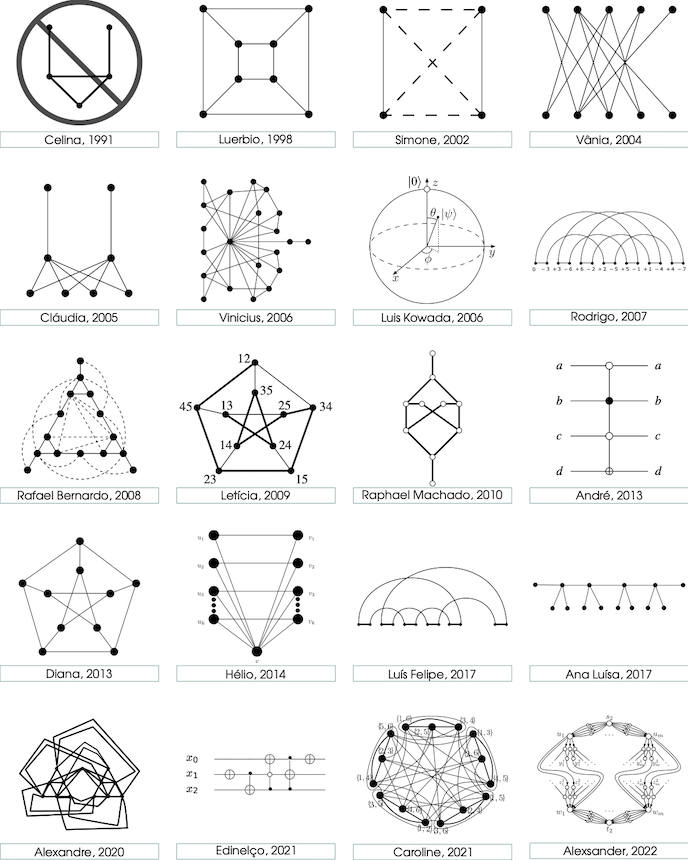
Celina Miraglia Herrera de Figueiredo is a full Professor at the Systems Engineering and Computer Science Program (PESC) of COPPE, the Alberto Luiz Coimbra Institute for Graduate Studies and Research in Engineering at the Federal University of Rio de Janeiro (UFRJ). She holds a PhD in systems and computer engineering from UFRJ and a postdoctoral degree from the University of Waterloo, Canada. She is a CNPq Level 1A Research Fellow and a FAPERJ Cientista do Nosso Estado awardee, and leads the algorithms and combinatorics research group at COPPE/UFRJ. University: Federal University of Rio de Janeiro School: Alberto Luiz Coimbra Institute for Graduate Studies and Research in Engineering Department: Systems Engineering and Computer Science Program Academic Rank: Professor Email: celina@cos.ufrj.br Her research centers on theoretical computer science, with a focus on graph theory, algorithms, computational complexity, and combinatorial optimization. She has made significant contributions to the understanding of graph classes such as perfect graphs and snarks, algorithm design, and computational complexity. Her work is grounded in the Mathematics Subject Classification codes 05-XX (Combinatorics), 68-XX (Computer Science), and 90-XX (Operations Research). The most recent publications indicate a strong trend in analyzing the computational complexity of graph problems (e.g., MaxCut, Steiner Tree, total coloring) on structured graph classes such as interval, permutation, and path graphs. Her work frequently involves proving NP-completeness results, developing parameterized algorithms, and studying graph invariants like pebbling numbers and chromatic numbers. She consistently publishes in high-quality journals such as Discrete Mathematics , Discrete Applied Mathematics , and RAIRO Operations Research . Giulio Massarani Award for Academic Merit (2006) COPPE Fifty Years Award (2013) CNPq Research Fellowship (Level 1A) FAPERJ Cientista do Nosso Estado Member of the Brazilian Academy of Sciences (2023) Celina has advised numerous students, including Raphael Machado, Vinícius de Sá, Alexsander Melo, and Ana Silva, and has secured significant research funding from CNPq and FAPERJ. She is deeply involved in the academic community, serving on the editorial boards of RAIRO Theoretical Informatics and Applications, Bulletin of the Brazilian Mathematical Society, and Matemática Contemporânea. She has also been a key organizer and committee member for major international conferences such as LAGOS, WG, LATIN, and FCT, reflecting her leadership in the fields of algorithms and combinatorics. She coordinates the Center of Excellence in Randomized, Quantum, and Approximative Algorithms and has been a driving force in promoting women in science, serving on the jury of the L'Oréal–UNESCO–ABC Program for Women in Science. Her Erdős number is 2, highlighting her extensive collaborative network in mathematics and computer science.
Edward Hermann Haeusler is an Associate Professor in the Department of Computer Science at Pontifícia Universidade Católica do Rio de Janeiro (PUC-Rio). He has been affiliated with PUC-Rio since 1991, following postdoctoral research at Aarhus University (1994) and Tuebingen University (2003). His research focuses on Proof Theory, Automated Theorem Proving, Category Theory, and their applications in software development and validation. Education: Bachelor of Science in Mathematics, Universidade de Brasília (1983) Master of Science in Computer Science, PUC-Rio (1986) Doctor of Science in Computer Science, PUC-Rio (1990) Research Interests: Structural and computational complexity, formal methods, logical reasoning, and semantics. He co-authored a Portuguese textbook on Category Theory for Computer Science with Paulo Blauth Menezes. Projects: Coordinated major initiatives such as the Semantics via Proof Theory (DAAD-CAPES), Mathematical and Engineering Foundations for Interoperability via Architecture of Software (CNPQ/NSF), and the Formal Methods and Logical Reasoning thematic laboratory (TecMF) at PUC-Rio. Academic Contributions: Supervised over 20 PhD students and participated in events like the Brazilian Logic Conference and UNILOG. Celebrated his 50th birthday with a Festschrift event during LSFA 2012.
Edgardo Brigatti is an Associate Professor at the Institute of Physics, Federal University of Rio de Janeiro, where he conducts research and teaches in the field of Physics of Complex Systems. His email contact is edgardo@if.ufrj.br. Education: PhD in Physics (Brazilian Center for Research in Physics, CBPF) Brigatti specializes in the Physics of Complex Systems , applying theoretical frameworks to biological, social, and economic sciences. His work bridges computational modeling and analytical techniques to address interdisciplinary challenges, such as pattern analysis in social networks, dynamical systems in biological contexts, and agent-based modeling in economic scenarios.
Elis Helena de CP Sinnecker is an Associate Professor at the Institute of Physics , Federal University of Rio de Janeiro ( UFRJ ). Her contact details include the email address elis@if.ufrj.br and phone number +55 (21) 3938-7321. She has been actively contributing to her academic field through teaching and research. Education PhD in Physics (UNICAMP) Research Interests Her research focuses on the Physical Properties of Metals and Alloys and the study of Magnetic Materials and Magnetic Properties . These areas explore the structural, electronic, and magnetic characteristics of materials, with applications in condensed matter physics and materials science. Affiliation As a member of the Institute of Physics, she participates in research, education, and outreach activities, including the Interactive Physics Museum (LADIF) and access to advanced facilities like the Central Computing Lab.