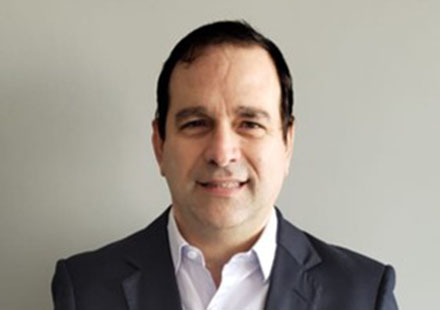
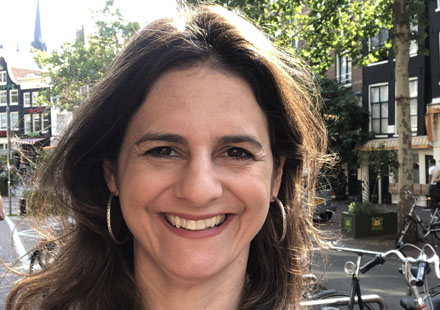
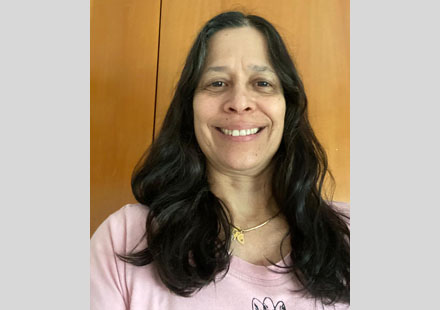
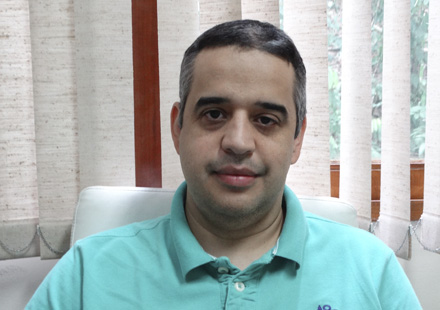
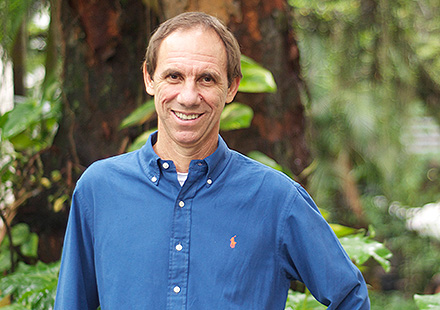
Joísa de Souza Oliveira is a Tenured Professor at the Computer Science Department of Pontifical Catholic University of Rio de Janeiro (PUC-Rio). Her work focuses on foundational areas of computer science including algorithms, data structures, and software engineering. She can be contacted via email at joisa@inf.puc-rio.br.
José Carlos Ramalho Moreira is an Assistant Professor at the Computer Science Department of the Pontifical Catholic University of Rio de Janeiro (PUC-Rio), affiliated with the School of Engineering . His academic role centers on teaching and research within computer science disciplines. Fields of Interest: Computer Science, Software Engineering, Data Structures, Algorithms, Databases, Artificial Intelligence
Luiz Fernando Bessa Seibel is a Tenured Professor in the Computer Science Department at Pontifical Catholic University of Rio de Janeiro (PUC-Rio). His work appears to intersect with academic coordination and teaching within the department, as indicated by his involvement in graduation programs and course-related sections listed in the institutional webpage. Research Focus : While specific research lines are not explicitly detailed, his affiliation with the Computer Science Department suggests expertise in foundational areas of computing, including software engineering, algorithms, data structures, and database systems. Contact : Email: seibel@inf.puc-rio.br
Marcantonio Giuseppe Maria Carlo Fabra is a Tenured Professor in the Department of Computer Science at Fundação Getulio Vargas (FGV), a leading Brazilian university. His work focuses on postgraduate education coordination, technological innovation, and academic mentorship in computer science disciplines. He actively contributes to graduate programs through: Final Project Presentation Schedule organization Postgraduate Defense Presentation Schedule management Graduation coordination Specialization and extension program development Research interests include technological innovation and computer science education. He participates in: Technological Innovation Centers NIT Laboratories Startup incubation initiatives Contact: marcantonio.fabra@fgv.br Visit his academic profile at: Lattes CV Personal Website
Marcos Vianna Villas serves as a Tenured Professor in the Department of Computer Science at the Pontifical Catholic University of Rio de Janeiro (PUC-Rio), a leading institution in Latin American higher education. His primary academic affiliation centers within the Department of Computer Science, where he contributes to undergraduate and postgraduate programs including course instruction, thesis supervision, and research coordination. Contact is maintained through his institutional email villas@puc-rio.br and personal website http://www.inf.puc-rio.br/~villas , with his complete academic record documented in Brazil's national Lattes CV system ( http://lattes.cnpq.br/9212655972228646 ). Professor Villas' research spans critical domains of modern computing, with foundational expertise in Distributed Systems and Networking. His work particularly addresses challenges in Wireless Sensor Networks and Internet of Things architectures, focusing on scalability, energy efficiency, and real-time data processing in resource-constrained environments. These research trajectories reflect significant contributions to developing robust communication protocols and middleware solutions for next-generation distributed applications. Scientific Awards: No specific awards or honors were documented in the provided source material Advising and Research Funding: While active supervision of postgraduate students is implied through departmental roles in thesis defense coordination and postgraduate seminars, no named advisees were listed in the source text Research grant details or funding sources were not specified in the available information Research Infrastructure: Departmental context indicates potential involvement with PUC-Rio's Technological Innovation Centers (NIT) and specialized laboratories, though specific lab affiliations or team memberships were not explicitly stated
Melissa Lemos Cavaliere serves as a Tenured Professor in the Department of Computer Science at the Pontifical Catholic University of Rio de Janeiro (PUC-Rio) and holds a research position at the Tecgraf Institute. Her academic responsibilities include teaching undergraduate courses in Big Data & Streaming Systems and Web Development, with emphasis on practical implementation using technologies such as Cassandra, Kafka, HTML/CSS, JavaScript, Bootstrap, and Meteor. Her research and teaching focus centers on applied computing technologies, particularly real-time data processing, distributed systems, and full-stack web application development. Through project-based courses like Supervised Internship (Estágio Supervisionado), she guides students in building production-ready software solutions using modern frameworks and database systems including MongoDB, emphasizing industry-relevant software engineering practices. Professor Cavaliere actively supervises student projects through the Supervised Internship program where participants develop complete software solutions. Her work with Tecgraf Institute indicates involvement in applied research projects bridging academic theory and industrial implementation, though specific grant details are not documented in available sources. She maintains strong institutional ties with Tecgraf Institute at PUC-Rio, a research center specializing in computer graphics, interactive systems, and software development for both academic and industrial applications, contributing to technological innovation in Brazil's tech ecosystem.
Paula Ypiranga dos Guaranys is a Tenured Professor affiliated with the Computer Science Department at the Pontifical Catholic University of Rio de Janeiro (PUC-Rio). Her work spans core areas of computer science, including software engineering, algorithms, and programming languages. Research Interests : Computer Science fundamentals Software Engineering methodologies Algorithm design and optimization Programming Languages theory Contact : pguaranys@inf.puc-rio.br
Ricardo Nolla Ruiz is a Tenured Professor at the Computer Science Department of Pontifical Catholic University of Rio de Janeiro (PUC-Rio), Brazil. His research focuses broadly on computer science, with emphasis on software engineering, algorithms, and programming languages. He can be reached at nolla@inf.puc-rio.br. Research Interests: span computer science domains including software engineering principles, algorithmic problem-solving, and programming language design.
Vitor Pinheiro de Almeida is a tenured professor at the Department of Informática, Pontifical Catholic University of Rio de Janeiro (PUC-Rio), and a researcher at the Tecgraf Institute. He holds a PhD in Distributed Systems (2021) and a master's in Theory of Computing (2013), both from PUC-Rio, with a doctoral fellowship at the University of Stuttgart's Institute of Parallel and Distributed Systems (IPVS). Education: PhD in Distributed Systems (2021), PUC-Rio Master's in Theory of Computing (2013), PUC-Rio Professional Experience: Researcher at Tecgraf Institute/PUC-Rio Semantic Computing team member at IBM Research Brazil (2013-2015) Automation engineering group at Petrobras (2015-2017) His research spans data science, semantic web, knowledge representation, stream processing, and cloud computing. He has served on the technical committee of IARIA conferences since 2013 and collaborates with the LAC TecMF laboratory.
Alberto Barbosa Raposo is an Associate Professor at the Department of Computer Science, Pontifical Catholic University of Rio de Janeiro (PUC-Rio), and a Project Manager at Tecgraf Institute. His research focuses on Human-Computer Interaction , Computer Graphics , and Virtual/Augmented Reality , applied to serious games, energy/oil industry, medicine, entertainment, and accessibility. Coordinates technical-scientific software development projects at Tecgraf Institute Collaborates with companies like Petrobras, Shell, GE, and Embraer Specializes in Image Processing and Computer Vision for medical applications Education: B.Sc., M.Sc., D.Sc. in Electrical Engineering from State University of Campinas (Unicamp) Scientific Awards: CNPq Level 1D Productivity Grant Laboratory & Industry Applications: Tecgraf Institute for Technical-Scientific Software Development
Bruno Feijó serves as a Full Professor in the Computer Science Department at Pontifical Catholic University of Rio de Janeiro's Center for Technology and Sciences (CTC), where he directs the ICAD/VisionLab laboratory. His pioneering work established Brazil's academic foundation in Games and Digital Entertainment, previously unrecognized in higher education institutions. Feijó co-founded the Brazilian Symposium on Computer Games and Digital Entertainment (SBGames) and the Special Committee on Games within the Brazilian Computer Society. PhD in Computer Science, University of London/Imperial College (1988) Bachelor of Engineering, Instituto Tecnológico de Aeronáutica (ITA) (1975) Feijó's research bridges computer graphics, animation, and interactive media with practical applications in digital television, cinema, and educational technology. His interdisciplinary approach spans from high school vocational training programs to advanced research prototypes, influencing public policy in Brazil's creative industries. Current projects focus on real-time rendering techniques for broadcast media and game-based learning environments. CNPq Level 1D Research Productivity Grant (highest distinction for Brazilian scientists) With over 15 doctoral and 40 master's students mentored, Feijó's academic lineage includes entrepreneurs who secured venture capital for gaming startups. His educational innovations include co-designing Brazil's first vocational high school curriculum in multimedia at NAVE/Oi Futuro. As former editor of Elsevier's Media Technology book series, he shaped international discourse on emerging digital media platforms. The ICAD/VisionLab under his direction develops cutting-edge visualization systems used in television production pipelines and maintains partnerships with broadcast networks for digital cinema research. The laboratory serves as incubator for student projects that have won awards at SIGGRAPH and other premier venues.
Marcelo Gattass is a Full Professor at the Computer Science Department of Pontifical Catholic University of Rio de Janeiro (PUC-Rio) and currently serves as the Vice-Rector for Development Affairs. He has been a professor at PUC-Rio since 1975, initially in the Civil Engineering Department until 1992, and then moved to the Computer Science Department. He is also the Director of the Tecgraf Institute at PUC-Rio since 1987. Education: B.Sc. in Civil Engineering, PUC-Rio, 1975 M.Sc. in Structural Engineering, PUC-Rio, 1977 Ph.D. in Computer Graphics & Civil Engineering, Cornell University USA, 1982 Marcelo Gattass is considered a pioneer of computer graphics in Brazil. His research focuses on Graphics Processing with emphasis on Visualization, Numerical Simulation, Augmented Reality, Geometric Modeling, and Computer Vision. He applies these technologies to projects from his laboratory, assisting professionals in various sectors such as medicine and petroleum engineering. He has dedicated himself to the development of applied computing and plays a key role in PUC-Rio's relationship with Petrobras and the Brazilian energy sector. Scientific Awards: CNPq Level 1A Productivity Grant As Director of the Tecgraf Institute since 1987, Prof. Gattass has led numerous research and development projects. His work has established important connections between academia and industry, particularly with Petrobras and the Brazilian energy sector. He has been instrumental in applying computer graphics and vision technologies to solve real-world problems in medicine and petroleum engineering. Prof. Gattass is actively involved in teaching, currently offering courses such as INF1761 - Computer Graphics, INF 2064/1310 - Computer Vision, INF2608 - Foundations of Computer Graphics, and INF1010 - Advanced Data Structures. His laboratory collaborates with various sectors to apply computer graphics and vision technologies to practical problems.
Marco Serpa Molinaro is an Adjunct Professor at PUC-Rio, affiliated with the Computer Science Department. His expertise lies in Optimization, Automatic Reasoning, and Theory of Computation, with a focus on algorithms under uncertainty and Integer Programming. Marco's educational background includes: Bachelor's Degree in Computer Engineering from PUC-Rio (2005) Master's Degree in Computer Science from PUC-Rio (2008) PhD in Algorithms, Combinatorics, and Optimization from Carnegie Mellon University (2013) His research interests bridge theoretical and applied aspects of computational complexity, including: Optimization algorithms Automated reasoning systems Computational theory foundations Uncertainty modeling in algorithm design Integer programming techniques Marco has been honored with: CNPq Level 2 Productivity Grant FAPERJ Young Scientist of Our State Grant
Marcos Kalinowski is an Associate Professor at the Department of Informatics, Pontifical Catholic University of Rio de Janeiro (PUC-Rio), where he has served as a faculty member since 2017. He is the co-founder and coordinator of the ExACTa PUC-Rio laboratory, General Chair of the International Conference on Software Engineering (ICSE) 2026, and Associate Editor of the Journal of Systems and Software. His academic affiliations also include membership on the steering committees of ICSE and the Ibero-American Conference on Software Engineering (CIbSE), as well as being a Senior Advisor and Lead Appraiser for the Brazilian Software Quality Program (MPS.BR). Dr. Kalinowski earned his Ph.D. and M.Sc. in Software Engineering from COPPE/UFRJ under advisor Guilherme Travassos, and his B.Sc. in Computer Science from UFRJ. His academic career includes previous faculty positions at Fluminense Federal University (UFF) from 2014-2017 and the Federal University of Juiz de Fora (UFJF) from 2012-2014. His research focuses on bridging software engineering and data science, with particular emphasis on developing reliable and maintainable AI/ML systems through rigorous engineering practices. His work addresses critical challenges in requirements engineering for ML-enabled systems, investigating how to effectively specify quality attributes and functional requirements for complex AI applications. His research on software process and product quality emphasizes agile methods adapted to modern data-intensive development contexts. Through experimental software engineering approaches, he validates these methods through empirical studies in both academic and industrial settings. His work has significantly contributed to establishing Software Engineering for Data Science as a distinct discipline, including creating Brazil's first extension course on the subject in 2021. His publication record demonstrates a strong focus on the intersection of software engineering and artificial intelligence, with recent work addressing technical debt in ML systems, requirements engineering for AI, and lean methodologies for industry-academia collaboration. His research shows a clear trajectory toward making AI development more systematic, reliable, and aligned with software engineering best practices, evidenced by his over 160 scientific publications and multiple books including the Jabuti Acadêmico award-finalist 'Engenharia de Software para Ciência de Dados' (2023). Dr. Kalinowski has received numerous prestigious awards including: CNPq Research Productivity Grant (Level 1D, 2024-2028) FAPERJ Scientist of Rio de Janeiro State Distinction (2024) Multiple best paper awards at international conferences including SWQD 2025 and CAIN 2024 Recognition as advisor of multiple award-winning Ph.D. and M.Sc. theses SBES 2024 Advisor of the Best Brazilian Software Engineering Ph.D. Thesis As an academic leader, Dr. Kalinowski has supervised numerous doctoral and master's students, many of whom have received national awards for their research. He has secured significant research funding from Brazilian Research Council (CNPq) and Rio State Agency (FAPERJ), as well as industry collaborations with major organizations including CEPEL, Eletrobras, Galp, Petrobras, and Stone. His laboratory, ExACTa PUC-Rio, has established successful industry partnerships through its Lean R&D approach, creating a robust pipeline between research and practical application. Dr. Kalinowski leads the ExACTa PUC-Rio laboratory which focuses on applying lean R&D methodologies to industry-academia collaboration projects. He also created and coordinates PUC-Rio's specialization courses in Software Engineering and Full Stack Development through CCEC PUC-Rio, demonstrating his commitment to bridging academic research with industry needs. His leadership in bringing ICSE 2026 to Brazil represents a significant milestone for the software engineering community in Latin America.
Marcus Poggi is an Associate Professor at the Pontifical Catholic University of Rio de Janeiro (PUC-Rio), specializing in Computer Science with research emphases on Computational Theory, Optimization, and Automatic Reasoning. His work extends to Industrial Automation, Decision Support Systems, Operations Research, and Algorithm Analysis, conducted in collaboration with the Galgos laboratory and ExACTa Greyhounds. Education: PhD in Applied Mathematics (Ecole Polytechnique de Montreal, 1993), Master's in Electrical Engineering (PUC-Rio, 1988), Bachelor's in Electrical Engineering (PUC-Rio, 1983) Grants: CNPq Productivity Grant Level 1C Contact: Room 421 RDC, +55 21 3527-1500 ext. 4339 His research integrates theoretical and applied approaches to solve complex industrial and operational challenges. Academic profiles are available on Google Scholar, DBPL, and ORCID.