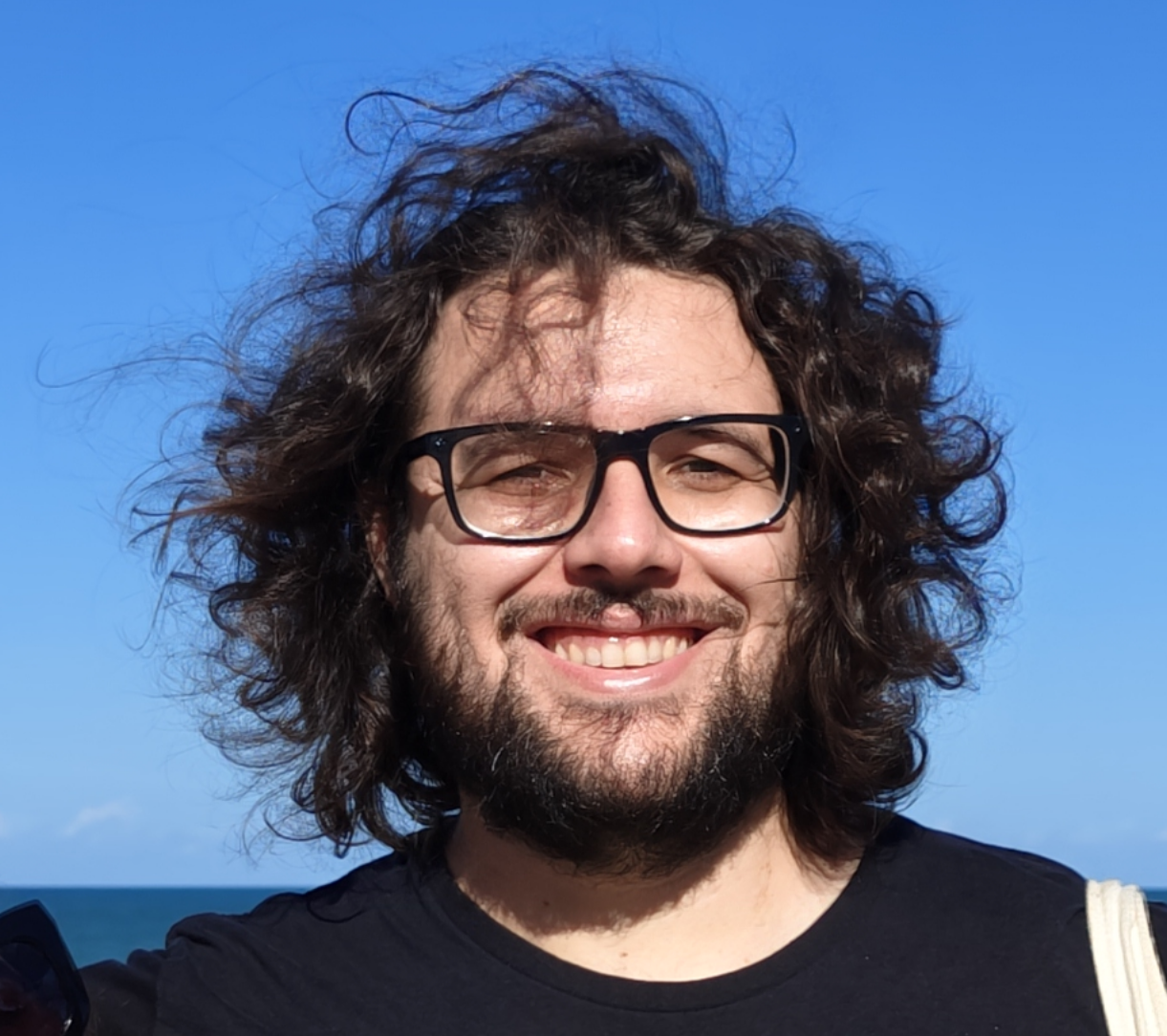
Raul Pierre Renteria serves as a Tenured Professor in the Computer Science Department at Pontifical Catholic University of Rio de Janeiro (PUC-Rio), contributing to academic instruction and departmental initiatives within the university's technical education framework. His research spans foundational and applied domains of computing, with emphasis on: Artificial Intelligence Data Science Software Engineering Algorithms Computer Networks Computer Science Professional correspondence may be directed to renteria@inf.puc-rio.br . No documented scientific awards or honors were specified in the source material. Information regarding graduate student supervision, research funding, or laboratory affiliations remains unavailable in the provided context.
Eduardo Sany Laber is an Associate Professor in the Computer Science Department at Pontifical Catholic University of Rio de Janeiro (PUC-Rio), with over two decades of academic and industrial experience. He completed his undergraduate (1996), master's (1997), and doctorate (1999) at PUC-Rio, focusing on data compression. Since 2001, he has been a faculty member, with visiting roles at Carnegie Mellon University (2001-2002). Education : PhD in Computer Science (1999), PUC-Rio Master in Computer Science (1997), PUC-Rio BSc in Computer Engineering (1996), PUC-Rio His research centers on designing algorithms with theoretical guarantees for problems in data compression , machine learning , and finance , combining optimization, information theory, and industrial applications. His recent work explores connections between k-means and decision trees , alongside information-theoretic clustering . The 15 most recent publications highlight his focus on algorithm efficiency, spanning machine learning , information retrieval , and combinatorial optimization . Notable venues include ICML , ECAI , and ISAAC , with applications in finance , data analysis , and web engineering . Scientific Awards : Gold Medal, Brazilian Math Olympiad (1990) Bronze Medal, International Math Olympiad (1991) First Prize, Brazilian Computer Society PhD Thesis Contest (2000, 2004 co-advisor) Affiliated Member, Brazilian Academy of Sciences (2008) Best Paper Award, ISAAC (2015) Laber supervises PhD and Master's students intensively, including recipients of national awards like the Brazilian Computer Society's First Prize for Marco Molinaro's Master's Dissertation (2009) and Second Prize for Renato Carmo's PhD Thesis (2006) . He is a CNPq Level 1 Researcher and collaborates with the Greyhounds Laboratory .
Juliana Alves Pereira is an Assistant Professor in the Computer Science Department at Pontifical Catholic University of Rio de Janeiro (PUC-Rio), where she supervises master's and doctoral research in Software Engineering. She collaborates with the Software Engineering Laboratory (LES/OPUS) and focuses on Machine Learning applications for software system management, evolution, and maintenance. Education: PhD (summa cum laude) in Software Engineering from Otto-von-Guericke-Universität Magdeburg (2018), Master's in Computer Science from Federal University of Minas Gerais (2015), and Postdoctoral studies at University of Rennes/Inria-IRISA (France) Her research spans Machine Learning, Explainability, Transfer Learning, Generative AI, Deep Learning, Natural Language Processing, and Recommender Systems, particularly in software quality and human-centric contexts. Juliana has received international recognition through awards at conferences like SPLC, ICPE, and CBSoft. Scientific Awards: Dissertationspreis 2018 – Otto-von-Guericke-Universität Magdeburg GI-Dissertationspreis 2018 nomination – German Computer Society ACM Best Paper Awards – SPLC 2021, ICPE 2020 CBSoft Most Influential Paper Award 2022 – Brazilian Computer Society Juliana actively engages in academic leadership through program committee roles at major conferences including ICSE Demo, SANER, MSR, and ICSME. She collaborates with national and international research groups while maintaining memberships in the Brazilian Computer Society (SBC) and LES/OPUS research group.
Roberto Ierusalimschy is a Full Professor at the Computer Science Department (DI) of Pontifical Catholic University of Rio de Janeiro (PUC-Rio). He is renowned as the lead designer of the Lua programming language, widely adopted in applications like Angry Birds, World of Warcraft, Adobe Lightroom, and Wikipedia. His work bridges theoretical foundations with practical implementations in programming languages. Bachelor's, Master's, and Doctorate in Computer Science from PUC-Rio (1982, 1985, 1990) Postdoctoral fellowship at the University of Waterloo (1992) Research Interests: Focus on programming language design, implementation, and optimization, particularly through the development of Lua. His contributions emphasize lightweight, embeddable scripting solutions for diverse industries. Scientific Awards: CNPq Level 2 Productivity Grant Labs & Teams: Coordinates LabLua, a development laboratory dedicated to Lua and related programming languages.
Clarissa Maria de Almeida Barbosa is an Associate Professor at the Pontifical Catholic University of Rio de Janeiro (PUC-Rio) in the Computer Science Department. She holds a Master's and Doctorate in Computer Science from PUC-Rio, specializing in Human-Computer Interaction (HCI) and Semiotic Engineering. With 14 years of industry experience leading IT departments and multidisciplinary projects, she bridges academic research and technological innovation through programs like ExACTa-FIT, which she coordinates. Education: Master's in Management, University of Manchester (UK) Master's and Doctorate in Computer Science, PUC-Rio (HCI/Semiotic Engineering) Her research emphasizes collaborative systems design and semiotic frameworks for HCI. She mentors students in the ExACTa-FIT program, fostering university-industry partnerships with Americanas SA, and teaches the undergraduate INF1403 course on Human-Computer Interaction.
João Luiz Dihl Comba is a Professor at the Institute of Informatics, Universidade Federal do Rio Grande do Sul (UFRGS), Brazil. With a PhD in Computer Science from Stanford University (1993-2000) under advisor Leonidas J. Guibas, he has established himself as a leading researcher in visualization and computer graphics. His academic journey includes a M.Sc. in Systems Engineering and Computing from UFRJ (1988-1991) and a B.Sc. in Computer Science from UFRGS (1983-1987), along with a sabbatical at the University of Utah (2010-2011). Comba's research focuses on data and scientific visualization, visual analytics, computer graphics, and their applications in medical imaging, sports analytics, and pandemic response. His work bridges theoretical advances in multidimensional projections with practical applications in healthcare, oil and gas, and digital twins. Recent publications demonstrate his continued leadership in applying machine learning techniques to visualization problems, particularly in biomedical contexts. His publication record spans over three decades with consistent output through 2025, showing evolution from foundational computer graphics work to contemporary applications of AI in visualization. The publications reveal strong collaborations with researchers across Brazil and internationally, with particular emphasis on solving real-world problems through visual analytics. As an advisor, Comba has mentored numerous graduate students who have become active researchers in visualization and computer graphics, with several continuing to collaborate with him on publications. His research group at UFRGS appears to be particularly strong in medical visualization applications, as evidenced by multiple recent publications related to COVID-19 analysis and medical image processing.
Haniel Barbosa is a tenured Assistant Professor in the Department of Computer Science at Universidade Federal de Minas Gerais (UFMG), Brazil. His research focuses on improving SMT solvers for formal verification and enhancing their trustworthiness through proof certificates, as detailed in his work on projects like Lean-SMT and Carcara. He also serves as a senior technical lead for the state-of-the-art SMT solver cvc5 and actively collaborates with institutions like the University of Iowa, Stanford University, and Inria Nancy. Barbosa's research is supported by grants from the Defense Advanced Research Projects Agency (DARPA), CAPES, and Amazon Web Services. He mentors a diverse team of postdoctoral scholars, PhD students, and MSc students, including Caio Raposo, Tomaz Mascarenhas, Pedro Saccomani, and Bruno Andreotti. His teaching portfolio includes courses like Introduction to Computational Logic, Theory and Practice of SMT Solving, and Formal Methods. His publications span topics such as SMT proof production, proof reconstruction, and syntax-guided synthesis, with a focus on scalable algorithms, higher-order logic extensions, and industrial-strength solver development. Key trends in his work include formal verification, automated reasoning, and the intersection of logic with software engineering. Scientific awards include the Distinguished Tutorial Paper Award at FM 2024 and the Best Tool Paper Award at TACAS 2022 . Barbosa also contributes extensively to academic service as a steering committee member for SBMF, PC chair for LSFA and SBMF conferences, and organizer for SMT-COMP. His outreach includes invited tutorials at ATVA 2024, Dagstuhl Seminars, and workshops on SMT solving.
Marco Tulio Valente is an Associate Professor in the Department of Computer Science at the Federal University of Minas Gerais (UFMG). His research focuses on software engineering and applied systems development. Research Group: Applied Software Engineering Research Group (ASERG) Books Authored: Engenharia de Software Moderna, Software Engineering: A Modern Approach Contact: Av. Antonio Carlos, 6627 - Pampulha, Belo Horizonte, MG, Brazil. Phone: 55-31-3409-5860, Email: mtov@dcc.ufmg.br.
Vitorvani Soares is an Associate Professor in the Department of Mathematical Physics at the Institute of Physics, Federal University of Rio de Janeiro (UFRJ), where he has been a faculty member since 1994. He holds a BSc (1981) and MSc (1984) from UFRJ, and a PhD (1991) from the University of Lausanne, Switzerland, where he also completed postdoctoral research and served as a professor until returning to UFRJ. He coordinates UFRJ's Physics Degree program and is a faculty member of the Master's Program in Physics Teaching. His research focuses on condensed matter physics , including adiabatic nucleation, superconductivity, refractory metals, and phase transitions, with recent extensions to relativistic thermodynamics and cosmological fluids. He maintains active interests in physics education, developing innovative teaching methodologies and experimental demonstrations for thermodynamics, kinematics, and astronomy. Publication trends show dual emphasis: (1) Fundamental condensed matter research on nucleation theory and superconducting junctions (1990s-2011), and (2) Physics education innovations, particularly kinematics paradoxes, thermodynamic experiments, and astronomy pedagogy (2010-present). His educational works frequently employ geometric modeling, low-cost experiments, and historical context to resolve conceptual challenges. He has supervised over 40 students, including 2 PhDs, 8 MSc candidates, and 30+ undergraduate researchers. Major advising themes include experimental thermodynamics (e.g., Boltzmann constant measurement), kinematics paradoxes, astronomy education, and superconductor applications. No awards or dedicated lab spaces are mentioned, though he collaborates on experimental work in superconductivity and material science.
Carlos Eduardo Magalhães de Aguiar is an Associate Professor at the Institute of Physics of the Federal University of Rio de Janeiro . With a PhD in Physics from UFRJ, his work spans both Nuclear Physics and Physics Education . Research interests include: Heavy-ion fusion dynamics and quark-gluon plasma hydrodynamics Innovative teaching methodologies for physics, especially in thermal physics and computational physics Development of inclusive experimental tools for visually impaired students His recent publications focus on nuclear fusion models (2025), dark matter pedagogy (2023), and velocity/acceleration teaching frameworks (2022). Articles show interdisciplinary expertise in Nuclear Physics , Optics , Thermodynamics , and Quantum Mechanics . Students advised include: PhD: Marcos Moura (2023) Master's: Samuel Ximenes (2016), Rodrigo Jordão (2021) Undergraduate researchers: Francisco Laudares (2000), Gustavo Rubini (2003)
Belita Koiller is a Full Professor at the Institute of Physics, Federal University of Rio de Janeiro (UFRJ), where she conducts cutting-edge research in semiconductor physics, nanostructures, quantum computing, and electronic properties of disordered systems. Her work bridges condensed matter physics and quantum information science, contributing to fundamental advancements in next-generation electronic devices and quantum technologies. She earned her PhD in Physics from the University of California at Berkeley, establishing a robust foundation for her theoretical and computational investigations into quantum mechanical phenomena in low-dimensional materials. Prof. Koiller's research focuses on electron behavior in semiconductor nanostructures and disordered media, with emphasis on quantum transport, localization effects, and potential applications in quantum computing architectures. Her methodologies integrate advanced theoretical modeling with computational simulations to unravel complex electronic properties. Her exceptional scientific contributions are recognized through Brazil's most prestigious research honor: CNPq Research Productivity Scholarship Level 1A
Giovani Gracioli is an Assistant Professor at the Department of Knowledge Engineering, College of Technology, Federal University of Santa Catarina (UFSC), Florianópolis. He is also a member of the Graduate Program in Computer Science and the Software/Hardware Integration Lab (LISHA). His research focuses on Embedded Operating Systems Exploiting multicore and reconfigurable architectures Concurrency and inter-processor synchronization Real-time resource management and scheduling Memory management in RTOS His recent publications emphasize embedded systems and real-time operating systems (RTOS), with studies on interrupt tracing and recording, schedulability analysis for resource access protocols, and the adaptation of systems for multicore architectures. These works align with his broader interests in concurrency, parallelism, and efficient resource management in constrained environments. He actively participates in academic events as a program committee member and organizational chair for conferences like ECRTS, RTSS, and SBESC. For research collaboration or advising opportunities, interested students can contact him via email at giovani@lisha.ufsc.br or phone +55 48 3721-2318.
Lucas Mello Schnorr is an Associate Professor at the Institute of Informatics of the Federal University of Rio Grande do Sul (UFRGS), where he teaches parallel computing at the graduate level and compilers/programming language paradigms at the undergraduate level. He conducted postdoctoral research at Inria Grenoble Rhônes-Alpes under Arnaud Legrand's supervision (2016/2017) and was a research scientist at CNRS, France, with the MESCAL team. Education: Ph.D. in Computer Science (2009) from UFRGS and Institut Polytechnique de Grenoble (cotutelle thesis); Bachelor's in Computer Science (2003) from UFSM, Brazil Research Focus: High Performance Computing, Performance Analysis, Energy-Aware Computing, and Parallel Systems He actively participates in academic seminars, program coordination (Graduate Program in Computer Science - PPGC), and international collaborations. His work emphasizes system optimization, reproducibility in research, and cross-disciplinary applications of computational methods.
Marco Molinaro is a Professor in the Computer Science Department at PUC-Rio . He previously held Assistant Professor positions at TU Delft (EWI), Georgia Tech (ISyE, ACO), and was a PhD student in the ACO program at Carnegie Mellon University . Education: PhD in Algorithms, Combinatorics, and Optimization (ACO), Carnegie Mellon University Research Interests: Marco's work lies at the intersection of online algorithms , convex optimization , machine learning , and operations research . His recent publications analyze: Online scheduling and VM allocation in data centers Complexity of branch-and-bound trees Information-theoretic bounds for optimization problems Explainable decision trees and their theoretical limits Stochastic and adversarial bandit algorithms Curvature properties in optimization sets His research often bridges abstract mathematical frameworks (e.g., Lipschitz functions, supermodular norms) with practical applications in cloud computing, machine learning, and game theory. Publication Trends: Marco's recent work focuses on online convex optimization and its extensions to data center resource allocation (Kamino: latency-driven VM scheduling), dynamic bin packing , and information complexity in mixed-integer models. He frequently collaborates with researchers at institutions like Carnegie Mellon University and TU Delft, with recurring co-authors Santanu Dey, Amitabh Basu, and Thomas Kesselheim. Teaching: Marco teaches advanced courses in algorithm design and analysis at PUC-Rio, including: Analise de Algoritmos (2020–2025) Projeto e Analise de Algoritmos (postgraduate, 2020–2025) Algoritmos e Incerteza (postgraduate, 2020) Estruturas Discretas (2021) His curriculum emphasizes online learning , random-order models , and PAC learning , with connections to game theory and practical implementations.
Flavio Heleno Bevilacqua e Silva is a Tenured Professor at the Computer Science Department of Pontifical Catholic University of Rio de Janeiro (PUC-Rio). His research interests span core areas of Computer Science , including Software Engineering , Distributed Systems , Database Management , and Programming Languages . Contact: bevilac@inf.puc-rio.br