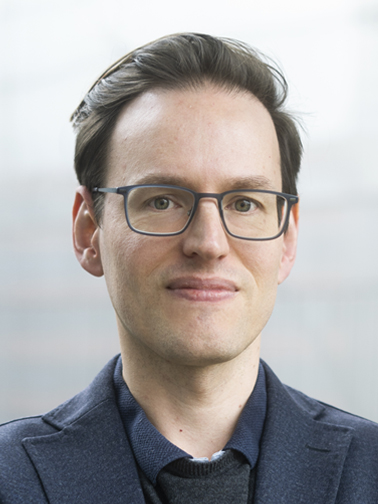
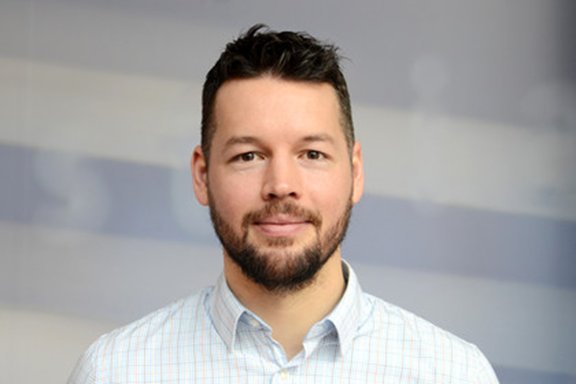
Chao Zhang is an Associate Professor at the Department of Chemistry-Ångström Laboratory, Uppsala University, specializing in computational electrochemistry and multi-scale modeling of electrolyte materials. His research bridges atomistic simulations with machine learning approaches to address challenges in energy storage and conversion systems. Education: Dr. rer. nat. from RWTH Aachen University (2013); Docent from Uppsala University (2020) Appointments: Postdoctoral researcher at the University of Cambridge (prior to joining Uppsala in 2017) His group develops finite-field methods for computational electrochemistry and investigates electrified solid-liquid interfaces. Recent research trends include neural rendering for underwater SLAM systems (2025), robust path-following control in marine robotics, and event-based localization in LiDAR-integrated environments. Scientific Awards: ERC Starting Grant (2020) Junior Research Fellowship, Wolfson College (2015) Jülich Excellence Prize for Young Scientists (2013)
Univ. Prof. Helga Lichtenegger is a distinguished faculty member at the University of Natural Resources and Life Sciences, Vienna (BOKU), where she serves as Head of the Institute of Physics and Materials Science and Vice Chair of the Department of Materials Sciences and Process Engineering since 2013. Her academic journey spans prestigious institutions worldwide, including the University of California Santa Barbara and TU Wien. Her research focuses on the intersection of materials science and biological systems, with particular expertise in nanomaterials, biophysics, and ultrastructure analysis. Using advanced synchrotron radiation techniques, her work bridges the gap between biological phenomena and materials engineering, with applications ranging from biomimetic materials to medical implants. Professor Lichtenegger's publication record reveals a strong emphasis on characterizing biological and biomimetic materials at the nanoscale. Her recent work shows a clear trajectory toward biomedical applications of natural materials, particularly spider silk for nerve regeneration and magnesium-based implants for bone healing. She combines materials physics with biological applications through sophisticated imaging techniques, especially synchrotron-based X-ray methods. Hertha-Firnberg-Fellowship (FWF) 2003 Young Investigator Award, Gordon Research Conference on Biomineralization 2002 Erwin-Schrödinger-Fellowship (FWF) 2001 As head of the Institute of Physics and Materials Science, Professor Lichtenegger leads a research team that collaborates extensively with synchrotron facilities worldwide. Her work integrates experimental materials characterization with computational modeling, focusing on the structure-property relationships in both natural and engineered materials. She maintains active collaborations with medical researchers studying bone-implant interfaces and nerve regeneration.
Tobias Dam serves as an Academic Professional at the Institute of IT Security Research within the Department of Computer Science and Security at St. Pölten University of Applied Sciences. His work focuses on practical cybersecurity challenges with emphasis on open-source software ecosystems, data space security, and web-based threats. Based in the B-Campus-Platz 1 location, he actively contributes to both research and educational initiatives in IT Security. His educational background includes completing HTL St. Pölten's Department of IT/Computer Science program from 2008-2013, followed by a Bachelor's degree in IT Security at St. Pölten University of Applied Sciences from 2013-2016. He gained practical experience in 2015 working on software development, security, and configuration management in the "upribox" project. Since 2016, he has been pursuing a Master's degree in Information Security at the same institution. Dr. Dam's research spans multiple critical areas in modern cybersecurity, with particular expertise in analyzing vulnerabilities in open-source software ecosystems. His work on critical open-source software databases represents significant contributions to understanding the "health status" of important open-source projects. He has also made notable advances in data space security, developing policy patterns for usage control, and conducting extensive analyses of web-based threats including typosquatting, pop-up scams, and cryptojacking. His research uniquely bridges theoretical frameworks with empirical analysis of real-world security issues, often examining how privacy techniques like k-anonymity impact machine learning classifiers and how data deletion affects model integrity. His publication record demonstrates consistent contributions to major cybersecurity conferences and journals, with recent work focusing on dataspace connector implementations, critical open-source software metrics, and vulnerability assessment in open-source packages. His research trajectory shows increasing specialization in the security challenges of modern data ecosystems while maintaining strong connections to practical implementation concerns. Through his video presentations on cloud services versus self-operated programs and secure remote corporate IT access, Dr. Dam actively engages in knowledge transfer to broader technical audiences beyond traditional academic publication channels.
Henri Ruotsalainen is a Researcher at the University of Applied Sciences St. Pölten (FH St. Pölten) , affiliated with the Institute of IT Security Research and the Department of Computer Science and Security . His work focuses on IoT security , wireless network protection , and sensor system resilience , with particular emphasis on LoRaWAN and critical infrastructure security . PhD in Technical Sciences (Dr. Techn.) from Vienna University of Technology (2011–2015) Diploma in Engineering (Dipl.-Ing.) from Helsinki University of Technology (2002–2010) Prior roles as University Assistant (Helsinki, 2007–2008) and Project Assistant (Vienna, 2011–2015) Ruotsalainen's research explores physical layer security for IoT, including radio-based key generation , supply voltage watermarking , and reactive jamming detection . His projects like LoRaKey and Substation Security aim to strengthen wireless communication integrity in industrial environments. Recent publications highlight trends in sensor network security and smart home vulnerabilities , with a focus on metadata differencing and attack countermeasures . Scientific contributions include: 15+ peer-reviewed articles in journals like Sensors and IEEE Transactions Participation in conferences including IEEE ETFA , ARES , and IT-SECX Development of security testbeds for LoRaWAN and critical infrastructure systems
Dr. Markus Tatzgern serves as Professor for Mixed Reality and Game Development and Head of Research at the Department for Creative Technologies, Salzburg University of Applied Sciences. He leads the Digital Realities Lab, a multi-disciplinary research group focused on human-centered solutions at the intersection of software, design, and creative engineering for technology interaction. His academic foundation includes a Master of Science and Doctorate with highest distinction from Graz University of Technology. He furthered his expertise through post-doctoral research at the Christian Doppler Laboratory for Handheld Augmented Reality, recognized as a world-leading facility in mobile AR. Tatzgern's research spans Augmented Reality, Virtual Reality, Mixed Reality, and Human-Computer Interaction with emphasis on practical applications. His work addresses critical challenges in view management, haptic feedback systems, industrial procedure visualization, medical imaging interfaces, and game development. Key contributions include novel techniques for eye-perspective rendering, breathing-based VR interaction, and latency compensation in medical robotics. His publication trajectory reveals evolving focus from foundational AR visualization (2010-2016) toward applied XR solutions in healthcare, industrial training, and user experience optimization (2017-2024). Recent work demonstrates increasing integration of physiological inputs, real-world safety applications, and enterprise-grade XR prototyping. Scientific recognition includes: Honorable Mention for Best Paper at CHI 2022 for 'AirRes Mask' breathing interface Honorable Mention for Best Paper at IEEE 3DUI 2017 for adaptive rendering techniques As Head of Research, Tatzgern actively shapes the field through program committee roles and peer review for top venues including ACM CHI and IEEE VR. His four patents in AR visualization demonstrate translational impact from academic research to practical applications. The Digital Realities Lab operates as an innovation hub where software engineers, designers, and creative technologists collaborate on next-generation interaction paradigms. Current projects emphasize medical XR applications, industrial training systems, and accessibility-focused AR solutions for vulnerable populations.
Mohsen Beheshti is a Professor at the Department of Nuclear Medicine and Endocrinology, Salk Institute. He serves as Head of the clinical sub-unit and has published extensively in nuclear medicine imaging applications for oncology. 2017 Marie Curie Award Nominee 2010 Mallinckrodt Prize recipient Research Interests : PET/CT Imaging in Prostate Cancer (100% clinical focus) Artificial Intelligence in Tumor Imaging Gastrin-Releasing Peptide Receptor Targeted Imaging Molecular Imaging Biomarkers for Cancer Diagnostics (63% pharmaceutical science overlap) Scientific Contributions : Active in PET/CT clinical decision-making (100% accuracy in recurrent cancers) Leadership in 2024 Austrian Thyroid Society symposium Editorial work for Journal of Clinical Medicine
Stefan Haeussler is an Associate Professor at the Department of Information Systems, Production and Logistics Management within the University of Innsbruck , Austria. His academic career spans since 2009, starting as a University assistant while completing his PhD in Management. He holds dual diplomas in Business Administration (2009) and Political Science (2010) from the same university. Specializing in production and logistics management, Häussler combines optimization techniques with machine learning approaches to address complex manufacturing challenges. His research focuses on Workload control systems Order release mechanisms Lead time management Reinforcement learning applications Semiconductor manufacturing optimization Behavioral operations in supply chains Recent publications highlight his work on integrated production planning , explainable AI for powertrain control , and dynamic workload allocation . He actively presents at major conferences like Winter Simulation Conference, EURO, and International Working Seminar on Production Economics. Häussler also teaches master's level courses and supervises thesis work in production economics, while serving as a guest lecturer on topics at the intersection of AI and manufacturing.
Clara Rauchegger is a Senior Assistant Professor of European Union Law and Digital Technology Law at the Department of Legal Theory and Future of Law, Faculty of Law, University of Innsbruck. She joined the university after serving as a Max Weber Postdoctoral Fellow at the European University Institute in Florence for two years. Her educational background includes: PhD from the University of Cambridge (Trinity Hall) Dr. Rauchegger's research focuses on European Union law with particular emphasis on fundamental rights protection and technology regulation. She is currently working on her Habilitation project on the governance of intermediary online platforms in the EU. Her work bridges legal theory with practical applications in digital governance, examining how EU law addresses emerging technological challenges while safeguarding fundamental rights. She approaches these issues from both doctrinal and empirical perspectives, often collaborating with computer scientists and other interdisciplinary experts. Her recent publications reveal a strong focus on the intersection of EU fundamental rights law and digital technology regulation. Key themes include the application of the EU Charter of Fundamental Rights in digital contexts, governance frameworks for online platforms, and the evolving relationship between EU law and national constitutional rights in the digital age. Her work demonstrates a consistent concern with ensuring that technological innovation aligns with constitutional values and fundamental rights protections. Dr. Rauchegger has received numerous prestigious awards: University of Innsbruck France Focus Award Eduard Wallnöfer Award Research Award of the City of Innsbruck Rotary Club Innsbruck Award for outstanding academic achievements University of Cambridge St Edmund's College Award for First Class LLM degree Winner of the Austrian Federal Language Competition in French As an active researcher, Dr. Rauchegger leads the legal component of the DeFiTrace project (FFG KIRAS), investigating data-driven methods for analyzing illegal payment flows in cross-ledger DeFi ecosystems. She participates in the ArtiPro consortium (ERA-PerMed) and serves on the Management Committee of the Global Digital Human Rights Network (COST). Her research has secured funding from multiple sources including the Austrian Science Fund (FWF), Austrian Academy of Sciences (ÖAW), and UK Arts & Humanities Research Council. Dr. Rauchegger is a member of the Digital Science Center at the University of Innsbruck, an interdisciplinary research center examining digital innovation from multiple perspectives. Through this affiliation, she collaborates with computer scientists, social scientists, and other experts to address complex challenges at the intersection of law and technology.
Dr Stephan Dahm is a researcher at the Department of General Psychology I, Faculty of Psychology and Sport Science, University of Innsbruck, Austria. He currently leads two funded projects: an Austrian Academy of Sciences (ÖAW) project on Action representations and automatization after action imagery practice and an Austrian Science Fund (FWF) project on The measurement of action imagery ability . Research interests Mechanisms of motor control underlying imagined and executed movements Motor imagery and assessment of action imagery ability Mental practice and motor learning Intermanual transfer of learning Implicit sequence learning Bimanual coordination Experimental psychology His work explores how cognitive constraints shape motor imagery, how imagery practice can automatize stimulus-response associations, and how sequence knowledge transfers between hands. A central theme is the comparison between imagined and executed actions using behavioural paradigms and chronometric measures. Key publications Across more than 30 peer-reviewed articles (2015-2025), Dahm has advanced understanding of motor imagery timing, effector independence, and the role of internal forward models in detecting errors during imagery. His recent work in Psychological Research and Human Movement Science demonstrates that imagery practice can induce robust learning and transfer effects comparable to physical practice. Funding & projects FWF Project P 36142-B: The measurement of action imagery ability ÖAW Project: Action representations and automatization after action imagery practice Advising & collaboration Dr Dahm welcomes inquiries from master’s students interested in experimental sport psychology or his specific research themes. He maintains active collaboration networks evidenced by international co-authored papers and open-science resources such as OpenSesame implementations. Labs & affiliations He is based in Room 2S14 (2nd floor) at University of Innsbruck, Universitätsstraße 5–7, and can be reached at Stephan.Dahm@uibk.ac.at .
Associate Professor Renata Georgia Raidou is affiliated with the Institute for Visual Computing and Human-Centered Technology at the Vienna University of Technology (Faculty of Computer Science). Originally from Greece, she earned her B.Sc./M.Sc. in Electrical and Computer Engineering from the National Technical University of Athens , followed by an M.Sc. in Biomedical Engineering from Delft University of Technology and a Ph.D. in Medical Visualization from Eindhoven University of Technology (2017). She has held postdoctoral and faculty roles at TU Wien and the University of Groningen. B.Sc./M.Sc.: Electrical and Computer Engineering, National Technical University of Athens (2005–2010) M.Sc.: Biomedical Engineering, Delft University of Technology (2010–2012) Ph.D.: Medical Visualization, Eindhoven University of Technology (2013–2017) Renata’s research bridges Visualization , Visual Analytics , and Machine Learning in medical contexts, particularly focusing on cancer radiotherapy . Her key areas include: Medical Visualization and Visual Analytics for P4 medicine (personalization, predictiveness, preventiveness, patient participation) Uncertainty Visualization in anatomical variability and biological models Ensemble and Comparative Visualization for large patient cohorts Data Physicalization for anatomical education and public engagement She leads the B.Sc. Informatics (Digital Health specialization) and M.Sc. Medical Informatics programs at TU Wien and contributes to international academic communities through editorial roles (e.g., Associate Editor for Computers & Graphics ) and workshop organization. Scientific Awards Dirk Bartz Prize for Visual Computing in Medicine (2017) EuroVis Best PhD Award (2018) EuroVis Young Researcher Award (2022) Best short paper awards at IEEE Vis (2020), EG VCBM (2022, 2023)
Gabriel Parriaux is an Associate Professor at Vaud Teacher Training College (HEP Vaud) in Switzerland, where he serves as Head of the Unit for Media, Digital Uses and Computer Science Teaching (UER MI). His work focuses on establishing computer science as a formal academic discipline within Swiss schools, moving beyond digital tool usage to understanding foundational computational principles. He plays a key role in developing teacher training programs for computer science education across all school levels. With an academic background spanning Oriental languages (Chinese, Sanskrit) and religious studies, Dr. Parriaux transitioned to computer science education through additional training at the University of Lausanne (UNIL) and EPFL. He is currently completing his doctoral thesis titled "Computer science in primary schools and teacher education" under Professor Éric Bruillard at Université Paris Cité's EDA laboratory. His research examines learning obstacles, teacher representations, effective pedagogical strategies, and curriculum development in computer science education. Recent work has particularly focused on educational robotics, textual analysis of teaching resources, and challenges of delivering computer science teacher training remotely during the pandemic. His publications reveal a strong emphasis on primary education contexts and the development of disciplinary computer science knowledge among future teachers. Dr. Parriaux actively contributes to the Swiss computer science education community as Vice-president of the Swiss Society for Informatics in Education (SSIE) and as an organizer of the Didapro colloquium series. His work bridges educational sciences and computer science, addressing the critical need for well-prepared teachers as computer science becomes institutionalized in Swiss compulsory education.
Daniel Green is a Teaching and Research Associate at the Vienna University of Economics and Business (WU), where he has been working since February 2022. His academic credentials include a BA in English and American studies, a teaching degree (Mag.phil.) in English and History from the University of Vienna, and an LL.M from the University of Edinburgh. His research explores the critical intersection of language, law, and business through the lens of applied legal linguistics. Green's scholarly focus centers on judicial discourse across historical and contemporary contexts, with particular attention to how linguistic analysis can address practical challenges in legal settings including police interviewing techniques and courtroom communication dynamics. As founding president of the Austrian Association for Legal Linguistics (AALL), he has established a platform for advancing research on language use in legal environments. Green's publication record reveals a methodologically sophisticated approach combining jurisprudential insights with quantitative and qualitative linguistic analysis. His recent work examines strategic indeterminacy in privacy policies, discourses of discrimination in criminal law, and gender representation in legislative texts, demonstrating consistent scholarly contribution to understanding language's role in legal systems. His academic trajectory includes prior teaching positions at the Centre for Teacher Education and the Department of English at the University of Vienna, along with experience teaching English, history, and law at secondary adult education institutions. Green has also contributed to research seminars on computer-assisted statutory interpretation and completed an internship with Vienna's state prosecution service. Through organizing projects promoting legal literacy, access to justice, and human rights, Green demonstrates commitment to applying academic insights to real-world legal challenges. His PhD project investigating discourses of indeterminacy in Austrian criminal proceedings represents ongoing scholarly contribution to understanding language in legal processes.
Herr Irrenfried Christoph serves as an Associate Professor at the Department of Fluid Mechanics and Heat Transfer within Graz University of Technology. His research focuses on fluid dynamics, heat transfer, and computational modeling, with applications in natural ventilation, aerodynamics, and turbulent flow analysis. University: Graz University of Technology Department: Fluid Mechanics and Heat Transfer Research Trends: His recent publications emphasize wind-driven ventilation systems, centrifugal polymer separation, and turbulence modeling in high Prandtl number flows. Key methodologies include Direct Numerical Simulations (DNS), computational fluid dynamics (CFD), and experimental validation. Scientific Awards: No awards or honors were explicitly mentioned in the provided texts.
Viktor Krutianskii is affiliated with the University of Innsbruck , working in the Department of Experimental Physics . He is part of the research team focused on quantum networking , particularly with trapped ions and photon entanglement over long distances. His work bridges quantum optics and quantum information science. His research spans multiple subfields, including quantum entanglement , telecom-wavelength compatibility , and nonlinear optical effects . Key trends in his publications highlight advancements in ion-photon interfaces , distributed quantum sensing , and noise-resilient quantum communication . He has contributed to developing quantum repeaters and multiqubit network nodes .
Rizwan Bulbul is a researcher at the Institute of Geodesy , Graz University of Technology (TU Graz), Austria. His work bridges geodesy, geographic information systems (GIS), and computational modeling. Research Interests : Bulbul's research focuses on geospatial modeling, artificial intelligence integration, and sustainable urban development. Key areas include smart tourism simulations, energy transition policy analysis, and off-road robotic navigation using machine learning. His work also addresses forest fire prediction uncertainty, vertical photovoltaic potential, and cattle tracking in alpine environments. Publications : His research spans spatial optimization, 3D city modeling, and semantic routing. Recent projects involve leveraging AI for tourism simulations and energy policy evaluation, demonstrating interdisciplinary applications of geospatial technologies. Contact : Email: bulbul@tugraz.at Office: TU Graz, Steyrergasse 30/I, Room ST01122