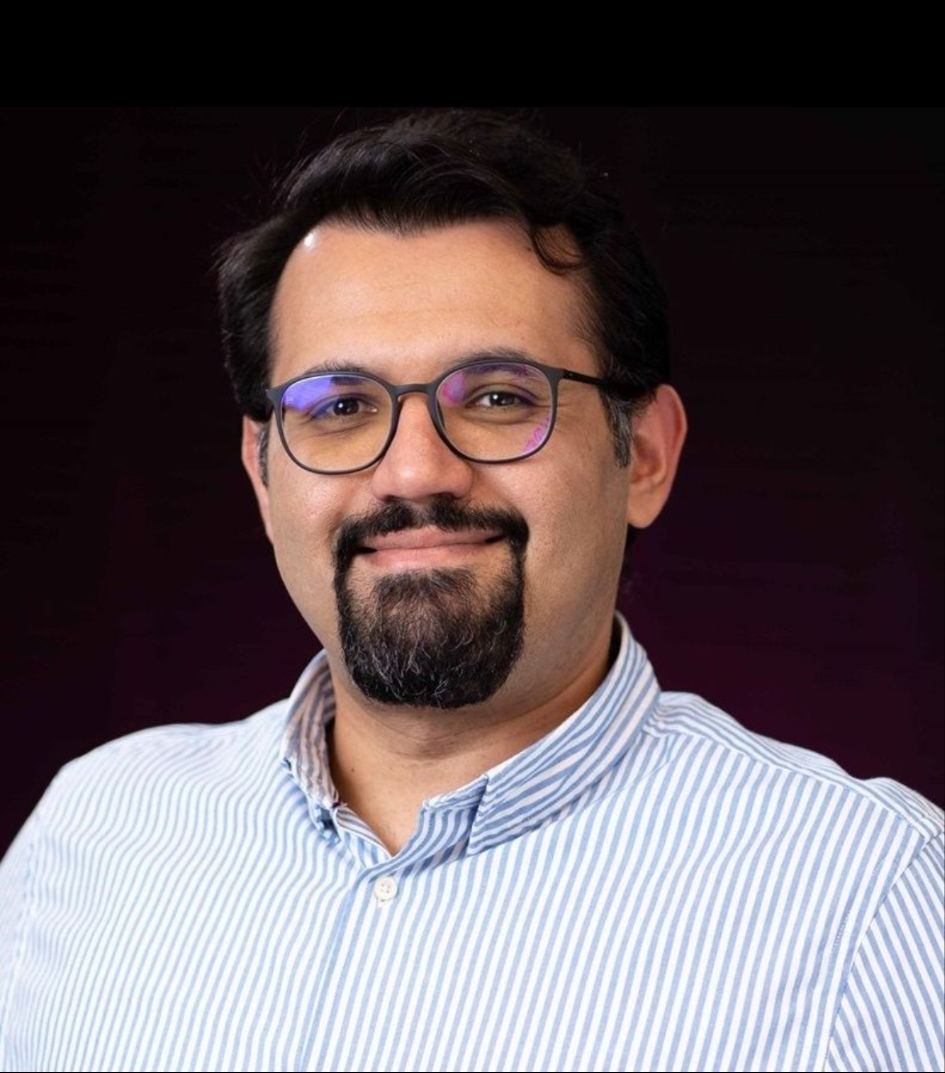
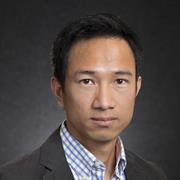
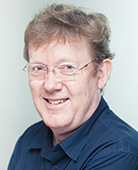
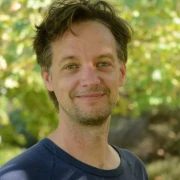
Dr. Ehsan Abbasnejad is an Associate Professor at Monash University's Department of Data Science and Artificial Intelligence, and holds adjunct positions at the Australian Institute for Machine Learning (AIML, University of Adelaide) and the Centre for Augmented Reasoning (CAR). He specializes in foundational AI, focusing on vision-language tasks, adversarial machine learning, and reinforcement learning. His work bridges theory with real-world applications in agriculture, energy, healthcare, and sports. Education: PhD in Computer Science from Australian National University (ANU). Research Interests: Machine Learning Theory and Adversarial Defenses Neural Network Robustness and Generalization Multimodal Learning (Vision-Language) Continual and Transfer Learning Applications in Energy, Healthcare, and Robotics Awards: Finalist for Australian AI Academic/Researcher of the Year (2024) Multidisciplinary competition wins (e.g., OzMineral Explorer Challenge) Advising & Grants: Australian Research Council (ARC) Discovery Project on Reinforcement Learning CSIRO's Next Generation Graduate Fund Accepting PhD students in foundational AI and applications Labs & Teams: Director of Foundational Machine Learning & Reasoning at Monash, leading global teams in AI competitions and industry collaborations (Microsoft Research, NEC Labs America).
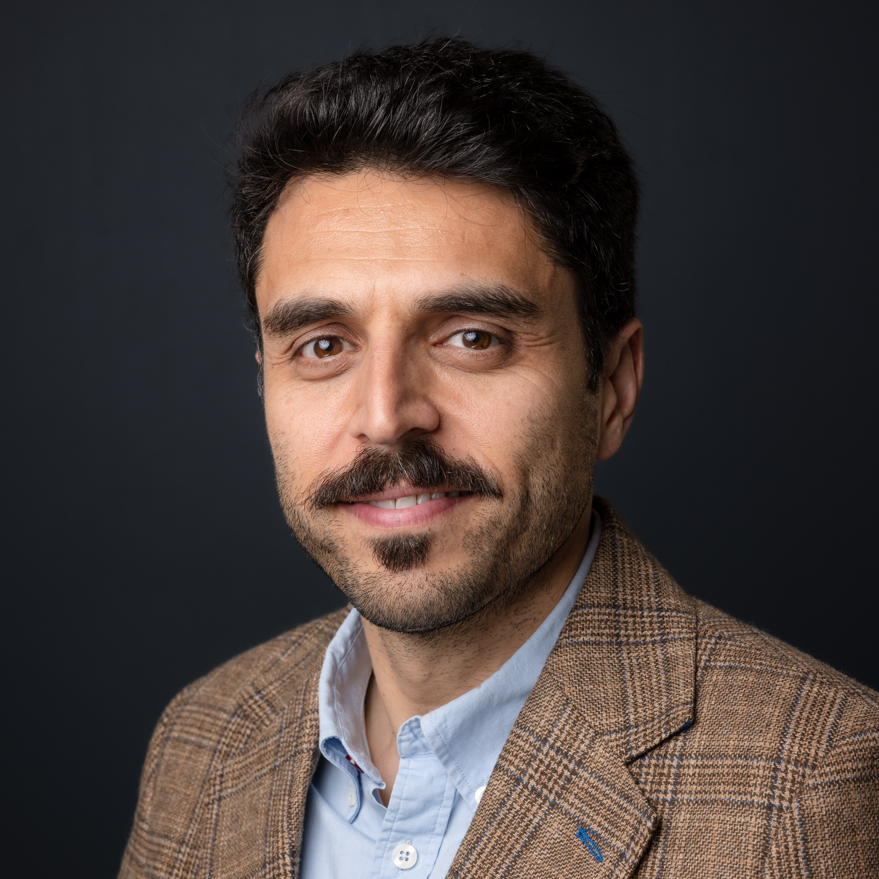
Floyd Mueller is a Full Professor of Future Interfaces in the Department of Human Centred Computing at Monash University, where he also directs the award-winning Exertion Games Lab. His work bridges human-computer interaction, interaction design, and game and play design, with a focus on bodily engagement and physical activity through technology. He has held prior academic and research positions at RMIT University, the University of Melbourne, and CSIRO, and has been affiliated with elite institutions such as Stanford University, MIT Media Lab, and Microsoft Research Asia. PhD in Interaction Design – University of Melbourne (2011) MS in Media Arts and Sciences – Massachusetts Institute of Technology (2002) Diplom-Informatiker (Medieninformatik) – Hochschule Furtwangen (2000) BSc in Multimedia – Griffith University (1999) Floyd Mueller’s research centers on human-computer interaction with a strong emphasis on bodily interactions, exertion interfaces, and playful technologies. His work explores how digital systems can support physical activity, human values, and novel forms of expression through games, wearables, augmented reality, and immersive experiences. He employs methodologies such as design ethnography, autoethnography, and Research Through Design to investigate the phenomenology of human-computer integration. His recent publications (2024–2025) reflect a continued focus on the future of bodily interfaces, including lucid dream mediation, extended reality for fear reduction in water, sonic gastronomy, and shared bodily control in augmented human systems. These works are published in top-tier venues like CHI and Human-Computer Interaction journal, highlighting trends toward immersive, sensory-rich, and human-centered computing that challenge traditional boundaries between body and machine. His scientific awards include being an inaugural honouree of the Australian Design Honours, receiving 9 Best Paper Honorable Mentions and 2 Best Papers at CHI and CHI PLAY, and being recognized as a Fulbright Visiting Scholar and Microsoft Research Asia Fellow. His games have been featured by BBC, ABC, Discovery Science Channel, and New Scientist, and won a Media Star Award. Floyd Mueller actively supervises PhD students through the Exertion Games Lab and Supervisor Connect platform. He has secured major research grants, including Australian Research Council Discovery and Linkage Projects. His current projects include Advancing Australia’s hospitality industry through interactive food and Designing digital aquatic play to foster Australians' engagement with water . He also serves as associate editor for IMWUT and IJHCS, co-founded the CHI PLAY conference series, and was general co-chair for CHI PLAY’18 and CHI’20. He leads the Exertion Games Lab, an interdisciplinary research team focused on inventing the future of bodily play. The lab investigates how technology can support active lifestyles through exertion games, wearables, drones, and immersive environments. The lab’s work spans design, prototyping, user studies, and real-world deployment, often in collaboration with chefs, athletes, and underwater explorers.
Associate Professor Mohsen Kalantari is a Geospatial Engineering academic at the University of New South Wales (UNSW) School of Civil and Environmental Engineering , with concurrent roles as co-founder of the startup Faramoon . His career spans roles at the University of Melbourne's Department of Infrastructure Engineering and Victorian government's land administration initiatives through DELWP. Education : PhD in Geomatics Engineering (2008, University of Melbourne), Master of GIS Engineering (2004), Bachelor of Surveying Engineering (2001) His research bridges geospatial engineering with construction automation , focusing on 3D cadastre , BIM-GIS integration , and smart cities . Recent publications show trends in underground land administration , digital twins , and LADM standard implementations . Scientific Awards : National educational recognition (2019), Victorian educational grants (2018), and prestigious fellowships (2012) As a supervisor , he guides PhD candidates in topics ranging from BIM for waste management to underground cadastral systems . His industry engagement includes partnerships with the United Nations , Open Geospatial Consortium , and Singapore Land Authority .
Dr. Owen Dillon is a Research Fellow in the Discipline of Medical Imaging Sciences at the University of Sydney's Faculty of Medicine and Health. He holds affiliations with the ACRF Image X Institute and the Dodd-Walls Centre for Photonic and Quantum Technologies. His work focuses on advanced imaging techniques for medical applications, particularly computed tomography (CT) and motion compensation in radiation therapy. He completed his PhD in Mathematics at the University of Auckland, specializing in probabilistic compression algorithms for inverse problems. Education: B.Sc. Physics & Applied Mathematics (2013, University of Auckland), First Class Honours in Mathematics (2015), PhD Mathematics (2018). Research interests include inverse problems, Bayesian statistics, CT image reconstruction, and real-time imaging systems. Current projects involve optimizing CT acquisition geometries, motion-compensated 4D imaging, and anatomical motion estimation. His contributions have led to clinical trials reducing radiation dose and scan times. He advises two PhD students and collaborates on grants like the Quantum CT project. Grants: 'Quantum CT for Cancer Diagnosis' (2024), 'Functional Imaging in Lung Cancer' (2024). His work bridges mathematical theory with clinical applications in oncology and interventional radiology.
Professor Khin Than Win is a leading academic in health informatics and digital health at the University of Wollongong (UOW), holding appointments as Professor in the School of Computing and Information Technology, Head of Postgraduate Studies, and Deputy Head (Research). She also serves as Academic Program Director for UOW's Master of Health Informatics and Graduate Certificate in Health Analytics programs. Her research focuses on applying information technology to healthcare, particularly in behavior change support systems, persuasive technology, and ethical AI applications. She has supervised over 20 PhD students and holds leadership roles including Deputy Chair of UOW's Health and Medical Research Ethics Committee, and membership in international committees like the Persuasive Technology Steering Committee. Education: MBBS from Rangoon University, Master's and PhD in IT from Assumption University (Bangkok) and UOW (Australia) Research Interests: Health data analytics, AI in healthcare, privacy/security of health systems Leadership: Program/General Chair roles at ACIS and Persuasive Technology conferences Awards: Best Paper Awards (2023, 2018) Her extensive funding portfolio includes ARC grants and NHMRC projects, totaling over 24 funded initiatives. Current research explores blockchain in medical passports, AI ethics, and culturally tailored health interventions.
Professor Ben Goldys is a distinguished academic at The University of Sydney's School of Mathematics and Statistics, where he conducts research at the intersection of pure mathematics and applied sciences. His work spans multiple disciplines including stochastic analysis, partial differential equations, and financial mathematics, with significant contributions to both theoretical frameworks and practical applications in science and finance. Goldys' research interests center on stochastic (ordinary and partial) differential equations and their applications. His specific focus areas include stochastic partial differential equations, stochastic geometric PDEs, stochastic boundary value problems, stochastic fluid dynamics, ergodic theory of infinite-dimensional diffusions, and applications in financial mathematics such as interest rate derivatives, credit risk, and stochastic volatility. His work bridges pure mathematical theory (Functional Analysis, PDEs, Ergodic Theory) with complex real-world problems across multiple domains. His research aligns with the University of Sydney Faculty of Science Research Strengths including Understanding the Universe, Fundamental Laws of Nature, Complex Systems, and Next Generation Materials. Professor Goldys has secured multiple significant research grants from the Australian Research Council, including recent projects such as 'Mathematics for future magnetic devices' (2024), 'Mathematics for breaking limits of speed and density in magnetic memories' (2019), and 'Novel Approaches for Problems with Uncertainties' (2015). His current research projects focus on geometric stochastic partial differential equations and applications in micromagnetism, mean field games in finance, stochastic boundary value problems, and stochastic Navier-Stokes equations on the rotating sphere. He maintains extensive international collaborations with institutions in Germany (University of Tuebingen), Italy (LUISS University), Poland (Institute of Mathematics Polish Academy of Sciences), and the United Kingdom (University of York), working on projects involving optimal control, stochastic systems with memory, and geometric stochastic PDEs. Goldys is an active member of the Applied Mathematics Research Group and The University of Sydney Nano Institute, contributing to interdisciplinary research initiatives that connect mathematical theory with cutting-edge technological applications.
Professor Amin Abbosh is a faculty member at the School of Electrical Engineering and Computer Science, University of Queensland. His research focuses on Medical Microwave Imaging and Millimeter-wave Engineering, with contributions to advanced imaging systems, antenna design, and communication technologies. He leads projects in electromagnetic medical sensing, including portable brain scanners and wearable diagnostic systems. His work integrates applied electromagnetics with AI-driven algorithms, addressing challenges in stroke detection, liver health monitoring, and deep vein thrombosis diagnosis. With over 16 patents and collaborations across biomedical and engineering domains, his research bridges clinical needs with cutting-edge electromagnetic techniques. Key projects include the development of low-cost healthcare monitoring systems and reconfigurable antennas for satellite communications. Research interests span medical imaging systems, antenna array design, and signal processing for healthcare applications. His team innovates in areas like phased arrays, dielectric property analysis, and non-invasive diagnostics. Recent advancements include synthetic microwave focusing techniques and self-supervised deep learning models for clutter removal in imaging. Publications highlight contributions in IEEE journals and conferences, emphasizing clinical applications and device prototyping. Collaborations with institutions like the University of Queensland’s medical faculty and industry partners ensure practical implementation of his research.
Dist. Professor Rachel Caruso is a Professor at RMIT University's School of Science, specializing in nanomaterials, energy storage systems, and photocatalysis. Her research focuses on advancing materials science through innovations in titanium-based nanomaterials, perovskite solar cells, and sustainable hydrogen production. She is actively involved in research supervision, offering guidance on topics like carbon capture, electrochemical CO₂ reduction, and antimicrobial surface engineering. Her work integrates machine learning for material discovery and emphasizes interdisciplinary applications in environmental and biomedical fields. Research Interests: Macromolecular Chemistry, Nanotechnology, Energy Materials, Photocatalysis, and Biomedical Applications. Supervision Projects: Includes pioneering studies on direct air capture of CO₂, graphene-based photocatalytic films, and perovskite materials for biomedical uses. Professor Caruso collaborates extensively on projects addressing global challenges such as renewable energy and antimicrobial resistance. Her contributions span over 200 publications, with notable advancements in titanium suboxide synthesis and electrocatalyst design.
Professor Chunsheng Lu is a faculty member at Curtin University's School of Civil and Mechanical Engineering within the Faculty of Science and Engineering. He currently holds the position of Professor and serves as Editor-in-Chief of Mechanical Engineering Advances . His research focuses on fracture mechanics, multi-scale modeling, energy materials, nonlinear dynamics, and natural disaster risk analysis. Lu is actively involved in HDR (Masters/PhD) supervision, offering projects on advanced materials modeling and simulations. His research interests include mechanics of energy materials, multi-scale modeling, and fracture statistics. He has contributed to over 200 publications, with recent work emphasizing piezoelectric semiconductors, nanomaterials, and energy storage systems. Lu's teaching spans materials engineering, solid mechanics, and numerical methods.
Dr. Nhiem Tran is a Senior Lecturer in the Department of Applied Chemistry and Environmental Science at RMIT University's School of Science, part of the STEM College. He joined RMIT in 2015 as a Vice Chancellor's Research Fellow after completing his PhD in Physics at Brown University (USA, 2012) and postdoctoral research at Rhode Island Hospital (USA), CSIRO, and the Australian Synchrotron. His research focuses on developing biomaterials for drug delivery, gene therapy, and medical implants, particularly lipid nanoparticles and 3D-printed metallic implants. He leads the Biomaterial Interfaces group, investigating self-assembled lipid nanoparticles for cancer and autoimmune disease treatments. His work has resulted in over 65 high-impact publications and numerous awards, including the RMIT Vice Chancellor's Research Fellowship and the Stein/Bellet Foundation Fellowship. Tran's funding comes from grants such as the ARC Discovery Project, mRNA Victoria, and the CASS Foundation. His research interests span nanomedicine, biomedical engineering, and materials science, with a focus on applications in drug delivery, bacterial infection control, and orthopaedic implants. Education: PhD in Physics (Brown University, 2012) Key Projects: 3D-printed diamond-titanium implants, lipid nanoparticle drug carriers, and antimicrobial coatings. He actively supervises postgraduate research in areas like nanomaterials for drug delivery and biomedical applications.
Associate Professor Oliver Diessel is a faculty member at the University of New South Wales (UNSW) within the School of Computer Science and Engineering. He has been actively teaching and conducting research at UNSW since at least 2000, with teaching experience spanning various computer architecture and digital systems courses. Dr. Diessel completed his education at the University of Newcastle, Australia, earning a B.E. (Computer, Hons) and B.Math. in 1991, followed by a PhD in 1998. His academic career has focused on reconfigurable computing systems and computer architecture. His primary research interests center around the design, test, and implementation of digital systems in reconfigurable logic devices called Field-Programmable Gate Arrays (FPGAs). Specifically, he focuses on dynamically reconfigurable digital systems where circuits can be modified while the system is operational. His work aims to develop architectures, design methods, and tools that enhance the benefits and reduce the costs of reconfigurable systems. Current research projects include fault-tolerant FPGA-based systems for space applications and fine-grained accelerators for heterogeneous devices. Dr. Diessel has published extensively with 2 books, 1 book chapter, 16 journal articles, 67 conference papers, 1 edited conference proceedings, and 7 conference presentations to his credit. His publications reflect a strong emphasis on reconfigurable technology, computer architecture, and electronic design automation. As a supervisor, Dr. Diessel currently mentors two MPhil students: Tong Wu working on Runtime reconfiguration and Junning Fan working on Fault-tolerance of FPGA-based applications. He has previously supervised six students to completion. His supervision interests include reconfigurable technology and systems, electronic design automation, and computer architecture. Dr. Diessel is an active member of the professional community, serving on the Editorial Board of ACM Transactions on Reconfigurable Technology and Systems and as an IEEE Member. He has taught numerous courses including Configurable Systems (COMP4601), Computer Architecture (COMP3211, COMP4211), Digital Systems (COMP3222), and FPGA Implementation of Digital Systems using Verilog.
Professor Hala Zreiqat AM is a leading biomedical engineer at The University of Sydney , serving as the Director of the ARC Training Centre for Innovative BioEngineering . A Fellow of all major Australian academies (AAS, ATSE, FAHMS, FRSN), she develops 3D printed bioceramics for bone regeneration while championing diversity through initiatives like the IDEAL Society and BIOTech Futures mentorship program. Her work bridges academia, clinical practice, and industry in musculoskeletal research . Research Focus: Her lab creates synthetic bone scaffolds that mimic natural bone architecture, strength, and porosity, enabling non-rejected bone regeneration via patient-matched implants. Key applications include orthopaedic, dental, and maxillofacial repair , with over $18M in competitive funding and multiple patents. Current projects explore AI-driven scaffold performance prediction and anti-senescence strategies for aging-related bone loss. Scientific Trends: Recent publications highlight 3D printed nanovoxelated ceramics , antisenescence biomaterials , and multifunctional theranostic platforms . Her team integrates machine learning for scaffold design, atom probe tomography for interface analysis, and two-photon imaging for cellular monitoring in 3D environments. 2021-2022 Fulbright Senior Scholar 2018 NSW Premier's Woman of the Year 2019 Eureka Prize for Innovative Use of Technology Fellow of Australian Academy of Science (2021) Over $18M in research funding Teaching & Leadership: She designed core courses like Tissue Engineering and Nanomaterials in Medicine , mentoring 158 students in 2020 alone. As Chair of CAAR (2020-2023), she strengthens Australia-Arab collaborations. Her lab trains early-career researchers , with alumni now in academia and industry.
Dr. Robin Laycock is a Senior Lecturer in the Department of Health and Biomedical Sciences at RMIT University. He leads the Social and Cognitive Neuroscience (SoCoNeuro) Lab, focusing on behavioral and neural mechanisms of social perception in neurotypical and neurodivergent populations, including autism spectrum disorders and the neurocognitive effects of concussion. His research integrates methodologies such as eye-tracking, EEG, and fNIRS to study visual perception, face processing, and the impact of stress/anxiety on cognition. Dr. Laycock holds a PhD from La Trobe University, where he investigated visual processing pathways. His work also includes the BabyFace study, exploring social perception in pre-term infants using fNIRS. He is affiliated with RMIT’s Healthy Foundations Research Group and supervises research projects on topics like concussion neurocognition and social media’s neurobiological effects. Research interests span visual neuroscience, social neuroscience, and clinical applications of neuroimaging. He teaches undergraduate courses in Biological Psychology and supervises postgraduate research in vision science, neuropsychology, and affective neuroscience. His lab’s recent studies examine sex differences in sports-related concussion neuroimaging and the role of deepfakes in emotion perception research. He actively collaborates on projects addressing autism traits, stress effects on visual processing, and neuroimaging advancements.
Scientia Professor Robert Kohn is a distinguished academic at the University of New South Wales, holding a position in the School of Economics within the UNSW Business School. With a career spanning several decades, Professor Kohn has established himself as a leading expert in statistical methodology and econometric modeling. His research has significantly contributed to Bayesian statistics and computational methods for complex data analysis. Professor Kohn's research focuses on advanced statistical methodologies including Bayesian methodology, variable selection and model averaging, nonparametric regression models, time series modeling, multivariate Gaussian and non-Gaussian regression, and Markov chain Monte Carlo simulation algorithms. His work bridges theoretical statistics with practical applications across economics, finance, and cognitive science. His research demonstrates a consistent trajectory toward developing more efficient computational methods for complex statistical models, with recent work emphasizing variational Bayesian methods, particle filtering techniques, and applications to time series analysis. Analysis of his recent publications (2022-2025) reveals a strong focus on advancing computational statistical methods, particularly in Bayesian inference for complex models. His work shows increasing integration of machine learning techniques with traditional statistical methods, especially in handling high-dimensional data and complex time series structures. Professor Kohn has made significant contributions to variational inference methods, particle-based computational techniques, and applications to financial time series and cognitive modeling. Professor Kohn has maintained an exceptionally productive research career with continuous publication output since the 1970s, demonstrating remarkable longevity and adaptability in his research focus as statistical methodologies have evolved. His work shows strong international collaboration, particularly with researchers in Australia, the United States, and Europe, reflecting his standing in the global statistical community.
Susan Hansen is an Honorary Senior Lecturer at the School of Computing, The Australian National University (ANU), and serves as the Human Centred Design Practice Lead in Information Technology Services at ANU. Her work focuses on designing inclusive digital experiences, aligning with ANU’s Digital Master Plan. She has extensive experience in human-centred design, spanning roles at CSIRO, consulting agencies, start-ups, and universities across Asia, South Africa, and Australia. Education: Bachelor of Science (Psychology), University of New South Wales Bachelor of Social Science and Policy (Honours 1), University of New South Wales PhD in Interaction Design, University of Technology Sydney Research Interests: Susan advocates for culturally tailored approaches to design, emphasizing engagement with diverse communities. Her expertise spans user-centered design methodologies, cross-cultural design practices, and the intersection of technology and social policy. Awards/Grants: No awards or grants explicitly listed in the provided text. Advising & Labs: No advising details or lab affiliations mentioned.