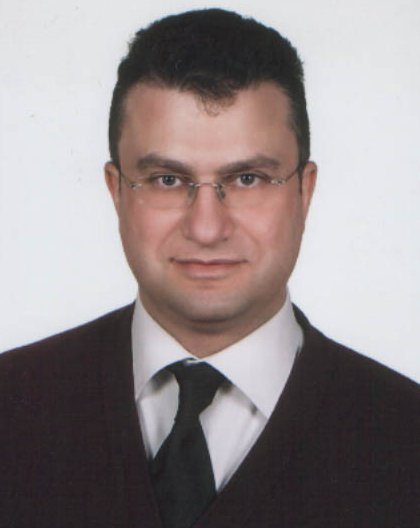
Prof. Dr. Hüseyin Yapıcı is a faculty member in the Department of Mechanical Engineering at Başkent University . His research focuses on Nuclear Energy Systems , Accelerator Technology , and Thermodynamics . Nuclear Reactor Design Energy Systems Optimization Heat Transfer Analysis His work involves numerical simulations , neutronic analysis , and nuclear waste transmutation . Recent publications highlight three-dimensional power density modeling in accelerator-driven systems and tritium production studies. Prof. Yapıcı has supervised numerous students, including Gizem Bakır , Alper Buğra Arslan , and Büşra Durmaz , across diverse projects from fusion-fission hybrids to renewable energy systems .
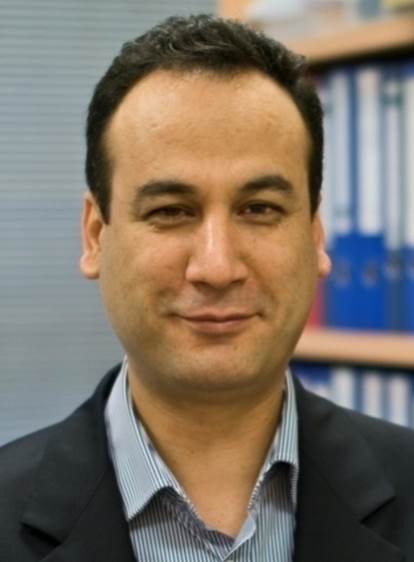
Assoc. Prof. Dr. Osman Kaan Erol is affiliated with Istanbul Technical University , where he serves in the Department of Control and Automation Engineering . His primary research focuses on optimization algorithms and their applications in engineering systems. Doctorate in Control and Computer Engineering Teaching and research at Istanbul Technical University since 2003 Industry experience at BEKO Electronics (2000-2003) and ABC CEDETAŞ (1995-2000) Research Interests include: Big Bang-Big Crunch optimization algorithm Differential Evolution methods Heuristic and metaheuristic approaches Applications in structural engineering, control systems, and transportation Search space reduction techniques Hybrid algorithm design Publication Trends show a consistent focus on optimization algorithms ( Big Bang-Big Crunch , Differential Evolution ), with applications spanning airport operations , structural design , and preventive control . His work emphasizes algorithm hybridization and convergence improvements. Project Leadership includes: Industrial data collection systems AI-assisted service systems for concrete plants Hydrophore control systems under ERP regulations Electrically heated underwear design
Professor Serdar Özoğuz is a full faculty member at the Department of Electronics and Communication Engineering , Istanbul Technical University . Holding a Ph.D. from ITU (2000) and a M.Sc. from ITU (1993) , he has taught courses like Active Network Synthesis , Basics of Electrical Circuits , and Scientific Research Ethics since 2014. His research focuses on Active RC filters Nonlinear electronic circuits Analog integrated circuit design Network synthesis . His recent publications emphasize machine learning applications in RF/microwave design , quantum computing for CAD tools , and emerging memory devices . The department's Devreler ve Sistemler Laboratuvarı Çok Geniş Ölçekli Tümdevre (VLSI) Tasarımı Laboratuvarı likely support his work. Despite no explicit awards listed, his 15+ recent articles in high-impact journals underscore his technical contributions.
Caner Ünlü is an Associate Professor in the Department of Chemistry at Istanbul Technical University with 39 publications and 10 active research projects through 2025. His work focuses on quantum dot synthesis, photophysical characterization, and applications in environmental sensing and renewable energy systems. Research interests center on carbon dots, chalcogenide quantum dots, and their interactions with biological systems. Key areas include tunable emission design, photosynthetic enhancement for algae biomass production, eco-friendly ATP sensing, and micropollutant removal. His methodology integrates experimental synthesis with computational modeling and machine learning for nanomaterial optimization. Recent publications (2024-2025) demonstrate strong thematic coherence in quantum dot engineering for specific functionalities: dopant-driven metal ion sensing, defect state manipulation in chalcogenides, and spectral modulation of photosynthetic complexes. This work bridges nanomaterials science with biotechnology and environmental engineering. Scientific awards: None mentioned in source material. Ünlü has supervised 14 research students and secured multiple grants including TÜBİTAK funding for quantum dot applications in solar cells and environmental remediation. Current projects involve quantum dot integration with metal-organic frameworks and development of fuel-marking nanomaterials. While specific lab names are unreported, his collaborative projects indicate active participation in interdisciplinary teams advancing quantum dot technology for energy and environmental solutions.
Dr. Emre Sefer is an Associate Professor at the Faculty of Engineering, Özyeğin University, specializing in machine learning and bioinformatics. He holds a Ph.D. in Computational Biology from Carnegie Mellon University (2015), an M.S. in Computer Science from University of Maryland College Park (2011), and a B.S. in Computer Engineering from Boğaziçi University (2008). His research bridges graph machine learning with financial networks, bioinformatics, and data engineering. Ph.D.: Computational Biology, Carnegie Mellon University M.S.: Computer Science, University of Maryland College Park B.S.: Computer Engineering, Boğaziçi University Research focuses on applying machine learning to financial and biological networks: Bioinformatics : 3D genome modeling, protein modifications, transcriptomic analysis Graph Machine Learning : GNNs for fraud detection, drug response prediction, and network evolution Financial Networks : Cryptocurrency investment strategies, asset price prediction His lab (OzU Machine Learning in Finance and Bioinformatics Lab) develops graph-based deep learning methods for cross-domain applications, including NFT market analysis and chromatin structure prediction. He received the Best research paper award at Recomb 2016 for work on 3D genome architecture. Former postdoc at CMU Machine Learning Department Industry experience as Quantitative Strategist at Goldman Sachs and JPMorgan
Mustafa Ünel is a Professor and Program Coordinator for Mechatronics Engineering at Sabanci University's Faculty of Engineering and Natural Sciences. He directs the Control, Vision and Robotics Research Lab and serves as a Senior Researcher at SU-IMC. His research spans robotics, computer vision, and machine learning applications in industrial systems. He earned a PhD in Electrical Engineering from Brown University and has held academic positions at Gebze Institute of Technology and Yale University. Current research projects include autonomous vehicle navigation, system health prediction, and aerospace manufacturing technologies funded by TUBITAK and Ford Otosan. He has supervised over 50 graduate theses and teaches courses including Autonomous Mobile Robotics, Nonlinear Control, and Computer Vision. His industrial collaborations focus on AI applications in automotive systems and construction automation.
Professor Vakur B. Erturk is a distinguished faculty member in the Department of Electrical and Electronics Engineering at Bilkent University's Faculty of Engineering. With a PhD from The Ohio-State University (2000), his academic journey spans over two decades of impactful research and teaching. His research focuses on advanced computational electromagnetics, specializing in closed-form Green's function representations, conformal antenna design, structural health monitoring systems, and metamaterial applications. His work bridges theoretical electromagnetics with practical engineering solutions, particularly in wireless sensing and high-frequency electromagnetic analysis. Professor Erturk's publication record demonstrates consistent innovation, with recent work emphasizing efficient computational methods like the multilevel fast multipole algorithm (MLFMA) for multiscale electromagnetic problems. His research shows strong continuity in antenna theory while expanding into metamaterial-inspired sensors and structural monitoring systems. Best master thesis award (1996) He actively mentors graduate students, with over 30 PhD and MSc graduates who have contributed significantly to fields including computational electromagnetics, antenna design, and wireless sensor development. His research group maintains strong collaborations with institutions like Middle East Technical University and researchers in metamaterials and structural health monitoring. Professor Erturk teaches core courses including Microwave Engineering, Antenna Engineering, and Computational Methods in Electromagnetics, shaping the next generation of electrical engineers through rigorous theoretical and practical instruction.
Prof. Dr. Mehmet Reşit Tolun is a full-time Professor in the Department of Software Engineering at Çankaya University (Turkey) since 2022. Previously held full-time professor positions at Konya Food and Agriculture University (2020-2022), Aksaray University (2013-2017), and TED University (2011-2013), along with a part-time professorship at Başkent University (2017-2020). Specializes in Artificial Intelligence , Machine Learning , and Data Mining , with a focus on deep learning applications in aerospace, biomedical data analysis, and software process improvement. PhD in Computer Science (University of Kent, 1985) MSc in Computer Science (University of Kent, 1982) BSc in Physics and Computer Science (University of Kent, 1981) Research Interests span deep learning frameworks, hybrid expert systems, software engineering methodologies, and biomedical signal processing. Publications emphasize practical implementations in medical diagnostics, robotics, and agricultural pest detection. Scientific Awards include the IEEE Third Millenium Medal (2000). Supervised over 55 graduate students, including Burak Çetin, Uğur Özotuk, and Mahinur Doğan. Collaborated with researchers from Orta Doğu Teknik Üniversitesi , Çankaya University , and Aksaray University .
Assoc. Prof. Dr. Ali Şükrü Özbay currently serves as an Associate Professor at Karadeniz Technical University's Faculty of Arts, Department of English Language and Literature. He earned his PhD and MA in Applied Linguistics from Karadeniz Technical University and holds a BA in English Language and Literature from Ankara University. Education : PhD (2015) and MA (2004) from Karadeniz Technical University; BA (1996) from Ankara University Dr. Özbay's research focuses on Corpus Linguistics , Learner Corpora , Academic Writing , Translation Studies , and Language Pedagogy . His work investigates lexical bundles, support verb constructions, and pragmatic markers through computational corpus analysis. Recent publications analyze four-word recurrent expressions in educational technology contexts, collocational priming in Turkish EFL learners' mental lexicon, and semantic prosody of intensifiers in academic corpora. He supervises theses on data-driven learning applications and corpus-based teaching materials. Dr. Özbay has held managerial roles including Deputy Head of Department (2019–present) and Assistant Coordinator for Erasmus+ programs (2017–2021). He actively participates in international conferences and has published in journals like Turkish Studies , Australian Journal of Applied Linguistics , and Hacettepe Eğitim Dergisi .
Assoc. Prof. Dr. Ayhan Gün is an Associate Professor in the Department of Electrical and Electronics Engineering at Kütahya Dumlupınar University's Faculty of Engineering. With a career spanning over two decades, he has held various academic positions including Research Assistant, Assistant Professor, and currently Associate Professor since 2024. His extensive administrative experience includes serving as Head of the Control and Command Systems Department (2007-2021) and various leadership roles in university-industry collaboration initiatives. Dr. Gün completed his Bachelor's degree at Near East University (1991-1996), Master's at Dumlupınar University (1998-2001), and PhD at Eskişehir Osmangazi University (2001-2007). His research focuses on control systems, mathematical modeling, artificial neural networks, robotics, SCADA, PLC programming, electromechanical systems, nonlinear control, fuzzy logic, optimization techniques, automation, biomechanics, and mechatronics. His recent publications demonstrate a consistent research trajectory in control engineering, with particular emphasis on optimization algorithms applied to quadrotor control, inverted pendulum systems, and electrical motor design. His work bridges theoretical control concepts with practical implementations in robotics and power systems. A significant portion of his research involves applying swarm intelligence and evolutionary algorithms to solve complex control problems. Bilim, Sanayi ve Teknoloji Bakanlığı Kurumsal Kapasitenin Arttırılması (2016) BİLİM SANAYİ VE TEKNOLOJİ BAKANLIĞI Çift Beslemeli İndüksiyon Generatörü Tasarımı ve İmalatı (2016) Dr. Gün has supervised multiple graduate students and managed numerous research projects, including the current 'Robotic Arm Design and Implementation for Patients with Hemiparetic Arms' project. His external roles include serving as an expert witness for judicial institutions, project referee for TÜBİTAK, and publication reviewer for IEEE Transactions. He has also contributed to regional development through his work with Kütahya Governorship's Planning and Development Board.
Dr. Veysel Gümüş is an Associate Professor at Harran University's Faculty of Engineering, Department of Civil Engineering, where he has been since 2014. His research focuses on turbulence modeling, computational fluid dynamics, hydrological drought analysis, and time-series trend analysis. Licence (2003), Master's (2006), and Doctorate (2014) in Civil Engineering from Harran and Çukurova Universities. His research interests span hydrological drought , computational fluid dynamics , climate trend analysis , and GIS applications in hydrology . His recent work emphasizes drought risk assessment, wind speed trends, and fluid flow simulations using AI techniques. Publications since 2023 highlight his expertise in Mann-Kendall tests , copula-based drought analysis , and CMIP6 climate projections across Turkey and Morocco. He has supervised over 15 graduate theses and served as an editor/hakem for 10+ journals, including ASCE and Theoretical and Applied Climatology.
Dr. Nebahat Aral is a Lecturer in the Department of Materials Science and Nanotechnology Engineering at Yeditepe University's Faculty of Engineering. Her research focuses on Textile Science and Engineering, Nanotechnology, and Radiation Shielding Materials. She has contributed to advancements in coated fabrics for X-ray protection, nanofiber development, and sustainable composites. Education: PhD (2016) in Textile Engineering, Istanbul Technical University - Thesis: Design of an Alternative Textile Material to Lead Aprons Master's (2009) in Textile Engineering, Istanbul Technical University - Thesis: Investigation of Performance Properties of Composites Made from Textile Waste BSc (2006) in Textile Engineering, Uludağ University Research Trends: Recent publications highlight her work on essential oil-infused coaxial nanofibers, biodegradable food packaging films, and ionizing radiation protection using bismuth oxide and pomegranate peel powder. Her studies bridge Textile Engineering with Nanotechnology and Environmental Sustainability. Grants and Projects: She has secured funding through TÜBİTAK projects (1004, 3501, 2219) and institutional grants, focusing on radiation shielding, biodegradable composites, and medical textiles. Leadership: Dr. Aral has served as Deputy Head of Department at Yeditepe University and Program Coordinator at Istanbul Kavram Vocational School and Istanbul Gelisim University. Patents: Co-inventor of a patent for X-ray shielding textile materials with nano-powder with Istanbul Technical University.
Ozgur S. Oguz is an Assistant Professor at Bilkent University , Faculty of Computer Engineering, and the lead of the Learning for Intelligent Robotic Agents (LiRA) Lab . His research focuses on enhancing autonomous agents' capabilities in learning, reasoning, and planning, particularly for robotics applications. Education : PhD in Computer Science from TU Munich , studies at University of British Columbia (UBC) and Koç University , postdoctoral work at University of Stuttgart and Max Planck Institute for Intelligent Systems . His research explores algorithms for autonomous decision-making, with emphasis on deep learning , reinforcement learning , and robotics . Recent work includes diffusion-based reinforcement learning , hindsight experience prioritization , and hybrid manipulation planning , often addressing challenges in sequential task execution and tactile-based control. Key trends in his publications revolve around robotic manipulation , motion planning , and human-robot interaction . He has contributed to conferences like NeurIPS , ICRA , IROS , and journals such as IEEE TRO and Scientific Reports .
Ergin Tönük serves as an Associate Professor in the Mechanical Engineering Department at Middle East Technical University (METU) in Ankara, Turkey. With a career deeply rooted at METU where he earned all his degrees, he maintains an active research profile with office B-319 and contact details tonuk@metu.edu.tr and +90 312 210 5293. His academic credentials include: Bachelor's Degree (B.Sc.) from METU, 1990 Master's Degree (M.Sc.) from METU, 1992 Ph.D. from METU, 1998 Professor Tönük's research spans Pneumatic Tires, Finite Element Analysis, Mechanism Synthesis, Soft Tissue Biomechanics, and Railway Vehicles. His biomechanics work focuses on computational modeling of biological systems including joint mechanics, tissue behavior, and medical device development. Tire and railway research leverages his mechanical engineering expertise for transportation applications, while his mechanism design studies address complex kinematic problems. Analysis of his 2016-2025 publications reveals a strong biomedical trajectory with emphasis on orthopedic applications. Key themes include hand/knee joint modeling, tissue engineering scaffolds, gait/posture analysis systems, and viscoelastic material characterization. His methodological signature combines finite element analysis with experimental validation, particularly in soft tissue mechanics and surgical simulation. While specific advising records and grant details aren't provided, his 70+ publications indicate substantial graduate mentorship and research funding acquisition. His work aligns with biomechanics and computational mechanics groups within METU's Mechanical Engineering Department, though dedicated laboratory facilities aren't specified in available sources.
Sinan Yıldırım is a Researcher in the Faculty of Engineering and Natural Sciences at Sabancı University, Turkey. His primary research focuses on Bayesian Statistics, Monte Carlo methods, and data privacy, with interdisciplinary applications in machine learning and signal processing. He holds a BSc and MSc in Electrical and Electronics Engineering from Boğaziçi University, followed by a PhD in Mathematical Statistics from the University of Cambridge. Postdoctoral research (2013-2015) at the University of Bristol’s School of Mathematics involved the EPSRC-funded project 'Intractable Likelihood: New Challenges from Modern Applications (i-like).' His work bridges theoretical statistics with practical problems in privacy, control systems, and energy optimization. Research interests emphasize Bayesian methodologies for privacy-preserving data analysis, dynamic modeling of complex systems, and stochastic optimization algorithms. Recent publications explore differential privacy in machine learning, Monte Carlo techniques for high-dimensional inference, and applications of Bayesian methods in robotics and energy systems. Advising and grants include contributions to multi-party resource sharing frameworks and privacy-aware algorithms. His work integrates computational methods with real-world challenges in engineering and policy modeling.