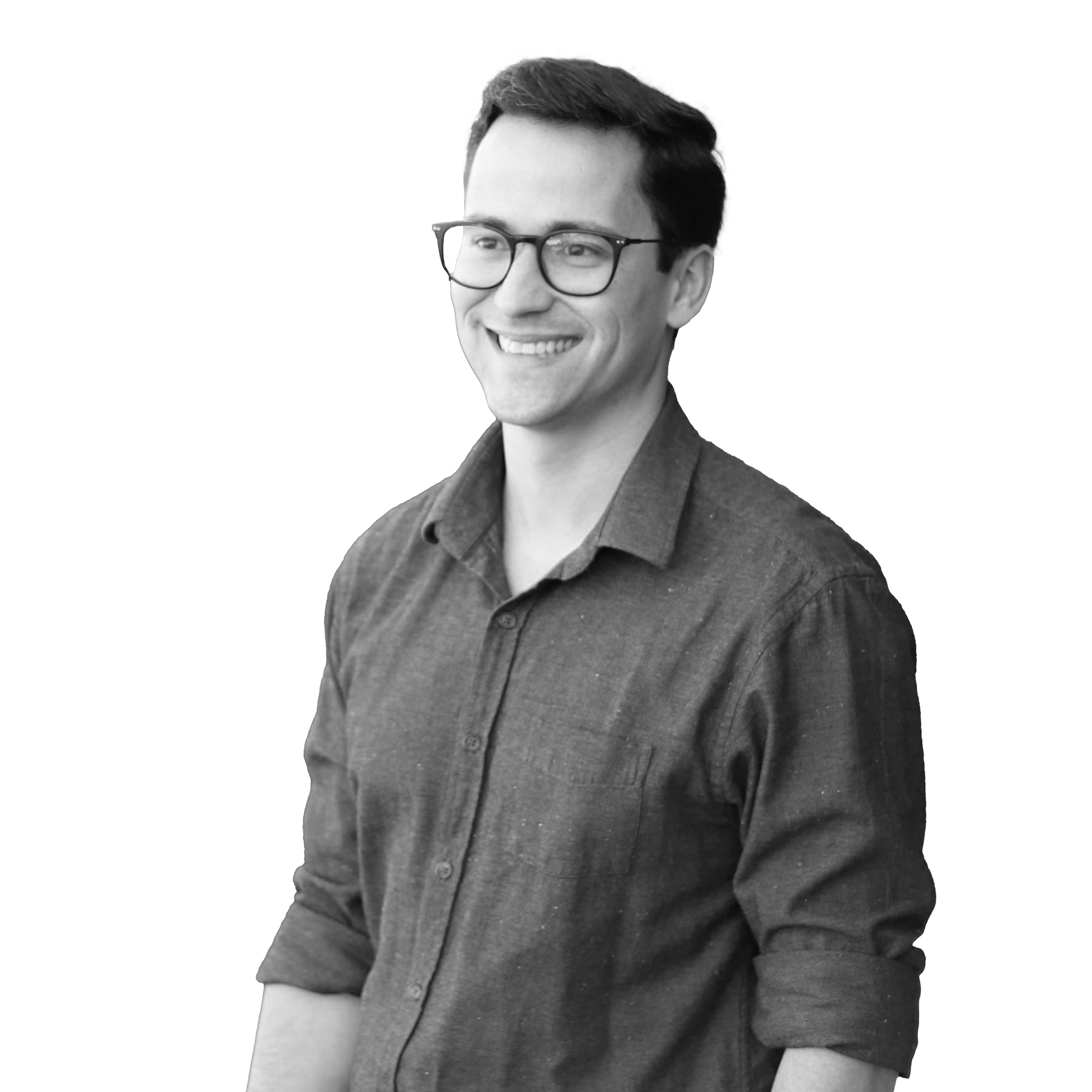
Eduardo Velloso is a Professor of Computer Science at the University of Sydney , focusing on interaction design for emerging technologies . His work explores novel user experiences through input modalities, interaction devices, and AI/ML integration in systems. Education: PhD in Computer Science (Lancaster University, UK), Bachelor in Computer Engineering (Pontifical Catholic University of Rio de Janeiro, Brazil) Research Interests: Interdisciplinary work combining Human-Computer Interaction , Augmented/Virtual Reality , Eye Tracking , Wearable Computing , and Machine Learning . Publication Trends: Recent work addresses methodology in HCI , AR/VR applications , AI integration , and sensor-based interaction . Scientific Awards: Best Paper Award at CHI Best Paper Award at UIST Best Paper Award at TOCHI Best Paper Award at TEI Supervision: Actively supervises PhD students and collaborates with companies/government on projects like VR training systems and AI mediation tools . Labs/Teams: Affiliated with institutions in Australia (University of Sydney) and Brazil (PUC-Rio), with global co-authors in projects involving mixed reality , wearables , and AI ethics .
Daniel B. Neill is a Professor of Computer Science, Public Service, and Urban Analytics at New York University (NYU), jointly appointed across the Courant Institute of Mathematical Sciences, Robert F. Wagner Graduate School of Public Service, and the Center for Urban Science and Progress (Tandon School of Engineering). He also serves as the Director of the Machine Learning for Good Laboratory (ML4G) and is affiliated with NYU's Center for Data Science and Tandon Department of Computer Science and Engineering. Education: Ph.D. in Computer Science, Carnegie Mellon University M.S. in Computer Science, Carnegie Mellon University M.Phil. in Computer Speech, Cambridge University Research Interests: Dr. Neill's research focuses on developing novel machine learning methods for social good, with applications in disease surveillance (e.g., early outbreak detection), healthcare (e.g., anomalous care patterns), and urban analytics (e.g., predicting citizen needs). He also explores algorithmic fairness , causal inference , and pre-syndromic surveillance using unstructured data. His work bridges theoretical machine learning with real-world policy challenges, collaborating with health departments, hospitals, and city governments to deploy data-driven tools that enhance public health, safety, and security. Scientific Awards & Honors: NSF CAREER Award NSF Graduate Research Fellowship IEEE Intelligent Systems' "Top Ten AI Researchers to Watch" Yelp Dataset Challenge Winner Hidden Signals Challenge Runner-Up (DHS) Grants & Funding: He has received significant funding from the National Science Foundation (NSF), including grants on fairness in AI (IIS-2040898), bias in urban analytics (IIS-1926470), and others. He also acknowledges support from UPMC, MacArthur Foundation, and Richard King Mellon Foundation. Laboratory & Leadership: He directs the Machine Learning for Good Laboratory (ML4G) at NYU, focusing on AI for social impact. He previously co-directed NYU's Urban Initiative (2019-2022) and led the Event and Pattern Detection Laboratory at Carnegie Mellon University.
Samuel Jean Bassetto is an Associate Professor in the Department of Mathematics and Industrial Engineering at Polytechnique Montréal. He serves as Director of the Continuous Improvement Laboratory (LABAC) and holds membership in multiple prestigious research groups including the Research Group on Globalisation and Management of Technology (GMT), Poly-Industries 4.0 Laboratory, Interuniversity Research Centre on Enterprise Networks, Logistics and Transportation (CIRRELT), and Institute for Data Valorization (IVADO). Dr. Bassetto's research spans multiple disciplines, focusing on continuous improvement through the integration of engineering, artificial intelligence, cognitive science, psychology, and design. His primary sphere of excellence is in New Frontiers in Information and Communication Technologies, with secondary expertise in Modeling and Artificial Intelligence and Human Health. He develops tools that place humans at the center of technology to enhance organizational performance while respecting human rhythms and cognitive limitations. His recent publication portfolio reveals a strong interdisciplinary approach, with research bridging industrial engineering, cognitive neuroscience, and AI ethics. His work addresses practical challenges in lean manufacturing assessment, racial bias in medical AI systems, cognitive data collection in natural environments, and condition monitoring for industrial machinery. The research consistently demonstrates a commitment to developing practical solutions that integrate human factors with technological innovation. NSERC Synergy Prize for Innovation recipient Principal investigator on multiple research grants from NSERC, FRQ, and MITACS Collaborations with over a dozen institutions across multiple countries Supervision of over 150 highly qualified personnel throughout his career Dr. Bassetto teaches specialized courses including CAP7011 (Creativity in Research), IND8444 (Continuous Improvement), IND8203 (Industrial Launch), and previously taught IND8178 (Production). His teaching philosophy emphasizes practical application, with courses featuring hands-on exercises, real-world scenarios, and gamification techniques to enhance learning. His supervision portfolio includes numerous Ph.D. and Master's students working on topics ranging from human-technology collaboration to reinforcement learning for production management. Through LABAC, Dr. Bassetto leads research initiatives focused on developing human-centered tools for continuous improvement in organizational settings. The laboratory conducts projects related to industrial IoT applications, cognitive aspects of process improvement, and the development of practical frameworks for organizations to enhance performance while maintaining respect for human rhythms and cognitive capabilities.
ChanMin Kim is a Professor in the Learning and Performance Systems department at Penn State College of Education. With over 80 publications and 2553 citations, their work focuses on integrating artificial intelligence , robotics , and educational technology into science and computer science education. Research interests: Science writing, AI-human partnerships, robotics in education, equity-focused technology design Key methodologies: Natural Language Processing, learning analytics, scaffolding strategies Recent work explores large language models in education, debugging processes in pre-service teacher training, and automated assessment systems for science explanations. While the provided data doesn't show specific scientific awards or student advisees, their publications in venues like British Journal of Educational Technology and Journal of Science Education and Technology demonstrate significant contributions to learning sciences. Kim collaborates extensively with researchers in AI, educational technology, and equity-focused domains.
Dr. Mary Lacity is a Distinguished Professor of Information Systems at the Sam M. Walton College of Business, University of Arkansas, and holds the David D. Glass Endowed Chair. She is also a Visiting Professor at the London School of Economics for Spring 2025. Director of Walton College’s Blockchain Center of Excellence (2014-2019) Former Curators’ Distinguished Professor at University of Missouri Holds visiting positions at MIT, Washington University, and Oxford University Senior Editor for MIS Quarterly Executive Contributing Editor for Journal of the British Blockchain Association Her research focuses on enterprise adoption of emerging technologies, particularly blockchain, metaverse, service automation, and ethical technology use. She has conducted extensive case studies and surveys on automation and Web3 implementation across hundreds of organizations globally. Recent publications include books like Human Privacy in Virtual and Physical Worlds (2024) and Blockchain Fundamentals for the Web 3.0 (2022). She has over 30 books and 26,300 Google Scholar citations (h-index: 68). 2014: Inducted into IAOP’s Outsourcing Hall of Fame 2024: Recognized as top 2% scholar in Business and Management (Stanford) 2024: Top 1% scholar in Business and Management (ScholarGPS) Fellow of the Association of Information Systems She actively contributes to blockchain standards via the Global Standards Mapping Initiative (GSMI) of the Global Blockchain Business Council and the Linux Foundation’s Trust over IP (ToIP). Her work bridges academic research and practical applications in enterprise technology adoption.
Dimitris N. Metaxas is a Professor in the Department of Computer Science within the School of Arts and Sciences at Rutgers University. His research spans computer vision, medical image analysis, and artificial intelligence, with a particular focus on medical applications including cardiac MRI analysis and foundation models for healthcare. Dr. Metaxas's research interests encompass medical image analysis, computer vision, deep learning, and artificial intelligence. His work demonstrates a strong emphasis on applying advanced machine learning techniques to medical imaging problems, particularly in cardiac analysis. He has made significant contributions to diffusion models, multimodal learning, and efficient AI techniques for medical applications. His research bridges the gap between theoretical computer vision and practical healthcare solutions, with numerous publications in top-tier conferences and journals. His recent publications show a clear trend toward foundation models for medical image analysis, with significant contributions to cardiac MRI segmentation, diffusion models, and multimodal learning. The research spans both theoretical advancements in AI techniques and practical applications in healthcare, particularly focused on improving medical diagnostics through computer vision. His work demonstrates expertise in adapting cutting-edge AI techniques like diffusion models and large language models for specialized medical applications. Dr. Metaxas has mentored numerous students and researchers, as evidenced by his extensive publication record with multiple co-authors across various institutions. His work has received significant attention in the research community, with numerous publications in top venues including CVPR, ICCV, MICCAI, and Medical Image Analysis. His research group focuses on medical image computing, computer vision, and machine learning applications in healthcare. The team works extensively with cardiac MRI data, developing advanced techniques for segmentation, reconstruction, and analysis of 4D cardiac imaging. They are particularly known for their contributions to foundation models in medical imaging and efficient adaptation techniques for specialized medical tasks.
Aniello Murano is a Professor of Computer Science at the Department of Electrical Engineering and Information Technologies , University of Naples Federico II. He serves as Scientific Director of the ASTREA (Automated Strategic Reasoning) Laboratory and leads cutting-edge research in Artificial Intelligence, Strategic Reasoning, Multi-Agent Systems , and Formal Verification . Research Interests : Strategic reasoning under perfect/imperfect information, specification/verification/synthesis of reactive systems, temporal/modal logics, automata theory, parity games, game theory, mechanism design, and formal languages. Notable Projects : PNRR Research Unit Coordinator (2023-2025) on Resilient AI, PRIN 2020 Unit Coordinator (RIPER: Resilient AI-Based Self-Programming and Strategic Reasoning), H2020-MSCA SEAL (Principal Coordinator). Awards & Honors : JPMorgan Faculty Research Award (2022), Royal Society Award (2016), Best Paper PRIMA (2015), INDAM Project Leader (2023), Italian Scientific Habilitation (2017-2018). Students & Postdocs : Supervised 6 PhD students (e.g., Silvia Stranieri, Vadim Malvone) and mentored postdocs such as Munyque Mittelmann and Bastien Maubert. Laboratory : Leads ASTREA Lab, focusing on automated strategic reasoning and resilient AI systems.
Jennifer Mankoff is the Richard E. Ladner Professor at the Paul G. Allen School of Computer Science & Engineering, University of Washington. She previously held faculty positions at UC Berkeley’s EECS department and Carnegie Mellon’s HCI Institute. Her research focuses on accessibility, empowering disabled individuals through technologies like generative AI, 3D printing, and computational knitting. Education : PhD in Computer Science from Georgia Tech (advised by Gregory Abowd and Scott Hudson), BA from Oberlin College. Her work addresses technical challenges in accessibility across domains such as higher education, health, and DIY solutions. She leads the Make4All Group and the Center for Research and Education on Accessible Technology and Experiences (CREATE). Awards include the SIGCHI Social Impact Award, IBM Faculty Fellowship, and ASSETS 10-Year Impact Award. Scientific Awards : SIGCHI Social Impact Award Alfred P. Sloan Fellowship IBM Faculty Fellowship ASSETS 10-Year Impact Award CHI Academy Member Mankoff has mentored over 50 undergraduate and graduate students, including current faculty members like Julie Kientz and Gary Hsieh. She advocates for inclusive curriculum development, teaches courses on data-centric computing and HCI, and provides mentorship on navigating academia with disabilities. Contact : jmankoff@cs.uw.edu | jmankoff@acm.org | 206-685-3035
Kep Kee Loh is a Senior Tutor in the Department of Psychology at the National University of Singapore (NUS). Currently, he also holds an NUS Overseas Postdoctoral Fellowship position at both the Montreal Neurological Institute (McGill University) and the University of Oxford. His research focuses on comparative primate neuroanatomy, examining what makes the human brain special compared to other primates through multimodal MRI techniques. Ph.D. in Neuroscience from Université Claude Bernard Lyon I (2014-2018) M.Sc. in Cognitive Neuroscience from University College London (2011-2012) B.Soc.Sci. (Hons.) in Psychology from National University of Singapore (2007-2011) Dr. Loh's research primarily investigates the anatomical organization of brains across humans and various primate species including chimpanzees, baboons, and macaques. He employs different magnetic resonance imaging techniques (anatomical, resting-state, diffusion-weighted MRI) to compare brain organization across species, with particular focus on the medial frontal cortex, sulcal anatomy, and the evolution of speech and language in the human brain. His work adopts a multimodal approach to provide an integrative view of what sets human brains apart from other primates. His recent publications demonstrate a strong focus on comparative neuroanatomy across species, with particular emphasis on primate brain evolution, frontal cortex organization, and language-related neural pathways. The research spans multiple disciplines including neuroscience, cognitive science, and evolutionary biology, with increasing attention to methodological advancements in neuroimaging techniques for cross-species comparisons. NUS Overseas Postdoctoral Fellowship (2021) Institute of Language, Communications and the Brain (ILCB) Postdoctoral Fellowship (2019) Fondation Recherche Médicale (FRM) Fin de Thèse (PhD funding) (2017) BRAIN Student Travel Award, 6th Motivation and Cognitive Control Symposium (2016) Dr. Loh has been involved in numerous collaborative research projects across international institutions, including the French Institute of Health and Medical Research (Stem Cell and Brain Research Institute), Aix-Marseille Université, and currently McGill University and the University of Oxford. His work has received significant recognition with over 1,000 citations for his 33 publications. While specific grant information isn't detailed in the provided text, his postdoctoral fellowships indicate successful competitive funding. Dr. Loh collaborates with several research groups including the Montreal Neurological Institute at McGill University and research teams at the University of Oxford. His work connects with broader initiatives like the collaborative resource platform for non-human primate neuroimaging, indicating participation in larger research networks focused on advancing primate neuroscience through shared resources and methodologies.
Rudy Hirschheim is a Professor at the Stephenson Department of Entrepreneurship & Information Systems within the E.J. Ourso College of Business at Louisiana State University. He previously held faculty positions at the University of Houston, Templeton College - Oxford, London School of Economics, and McMaster University, with visiting appointments at Monash University, University of New South Wales, University of Bayreuth, University of Jyvaskyla, University of Warwick, and University of Paris-Dauphine. PhD in Information Systems, London School of Economics (1985) MS in Computer Science, University of Toronto (1974) BCom in Business Administration, University of Toronto (1975) His research interests span outsourcing, management of information systems, research methods, and philosophical issues in research. His recent publications focus on agile software development, crowdsourcing, social justice in IT, service-oriented architecture maturity, and theoretical critiques of the IS discipline. He emphasizes methodological rigor and philosophical foundations in information systems research. Key scientific awards include the LEO Award for lifetime achievement (2013), two honorary doctorates (University of Oulu, 2006; University of Bern, 2012), and Fellow status from the Association for Information Systems (2007). He has also received multiple best paper awards and LSU's Rainmaker Award (2012).
Jodi Schneider is an Associate Professor at the University of Illinois Urbana-Champaign , with affiliate appointments at the Beckman Institute , Health Care Engineering Systems Center , European Union Center , and Center for Health Informatics . She directs the Information Quality Lab and focuses on the science of science through argumentation and evidence analysis. PhD in Informatics (National University of Ireland, Galway) M.S. in Library and Information Science (UIUC) M.A. in Mathematics (UT-Austin) B.A. in Liberal Arts (St. John's College) Her research examines how scientific controversies persist through citation patterns, the role of knowledge brokers in public policy, and information quality in biomedical contexts. She has developed semantic frameworks for micropublications and knowledge maintenance in digital libraries. Recent publications include citation integrity studies in Scientometrics , retraction indexing in STI Conference , and argumentation mining in Human Language Technologies . Collaborative projects span institutions like Harvard Radcliffe Institute and RWTH Aachen . NSF CAREER Award IMLS Early Career Award Senior Member, Association of Computing Machinery Marie Curie Fellow She advises graduate students in information quality and knowledge representation , with funding from the Alfred P. Sloan Foundation , NIH , and European Commission . Her lab develops tools to combat scientific misinformation and improve public health informatics .
Christian List is Professor of Philosophy and Decision Theory at Ludwig Maximilian University of Munich, where he serves as Co-Director of the Munich Center for Mathematical Philosophy (MCMP). Previously, he was Professor of Philosophy and Political Science at the London School of Economics until 2020. His work bridges philosophy, economics, and political science with a particular focus on individual and collective decision-making and the nature of intentional agency. Professor List's research spans multiple interconnected domains: theories of individual and collective choice (particularly social choice theory and judgment aggregation), free will and consciousness, the philosophy of mind and action, and the foundations of the social sciences. His work on group agency, developed in his influential book Group Agency with Philip Pettit, has reshaped debates about corporate entities and collective intentionality. His more recent work on free will, culminating in his book Why Free Will is Real , presents a scientifically grounded defense of free will against reductionist skepticism. His recent publications reveal a sophisticated integration of formal methods with deep philosophical questions, particularly regarding consciousness, probability aggregation, and the relationship between different levels of explanation. List's work consistently demonstrates how mathematical precision can illuminate fundamental philosophical problems while maintaining relevance to broader social and scientific contexts. Scientific Awards and Recognition: Elected Fellow of the British Academy (2014) Member of Academia Europaea (2023) Member of the Bavarian Academy of Sciences and Humanities (2022) Joseph B. Gittler Award from the American Philosophical Association (2020) Philip Leverhulme Prize in Philosophy (2007) 5th Social Choice and Welfare Prize (2010) List has supervised numerous PhD students and early-career researchers, many of whom have gone on to prominent positions in philosophy and related fields. His collaborative work with Franz Dietrich on judgment aggregation has been particularly influential. As Co-Director of the Munich Center for Mathematical Philosophy, he has secured substantial research funding and established MCMP as a leading international hub for formal and mathematical approaches to philosophical problems. Through the Munich Center for Mathematical Philosophy, List leads a vibrant research community that brings together philosophers, economists, political scientists, and mathematicians to tackle foundational questions using rigorous formal methods. The center hosts regular workshops, seminars, and visiting scholars, creating a dynamic intellectual environment that bridges disciplinary boundaries.
Duncan Wilson is a Professor of Connected Environments at the Bartlett Centre for Advanced Spatial Analysis (CASA) at University College London. His work bridges academia and industry, focusing on IoT, AI, and spatial analysis to enhance understanding of built and natural environments. Current role: Professor of Connected Environments at UCL Education: PhD in Artificial Intelligence and Machine Vision (UCL, 1997), BEng (Hons) in Electrical Engineering (Loughborough University, 1993) Research interests include: Cognitive computing at the network edge Extraordinary sensory systems for data capture Spatial reasoning and digital twins IoT for healthcare and biodiversity Edge AI and TinyML Recent articles span digital twin development , IoT for biodiversity monitoring , and smart healthcare infrastructure . He has received recognition for collaborative R&D approaches during his directorship at Intel's Sustainable Connected Cities institute. Teaching: Leads MSc Connected Environments and modules on IoT ethics, AI on microcontrollers, and sensor network deployment Projects: IoT Living Lab at UCL, Project Hercules for eye clinic analytics, and Shazam for Bats environmental monitoring Professional activities: Former Director of Intel Collaborative Research Institute (2012-2018), ex-member of Smart London Board (2017-2022)
Tina Eliassi-Rad is Professor and the Inaugural Joseph E. Aoun Chair at Khoury College of Computer Sciences, Northeastern University in Boston. She serves as Core Faculty at the Network Science Institute and holds External Faculty positions at both the Santa Fe Institute and Vermont Complex Systems Institute. Additionally, she maintains Affiliated Faculty status across six Northeastern University institutes including the NULab for Digital Humanities and Computational Social Science, Global Resilience Institute, Cybersecurity and Privacy Institute, Institute for Experiential AI, and Internet Democracy Initiative. Her research spans: Data Mining & Machine Learning Network Science & Complex Systems Artificial Intelligence & Society She leads two major research initiatives: Trustworthy Network Science , which addresses explainability, transparency, stability, and robustness in network science ML algorithms; and Just Machine Learning , which examines broader complex systems where ML operates to understand and mitigate risks. Her work bridges theoretical foundations with societal applications. Dr. Eliassi-Rad's publication record demonstrates consistent focus on applying network science to critical societal challenges. Her recent research examines pandemic mobility patterns and cybersecurity threats using network-based approaches that combine epidemiological modeling with network analysis techniques. She actively mentors doctoral students through her RADLAB research group, currently advising PhD candidates Wan He (Network Science) and David Liu (Computer Science), along with PhD students Zohair Shafi and Samantha Dies (Computer Science). Her research has secured funding from prestigious organizations including the National Science Foundation, Department of Defense, Defense Advanced Research Projects Agency, Army Research Lab, and others. As leader of RADLAB, she directs research at the intersection of data science, network analysis, and societal impact, with particular emphasis on ensuring that technical advances in AI and network science serve societal needs responsibly and equitably.
Prof. Dr. Wolfgang Nejdl is a Professor at the Institute for Data Science within the Faculty of Electrical Engineering and Computer Science at Leibniz University Hannover. He serves as Executive Director of the L3S Research Centre and Leibniz Forschungszentrum Inclusive Citizenship. Web Science Information Retrieval Artificial Intelligence Deep Learning His recent research focuses on AI applications in medicine , multimodal data fusion , and ethical AI systems . Projects include CAIMed (AI in Causal Medicine) and DAISEC (AI & Cybersecurity). His publications span conferences like AAMAS, WWW, and SIGIR. Notable awards include membership in the National Academy of Science and Engineering (acatech) . Former students hold positions at institutions like Stanford, TU Dresden, and ETH Zürich. Current projects involve climate resilience AI , federated learning for healthcare , and quantum-inspired data science .