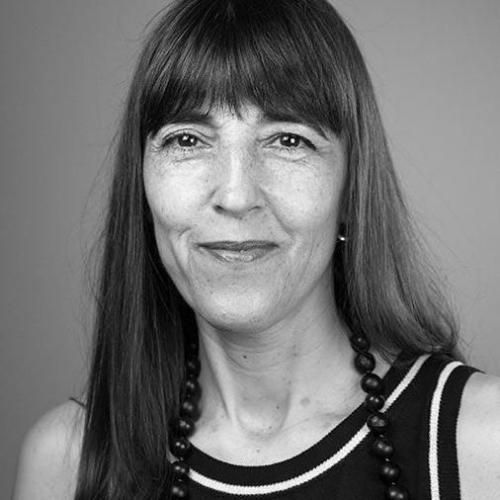
Albert Gibert Bosch serves as an Assistant Professor in the Department of Organic and Pharmaceutical Chemistry at IQS School of Engineering, Universitat Ramon Llull. He is an active member of the Pharmaceutical Chemistry Group (GQF) and has been involved in significant research projects spanning from 2014 to 2025. His research spans multiple areas of pharmaceutical chemistry with a focus on drug discovery and development. Key research interests include molecular modeling for drug design, CXCR4 inhibitors for cancer treatment, HIV therapeutics, nanoparticle drug delivery systems, and tyrosine kinase inhibitors. His work demonstrates strong interdisciplinary connections between computational chemistry, medicinal chemistry, and cancer biology. Recent publication trends show a consistent focus on CXCR4 targeting compounds with applications in both oncology (particularly B-cell lymphoma) and HIV treatment. His research utilizes advanced molecular modeling techniques to design novel compounds with therapeutic potential. Dr. Bosch has participated in multiple research projects including DisX4lymph: Design and synthesis of CXCR4 allosteric inhibitors and IRAK4 degraders as potential treatments of B-cell lymphoma (2022-2025), and has been part of the Pharmaceutical Chemistry Group funded by Agència de Gestió d'Ajuts Universitaris i de Recerca (AGAUR) from 2022-2025.
Maria Dolores Blanco Rojas is a Full Professor and Deputy Director of the Systems and Automatic Engineering Department at Universidad Carlos III de Madrid (UC3M). Her research focuses on robotics and biomedical engineering, particularly in the development of soft robotic exoskeletons, shape memory alloy (SMA) actuators, and rehabilitation technologies. She leads the Robotics Lab and has contributed to over 100 peer-reviewed articles. Affiliations : UC3M, Robotics Lab, Systems Engineering and Automation Department Education : Not explicitly stated in text Her research interests include: Soft Robotics : Design of wearable exoskeletons for pediatric and post-stroke patients Materials Science : SMA-based actuators for medical and robotic applications Control Systems : Adaptive control algorithms for rehabilitation devices Biomedical Engineering : Integration of sEMG signals for gesture classification in assistive technologies Recent articles explore topics like hyperparameter optimization for machine learning models, SMA actuator efficiency, and eye-hand coordination assessment systems. Projects include the development of pediatric rehabilitation robots (Discover2Walk) and soft exoskeletons for ankle and wrist mobility. Grants/Projects : SRAR (2024–2027): Soft robotics for ankle rehabilitation STRIDE-UC3M (2022–2024): Pediatric exoskeleton validation Advising : Supervised theses on SMA actuators, soft exoskeletons, and rehabilitation systems Her lab develops novel sensors and actuators, including a silver-coated polyamide sensor and multi-wire SMA actuators for high-displacement applications. Collaborations include Airbus and TechnoFusión facilities.
Prof. Valerio Pruneri is an ICREA Professor and Group Leader at the Institute of Photonic Sciences (ICFO), holding the Corning Inc. Chair in Optoelectronics. He leads a research group focused on quantum optics, nanophotonics, and biomedical imaging. His academic background includes a PhD in Laser Physics from the University of Southampton (UK). Research interests span quantum communication technologies, plasmonic sensors, and nanomaterials for optical applications. Recent advancements include work on quantum key distribution systems, graphene-based devices, and super-sensitive phase imaging techniques. Articles highlight innovations in quantum-enhanced imaging, integrated photonic circuits, and hyperbolic metamaterials. His team collaborates on EU projects like NANO-GLASS ITN and FLIGHT, with a strong emphasis on translational research. Over 50 students and researchers are advised, many funded by national and international grants (e.g., Agencia Estatal de Investigación, CELLEX Foundation). Key lab facilities include state-of-the-art cleanrooms and optical characterization tools.
Fernando Sánchez-Figueroa is a Full Professor at the University of Extremadura's Department of Computer Systems Engineering and Telematics. He is a co-founder of Homeria Open Solutions, a spin-off engaged in R&D projects under EU frameworks. His research focuses on Software Engineering, Machine Learning, Data Visualization, and Ambient Intelligence. He has authored over 50 scientific articles and led numerous R&D contracts with public and private entities. Key roles include: Academic: Full Professor at University of Extremadura Entrepreneur: Co-founder of Homeria Open Solutions Research: Participation in EU-funded projects and development of AI-driven solutions for healthcare, smart cities, and education Research Interests: Machine Learning applications in healthcare, predictive analytics for education, and sustainable smart city technologies. His work bridges theoretical advancements with practical implementations, such as medical image segmentation using SAM models and cost-efficient UAV systems. Publications: Recent works include decision support systems for employability analysis, zero-shot learning in medical imaging, and recommender systems for education. He emphasizes data-driven approaches and model-driven engineering in software development. Impact: Developed tools like CompareML for preliminary data analysis and LiveSankey for advanced web visualization. His contributions span academia and industry, addressing challenges in healthcare, urban sustainability, and educational technology.
Giovanni Compiani is an Associate Professor at the University of Chicago Booth School of Business, specializing in Marketing. His research bridges industrial organization and quantitative marketing, focusing on advanced econometric methods. PhD, MPhil, MA in Economics from Yale University BSc, MSc in Economics from Bocconi University Previous Assistant Professor at Haas School of Business His work explores unstructured data integration in demand estimation, consumer search behavior on online platforms, risk preferences in cryptocurrency markets, and time perception in behavioral economics. He has published in top journals including Journal of Political Economy , Marketing Science , and Review of Economic Studies . Recent publications emphasize machine learning applications in econometrics, equilibrium modeling of lotteries, and crypto mining's economic impact. His research portfolio spans demand analysis, structural modeling, and behavioral insights. Editor's Choice Award, The Review of Asset Pricing Studies (2024) Developed nonparametric demand estimation frameworks Advances dynamic model identification with instrumental variables Compiani teaches Data Science for Marketing Decision Making at Booth and maintains active collaborations with researchers across econometrics, computer science, and behavioral disciplines.
Mar Pérez-Sanagustín is an Associate Professor at the Institute de Recherche en Informatique (IRIT) , Université Toulouse III Paul Sabatier. She actively participates in international conferences such as EIAH, ATICA, and EDEN, focusing on Technology Enhanced Learning (TEL), Smart Cities, and MOOCs. Award-winning researcher with the 1rst ITWorldEdu Award and Best Demo Award at ECTEL 2013 Specializes in datafication in education, collaborative learning, and social media integration Research interests include: Technology Enhanced Learning (TEL) and its intersection with computer science Smart Cities Learning ecosystems and context-aware services Massive Open Online Courses (MOOCs) and educational analytics Space-aware design for mobile learning Personal Learning Environments and collaborative tools Her recent publications analyze trends in TEL methodology, the PROF-XXI Framework, and global blended learning initiatives. She actively collaborates with institutions like Universidad Carlos III, UNED, and BUAP de México, and has been invited to keynotes and workshops across Europe and Latin America. Scientific awards: 1rst ITWorldEdu Award (2014) for educational technology solutions Best Demo Award at ECTEL 2013
Piotr Przybyła is a tenure-track Assistant Professor at Universitat Pompeu Fabra in Barcelona, Spain, where he researches in the TALN (Natural Language Processing) Research Group. He maintains a significant affiliation with the Linguistic Engineering Group at the Institute of Computer Science, Polish Academy of Sciences (ICS PAS) in Warsaw, Poland, where he completed his PhD in Computer Science. Previously, he worked as a research fellow at the National Centre for Text Mining (NaCTeM) at the University of Manchester. Przybyła's research focuses primarily on Natural Language Processing with particular emphasis on misinformation detection, adversarial attacks on text classifiers, text simplification, and Polish language processing. His work bridges theoretical NLP with practical applications for credibility assessment and language understanding. He has developed innovative approaches for testing the robustness of text classifiers against adversarial examples and has made significant contributions to Polish language resources and processing tools. His recent publications demonstrate a strong trajectory in examining the robustness of NLP systems, particularly in the context of misinformation detection and credibility assessment. His work spans from foundational research on language model behavior to practical applications in Polish language processing and text simplification. The ERINIA project, funded by a prestigious Marie Skłodowska-Curie Postdoctoral Fellowship, represents a significant contribution to understanding how misinformation detection systems can be made more robust against adversarial attacks. Marie Skłodowska-Curie Postdoctoral Fellowship for the ERINIA project Computing grant of 10,000 hours on the Athena supercomputer for accelerating work in the ERINIA project Przybyła actively contributes to the NLP community through conference organization, shared tasks (such as coordinating the InCrediblAE shared task for CheckThat! 2024), and developing open-source tools like Plainifier for multi-word lexical simplification. His work demonstrates a commitment to both advancing NLP research methodology and addressing practical challenges in misinformation detection and language understanding across multiple languages, with special attention to Polish language processing.
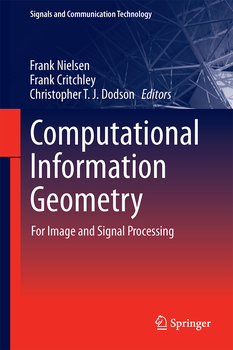
Frank NIELSEN is a Professor at École Polytechnique with expertise in information geometry, data science, and machine learning. He holds a PhD (1996) and HDR (2006) in computer science and has established himself as a leading researcher in geometric approaches to information science. His educational background includes a PhD in computer science (1996) followed by a Habilitation à Diriger des Recherches (HDR) in 2006, the highest academic qualification in France that qualifies one to supervise doctoral candidates. Dr. NIELSEN's research focuses on the Geometric Science of Information , where he develops theoretical frameworks for understanding data through geometric and information-theoretic lenses. His work bridges Computational information geometry Statistical manifold theory Bregman divergences and their applications Machine learning with geometric foundations High-dimensional data analysis He aims to address the challenge of inappropriate data representation in current Data Science by building a theory of Computational Information Geometry to enable Intrinsic Data Science with principled distances. His extensive publication record shows a clear trend toward developing geometric frameworks for understanding statistical divergences, with recent work focusing on Bregman geometry, Fisher-Rao metrics, and their applications in machine learning. His research spans theoretical developments in information geometry to practical implementations like the pyBregMan Python library, demonstrating both theoretical depth and practical relevance. Dr. NIELSEN has made significant contributions through his teaching and publications. He has taught courses at École Polytechnique including INF442, INF517, and INF591. His authored textbooks include Introduction to HPC with MPI for Data Science (2016), A Concise and Practical Introduction to Programming Algorithms in Java (2009), and Visual Computing: Geometry, Graphics, and Vision (2005). He has also edited influential volumes such as Computational Information Geometry for Image and Signal Processing (2016) and Geometric Theory of Information (2014). He actively organizes and participates in academic events, serving on program committees for major conferences including GSI (Geometric Science of Information), CVPR, and ICCV. His work has established him as a key figure in the growing field of geometric approaches to information science.
Mariano Cabezas is a researcher in medical imaging and computer vision, currently affiliated with Macquarie University and as an affiliate at the University of Sydney . His work focuses on automating brain MRI analysis for pathologies like multiple sclerosis, Alzheimer's disease, and tumors, with additional contributions to UAV image analysis. PhD in Computer Science (2013), University of Girona MSc in Automation, Computation, and Systems (2010), University of Girona BSc in Computer Science (2009), University of Girona Research Interests : Specializes in magnetic resonance imaging , lesion detection , deep learning , and image processing , with applications in multiple sclerosis , hearing loss , and UAV-derived ecological data . His recent work includes federated learning frameworks for cross-site MS lesion segmentation and pseudo-labeling techniques for longitudinal brain volume estimation. Publication Trends : Over the past five years, his research has emphasized federated learning (4 articles), lesion segmentation (9 articles), and UAV image analysis (3 articles), with a strong focus on clinical validation and cross-institutional collaboration. Labs & Collaborations : Contributed to the NIC-VICOROB group at the University of Girona and maintains affiliations with the Research Institute of the Hospital Vall d'Hebron (VHIR) in Barcelona and Macquarie University in Sydney. Actively develops open-source tools hosted on GitHub.
Luis Merino Cabañas is a Professor at the Universidad Pablo de Olavide , affiliated with the Deporte e Informática department and leading the SRL Service Robotics Laboratory . His research focuses on robotics, systems engineering, and automation, with a specialization in human-robot interaction and path planning. Education : PhD in Systems Engineering from the Universidad de Sevilla (2007), where his thesis explored cooperative perception techniques for multiple unmanned aerial vehicles in forest fire detection. Research Trends : Recent work (2023–2025) emphasizes 3D path planning, sensor fusion (LiDAR, radar, inertial systems), neural distance fields for safe navigation, and socially aware robotics. His studies integrate AI, genetic programming, and multi-modal perception for applications in construction, healthcare, and GNSS-denied environments. Labs & Teams : He leads the SRL Service Robotics Laboratory , contributing to projects like the Skyeye team and BIM2ROS integration for construction robotics.
Mercedes Herrero de la Fuente is a Professor at Antonio de Nebrija University's School of Communication and Arts in Madrid, specializing in Journalism and Media Innovation. Holding a PhD in Information Sciences from Complutense University of Madrid, she coordinates the doctoral program in Innovation in Digital Communication and Media while leading research through the INNOMEDIA Research Group. Her academic affiliations include active participation in multiple national research projects funded by Spain's Ministry of Science and Innovation. Her research focuses on the intersection of digital technologies and communication, with particular emphasis on data journalism, transmedia narratives, disinformation combat strategies, and gender representation in media. Recent work explores augmented reality applications in journalism, accessibility for people with disabilities in the audiovisual sector, and women's leadership in media production. She has conducted research fellowships at Cornell University, Radboud Universiteit, Salford University, and Charles University. Herrero de la Fuente has published extensively in high-impact journals, with her most recent work examining AI applications against electoral misinformation, women creators in streaming platforms, and immersive journalism technologies. Her research demonstrates consistent focus on emerging media technologies and their societal implications, particularly regarding inclusion and verification practices. As an educator, she previously directed Nebrija University's Master's in Digital and Data Journalism (2016-2021) and Master's in Television Journalism (2015-2020), while currently teaching in both undergraduate and graduate programs. Her professional background includes eight years as a producer for TELEMADRID News, providing practical industry experience that informs her academic work.
Jakub Vohryzek is a postdoctoral researcher at the Computational Neuroscience (CNS) Group at University Pompeu Fabra in Barcelona, supervised by Prof. Gustavo Deco. His work focuses on spacetime connectomics and whole-brain modeling, particularly in neurodegenerative disorders and psychedelic neuroscience. He holds a DPhil from the University of Oxford, where he studied under Prof. Morten Kringelbach. Research Interests: Spacetime connectomics Psychedelic-induced brain state transitions Neurotwin models for personalized medicine Cognitive and clinical applications of whole-brain dynamics Current projects include developing neurotwin models under a European grant for neurodegenerative treatments, investigating brain state dynamics in mindfulness therapy, and modeling psychedelic effects on Alzheimer’s disease. His recent work emphasizes low-dimensional brain network interactions and functional hierarchy perturbations. His research has explored connectivity profiles, oscillatory restoration in dementia, and algorithmic agent approaches to neuropsychiatric disorders. He collaborates on open-science initiatives like Brainhack and advocates for inclusive conference design.
Dr. Jose Manuel Sánchez Peña is a Full Professor at Universidad Carlos III de Madrid (UC3M), affiliated with the Grupo Universitario de Tecnologías de Identificación (GUTI). His research focuses on precision agriculture technologies, optoelectronics, and neuroscientific interfaces. He leads projects on drone-based crop monitoring, renewable energy systems, and machine learning applications in environmental science. Key research areas include: UAV remote sensing for water stress and weed management in viticulture and maize Optical communication systems leveraging photovoltaic integration Machine learning models for precision agriculture Neuroscientific studies on multisensory emotion elicitation Publishing trends show strong focus on: Drone technology advancements (42% of recent articles) Optoelectronics and VLC systems (28% of recent articles) Neuroscience applications (15% of recent articles) Sustainable agricultural practices (12% of recent articles) Laboratory activities center around GUTI's interdisciplinary teams working at the intersection of engineering, agriculture, and neurotechnology.
Sonia Vanier is a Professor in the Department of Computer Science at École Polytechnique, where she holds multiple leadership positions: Head of the 'Trusted and Responsible AI' Chair (X/Crédit Agricole), Head of the 'Optimization and AI for Mobility' Chair (X/SNCF), Head of 3A, and Scientific Manager of Industrial Relations for both the Department and the Computer Science Laboratory (LIX). She coordinates the GdT OR (Network Optimization) working group and leads the REST (Energy, Services and Transport Networks) research axis of the CNRS GDROD, while serving on its scientific council. Her research develops decision support tools for complex industrial problems through hybrid approaches combining Artificial Intelligence and Operations Research , with focus areas including Network Optimization, ethical AI systems, sustainable computing, and trustworthy AI frameworks. Her work bridges theoretical foundations with applications in telecommunications, transportation, and cybersecurity. Publications demonstrate strong emphasis on optimization techniques (branch-and-price, cutting planes) applied to wireless networks, AI safety, and security challenges. Recent works explore LLM memorization, signomial programming, and multi-commodity flow problems, showing consistent integration of OR with machine learning for industrial-scale problems. Awards: Research Award and Innovation Award, Telecom Valley Association ALOES Orange Innovation Project She leads major industrial-academic partnerships through the Crédit Agricole and SNCF chairs, managing research grants focused on responsible AI deployment and mobility optimization. As Scientific Manager of Industrial Relations, she oversees industry collaborations for LIX laboratory. Affiliated with the Computer Science Laboratory (LIX), she directs the 3A research group and contributes to national initiatives through CNRS GDROD, coordinating research in network optimization and sustainable systems.
Francisco J. Quiles is a Full Professor of Computer Architecture and Technology at the University of Castilla-La Mancha (UCLM), where he has been a faculty member since 1987. He currently serves as Director of the Department of Computer Systems and leads the High Performance Networks and Architectures (RAAP) research group, which he founded 33 years ago. His leadership extends to national and international organizations, including his current role as President of the Spanish Scientific Society of Computer Science (SCIE) since 2024. Dr. Quiles earned his Degree and PhD in Physics (Electronics and Computer Science) from the University of Valencia in 1986 and 1993, respectively. His academic journey began at UCLM in 1987, where he has held numerous leadership positions including Dean of the Department of Computer Science (1991-1994), first Dean of the Computer Science Engineering Faculty (1994-2000), and Vice-Rector of Research (2000-2011). Dr. Quiles' research focuses on high-performance interconnection networks for multiprocessor systems, clusters, and datacenters, along with parallel algorithms for video compression and transmission. His work bridges theoretical computer architecture with practical applications in high-performance computing environments. His research group has established significant collaborations with CERN's ATLAS project since 2019, demonstrating the real-world impact of his work in large-scale scientific computing. His publication record shows a consistent focus on congestion control, routing algorithms, and network performance optimization across various topologies including Dragonfly, Fat-Tree, and Slim Fly networks. Recent work (2023-2025) has emphasized practical implementations in InfiniBand hardware and solutions for modern datacenter challenges, reflecting the evolving nature of high-performance computing infrastructure. Dr. Quiles has received recognition through his leadership roles in professional organizations including SARTECO (Spanish Society of Computer Architecture and Technology) and IEEE Computer Society, where he is a Senior Member. His contributions to the field have shaped research directions in computer architecture both nationally and internationally. With over 270 peer-reviewed publications, supervision of 9 doctoral theses, and participation in more than 128 research projects supported by various national and international funding bodies, Dr. Quiles has made substantial contributions to both academic research and industry collaboration. His work with companies like Huawei, Bull, and Mellanox demonstrates the practical applicability of his research. The RAAP research group under Dr. Quiles' leadership has established itself as a significant player in computer architecture research, with particular expertise in interconnection networks. Their association with CERN's ATLAS project since 2019 represents a major achievement in applying academic research to fundamental scientific discovery.