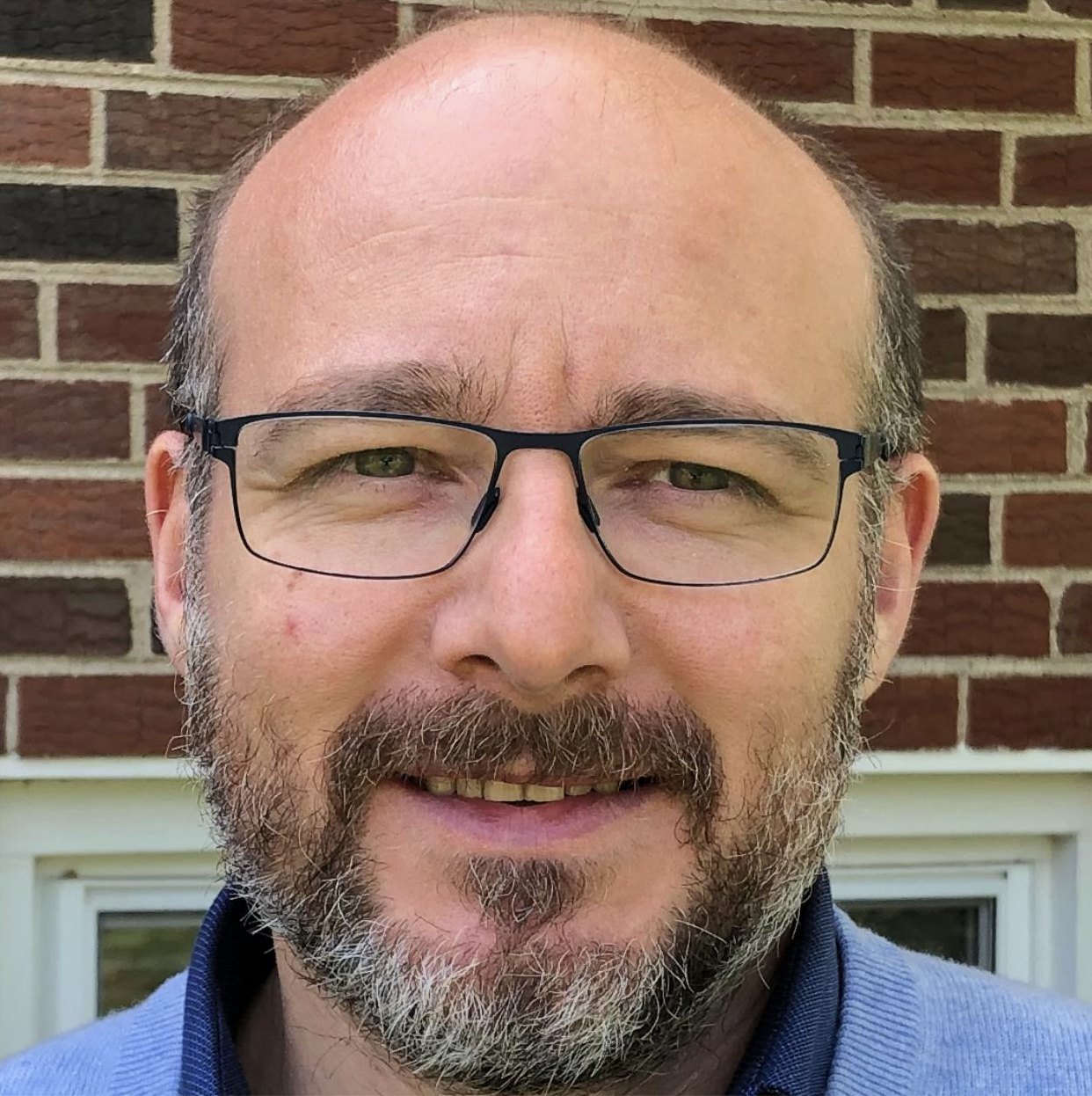
Kenneth W Church is a Professor in the Department of Computer Science at Northeastern University. He received his PhD from MIT in 1983 and has held positions at AT&T Bell Labs (20 years), Microsoft, Johns Hopkins University, IBM, and Baidu. He is the founder of VecML, a startup focused on vectors, machine learning, and approximate nearest neighbors for AI applications. His research focuses on computational linguistics and large language models (LLMs), with applications including web search, language modeling, text analysis, spelling correction, word-sense disambiguation, terminology, translation, lexicography, compression, optical character recognition, speech recognition, synthesis, and diarization. He was an early advocate of empirical methods and founded the Conference on Empirical Methods in Natural Language Processing (EMNLP). ACM Fellow (2023) ACL Fellow (2015) AT&T Fellow (2001) President of ACL (2012) President of ACL SIGDAT (1993-2011) He teaches courses including CS6120: Practical Natural Language Processing and CS7290 at Northeastern University. As founder of VecML, he develops products for search, machine learning, chat, RAG and agentive systems available on mobile platforms.
Danny Law serves as an Associate Professor in the College of Liberal Arts at the University of Texas at Austin. His academic focus lies at the intersection of historical linguistics, language contact phenomena, and the study of Mayan languages and writing systems, where he has established a significant research presence. His educational qualifications include: Ph.D. from the University of Texas at Austin Dr. Law's primary research interests encompass Historical Linguistics, Language Contact, Mayan Languages, and Writing Systems. He also investigates Language Variation, Constructed Languages in Popular Media, Iconicity, Historical Phonology, and Maya Hieroglyphics. His scholarly work frequently addresses the historical development of Mayan languages, contact-induced changes, and the evolution of writing systems, with particular attention to ancient Mesoamerican scripts. An examination of his recent publications (2017-2024) indicates a sustained focus on Mayan linguistics, including studies on language contact, historical change, and the structure of Classic Mayan. He has also contributed to the field of signed language linguistics and explored innovative approaches to ancient language pedagogy using open educational resources. A recurring theme is the application of historical linguistic methods to endangered languages and writing systems. No scientific awards or honors were documented in the provided materials. Dr. Law mentors students through advanced coursework such as Research in Documentary and Descriptive Linguistics (LIN 389D), though specific graduate advisees and grant-funded research projects are not enumerated in the available information. Details regarding research laboratories or collaborative teams were not provided in the source material.
Georgette Dal is a Full Professor at the University of Lille, affiliated with the Faculty of Humanities and the Language Sciences Department (UMR 8163 - STL: Savoirs, Textes, Langages). Her research focuses on constructional morphology , morphological productivity , and usage-based linguistics , with a strong emphasis on corpus analysis and digital resources like the Démonette-2 database. She led the ANR DEMONEXT project (2017-2022) to develop morphological databases for speech therapy applications. Research Themes : Constructional morphology, productivity, corpus linguistics, lexematic morphology Projects : FRANLEX (1997-2003), MorTAL (2000-2003), DEMONEXT (2017-2022) Her work bridges theoretical morphology with applied linguistics , particularly in speech therapy and language education . She has collaborated extensively with computational linguists and psycholinguists, contributing to debates on the autonomy of morphology , category boundaries , and the role of analogy in lexical construction. Recent studies include the morphological analysis of French adjectives in -eux and the development of participatory research frameworks for clinical partnerships. Her advocacy for internet-based data has transformed French morphological research methodologies.
Dr. Adam Crymble is an Associate Professor in Digital Humanities at University College London's Department of Information Studies, where he also serves as co-director of the UCL Centre for Digital Humanities. His academic career focuses on the intersection of historical research and digital methodologies, with particular emphasis on migration history, London's social history, and the application of technology to historical inquiry. Dr. Crymble's educational background includes: PhD in History & Digital Humanities from King's College London (2015-2020) MA in Public History from University of Western Ontario (2007-2008) BA in History from University of Western Ontario (2002-2007) PGCERT in Learning and Teaching in Higher Education from University of Hertfordshire (2014-2016) Certificate in Writing & Communication from University of Western Ontario (2002-2007) His research interests center on the study of migration and community formation, particularly how technology creates both challenges and opportunities for historical research. Dr. Crymble is currently leading a major cultural study analyzing over 40,000 dishes served in the Royal Households of King George III and IV to understand foreign influences on British cuisine during the 18th and 19th centuries. This work reveals previously obscured German, French, and Italian migrant influences on British culture, as well as the British Empire's extractive approach to food culture from colonial territories. He is also a strong advocate for Global Digital Humanities, working with communities worldwide to develop context-appropriate digital humanities solutions and empower communities to control their own historical narratives through technology. Dr. Crymble's publication record demonstrates consistent focus on migration history, digital methodologies, and cultural exchange. His recent work shows increasing attention to food history as a lens for understanding cultural identity and migration patterns, alongside continued development of digital tools and methods for historical research. He has also been increasingly focused on global perspectives in digital humanities, examining how digital tools function differently across cultural contexts. His notable achievements include: Open Publishing Award from Coko Foundation (2021) Open Scholarship Award from Canadian Social Knowledge Institute (2020) Fellow of the Royal Historical Society (2019) Senior Fellow of the Higher Education Academy (2019) Fellow of the Software Sustainability Institute (2014) As an educator, Dr. Crymble serves as Programme Lead for the 'Information in Society' BSc and contributes to the Digital Humanities MA/MSc program. He supervises PhD students working on projects related to migration, cultural heritage, and technology. He is also a long-time contributor to the 'Programming Historian' suite of journals, which publishes digital methods papers in multiple languages, having worked on this project for over ten years. His teaching philosophy emphasizes the importance of understanding local contexts when applying technology across cultural boundaries. Dr. Crymble co-directs the UCL Centre for Digital Humanities, which serves as a hub for interdisciplinary research at the intersection of computing, information studies, and humanities disciplines. Through this center, he facilitates collaborations between historians, computer scientists, linguists, and other scholars to develop innovative approaches to historical research.
Christopher Thomson is a Senior Lecturer in the English Department within the Faculty of Arts at the University of Canterbury (Te Whare Wānanga o Waitaha) in Aotearoa New Zealand. He has held this academic position since January 6, 2014, and currently serves as the director of the UC Arts Digital Lab. His work bridges traditional humanities scholarship with cutting-edge digital methodologies, creating innovative approaches to literary and historical analysis. Thomson's research focuses on the intersection of literary studies and digital humanities, particularly examining how quantitative methods can inform and re-frame questions about cognitive and new materialist theoretical approaches to literary texts. He also supervises research on the application of digital research methods, such as text classification and information extraction, to historical text corpora in Aotearoa New Zealand. His scholarly work demonstrates a consistent engagement with digital laboratory studies, exploring how these spaces shape research practices and knowledge production in the humanities. His publication record shows significant contributions to digital humanities methodology, post-disaster archiving, and the theoretical implications of digital approaches for literary studies. Thomson has been particularly active in exploring how digital tools can be applied to analyze community discourses in post-earthquake Christchurch, using techniques like topic modeling and positioning analysis. His work on the CEISMIC Canterbury Earthquakes Digital Archive demonstrates his commitment to preserving cultural memory through digital means. As an educator, Thomson is registered to supervise both Master's and Doctoral students, focusing on digital humanities approaches to literary and historical research. His supervision emphasizes practical digital skills alongside theoretical understanding, preparing students for contemporary research environments. His work with student research assistants in laboratory settings reflects his commitment to collaborative, hands-on learning experiences. Thomson's leadership of the UC Arts Digital Lab positions him at the forefront of digital scholarship development at the University of Canterbury. The lab serves as a hub for interdisciplinary digital research, supporting faculty and students across the humanities in developing and implementing digital methodologies. His recent edited volume on digital humanities laboratories contributes significantly to global conversations about research infrastructure in the humanities.
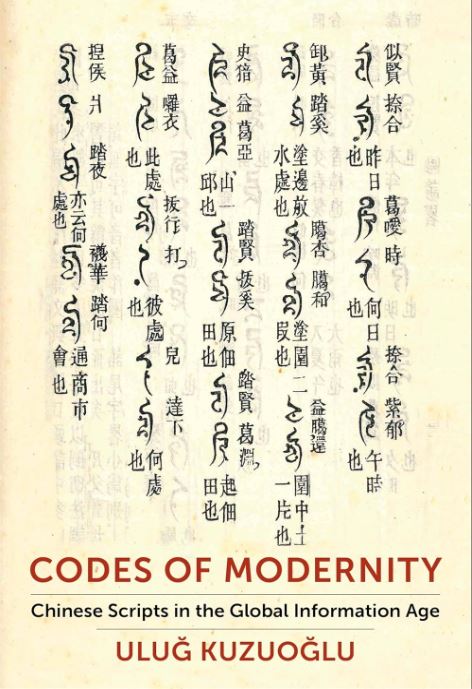
Uluğ Kuzuoğlu is an Associate Professor of History at Washington University in St. Louis, specializing in modern Chinese and global history with a focus on non-Western information and communication technologies. His academic journey includes degrees from Columbia University (PhD, 2018) and Boğaziçi University (BA and MA). He holds positions such as the MA Program Coordinator at Columbia University and has been actively involved in research and teaching since 2018. Education: PhD in History, Columbia University, 2018 (with distinction) MPhil in History, Columbia University, 2014 (with distinction) MA in History, Columbia University, 2013 MA in History, Boğaziçi University, 2010 BA in Sociology, Boğaziçi University, 2007 (with honors) Research Interests: Modern Chinese and global history, with a focus on the history of non-Western information and communication technologies Script reforms and their socio-political implications Emerging technologies like 3D, AI, and immersive tech in humanities research Virtual and augmented reality applications in academic and public contexts Publications Trends: His work explores the intersection of technology, language, and politics in modern China and Eurasia. Recent articles analyze Morse codes in Tibetan/Mongolian contexts, cognitive management through language reforms, and the global history of scripts like the Chinese Latin Alphabet. His research often bridges historical analysis with digital humanities methodologies. Scientific Awards: AY 2024-25 Luce/ACLS Early Career Fellowship in China Studies WUSTL Center for the Humanities Faculty Fellowship Multiple grants from institutions like the Center for Chinese Studies and Mellon/ACLS Advising and Grants: Advised senior thesis: Nkemjika Emenike on the Black Panther Party and CCP Recipient of grants including WUSTL's Arts & Sciences Faculty Research Grant and the Luce/ACLS Fellowship Involved in projects like the "Asia in St. Louis" app and the Immersive Technology Collective Labs/Teams: Co-leads the Immersive Technology Collective, exploring VR/AR in humanities Part of WashU's Center for the Humanities and Redefining Doctoral Education initiatives
Jared B. Kenworthy is a Professor of Psychology at The University of Texas at Arlington, where he has held academic positions since 2005, including roles as Lewis Hollweg Endowed Professor of Industrial-Organizational Psychology (2023–present). His primary affiliations include the Department of Psychology and contributions to the College of Science. Kenworthy’s research focuses on social psychology, particularly intergroup relations, group processes, collaborative creativity, and meta-analysis. He has extensive expertise in studying how intergroup contact reduces prejudice, the dynamics of creative group processes, and the role of technology in enhancing collaborative innovation. Kenworthy’s education includes a PhD in Social Psychology from the University of Southern California (2002), preceded by an MA (1998) and BS in Psychology (1996) from the same institution. His work has been supported by grants from the National Science Foundation (NSF), Army Research Office, and other federal agencies, totaling over $10 million in funding. Key projects include studies on collaborative creativity in dynamic networks, AI integration in team processes, and reconciliation in post-conflict societies. His research has led to over 100 peer-reviewed articles, book chapters, and edited volumes, including seminal works on group brainstorming strategies and intergroup trust. Notable publications include Group and Team Processes: Science and Practice (2021) and Creativity and Innovation: Cognitive, Social, and Computational Approaches (2022). Kenworthy has advised over 30 doctoral and master’s students, guiding them in topics ranging from social identity theory to computational creativity assessment. He has served on numerous university committees, including the Graduate Affairs Committee and the College of Science Research Space Committee, and has been a frequent presenter at conferences such as the Interdisciplinary Network for Group Research (INGRoup). His teaching spans advanced social psychology, group processes, and multivariate data analysis, reflecting his commitment to both research and education.
Ian Dryden is a Professor of Statistics at the University of South Carolina, affiliated with the McCausland College of Arts and Sciences. He holds a Ph.D. from the University of Leeds (1989) and has held academic positions at Florida International University, University of Nottingham, University of Chicago, and multiple stints at USC. His research focuses on statistical methodology for highly-structured data, including shape analysis, functional data analysis, and object-oriented data analysis. He has authored over 150 publications and two influential books: Statistical Shape Analysis (2016) and Object-Oriented Data Analysis (2022). Dr. Dryden’s work spans applications in medical imaging, corpus linguistics, environmental science, and Bayesian spatial modeling. Recent projects include using remote sensing for peatland monitoring and Bayesian hierarchical models for urban deprivation analysis in Tanzania. He has secured over $20M in grants as PI/Co-I and is an elected Fellow of the Institute of Mathematical Statistics. His research outputs emphasize methodological innovation, with key contributions to shape trajectory analysis, manifold-valued data regression, and Riemannian manifold smoothing splines. Collaborative work includes interdisciplinary projects in genetics, pharmacology, and environmental science, reflecting his broad statistical expertise and impact across disciplines.
Marjorie McShane is a Professor of Cognitive Science at Rensselaer Polytechnic Institute (RPI). She specializes in developing cognitive models for intelligent agents that collaborate with humans in task-oriented dialog systems. Her work integrates physiological simulation, emotion modeling, and cognition, with a focus on natural language processing (NLP) and cross-linguistic perspectives. She leads the Language-Endowed Intelligent Agents (LEIA) Lab and has authored influential books like Agents in the Long Game of AI and Linguistics for the Age of AI . Education: PhD in Slavic Languages and Literatures (Princeton University), MA (Princeton), Advanced Translation Certificate (SUNY Albany), and prior degrees from SUNY Albany and Grinnell College. Research Interests: Her work bridges cognitive science and AI, focusing on: 1) NLP and semantic analysis for conversational agents, 2) cognitive modeling in medical training (e.g., Maryland Virtual Patient system), and 3) hybrid AI systems combining knowledge bases with machine learning. She emphasizes explainable AI, lifelong learning, and trustworthiness in hybrid systems. Key Contributions: Pioneered frameworks like HARMONIC for cognitive robotics and LEIA agents. Her recent work addresses metacognition in AI, neurosymbolic approaches, and overcoming knowledge bottlenecks. She advocates for linguistics-informed AI development, integrating multi-stage language understanding with actionable decision-making. Labs/Teams: Directs the LEIA Lab, advancing research in embodied cognitive agents and language-enabled systems. Collaborates on medical simulation systems and AI ethics frameworks.
Jung-ran Park is an Associate Professor in the Department of Information Science at Drexel University's College of Computing & Informatics. Her research focuses on knowledge organization systems, metadata standards, multilingual information access, and cross-cultural communication in digital environments. She holds a Ph.D. in Linguistics (University of Hawaii, 2003) and an MLIS (2000), along with prior degrees from institutions in South Korea. Her work bridges linguistics and information science, addressing challenges in semantic interoperability, metadata quality, and professional development for cataloging and metadata specialists. Notable projects include studies on BIBFRAME implementation, RDA adoption barriers, and automated metadata generation systems for digital repositories. Research trends in her publications emphasize: 1) Metadata standardization (e.g., BIBFRAME, Dublin Core) and their practical applications; 2) Cross-cultural communication dynamics in social media and virtual reference services; 3) Professional training needs for evolving library technologies. Though no formal awards are listed, her contributions to metadata education and digital library systems are significant. Her advising focuses on preparing professionals for evolving information organization challenges, reflected in collaborative projects like metadata harvesting tools and continuing education resource repositories. Labs/Teams: Involved in digital repository development initiatives, metadata workflow optimization studies, and cross-cultural communication analysis teams within the College of Computing & Informatics.
Vincenzo Carnevale is an Associate Professor in the Department of Biology at Temple University's College of Science and Technology. He holds a B.Sc. and M.Sc. in Physics from the University of Pisa and a Ph.D. from SISSA in Trieste, Italy. His research group focuses on statistical physics and machine learning to study sequence-structure-function relations in proteins, epistasis in molecular evolution, and self-organization in biomolecules. Key themes include how interactions drive collective phenomena and emergent behaviors in biological systems, with a long-term goal of understanding electrical signaling in excitable cells. Recent work spans computational approaches in medical applications (e.g., AI in obstetrics-gynecology diagnostics), lipid-ion channel interactions, and genotype imputation algorithms. His methods include molecular dynamics simulations, Monte Carlo techniques, and deep learning frameworks. Carnevale has no listed scientific awards, but his work emphasizes interdisciplinary collaborations at the interface of physics, biology, and computer science. He contributes to programs like Molecular and Cellular Biology and maintains a lab focused on theoretical/computational biology.
Virendra Bhavsar is an Honorary Research Professor and Professor Emeritus in the Department of Computer Science at the University of New Brunswick (UNB). He holds a PhD in Computer Science and is affiliated with UNB's Fredericton campus, located in Gillin Hall GE109A. His research focuses on natural language processing (especially for Hindi and other Indian languages), cognitive informatics, distributed systems, and bioinformatics. Bhavsar has also contributed to projects involving virtual reality in education, parallel computing, and machine translation systems. Education: PhD in Computer Science Research Interests: Development of NLP tools for free-word-order languages Optimization of in-memory data processing systems on NUMA architectures Cognitive learning environments using virtual reality Tree-based parsing algorithms for linguistic analysis High-performance spatial and spatio-temporal data systems Recent Work Trends: His articles from 2017–2022 highlight advancements in Hindi language processing, distributed computing optimizations, and cognitive informatics applications. Notable areas include improving data skew resilience in hash joins and developing visualization systems for language learning. Awards: No specific scientific awards listed in available materials. Advising & Grants: No formal advisee list or grant details provided in current data. His collaborations include work on grid computing frameworks like GARUDA and HPGC initiatives. Labs/Teams: Involved in projects related to distributed in-memory systems (e.g., DISTIL) and cognitive informatics research groups.
Craig Leth-Steensen is an Associate Professor in the Department of Psychology at Carleton University, affiliated with the Faculty of Arts and Social Sciences. He holds a Ph.D. from McGill University. His research focuses on cognitive psychology, particularly the application of quantitative methods and computational models (e.g., neural networks, random walks) to analyze human cognitive performance, reaction time distributions, and symbolic comparative judgments. Recent interests include early childhood cognitive development and interventions through programs like PlayWisely. His work spans experimental psychology and psychometrics, with key contributions to reaction time analysis, spatial-numerical associations (SNARC effect), and task-switching dynamics. He has published widely in journals like Psychological Review , Journal of Experimental Psychology , and Frontiers in Psychology . Dr. Leth-Steensen has no listed awards but has collaborated with institutions globally. His research emphasizes methodological rigor, integrating statistical techniques with experimental designs to explore information processing and decision-making mechanisms.
John Logan is an Associate Professor in the Department of Psychology at Carleton University, affiliated with the Faculty of Arts and Social Sciences. He holds a Ph.D. from Indiana University. His research focuses on spoken language perception, non-native speech perception, and word recognition in children. His work bridges cognitive psychology, forensic psychology, and linguistics, examining how personality traits like psychopathy influence speech perception and emotional processing. Dr. Logan's research explores the interplay between personality variables and speech perception mechanisms, particularly in contexts involving psychopathic traits, trauma, and non-native language acquisition. His recent studies investigate how psychopathy affects emotional recognition in spoken language and domestic abuse dynamics, while also analyzing disfluency patterns and vowel acoustics in speech production. His research has contributed to understanding deficits in prosodic perception among individuals with psychopathic characteristics and developing interventions to improve emotion recognition. He also studies cognitive constraints in acquiring non-native phonemes and employs neuroimaging techniques to explore decision-making processes in gambling scenarios. Though no specific awards or grants are listed, his extensive publication record reflects sustained contributions to speech perception, forensic psychology, and developmental cognitive science. Dr. Logan's work integrates experimental methods with computational analysis, addressing both theoretical and applied questions in language processing and mental health.
Monique Sénéchal is a Professor in the Department of Psychology at Carleton University, affiliated with the Faculty of Arts and Social Sciences. She holds a Ph.D. from the University of Alberta. Her research focuses on child language and literacy development, particularly how natural activities like shared book reading and home literacy practices influence learning. She investigates mechanisms underlying reading and writing acquisition in English and French, emphasizing the cognitive and linguistic foundations of literacy. Her work spans cross-cultural studies, bilingualism, and longitudinal analyses of developmental outcomes. Her research lab, the Child Language and Literacy Research Lab , explores topics such as invented spelling, morphological knowledge, and the impact of parental involvement. Recent studies highlight the role of home literacy environments, maternal mental health, and statistical learning in orthographic systems. Publications from 2016–2025 reflect a focus on cross-linguistic comparisons (e.g., French silent letters), longitudinal developmental trajectories, and interventions to improve literacy skills. Key themes include early vocabulary’s predictive role in later literacy, bilingual language processing, and the efficacy of shared reading practices.