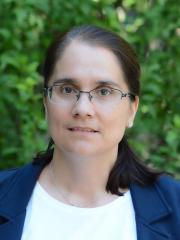
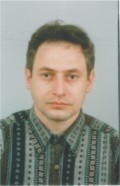
Temenuzhka Borisova Zafirova-Malcheva is an Associate Professor at the Faculty of Mathematics and Informatics, Sofia University "St. Kliment Ohridski," specializing in educational technologies for special needs populations. Her work bridges computer science , inclusive education , and digital design . PhD in Informatics and Computer Science (2015), dissertation: "Specialized software environment for computer training of children with cerebral palsy" Master's in Mathematics and Informatics (2000) Her research focuses on: Design and development of educational software for special needs Inclusive e-learning systems and pedagogical frameworks Computer graphics and digital design for accessible learning Competence-based training models for STEM educators Adaptation of digital resources for remote learning Recent publications (2017-2022) emphasize inclusive education technologies , inquiry-based learning , and remote/hybrid teaching models , particularly during the pandemic. She frequently collaborates with researchers like Pencho Mihnev and Albena Antonova.
Tinko Velichkov Tinchev is a Professor and Researcher at the Faculty of Mathematics and Informatics (FMI), Sofia University "St. Kliment Ohridski". His research focuses on Modal Logic , Dynamic Logic , and Formal Methods , particularly in applications to spatial reasoning and theoretical computer science. Email: tinko@fmi.uni-sofia.bg Office Hours: Thursday 11-12, Friday 13:30-15:30 His work spans geometric reasoning , equivalence relations , and knowledge representation . Publications include collaborations on region-based theories of space , affine reasoning , and modal operators for logical systems.
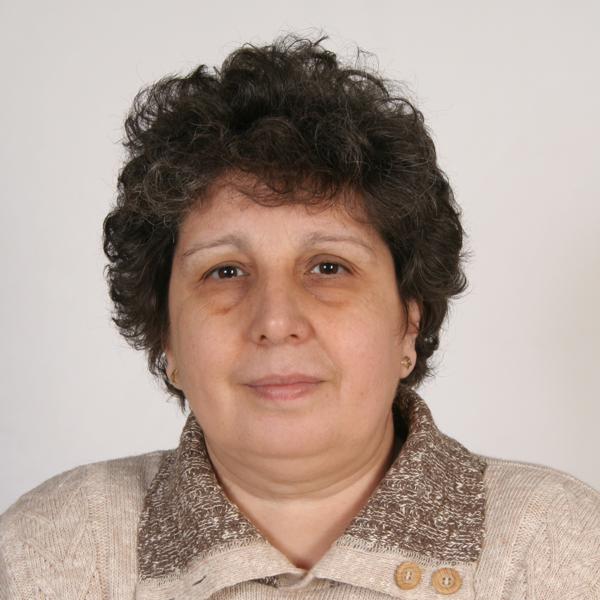
Dr. Silviya Parvanova Boumova is an Associate Professor at the Faculty of Mathematics and Informatics, Sofia University 'St. Kliment Ohridski' , with a PhD in Algebra from Eindhoven University of Technology. Her research focuses on combinatorial structures in Coding Theory and Design Theory , particularly Orthogonal Arrays and Spherical Designs . Research Interests Her work investigates the minimum distance and covering radius of orthogonal arrays using distance distributions, with applications in polynomial metric spaces and error-control codes. She collaborates extensively with researchers like Peter Boyvalenkov and Maya Stoyanova. Publications Recent studies (2022–2000) analyze bounds for orthogonal arrays, Diophantine problems, and geometric properties of codes. Key subfields include distance distributions , polynomial identities , and combinatorial optimization . Contact Email: boumova@fmi.uni-sofia.bg
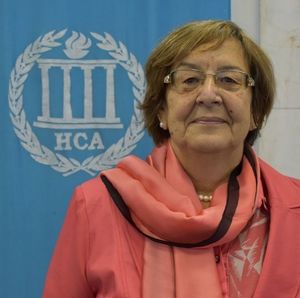
Zvezditsa Petrova Nenova is a distinguished faculty member at the Technical University of Gabrovo, Bulgaria, where she serves in the Department of Fundamentals of Electricity and Electrical Engineering. With a career spanning nearly four decades, she has established herself as a leading expert in sensor systems, environmental monitoring, and measurement technologies. Her extensive research portfolio includes 15 books, 139 scientific publications, and leadership in 33 research projects, demonstrating her significant contributions to engineering education and research. Dr. Nenova's research focuses on the development and application of advanced sensor systems for environmental monitoring, with particular expertise in humidity sensing elements, thin-film technologies, and measurement systems. Her work bridges materials science, electrical engineering, and environmental applications, resulting in numerous innovations in sensor design and implementation. She has pioneered research in doped oxide films, graphene-based sensors, and piezoelectric measurement systems, contributing significantly to the field of environmental monitoring technology. Analysis of her recent publications reveals a consistent focus on improving humidity sensing technologies through advanced materials science. Her work increasingly incorporates nanotechnology approaches, particularly with graphene and doped metal oxides, while maintaining practical applications for environmental monitoring systems. The research shows a progression from fundamental material characterization to sophisticated sensor system integration, demonstrating both theoretical depth and practical implementation. Dr. Nenova has successfully supervised three PhD students to completion, guiding research in air environment monitoring systems and advanced sensor technologies. Her extensive project portfolio includes both national and international collaborations, with significant participation in EU-funded programs including Erasmus+ and Leonardo da Vinci initiatives focused on vocational education and industrial automation.
Assoc. Prof. Boryana Pelova is an Associate Professor at the Department of Statistics and Econometrics, Faculty of Economics and Business Administration (FEBA), Sofia University. She holds a PhD and has over 15 years of expertise in data analysis, large dataset processing, and machine learning applications. Her work addresses societal challenges such as air quality improvement, mental health prevention, and digitalization of public sectors and SMEs. She currently leads research projects including 'Digitalization of SMEs' (2023–present), 'SHARE-ERIC Bulgaria' (2018–present), and a National Science Fund project (2023–present). Prof. Pelova serves as the Academic Director of the MSc Program 'AI for Business and Finance' and pioneered an industry-funded PhD program. She previously led the Career Center at FEBA (2016–2023), organizing career development initiatives for students. As former Vice-Dean of FEBA (2019–2023), she fostered academic-business collaboration to enhance tech-driven education. She also coordinates initiatives linking vocational schools with universities, such as the affiliation of the Burgas Vocational School of Computer Programming and Innovation with Sofia University. Her research focuses on applying data science to real-world problems, including financial stability and environmental sustainability. While no specific scientific awards are listed, her contributions to academic-industry synergy and educational innovation highlight her leadership in advancing tech-driven education and societal impact. Prof. Pelova collaborates with institutions such as the ESG Lab and Center for Education Services at FEBA, driving interdisciplinary projects like the Twin4Eco and ConsuWAIS initiatives. Her work emphasizes bridging academic research with practical solutions for businesses and public sectors.
Prof. Reni Damjanova is a faculty member at the National Sports Academy "Vasil Levski" in Sofia, Bulgaria. She holds the rank of Professor in the Department of Theory of Sport Training and specializes in sport methodology, statistics, and biomechanics. Her career spans over four decades, with roles including Associate Professor, Chief Researcher in Sport Science, and initiator of Bulgaria's first academic golf course programs. Education: Bachelor's in Physical Education (Summa Cum Laude, 1975) Ph.D. in Sport Biomechanics (1983) Advanced certifications in statistics, functional diagnostics, and Chinese medicine Research interests focus on optimizing high-performance training through statistical analysis, biomechanical motion studies, and sport rehabilitation. She pioneered Golf education in Bulgaria and contributed to Olympic teams' training methodologies. Awards include recognition from the International Olympic Committee and Bulgaria's Olympic Committee for integrating computer technology in sports. Labs/Teams: Specialized Swimming Lab, Ergomechanics Research Team, Golf Course Curriculum Developer
Goran Danailov Goranov is a Professor at the Technical University - Gabrovo , affiliated with the Faculty of Electrical Engineering and Electronics and the Department of Electronics. His research focuses on control systems , sensor networks , electric vehicles , and microcontroller applications . Projects: Led and participated in 15 research initiatives, including electric vehicle development and contactless power transmission systems. Students: Advises three PhD students in areas like digital control and sensor networks. His work involves FPGA design , Arduino-based solutions , and industrial automation , with recent publications addressing Hall element testing, wind turbine controllers, and open-source hardware for education. He has authored four textbooks and contributed to 74 scientific publications, emphasizing energy efficiency and embedded systems.
Валентина Стоянова Кукенска е доцент и заведател на катедрата за Компютърни Системи и Технологии в Технически Университет - Габрово. Осъществява професионална дейност от 1984 г. с акцент в областта на автоматизираното проектиране, FPGA технологии и компютърни системи. Образованието й включва докторска степен (1999 г.) по тема „Разработка на модулна учебно-изследователска диалогова система за автоматизирано схемотехническо проектиране в електрониката“. Води курсове по автоматизация на инженерния труд, операционни системи и компютърни архитектури. Участлива е в международни и университетски проекти, включително в рамките на програмите TEMPUS и ERASMUS за модернизация на учебните програми и развитие на ICT инфраструктура. Има значителен вклад в разработка на учебни пособия и публикации в области на компютърните системи, FPGA и CAD системи. Нейните исследователски интереси се фокусират върху FPGA архитектури, автоматизирано проектиране на електронна апаратура, и интеграция на CAD технологии в образователните процеси. Участие в над 20 научни проекти и няколко публикации демонстрират нейния принос в областта на компютърната инженерия и образованието.
Иван Симеонов Симеонов is an Associate Professor at Technical University Gabrovo specializing in Computer Systems and Networks. He holds a PhD in Computer Science (2006) and has extensive experience in ultrasonic sensor technology, embedded systems, and automated manufacturing. His career spans roles from researcher to academic leadership in technical fields. Key research focuses include non-contact ultrasonic material analysis, sensor design, and computer-aided engineering solutions. Education: Graduated from VMÉI (Gabrovo) in Electronic Technology, earned PhD in 2006 with thesis on computerized measurement systems. Fluent in English, German, and Russian with strong technical communication skills. Research interests emphasize interdisciplinary applications of computer systems in engineering contexts. His work bridges hardware design (e.g., programmable logic circuits) with software solutions (image processing algorithms). Notable projects include intelligent ultrasonic sensors for industrial automation and non-destructive material testing systems. Publications span 11 peer-reviewed articles and 68 conference presentations, focusing on ultrasonic technologies and embedded systems. Active member of ACM, Bulgarian Union of Automation and Informatics, and academic computer systems communities. Led over 15 research projects funded by national and EU programs, including EU's Erasmus initiatives for education innovation in computing.
Mark Burry is a renowned architect and academic with dual professorships as Professor of Digital Design at The European Graduate School and Professor of Urban Futures at Melbourne University. His work bridges architecture, technology, and design, notably through his leadership in completing Antoni Gaudí’s Sagrada Família and founding RMIT’s Spatial Information Architecture Laboratory and Design Research Institute. He holds degrees from the University of Cambridge and has taught globally at institutions like MIT and the Royal Danish Academy. Educations: BA in Architecture (University of Cambridge, 1979) Diploma in Architecture (University of Cambridge, 1982) MA in Architecture (University of Cambridge, 1989) His research focuses on computational design, parametric architecture, and the intersection of mathematics with urban futures. He has pioneered digital tools for architectural innovation, as seen in projects like the Sagrada Família and through his authored books on scripting cultures and mathematical architecture. Awards: Diploma i la insignia a l’acadèmic corresponent (2004) Federation Fellowship (2006) Biennial Sasada Award (2012) Advisees/grants: Directed over 100 researchers at RMIT’s Design Research Institute Recipient of ARC grants and PMSEIC advisory roles He co-founded labs like the Spatial Information Architecture Laboratory and contributed to exhibitions such as Convergence: Transforming our Future and Homo Faber .
Professor Stephan Ivanov Ivanov serves as Head of the Department of Automation, Information and Control Technology within the Faculty of Electrical Engineering and Electronics at Technical University - Gabrovo. With a Doctorate in Technical Sciences, he has established himself as a leading researcher in sensor systems and industrial automation. His academic career spans over two decades with continuous contributions to both theoretical and applied research. Dr. Ivanov's research focuses on the intersection of microcontroller technology, programmable logic devices, and sensor systems. His work particularly emphasizes humidity and gas sensors, electronic nose technology, and the application of artificial neural networks in fire detection and food quality assessment. A significant portion of his recent research explores the innovative use of acoustic waves combined with deep learning for firefighting applications, representing a cutting-edge interdisciplinary approach. His publication record demonstrates consistent scholarly output, with 86 publications including books, conference papers, and journal articles. The most recent works (2022-2025) show a clear trend toward integrating deep neural networks with physical sensor systems, particularly in fire detection and environmental monitoring. His research bridges theoretical computer science with practical engineering applications, resulting in numerous international collaborations. As an educator and mentor, Professor Ivanov has supervised five PhD students, with three currently active in their research. His leadership extends to coordinating multiple international projects focused on incorporating 3D design and programming into educational curricula. His work demonstrates a commitment to both advancing scientific knowledge and applying it to practical educational and industrial challenges.
Stanimir Yordanov Yordanov is an Associate Professor at the Department of Automation, Information and Control Technology within the Faculty of Electrical Engineering and Electronics at Technical University - Gabrovo. With a Doctorate in Technical Sciences and over 30 years of professional experience since 1993, he has established himself as a leading researcher and educator in control systems and automation. His educational background includes a Master of Engineering from VMEI - Gabrovo (1992) with specializations in Computer Engineering, Management Technologies, and Pedagogy, followed by a Doctorate (2006) and Associate Professor qualification (2010) in specialized technical fields. His teaching portfolio encompasses System Programming, Operating Systems, Digital Control Systems, and Industrial Robotics, among others. Professor Yordanov's research focuses on automated control systems, intelligent management of technological processes, industrial system monitoring, and object/system modeling. His work demonstrates a consistent trajectory toward increasingly sophisticated control algorithms and applications across diverse domains from electrohydraulic systems to environmental monitoring. The recent publications reveal a strong emphasis on advanced control techniques including neuro-PID regulators, model predictive control, and applications of artificial intelligence in industrial contexts. His extensive project portfolio includes 22 significant research initiatives, ranging from national projects like the 'Competence Center for Intelligent Mechatronic Systems' to international collaborations such as the 'MechMate' project focused on European SME growth. These projects demonstrate his ability to secure funding and lead research teams across various technical domains. Professor Yordanov has mentored six PhD students to completion, with several successfully defending dissertations on topics including intelligent energy systems, embedded real-time operating systems, and robotic systems. His academic leadership extends to serving as an academic mentor for over 600 student internships. His laboratory work centers on electrohydraulic control systems, robotic manipulation, and intelligent monitoring applications, with recent projects developing smart dispensers, beehive monitoring systems, and low-cost health monitoring devices for pregnant women, demonstrating practical applications of his theoretical research.
Boryana Traycheva Simeonova serves as Assistant Professor at the Department of Health Care within the Faculty of Public Health at Medical University of Sofia. With over a decade of academic service, she contributes significantly to healthcare education and research, focusing on maternal and child health services within Bulgaria's healthcare system. Her work bridges clinical practice with academic scholarship through collaborations with major healthcare institutions including "Tsaritsa Joanna" University Hospital and Fifth Hospital EAD in Sofia. Her educational qualifications include: Bachelor's degree in Healthcare Management (2000) Master's degree in Healthcare Management (2010) PhD in "Social Medicine and Organization of Healthcare and Pharmacy" (2016) Specialty in "Public Health" (2020) Professor Simeonova's research centers on midwifery training systems and healthcare delivery in obstetrics, gynecology, and neonatology. Her doctoral work on "Social and Health Aspects of Cervical Cancer Prevention" established her expertise in women's health policy. She has developed specialized educational materials for midwifery students and contributes to healthcare policy frameworks through publications in the "Health Policy and Management" journal. Her recent work increasingly integrates pharmacological research with public health applications. Analysis of her 40+ publications reveals strong focus on pharmacological interventions for neurodegenerative diseases, metabolic disorders, and hepatoprotective agents. Her methodology combines computational approaches (molecular docking, structure-activity analysis) with rigorous in vivo validation, demonstrating translational research capabilities across multiple therapeutic areas. Recent work shows particular emphasis on natural product research for metabolic and neurological conditions. Professional affiliations include: Bulgarian Scientific Society for Public Health (BSPH) Scientific Society for Medical Education (BSME) Professor Simeonova actively supervises student research projects and participates in national healthcare initiatives. She contributes to curriculum development for midwifery programs and leads advanced training courses for healthcare professionals. Her departmental work focuses on healthcare system organization with direct applications to maternal and child health services through clinical partnerships across Sofia's major hospitals.
Milen Chipchanov is an Assistant Professor at New Bulgarian University (NBU) in the Department of Foreign Languages and Cultures. He has over 35 years of teaching experience in French language education, focusing on courses such as written and oral translation, phonetics, and the integration of multimedia and new technologies in foreign language instruction.
Sergey Vasilyevich Golub is a Professor at the Department of Software for Automated Systems at Cherkasy State Technological University. He holds a Doctor of Technical Sciences degree and has been part-time faculty since 2018. His career spans multiple roles, including dean at CHNU and head of departments in intelligent systems and software engineering. His research focuses on agent programming, intelligent monitoring, medical informatics, and machine learning. He has contributed to interdisciplinary projects linking software engineering with environmental monitoring and healthcare diagnostics. Recent publications emphasize multi-agent systems, social network analysis, and data-driven disease prediction. Key article trends include integrating satellite data for climate monitoring, authorship classification in social media, and agent-based modeling for pandemic forecasting. He collaborates with researchers in Ukraine and abroad, with works in Springer LNNS and CEUR-WS proceedings. Thanks and honorary diplomas from Cherkasy National University (2000, 2003, 2015) Honorary diplomas from Cherkasy Regional State Administration (2001, 2014) Honorary diploma from Ukraine's Ministry of Education and Science (2011) He has authored monographs on data analysis technologies and cross-platform decision support systems. His work bridges academic research and practical applications in intellectual monitoring across healthcare, ecology, and cybersecurity domains.