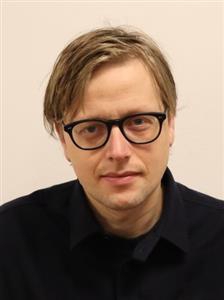
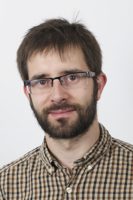
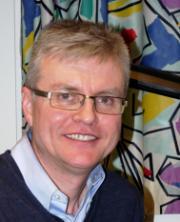
Mathias Valstad is a Postdoctoral Fellow at the PROMENTA Research Group within the Department of Psychology at the University of Oslo. His research focuses on mental disorders, intergenerational transmission of psychological traits, and genetically informative designs. Key Research Areas: Neuroplasticity in schizophrenia and bipolar disorder, neuroimaging, oxytocin's role in mental health, and psychiatric comorbidity. Methodological Expertise: Structural equation modeling (PSY9140 instruction), computational modeling, and systematic review/meta-analysis protocols. Recent projects include investigating synaptic plasticity impairments in schizophrenia using computational models, auditory cortex thickness correlations in psychotic disorders, and oxytocin concentration relationships across biological systems. His work frequently employs large-scale neuroimaging and genetic datasets.
Didac Vidal Pineiro is a PostDoc researcher at the Lifespan Changes in Brain and Cognition (LCBC) research group at the University of Oslo's Department of Psychology, working under Professors Anders M. Fjell and Kristine B. Walhovd. His research focuses on cognitive aging and memory networks using advanced brain imaging techniques. Dr. Pineiro earned his PhD in Neuroscience in 2014 from the University of Barcelona, following an M.Sc in Neuroscience (2009-2010) and a Psychology degree (2005-2009) from the Autonomous University of Barcelona. His doctoral work focused on characterizing and modulating large-scale memory networks with special attention to cognitive aging. His research interests span cognitive aging, brain imaging methodologies (including structural and functional MRI, MR spectroscopy), non-invasive brain stimulation techniques (TMS, tDCS), and neuropsychological assessments. His work often examines how memory networks change throughout the lifespan, particularly in relation to aging processes. His research combines methodological approaches from neuroscience, psychology, and computational analysis to understand the neural basis of memory function across adulthood. Analysis of his recent publications reveals a strong focus on brain aging, memory networks, and neuroimaging biomarkers. His work frequently examines hippocampal function, cortical connectivity patterns, and brain structural changes associated with cognitive aging. A significant portion of his research investigates early biomarkers of neurodegenerative processes and how brain changes relate to cognitive performance across the lifespan. His most recent work incorporates advanced computational approaches, including artificial intelligence applications in neuroimaging analysis. Dr. Pineiro is an active member of the LCBC research group at the University of Oslo, which conducts extensive longitudinal research on brain and cognitive changes throughout life. His work often involves large-scale collaborative efforts with multiple international research teams, as evidenced by the numerous multi-author publications in high-impact journals across neuroscience and psychology.
Bergljot Gjelsvik is a Postdoctoral Fellow at the University of Oslo within the Faculty of Psychology and Department of Clinical Psychology . She specializes in suicidal behavior , depression , and Mindfulness-Based Cognitive Therapy for recurrent mental health issues. Her work focuses on understanding causal models in suicidology , developmental psychopathology , and multimethod research designs . Double-expertise fellow since 2005 Mindfulness specialization at Oxford University Leader of the Mindlock project on suicidal vulnerability Her research spans adolescent suicidality , depression-pain interactions , and network analysis of mental health factors . She has contributed to 13 publications since 2007, including systematic reviews and clinical efficacy studies. Her work emphasizes translating causal knowledge into preventive interventions and exploring multimethod designs in clinical psychology. Key collaborations include institutions in Oslo, Bergen, and Trondheim through the Double Competence Project , which integrates PhD research and specialist clinical training . She works at the intersection of psychiatric research , health policy , and mental health economics .
Anne-Kristin Solbakk is a Professor at the University of Oslo 's Department of Psychology and holds a 20% part-time position at the Neurosurgery Department of Oslo University Hospital-Rikshospitalet (OUS-RH) since 2016. She co-leads a research group focused on the neurophysiological basis of cognitive control functions, including prediction, expectation violation, attention, and working memory, using methods like fMRI , EEG , and intracranial ECoG in both healthy adults and patients with CNS injuries. Education: Dr. Psychol. (2001), University of Oslo Cand. Psychol. (1993), University of Bergen Specialist in Clinical Psychology (2005) Her research explores how frontal subregions interact with other brain areas, particularly in ADHD , Klinefelter syndrome , and epilepsy . Key projects include Sound prediction in the human brain and studies on functional connectivity . She collaborates internationally with institutions like UC Berkeley , Stanford , and University of Glasgow . Recent publications (2025-2023) address topics such as beta oscillations , theta dynamics , rhythmic cognition , and neural compensation mechanisms , using advanced techniques like information-theoretical measures and anatomical electrode registration . Her work bridges clinical populations (e.g., brain injury, ADHD) with theoretical neuroscience . She is actively involved in the UiO:Life Sciences cross-faculty initiative and contributes to cognitive rehabilitation projects like Goal-Management Training for executive dysfunction.
Professor Peter Herrmann is affiliated with the Norwegian University of Science and Technology (NTNU) , Faculty of Information Technology and Electrical Engineering, Department of Information Security and Communication Technology. He leads research in Intelligent Transport Systems (ITS) , model-based engineering , and trust management , with a focus on distributed systems and cyber-physical systems. Collaborations : Statens Vegvesen, Jernbaneverket, Telenor, RMIT University, University of Oslo Key Projects : IoT-STOP, MobiTrack, SIMS, Arctis, EuroNF, ISIS, iTrust His Reactive Blocks tool enables formal specification and verification of networked systems, while BeSpaceD specializes in spatiotemporal analysis. Students under his supervision include Ergys Puka (dead spot mitigation), Magnus Oplenskedal (machine learning localization), and Zeeshan Ali Khan (trust-based intrusion detection). Scientific awards include two best paper awards for collaborative work with RMIT University. His research spans formal methods, security of distributed components, and energy-efficient IoT systems, with over 20 years of contributions from TLA extensions to commercialization of BitReactive .
Erik Hjelmås is an Associate Professor in the Department of Information Security and Communication Technology at the Norwegian University of Science and Technology (NTNU) campus in Gjøvik. He has been employed at NTNU (formerly HiG) since 1996 and currently serves as the study program manager for the Bachelor in Digital Infrastructure and Cybersecurity program. His educational background includes: Cand.mag (1994) in computer science from Hedmark District University College and mathematics from Telemark District University College M.Sc. (1996) in information science with a specialization in artificial intelligence from University of Pittsburgh Dr. scient. (2005) in computer science with a thesis in facial recognition from University of Oslo Hjelmås has extensive expertise spanning information security, system administration, and digital infrastructure. His primary research interests include Information Security, Cybersecurity, System Administration, Facial Recognition, Data Security, Cloud Computing, Virtualization, Automation, Data Storage/Retrieval, and Network Security. His work bridges theoretical research with practical applications in cybersecurity education and infrastructure management, with particular focus on integrating security practices into system administration workflows and developing comprehensive cybersecurity curricula. His publication record demonstrates an evolution from early work on facial recognition algorithms (2001-2006), to more contemporary research on cybersecurity education, digital forensics, and information assurance in system administration. The recent publications particularly address practical cybersecurity challenges in higher education institutions, password policies, and professional community building within digital infrastructure. Hjelmås plays a central role in building the professional community within digital infrastructure/IT operations and information security/cybersecurity at NTNU campus Gjøvik. He teaches core courses including 'Operating systems' and 'Infrastructure: secure basic services' and has previously taught Infrastructure as Code, system administration, data communication and network security, computer system security, artificial intelligence, IT for teachers and computer engineering.
Katina Kralevska is an Associate Professor at the Department of Information Security and Communication Technology, Faculty of Information Technology and Electrical Engineering, Norwegian University of Science and Technology (NTNU), since January 2018. She previously served as Deputy Head of Department from 2019 to 2020 and was a visitor at the ISN research group at Imperial College London in 2017. Her research focuses on network security , blockchain technology , 5G network slicing , and intent-based networking . Her recent publications address knowledge-driven intent lifecycle management , blockchain for healthcare trust relations , and network slicing optimization in 5G and beyond. She supervises multiple PhD and Master’s students in topics spanning network security , blockchain applications , and 5G technologies . Her work is supported by grants from FIDAL Field Trials Beyond 5G (2025) NTNU Discovery (2022) H2020 EIC SME Instrument (2018-2020) She co-founded MemoScale AS, a company providing data protection and compression solutions, and actively contributes to academic leadership through roles in IEEE conferences and the WeLead program for women in computer science.
Stanislav Lange is an Associate Professor at the Department of Information Security and Communication Technology at the Norwegian University of Science and Technology (NTNU). His research focuses on network function virtualization, 5G/6G network slicing, quality of service (QoS), quality of experience (QoE), and machine learning applications for network management. His recent publications address decentralized autoscaling, 5G New Radio scheduling impacts, and survivability of network slices during outages. Key trends in his work include network intelligence, in-network computing, and deterministic performance guarantees in virtualized environments. Lange contributes to teaching courses in network programming, cybersecurity, and computer networks for instrumentation. His collaborations span IEEE conferences and journals, addressing challenges in network virtualization, resource optimization, and next-generation communication systems.
Camilla Brekke is a Professor at the Department of Physics and Technology , UiT The Arctic University of Norway, with a focus on satellite remote sensing and Earth observation using Synthetic Aperture Radar (SAR) and optical ocean color monitoring. Former Vice-Rector for Research and Development (2021-2023) and Deputy Rector at UiT, she previously served as Pro-Dean for Research at the Faculty of Science and Technology (2018-2021) and Deputy Director at CIRFA (2019-2021). Academic degrees from the University of Oslo (MSc in 2001, PhD in 2008) Former roles at the European Space Agency (ESA) and the Norwegian Defence Research Establishment (FFI) Her research spans algorithm development for multidimensional data analysis, integrated remote sensing and modeling for Arctic applications, and marine pollution/oil spill detection. Recent work includes machine learning for satellite data harmonization in the Barents Sea and SAR-based sea ice discrimination near oil platforms. Current affiliations include the LIE-STØRMER CENTER and the Norwegian Polar Institute (2023-), where she leads national Arctic Earth observation initiatives. She collaborates on projects involving ship/fly-based data collection, laboratory experiments, and oil drift simulations for environmental monitoring.
Changkyu Choi is a Postdoctoral Fellow in Machine Learning at the Department of Physics and Technology, UiT The Arctic University of Norway. He is affiliated with the Machine Learning Group in Forskningsparken 1 B201. His research focuses on applying deep learning and machine learning to marine acoustics, with an emphasis on semisupervised learning, explainability, and underwater exploration. Key trends in his work include information-theoretic approaches, metric learning, and autonomous systems for marine data analysis. Choi has published extensively on topics like target classification in echosounder data, visual explanations for document QA, and entropy regularization in distributed learning. His collaborations span institutions in Canada, Europe, and Norway. He contributes to projects such as "Developing and deploying machine learning methods for acoustic data" (2022) and is involved in workshops like the COGMAR/CRIMAC event on fisheries acoustics.
Igor Ezau is a Professor at the Department of Physics and Technology , UiT The Arctic University of Norway . As Group Leader Renewable Energy , his work focuses on urban climate modeling in cold regions, atmospheric physics, and renewable energy systems. Cross-disciplinary research in Arctic urban environments Expert in turbulence-resolving simulations (e.g., PALM model) Key collaborations with international climate institutions His scientific contributions include: Urban microclimate analysis Offshore wind assessment Smart city environmental systems Climate adaptation strategies
Sebastien Francois Lefevre is a Professor in Machine Learning at the Department of Physics and Technology, UiT The Arctic University of Norway, located in Tromsø. He contributes to interdisciplinary research at the intersection of artificial intelligence and geophysical sciences. His research focuses on: Deep learning for environmental modeling Remote sensing data analysis Feature reduction techniques in predictive models Multimodal object detection systems Seasonal sea ice forecasting applications Recent work explores Gaussian contrastive fusion methods for multimodal detection (2025) and feature reduction impacts in Arctic climate models (2024-2025). He collaborates within the Machine Learning Group at UiT.
Jean-Claude Tinguely is a Researcher/Senior Engineer at the Department of Physics and Technology, UiT The Arctic University of Norway, specializing in micro-/nanofabrication , integrated photonics , and super-resolution microscopy . As a member of UiT's Optics Group since 2012, he collaborates across international projects and has co-authored over 50 publications with an h-index of 16 (2024). Education: Dipl. Chemistry (2006, Switzerland), MSc Micro/Nanotechnology (2009, Austria), PhD Experimental Physics (2012, Austria) His research focuses on optical sensing , bioimaging , and photonic chip development for applications in histopathology , cellular dynamics , and environmental biology . Recent work includes machine learning-enhanced SERS chips for bacterial classification, plasmonic nanostructures for membrane analysis, and multimodal on-chip nanoscopy systems. He also oversees laboratory safety , instrument management , and technology commercialization initiatives. Notable Responsibilities: Co-supervision of students and guest researchers Lab and instrument management Gas and chemical waste safety officer Equipment procurement International collaboration networks
Kristoffer Wickstrøm is an Associate Professor in the Machine Learning Group at UiT The Arctic University of Norway, where he serves as research leader for interpretability at SFI Visual Intelligence. His work focuses on deep learning, with emphasis on explainability, uncertainty modeling, and learning with limited data. Deep Learning Explainable Artificial Intelligence Uncertainty Analysis Medical Image Analysis Small Data Learning His recent research trends include: Explainable AI for medical imaging and time series Uncertainty quantification in neural networks Physics-informed learning for PET imaging Representation learning for healthcare applications Robustness in clinical AI systems Sea ice forecasting with deep learning Collaborations include work with: Prof. Gustau Camps-Valls (University of Valencia) Prof. Marina M.-C. Höhne (Technical University of Berlin) Prof. Robert Jenssen (UiT) Prof. Michael Kampffmeyer (UiT)
Dr. Fred Godtliebsen is a Professor at the Department of Mathematics and Statistics , UiT The Arctic University of Norway. His research bridges Machine Learning , Statistical Analysis , and Geosciences , with a particular focus on automating microfossil classification and medical data analysis . Dr. Godtliebsen leads projects like "Transforming ocean surveying by the power of DL and statistical methods" , applying AI to geological and healthcare challenges. His recent work demonstrates how deep learning and reinforcement learning can automate paleontological analysis, manage blood glucose control for diabetes, and process hyperspectral dermatologic data for cancer detection. His publications span Artificial Intelligence in Geosciences , Medical Imaging , and Statistical Methodology , often collaborating with multidisciplinary teams. While no formal awards or student advisement details are listed, his work influences electronic health record analysis , environmental monitoring , and AI implementation barriers .