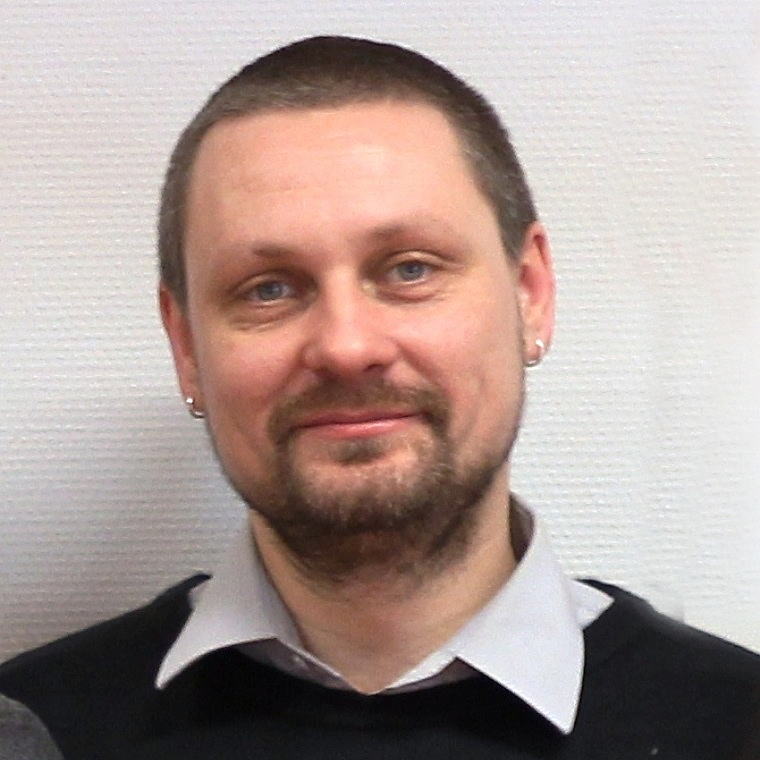
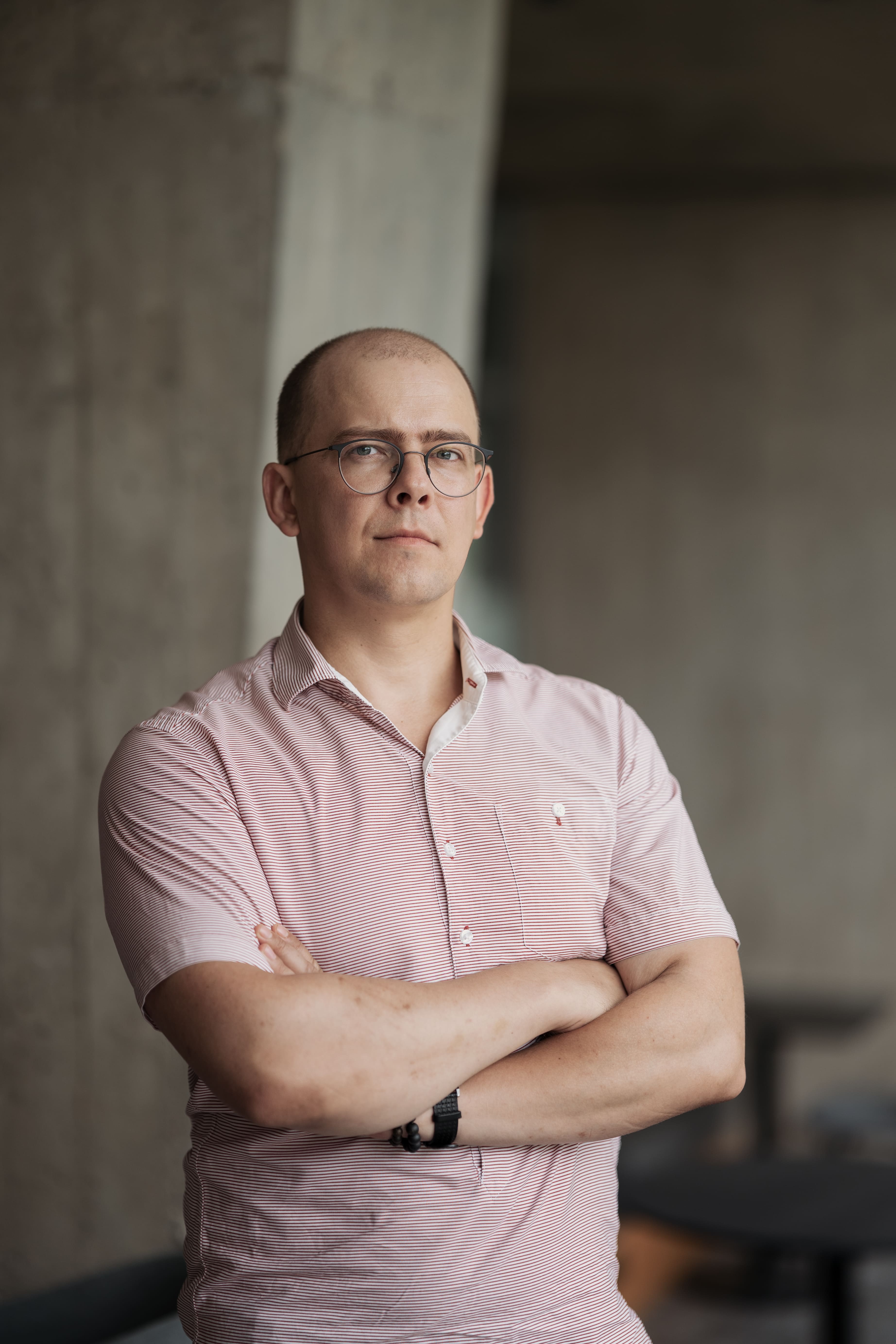
Arūnas MaršalkaView profile
Associate Professor
Dr. Arūnas Maršalka serves as an Associate Professor at the Institute of Chemical Physics, Faculty of Physics, Vilnius University. His research focuses on advanced spectroscopic techniques for studying molecular structures and dynamics, particularly in complex material systems and biological environments. His primary research interests center around NMR (Nuclear Magnetic Resonance) and EPR (Electron Paramagnetic Resonance) spectroscopy applications. Maršalka investigates photochemical processes of sensitizers in oxidant environments, solid-state NMR spectroscopy, hydrogen bonding phenomena, and lyotropic chromonic liquid crystals of biomedical interest. His work spans from fundamental molecular interactions to applied materials science, with particular attention to calcium phosphates used in medical applications and rare-earth-doped materials for optical technologies. Analysis of his recent publications reveals a strong focus on spectroscopic characterization of materials with biomedical relevance. His research demonstrates expertise in combining multiple spectroscopic techniques (NMR, EPR, FT-IR, Raman) with computational methods (DFT) to understand molecular structures and dynamics. A recurring theme across his work is the investigation of hydrogen bonding networks and their role in determining material properties, spanning from organic molecules to complex biominerals. Dr. Maršalka actively supervises student research, having guided multiple bachelor's theses on topics including Vitamin C photochemical reactions using EPR spectroscopy, new generation light technology materials (mixed metal garnets doped with lanthanide ions), and structural properties of calcium phosphates used in medicine. His research has practical applications in photodynamic therapy, LED technology, and biomedical materials development. Outside his primary academic role, Dr. Maršalka serves as Deputy President of the Lithuanian Radio Sports Federation for ARDF affairs, ARDF coordinator of Lithuanian radio amateur society, and is a member of the working group of the International Amateurs Radio Union (IARU), demonstrating a commitment to both scientific and community engagement.