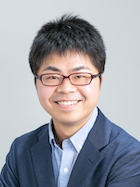
Mikiko Shimaoka is a Professor at the Research Innovation Center of Waseda University, with a focus on Business Administration , Nonprofit Organizations , and Entrepreneurship Education . She holds a Ph.D. in Public Management from Waseda University (2013) and has held roles including Associate Professor (2016-2019) and Assistant Professor (2014-2016) at Waseda University's Center for Research Strategy. Her work addresses collaborative governance , stakeholder theory , and environmental policy in Asia, with significant contributions to multistakeholder processes in public participation. Education : Ph.D. (2013) and MA (2008) in Public Management from Waseda University. Key Research Themes : Intermediary Organizations in Environmental Governance, Stakeholder Management in Nonprofits, Digital Leadership Dynamics, and Entrepreneurship Education Frameworks. Her recent peer-reviewed articles (2022-2024) explore machine learning applications in leadership emergence, virtual entrepreneurship programs, and patient trust in rare diseases. She has received the Best Communication, Digital Technology, and Organization Division Paper Award (2024) and has been a national advisor for Japan's Ministry of Environment since 2015. As Deputy General Manager of the WASEDA-EDGE program, she promotes global entrepreneurship and interdisciplinary research in humanities. Committee Memberships : Includes roles in entrepreneurship promotion for MEXT (2024-Now) and advisory positions for environmental programs. Professional Memberships : Japan Society for Research Policy and Innovation Management, Society for Innovation Education, and The International Society for Third-Sector Research.
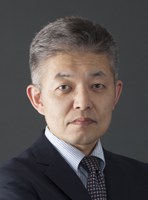
OKAMOTO Eiji is a Professor at the Department of Electrical and Mechanical Engineering, School of Engineering, Nagoya Institute of Technology. His research focuses on quantum cryptography, satellite communications, wireless networks, 5G/6G technology, information security, and Sub-THz imaging. He has made significant contributions to the fields of quantum key distribution, non-terrestrial networks, and secure wireless communications. OKAMOTO received his Doctor of Informatics from Kyoto University in 2003, Master of Engineering in 1995, and Bachelor of Engineering in 1993, all from Kyoto University. Prior to his current position, he worked at the Communications Research Laboratory, Ministry of Posts and Telecommunications (1995-2002), NICT (2011-2013), and Simon Fraser University (2004). Professor OKAMOTO's research interests span multiple cutting-edge areas in communications technology. His work in quantum cryptography focuses on improving information reconciliation for continuous-variable quantum key distribution using polar codes and raptor codes. In satellite communications, he has conducted extensive research on non-terrestrial networks and optical satellite data relay systems. His contributions to wireless networks include developing low-latency communication techniques, advanced multiple access methods, and secure communication protocols. His recent work in Sub-THz imaging has led to innovations in hazardous material identification and complexity reduction methods. Analysis of his recent publications reveals a strong focus on quantum key distribution systems, with multiple papers addressing information reconciliation efficiency. There's also a significant emphasis on non-terrestrial networks for 6G applications, particularly leveraging LEO satellites and optical communications. His research bridges theoretical advances with practical implementations, as evidenced by numerous papers on experimental demonstrations and system implementations. Education Achievement Award from IEICE (2025) Best Paper Award from IEICE Communications Society (2024) Satellite Communication Research Award (2023) Activity Merit Award (Review Committee) (2022) Meritorious Service Award (Research Committee Chair) (2022) Excellent Teaching Award from Nagoya Institute of Technology (2022) IEICE ComEX Top Downloaded Letter Award (2022) IEICE Fellow (2022) Professor OKAMOTO actively mentors numerous graduate students, with recent research involving M1 and M2 students working on quantum cryptography, Sub-THz imaging, and non-terrestrial networks. His laboratory at Nagoya Institute of Technology has received funding for research on quantum cryptography communication (2019), autonomous driving (2014), sensor networks (2009), and optical satellite communication (2008). He has served as a committee member for numerous academic societies including IEEE and IEICE. Professor OKAMOTO leads the Eiji Okamoto Laboratory at Nagoya Institute of Technology, which focuses on creating next-generation mobile and satellite communication systems. The laboratory aims to cultivate independent thinking engineers while developing new wireless (and wired) communication methods to realize a safer, more secure, and more convenient super-smart society. Current research projects include quantum cryptography, Sub-THz imaging for security applications, non-terrestrial networks for 6G, and low-latency communication techniques for autonomous driving and V2X applications.
Jun Nakanishi is a researcher affiliated with the Institute of Science Tokyo, working externally with organizations JST/ATR. His work appears to focus on advanced technological research. Research areas include telecommunications, information science, and artificial intelligence, reflecting the mission of JST (Japan Science and Technology Agency) and ATR (Advanced Telecommunications Research Institute).
Yuta Koike is an Associate Professor at the Graduate School of Mathematical Sciences, University of Tokyo . His research focuses on statistical inference for stochastic processes , particularly in high-frequency financial data and high-dimensional statistics . He has contributed to covariance estimation under non-synchronous observations, microstructure noise, and jumps, and recently explores lead-lag relationships between stochastic processes. Research Interests : Stochastic processes, high-dimensional statistics, financial econometrics, high-frequency data, probability theory. Awards : The 32nd JSS Ogawa Award The 1st ISI Tokyo Memorial Award Editorial Roles : Associate Editor for Asia-Pacific Financial Markets (2019–present), Bernoulli (2025–present), and Japanese Journal of Statistics and Data Science (2023–present). Teaching : Courses in statistical analysis, econometrics, and probability theory at the University of Tokyo, Seijo University, and Tokyo Metropolitan University. His publications span journals like Annals of Statistics , Stochastic Processes and their Applications , and Journal of Theoretical Probability . He actively presents at international conferences, including the Joint Statistical Meetings and SPA Conference .
SAKAUE Fumihiko is an Associate Professor at the Faculty of Engineering, Department of Information Engineering at Okayama University. He holds a Doctor of Engineering degree from Okayama University, awarded in 2006. His research focuses on innovative computer vision and computational photography techniques, aiming to develop novel methods for 3D measurement and real-time motion analysis without relying on conventional cameras or computers. His work integrates light-ray processing and spatiotemporal modulation to enhance visual information extraction and has contributed significantly to fields such as pattern recognition and imaging systems. Education background includes graduation from Okayama University's Faculty of Engineering in 2001, followed by earning his Doctor of Engineering degree from the same institution in 2006. His research interests span several key areas in informatics and engineering, including: Perceptual information processing for dynamic visual analysis Computer vision applications in 3D reconstruction and motion capture Computational photography techniques for advanced imaging systems Pattern recognition methodologies in unstructured environments Development of light-based measurement systems without conventional sensors Integration of light projection and observation for real-time data interpretation SAKAUE has received numerous awards, including: MIRUインタラクティブ発表賞 (2024) Best student paper award at International Workshop on Frontiers of Computer Vision (2022) Best paper award at INTERNATIONAL WORKSHOP ON ADVANCED IMAGE TECHNOLOGY (2022) MIRU2018長尾賞 (2018) 山下記念研究賞 (2018) CGVI研究会優秀研究発表賞 (2017) ICPR Best Student Paper Award (2016) MIRUインタラクティブ発表賞 (2019) MRU2016インタラクティブ発表賞 (2016) In terms of advising, SAKAUE has guided notable students including Toshiki Kamiya (recipient of 2022 Best Student Paper Award) and Yuma Nishikawa (2024 Best Student Paper award recipient). He has secured multiple grants from the Japan Society for the Promotion of Science (JSPS), including a 2020-2023 grant focused on 3D motion visualization through spatiotemporal light-ray integration, and a 2016-2019 grant on 5D light field display technologies. Additional funding includes a 2022-2025 project with Aichi Prefecture for AI-driven textile inspection systems. SAKAUE collaborates with interdisciplinary research teams at Okayama University, focusing on developing innovative imaging systems and sensorless vision technologies. His work often involves partnerships with industry through patents and applied research projects, such as the 'Position Measurement Device' (2016) and 'Three-Dimensional Information Presentation Device' (2014), demonstrating practical applications of his theoretical research.
Yasutaka Kamei is a Full Professor at the Graduate School and Faculty of Information Science and Electrical Engineering , Kyushu University since 2024. He holds a Doctorate in Information Science from Nara Institute of Science and Technology and has been a InaRIS Fellow since 2023. His career spans roles as Associate Professor (2015-2023), Visiting Researcher at Queen's University (2015-2017), and Assistant Professor (2011-2015). Research Fields: Specializing in Empirical Software Engineering , he investigates software reliability, defect prediction, code review practices, and mining software repositories. His work on fuzz testing , technical debt , and automated program repair has produced influential frameworks like TraceJIT and PAFL . He pioneered studies on developer behavior in GitHub and federated learning for cross-project defect prediction. Scientific Trends: Recent publications focus on LLM applications in mutation testing , visual bug reporting , and CI/CD inefficiencies . His team explores developer-centric challenges in modern practices, including token-based micro commits and fuzzing build failures . Awards & Grants: InaRIS Fellowship (2023): 10-year, 100M yen grant for human-machine interaction in software development IPSJ/ACM Early Career Award (2013) Leadership: He chairs PC for MSR2018 , co-organizes NII Shonan Seminars , and serves on committees for ICSE , ASE , and SANER conferences. His editorial roles include Empirical Software Engineering and Automated Software Engineering journals.
Synge Todo is a Professor in the Department of Physics, Graduate School of Science at the University of Tokyo , with joint appointments at the Mathematics and Informatics Center , Institute for Solid State Physics , Institute for Physics of Intelligence , Quantum Software Project , and Next-Generation AI Research Center . Born in 1968, he earned his B.Sc. and Ph.D. from the University of Tokyo and subsequently held post-doctoral positions at ETH Zürich. Education Ph.D. (Science), University of Tokyo, 1996 B.Sc. (Physics), University of Tokyo, 1991 Research Interests Todo’s research integrates quantum many-body physics , computational physics , and quantum computing . He develops advanced Monte-Carlo algorithms , tensor-network techniques , and renormalization group methods to study strongly correlated electron systems , lattice QCD , quantum phase transitions , and machine-learning applications in physics . His recent work explores fault-tolerant quantum computing architectures , non-variational quantum ground-state preparation , and universal scaling laws in deep neural networks . Scientific Awards Prizes for Science and Technology, The Commendation for Science and Technology by MEXT Japan (April 2019) Grants & Collaborations He currently leads several JSPS KAKENHI projects, including “ Quantum-circuit design for computational materials science ” (2023-26) and “ Enhancement of detailed-balance-violating MCMC methods ” (2020-24). He also co-leads interdisciplinary teams focusing on data assimilation for materials discovery and scalable high-performance computing . Laboratories & Software Todo heads research activities in the HΦ quantum lattice model solver and the MateriApps portal, providing open-source tools for large-scale simulations in condensed-matter and materials science.
Professor Mizuho Iwaihara is affiliated with Waseda University's Faculty of Science and Engineering and Graduate School of Information, Production, and Systems. Her research focuses on database systems, web information retrieval, text mining, security/privacy, and social media analysis. She has led significant projects on Wikipedia edit history analysis, knowledge graph construction, and privacy-preserving frameworks. Key research areas: Database Query Processing, Web Information Systems, Text Mining, Knowledge Management, Social Media Her recent publications address semantic analysis of collaborative content, topic evolution tracking, and privacy behavior modeling. Over 85 papers with 349 citations reflect her impact in database and social media research. Scientific achievements include: Best Demo Award (2014) for WikiReviz Best Paper Award (2008) at IFIP e-Business Conference EC-Web2006 recognition Grants from Japan Society for the Promotion of Science (JSPS) span multiple projects on knowledge graph development, social content analysis, and privacy-preserving systems. She supervises numerous graduate students and leads the Data Engineering Laboratory at Waseda University.
Hideaki Kikuchi is a Professor at Waseda University’s Faculty of Human Sciences, Japan, holding a Ph.D. in Information Science from the same university. He specializes in speech science, spoken dialogue systems, and human-agent interaction, with extensive work on prosody, infant-directed speech, and real-time MRI articulatory analysis. Education: Ph.D. (Information Science), Waseda University Research Interests: His research spans Speech Science , Spoken Dialogue Systems , Human-Agent Interaction , Kansei Informatics , Intelligent Informatics , and Language Acquisition . He investigates empathic dialogue generation, prosodic entrainment, infant speech development, and multimodal communication robots. Publications Trend: Recent articles focus on user empathy toward dialogue systems, linguistic alignment in chat-oriented robots, real-time MRI visualization of articulation, and developmental phonetic studies in Japanese children, indicating a strong emphasis on both technological innovation and cognitive speech science. Awards: Information Processing Society of Japan, 53rd National Convention Excellence Award (1996) Grants & Projects: JSPS KAKENHI "Real-time MRI database of articulatory movements of Japanese" (2020-2024) JSPS KAKENHI "Development of protocol of effective social work interview for older adults with dementia" (2019-2022) VR orality factors project (2017-2020) Labs & Teams: He leads the Speech & Interaction Research Group within Waseda’s Faculty of Human Sciences, collaborating with interdisciplinary members on spoken corpora, dialogue systems, and multimodal interaction experiments.
Yves Lepage is a Professor at Waseda University's Faculty of Science and Engineering, specifically within the Graduate School of Information, Production, and Systems. He maintains an active research laboratory (lepage-lab.ips.waseda.ac.jp) and teaches courses including Example-based machine translation/NLP, Natural language processing, and Master's/Doctoral thesis supervision for the 2025 academic year. His research focuses on the application of analogical reasoning to natural language processing problems, particularly machine translation. Lepage's work spans formal analogy between strings, sentence-level analogies, morphological analysis, and multilingual systems. His research interests include machine translation, analogy, multilingual alignment, multilingual large language models, and foreign language aids. He has made significant contributions to understanding analogical density in corpora and developing methods to leverage analogies for translation, especially in low-resource scenarios. His publication record shows consistent output through 2024, with research evolving from foundational work on proportional analogy to sophisticated applications with neural networks. Recent work explores masked prompt learning for analogies, fuzzy analogies for translation, and organizing lexica into analogical grids for morphological generation across languages. Waseda University Teaching Award (Spring semester 2016) Lepage has successfully led multiple research projects funded by the Japan Society for the Promotion of Science, including "Theoretically founded algorithms for the automatic production of analogy tests in NLP" (2021-2024) and "Self-explainable and fast-to-train example-based machine translation using neural networks" (2018-2021). His work has involved international collaboration, including a 2023-2024 research period at the University of Montreal. He serves as Concurrent Researcher at the Waseda Research Institute for Science and Engineering (2024-2026) and has been active in professional organizations including the Information Processing Society of Japan and the Japanese Natural Language Processing Association.
Takahiro Mimori is a Researcher at the Faculty of Science and Engineering , Waseda University. His work focuses on Life, Health and Medical Informatics with extensive contributions to genomic data analysis , phylogenetic inference , and computational methods for healthcare applications . Current affiliation: Waseda Research Institute for Science and Engineering Previous roles: RIKEN (2019-2025), Tohoku Medical Megabank Project His research spans algorithms for structural variant detection , HLA typing , and multiomics integration , particularly in maternal and cancer studies. Recent work includes computational frameworks for microdroplet barcode design and hyperbolic phylogenetic tree embeddings . Key tools developed: HLA-VBSeq, STR-realigner, AP-SKAT, iSVP Major projects: Tohoku Medical Megabank, Maternity Log Study His publications demonstrate expertise in machine learning applications to medical diagnostics and genomic variant analysis , with over 29 peer-reviewed papers and 796 Scopus citations.
Yoichi Kato serves as a Professor (without tenure) at Waseda University's School of Creative Science and Engineering and Global Center for Science and Engineering. He maintains additional affiliations with the Graduate School of Creative Science and Engineering and the Global Education Center. His academic profile spans decades of research and teaching in information and communication technologies, with particular expertise in video coding algorithms, image processing, and human-computer interaction systems. Professor Kato's research interests focus on Human interface and interaction, Image Processing, Digital Signal Processing, and Design Thinking. His scholarly trajectory demonstrates a progression from foundational work in signal processing during the 1980s-1990s toward more applied, interdisciplinary research in recent years. Early publications established his expertise in motion picture coding algorithms and image restoration techniques, while his current work explores IoT applications, machine learning prototyping methods, and user-centered design approaches. Analysis of his publication history reveals significant contributions to video compression standards and image processing algorithms, with recent research expanding into collaborative systems, disaster prevention technologies, and educational applications. His work bridges theoretical foundations with practical implementations, particularly evident in his recent projects involving drone-based terrain analysis and automated plant monitoring systems. Professor Kato actively supervises graduate students through Master's Thesis projects in the Department of Modern Mechanical Engineering and Research on Neuro Robotics. His teaching portfolio includes diverse courses such as SHIP Field Practice, Modern Information and Communication Systems, Exercise for Co-Creation workshop, and Introduction to Python Programming, reflecting his interdisciplinary approach to education. His laboratory activities center on practical applications of information technologies, with current projects examining drone applications for disaster prevention, remote plant monitoring systems using IoT technology, and prototyping methodologies for machine learning applications. These initiatives demonstrate his commitment to translating theoretical knowledge into real-world solutions that address contemporary challenges.
Hiroshi Watanabe is a Professor at Waseda University 's Department of Communications and Computer Engineering , School of Fundamental Science and Engineering. With a Doctor of Engineering from Hokkaido University (1985), his career spans NTT Human Interface Laboratories (1985-2000) and academic leadership at Waseda since 2000, including chairing ISO/IEC JTC 1/SC 29 (1999-2006). A Fellow of IEEE , IEICE , and other institutions, he focuses on image/video coding , machine vision , and multimedia distribution . Education: BE, ME, Ph.D. in Electronic Engineering (Hokkaido University) Professional Affiliations: IEEE, IEICE, IPSJ, ITE, IIEEJ His research bridges image/video processing with deep learning , emphasizing machine-centric coding , real-time detection , and multimodal analysis . Key recent work includes: Novel image coding frameworks combining edge learning and diffusion models Super-resolution techniques for QR codes and medical imaging Advanced object detection using non-local modules and attention networks 3D pose estimation and point cloud analysis for robotics and healthcare He has received prestigious awards including the 2005 Information Processing Society of Japan Standardization Contribution Award and multiple earlier honors. His recent publications (2024-2025) demonstrate leadership in machine vision coding , real-time medical detection , and multimodal signal processing , often integrating stable diffusion , feature fusion , and parameter-efficient models .
Professor Akihiko Hirata is a distinguished faculty member at Waseda University's School of Fundamental Science and Engineering, specializing in Materials Science and Engineering. With a Doctor of Engineering degree from Waseda University, he has established himself as a leading researcher in the field of materials characterization, particularly focusing on metallic glasses, amorphous materials, and electron microscopy techniques. His research interests span a wide range of topics in materials science, with particular emphasis on electron microscopy , metallic materials , amorphous structures , and nanoporous materials . Professor Hirata's work combines advanced experimental techniques with computational modeling to unravel the complex structures of disordered materials. His research group has made significant contributions to understanding the topological features of silica glasses, metallic glasses, and other amorphous systems, revealing connections between atomic-scale structures and macroscopic properties. Analysis of his recent publications shows a strong focus on topological analysis of glass structures , local atomic environment characterization , and advanced electron diffraction techniques . His work frequently employs persistent homology methods, angstrom-beam electron diffraction, and molecular dynamics simulations to extract structural information from disordered materials. The research spans fundamental understanding of glass formation to practical applications in energy storage and conversion. Best Poster Young Researcher Presentation Award in BMGV (2006) Professor Hirata's research has significant implications for the development of advanced materials with tailored properties. His work on nanoporous materials, metallic glasses, and solid-state electrolytes contributes to advancements in energy storage technologies, catalysis, and functional materials design. Through his extensive publication record and innovative methodologies, he has established important connections between atomic-scale structures and macroscopic material properties, providing valuable insights for materials design and engineering.
Professor Matsuda Yu at Waseda University 's Faculty of Science and Engineering (School of Creative Science and Engineering) is a leading researcher in fluid engineering and aerospace systems. With a Doctor of Engineering from Nagoya University, he has developed innovative measurement techniques for micro/nano-scale phenomena. Current position: Professor, Waseda University (2022-present) Previous roles: Japan Science and Technology Agency (2018-2022), Nagoya University (2008-2018) Research Focus spans thermal engineering , microfluidics , and quantum-inspired data analysis . His recent work involves pressure-sensitive paint optimization, single-particle tracking , and quantum annealing applications for fluid dynamics. Scientific Recognition includes multiple JSME awards, MEXT Commendation for Young Scientists, and the 2025 Ichiro Tanaka Award . His 45+ scientific awards highlight contributions to measurement science and fluid dynamics. Technical Innovations include ambient-light-resistant PSP methods, quantum-optimized sensor placement, and bioluminescent temperature-pressure sensors. His 95+ publications with 1497 Google Scholar citations demonstrate significant impact in microscale flow analysis and nanoparticle dynamics .