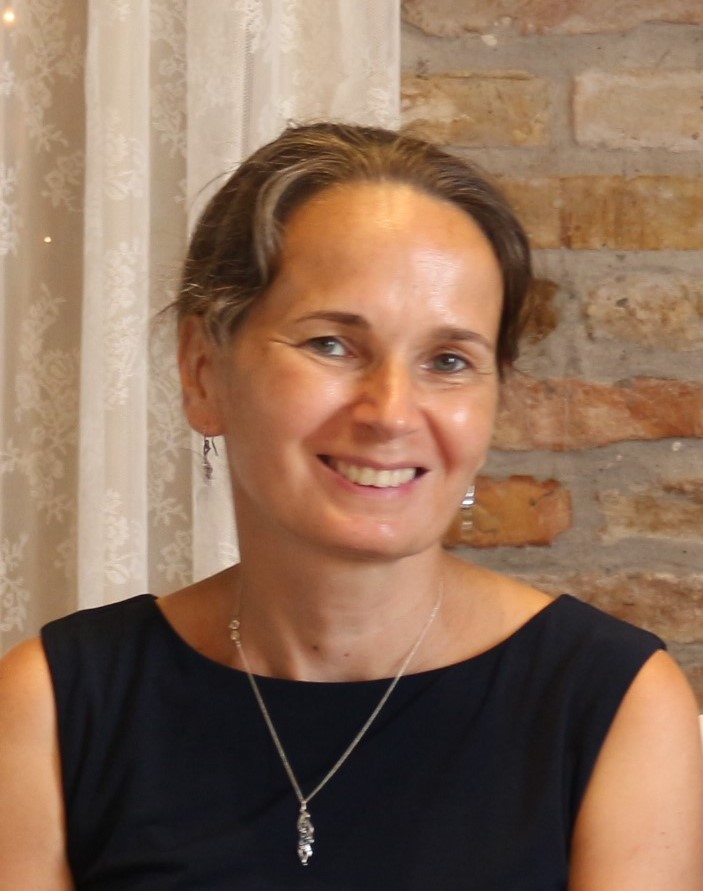
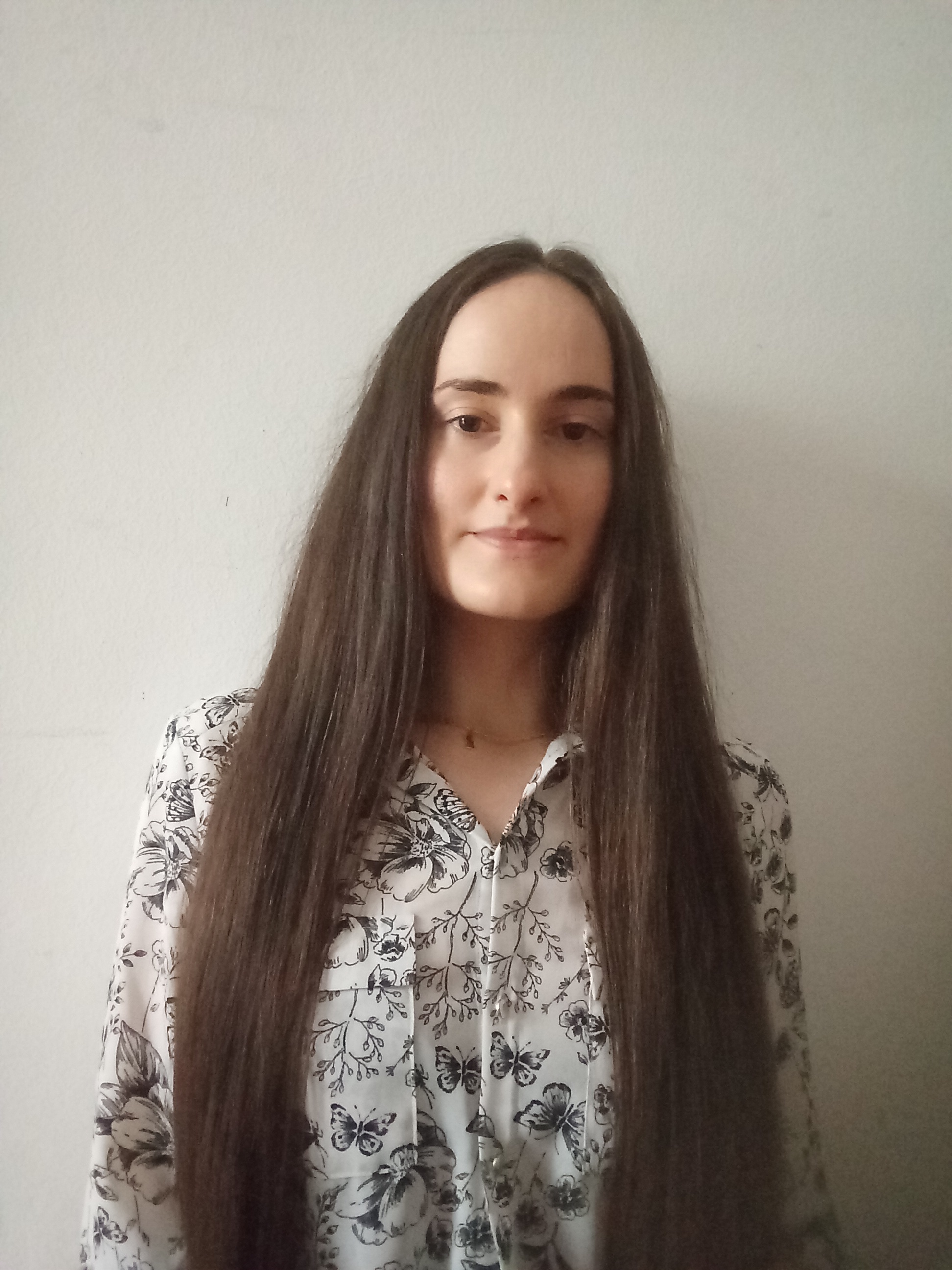
Máté Szabó is an Assistant Professor at the University of Debrecen , affiliated with the Faculty of Informatics and the Department of Information Technology . His email contact is szabo.mate@inf.unideb.hu . He works in areas such as Machine Learning , Smart Cities , and Mobile Computing . His research spans topics like microservice architecture for ensemble models, Markov modeling of traffic flows, and distributed machine learning on mobile platforms. He has explored neural models for conversational AI and gamification in programming education through Minecraft-based challenges. His work also addresses edge computing and data parallelism in mobile environments. His publications (2016–2024) reflect trends in machine learning deployment on Android platforms smart city traffic analytics gamified educational tools cognitive modeling of numerical understanding microservice-based model integration .
Dr. HAJNAL Géza is an Associate Professor at the Budapest University of Technology and Economics (BME), Faculty of Civil Engineering, where he serves in the Department of Hydraulic and Water Resources Engineering. His office is located in Room K. ép / mf. 12/7, and he can be contacted via email at hajnal.geza@emk.bme.hu or phone at +36 1 463 2362. His teaching portfolio includes active courses such as Hydraulic Engineering, Water Management (BMEEOVVAT43) and Hydrometric Field Course (BMEEOVVAI44). Previously, he taught Hidrogeology (BMEEOGMMET3) and Hydrogeology of Subsurface Water (BMEEOGMDT81). HAJNAL's research specializes in hydrogeology , with emphases on karst aquifer dynamics, groundwater flow modeling, climate impacts on hydrology, and hydraulic engineering. His work integrates field measurements (e.g., drip-water monitoring in Buda Castle Cave) with advanced numerical modeling to address complex hydrological challenges in Hungarian watersheds. Analysis of his 15 most recent publications (2013–2025) reveals dominant themes: 73% focus on karst/fractured aquifers , 20% on hydrological modeling techniques , and 7% on socio-environmental conflicts. Recurrent technical subfields include seepage flow validation, transmissivity determination, and rainfall-runoff sensitivity. No scientific awards, grants, student advisees, or lab affiliations are documented in the provided materials.
Roles: Full Professor at Budapest University of Technology and Economics (BME), leading the Laboratory of Cryptography and Systems Security (CrySyS Lab) . Specializes in cyber security, IoT security, and privacy technologies. Served as Associate Editor for IEEE Transactions on Mobile Computing and Elsevier Computer Communications. Education: M.Sc. in Computer Science, BME (1995) Ph.D. in Computer Science, Swiss Federal Institute of Technology Lausanne (EPFL, 2002) Habilitation at BME (2013) Doctor of Science, Hungarian Academy of Sciences (2021) Research Interests: Focuses on malware detection on embedded systems, security of industrial control systems, and privacy-preserving AI. Current projects include DOSS (IoT supply chain security), SECURED (health data security), and SPAM (AI and cybersecurity). Published over 150 papers and co-authored books on wireless network security and cryptographic obfuscation. Grants & Awards: Awarded Dennis Gabor Award (2024), Bolyai Fellowship (2008-2011), and led EU projects like SEVECOM and WSAN4CIP. Current grants include H2020 DOSS and OTKA-funded research on federated learning incentives. Advising: Supervised 13 PhD students, including current faculty members (e.g., András Gazdag, Dorottya Papp). Active in mentoring CTF teams like !SpamAndHex (DEFCON qualifier). Labs & Teams: Director of CrySyS Lab, leading research in embedded device security, vehicle cyber defense, and industrial IoT resilience. Active in EDIH cybersecurity consulting for SMEs.
Gábor Magyarfalvi is an Assistant Professor and Lecturer at Eötvös Loránd University, affiliated with both the Institute of Chemistry and the Department of Inorganic Chemistry. His office is located at 1117 Budapest, Pázmány Péter sétány 1/a. (Room 542), and he can be contacted via email at gmagyarf@elte.hu or phone extension 6587. His research focuses on physical and inorganic chemistry, with specialization in spectroscopy, astrochemistry, and computational methods. Key areas include matrix isolation techniques for studying interstellar molecule formation (e.g., H 2 catalysis via polyaromatic hydrocarbons), photochemical generation of reactive intermediates, and conformational dynamics of biomolecules. His work extensively employs low-temperature matrix isolation coupled with laser spectroscopy and quantum chemical calculations. Magyarfalvi's publications demonstrate consistent themes: 60% focus on low-temperature photochemistry and spectroscopy of small molecules (e.g., nitrogen/sulfur compounds, amino acids), 30% on peptide/protein conformational analysis using vibrational circular dichroism (VCD) and NMR, and 10% on methodological developments in computational chemistry. Recent works increasingly explore astrochemistry and quantum tunneling phenomena.
Federico Battiston is an Associate Professor of Network Science and Director of the PhD Program in Network Science at Central European University (CEU), the first such program in Europe. He holds a PhD in Applied Mathematics from Queen Mary University of London and degrees in statistical physics from Sapienza University of Rome. His research focuses on network science, complex systems, and computational social science, with contributions in leading journals like Nature Physics , Physical Review Letters , and Science Advances . He coordinates the software project Hypergraphx and was Chair of NetSci2023, the largest Network Science conference. He has received awards including the Complex Systems Society's Junior Award (2022) and the European Physical Society's Early Career Prize (2021). Education: PhD in Applied Mathematics, Queen Mary University of London MSc in Theoretical Physics, Sapienza University of Rome BSc in Physics, Sapienza University of Rome Research Interests: Battiston explores generalized network structures (e.g., multilayer and higher-order networks), dynamics on networks (epidemics, social/cultural dynamics, synchronization), and their applications in social systems, neuroscience, and ecology. He emphasizes how network topology influences collective behavior and emergent phenomena. Key Contributions: His work includes hypergraph modeling, collaboration in escape rooms, and the role of higher-order interactions in brain networks. He co-authored the book Higher-order systems and guest-edited a Focus Collection on higher-order networks in Communications Physics . Awards & Roles: Junior Award of the Complex Systems Society (2022) Early Career Prize, European Physical Society (2021) Elected Member, Complex Systems Society Council Editor, Communications Physics Advising & Grants: Advised PhD students such as Milan Janosov, Luis Natera, and Rebeka Szabo. Two students received CEU Advanced Awards. His projects include Mapping the Higher-Order Dynamics of Neurodegeneration and DYNASNET . Labs/Teams: Leads the Hypergraphx team and collaborates on interdisciplinary projects in network science, including ecological networks and urban mobility analysis.
Balazs Vedres is a **Professor** at the **Central European University (CEU)**, with a joint appointment in the **Department of Network and Data Science**. His research integrates network science, data science, and social theory to explore creativity, innovation, and historical processes in collaborative networks. He holds a **PhD in Sociology from Columbia University** and an **MA in Economics from Corvinus University**. **Research Interests**: Focuses on structural dynamics in creative fields (e.g., jazz, video games, open-source software), gender inequality in collaborative platforms, historical network evolution, and the impact of social bots on human collaboration. He analyzes how network configurations like *structural folds* and *forbidden triads* drive innovation and creativity. **Awards**: Elected **Member of the European Academy of Sociology (2017)**, recognizing his contributions to sociological research. His work bridges computational methods with sociological theory, as seen in his publications in *American Journal of Sociology* and interdisciplinary journals. **Projects**: Leads initiatives like *Gendered Creative Teams: From Marginality to Success* and *Ceunet/Indra Mapping European Network Science*. His research often involves empirical studies of transnational activism, entrepreneurial networks, and digital platforms. **Labs/Teams**: Active in CEU’s **Data and Network Dynamics Studies (DNDS)** group, fostering interdisciplinary collaboration in computational social science. His work emphasizes the interplay between global economic integration and local developmental agency.
János Kertész is a Professor at the Department of Network and Data Science at Central European University (CEU) since 2012, and previously held the position of Professor at the Budapest University of Technology and Economics (1992–2018). He obtained his PhD in Physics from Eötvös University (1980) and DSc from the Hungarian Academy of Sciences (1989). His research spans statistical physics applications, complex networks, and financial analysis. He has authored over 280 papers and served on editorial boards of journals like Journal of Physics A and Physical Review E . His research focuses on interdisciplinary topics including social network dynamics, systemic risk in economic systems, and algorithmic bias in digital environments. Notable awards include the Széchenyi Prize (Hungary’s highest scientific honor) and the Finland Distinguished Professorship. He has led projects such as SAI (Socially Explainable AI) and HUMANE-AI-NET, addressing algorithmic bias and AI ethics. His work bridges physics-based modeling with real-world social and economic systems, emphasizing computational approaches to corruption, opinion formation, and innovation diffusion. Key contributions include modeling cascading failures in interdependent networks and analyzing attention dynamics on platforms like Sina Weibo during the pandemic. He advises on systemic risk mitigation strategies and collaborates internationally, with visiting roles in Germany, the U.S., France, Italy, and Finland.
Andrea Kő is a researcher at the Corvinus University of Budapest's Institute of Data Analysis and Informatics, with a focus on artificial intelligence, fintech, and big data applications. She has held positions in the Department of Information Systems until 2022 before transitioning to her current role. Her work emphasizes investment recommenders, Industry 4.0 readiness, and e-government solutions. Her research spans financial technologies, manufacturing optimization, and organizational resilience in SMEs. Notable contributions include hybrid AI models for production systems and frameworks for digital transformation assessment. She actively contributes to international conferences like EGOVIS and BiDEDE, editing proceedings and presenting on topics such as robo-advisors and smart manufacturing. Key projects include the CCMS2.0e maturity model for Industry 4.0 adoption and studies on pandemic impacts on SMEs. Her work integrates machine learning (ANFIS, MMNN) with domain-specific challenges, addressing both theoretical and practical aspects of digital innovation across sectors.
Márk Jelasity is a Full Professor in the Department of Algorithms and AI at the University of Szeged, Hungary, where he has been working since 2016. Previously, he served as a research advisor (equivalent to full professor) and senior research scientist at the Research Group on Artificial Intelligence (RGAI) of the Hungarian Academy of Sciences. His career includes numerous international research positions at institutions in Sweden, Norway, France, Italy, and the Netherlands. Professor Jelasity's research spans distributed systems, peer-to-peer computing, gossip protocols, and decentralized machine learning. His work bridges theoretical foundations with practical applications, particularly in the areas of self-organizing systems and privacy-preserving computation. His research has significant implications for smart grid technologies, secure distributed systems, and robust machine learning. His publication record shows a clear evolution from foundational work in gossip protocols and peer-to-peer systems toward cutting-edge research in decentralized machine learning, adversarial robustness, and privacy-preserving AI. Recent publications demonstrate his leadership in comparing gossip learning with federated learning approaches and exploring novel techniques for enhancing robustness in neural networks. Bolyai Plaquette (2015) 10 years best paper award at ACM/IFIP/USENIX Middleware Conference (2014) Best paper award at IEEE International Conference on Peer-to-Peer Computing (2014) Best paper award at IEEE International Conference on Self-Adaptive and Self-Organizing Systems (2013) Scientific Award of the Faculty of Science and Informatics, University of Szeged (2013) Fulbright Scholarship to visit Cornell University (2013) Multiple Bolyai Scholarships (2007-2014) Professor Jelasity has been actively involved in the academic community as an organizer of major conferences including DAIS'16 (TPC co-chair), SASO 2010 (General Co-Chair), and SASO 2007 (TPC co-chair). His leadership in the field is evidenced by his extensive publication record in top venues and his role in editing special issues and conference proceedings.
Dr. habil. Simon János PhD is an Associate Professor at the University of Szeged's Faculty of Engineering, Institute of Technology. Born on July 27, 1980, he maintains his office at 6724 Szeged, Moszkvai krt. 9. Room F9, with contact number +36-62-546-575. His educational background includes IT engineering and electrical engineering from Technical College of Subotica (1999-2005), Certified Computer Engineering from University of Novi Sad (2005-2008), PhD in Engineering from University of Osijek (2008-2014), and habilitation from Óbuda University Doctoral School of Security Sciences (2020). English (intermediate, complex) Serbian (advanced, complex) Dr. Simon's research focuses on design and programming of Internet of Things environments, hardware and software development of mobile robots and wireless sensor networks, and analysis of Industry 4.0 case studies. His teaching portfolio includes Computer Modeling, Simulation courses, Microcontrollers, Graphical Programming at BSc level, and Real-time systems, Autonomous and intelligent robots at MSc level. He serves as Associate Editor for Analecta Technica Szegedinensia and is a member of the Higher Education Management Education Methodology Association (FIOM). His international experience includes CEEPUS mobility to Timisoara, Erasmus mobility to multiple Romanian cities, and participation in IoTTech Expo Global in London.
László Lengyel is a Professor at the Budapest University of Technology and Economics (BME), affiliated with the Department of Automation and Applied Informatics . His work bridges theoretical and applied computer science, focusing on industrial automation, IoT systems, and model-driven engineering. Research interests include Model transformations and domain-specific languages IoT device management and multi-domain integration Software obfuscation and cybersecurity Graph algorithms and distributed computing (MapReduce) Real-time data analysis in manufacturing Automotive sensor networks His recent publications reflect expertise in model-driven IoT architectures , granule manufacturing automation , and MapReduce-based graph analysis , with a focus on industrial and automotive applications. He contributes to open-source frameworks like SensorHUB and explores gamification in driver behavior systems.
Zoltán Sütő is an Associate Professor at the Budapest University of Technology and Economics, affiliated with the Department of Automation and Applied Informatics. His research focuses on advanced power electronics and control systems, with expertise in real-time implementation using FPGA technology. He maintains an active presence through institutional contacts at Budapest 1117, Magyar tudósok krt. 2., Q.B114, and can be reached via phone (+36 1 463-2337) or email (Suto.Zoltan@aut.bme.hu). Dr. Sütő's research encompasses: Design and optimization of power converters (dual active bridge, multilevel inverters) Real-time control algorithms for grid-connected systems and microgrids FPGA-based hardware-in-the-loop simulation methodologies Nonlinear dynamics in power electronic systems Artificial intelligence applications for fault diagnosis in drive systems His work bridges theoretical control models with practical implementations in renewable energy integration and power quality management. Recent publications demonstrate a strong focus on predictive control techniques, adaptive compensation methods, and optimization of power converter topologies. Research trends emphasize real-time validation, FPGA implementation, and AI-enhanced diagnostics across applications ranging from energy storage systems to industrial drives. Articles consistently address efficiency improvements, stability challenges, and novel modulation strategies in power conversion.
Dr. Gergely Kocsis serves as an Associate Professor at the University of Debrecen's Faculty of Informatics, Department of Informatics Systems and Networks. His office is located in the Faculty of Informatics building at 4028 Debrecen, Kassai út 26, ground floor, IF13 (Lecturers' room), with contact email kocsis.gergely@inf.unideb.hu and central telephone +36 52 512 900 75013. Dr. Kocsis's research program focuses on: Information spreading phenomena Agent-based and individual-based simulations Cellular automata applications Network structure and dynamics His scholarly output reveals a sophisticated research trajectory evolving from foundational work on cellular automata modeling of social dynamics (2007-2014) to contemporary investigations of transportation networks, VANETs, and AI applications. The 2023-2025 publications demonstrate particular expertise in network extraction methodologies, containerized computing environments, and the application of generative AI to productivity challenges. His work consistently applies computational modeling approaches to understand complex spreading phenomena across diverse network structures. Dr. Kocsis maintains comprehensive scientific profiles across major academic platforms including Google Scholar, ResearchGate, ORCID, Scopus, and Web of Science, demonstrating active participation in the international research community. His departmental colleagues work in complementary areas such as complex networks, embedded systems, and neural networks, suggesting rich collaborative opportunities within the Faculty of Informatics.
Edina Robin is a Habilitated Associate Professor at the Institute of Language Mediation , part of Eötvös Loránd University . She serves as the Director of the Institute and leads two departments: the Department of Translation and Interpreting and the Department of Hungarian as a Foreign Language . Her work bridges theoretical and applied translation studies, emphasizing modern challenges in language mediation. Role: Director of Institute of Language Mediation Role: Head of Department of Translation and Interpreting Role: Head of Department of Hungarian as a Foreign Language Research Interests Translation universals and revision practices Corpus-based translation analysis Human-in-the-loop machine translation systems Ethical implications of AI in translation Distance education methodologies in translation training Publication Trends reflect her interdisciplinary focus on machine translation (33%), translation teaching (25%), corpus linguistics (20%), and crisis communication (15%). Recent works explore the intersection of artificial intelligence, human agency, and ethical frameworks in language mediation. Academic Leadership includes institutional development for language mediation, curriculum design for Hungarian as a foreign language, and fostering collaboration between academic and industry translation practices.
Szandra Ésik is a Lecturer at the Department of Chinese Studies, Faculty of Humanities, Eötvös Loránd University. She teaches Chinese language and political discourse analysis while contributing to Hungarian-Chinese lexicography projects. Institute of East Asian Studies Department of Chinese Studies Research Interests: Chinese political rhetoric and discourse analysis Second language teaching methodologies for Chinese Translation studies and bilingual dictionary development Silk Road cultural/economic history Environmental policy in Chinese Communist Party congresses Her recent publications focus on comparative analysis of political speeches (2017-2020), character teaching strategies, and collaborative dictionary projects with scholars like Huba Bartos and Imre Hamar. She has contributed to institutional research at ELTE's Chinese Studies department. Contact: esik.szandra@btk.elte.hu