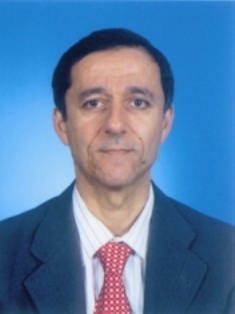
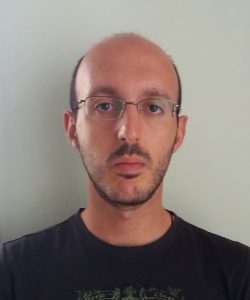
Ahsan Fayyaz is a Research Engineer I at the KIOS Research and Innovation Center of Excellence and a current M.Sc. student in Artificial Intelligence jointly offered by the Department of Electrical and Computer Engineering and the Department of Computer Science at the University of Cyprus. He holds a BS in Electrical Engineering from COMSATS University Islamabad (2021).
Prof. Hakan Altınçay is a Full Professor in the Department of Computer Engineering at Eastern Mediterranean University (EMU). He holds a PhD from Middle East Technical University (METU), Turkey (2000), and has been at EMU since 2000, progressing from Assistant Professor (2000–2005) to Full Professor (2012–present). His research focuses on machine learning, including imbalance learning, feature selection, ensemble methods, and biomedical data analysis. He has supervised 10+ PhD and Master’s theses and authored over 50 journal and conference papers. Education: BEng in Electrical and Electronics Engineering (METU, 1993), MSc and PhD in Electrical Engineering (METU, 2000). Awards include the IEEE Third Best Paper Award (2003) and TÜBİTAK PhD Scholarship. He serves on editorial boards (e.g., Applied Intelligence Journal) and chairs academic committees at EMU. Key contributions include algorithms for imbalanced data classification (MaMiPot), feature selection techniques, and biomedical applications like diabetes prediction. His work addresses challenges in text categorization, speaker verification, and ensemble classifier design.
Professor Mavronicolas Marios is a faculty member in the Department of Computer Science at the University of Cyprus. His academic journey includes a Diploma in Electrical Engineering (Summa Cum Laude) from the National Technical University of Athens (1985) and a Ph.D. in Computer Science from Harvard University (1992). His research focuses on Algorithm Theory, Game Theory, Distributed Computing, Networking, and Internet Systems. He has held visiting positions at institutions such as the University of Connecticut and the University of Paderborn. Over 100 publications in top-tier venues highlight his contributions to computational complexity, Nash equilibria, and network security. His work bridges theoretical computer science with practical applications, emphasizing strategic decision-making and distributed systems. Research areas include the computational complexity of Nash equilibria, game-theoretic models for network security, and algorithmic challenges in distributed systems. He has explored topics like risk-averse equilibria, congestion games, and the structural properties of multi-player games. His recent work addresses decision problems in win-lose scenarios and the existence of equilibria under varying valuation functions.
Aristidou Andreas is an Associate Professor at the Department of Informatics, University of Cyprus. His academic journey includes a BSc from National and Kapodistrian University of Athens (2005), MSc from King's College London (2006), and a PhD from the University of Cambridge (2011). He has held postdoctoral positions at multiple institutions and served as a visiting professor at the University of Nicosia. His research focuses on human motion analysis, computer graphics, cultural heritage digitization, and geometric algebra applications. He is a senior member of IEEE, ACM, and Eurographics, and serves on editorial boards for journals like The Visual Computer. Research highlights include the FABRIK algorithm (widely used in game engines) and motion capture innovations for cultural heritage preservation. Awards include the DIDAKTOR scholarship, Erasmus Mundus Grant, and NVIDIA GPU grant. He leads projects funded by EU initiatives (e.g., ITN-DCH, SCHEDAR) and collaborates internationally on digital twins, virtual museums, and AI-driven motion synthesis. Key contributions span 3D motion analysis, motion reconstruction from sparse data, and emotion recognition in theater performances. His work bridges computational methods with cultural preservation, biomedical applications, and interactive VR systems.
Prof. Dr. Hadi Işık Aybay is a distinguished Professor of Computer Engineering at Eastern Mediterranean University (EMU), North Cyprus. He has held academic roles including Department Chairman of Computer Engineering (1994–2004 and 2013–present) and Director of EMU's Distance Education Institute (2000–2013). He earned his PhD in Electrical and Electronic Engineering from METU (1989) and served as an Assistant/Associate Professor before becoming a full Professor in 2013. His research spans neural networks, distributed systems, and e-learning technologies. Education: PhD, Electrical and Electronic Engineering, Middle East Technical University (1989) M.Sc., Electrical and Electronic Engineering, METU B.Sc., Electrical and Electronic Engineering, METU Research Interests: Prof. Aybay's work focuses on computer engineering innovations, including neural network hardware, distributed multimedia systems, and wireless communication protocols. He pioneered EMUOnline, a blended learning platform, and contributed to science park development in North Cyprus. His research also addresses challenges in video streaming optimization and adaptive resource allocation in cellular networks. Key Achievements: He led over 15 projects, including EU-funded initiatives like 'Deep Farm' (2024–2025). His publications (80+ papers) span IEEE journals and conferences, with 281 Google Scholar citations. Awards include the 1973 National Project Contest First Prize and the 1990 Best Thesis Award (supervised). Grants and advising: Supervised 3 PhD and 28 MSc students. Current projects include AI-driven agriculture (Erasmus+). Grants include EU funding (€1M) and Turkish Republic of Northern Cyprus initiatives. Labs/Teams: Active in the EMU Computer Engineering Department's research groups, focusing on distributed systems and e-learning infrastructure.
Antonis Savva serves as a Researcher at the KIOS Research and Innovation Center of Excellence, University of Cyprus, a role he has held since March 2020 focusing on computer vision applications for drone systems. His academic background includes: MEng in Electronics and Systems from the School of Electrical and Computer Engineering, National Technical University of Athens (2014) MSc in Management of Organizations and Entrepreneurship from the same institution (2018) PhD in medical data analysis from the School of Electrical and Computer Engineering, National Technical University of Athens (2019) Dr. Savva specializes in signal processing and computer vision with dual applications in medical imaging and autonomous systems. His doctoral work pioneered algorithms for aligning pre/post-operative CT scans in bone augmentation procedures, reconstructing panoramic jaw views, and quantifying dynamic brain region associations via fMRI analysis in both healthy and pathological states. Current research extends these methodologies to drone technology, emphasizing real-time visual data processing and pattern recognition for aerial applications. He operates within the KIOS Research and Innovation Center of Excellence, a specialized hub for intelligent systems and networks at the University of Cyprus driving cross-disciplinary innovation in computational methodologies.
Harald Gjermundrod is a Professor of Computer Science in the Department of Computer Science at the University of Nicosia's School of Sciences and Engineering, where he has served since September 2008. Previously, he was a Post-Doctorate Associate (2006-2008) at the High-Performance Computing Systems Laboratory, University of Cyprus. Education: PhD in Computer Science, Washington State University (2006) MS in Computer Science, Washington State University (2001) BS in Computer Science, Washington State University (1999) Dipl.-Ing, Oslo Metropolitan University (1998) His research spans Distributed Computing Systems , Computer Security , Blockchain Technology , and Data Protection , with emphasis on practical implementations like GridStat middleware for power grids and privacyTracker for GDPR compliance. As co-director of the Informatics Security Laboratory, he leads research on active defense mechanisms and data protection frameworks. His 87+ publications since 2001 show evolving focus from grid computing (2006-2010) to blockchain applications (2016-present), with recent work emphasizing privacy engineering, secure e-voting, and AI-driven security analytics. Key trends include transitioning from infrastructure-focused research (GridStat, ICGrid) to policy-compliant systems (privacyTracker, HoneyCY). Scientific Recognition: Senior Member of ACM Eclipse Committer Status (Alumni) Chair of ACM Cyprus Chapter (2015-2018) He has secured funding from EU programs, US National Science Foundation, and National Institute of Technology, developing software products including GridStat (critical infrastructure middleware), ICGrid (medical data sharing), and ReProTool (Bologna Process compliance). His supervision has produced student-developed prototypes like NoteLocker and HoneyCY. Current projects include privacyTracker (GDPR compliance) and SmartTeV (blockchain voting). As co-director of the Informatics Security Laboratory, he oversees research on active defense systems, honeypot frameworks (HoneyCY), and verifiable data traceability, with applications in e-government and healthcare security.
Assistant Professor Elbrus Beşir İMANOV serves in the Computer Engineering Department at Near East University, Northern Cyprus, since September 2005. Previously, he held academic positions at Odlar Yurdu University (Baku, Azerbaijan) as Vice-Dean and Assistant Professor (2001-2004) and at Georgia State University (USA) as MBA Program Instructor (2004-2005). Educational background includes a BSc from Azerbaijan Technical University (1990) and a PhD from Odlar Yurdu University (2001) with dissertation 'Development of planning, navigation and control systems for intelligent robot'. Research focuses on Artificial Intelligence and Soft Computing methodologies, specifically: Expert Systems and Neural Networks Fuzzy Logic applications Decision Making frameworks Rule-based simulation for business/industrial contexts His work develops intelligent control systems for real-world industrial automation and business process optimization. No scientific awards are documented. Dr. İMANOV teaches core courses including Soft Computing, Artificial Intelligence, Real Time Systems, and Control Systems while mentoring undergraduate projects in AI applications. Current affiliations show no dedicated research laboratories or specialized teams beyond standard departmental structures.
MSc. Sinem Alturjman is a Lecturer in the Department of Artificial Intelligence Engineering at Near East University's College of Engineering. Her academic work focuses on the intersection of artificial intelligence, blockchain technology, and internet of things (IoT) systems. Research areas include: Development of AI-powered learning facilitators and educational tools Integration of blockchain for secure IoT architectures Optimization of mobile cloud computing services Application of machine learning in cybersecurity frameworks 6G communication systems with intelligent routing protocols Recent publications demonstrate expertise in: AI-enhanced scheduling mechanisms Decentralized cloud-IoT architectures Reinforcement learning applications Smart healthcare systems with blockchain Energy-aware routing protocols for sensor networks
Shubhendu Mukherjee is a Distinguished Engineer at Cavium Networks and Adjunct Professor at the Indian Institute of Technology Kanpur. He is a Fellow of IEEE and ACM, and recipient of the 2009 Maurice-Wilkes Award for outstanding contributions to computer architecture. His career spans leadership roles at Intel and Compaq, where he pioneered fault-tolerant microarchitectures and performance modeling innovations. Education: PhD (1998) and MS (1993) in Computer Science from University of Wisconsin-Madison; B.Tech (1991) in Computer Science and Engineering from IIT Kanpur. Research Interests Mukherjee specializes in computer architecture , soft error modeling , and fault-tolerant design . His work includes Redundant Multithreading (RMT), architectural vulnerability modeling, and on-chip interconnect optimization. Recent publications focus on cache soft error anomalies, quantized AVF analysis, and architectural core salvaging for hard error tolerance. Scientific Awards Maurice-Wilkes Award (2009) IEEE Fellow (2009) ACM Fellow (2011) IEEE Top Picks Awards (2003, 2004) Intel Divisional Recognition Awards (2002–2009) Professional Activities Mukherjee served as General Chair of ASPLOS 2004 , Program Chair of HPCA 2011 , and editorial board member for IEEE Micro, IEEE Computer Architecture Letters, and IEEE Transactions on Dependable and Secure Computing. He also led Intel's SPEARS group (2001–2010), driving architectural innovations in enterprise processors.
Prof. Costas N. Papanicolas is an Institute Professor at The Cyprus Institute (CyI) and serves as President Emeritus and CEO of the Cyprus Research and Educational Foundation (CREF). He holds adjunct professorships at the University of Athens, Greece, and the University of Illinois at Urbana-Champaign, USA. With a B.Sc. and Ph.D. from MIT, he has held roles including Director of the Institute of Accelerating Systems and Applications at the National Technical University of Athens and chaired key committees shaping Cyprus’ educational and research policies. Education: B.Sc. and Ph.D. in Physics, Massachusetts Institute of Technology (MIT) Research Interests: Nuclear & Particle Physics, Medical Imaging, Solar Energy, Climate Change Policy, and Educational Policy. His work bridges theoretical physics, medical diagnostics (e.g., SPECT/PET imaging), and renewable energy systems (e.g., CSP technologies like PROTEAS). He has pioneered thermal tomography via neural networks and contributed to solar thermal storage and hybrid energy systems. Awards: Medal of Excellence (Cyprus), Commendatore dell’Ordine della Stella d’Italia (Italy), Fellow of the American Physical Society. Prof. Papanicolas advises the Cypriot government on climate change and led the establishment of the University of Cyprus’s Physical Sciences departments. He directs CyI’s research centers and promotes international collaborations in energy sustainability and cultural heritage preservation.
Mihalis Nicolaou is Associate Professor at The Cyprus Institute's Computation-based Science and Technology Research Center. His research develops robust machine learning algorithms with applications in computer vision and interdisciplinary domains. Research focuses on: Interpretable representation learning Tensor-based machine learning Generative model interpretation Multimodal data fusion Recent publications explore semantic grounding in vision-language models and interpretability of satellite image generative networks. His work emphasizes algorithmic robustness and cross-domain applications.
Katerina Papanikolaou is an Associate Professor in the Department of Computer Science and Engineering at the European University Cyprus, located in Nicosia. She holds a PhD in Electronic and Electrical Engineering from University College London (2001) and a Bachelor of Science in Physics from Imperial College of Science, Technology and Medicine (1993). Her academic roles include program coordination for the Computer Science program (2008-2019) and membership in faculty selection committees. Her research focuses on cloud computing, mobile networks, and ambient assisted living technologies. Notable projects include EU-funded initiatives like ICT Cost Action CA16226 (2017-2021) for elderly care environments and ICT COST Action IC1303 (2014-2017) for enhanced living environments. She has contributed to over 20 peer-reviewed publications, emphasizing optimization of resource migration in 3D video processing and energy-efficient mobile cloud systems. Prof. Papanikolaou actively participates in IEEE committees, serving as Cyprus Section Vice Chair (2018-2019) and Secretary (2016-2018). Her work integrates interdisciplinary approaches combining machine learning, wireless networks, and healthcare applications to address modern computational challenges.
Andreas Grondoudis is an Assistant Professor in the Department of Computer Science and Engineering at the School of Sciences, European University Cyprus. Previously, he held academic roles at Cyprus College (2003–2007) and worked as a Senior Software Developer at Quad Computer Services (2001–2003). He earned a PhD in Computer Science from Sheffield University (2000), an MSc (Eng) from the same institution (1994), and a BSc in Computer Science from the University of East Anglia (1993). His research focuses on protocol specification using formal methods (e.g., X-machines), quality assurance in medical imaging systems, and disaster surveillance technologies. Notable projects include the EU-funded 'Interfaces' and 'JOBIT' initiatives, where he contributed to online learning platforms and software development methodologies. Grondoudis' publications span medical imaging automation, wildfire surveillance systems, and protocol verification. His work demonstrates expertise in integrating formal methods with practical applications in healthcare and environmental safety. Awards include the 2001 'Third Party Developer' recognition from Pegasus Software and a Cambridge English certification (1985). He has advised on interdisciplinary projects such as the YPE NEPRO0204_02 research package and contributed to EU-funded educational technology initiatives. His academic consulting roles include editorial and technical support for online platforms.
Pericles Leng Cheng is a Lecturer in the Department of Computer Science and Engineering at the European University Cyprus (School of Sciences). He holds a Doctor of Information Technology (Walden University, 2017) and dual M.Sc. and B.Sc. in Computer Science from the University of Texas at Austin (2003 and 2001). His research focuses on robotics applications in education, therapeutic systems, and aspect-oriented software development for embedded systems. He leads Cyprus' participation in international robotics competitions like Robotex and has contributed to EU-funded projects addressing energy efficiency and ubiquitous computing. Education: PhD: Information Technology, Walden University (2017) M.Sc.: Computer Science, University of Texas at Austin (2003) B.Sc.: Computer Science, University of Texas at Austin (2001) Key Contributions: Developed robotic systems for Constraint Induced Movement Therapy (CIMT) in children Advanced remote robotic experimentation platforms for STEM education Authored foundational studies on aspect-oriented programming for real-time embedded systems Professional Roles: Head of Technical Committee for Robotex Cyprus (Cyprus Computer Society) EU Project Researcher (FP6, Horizon 2020, Erasmus+) Academic Consultant for educational robotics competitions His research spans robotics applications across healthcare, education, and industry, with a focus on integrating emerging technologies into practical solutions. Recent work emphasizes autonomous systems in gaming environments and robotics competitions' pedagogical impact. Over 15 years of academic experience includes teaching, curriculum development, and fostering international collaboration in tech education.