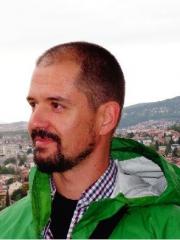
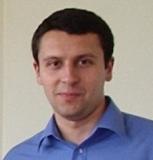
Zlatko Georgiev VarbanovView profile
Associate Professor
Assoc. Prof. Zlatko Georgiev Varbanov is a distinguished academic at the Faculty of Mathematics and Informatics, University of Veliko Tarnovo (Bulgaria). With expertise spanning discrete mathematics, coding theory, and software development, he has established himself as a prominent researcher in both theoretical and applied computer science domains. His scholarly work bridges mathematical theory with practical implementations, particularly in DNA coding, quantum error correction, and software engineering principles. Dr. Varbanov's research interests encompass a diverse range of topics including Discrete Mathematics, Coding Theory, Algorithms, Programming, DNA codes, Quantum codes, and Information security. His scholarly work demonstrates a consistent focus on the intersection of algebraic structures and practical coding applications, with particular emphasis on self-dual codes over finite fields and their applications in DNA computing and quantum information theory. In software engineering, he has made significant contributions to design patterns, asynchronous programming in C#, and static site generation techniques. Analysis of Dr. Varbanov's recent publications reveals a dual research trajectory: one strand focusing on theoretical aspects of coding theory (particularly DNA codes and quantum codes), and another addressing practical software engineering challenges. His work on design patterns, SOLID principles, and asynchronous programming in C# demonstrates his commitment to improving software development practices. The publications on static site generation and data storage services reflect his engagement with contemporary web development technologies and their optimization. Dr. Varbanov has been actively involved in numerous research projects, with current engagements extending into 2025. These projects focus on AI-driven information systems, mobile technologies for students with special needs, digital accessibility for visually impaired users, and enhancement of research indicators for faculty members. His collaborative work spans multiple institutions and demonstrates a strong commitment to both theoretical research and practical applications that address real-world challenges.