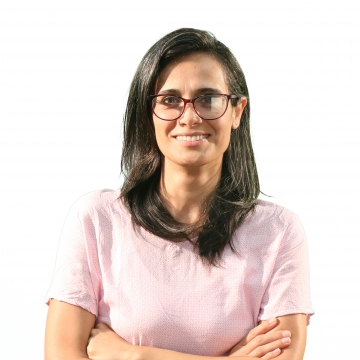
Emma Delhaye is a researcher at the University of Lisbon (ULisboa) specializing in cognitive psychology, neuroimaging, and aging. She earned her PhD from the University of Liège, Belgium, in 2019 and has been affiliated with ULisboa's research groups, including CICPSI and GROUP CO2. PhD , University of Liège, Belgium (2019) Postdoctoral Fellow , University of Liège (2019-2020, 2022-2024) FCT Junior Researcher , ULisboa (2024-present) Her research focuses on the interplay between episodic memory, semantic memory, and mental imagery, particularly in the perirhinal cortex and its implications for Alzheimer's disease and healthy aging. She employs neuroimaging techniques like EEG and fMRI to study memory mechanisms. Emma's recent publications highlight trends in computational modeling, familiarity recognition, and the role of perirhinal cortex in mnemonic discrimination and conceptual representation. She actively mentors students and collaborates on interdisciplinary projects. Emma's work spans multiple institutions and integrates neuroimaging, cognitive psychology, and aging research. She has contributed to studies on Alzheimer's disease and mild cognitive impairment, emphasizing the importance of the perirhinal cortex in memory systems.
Luís Curral serves as Associate Professor at the University of Lisbon's Faculty of Psychology, where he coordinates the Master in Psychology of Human Resources, Work and Organizations program and participates in the Pedagogical Council. His academic appointment focuses on organizational psychology and human resources disciplines. His research investigates adaptation processes through the lens of complexity theory, examining cognitive self-leadership strategies at individual levels and emergent team states like transactive memory systems. Current work tests complex leadership theory using simulations (e.g., SimCity) to model team adaptation in unpredictable environments. Key research areas include Teams as Complex Adaptive Systems, Complexity Leadership, Self-Leadership, and Innovation Projects. Dr. Curral leads significant research initiatives including the FCT-funded "Leadership process and occupational health of firefighters" intervention program (2019-2023) and the H2020 DiSSCo Prepare infrastructure project (2020-2023). His publication record demonstrates consistent output in high-impact journals such as PLoS ONE , Journal of Product Innovation Management , and Nonlinear Dynamics, Psychology, and Life Sciences , with recent work emphasizing nonlinear team dynamics and cross-cultural leadership applications. ResearchGate profile ORCID identifier Ciência Vitae profile As Master's program coordinator, he teaches core modules including Organizational Design, Teamwork and Leadership, Work Relationships and Motivation, and Work Analysis and Performance Management. His methodological approach combines laboratory simulations with field studies in high-stakes environments like firefighting units, bridging theoretical complexity frameworks with practical organizational interventions.
Nuno Rosa is an Associate Professor at the Faculty of Dental Medicine of the Catholic University of Portugal (FMD-UCP) in Viseu, where he teaches Biochemistry, Physiology, Computational Biology, Biomarkers, and Molecular Mechanisms since 2003 and 2009 respectively. He coordinates the Computing and Management branches of the Master's in Applied Biomedicine and has served as President of the Pedagogical Council at FMD-UCP since 2020. Since September 2023, he has been Director of the Center for Interdisciplinary Research in Health (CIIS). PhD in Health Sciences (Biomedical Sciences) from Catholic University of Portugal (2012) Master in Cell Biology from University of Coimbra (2003) Biology degree from University of Aveiro (2000) His research focuses on salivary biomarker panels through in silico studies using bioinformatics tools like SalivaTecDB, OralInt, and SalivaPrint Toolkit. He has led projects such as CoVTec for SARS-CoV-2 saliva testing (ERS certification 153243) and SPRINT - Saliva for Precision Diagnosis for oral disease diagnostics. His work spans bioinformatics, proteomics, and precision dentistry. Scientific contributions include over 100 publications (peer-reviewed articles, book chapters, theses, bioinformatics tools) and 43 Scopus citations for his foundational work on OralOme. He has received the 2019 Best Poster Award and maintains an h-index of 12 based on Scopus citations. His leadership extends to directing CIIS and coordinating multidisciplinary research teams in projects like 3Boost (biotech transfer) and OeHMP (oral e-health monitoring).
Patrícia Batista is a Visiting Assistant Professor at the Faculty of Education and Psychology of the Catholic University of Portugal, an integrated researcher at HNL, and a collaborator at the Center for Biotechnology and Fine Chemistry (CBQF). She also serves as a visiting professor at the University of Beira Interior and the University of Aveiro, demonstrating her extensive academic network across Portuguese institutions. Her educational background includes a PhD in Biomedicine from the Faculty of Health Sciences of the University of Beira Interior (awarded December 17, 2013), a Master's degree in Experimental Psychology from the Faculty of Medicine of the University of Coimbra, and a Master's degree in Education - Personal and Social Development from the University of Beira Interior. Dr. Batista leads interdisciplinary research at the intersection of Psychology, Neuroscience, and Biotechnology. Her work focuses on neurodegenerative diseases, brain health, and the application of biotechnological approaches to psychological and neurological conditions. She investigates how natural compounds like astaxanthin and fucoidans can provide neuroprotective benefits, and explores innovative diagnostic methods such as voice analysis for disease screening. Her research on education for sustainability integrates neuroscience perspectives to enhance educational approaches for sustainable development. Through her publications, Dr. Batista demonstrates a clear trajectory toward integrating biotechnology with psychological and neurological research. Her recent work shows increasing focus on neuroprotective compounds, diagnostic technologies using smart data analysis, and the intersection of neuroscience with educational practices. This interdisciplinary approach reflects her commitment to addressing complex health challenges through multiple lenses. Portuguese perception of psychological impact of COVID 19 vaccines (2021) "Prémio + Potencial" (Concurso e Programa BIOTECH) (2018) Dr. Batista has co-supervised numerous doctoral and master's theses and final year projects. She has participated in projects funded by the FCT (Foundation for Science and Technology) and ANI (National Innovation Agency), demonstrating her ability to secure competitive research funding. Her work on the B4Brain project as Principal Investigator shows her leadership in developing bioproducts with preventive and therapeutic potential for neurodegenerative diseases. Dr. Batista is actively involved with the Research Centre for Human Development (CEDH), where she contributes to interdisciplinary research teams. She also collaborates with the Center for Biotechnology and Fine Chemistry (CBQF) and participates in the HNL International Mentoring Programme, demonstrating her commitment to fostering the next generation of researchers.
Asal Kiazadeh is an Assistant Professor at the Faculty of Science and Technology (FCT), Universidade Nova de Lisboa, specializing in memristor devices, thin-film transistors, and neuromorphic computing. His research focuses on advancing flexible amorphous oxide materials for resistive switching devices and IoT applications. PhD in Electronics and Optoelectronics from the University of Algarve (2013) Collaboration with Philips Research Laboratories Principal Investigator for NeurOxide (PTDC/NAN-MAT/30812) and OPERA (2022.08132.PTDCO) Local coordinator for TERRAMETA (European Project No. 101097101) His work bridges device physics and system-level innovation, with a particular emphasis on memristor-based neuromorphic computing , reconfigurable smart surfaces , and low-power RF solutions . Recent publications highlight advancements in printed electronics, 2D materials, and sustainable in-memory computing edge devices. Kiazadeh supervises PhD and Master’s students in Micro and Nanotechnology, Electronics, and Materials Science. He has served on the organizing committee of DoCEIS (Doctoral Conference on Computing, Electronics, and Industrial Systems) since 2016 and leads the 'Resistive Switching Technologies for Neuromorphic and RF Solutions' research group.
Estela Bicho is a Full Professor at the Department of Industrial Electronics, School of Engineering (EEUM), University of Minho, where she coordinates the Control, Automation and Robotics Group and leads the MAR Lab (Mobile and Anthropomorphic Robotics Lab). She previously served as Associate Director of Algoritmi Research Centre (2013-2015) and vice-president of EEUM (2019-2022). Her research focuses on Uni- and multi-robot systems Human-robot interaction & collaboration Machine learning applications Bimanual robotic manipulation Autonomous navigation Medical robotics for Parkinson's/Alzheimer's diagnosis Neuro-rehabilitation technologies Her work has produced over 100 publications in top journals (Mechanism and Machine Theory, Autonomous Robots, Neural Networks) and conferences (IROS, ICRA). Notable achievements include: 1999 IBM Portuguese PhD Award JAST project selected as European robotics success story IEEE IROS Jubilee video award finalist 2019 student team prize in Beijing Brain-Inspired Computing Competition 2021 RoboHub '50 Women in Robotics' recognition She has supervised 12 PhD theses and 35+ MSc dissertations, with current advisees including Ana Margarida Trigo, Ankit Patel, Gianpaolo Gulletta, and Tiago Malheiro.
Maria Madalena Teixeira Araújo is a Full Professor in Industrial and Technology Management at the School of Engineering , University of Minho , Portugal. As a Senior Researcher at the ALGORITMI Research Centre's IEM R&D Group and EMES R&D Lab, her work focuses on the Economics of Engineering Systems and Management , with emphasis on Decision and Utility Modelling, Project Evaluation, Risk Analysis, and sustainability assessment of industrial/energy systems across economic, environmental, and social dimensions. PhD in Production Engineering (University of Birmingham, UK) M.Sc. in Industrial Management (University of Birmingham, UK) B.Sc. in Chemical Engineering (University of Coimbra, Portugal) Her research trends show interdisciplinary integration of: Project Portfolio Risk Management (network perspectives, interdependencies) Industry 4.0/5.0 (digital transformation frameworks) Social Innovation (SDG alignment, impact measurement) Energy Systems (smart grids, renewable integration, demand response) She has evaluated projects for ERANET, EGYGERF, and Portugal2020 initiatives since 2010, and held leadership roles including Department Head (10+ years), Vice-Dean (School of Engineering), and Research Centre Director (6 years).
Paulo Miguel Torres Duarte Quaresma is a Full Professor at the Department of Informatics, Universidade de Évora, Portugal, and Senior Researcher at Centro ALGORITMI. His career spans roles as Vice-Rector for Research and Innovation (2022–2025), Director of the School of Science and Technology (2009–2013), and Member of FCT’s Board of Directors (2021). Holding a PhD in Informatics (specialized in AI/NLP) from Universidade Nova de Lisboa and a Habilitation in Informatics from Universidade de Évora, he leads the AI & BigData Lab (equipped with 10 petaflop NVIDIA DGX-A100 supercomputers) and co-coordinates PORTULAN CLARIN, a €2M FCT-funded language technology infrastructure. Current Affiliation: Universidade de Évora (since 1997) Research Labs: AI & BigData Lab, PORTULAN CLARIN, VISTA Lab, NOVA LINCS (2019–2021) His research focuses on Artificial Intelligence and Natural Language Processing , with applications in legal reasoning , medical informatics , geospatial accident analysis , and semantic web technologies . Recent work includes creating European Portuguese BERT models, analyzing 18th-century health texts, and developing AI solutions for clinical triage. Advising highlights include supervising 7 PhD and 26 MSc theses. He chairs international conferences like PROPOR (2020) and IDEAL (2023), and participates in projects integrating AI with public administration and regional development through Alentejo2020 funding.
Adriano José Conceição Tavares is an Associate Professor at the School of Engineering, University of Minho, Portugal. He serves as a Senior Researcher at Centro ALGORITMI, where he is affiliated with both the IE R&D Group and the ESRG R&D Lab. His academic credentials include a PhD in Industrial Electronics from the University of Minho, a Master of Science in Information Technology from the University of Coimbra, and an undergraduate degree in Informatics from the University of Coimbra. Professor Tavares specializes in embedded systems with particular expertise in: Embedded systems modeling and design System software design System-on-chip design Real-time operating systems Hardware acceleration and FPGA design Virtualization for embedded systems IoT frameworks and protocols His publication record demonstrates a strong research trajectory in hardware-software co-design, with recent work showing an increasing integration of machine learning techniques into embedded systems. His publications span theoretical frameworks to practical implementations addressing real-time performance, resource constraints, and security challenges. Among his scholarly metrics: h-index of 18 126 publications with 1148 citations 20 publications in Q1/Q2 journals Author of a book on microcontroller programming Professor Tavares has supervised students including Miguel Ângelo Fernandes Silva and has established international collaborations through the Erasmus Program with institutions in China, Iran, Thailand, Jordan, and Cambodia. He teaches advanced courses on embedded and real-time systems modeling, compiler design, system-on-chip design, real-time operating system design, and advanced computer architectures at University of Minho.
Filipe Pereira Pinto Cunha Alvelos is an Associate Professor at the University of Minho's School of Engineering, Department of Production and Systems. He holds a PhD in Operational Research from the University of Minho and specializes in mathematical optimization models and metaheuristics for complex systems. His research focuses on: Operations Research and Optimization Integer programming and branch-and-price methods Local search metaheuristics for complex problems Applications in wildfire management, healthcare logistics, and telecommunications Recent work emphasizes wildfire prevention through optimization frameworks, resource dispatch algorithms, and fire spread modeling. He leads the O3F project (2021-2024) for forest fire reduction and chairs the Optimization and Wildfire Conference (2024). Scientific contributions include publications in European Journal of Operational Research , International Transactions in Operational Research , and conference proceedings of Lecture Notes in Computer Science . His work combines column generation techniques with metaheuristics for practical optimization.
Lino António Antunes Fernandes Costa is an Associate Professor (with tenure) at the Department of Production and Systems, School of Engineering, University of Minho, Portugal. He conducts his research activities at the ALGORITMI R&D Centre as a member of the Systems Engineering and Operational Research (SEOR) research group. His academic credentials include a PhD in Production and Systems Engineering, an MSc in Informatics, and a DEng in Informatics and Systems Engineering. These qualifications form the foundation for his interdisciplinary research bridging engineering, computer science, and mathematical optimization. Dr. Costa's research focuses on multi-objective optimization, nonlinear optimization, evolutionary algorithms, and applied statistics. His work demonstrates significant application to real-world industrial problems, particularly in manufacturing optimization, agricultural technology (with emphasis on olive cultivation), emergency response systems, and quality control. His methodological approaches often combine traditional optimization techniques with modern machine learning and artificial intelligence methods. His publication record shows a clear evolution toward Industry 4.0 applications, with recent work emphasizing the integration of optimization techniques with smart manufacturing systems, agricultural technology, and emergency management. His research demonstrates strong interdisciplinary connections between operations research, computer science, and domain-specific applications in manufacturing and agriculture. h-index: 17 Total Publications: 126 Total Citations: 1,193 Q1/Q2 Journal Publications: 40 Dr. Costa serves as a regular reviewer for prestigious journals including IEEE Transactions on Evolutionary Computation, Evolutionary Computation, IEEE Intelligent Systems, and European Journal of Operational Research. He has contributed to over 40 international scientific events as a program committee member, including major conferences such as ACM GECCO, IEEE CEC, and EMO. His professional activities extend to project-based learning initiatives in industrial engineering education, demonstrating his commitment to both research and teaching excellence. His laboratory work centers around the ALGORITMI Centre's SEOR research group, where he collaborates on developing optimization frameworks for distributed manufacturing systems, agricultural technology applications, and emergency resource management. Current projects include applying multi-objective optimization to olive cultivation challenges and developing intelligent systems for firefighting resource allocation.
Fátima Capela Fortunas Teixeira serves as Associate Professor at the School of Engineering, University of Minho, and Senior Researcher with PhD at Centro ALGORITMI/LASI. She is also a Member of the Coordinating Committee for the Bachelor's Program in Industrial and Management Engineering (LEGI) at the University of Minho. Bachelor in Systems Engineering and Informatics (1984), University of Minho Doctor in Chemical Engineering (1989), University of Birmingham, School of Chemical Engineering Integrated Master in Industrial and Management Engineering (2016), University of Minho Professor Teixeira's research spans Computational Fluid Dynamics applications across multiple domains including heat transfer, thermal comfort, PCB modeling, two-phase flows, Organ-on-a-Chip modeling, forest fire simulation, and biomass combustion. Her work demonstrates strong interdisciplinary connections between engineering fundamentals and practical applications. She has recently expanded her research into misinformation modeling and digital health applications, showing the versatility of her computational approach. Her publication record reveals a strong trend toward interdisciplinary applications of CFD techniques, with recent work spanning traditional engineering domains like biomass combustion and thermal systems, while also venturing into emerging areas like Organ-on-a-Chip technology, misinformation modeling, and digital transformation in industrial contexts. Her research shows increasing integration of educational methodology with technical content, particularly through Project-Based Learning approaches. Professor Teixeira has made significant contributions to engineering education through innovative teaching methodologies. She has supervised 15 PhD theses and 85 MSc dissertations throughout her career, demonstrating her commitment to developing the next generation of engineers. Principal Investigator in one research project Co-PI in one research project Researcher in 20 projects Supervisor of 27 grant projects She maintains active research collaborations through her membership in the IEM R&D Group and EHF R&D Lab at Centro ALGORITMI, contributing to both fundamental engineering research and practical industrial applications. Her work with nearly 650 collaborators demonstrates her strong network and interdisciplinary approach to research problems.
André Rodrigues is an Associate Researcher and Professor at the Polytechnic University of Coimbra's Coimbra Accounting and Business School (ISCAC), where he teaches Computer Networks courses. His dual expertise bridges engineering and management domains. His educational credentials include: Bachelor of Computer Engineering from University of Coimbra Master of Management from ISCTE PhD in Computer Engineering from University of Coimbra Research focuses on Industrial Wireless Sensor Networks, People-Centred Internet of Things, and Network Management, driving innovations in industrial IoT systems and adaptive network solutions. His work emphasizes practical implementations for real-world industrial environments. He maintains active scholarly engagement through publications in international journals/conferences and service as a reviewer for major conferences. His participation in European projects demonstrates cross-border research collaboration. Information regarding student supervision, specific research grants, laboratory facilities, and scientific awards was not provided in available sources.
Sílvia da Conceição Pinto de Brito Fernandes is an Assistant Professor at the Faculty of Economics, University of Algarve in Faro, Portugal. She is also a senior researcher at CinTurs (Research Centre in Tourism, Sustainability and Well-being). Dr. Fernandes holds a PhD in Informational Economics from the University of Algarve. Her academic journey has focused on the intersection of economics, information technology, and tourism management. Her research interests span tourism sustainability , innovation management , smart tourism , and big data applications in the tourism sector. Dr. Fernandes has conducted extensive research on post-pandemic tourism recovery, sustainable hospitality practices, and the integration of technology in tourism ecosystems. Her work often applies systems theory to understand complex tourism dynamics, with a particular focus on the Portuguese context and the Algarve region. Dr. Fernandes has published extensively in international journals such as 'Big Data and Cognitive Computing', 'Technology in Society', and 'International Journal of Innovation and Learning', as well as numerous book chapters. Her recent work demonstrates a strong trend toward examining how digital transformation, particularly through social media and smart technologies, can drive sustainable tourism development. Her scientific contributions include: Research on innovation strategies and performance in Portuguese firms Analysis of social media narratives in tourism risk perception Studies on resilient tourism systems using system theory approaches Examination of sustainable hospitality practices in the Algarve region Applications of web data scraping for tourism analysis Dr. Fernandes teaches Information Technology and Innovation Management courses at both undergraduate and graduate levels. Her research is supported by funding from Fundação para a Ciência e a Tecnologia (UID/04020), indicating active research projects in her field of expertise. As a senior researcher at CinTurs, she contributes to the center's mission of advancing knowledge in tourism, sustainability, and well-being.
Eva María Buitrago Esquinas is a Full Professor at the University of Seville, Spain, holding this position continuously since 1993. She leads the Junta de Andalucía-funded Research Group 'Research in Applied Economics' (SEJ 258) and serves as Principal Investigator for multiple active projects including the Horizon Europe initiative 'Sustainable Horizons' and the University of Seville project on table olive sector sustainability. Her research expertise spans Tourism Economics, Sustainable Development, and Environmental Economics, with particular focus on overtourism measurement, circular economy implementation, and tourism-institutional quality linkages. Recent work develops quantitative tools for EU sustainability assessment and examines educational foundations in economics disciplines. Analysis of her 2019-2023 publications reveals consistent thematic evolution toward actionable sustainability metrics, with increasing emphasis on decarbonization pathways and overtourism management frameworks. Her work bridges theoretical economic modeling with practical policy applications for European regional development. As Principal Investigator of the Research Group 'Research in Applied Economics', she directs a collaborative team focused on applied economic research in tourism, sustainability, and regional development. The group maintains active EU-level collaborations, particularly with Portuguese institutions, and secures continuous funding from regional, national, and European sources including Horizon Europe and Junta de Andalucía grants.