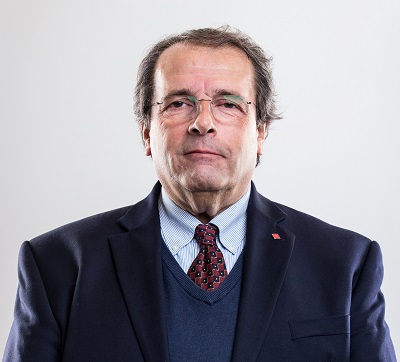
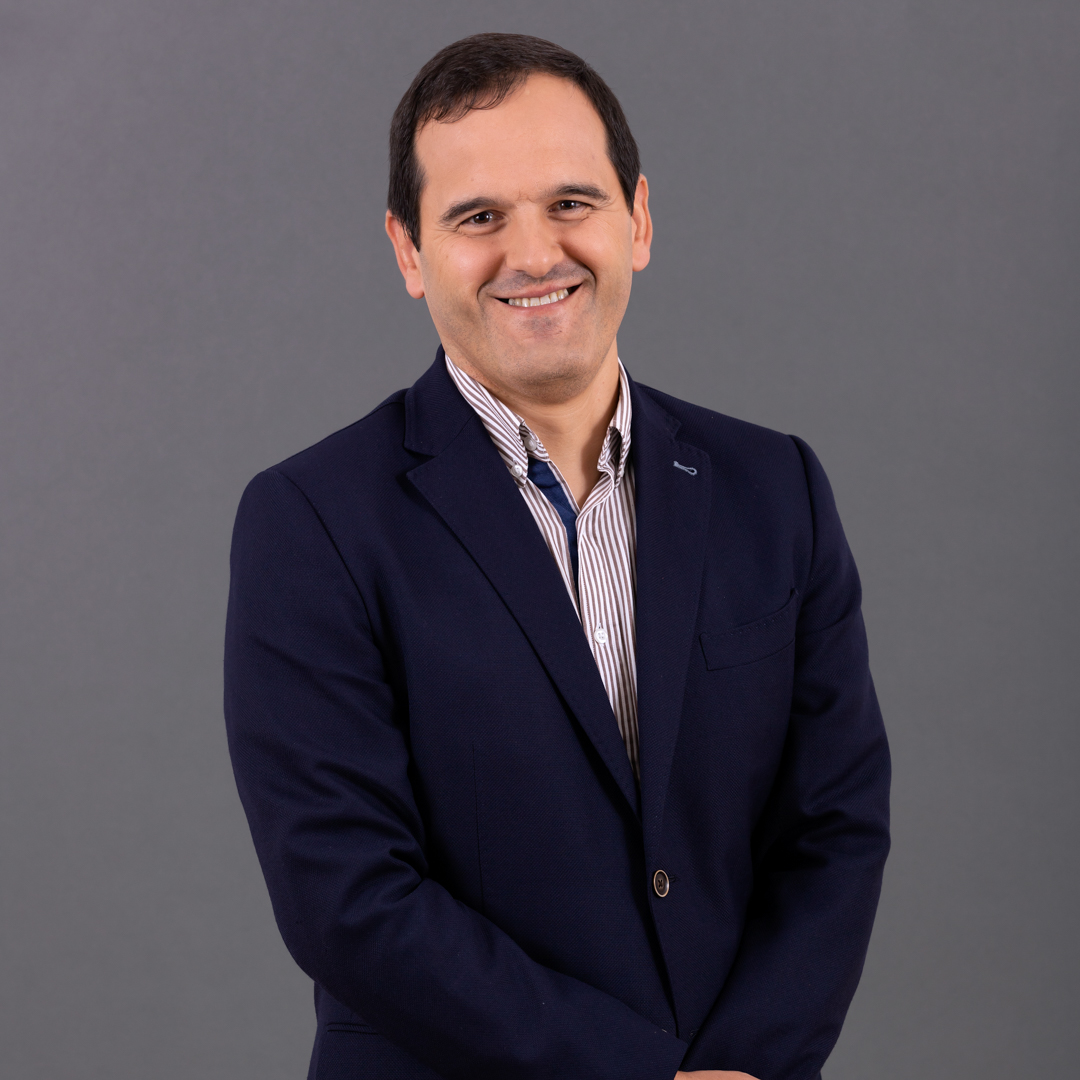
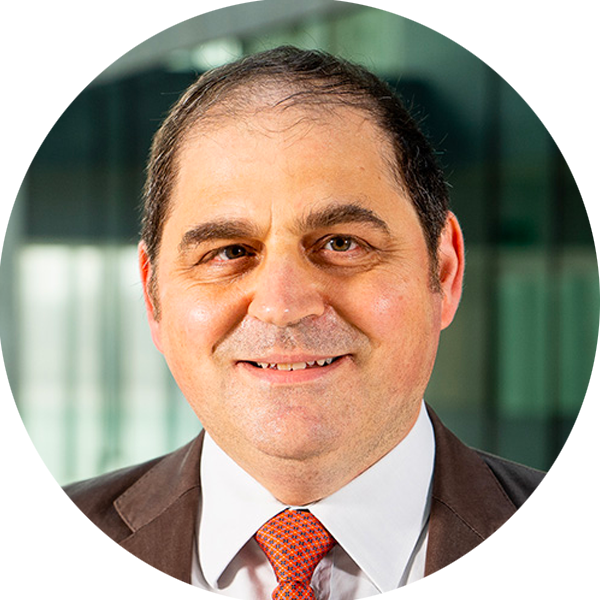
Luis Amaral is an Associate Professor at the School of Engineering, University of Minho, where he has served since 1998. He holds a PhD in Computer Science (Information Systems) from the University of Minho (1995) and has extensive experience in teaching, research, and administrative leadership. His research focuses on Information Systems in social and organizational contexts, particularly in public administration, with over 400 publications including books, journal articles, and conference papers. Key roles include Vice-Rector for Organizational Transformation and Administrative Simplification, Director of the Information Systems Department (2005–2006, 2010–2012), and leadership in projects like the Virtual Campus (e-UM). He has held numerous administrative positions, including President of the School of Engineering’s Council (2013–2016) and Pro-Rector (2006–2009). His work emphasizes e-government, digital transformation, and public procurement systems. Recent research trends include digitalization of public services, regulatory compliance (e.g., GDPR in higher education), and optimization of renewable energy systems. He has contributed to international initiatives such as the ICEGOV conference and projects in Mozambique and Timor-Leste. His publications highlight innovation in administrative processes, citizen engagement, and institutional digital readiness. Luis Amaral has coordinated postgraduate programs, including the Master’s in Information Systems (2001–2002, 2016–2017), and led research centers like IDITE Minho. His career reflects a balance between academic rigor and practical impact in technology-driven governance and organizational change.
Fernando Manuel Marques Batista is an Associate Professor at ISCTE – University Institute of Lisbon, Department of Information Science and Technology, and an integrated researcher at INESC-ID Lisbon. He serves as the Executive Coordinator of the Human Language Technologies (HLT) Scientific Area at INESC-ID and is a member of its Scientific Council. He previously held leadership roles including President of the Pedagogical Council of ISCTE-IUL (2017–2019) and member of its Standing Committee (2015–2017). Research Interests: Natural Language Processing Machine Learning Text and Speech Processing Sentiment and Emotion Analysis Hate Speech Detection Social Media Analytics Automatic Speech Recognition and Transcription His recent publications reflect a strong focus on applying NLP and machine learning to social media, with particular emphasis on hate speech detection, sentiment analysis, and user behavior modeling. He has also contributed significantly to speech processing, including punctuation restoration and prosody modeling, and to digital humanities through medieval text analysis. His work spans both technical innovation and real-world applications in tourism, finance, and public discourse. Scientific Recognition: Senior Member of IEEE (since 2016) Member of ISCA (International Speech Communication Association) Fernando Batista actively advises numerous PhD and Master’s students, supervising research in areas such as generative AI, hate speech detection, sentiment analysis, and economic forecasting. He has coordinated research projects like SPEDIAL and AppRecommender and is involved in organizing major conferences including PROPOR, EAMT, IPMU, and the Lisbon Machine Learning Summer School (LxMLS), where he has served in editorial and technical roles. Research Labs and Teams: He is a key member of the HLT@INESC-ID research group, contributing to its leadership and scientific direction. This group focuses on human language technologies, including speech processing, natural language understanding, and multilingual systems.
Adriano Jorge Cardoso Moreira is an Associate Professor with Habilitation at the Department of Information Systems, School of Engineering, Universidade do Minho, Portugal. He is also a Senior Researcher at the Algoritmi Research Centre and Scientific Coordinator of the Urban and Mobile Computing department at Centro de Computação Gráfica. His research focuses on indoor positioning , mobile and context-aware computing , urban computing , and simulation of wireless networks . Research Interests : Indoor Positioning, Mobile Computing, Urban Mobility, Sensor Networks, Wi-Fi and UWB Localization, Smart Cities. Leadership : Coordinated the Computer Communications and Pervasive Media Group (2008-2016), Scientific Committee member (Director of MAP-tele PhD program in multiple terms), and leads the Master in Telecommunications and Informatics since 2021. Publications : Over 100 papers, including IEEE Transactions and Sensors journal articles, with an h-index of 23 and 2136 citations. Awards : First and second prizes in EvAAL-ETRI Indoor Localization Competitions (2015, 2016, 2017).
Maria Leonilde Rocha Varela is an Associate Professor with Habilitation at the School of Engineering, University of Minho, Portugal, where she also serves as a Senior Researcher at the Algoritmi Research Centre. She has been an integrated member of the Algoritmi Research Centre since 2012 and works in the Department of Production and Systems. Dr. Varela earned her degree in Production Engineering from the University of Minho in 1994, completed a Master's in Computer Integrated Production at DPS-UMinho in 1999, and received her Ph.D. in Production and Systems from the University of Minho in 2007. Her primary research focuses on Manufacturing Management, particularly Production Planning, Control and Optimization, and Collaborative Paradigms, Networks and Decision Making Models. She maintains extensive international collaborations with institutions worldwide including the National Institute of Industrial Engineering, VSB-Technick Univerzita Ostrava, University of Belgrade, and others. Her research spans Web Applications and Services for supporting Engineering and Production Management, with increasing emphasis on Artificial Intelligence, Robotic Process Automation, and Industry 4.0/5.0 applications. She has made significant contributions to scheduling algorithms, optimization techniques, and decision support systems for manufacturing environments. Analysis of her recent publications reveals a strong trend toward integrating Artificial Intelligence with traditional manufacturing processes, particularly in Robotic Process Automation applications. Her research increasingly focuses on sustainable manufacturing practices, with numerous publications addressing energy efficiency, environmental sustainability, and resource optimization. There is a clear emphasis on multi-objective optimization approaches to solve complex manufacturing problems, particularly in distributed job shop scheduling. Her work demonstrates an evolution from traditional production planning methods to more advanced AI-driven approaches for Industry 4.0 and 5.0 environments. Dr. Varela has held significant academic leadership roles, currently serving as the director of the master's course in Engineering and Quality Management at DPS-UMinho. She previously coordinated the industrial management and systems subgroup from 2012 to 2021 and was part of the steering committee for the master's course in systems engineering between 2016 and 2019. She has successfully supervised more than 70 MSc projects, with over 15 currently ongoing, focusing on Production and Systems Engineering. Her supervision encompasses collaborative management models, traditional decision approaches, and web-based platforms incorporating AI techniques. She coordinates research projects including 2 concluded Ph.D. projects and 6 ongoing ones. She collaborates as a research member in several R&D projects with national and international industrial enterprises and institutions, and in international Erasmus projects. Dr. Varela is an active participant in the academic community, serving on editorial boards of several international journals and as a member of organizing and scientific committees for numerous international conferences. She is a member of several prestigious research networks including the Euro Working Group of Decision Support Systems (EWG-DSS), Institute of Electrical and Electronics Engineers (IEEE), Industrial Engineering Network, and the Institute of Industrial and Systems Engineers (IISE).
Pedro R. M. Inácio is an Associate Professor at the University of Beira Interior (UBI) , where he teaches information assurance, cybersecurity, and computer simulation courses in undergraduate and graduate programs. He serves as Pro-Rector for the Digital University and Data Protection Officer at UBI, and leads the Cross Cutting Skills Lab and the Network Security research group at Instituto de Telecomunicações. His work bridges academia and industry, including a PhD at Nokia Siemens Networks Portugal.
J.F. Matos is a Professor at the Faculty of Social Sciences, Education and Administration (FCSEA) of Lusophone University, Portugal. His work focuses on education, pedagogy, teacher training, and digital education , with a strong emphasis on integrating technology into teaching practices and curriculum design. Education: PhD in Mathematics Education, University of Lisbon (1988–1991) Research Interests: Matos is active in research methodology, educational technology, virtual reality pedagogy, and policy analysis . His projects like ReMASE and EDU-LAB explore innovative frameworks for teacher training, work-based learning, and labor market alignment. Scientific Output Trends: Recent work includes immersive virtual reality pedagogical models, digital textbook implementation in Madeira, and collaborative research on educational methodologies in Portugal. His publications span peer-reviewed journals, commissioned reports, and books , reflecting interdisciplinary collaborations. Projects: EDU-LAB (2022–2027): Focus on work-based learning and investment policy. ReMASE (2022–2023): Analyze research methods in advanced education studies. Collaborations: Matos works with institutions like the European Research Executive Agency and COFAC , leveraging international networks to address educational challenges in Portugal and beyond.
José Manuel Ferreira Machado is a Full Professor at the Department of Informatics, School of Engineering, University of Minho, where he has been affiliated since 1988. His research integrates Artificial Intelligence, Medical Informatics, and Data Mining, with applications in healthcare, industrial systems, and public services. He founded ALGORITMI's 'Knowledge Engineering' group and served as Director of the ALGORITMI R&D Center (2018-2024). Education: Agregado in Informatics (AI), Universidade de Trás-os-Montes e Alto Douro (2011-2012) PhD in Informatics (AI), Universidade do Minho (1995-2002) Licenciatura in Systems and Informatics Engineering, Universidade do Minho (1982-1988) Research Interests: Machado's work focuses on intelligent systems for healthcare (e.g., AIDA medical platform), industrial automation, and smart cities. He emphasizes real-world applications, including clinical decision support, predictive maintenance, and sustainable urban infrastructure. Publications: His recent articles (2022-2025) demonstrate a strong focus on healthcare AI (e.g., disease prediction, COVID-19 analytics) and smart systems (e.g., traffic optimization, energy sustainability), utilizing data mining and machine learning. Awards: Hospital of the Future (2007, 2008, 2009) Good Practices in Health (2014) Portugal Digital Awards (2016) IHF Awards (2021) Advising & Grants: Supervised 16 PhD, 101 MSc, and 4 post-doc students. Leads sub-projects in PRR agendas GReenAuto and Be.Neutral. Secured funding from FCT, EU, and industry partners (e.g., Bosch) for 50+ projects. Labs & Teams: Coordinates the 'Knowledge Engineering' research group at ALGORITMI, focusing on intelligent decision support and interoperability in healthcare and industry.
Minjoon Seo is an Associate Professor at KAIST AI, Korea Advanced Institute of Science and Technology. He holds a BS in Electrical Engineering & Computer Science from UC Berkeley and previously worked as a software engineer at Oracle. His research focuses on natural language understanding, large-scale end-to-end question answering, and multimodal AI systems combining language and vision. Research Interests: His work spans Natural Language Processing, Machine Learning, Deep Learning, and Language-Vision integration. He develops neural network architectures for machine comprehension and multimodal understanding, with applications in question answering systems and diagram interpretation. Publications: His research demonstrates a consistent focus on multimodal AI systems, with recent works advancing neural approaches to machine comprehension and diagram understanding. Publications show strong emphasis on NLP-CV integration and practical applications in healthcare and education. Awards: Best Paper Nomination at UbiComp 2014 for BiliCam research Professional Activities: Maintains active open-source contributions through GitHub repositories related to question answering systems and NLP research. Co-founded Config Intelligence while maintaining academic position.
Nuno Fernandes Crespo is an Associate Professor at the Department of Strategic Management and Marketing, Lisbon School of Economics & Management (ISEG), University of Lisbon. He holds a PhD in Management (2013), a Master's in Management and Industrial Strategy (2004), and a Bachelor's in Management (1999) from ISEG. His research focuses on International Business, Entrepreneurship, and Strategic Agility in international new ventures (INVs), particularly during crises. He has published extensively in journals like International Business Review , Journal of International Management , and Technological Forecasting & Social Change . His 15 most recent works (2023–2025) explore themes including: Business model innovation during crises Supplier-country image effects in B2B marketing Sustainable entrepreneurship in family firms Digitalization and early internationalization strategies Country-of-origin stereotypes in industrial marketing Dynamic capabilities in INVs He supervises Master's students in topics spanning internationalization, digital transformation, family business strategy, and innovation. Professional roles include coordinating the Master's in Management and Industrial Strategy (2016–2022), serving on ISEG’s Executive Commission, and leading the Doctoral Program in Management (2018–2022). His methodology integrates empirical research, mixed methods, and configurational approaches.
Alexandre Manuel de Castro Passos de Almeida is an Assistant Professor in the Department of Information Science and Technology at the University Institute of Lisbon (ISCTE-IUL), where he also contributes to the School of Technology and Architecture. He is an Associate Researcher at the Institute of Telecommunications - IUL, actively involved in the Radio Systems Group, focusing on telecommunications and sensor-based environmental monitoring. PhD in Telecommunications, ISCTE-IUL, 2012 His research interests span telecommunications, wireless sensor networks, air quality monitoring, computer architecture, and robotics. He has led and contributed to innovative projects such as ExpoLis, which uses mobile sensor networks on public buses to map urban air pollution. His work bridges engineering and environmental science, aiming to influence urban policy and public health through real-time data systems. The most recent publications highlight a strong trend toward deploying low-cost, mobile sensor networks for environmental monitoring, particularly in urban settings. His work integrates computer systems, signal processing, and sustainable technology, with applications in smart cities, public health, and robotics. Topics like air quality mapping, energy harvesting, and noise-aware robot navigation reflect a multidisciplinary approach to solving real-world problems. He has advised seven Master’s students at ISCTE-IUL, guiding research in sensor networks, air pollution, database performance, robotic navigation, and personal photography assistants. While no specific scientific awards are listed, his contributions to funded research projects and consistent scholarly output indicate recognition in his field. He has held leadership roles in academic governance, including Vice President of the Pedagogical Council, underscoring his institutional engagement. His teaching portfolio includes core courses such as Fundamentals of Computer Architecture, Operating Systems, and Big Data Processing, delivered across multiple undergraduate and postgraduate programs. He is involved in research projects that combine academic innovation with practical urban applications, particularly through the deployment of scalable, open-source environmental sensing systems.
Jorge Louçã is a Full Professor in the Department of Information Science and Technology at ISCTE-IUL, where he has been a faculty member since 2000. He is also an Integrated Researcher at ISTAR-Iscte, the Research Center in Information Sciences, Technologies and Architecture, and leads the research group The Observatorium . He holds a PhD in Computer Science and Artificial Intelligence from Université Paris Dauphine and the University of Lisbon, and completed his Aggregation in Complexity Sciences in 2019. PhD in Computing – University of Lisbon & Université Paris-Dauphine (2000) Master’s in Informatique: Intelligent Systems – Université Paris-Dauphine (1995) Aggregation in Complexity Sciences – ISCTE-IUL (2019) His research centers on computational modeling of social systems, focusing on data-intensive analysis of human communication, knowledge generation in large networks, and the dynamics of complex systems. He founded the Doctoral Program in Complexity Sciences and has been instrumental in advancing the field through international collaborations such as the UNESCO Unitwin network for the Complex Systems Digital Campus and participation in the Conference on Complex Systems (CCS/ECCS). The recent publications highlight a strong interdisciplinary focus, combining network science, data analysis, and social theory. Key themes include the modeling of malaria transmission, information diffusion in social media, structural inequality in education, and the dynamics of opinion and popularity. His work often employs agent-based models, temporal network analysis, and entropy-based measures, reflecting a deep integration of computational and theoretical approaches. Research Methods for Doctorate in Complexity Sciences Advanced Topics in Complexity Sciences Data Science Fundamentals Development for the Internet and Mobile Applications Web Interfaces for Data Management Advanced Network Analysis Jorge Louçã has supervised over a dozen doctoral and master’s students, with completed theses on topics such as malaria modeling, information diffusion, temporal networks, and social inequality. His research has been supported by projects like NESS (Non-Equilibrium Social Science in ICT and Economics), reflecting his leadership in interdisciplinary science. He has held significant academic management roles, including Director of the Department of Information Science and Technology and head of multiple degree programs. His work continues to bridge computer science, social science, and policy, positioning him as a key figure in the global complexity science community.
Nuno Pereira Lopes is an Associate Professor at Instituto Superior Técnico , part of Universidade de Lisboa , and a researcher at INESC-ID . He also serves as an advisor at FuriosaAI , focusing on tensor contraction processors for AI workloads. Research Interests : Compilers, formal verification of LLVM optimizations, machine learning frameworks, undefined behavior exploitation, probabilistic model checking, blockchain security, and many-core code generation. Teaching : Compilers and Computer/Informatics Engineering projects. Funding : Supported by Google, Matter Labs, NLnet, Oracle, PRACE, RNCA, and Woven by Toyota. Recent Publications focus on LLVM backend validation , PyTorch pipeline parallelism , C++ dynamic cast optimization , undefined behavior in C/C++ , and AI tensor processors . His work bridges compiler design, formal methods, and AI hardware. Academic Service includes representing Portugal in ISO/IEC JTC 1/SC 22 (C++), organizing FLoC'26 , and serving on program committees for PLDI, EuroLLVM, and CGO.
Claudio Tebaldi is an Associate Professor at Università Bocconi , specializing in financial economics and quantitative methods. He serves as Managing Editor of Quantitative Finance and has collaborated with institutions including UCLA, NYU, the Federal Reserve Board, and ECB. Education : Ph.D. in Statistical Mechanics from SISSA; Master in Economics and Finance from Venice International University His research spans financial economics (asset/derivative pricing, risk management) and mathematical/physical sciences (complexity theory, collective phenomena). He employs advanced statistical methods like machine learning and big data analysis to develop decision rules for uncertain environments. Key publication themes include computational finance (2025), pension economics (2024), network-based financial contagion (2024), and optimal trading algorithms (2024). Earlier works focus on econometric theory (2023) and risk measurement frameworks (2022). Scientific Recognition : Excellence in Research Award (2023), Best Paper in Derivatives (NFA 2019), Best Paper (Swiss Econometrics and Finance Society meeting 2007)
Paulo Jorge Freitas de Oliveira Novais is a Full Professor of Computer Science at the Department of Informatics, School of Engineering, Universidade do Minho, where he also holds a Habilitation in Computer Science. He leads the Synthetic Intelligence Lab at ALGORITMI Centre and coordinates the research line on Ambient Intelligence for Well-Being and Health Applications. His research spans Intelligent Systems, Machine Learning, Multi-Agent Systems, and their applications in Smart Cities, Health Informatics, and AI Ethics. PhD in Computer Science, Universidade do Minho, 2003 Habilitation in Computer Science, Universidade do Minho, 2011 Research interests include Ambient Intelligence, Ambient Assisted Living, Intelligent Environments, AI and Law, Conflict Resolution, and Explainable AI. His work focuses on enhancing system intelligence and reliability through novel architectures and ethical frameworks. Recent publications highlight applications in wastewater energy prediction, violence detection, student risk modeling, and urban logistics. Awards include multiple Best Paper and IBM Excellence recognitions across 2015–2023, plus a 2022 Career Recognition Award from the Ibero-American Society of Artificial Intelligence. Senior IEEE Member Chair of IEEE Computational Intelligence Chapter, Portugal IFIP TC 12 Artificial Intelligence Working Group Leadership He has supervised 132 PhD and Master’s students and contributed to editorial boards of journals like JAISE and ComSIS . His leadership roles include coordinating LASI – Intelligent Systems Associate Laboratory and serving as former president of APPIA.
Chrysoula Zerva is an Invited Assistant Professor in the Department of Electrical and Computer Engineering at Instituto Superior Técnico and a post-doc researcher in the SARDINE group at the Instituto de Telecomunicações. She holds a PhD from the University of Manchester (2019) and was awarded the EPSRC Doctoral Prize Fellowship for the “Fake Health News” project. Her research focuses on uncertainty quantification, fairness, explainability in NLP, and machine translation evaluation. Key interests include adversarial attacks, bias mitigation, and disentangled representation learning. Dr. Zerva’s work spans conformal prediction frameworks, dialect bias in reward models, and response clarity classification. Her contributions to MT evaluation and quality estimation have been highlighted in WMT shared tasks. Recent studies address ethical AI challenges, such as the societal impacts of LLMs and biases against African American language. Scientific Awards: EPSRC Doctoral Prize Fellowship Labs/Teams: Member of the SARDINE research group Her publications investigate cutting-edge topics like CLIPScore metrics, non-exchangeable conformal methods, and context-aware NMT for business dialogues. Collaborations include Unbabel and participation in international shared tasks.