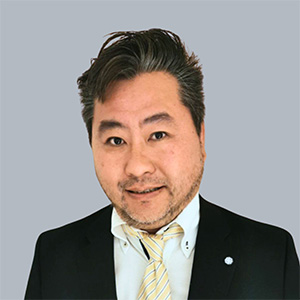
Archan Misra is a Lee Kong Chian Professor of Computer Science and Vice Provost (Research) at Singapore Management University (SMU). He leads the School of Computing and Information Systems and oversees research strategy across SMU. His work focuses on Human-Machine Collaboration, Pervasive Sensing, and AI-driven systems. Misra holds a PhD from the University of Maryland (2000) and has extensive industry experience at IBM Research and Bellcore. He is a Distinguished Member of ACM and Senior Member of IEEE. Research interests include Embodied AI, LiDAR-based localization, energy-efficient AIoT, and smart city analytics. Notable projects include the MIT/SMART M3S program on human-machine collaboration and leadership roles in SMU's CASA and LiveLabs initiatives. His work spans 300+ publications and multiple industry-funded grants, including NRF Singapore and US Army projects. Advises PhD students in areas like edge AI, wearable computing, and computer vision. Awards include ACM Distinguished Membership and IEEE Senior Membership. Current roles include Director of SMU's Resilient Workforces Institute and co-PI for the M3S program. Active in teaching, including courses on mobile systems and software foundations.
Tanvi Verma is a Research Scientist at the Institute of High Performance Computing (IHPC), A*STAR in Singapore. She holds a PhD in Information Systems from Singapore Management University (SMU), where she was awarded the Presidential Doctoral Fellowship for outstanding research. Prior to her PhD, she earned a B.Tech. in Computer Science and Engineering from the National Institute of Technology Warangal, India. Her professional experience includes software development roles at NetApp India and Dell India R&D before transitioning to academia in 2015. Her research focuses on lifelong continual learning, reinforcement learning, game theory, and auto ML . Applications of her work include optimizing revenue maximization through deep RL methods, decision support systems for healthcare (e.g., visual perimetry, retinal pathology detection), and sustainable indoor farming via generative deep learning. She also explores multi-agent systems for large-scale coordination and privacy-preserving techniques in medical image classification. Key contributions span scalable MARL algorithms, entropy-based learning in anonymous environments, and light recipe design for vertical farming. Her articles reflect a blend of theoretical advancements and practical applications across AI, healthcare, and agriculture. Awards: Presidential Doctoral Fellowship (SMU). Labs/Teams: Affiliated with IHPC’s AI and Data Science research group.
Dr. Siqi Ma is a Senior Lecturer at the University of New South Wales (UNSW), where he leads the Software Analysis and Testing Lab (SATLab) within the Institute for Cyber Security (IFCYBER) in the School of Engineering and Information Technology (SEIT). He also serves as the Postgraduate Program Coordinator for Cyber Security Operations at UNSW. Previously, he held a Lecturer position at the University of Queensland and completed his postdoctoral research at CSIRO Data61 after earning his Ph.D. from Singapore Management University (2018). His research focuses on automated vulnerability detection, mobile/IoT security, network security, and privacy-preserving technologies. His educational background includes a Ph.D. in Information Systems from SMU, postdoctoral work at Data61, and a visiting scholar stint at Carnegie Mellon University (2015). Key collaborations involve researchers from Purdue University, Singapore Management University, and CSIRO Data61, among others. Research interests span adversarial robustness in AI, secure software analysis, and federated learning mechanisms. Recent work includes EvilScreen Attack (smart TV hijacking), Medusa Attack (QR code vulnerabilities), and frameworks like FDFL for fair federated learning. His lab emphasizes open-source contributions and collaborations with industry partners. Grants include leadership in the UNSW-led 'Building National Cybersecurity Capabilities' project (2022) and funding from the Cyber Security CRC. Teaching responsibilities span courses in Information Assurance, Cyber Security Capstone, and Computer Systems Programming. Labs/Teams: SATLab collaborates with the Group of Software Security In Progress (G.O.S.S.I.P) and maintains an active open-source repository on Code-Analysis.org. Current projects focus on vulnerability detection, secure AI, and edge computing security.
Dr. Gauthama Raman is a postdoctoral researcher at the Singapore University of Technology and Design (SUTD), affiliated with the iTrust research center under Prof. Aditya P Mathur. His work focuses on bridging advanced technologies with industrial applications, particularly in machine learning, data analytics, and operational technology (OT) cybersecurity. He holds a doctoral degree from SASTRA University, India. His research emphasizes integrating design knowledge with data-driven models to enhance anomaly detection in critical infrastructure such as water treatment plants and industrial control systems. Key research themes include real-time anomaly detection frameworks (e.g., AICrit), PLC command analysis tools (PCAT), and hybrid physics-based machine learning models. His contributions address challenges in industrial cybersecurity, predictive maintenance, and energy management systems. Dr. Raman collaborates actively within iTrust’s multidisciplinary team, contributing to projects that apply iTrust’s innovations to real-world industrial environments. His work highlights the intersection of theoretical advancements and practical industrial needs.
Professor U-Xuan TAN is affiliated with the Sensing, Actuation, and Mechanism (SAM) Design Group within the Engineering Product Development (EPD) school at Singapore University of Technology and Design (SUTD). His research focuses on Robotics & Automation, Mechatronics, Localization & Mapping, and Sensing & Control systems. His work spans applications in medical robotics, 3D food printing, industrial IoT, and human-robot interaction. He leads a dynamic research group, evidenced by frequent group photos (e.g., 2017/2019) and ongoing projects involving multi-robot systems. Notable contributions include advancements in UWB-based localization, neural network-driven vibration compensation, and autonomous medical service robots like ARIS 1.0. His team has developed systems for precision tasks such as kidney stone treatment and high-rise glass cleaning. Over 40 publications since 2018 demonstrate expertise in robotics algorithms, sensor fusion, and AI-driven solutions across healthcare, manufacturing, and environmental domains. Current openings include Post-Doctorate Fellowships and Research Assistant roles in robotics. PhD scholarships are available for candidates with project/publication portfolios.
Lingjie Duan is an Associate Professor (tenured) and Associate Head of Pillar (Research) in the Engineering Systems and Design School at Singapore University of Technology and Design (SUTD). He holds a PhD in Information Engineering from The Chinese University of Hong Kong (2012) and was a visiting scholar at UC Berkeley's EECS Department. His research focuses on network economics, algorithmic game theory, and AI-driven networking, with emphasis on optimizing wireless systems, UAV networks, and distributed learning mechanisms. He has received prestigious awards including the IEEE ComSoc Asia-Pacific Outstanding Young Researcher Award (2015) and SUTD Excellence in Research Award (2017). His work spans over 150 publications in top-tier journals/conferences, including 6 ESI Highly Cited Papers. He leads the Network Economics & Optimization Lab (NEOL) and serves as Editor for IEEE Transactions on Networking and Mobile Computing. Key research areas include: Machine Learning & AI in Networking Game Theory-driven Resource Allocation UAV-assisted Communication Systems Cyber-Security & Privacy Energy-Efficient IoT Systems Recent grants include projects on privacy-protected AI methods (SGD$0.5M) and decarbonizing urban transportation via crowdsourcing (SG$0.3M). He actively collaborates with institutions like MIT, UC Berkeley, and NUS.
Natarajan Prabhu is a Senior Lecturer on the Educator Track at the Department of Computer Science, National University of Singapore (NUS), Faculty of Computing. He also serves as the Director of the Center for Computing for Social Good and Philanthropy, highlighting his leadership in technology for societal impact. Education: Ph.D. in Computer Science, National University of Singapore M.E. in Computer Science (Gold Medalist, University First Rank) B.Tech. in Information Technology His research focuses on Artificial Intelligence, Machine Learning, Computer Vision, and Multimedia Systems , particularly in multi-camera surveillance, fairness in observation, decision-theoretic coordination, and active perception . His work bridges intelligent systems with ethical considerations in automated surveillance. He teaches foundational courses such as CS2100 (Computer Organisation), CS2103/CS2103T (Software Engineering), and IT1244 (Artificial Intelligence: Technology and Impact). The analysis of his publications reveals a strong thematic focus between 2008 and 2015 on intelligent, decision-theoretic approaches to multi-camera surveillance, emphasizing fairness, scalability, and real-time coordination. His early work on whiteboard documentation also reflects interest in practical, human-centered computing applications. Scientific Awards: Annual Teaching Excellence Award (ATEA) - 2023 Annual Teaching Excellence Award (ATEA) - 2024 Faculty Teaching Excellence Award (FTEA) - 2023 Faculty Teaching Excellence Award (FTEA) - 2024 Natarajan Prabhu is a dedicated educator and researcher with significant contributions to teaching excellence and ethically informed AI systems. His leadership in the Center for Computing for Social Good indicates active engagement in grants and initiatives promoting technology for philanthropy. While specific grants are not listed, his directorship implies oversight of funded projects and research teams. He has mentored research at the doctoral level, as seen in his PhD forum publications. He leads the Center for Computing for Social Good and Philanthropy , which likely involves interdisciplinary teams working on AI for social impact, ethical computing, and community-driven technology solutions.
Debin GAO is a Full-time Professor of Computer Science at the Singapore Management University , affiliated with the School of Computing and Information Systems (SCIS) . He serves as Co-Director of the Centre on Security, Mobile Applications & Cryptography and Faculty Manager for the SMU BSc (IS)-CMU Fast-Track Programme . His research focuses on Android security , trusted execution environments , and malware detection . PhD from Carnegie Mellon University (2006) Supervisor to SCIS undergraduate instructors Research Advisor to EE Fook Ming GAO's research explores security vulnerabilities in mobile platforms , with emphasis on cache side-channel attacks and Android app debloating . His recent work investigates LLM-driven malware classification and secure code partitioning for smart contracts . His publications demonstrate a focus on mobile security (15/15), including malware analysis (9/15), trusted execution environments (5/15), and side-channel attack mitigation (4/15). Notable contributions include DynDebloater (2025), AutoTEE (2025), and CacheAlarm (2025). As Co-Director of the Centre on Security, Mobile Applications & Cryptography , GAO leads initiatives in trustworthy app delegation (AGChain, 2024) and user-centric security (OTO, 2012). His teaching covers Information Security & Trust , Networking , and Software Engineering .
Professor Yan Pang is a distinguished academic at the National University of Singapore (NUS), holding the position of Professor in the Department of Analytics and Operations (DAO) at the NUS Business School. He also serves as the Co-Director of the NUS Business Analytics Center (NUS BAC) and the Assistant Dean (Industry Relations) at NUS Business School. With over a decade of academic leadership and industry experience, Professor Pang has established himself as a leading expert in AI, analytics, and blockchain technologies. Professor Pang's educational background includes: Ph.D. from National University of Singapore jointly with Massachusetts Institute of Technology (MIT) Master's degree from Zhejiang University (ZJU), China Bachelor's degree from Zhejiang University (ZJU), China His research interests span Trustworthy AI, Federated Learning, Blockchain, Supply Chain Analytics, and Healthcare Analytics, with applications across Manufacturing, Supply Chain/Logistics, Finance, Healthcare, and Retail sectors. Professor Pang's recent publications demonstrate significant contributions to privacy-preserving techniques in AI systems, federated learning frameworks, and blockchain applications for enterprise solutions, particularly in pharmaceutical supply chains and digital asset management. Professor Pang's scholarly work shows a clear progression toward addressing critical challenges in AI trustworthiness and data privacy, with his most recent publications focusing on federated learning security, large language model protection, and blockchain interoperability. His research bridges theoretical innovation with practical implementation, as evidenced by commercial applications like Zuellig Pharma's eZTracker system. Professor Pang's contributions have been recognized through prestigious awards: Leading Academic Data Leader by CDO Magazine IBM Outstanding Technical Achievement Award (OTAA) Master Certified Architect in the Open Group IBM Invention Plateau Award Finalist of the Andrew Fraser Prize 2007 of IMechE With over ten patents across the United States, China, and Singapore, Professor Pang maintains strong industry connections through advisory roles with Singapore Tourism Board, SAP APCJ, IBM architecture boards, and China's development advisory boards. His extensive industry experience prior to academia, including leadership roles at IBM as Chief Architect in Analytics and Optimization, informs his practical research approach and industry-relevant teaching in AI, analytics, blockchain, and digital transformation. Professor Pang leads the NUS Business Analytics Center, driving research in trustworthy AI systems and blockchain solutions for enterprise applications, with particular focus on supply chain optimization, digital asset management, and healthcare analytics. His work demonstrates consistent translation of academic research into real-world implementations through strategic industry partnerships.
Marcelo H. Ang Jr. is a Professor in the Department of Mechanical Engineering at the National University of Singapore (NUS), where he also serves as the Director of the Advanced Robotics Centre. With expertise spanning robotics, control systems, and intelligent automation, he has made significant contributions to mobile manipulation, compliant control, and multi-robot systems. His work bridges theoretical foundations with practical applications in manufacturing, surveillance, and human-robot interaction. Research Interests: Robust Mobile Manipulation in Unstructured Environments Distributed Mobile Robotic Systems Man-Machine User Interface Control of Dynamic Behavior of Robot Manipulators Passive Compliance and Flexible Robots Mobile Robotics Intelligent Control using Neural Networks and Fuzzy Reasoning His research spans fundamental robotics concepts like impedance control and compliant manipulation to cutting-edge applications in multi-robot systems, autonomous navigation, and soft robotics. Recent work focuses on mobility-enhanced sensor networks, deep learning for perception, and autonomous vehicles. Scientific Awards: Awards for Excellence 2000, for Most Outstanding Paper in 1999 Volume for "A Walk-Through Programmed Robot for Welding in Shipyards" Research Activities: Professor Ang has led multiple funded projects including "Integration of Solid Modeling Systems and Robot Controller Architectures" (1990-1995), "Management of Manufacturing Technologies" (1993-1995), and "Research and Development of a Ship-Welding Robot" (1994-1997). He has supervised numerous students, including Ph.D. candidate Zheng Liu who worked on multi-robot surveillance systems. His laboratory at NUS develops advanced robotic systems for applications ranging from ship welding to autonomous vehicles.
NG Teck Khim is an Associate Professor (Practice Track) at the School of Computing, National University of Singapore (NUS). He holds a Ph.D. from Carnegie Mellon University (1999) and M.Sc./B.Eng. degrees from NUS (1992/1988). His academic career bridges both academia and industry with significant experience at DSO National Laboratories and Media Development Authority. Education: Ph.D. (CMU), M.Sc. & B.Eng. (NUS) Leadership: Vice-Dean, Industry Relations at NUS Computing Research Focus: Geometrical computer vision, signal processing, and their applications in Markerless AR, sports analytics, and image forensics. His work also explores audio signal processing and military technology applications. Publication Trends: Recent works emphasize multimodal learning, adversarial attack defenses, medical imaging, and efficient neural architectures. Key themes include distribution regression, self-supervised frameworks, and video recognition optimization. Scientific Awards: NUS School of Computing Faculty Teaching Excellence Award (AY14/15, AY15/16, AY16/17) NUS School of Computing Teaching Honours Roll (AY17/18) NUS Annual Teaching Excellence Award (2016/17) Teaching & Industry Contributions: He serves as Vice-Dean for Industry Relations, actively shaping academic-industry partnerships. Previously, he led the Signal Processing Lab at DSO National Laboratories Singapore, focusing on defense applications of image processing and computer vision.
WANG Xinrun is an Assistant Professor and Lee Kong Chian Fellow at the School of Computing and Information Systems, Singapore Management University, where he joined in July 2024. He holds a PhD from Nanyang Technological University (2020). His research spans: Fundamental decision making (single/multi-agent reinforcement learning) Applied decision systems (FinTech, urban security, scientific AI) Foundation agents (computer control, automated research) with emphasis on unified frameworks for complex problem-solving. His publication portfolio (15 most recent shown) demonstrates consistent focus on reinforcement learning innovations, multi-agent game theory, and financial AI applications, with papers in ICLR, NeurIPS, AAAI, and KDD. Key trends include foundation model integration, decision-making unification, and real-world deployment. Awards include the Lee Kong Chian Fellowship. He advises PhD student ZHOU Shunchao and leads a research group developing: Reinforcement learning for FinTech Multi-agent systems for urban security Foundation agents for scientific discovery while actively recruiting students and collaborators for these initiatives.
Tsuhan Chen is a Distinguished Professor and Deputy President (Research and Technology) at the National University of Singapore (NUS), serving as Chief Scientist of AI Singapore and Co-Chair of the SIA-NUS Digital Aviation Corporate Laboratory. Previously, he served as Dean of the College of Engineering at Nanyang Technological University and held professorships at Cornell University and Carnegie Mellon University. Education: Ph.D. in Electrical Engineering, California Institute of Technology M.S. in Electrical Engineering, California Institute of Technology B.Sc. in Electrical Engineering, National Taiwan University A globally recognized expert in pattern recognition, computer vision, and machine learning, Prof. Chen's research centers on media artificial intelligence including computer vision, pattern recognition, multimedia coding/retrieval, and biometric authentication. His work has produced over 300 technical publications and nearly 30 US patents. His recent publications reveal dominant themes in computer vision and multimedia processing, with significant contributions to image captioning, semantic segmentation, emotion recognition, and medical imaging through advanced techniques like deep learning, tensor regularization, and multimodal fusion. Scientific Awards: Charles Wilts Prize (1993) NSF CAREER Award (2000-2003) Benjamin Richard Teare Teaching Award (2006) Eta Kappa Nu Award (2007) Michael Tien Teaching Award (2014) Robert M Janowiak Award (2017) Fellow of IEEE Fellow of Institute of Engineers, Singapore Prof. Chen has secured substantial research funding including the NSF CAREER Award and directed the Advanced Multimedia Processing Laboratory at Cornell. He currently leads national AI initiatives through AI Singapore and has championed interdisciplinary research programs aligned with Singapore's RIE2020 strategy.
Dong Jin Song is a full Professor at the National University of Singapore's School of Computing, Department of Computer Science. He joined NUS in 1998 and was promoted to Professor in 2016 after serving as Associate Professor (2005) and Assistant Professor. He has held various leadership roles including Deputy Head of CS Department (2023-2024), NUS Senate Member (2020-current), and Assistant Dean (Graduate Office, SoC). PhD, University of Queensland, Australia (1993-1995) BInfTech with First Class Honours, University of Queensland, Australia (1989-1992) - Major in Software Engineering Professor Dong's research spans formal methods, safety and security systems, probabilistic reasoning, sports analytics, and trusted machine learning. He is best known for co-founding the PAT verification system which has attracted thousands of registered users from over 150 countries and won the 20-year ICFEM Most Influential System Award in 2018. He also co-founded 'Silas: Trusted Machine Learning' and the Dependable Intelligence company. His work bridges formal verification with practical applications in security, AI, and even sports analytics where he developed Markov Decision Process models for tennis strategy analysis. His recent publications show a strong trend toward integrating formal methods with modern AI systems, particularly focusing on trustworthy AI, LLM verification, and security applications. The research spans multiple high-impact venues including ICML, NeurIPS, IEEE Transactions, and top security conferences like USENIX Security, reflecting his interdisciplinary approach that combines formal verification with machine learning, security, and practical applications. Professor Dong has received numerous honors including the ACM SIGSOFT Distinguished Paper Award for ICSE 2020, the 20-Year ICFEM Most Influential System Award (2018), and being named a Fellow of the Institute of Engineers Australia (2018). His awards reflect both theoretical contributions to formal methods and practical impact on software engineering. ACM SIGSOFT Distinguished Paper Award for ICSE 2020 NUS Research Recognition Award (2020) Fellow of Institute of Engineers Australia (2018) 20-Year ICFEM Most Influential System Award (2018) Best Paper Award at ICECCS (2015 and 2012) Professor Dong has successfully supervised 33 PhD students, many of whom have become tenured faculty members at leading universities worldwide including The University of Auckland, Aston University, Singapore Management University, and Monash University. His students have gone on to successful careers in both academia and industry at organizations like Google, Apple, HP Research Lab, and IBM. He has served on the editorial boards of prestigious journals including ACM Transactions on Software Engineering and Methodology and has been active in numerous conference organizing committees. Through his research group and commercial ventures (Dependable Intelligence), Professor Dong has built a strong team focused on formal verification, trusted AI systems, and practical applications of model checking. His work has evolved from foundational formal methods research to cutting-edge applications in AI safety and security, maintaining a consistent thread of rigorous verification throughout his career.
Michelle Cheong is a Professor of Information Systems (Education) at the School of Computing and Information Systems , Singapore Management University. She serves as Associate Dean for SCIS Post-Graduate Professional Education and Director of the Doctor of Engineering program. PhD from Nanyang Technological University (2005) Key teaching areas: Computer as an Analysis Tool, Operations Analytics, Financial Modeling Research focuses on Supply Chain Coordination, Spreadsheet Modeling, and Technology-Enhanced Learning Her research spans strategic, tactical, and operational supply chain design, leveraging combinatorial auctions and Lagrangean Relaxation for coordination. She also explores spreadsheet modeling pedagogy, emphasizing practical business problem-solving. Recent publications highlight her work in logistics network design, supply chain pricing, and spreadsheet-based educational tools. These studies integrate optimization models with industry applications in chemical, beer distribution, and hospitality sectors. Consultancy projects include collaborations with DHL, YCH Group, and Asia Pacific Breweries on network optimization and pricing strategies.