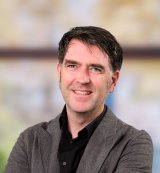
Dr. Rob Hamilton is Associate Professor and Head of the Department of Arts at Rensselaer Polytechnic Institute, with secondary appointment in the Games and Simulation Arts and Sciences program. His creative research explores the intersections of musical systems, interactive environments, and emerging technologies. Research Focus: Virtual reality musical instruments and performance systems Networked and collaborative music environments AI-mediated composition and improvisation His recent work includes developing extended reality performance platforms and investigating AI's role in creative musical practice. Current courses include Music and Technology II and interdisciplinary seminars on Music & AI. Dr. Hamilton serves on boards of the Electronic Music Foundation Institute and Empire State Youth Orchestra, maintaining active creative practice through installations, performances, and system development.
James Plank is a Professor in the Min H. Kao Department of Electrical Engineering and Computer Science at the University of Tennessee, Knoxville, within the Tickle College of Engineering. He has been at UT since 1993 and holds a PhD from Princeton University (1993), with prior degrees from Princeton (MS, 1990) and Yale (BS, 1988). His research focuses on neuromorphic computing , including models, software, and hardware applications, alongside expertise in erasure codes for storage systems, fault-tolerance, and distributed computing. His work spans neuromorphic hardware design, spiking neural networks, and storage reliability. He also explores interdisciplinary interests like duplicate bridge , computer-mediated music performance , and origami . Plank's publications emphasize neuromorphic computing benchmarks (e.g., Cart-Pole), neuromorphic processor architectures (RISP Neuroprocessor), and storage systems (RAID-6 codes). His research has applications in embedded systems, control systems, and energy-efficient hardware. Awards: Multiple teaching awards including the 2021 Brooks Distinguished Professor Award and Chancellor's Excellence in Teaching (2008). Grants: Supported by NSF and industry partnerships, focusing on neuromorphic computing and storage reliability. Labs: Leads TENNLab for neuromorphic control applications and collaborates on DANNA and RISP neuroprocessor frameworks.
Divinus Oppong-Tawiah is an Assistant Professor of Operations Management and Information Systems at York University's Schulich School of Business. His research focuses on how new technologies transform organizational forms and practices, particularly examining social norms and influence mechanisms in digitally enabled work environments. He employs diverse empirical methods including network science, data science, and randomized controlled trials. His research interests include Business Analytics, Design Science, Digital Platforms, Network Science, and Persuasion & Gamification. His publications frequently explore organizational dynamics in digital contexts, sustainability communication, and behavioral interventions in workplace settings. Research trends show consistent focus on technology-mediated organizational innovation and ethical considerations in digital transformation. Professor Oppong-Tawiah maintains an active research program examining digital innovation across multiple domains including platform ecosystems, sustainable technology adoption, and organizational gamification.
Jamie Forth is a Lecturer in the Department of Computing at Goldsmiths, University of London. His work bridges music, computation, and interdisciplinary research, focusing on computational creativity, AI, and the intersection of technology with artistic practice. He holds a PhD in Computer Science (2012), MA in Electroacoustic Composition (2004), and BMus (2003). As programme convenor for the BSc Creative Computing, he teaches and designs curricula integrating computational methods with creative disciplines. His research explores computational models of creativity, music perception, and symbolic systems. Key projects include the IDyOT cognitive architecture, algorithmic music generation, and collaborations on movement-based digital art. Notable works include Algorithmic folding (2025) and Towards a Deep Improviser (2020), which demonstrate AI-driven musical improvisation. He has also investigated conceptual representations in AI (2019) and neural-symbolic integration (2017). His interdisciplinary projects, such as Mediated Movement , explore remote collaboration between artists and the impact of technology on creative processes. His work is supported by grants like the Goldsmiths-LASALLE Partnership Innovation Fund (2021). Jamie’s publications span computational creativity, music information retrieval, and cognitive science, with contributions to journals like Neural Computing and Applications and ACM Computing Surveys .
John Keston is Professor of Digital Media Arts at the University of St Thomas and Senior Clinical Faculty in Emerging Media. His transdisciplinary practice integrates music technology, software development, and improvisation to create interactive performances and installations. His research explores algorithmic composition through custom instruments like the Audiovisual Grain Machine (AVGM) and PreenFM2 Patch Degrader. Recent projects include generative graphic scores that enable collaborative interpretation between humans and algorithmic systems. Keston's work has been featured at international venues including SEAMUS, NIME, Moogfest, and Walker Art Center, examining how technology mediates creative expression.
David Marchant is Professor of Practice in Dance and Coordinator of the Somatic Studies Program at Washington University in St. Louis. He holds an MFA from the University of Iowa and is an AmSAT-certified Alexander Technique instructor. His research includes dance/movement coordination methods and therapeutic applications of contact improvisation. Marchant developed 'Quadruped' - a movement practice combining Alexander Technique and Dart Procedures. His Parkinson's disease research demonstrates how contact improvisation improves balance. He also explores computer-mediated dance/music composition through projects like 'Leonardo's Chimes'. As co-director of ZoMotion Arts, he creates site-specific installations featuring tree-climbing as performance art. His choreography has been presented at national festivals including the American College Dance Festival.
Panayiotis Zaphiris serves as Rector of Cyprus University of Technology and Professor at the Department of Multimedia and Graphic Arts. Previously, he held leadership roles as Dean of the School of Fine and Applied Arts and Head of the Department of Multimedia and Graphic Arts. His academic journey includes being a Reader at the Centre for Human-Computer Interaction Design, School of Informatics, City University London, and research at Wayne State University's Institute of Gerontology. His educational background comprises: Ph.D. in Human Computer Interaction from Wayne State University (2002) MSc in Systems Engineering from University of Maryland (1998) BSc in Electrical Engineering from University of Maryland (1995) HND in Electrical Engineering from Higher Technical Institute, Cyprus (1991) Zaphiris's research centers on "Inclusive Design and Social Aspects of Computing" through the Cyprus Interaction Lab. His expertise spans computer games' social dimensions, e-learning, design for elderly and disabled users, cultural considerations in interactive systems, and web accessibility. He developed the Learn Greek Online course with over 100,000 students using participatory design methodology. His publication trend reveals deepening engagement with embodied learning, makerspaces in education, and social aspects of computing. Recent work increasingly examines how technology enhances learning experiences and accessibility across diverse user groups, with a notable focus on inclusive design principles and collaborative learning environments. His recognition includes: Fulbright scholarship for BSc Studies (1993-1995) Zaphiris has significantly contributed to academic program development, creating three Master's programs at Cyprus University of Technology: MSc in Interaction Design, MA in Interactive Multimedia, and MSc in Design and Development of Computer Game Technologies. At City University London, he established the MSc in Human Centred Systems. His teaching includes Human Computer Interaction Design, User Centered Design, and Design for All courses. As an active member of the Cyprus Interaction Lab and RISE CoE, he leads funded research projects exploring inclusive design solutions and social computing applications.
Nate Greenslit is an Associate Professor in the College of Liberal Arts and Sciences at Berklee College of Music, where he bridges anthropology, science studies, and artistic practice. His work critically examines the societal dimensions of psychopharmaceuticals, digital culture, and neuroscience, with particular focus on identity formation and policy implications. Greenslit holds a Ph.D. from the Massachusetts Institute of Technology and completed postdoctoral appointments at the MIT Media Lab and Harvard University's History of Science Program. His educational trajectory reflects an interdisciplinary commitment spanning science, humanities, and creative expression. His research centers on the anthropology of science, investigating how pharmaceutical branding shapes identity practices, how digital platforms mediate mental health discourse, and how neuroscience intersects with racist drug policies. Greenslit critically analyzes the cultural construction of depression through advertising and online communities, revealing connections between consumer culture, medicalization, and selfhood. His scholarship consistently challenges biomedical frameworks through anthropological and critical race lenses. Analysis of Greenslit's 2012-2015 publications reveals a cohesive exploration of psychopharmaceuticals' societal impacts, with recurring themes of digital mediation (YouTube, social media), identity politics, and structural inequality. His work in outlets like The Atlantic Monthly and Wired demonstrates exceptional ability to translate complex academic concepts for public discourse while maintaining scholarly rigor. As an active musician residing at Boston's Cloud Club art collective, Greenslit curates the Lost Marbles Salon—a monthly experimental gathering merging art and science. This practice embodies his self-described role as an 'anthro-apologist' who simultaneously defends and interrogates human weirdness through performance, scholarship, and community engagement.
Patricia Alessandrini is a composer/sound artist, educator, and researcher affiliated with Stanford University's Department of Music and CCRMA (Center for Computer Research in Music and Acoustics). She explores themes of canonicity, representation, interpretation, perception, and memory within social and political contexts through interactive and intermedial work. Research focuses on embodied interaction, inclusive instrument design, and digitally-mediated performance Teaches composition, sonic arts, and computer music Her career spans institutions like the University of Bangor, Goldsmiths (University of London), and the Accademia Musicale Pescarese. She has presented works globally across four continents.
Sang Won Lee is an Associate Professor of Computer Science at Virginia Tech and a Visiting Researcher at NAVER AI Lab. His work focuses on Human-Computer Interaction (HCI), computer-mediated empathy, and creative computing. He explores technologies like VR, conversational agents, and live coding to foster empathy, support self-reflection, and enable inclusive collaboration. His research has been recognized with best paper awards at ACM CHI and Creativity & Cognition. He holds a Ph.D. in Computer Science from the University of Michigan, alongside degrees in Music Technology (Georgia Tech), Management Science (Stanford), and Industrial Engineering (Seoul National University). His teaching spans courses like Creative Computing Studio, Computer-Supported Cooperative Work, and Game Design. Research interests include: Empathy through interactive systems Music technology and live coding performances Collaborative tools for education and work VR/AR applications in learning Notable awards include the 2016 International Computer Music Association Award for his composition Live Writing: Gloomy Streets . Recent work explores AI ethics in education, voice agents in parent-child interactions, and cross-device mixed reality experiences. Active in both academic conferences (CHI, NIME) and artistic venues (ICMC performances), he bridges technical innovation with creative expression. His lab develops tools like TaskScape for holistic task management and Octave for spatiotemporal data analysis in construction education.
Cordula Vesper is an Associate Professor at the Department of Cognitive Science within the School of Communication and Culture at Aarhus University. Her research focuses on joint action coordination, sensorimotor communication, and the cognitive mechanisms underlying social interaction. She explores how individuals coordinate actions through nonverbal cues, proximal/distal spatial dynamics, and crossmodal correspondences, with applications in digital environments and museum spaces. Her work spans experimental psychology, neuroscience, and cultural evolution, investigating topics like motor variability’s impact on joint action, diversity in collective problem-solving, and rhythm perception. She actively participates in workshops and conferences, such as the 2022 SOMICS meeting and 2021 EEG hyperscanning workshop, emphasizing collaborative research and interdisciplinary dialogue. Vesper’s publications analyze communication strategies in joint tasks, demonstrating how partner actions are predicted through motor constraints and shared temporal structures. Her research highlights the role of abstraction, cognitive flexibility, and common ground in enabling coordinated behavior across diverse contexts.
Miya J. Masaoka is an Associate Professor of Professional Practice in Visual Arts within the Faculty of the Arts at Columbia University's School of the Arts. She holds a dual affiliation with the Department of Music and the Sound Art MFA program, which she directs. Her work spans installations, compositions, and interdisciplinary performances that explore sound's intersection with biology, technology, and human interaction. Key professional engagements include teaching roles at New York University and Bard College since 2003. Notable works include the 2017 Kunstmuseum Bonn installation Vaginated Chairs , a 2018 premiere with the BBC Scottish Symphony Orchestra, and collaborations with artists like Anthony Braxton and Zeena Parkins. Her creative practice integrates biofeedback systems, wearable technology, and traditional Japanese Noh theater forms. Masaoka's exhibitions include major institutions such as the Venice Biennale, MoMA PS1, and the Museum of Contemporary Art Chicago. Her research explores resonant frequencies in non-human systems, including plant behavior sonification and neural activity translation into musical forms. Current projects include a chamber Noh opera and ongoing investigations into sound's role in mediating interspecies communication.
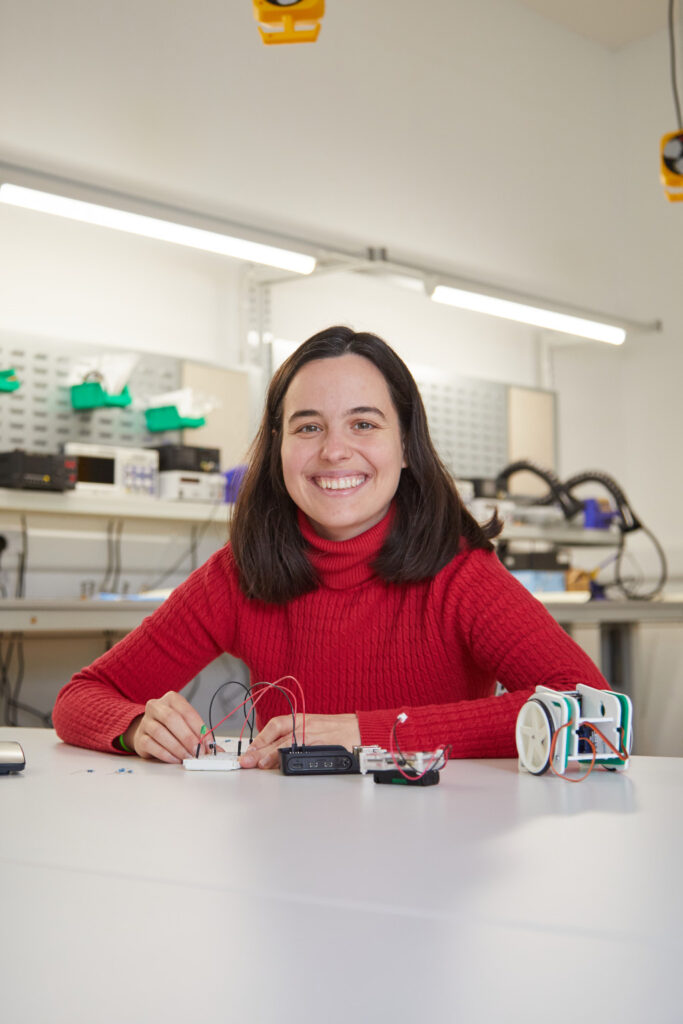
Diana Vallverdu serves as a Lecturer in the Creative Computing department at Norwich University of the Arts, teaching on both the BSc (Hons) Creative Computing and BSc (Hons) Creative Technology and Robotics programs since joining the faculty in 2023. Her unique interdisciplinary profile bridges rigorous mathematical training with experimental theatre practice to pioneer new forms of technology-mediated performance. Her educational foundation includes a BSc (Hons) in Mathematics from Universitat Politècnica de Catalunya (2018) and an MFA in Advanced Theatre Practice from the Royal Central School of Speech and Drama (2021). Vallverdu's research investigates experiential phenomenology and Human-Robot Interaction through the reinterpretation of existing technologies for interactive physical performance. She explores how mathematical concepts catalyze theatrical innovation, creating immersive audience experiences that challenge conventional data interaction. Her work consistently merges computational logic with embodied performance, resulting in installations that transform abstract concepts into tangible sensory encounters. Recent publications like A Conversation with Berna (2025) and A Banal Introduction of Berna (2024) demonstrate a cohesive trajectory toward biometric data interpretation and alternative communication systems. These works analyze how fingerprint data can generate musical compositions and how obsolete technologies like fax machines provoke reflection on social media immediacy, revealing her signature approach of using creative computing to humanize technological interfaces. As co-founder and co-director of ANTS Theatre since 2020, Vallverdu has developed groundbreaking productions including Qrumpet (exploring quantum pseudoscience) and We Still Fax (interactive audience experiences). Her technical collaborations with Ludens Theatre on The Tight Squeeze (2022) and Terraforming Mars (2023) showcase custom software development for immersive game-theatre hybrids. The upcoming A Conversation with Berna installation for the 2026 Norwich Science Festival—developed with Akademia University—will interpret fingerprints as songs, extending her exploration of biometric connection.
Professor Nicolas A Fells is a composer, performer, and sound artist affiliated with the University of Glasgow as a Professor of Sonic Practice in the Department of Music , School of Culture & Creative Arts. His work bridges electronic and acoustic music, emphasizing computer-mediated sound in performance, spatialization, and interdisciplinary collaborations with visual artists, dancers, and improvisers. Research Interests: Fells focuses on experimental approaches to sound, including field recordings, live improvisation, and the sociotechnical dynamics of collaborative performance. His work explores intercultural practices and the transformative role of technology in ensemble contexts. Key Projects: Founder of nerve8 and Glasgow Improvisers Orchestra Awarded Muenchen Kulturreferat Stipendium for residency at Villa Waldberta Performed globally at venues like Sónar Barcelona and ISSUE Project Room, NYC Grants & Roles: Course Convenor: Electronics with Music, MSc Sound Design & Audiovisual Practice PI on grants including AHRC Fellowships and innovation funds for spatial sound projects External Examiner at University of Edinburgh, Surrey, York, and others Labs/Teams: Active collaborations with rm-star, Sony Creative Centre, and interdisciplinary groups like the Glasgow Improvisers Orchestra.
Rens Kortmann is an Assistant Professor at Delft University of Technology, affiliated with the Faculty of Technology, Policy and Management and the Multi-Actor Systems department. He operates within the Policy Analysis group, focusing on systems modeling and simulation to address societal challenges like energy transitions. Education: MSc in Cognitive Science (University of Groningen), PhD in Computer Science (Maastricht University), with research experience at Edinburgh's Artificial Intelligence department His research emphasizes simulation gaming as a primary method, complemented by discrete event simulation, agent-based models, and cybernetics. He investigates games' potential to drive cultural change through embodied experiences and ludic performances, collaborating on projects like: ROTBEESTEN?! – a motivator game for forensic mental healthcare training Talk that Talk – persuasive card game against sexually transgressive behavior Veerkracht series – servant-leadership development games Parsifal Game Opera – performance-art-meets-game cultural experiments Key trends in his publications include: 2023-2021: Forensic vigilance training, sexually transgressive behavior interventions 2019-2018: Contextual game design principles, urban canal logistics 2016-2014: Ludic performances, servant-leadership simulations Scientific recognition includes: Mekel Prize for sustainable innovation (2017) from TU Delft Organized ISAGA game design summer school (2014) and served as ISAGA conference chair (2017) He contributes to academic governance as a reviewer for journals/conferences and through collaborative works with researchers like Vincent Peters, Alexander Verbraeck, and Gwendolen Bekebrede. His 2024-2026 secondary affiliation includes the Macromechanic Laboratory in Civil Engineering and Geosciences.