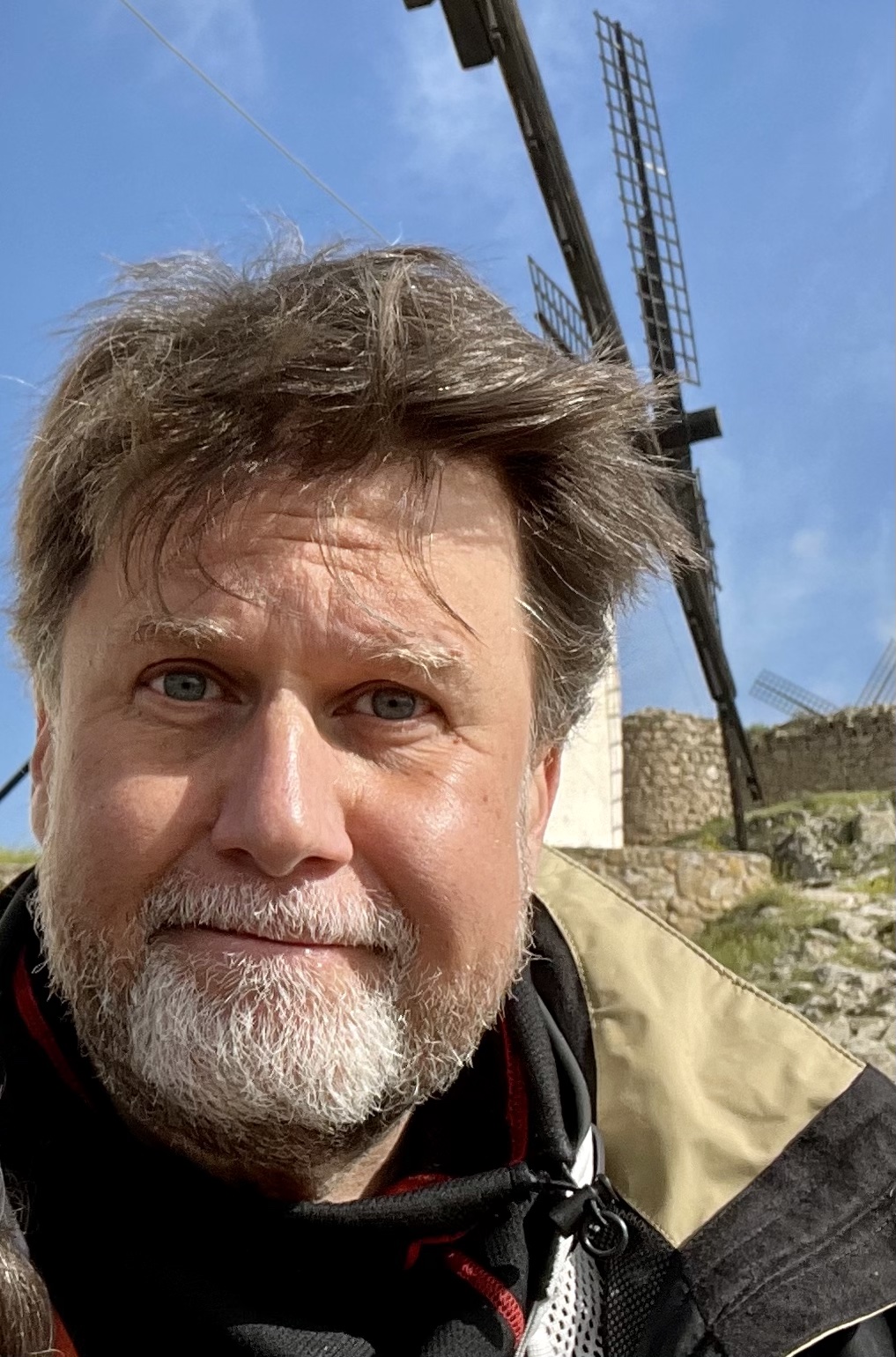
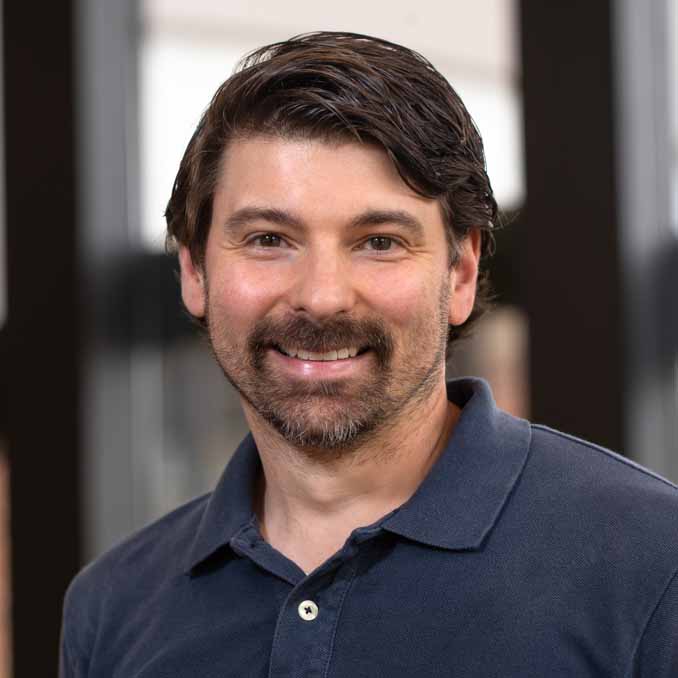
Dr. Dylan Davis is a Lecturer and Manager of Multimedia Design at Swinburne University's School of Design and Architecture. His interdisciplinary work bridges design research, audio production, and electronic music composition. Research interests include: Design process innovation and community-centered methodologies Digital storytelling through interactive media Electronic music production, particularly acid house and techno genres AI-assisted creative workflows and generative music systems His scholarly output reflects a consistent exploration of technology-mediated creativity, with publications spanning computer music algorithms, community design practices, and electronic music history. Creative works frequently experiment with analog synthesizers (especially Roland TB-303 techniques) and explore the intersection of coding and composition.
Amy Hurst is an Associate Professor at New York University (NYU) with a joint appointment in the Occupational Therapy Department at the Steinhardt School of Culture, Education, and Human Development and the Technology, Culture and Society Department at the Tandon School of Engineering. She directs the NYU Ability Project , an interdisciplinary initiative focused on disability and technology, and is part of the Center for Responsible AI . Her research emphasizes human-centered computing, assistive technology, and accessibility, with a focus on empowering marginalized groups through DIY fabrication and inclusive design. Education: PhD in Human-Computer Interaction (Carnegie Mellon University, 2010) BS in Computer Science (Georgia Institute of Technology, 2004) Research Interests: Dr. Hurst’s work spans accessibility challenges, assistive technology design, and participatory methods with end-users. She explores how accessible tools can democratize technology creation for people with disabilities, particularly through nonvisual design workflows , tactile graphics , and adaptive interfaces . Recent projects include live coding accessibility for mixed-vision ensembles and neurodiversity-affirming STEM programs for autistic youth. Key Contributions: Developed SoundCells , a browser-based music notation tool for braille users Advocated for inclusive museum accessibility via DIY fabrication (e.g., 3D-printed tactile maps) Pioneered youth employment programs integrating adaptive technology training Labs & Collaborations: As director of the Ability Project, she fosters cross-disciplinary teams addressing disability through technology. The Center for Responsible AI aligns her work with ethical AI applications. Past roles include Associate Professor at UMBC (2010–2018), where she led Human-Centered Computing graduate programs.
Claire L. Evans is an Adjunct Instructor in the Media Design Practices program at Art Center College of Design in Los Angeles, where she advises students while maintaining an active creative practice spanning writing, music, and digital culture exploration. Her research interests focus on the intersection of biology, technology, and culture, with particular emphasis on computing history, artificial intelligence, ecological systems, and digital consciousness. Evans approaches these topics through both scholarly and creative lenses, examining how biological principles inform computational systems and vice versa, while exploring the philosophical implications of emerging technologies. Her recent publications reveal trends across digital culture, biocomputing, and AI ethics, with increasing focus on the relationship between organic and artificial intelligence systems. These works demonstrate her interdisciplinary approach that bridges scientific inquiry with cultural criticism. Grammy nomination as singer of YACHT 2024 MacDowell Calderwood Fellow for Journalism ASME Award nomination for profile of Susy Thunder Evans advises students in the Media Design Practices program at Art Center College of Design and has presented at major institutions including the Hirshhorn Museum, Walker Art Center, TEDx, Google I/O, and the Neural Information Processing Systems conference. Her work spans multiple creative domains including the video game Blippo+, the documentary The Computer Accent, and the Wild Information newsletter exploring ecology, computing, and consciousness. She co-founded Terraform, a speculative fiction incubator, and serves as an advisor to emerging creators working at the intersection of art and technology.
Tom Davis is an Associate Professor in Music and Audio Technology at The Media School, Bournemouth University , where he teaches on the BA Music and Sound Production degree. He is a practicing artist specializing in sound installation and live performance , with exhibitions across Europe and the United States. His research focuses on the interface between music and technology , including instrument building, technologically mediated improvisation, and enaction. Education: PhD in Sonic Art (Queen's University Belfast, 2008) PGCert in Education Practice (Bournemouth University, 2015) MA in Communication Media: Creative Sound Production (University of the West of England, 2004) BSc (Hons) in Physics with Music (University of Edinburgh, 2001) Research Interests span interdisciplinary domains such as Music Technology , Human-Computer Interaction , and Sonic Art , with a focus on enactive and postphenomenological frameworks. His work explores networked performance ecosystems , actuated instruments , and AI-mediated creativity . Publications and Research Trends reflect his expertise in digital music interfaces , human-AI collaboration , and cultural heritage digitization . Key themes include improvisational agency , assistive technology , and generative sound systems . Grants and Leadership: Davis leads projects like Shared Post-Human Imagination: Human-AI Collaboration in Media Creation (AHRC, 2024) and Improving Educational Outcomes for SEN Students (HEIF, 2017). He serves as an external examiner for institutions like London College of Communication (UAL) and contributes to peer review for journals and funding bodies. Labs and Collaborations: As an affiliate member of CIPPM (Centre for Intellectual Property Policy & Management) , he engages in cross-disciplinary research on emerging technologies and global IP policy .
Sergio Canazza is an Associate Professor at the Department of Information Engineering , University of Padova, Italy. He holds key roles in academic leadership as advisory editor for the Journal of New Music Research and as founder of the Sound and Music Processing Lab . His work bridges music technology , audio restoration , and cultural heritage preservation . Degree in Electronic Engineering, University of Padova CEO, AudioInnova (University spin-off) Research Interests : Expressive information processing in music Auditory displays and cross-modal interaction Preservation of musical cultural heritage Interactive multimedia systems for education AI-driven audio restoration Digital philology for time-based media Scientific Contributions span 20+ years of European/National projects and 200+ publications. His recent work focuses on: Generative AI for IoT sound communication Standardization of audio preservation (ARP technology) Reactivation of historical computer music systems Visual anomaly detection in audio tapes Interactive environments for music education 3D reconstruction of ancient instruments Awards : StartCup Veneto 2010 (Sound and Music Lab) StartCup Veneto 2012 (TechnoTale project) Start Cup 2006 (ARCHIMEDES project) Leadership Roles : Project Manager, EU Culture Program Director, University of Padova's Multimedia Center (2013-2016) Owner of audio preservation patents
Leif Handberg is an Associate Professor at KTH Royal Institute of Technology's Division of Media Technology and Interaction Design. He serves as course responsible and examiner for multiple courses including Introduction to Media Technology (DM1581), Engineering Training Courses (DM1998, DM1999), and various degree projects in Computer Science and Media Technology. His research explores the intersection of media technology, human-computer interaction, and cultural experiences. Key focus areas include presence production systems, telepresence applications, mediated performances, collaborative workspaces, and cultural heritage technologies. His work often involves experimental approaches to remote interaction and public engagement through technology. Publications demonstrate evolving research from industrial printing technologies (1990s) to advanced mediated presence systems (2010s), with recent works focusing on artistic applications in unique environments like nuclear reactors and cultural heritage sites. Awards: First prize, Nodem Award 2008 for Digital Excellence in Museums Communication (The Mediated Museum Project) Handberg contributes to KTH's experimental spaces including the R1 Experimental Performance Space and Presence Lab, where he has curated impact events like TEDxKTH conferences and artistic installations such as Opera Mecatronica and Vibragera performances.
Thomas Kaplan is a Visiting Professor at the School of Electronic Engineering and Computer Science, Queen Mary University of London. His research bridges computational modeling, music perception, and bioengineering with a focus on probabilistic frameworks for understanding rhythmic cognition, cardiovascular signal processing, and FPGA-accelerated genomic analysis. His work explores intersections between cultural influences on musical entrainment and hardware optimization for biological data processing. Key research areas include: Probabilistic models of rhythmic perception and synchronization Enculturated bias in musical expectation FPGA-based acceleration of genomic algorithms Cardiovascular signal analysis using neural networks Recent publications demonstrate cross-disciplinary contributions, spanning music cognition studies in Nature Human Behaviour to bioengineering advancements in Bioinformatics . While no explicit awards are listed, his research portfolio reflects sustained innovation in computational methods across multiple domains. Advising and grants: While specific student names and grant details are not documented here, his involvement with Queen Mary's research groups suggests active participation in interdisciplinary projects. His lab affiliations include collaborations within the school's Signal Processing and Communications group, focusing on applied machine learning solutions for both cultural and biomedical challenges.
Evelina Liliequist serves as Associate Professor at Humlab, Umeå University's interdisciplinary research environment housed within the University Library. Her work critically examines digital cultures through the dual lenses of queer theory and ethnographic practice, with particular focus on how technology mediates identity formation and spatial experiences in both online and rural contexts. Her research program centers on Digital Ethnography, Queer Studies, and Artificial Intelligence critique, employing autoethnographic and qualitative methods to investigate LGBTQI experiences in digital spaces. Key themes include the queering of AI systems that enforce gender binaries, sharenting practices among same-sex couples, and the geographical dimensions of queer belonging—especially in rural northern Sweden where she documents how marginalized communities navigate place and identity. Analysis of her recent publications (2022-2025) reveals three dominant trajectories: 1) Critical interventions in AI ethics through queer perspectives that challenge computational binarism, 2) Documentation of aging experiences among LGBTQI Swedes through interview-based studies, and 3) Deconstruction of regional narratives about northern Sweden that influence development policies. Her methodological contributions to digital research ethics and autoethnographic practice provide frameworks for studying vulnerable populations in online environments. Liliequist actively contributes to the Queer Perspectives on Automated Facial Analysis Technology (Queer AI) research group and led the 2022-2023 study on health conditions of LGBTQI seniors. Her scholarship appears across disciplinary venues including First Monday, Geografiska Annaler, and Lambda Nordica, demonstrating her commitment to bridging digital humanities, geography, and gender studies within Humlab's collaborative ecosystem.
Adriana Sá is a Visiting Professor at Noroff University College and a current board member at Lusófona University Lisbon , where she contributes to CICANT (Centre for Research in Applied Communication, Culture and New Technologies). She holds a PhD in Arts and Computing from Goldsmiths, University of London (2016) and a Fine Arts degree in Painting and Sculpture from the University of Lisbon (1996). Transdisciplinary artist, performer-composer-musician Editor-in-Chief of Live Interfaces Journal Board member at Lusófona University Lisbon Her research integrates artistic practice with interaction design , audio-visual theory , and neuroscience , focusing on sensor technologies, audio-visual instruments, and spatial presence. She designs custom instruments (e.g., zither-software hybrids) to explore the interplay of sound, light, and digital 3D environments. Her publications span Leonardo (MIT Press) , Live Interfaces Journal , and Routledge, with recurring themes in audio-visual mapping , interactive performance , and transdisciplinary methodologies . Her work has been showcased globally at venues like the Aomori Contemporary Art Center and Eyebeam . Artistic Residencies: STEIM, Metronom Electronic Arts Studio, Experimental Intermedia Foundation NY Performance Highlights: Favela Real (2023), Sprouts In-Between (2025), and international festivals like Version Beta and Novas Frequências
Angelika Güsewell is a Research Professor at HEMU (Haute École de Musique) within the HES-SO university system. She specializes in music accessibility, music therapy, and interdisciplinary education. Her work bridges music, healthcare, and technology, with a focus on inclusive practices for individuals with disabilities and mental health support. Key Projects: Leadership in projects like Concert inclusif (2024–2025) and SensiMUS exploring haptic feedback for hearing-impaired audiences. Co-created a care game ( a[µz]e-toi ) for adolescents in mental health care (2022–2024). Studied music's impact on workplace well-being ( Musicdrops@work , 2021). Conducted longitudinal studies on jazz graduates' career paths (Alumni Jazz projects, 2021–2023). Research Interests: Music's role in social inclusion, mental health, and pedagogical innovation. Collaborates with institutions like CHUV, HESAV, and international partners. Funding: Secured CHF 1.7M+ across projects from HES-SO, FNS, Innosuisse, and private entities. Active in grant-writing and international partnerships.
Anders Bach Pedersen is a Ph.D. student at the Department of Arts and Cultural Studies, University of Copenhagen, and a part-time lecturer at the Rhythmic Music Conservatory since 2014. His research examines music genres on TikTok through the lens of aesthetic, economic, and political dynamics in platform ecosystems. As an active composer and drummer with 15 years in Denmark's experimental music scene, he has collaborated with artists including MØ, Keiji Haino, and Sleep Party People while managing the Wetwear record label. His academic credentials include: MSc in Digital Design and Communication (IT University of Copenhagen, 2017) BMus in Music Performance (Rhythmic Music Conservatory, 2013) Contemporary Jazz studies (The Collective School of Music, 2009) Max/MSP/electro-acoustic composition training (IRCAM, 2009) Pedersen's research bridges musicology, cultural studies, and platform theory with specialization in electronic music aesthetics, generative systems, and socio-political dimensions of sound. His work interrogates how digital infrastructures reshape musical expression, from Spotify's algorithmic curation to TikTok's genre formation, while maintaining strong connections to practical music production through video game scoring and experimental performance. Publication analysis reveals an evolving trajectory from foundational sound synthesis research toward contemporary platform studies. Core themes include algorithmic influence on musical taste, environmental soundscapes, and computational creativity in improvisation. His scholarship consistently examines power structures within music technology, particularly how corporate platforms mediate cultural production and aesthetic values across streaming services and social media. No academic advisees or research grants are documented in available sources.
Gregory Davis serves as an Assistant Professor in the Department of Visual & Performing Arts at Pennsylvania Western University (PennWest), where he has been integral to the Commercial Music Technology (CMT) program since its 2010 launch. He designs and implements all music technology coursework, manages computing infrastructure and recording facilities, and supervises student internships while holding Avid Certified Instructor status for Pro Tools® and Sibelius®. His research explores critical intersections of music, identity, and culture: Dissertation focus on DIY music scenes as cultural unification networks in Pennsylvania Current investigations into acoustic ecology examining sound as a mediator between humans, animals, and environments Planned collaborative projects expanding acoustic ecology research Professionally active in southwestern Pennsylvania's music scene, Davis has served as lead recording engineer for Pittsburgh artists including Mike Swindell's American Bittersweet (2021), The Elemental's Lovely Distraction (2020), and The Tilt Room's Nostalgic Future (2017).
Dorothée Hefner is a researcher at the Department of Journalism and Communication Research, Hanover University of Music, Drama and Media. She previously held research roles at the University of Mannheim (2012–2015) and continues her work in digital media effects, mindfulness in technology use, and stress dynamics. Research focuses: Permanently Online/Connected (POPC), digital media literacy, interpersonal communication, environmental behavior, and technology-mediated stress Key contributions to mindfulness integration in mobile communication, FoMO dynamics, and online vigilance metrics Her publications address digital stress, peer norms in smartphone use, and mindful interventions. Active in EU’s FUGA project and editorial roles, she co-founded Hanover University’s sustainability initiative. Scientific Recognition Awarded Top Paper by ICA’s Political Communication Division (2008) Reviewer of the Year for the Journal of Media Psychology (2016, 2017) She has advised on computational communication methods and served on expert groups like the Young Scholars Network on Media Use and Well-Being (2013–present).
Elissa Aminoff is an Associate Professor of Psychology at Fordham University , where she leads the Vision and Memory Lab and serves as Associate Chair for Undergraduate Studies at the Rose Hill Campus. Her research integrates neuroimaging (fMRI, EEG, MEG), computational models , and cognitive theory to explore how visual perception, associative processing, and memory interact. Key research themes include: High-level visual processing and scene understanding Contextual associations in neural networks Temporal/spatial dynamics of visual cognition Applications of artificial vision models to human perception Her lab has produced impactful work on scene-selective brain regions , associative thinking , and contextual memory distortion , with recent publications in Scientific Reports and Cerebral Cortex . She has mentored numerous undergraduate researchers and contributed to open science via the BOLD5000 dataset.
Sue Jamison-Powell is a Lecturer in Psychology (Social) at the Sheffield Institute of Social Sciences, part of the College of Social Sciences and Arts at Sheffield Hallam University. She holds a PhD from Sheffield Hallam University (2011) and has been teaching there since 2007, with a permanent lectureship since 2014. She maintains collaborative links with the Lincoln Social Computer Research Centre (LiSC). Her research focuses on cyberpsychology, human-computer interaction, and the application of social technology to health and identity. Education: BSc in Psychology, University of Chester PhD in Psychology, Sheffield Hallam University (2011) Research Interests: Online communication and social media behavior Psychological impact of digital technologies on identity and self-disclosure Use of social technology in health contexts, including chronic illness and end-of-life care Cyberpsychology applications in cognitive behavioral therapy (e.g., insomnia treatment) Publications Trends: Her work spans social media’s role in health, identity, and festivals. Notable themes include posthumous digital messages, sleep therapy via mobile apps, and online self-representation. Recent research examines end-of-life processes through social technology. Collaborations & Labs: Active collaboration with LiSC on projects like sleep therapy apps and end-of-life digital communication. Interdisciplinary approach integrating psychology with technology.