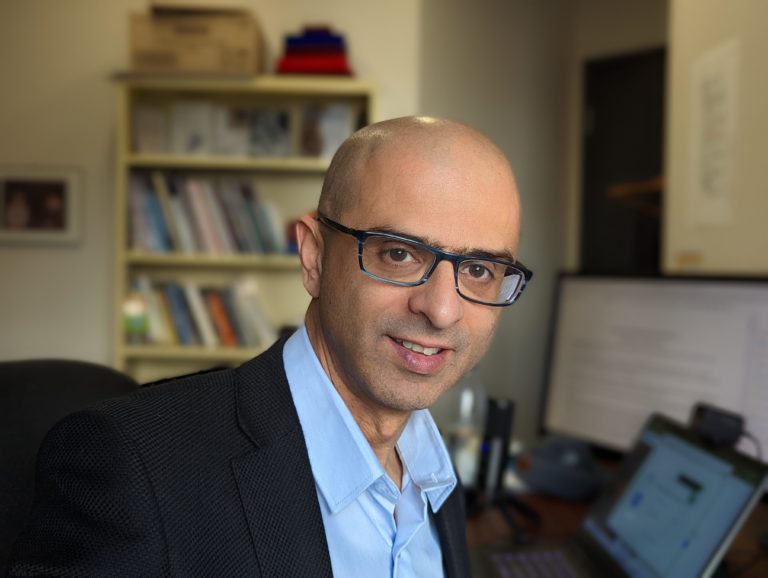
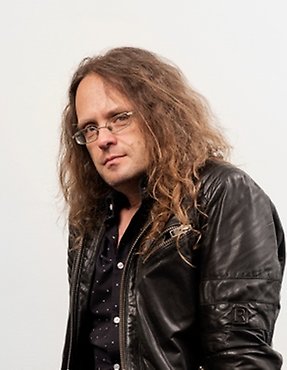
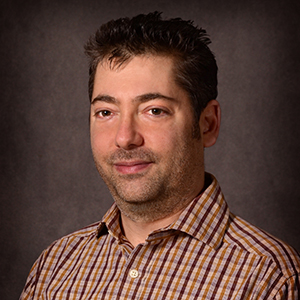
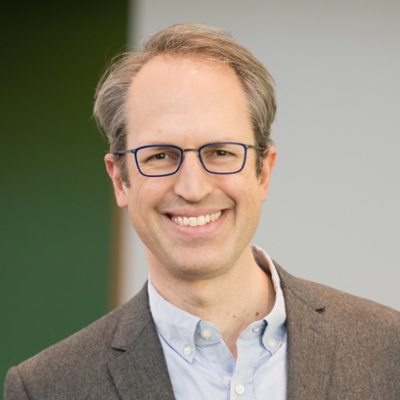
Eldad Tsabary is an Associate Dean of Research and Graduate Studies at the Faculty of Fine Arts, Concordia University. He leads the SSHRC-funded Reflective Iterative Scenario Enactments (RISE) project and founded the Concordia Laptop Orchestra (CLOrk), which has performed internationally. His work spans electroacoustic music, live coding, and interdisciplinary collaboration, particularly with AI and global artistic networks. Doctorate in Music Education from Boston University Research interests include improvisation , neural synthesis , and browser-based collaborative platforms . His recent publications explore GAN-based transformation matrices , multilingual live coding environments , and evolutionary dynamics in laptop orchestras , reflecting his focus on technology-driven musical innovation. Notable scientific contributions include the SSHRC-funded RISE project and leadership in the Canadian Electroacoustic Community (CEC) and the International Conference on Arts and Humanities. He actively collaborates with the Milieux Institute and Gina Cody School of Engineering, emphasizing AI integration in the arts.
Santiago Mengual Andres is an Associate Professor in the Department of Comparative Education at the Faculty of Philosophy and Educational Sciences, Universitat de València. His work is centered on digital competence, educational technology, and inclusive pedagogy in higher education. He is a member of two prominent research groups: GRECIA (Comparative Education Group) and POLISOC (Educational Policies, Interculturality and Society). Research Interests: His primary research areas include educational technology, digital competence, virtual reality in education, MOOCs, artificial intelligence in learning, teacher training, and inclusive education. He investigates how digital tools transform teaching and learning, especially in higher education contexts, with a focus on equity, accessibility, and pedagogical innovation. Publication Trends: His recent publications (2021–2025) reflect a strong focus on AI in education, online learning effectiveness, virtual reality, and digital inclusion. Themes such as student perceptions, teacher training, and sustainable digital education recur across his work, demonstrating a commitment to evidence-based educational innovation. Scientific Awards: No scientific awards were mentioned in the provided text. Advising and Grants: While specific details on grants are not provided, Santiago has supervised doctoral research, including his own PhD under Dr. Rosabel Roig Vila and Dr. Josefa Eugenia Blasco Mira. He collaborates extensively in educational research projects, particularly in digital education and policy. No formal list of advisees is available. Labs and Research Groups: He is actively involved in the GRECIA Comparative Education Group and the POLISOC research group focused on educational policies, interculturality, and society. These groups support interdisciplinary research on educational innovation, inclusion, and digital transformation in Ibero-American contexts.
Stefan Östersjö is Professor of Musical Performance and Head of Subject at Luleå University of Technology, Sweden, where he leads GEMM (Gesture, Embodiment and Machines in Music), an interdisciplinary research cluster. He holds a position within the Department of Music, Media and Theatre, part of the Department of Economics, Technology, Arts and Society. Östersjö's academic career spans both research and practical music performance, with significant contributions to artistic research methodology and transcultural musical practices. His research focuses on interdisciplinary collaboration, method development, and knowledge creation through the interaction between musicology, ethnomusicology, music psychology, music education, and computational approaches. Östersjö has been instrumental in developing the role of artistic research in method development, particularly through his work on transcultural musicianship and ecological sound practices. His research interests reveal a commitment to bridging academic inquiry with practical musical exploration. Analysis of his 15 most recent publications shows a consistent focus on artistic research methodologies, transcultural musical practices, sound ecology, and the relationship between gesture and sonic production. His work demonstrates a sophisticated integration of qualitative and quantitative approaches to understanding musical performance, with particular attention to the embodied and ecological dimensions of musical practice. Östersjö's publications span both scholarly journals and creative practice outputs, reflecting his dual commitment to academic rigor and artistic innovation. Östersjö has received significant research funding, including multiple projects from the Swedish Research Council, MAW, AHRC, and as a Research Fellow at the Orpheus Institute in Belgium (2009-2019). His current research continues to explore the intersections of artistic practice, interdisciplinary collaboration, and knowledge production in musical contexts. As a performer, Östersjö is a leading classical guitarist specializing in contemporary music, with over twenty CD releases and extensive international touring. He has collaborated with major composers and artists across disciplines, including choreographers, filmmakers, and visual artists. His performance career includes founding The Six Tones (2006-present), membership in the Landscape Quartet, and former leadership of Ensemble Ars Nova (1995-2012). Östersjö has worked with renowned conductors including Lothar Zagrosek, Peter Eötvös, Mario Venzago and Andrew Manze.
Michael Schober is a Professor of Psychology at The New School and Senior Vice Provost for Faculty Affairs. He holds a PhD from Stanford University (1990) and a Sc.B. from Brown University (1986). His research bridges psychology, linguistics, human-computer interaction, music, and design, focusing on coordinated action, cognitive processes, and technology-mediated collaboration. He previously served as Dean of the New School for Social Research (2006–2013) and as editor of Discourse Processes (2005–2015). Major research themes include survey methodology innovations, jazz improvisation coordination, virtual collaboration interfaces, and audience-performer dynamics. He co-developed influential frameworks for analyzing conceptual misalignment in survey interactions and received the 2013 Warren J. Mitofsky Innovators Award for advancing survey research methods. His work often involves interdisciplinary collaborations, such as with Frederick G. Conrad at the University of Michigan. Teaching spans graduate/undergraduate courses in psycholinguistics, research methods, and psychology of music. Current roles include overseeing faculty affairs and guiding institutional academic strategy. His portfolio http://www.mfschober.net showcases ongoing projects in music cognition and technology-enhanced communication.
Prof. Dr. Rolf Grossmann is a Professor at Leuphana Universität Lüneburg, affiliated with the Institute of Culture and Aesthetics of Digital Media (ICAM). His research focuses on Sound Studies, Digital Cultures, and Cultural Informatics, exploring themes like media theory, music technology, and audio culture. He has organized conferences such as 'The Sound of Sound Studies' (2021) and contributed to projects like 'Instrumentality meets Materiality' (2019). Grossmann's publications span peer-reviewed journals like Paragrana and Positionen , as well as edited volumes on topics like sound art and media anthropology. He has been featured in media discussions about AI in music production, digital copyright, and the cultural implications of sampling. His work bridges musicology, media studies, and philosophy, addressing contemporary issues in digital sound culture. Research Interests: Sound Studies investigates how sound shapes cultural practices and technologies. His work on digital cultures examines transformations in music production and consumption, while cultural informatics explores computational methods in media analysis. Key projects include analyzing the PRC's Social Credit System through media theory and critiquing sonic media's role in societal norms. Media Contributions: Grossmann has participated in radio discussions (NDR, Deutschlandfunk) about AI's impact on music (2023), sampling ethics (2015), and digital music's future (2012). His work emphasizes interdisciplinary approaches to understanding sound's societal role.
Marina Stergiou is a doctoral candidate at the Department of Product and Systems Design Engineering, University of the Aegean. Her research focuses on the intersection of traditional cultural practices—particularly dance and costume—with emerging technologies like virtual reality and sustainable fashion. She collaborates with the National and Kapodistrian University of Athens and the Athena Research Center on projects involving cultural technology and human-computer interaction. Education includes a BEng in Chemical Engineering (National Technical University of Athens, 2012), an MSc in Interactive and Industrial Product & System Design (University of the Aegean, 2016), and current PhD candidacy at the same institution focusing on using new technologies to preserve traditional dances and costumes as cultural heritage. Her research interests span dance technology, digital clothing, virtual/augmented reality, and sustainable fashion. Notable projects include motion-based learning systems for dance notation and VR experiences for music composition exploration. Articles highlight trends in VR/AR applications for cultural heritage preservation, extended reality for dance documentation, and data-driven artistic creation. Her work bridges technical innovation with cultural preservation through interdisciplinary collaborations. Labs/teams affiliation includes partnerships with the National and Kapodistrian University of Athens' Department of Informatics and Telecommunications and the Athena Research Center's cultural technology initiatives.
Dr. Melissa Avdeeff is a Lecturer in Digital Media at the University of Stirling, affiliated with the Communications, Media and Culture school. She holds a PhD in Musicology from the University of Edinburgh, an MA in Music Criticism from McMaster University, and a BMus from the University of Alberta. Her research focuses on digital media and society, with specialties in critical internet/algorithmic cultures, social media discourse, and AI-pop music intersections. Key areas include technocultural analysis of popular music on platforms like TikTok and Twitter, and the development of Critical AI Popular Music studies through frameworks like the 'audio uncanny valley.' She actively contributes to the International Association for the Study of Popular Music (IASPM), serving as Communications Coordinator for IASPM-Canada and editorial board member. Her work emphasizes land-based epistemologies and relationality, shaped by her roots on the traditional territories of the Squamish, Sechelt, Sliammon, and Kla’hoose Nations. Current projects explore AI’s role in pop music production, speculative discourse around computational creativity, and platform-specific cultural engagement patterns. Her academic journey integrates interdisciplinary approaches, blending feminist theory, cultural critique, and digital media analysis. Recent research highlights include examining Taylor Swift’s LGBTQ+ allyship through social media discourse and analyzing Lil Nas X’s viral success via platform dynamics. She critiques algorithmic mediation in music journalism and advocates for ethical considerations in AI-generated art. Collaborations with IASPM and digital society research groups position her at the forefront of contemporary media scholarship. Dr. Avdeeff’s publications span peer-reviewed articles and cultural critiques, addressing topics from Beyoncé’s digital self-presentation to the economic sociology of ringtone culture. Her work bridges academic rigor with public engagement, reflecting her commitment to accessible, socially relevant research. Future projects aim to solidify the Critical AI Popular Music field as a critical lens for understanding emerging technocultural phenomena.
Blake Marques Carrington is an Associate Professor at Pratt Institute's School of Art, Department of Digital Arts and Animation, where he coordinates the Art+Technology program. His work merges sound, visual, and performing arts through the lens of 'speculative forensics', exploring transdisciplinary practices in art and technology. In 2025, he will pursue research at the University of São Paulo via a Fulbright U.S. Scholar Award. Key research areas: Transdisciplinary Art and Technology Ambient Narrativity AI-Driven Creative Workflows Phenomenology in Digital Landscapes Sound-Visual Interplay Notable works: Interactive audiovisual installations like Study on the Metaphysical Status of a Table (2022) and An Infinite Density Over Zero (2021) explore simulated realities, authorship in AI, and the materiality of digital landscapes. His practice spans electronic music releases, public projections, and collaborative concert visuals with artists like Patti Smith. Awards: Fulbright U.S. Scholar Award (2025) Jerome Foundation Travel Study Grant NYFA Fellowship in Electronic Arts NYSCA Distribution Grant Education: B.A. in Digital Media, Indiana University Bloomington M.F.A. in Computer Art, Syracuse University
Dr. Hanna Barbara Hölling is a Research Professor at Bern University of the Arts and Honorary Fellow at University College London . She specializes in art history, material and heritage studies, and conservation, with a focus on American and European art since the 1960s. Current Roles: Project Lead for SNSF-funded research initiatives ( Natureculture Lab , Activating Fluxus ), Coordinator of the Contemporary Art and Media research field. Prior Academic Affiliations: Associate Professor at UCL, Andrew W. Mellon Visiting Professor at Bard Graduate Center, guest lecturer at University of Amsterdam and Harvard University. Research Interests encompass two interconnected strands: 1960s–70s Art: Film, video, installation, and performative practices in material and cultural contexts. Conservation as Critical Practice: Ethics of care, institutionalization of conservation, and naturecultures frameworks for ecological-cultural challenges. Article Trends reflect her expertise in performance/media art conservation, Fluxus studies, and care ethics. Key themes include transitional media , dynamic materiality , and post-preservation theories . Scientific Awards include: Andrew W. Mellon Visiting Professorship (2013–15) Terra Foundation Fellowship (2019–20) Getty Conservation Scholarship (2016–17) NWO PhD Fellowship (2009–13) Fellowship of the Higher Education Academy (FHEA) Advising spans PhD theses on environmental justice, performance conservation, and digital heritage. She leads labs like Natureculture Lab and Performance: Conservation, Materiality, Knowledge , addressing climate-art intersections.
David R. Burns is an Associate Professor in the Radio, Television, and Digital Media program at Southern Illinois University. A digital media artist and publishing scholar, his creative-research investigates the intricate relationships between humans, technology, and nature. His internationally exhibited work, shown at over 130 venues including the National Media Museum (England) and Chelsea Art Museum (New York), bridges artistic practice and scholarly inquiry. Burns' educational background includes: M.F.A. in Design and Technology from Parsons School of Design (2001) AAS from Parsons School of Design (1999) B.A. from the University of South Florida (1995) His research centers on the tensions between technology, culture, and nature in public and private spheres, mediating memory and postmemory, and participatory self-expression through visual music. By integrating computer animation, 3D modeling, 3D printing, sound design, interactive media, and physical computing, Burns pushes the boundaries of digital media art. His interdisciplinary approach results in hybrid projects that function simultaneously as artistic exhibitions and scholarly publications, critically analyzing contemporary issues in media arts. Burns' artistic output from 2001 to 2019 reveals a thematic consistency in exploring the material and immaterial in digital creation, the cultural impact of technology, and memory studies. His works, ranging from real-time interactive installations to multi-channel video animations, address border politics, cultural transformation in urban landscapes, and historical remembrance. Over time, his technical mastery in 3D printing and complex animation has evolved, yet the human experience within technological systems remains central. Notable recognition includes: Fulbright Senior Research Fellowship He has also secured funding from the U.S. Department of State Bureau of Educational and Cultural Affairs, the U.S.-India Educational Foundation South and Central Asia Regional Travel Program, and the Bissaya Barreto Foundation in Portugal. As the developer of the Digital Media Arts + Animation specialization at SIU, Burns mentors students in 3D computer modeling, animation, and digital media arts studio practice. His grant-funded projects often involve cross-cultural collaboration, as evidenced by his Fulbright residency in Portugal and work with international festivals. While specific labs are not mentioned, Burns' practice involves creating interactive installations and digital prints that require technical expertise in physical computing and 3D fabrication. His ongoing projects, such as Bind (un)Bind, continue to explore the intersection of technology and interpersonal relationships.
Matthew Clauhs is an Associate Professor of Music Education at Ithaca College's School of Music, Theatre, and Dance, where he teaches courses related to woodwind technique, wind instrument pedagogy, and popular music education. He holds degrees from Penn State University (B.S.), University of Massachusetts, Amherst (M.M.), and Temple University (Ph.D.). Prior to his appointment at Ithaca College, he served as an instrumental music teacher at the Boston Arts Academy and as a lecturer at SUNY Broome, Morrisville State, and Mansfield University, and was the music coordinator for the Johnson City Central School District. Dr. Clauhs is a prominent scholar in popular music education, having co-authored Popular Music Pedagogies: A Practical Guide for Music Teachers and published extensively in peer-reviewed journals. His research focuses on instrumental music education, technology integration, race and equity issues, and popular music pedagogy. His recent publications examine demographic patterns in music education, gender bias in teacher evaluations, the impact of the pandemic on music technology use, and the historical development of digital audio workstations in music education. Dr. Clauhs serves as chair of the New York State School Music Association (NYSSMA) Research Committee and on the editorial review boards of Music Educators Journal and Contributions to Music Education . He has received numerous grants and honors from organizations including Mr. Holland's Opus Foundation, NAMM Foundation, Little Kids Rock, Guitar Center, NYSSMA, Ithaca College Center for Faculty Excellence, and the Surdna Foundation. Many of these grants have supported initiatives to provide music education to students in underserved communities. As an active presenter, Dr. Clauhs has shared his research at international, national, regional, and state conferences, with a particular focus on modern band curriculum development, culturally responsive teaching through popular music education, and technology integration in music classrooms. He has also served as a conductor for honor wind bands and modern bands throughout New York State and Pennsylvania. Dr. Clauhs has also worked as an instructor and consultant to the Berklee College of Music City Music network, a national program providing music education to inner city students across the United States. His work consistently emphasizes expanding access to music education and developing inclusive, contemporary music programs that reflect students' musical lives and cultural backgrounds.
Eric-Oluf Svee is an Associate Professor at Stockholm University 's Department of Computer and Systems Sciences . His research bridges Values Sensitive Design (VSD) , Consumer Values , and Information Systems (IS) development through Natural Language Processing (NLP) , Enterprise Architecture , and Requirements Engineering . He co-founded the NLP Research Group and the PRECIS group, focusing on privacy, explainability, and domain adaptation. Education: M.Sc. in Interactive Systems Engineering (2007, Royal Institute of Technology/KTH ), B.A. in Political Philosophy, B.Mus. in Music Performance (Saxophone). Professional Background: Prior roles at Adobe Systems , AT&T Wireless , Swedish Defence Research Agency , and RISE (formerly SICS) . His work integrates Phenomenological Theories and Technological Mediation into AI alignment with human values, emphasizing Privacy , Explainability , and Domain Adaptation . He pioneered the Consumer Preference-aware Meta-Model (CPMM) to link consumer values to system requirements, with applications in Online Education , Healthcare , and Personalized Services . The Consider8 Project (patent filing) focused on privacy-sensitive mobile personalization. Eric-Oluf is active in Teaching and Industry Collaboration , with a focus on Time Geography , Data Visualization , and Business-IT Alignment . He has no listed scientific awards but contributes extensively to Conference Proceedings and Theses .
Kevin Healey serves as Associate Professor in the Department of Communication at the University of New Hampshire, where his work bridges media studies, religious studies, and digital ethics. His research critically examines moral frameworks in social media, virtual reality, and Silicon Valley ideologies through the lens of contemplative traditions and prophetic critique. Education: B.A. from Drew University M.A. in Media Studies/History from The New School Ph.D. in Communications from University of Illinois at Urbana-Champaign Professor Healey's research centers on the ethical and religious dimensions of digital culture, with particular focus on how contemplative practices can inform technology design and usage. His scholarship challenges dominant narratives in digital humanism through prophetic critique, examining tensions between technological innovation and moral reflection in areas like social media ethics, virtual reality, and algorithmic accountability. He investigates how digital platforms reshape spiritual experience and moral discourse while advocating for wisdom traditions in technological development. Analysis of his 2015-2024 publications reveals consistent exploration of digital ethics through contemplative frameworks, with recent work addressing post-pandemic technology relationships, women's voices in digital spaces, and multisensory truth-seeking methods. His scholarship demonstrates interdisciplinary reach across media studies, religious studies, and critical technology studies while maintaining focus on moral accountability in digital environments. Scientific Awards: No scientific awards listed in source material Information about graduate student advising and research grants was not provided in available materials. The source contains no details regarding laboratory affiliations, research teams, or collaborative projects, though his publications suggest engagement with interdisciplinary scholarly communities through journals like Journal of Media Ethics and Television & New Media .
Brygg Ullmer is a Professor at Clemson University's School of Computing and Chair of the Human-Centered Computing Division. He leads the Tangible Visualization group, focusing on Tangible User Interfaces (TUIs) Computational Genomics Interactive Computational STEAM Rapid Physical/Electronic Prototyping Computationally-Mediated Art and Design His work bridges physical and digital domains, with applications in K-12 education, high-performance computing, and culturally-rooted design. Research trends from his 15 most recent articles show a focus on Generative AI for cyberphysical systems Shape-changing interfaces Token+Constraint interaction models Genomics data visualization Hybrid tangible-gestural interfaces Multi-display collaboration These span both theoretical and applied work in computer science, biology, and design. Ullmer has held significant roles including Postdoctoral work at Zuse Institute Berlin Associate Professor at Louisiana State University (CCT & Computer Science) Visiting Lecturer at Hong Kong Polytechnic University Contributions to IBM Systems Journal and special editions of Springer's Personal and Ubiquitous Computing He has also co-edited journal special issues and served on conference committees. His scientific contributions include co-invented U.S. patents (6164541, 6263507, 6259441) related to Invisible hyperlinking Audiovisual data browsing Digital video time-shifting These patents reflect early innovations in tangible interface technology that have influenced modern interactive systems.
Florian Grond is an Assistant Professor in the Department of Design and Computation Arts within Concordia University's Faculty of Fine Arts. His interdisciplinary work bridges media arts, technology, and disability studies through innovative sonic research. His research focuses on Spatial and Immersive Audio , Assistive Technology Design , and Critical Disability Studies , with significant contributions to auditory display, human-computer interaction, and participatory design methodologies. Grond develops technologies that center disability perspectives, particularly through collaborations with blind scholars and autistic individuals. His publication trends reveal strong specialization in 3D sound recording techniques using Ambisonic microphone arrays Biomusic systems for autism intervention Ethical frameworks for disability technology Artistic sonification practices with recent work advancing brain-computer interfaces and spatial audio reproduction. Grond actively engages in artistic practice through installations like DELAY (collaborating with Mary Sherman and Piet Devos) and has curated disability-focused exhibitions including Hands On! at Concordia's Critical Disability Studies Working Group. His academic trajectory includes postdoctoral research at McGill University's CIRMMT and Shared Reality Lab, where he pioneered 6-degrees-of-freedom sound recording systems. He previously served as research lead for ZYLIA, a VR/AR microphone array company.