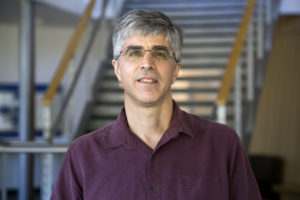
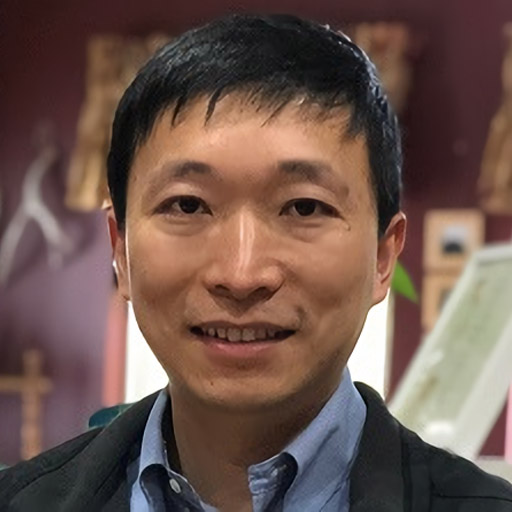
Andrea Costamagna is a researcher affiliated with the École Polytechnique Fédérale de Lausanne (EPFL), working within the School of Computer and Communication Sciences and the Department of Communication Systems. His research focuses on logic synthesis, digital circuit design, and the intersection of machine learning with hardware implementation. His work includes optimizing digital circuits using techniques like resynthesis, resubstitution, and decomposition, with applications in FPGA design and low-power systems. Recent publications explore symmetry-based synthesis, glitch-aware power minimization, and the use of resistive switching devices in machine learning hardware. His research also extends to quantum physics modeling with deep learning.
Dr. Boyin Ding is an Associate Professor at the University of Adelaide , serving as Academic Director at Haide College and researcher in the Mechanical Engineering department within the Faculty of Sciences, Engineering and Technology. He leads the Wave Energy Research initiative established in 2014, while also contributing to Robotics and Biomechanics through his work with the Flinders Medical Device Research Institute. Research Areas: Ocean Wave Energy Harvesting Control Systems for Renewable Energy 6DOF Robotic Testing Spine Biomechanics Transnational Education Programs Key Collaborations: Australia-China Joint Research Centre for Offshore Wind & Wave Energy Acoustics, Vibration and Control Research Group Scientific Awards: Australian Endeavour Fellowship Malcolm Kinnaird Engineering Excellence Award (2012) His recent publications focus on hybrid offshore energy systems, nonlinear hydrodynamics in wave energy converters, and biomechanical testing technologies. He has developed control algorithms for floating offshore wind-wave systems and pioneered 6DOF robotic platforms for medical applications. As an eligible PhD supervisor, he actively collaborates with global industries and academic institutions.
Vikram Iyer is an Assistant Professor at the Paul G. Allen School of Computer Science and Engineering and holds an Adjunct Appointment in Mechanical Engineering at the University of Washington. He co-directs the CS for Environment Initiative , focusing on interdisciplinary solutions that bridge computing, biology, and physical systems for environmental sustainability. Education : Ph.D. in Electrical & Computer Engineering (University of Washington), B.S. in Electrical Engineering and Computer Sciences (UC Berkeley) Research Interests revolve around bio-inspired wireless systems , environmentally sustainable electronics , and miniaturized autonomous robotics . His work includes: Biodegradable circuit boards Battery-free wireless sensors Insect-scale vision systems Wind-dispersed environmental monitors AI tools for sustainable design Article Trends highlight contributions to green hardware , energy-autonomous robotics , and environmental sensing networks , often integrating machine learning with physical world interaction . Awards include: NSF CAREER Award SIGMOBILE Dissertation Award Marconi Society Paul Baran Young Scholar Best Paper Awards (SIGCOMM 2016, Sensys 2018) Google/Amazon Research Awards Students advised include Kyle Johnson (NSF Fellow), Vicente Arroyos (GEM Fellow), and Qiuyue Xue (co-advised with Shwetak Patel). His lab collaborates with the Networks & Mobile Systems Lab and Urban Innovation Initiative .
Dr. Le-Nam Tran is a researcher at the UCD School of Electrical & Electronic Engineering , University College Dublin. His work focuses on optimizing the last hop of 5G/6G wireless networks through mathematical programming, with emphasis on energy efficiency, interference management, and security against eavesdropping. Develops low-cost, low-complexity transmission techniques Projects supported by Science Foundation Ireland Career Development Award Author of over 80 peer-reviewed publications Research Keywords: Wireless Communications Network Security Signal Processing Energy-Efficient Systems Beamforming Optimization Interference Mitigation
Daniel Fremont is an Associate Professor of Computer Science and Engineering at the University of California, Santa Cruz, where he conducts research at the intersection of formal methods and autonomous systems. His work focuses on developing mathematical techniques to improve the reliability of software, hardware, and cyber-physical systems through precise specification, formal verification, automatic synthesis, and principled testing approaches. Dr. Fremont's research interests center on applications of logic in computer science, particularly using automated reasoning to enhance system reliability. His work spans formal methods for cyber-physical systems (CPS), especially autonomous systems that incorporate machine learning. Key research areas include algorithmic improvisation for creating systems with controlled randomness, probabilistic programming through the Scenic language for environment modeling, and formal verification techniques applicable to safety-critical autonomous systems. His group has successfully applied these methods to autonomous vehicles, aircraft systems, and robotics, with significant contributions to both theoretical foundations and practical implementations. The publication record reveals a strong trajectory from theoretical foundations of control improvisation toward practical applications in autonomous systems verification. Early work established the theoretical framework of control improvisation, while recent publications focus on applying these techniques to real-world challenges in autonomous driving, aircraft systems, and AI-based autonomy. A consistent theme across his research is the integration of formal methods with machine learning to address the verification challenges posed by complex, learning-based systems operating in uncertain environments. Best Paper Award at IoTDI 2016 for 'Control Improvisation with Probabilistic Temporal Specifications' Dr. Fremont leads a research group focused on formal methods for autonomous systems, with significant contributions to the development of tools like Scenic (a probabilistic programming language for scenario specification) and VerifAI (a toolkit for formal design and analysis of AI-based systems). His work bridges theoretical computer science with practical engineering challenges in safety-critical autonomous systems, receiving funding from various sources supporting research at the intersection of formal methods and artificial intelligence. The group's approach combines theoretical algorithm development with practical implementation and testing, often collaborating with industry partners working on autonomous vehicle technology. The research group maintains active development of several open-source tools, including the Scenic language for scenario specification and VerifAI for formal analysis of AI systems. They have demonstrated applications across multiple domains including autonomous vehicles, aircraft systems, and robotics, with particular emphasis on simulation-based testing and verification approaches that can provide formal guarantees about system behavior.
Dr. Cong Pu is an Assistant Professor in the Department of Computer Science at Oklahoma State University (OSU), Stillwater, Oklahoma. He holds a Ph.D. and M.S. in Computer Science from Texas Tech University and a B.S. in Computer Science and Technology from Zhengzhou University, China. His primary research focuses on network security, data privacy, applied cryptography, wireless networking, and mobile computing. He leads the Security & Networking Lab at OSU and has secured grants from NSF, NSA, and other agencies. His work emphasizes secure IoT and drone networks, privacy-preserving protocols, and AI-driven cybersecurity solutions. Education Ph.D. and M.S. in Computer Science, Texas Tech University, USA B.S. in Computer Science and Technology, Zhengzhou University, China Research Interests Dr. Pu's research spans network security , data privacy , applied cryptography , wireless networking , and mobile computing . He specializes in designing lightweight authentication protocols for IoT and drone networks, enhancing privacy in distributed systems, and developing AI-driven cybersecurity frameworks. Recent efforts include blockchain-assisted authentication, fault-tolerant data aggregation, and resource-efficient cryptographic protocols. Grants & Awards NSF SaTC Award ($288,398) for securing Internet of Drones systems (2024) NSA Cybersecurity Training Program Grant ($127,128) (2023) Best Paper Award at IEEE CCNC 2024 Listed in Stanford/Elsevier Top 2% Scientists (2025) Advising & Training He mentors Ph.D., M.S., and undergraduate students in areas like network security and applied cryptography. Offers research assistantships, independent studies, and visiting scholar collaborations. Has developed training programs for K-12 educators in cybersecurity via NSF/OSRHE grants. Labs & Infrastructure Leads the Security & Networking Lab , focusing on secure IoT/drones, privacy-preserving systems, and AI-driven security tools. Collaborates on projects involving blockchain, reinforcement learning, and hardware-software co-design for defense mechanisms.
Darko Marinov is a Professor at the Siebel School of Computing and Data Science and a member of the Information Trust Institute at the University of Illinois at Urbana-Champaign. His research focuses on software testing methodologies, particularly regression testing, flaky tests, and software reliability engineering. He has contributed to frameworks like Ekstazi for regression test selection and DeFlaker for identifying flaky tests. Marinov holds an NSF CAREER Award (2008) for his work in this domain. His research interests span testing techniques for modern software systems, including configuration testing, test prioritization, and fault localization. He has pioneered studies on the characteristics of flaky tests in large-scale projects and developed tools to improve software quality assurance processes. Marinov collaborates across academic and industrial settings, addressing challenges in continuous integration, reproducibility of computational experiments, and hardware-software co-design for resilience. His work bridges theory and practice, with applications in cloud computing, AI workloads, and cybersecurity. Awards: NSF CAREER Award (2008) Key Contributions: Ekstazi, DeFlaker, FastFlip, and Ctest4J frameworks Labs/Teams: Active member of the Information Trust Institute and leads software testing research groups at UIUC
Sandy Irani is a Full Professor at the University of California, Irvine (UCI) in the Department of Computer Science within the Donald Bren School of Information and Computer Sciences. She received her Ph.D. from UC Berkeley in 1991 and has been at UCI since 1992. Her research focuses on algorithm design, computational complexity theory, and quantum computing, with notable contributions to online algorithms and quantum complexity theory. She currently serves as Associate Director of the Simons Institute for the Theory of Computing at UC Berkeley, a role she has held since 2022. This position allows her to collaborate with researchers across theoretical computer science and related disciplines. Irani’s teaching excellence is recognized through the UCI Distinguished Faculty Award for Teaching (2021), and she has contributed to education through her zyBook on Discrete Mathematics, used by over 94,000 students globally. Her work bridges foundational computer science with practical applications, including power management strategies and distributed computing algorithms. Notably, she has collaborated with industry leaders like Mike Luby on optimizing distributed systems. Her research in quantum computing explores computational problems inspired by condensed matter physics, aiming to understand quantum advantage over classical systems. She has also authored influential papers on topics like cache hierarchy design, scheduling algorithms, and the theoretical limits of electronic structure calculations. Awards: ACM Fellow (2022), UCI Distinguished Faculty Award for Teaching (2021). Key Roles: Associate Director, Simons Institute; Vice Chair, Computing Division at UCI. Recent Projects: Quantum algorithms for condensed matter systems, maximal independent set algorithms in distributed networks.
Thomas Yeh is an Assistant Professor of Teaching in the Department of Computer Science at the University of California, Irvine. His academic background includes a Ph.D. in Computer Science from UCLA and a BS in Electrical Engineering and Computer Science from UC Berkeley. Prior to academia, he gained industry experience across research, architecture, design, verification, marketing, and management roles. His educational credentials: Ph.D. in Computer Science, UCLA BS in Electrical Engineering and Computer Science, UC Berkeley Dr. Yeh's research spans computer architecture, accelerated machine learning, and computer science education. In architecture, he pioneers error-tolerant physics simulation and heterogeneous computing. His ML work focuses on adaptive precision techniques for energy-efficient acceleration. In education, he develops interactive tools for novice programmers and experiential learning frameworks for computer architecture. His cross-disciplinary approach bridges hardware-software co-design with pedagogical innovation. Publication trends reveal consistent focus on computational efficiency across physics simulation, ML acceleration, and educational technology. His work connects real-time systems optimization with emerging AI applications, particularly in interactive environments and physics-based animation. No scientific awards are documented in the provided materials. While advising details and grant funding specifics are absent from available information, his industry-academia transition informs practical research directions. Teaching responsibilities include core courses like Introduction to CS, Data Structures, and Efficient ML Computing. Research infrastructure details remain unspecified, though his publications suggest collaborations in physics simulation and heterogeneous computing environments.
Shawn Xingshan Cui is Associate Professor in the Departments of Mathematics and Physics & Astronomy at Purdue University. His research bridges low-dimensional topology, quantum field theory, and quantum information science, with focus on topological quantum computation and tensor category applications. His work develops mathematical frameworks for topological quantum computing using knot theory, Hopf algebras, and modular tensor categories. Recent publications explore quantum error correction in topological codes (Kitaev model, toric code), non-semisimple invariants of 3-/4-manifolds, and quantum circuit implementations. He leads research on constructing fault-tolerant quantum gates using topological phases and anyonic braiding. Current projects investigate Floquet codes, fracton models, and the application of neural networks to quantum state representation. His SIAM News article 'Fighting Errors with Space' highlights spatial approaches to quantum error correction. He supervises graduate students working on quantum algorithms, topological phases of matter, and mathematical foundations of quantum computation. Teaching includes MA 261: Multivariate Calculus and specialized topics in topological quantum computation.
Roles & Affiliations: Prof. Piotr Dudek is a Professor of Circuits and Systems in the School of Electrical and Electronic Engineering at The University of Manchester. He has held visiting roles at Hong Kong University of Science and Technology, Gdansk University of Technology, and Sorbonne University. He is a Senior Member of the IEEE and chairs/co-chairs technical committees in circuits and systems. Education: Mgr inz (Technical University of Gdańsk, Poland), MSc and PhD (UMIST, UK). Research Interests: Focuses on VLSI design, vision sensors (SCAMP chip family), cellular processor arrays, neuromorphic engineering, and brain-inspired systems. Develops low-power, high-performance embedded vision systems for robotics, biomedical applications, and autonomous systems. Projects & Contributions: Leads projects like SCAMP vision chips, FORTE (memristor-based systems), and Agile robotic vision. Involved in EPSRC-funded initiatives and collaborates internationally. Active in reviewing for journals/conferences and holds editorial roles. Awards: Recipient of Best Paper/Demo awards at ISCAS, CNNA, IJCNN, and ICDSC. Holds the Royal Academy of Engineering/Leverhulme Trust Senior Research Fellowship. Lab & Teams: Directs the Microelectronics Design Lab, fostering interdisciplinary work between VLSI design, robotics, and neuroscience. Supervises 11 PhD students and collaborates with global researchers in bioelectronics and computational systems.
Douglas C. Noll is the Ann and Robert H. Lurie Professor of Biomedical Engineering and Professor of Radiology at the University of Michigan. He holds key roles as Co-Director of the Functional MRI Laboratory, Co-Lead of the NeuroImaging Core at the Michigan Alzheimer’s Disease Research Center, and collaborator at the Michigan Institute for Imaging Technology and Translation (MIITT). His affiliations include the Michigan Neuroscience Institute, Center for Computational Medicine and Bioinformatics, and Michigan Concussion Center. His research focuses on advancing MRI and fMRI technologies to study brain function and neurological disorders. Key projects include rapid image acquisition, artifact elimination, physiological modeling, and MRI-guided therapies like histotripsy. Recent work emphasizes pre-clinical MRI-guided focused ultrasound systems and collaborations with neuroscientists to map brain organization in health and disease. Notable contributions include developing the Oscillating Steady State Imaging (OSSI) technique, the TOPPE framework for MRI sequence prototyping, and tools like FieldMapNet MRI for off-resonance correction. His lab addresses challenges in high-resolution fMRI, real-time motion compensation, and translational imaging for clinical applications. Current efforts span improving MRI hardware-software integration, advancing non-invasive brain therapies, and applying machine learning to enhance image reconstruction and artifact correction. Collaborations bridge engineering, neuroscience, and clinical medicine to tackle complex neurological conditions like Alzheimer’s and brain tumors.
Janki Bhimani is a Professor and Director of the Data Management Research Lab (DaMRL) at the School of Computing and Information Science, Florida International University (FIU). Her research focuses on Memory and Storage Systems, Cloud Computing, Performance Modeling, and Applied Machine Learning. She holds a Ph.D. in Computer Engineering from Northeastern University (2019), an M.S. in Electrical and Computer Engineering (2016), and a B.S. in Electrical and Electronics Engineering from GITAM University (2013). Prior to FIU, she taught at Northeastern University and collaborated with Samsung Semiconductor Research Labs on flash-based SSDs. Her research interests include emerging memory technologies, high-performance computing, and datacenter reliability management. She leads innovative projects like Heimdall (machine learning for storage I/O optimization) and MoKE (modular key-value storage emulation). Awards include FIU Top Scholar and KFSCIS Excellence in Applied Research. Teaching highlights include CIS 3530 (Data Structures), CIS 5346 (Storage Systems), and EECE 2560 (Engineering Algorithms). Her work emphasizes bridging theory and practice, with patents on storage system optimization and machine learning integration.
Ori Lahav is a faculty member in the School of Computer Science at Tel Aviv University. His research is generously supported by an ERC Starting Grant and an ISF Grant. He actively supervises PhD and MSc students, and seeks highly motivated candidates for postdoc, PhD, and MSc positions in programming language theory, concurrency, and formal methods. Dr. Lahav completed his PhD at Tel Aviv University under the supervision of Arnon Avron. In 2014, he was a postdoctoral researcher at Tel Aviv University hosted by Mooly Sagiv. From 2014 to September 2017, he was a postdoctoral researcher at MPI-SWS in Germany hosted by Viktor Vafeiadis and Derek Dreyer. His primary research areas focus on programming languages and verification, with specialization in concurrency and relaxed memory models. He also has significant interests in proof-theory, semantics of non-classical logics, and automated reasoning. His work bridges theoretical foundations with practical applications in programming language design and implementation. Dr. Lahav's publication record shows a consistent trajectory of high-impact research in top-tier conferences including PLDI, POPL, OOPSLA, and ESOP. His recent work (2023-2025) demonstrates continued leadership in memory models, concurrency semantics, and verification techniques. His research spans both theoretical contributions in denotational semantics and practical tools for verification. Best Paper Award DISC 2024 Best Student Paper Award DISC 2024 Distinguished Artifact Award ESOP 2022 Distinguished Paper Award OOPSLA 2021 Kleene Award for Best Student Paper LICS 2013 Dr. Lahav actively advises students including Yoav Ben Shimon, Yotam Dvir, Amir Karniel, and Roy Margalit (PhD students), Yuval Katsman Ezra (MSc student), and has alumni including Ori Saporta (MSc) and Abhishek Kr Singh (postdoc, now Assistant Professor at IIIT Hyderabad). He has organized significant events including VMCAI 2024 and Dagstuhl Seminars on persistent programming. His teaching portfolio includes courses on Shared Memory Concurrency Semantics, Programming Language Foundations, and Software Foundations in Coq.
Jiafeng (Harvest) Xie is an Assistant Professor in the Department of Electrical and Computer Engineering at Villanova University, where he directs the Security and Cryptography (SAC) Lab. He holds a Ph.D. in Electrical Engineering from the University of Pittsburgh and has prior faculty experience at Wright State University. His research focuses on cryptographic engineering, post-quantum cryptography, hardware security, and digital design for telemetry systems. Education includes a Ph.D. from University of Pittsburgh (2013-2014), M.E. from Central South University (2007-2010), and B.E. from Yanshan University (2002-2006). He has received prestigious awards like the 2024 IEEE Philadelphia Engineer of the Year Award and the 2023 Art Ryan Award. His work spans over 66 peer-reviewed publications, with a focus on hardware acceleration for post-quantum cryptographic systems. Research interests include post-quantum cryptographic engineering, fully homomorphic encryption, fault detection methodologies, and digitalization of aeronautical telemetry systems. His grants include NSF SaTC and NIST-funded projects. Teaching includes courses like Embedded Systems and Post-Quantum Computing . Current advisees include Ph.D. students Pengzhou He, Tianyou Bao, and Yazheng Tu, along with several M.S. and undergraduate researchers. The SAC Lab collaborates with AFRL and explores novel cryptographic hardware designs, with recent breakthroughs in compact accelerators for lattice-based cryptography and approximate homomorphic encryption. His work emphasizes algorithm-architecture co-design for security and efficiency in emerging computing systems.