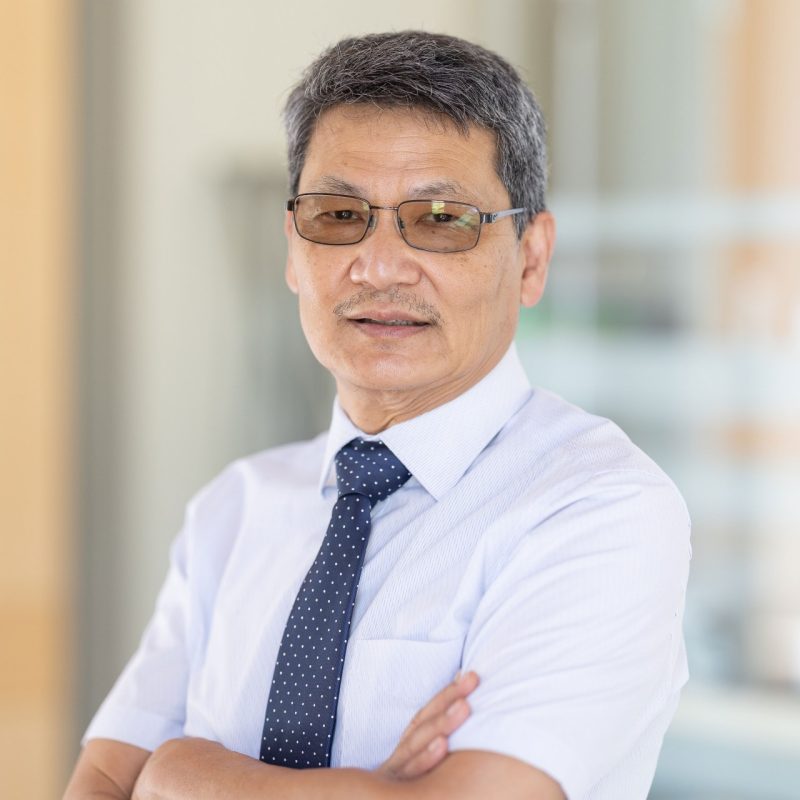
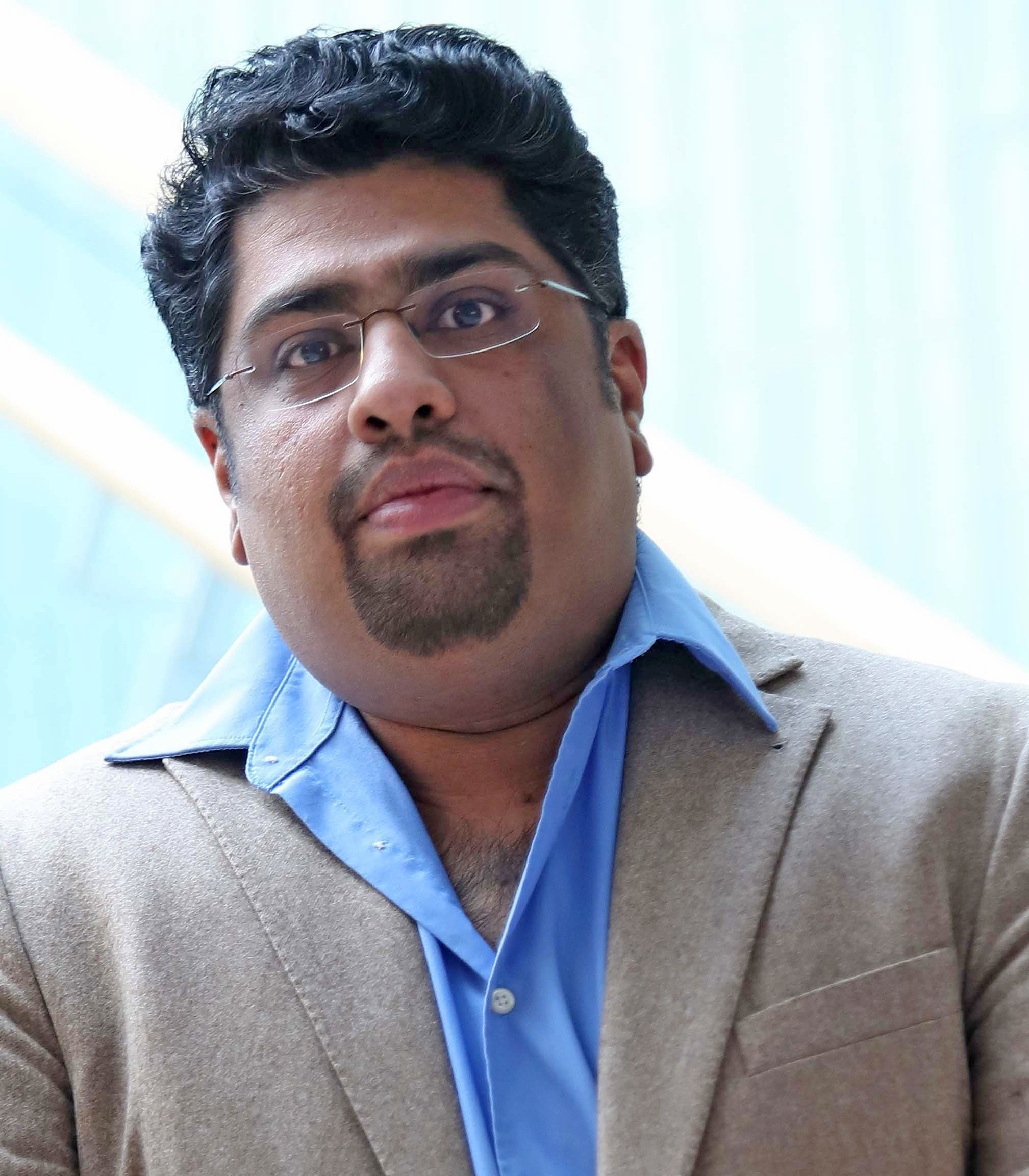
Kirill Serkh is an Assistant Professor in the Department of Mathematics at the University of Toronto, with a cross-appointment to the Department of Computer Science. His research focuses on advanced numerical methods for solving complex mathematical problems. Key Research Areas: Numerical analysis, Scientific computing, Partial differential equations, Numerical linear algebra, Quadrature and approximation theory, Special functions His recent work explores high-order numerical schemes for PDEs on non-smooth domains, adaptive methods for oscillatory integrals, and efficient evaluation of Newtonian potentials. He has contributed to the development of hybrid boundary integral methods and spectral techniques for challenging computational problems. While no specific scientific awards are mentioned in the provided text, his publications demonstrate expertise in computational mathematics and interdisciplinary applications in fluid dynamics, wave propagation, and machine learning. His methodological innovations span both theoretical and applied domains.
Dr. Colin Palmer is a Visiting Fellow in the School of Psychology at the University of New South Wales (UNSW), where he conducts research on visual perception with a focus on social features of our sensory environment. His work examines how the brain processes elements like eyes, faces, and behaviors of people around us using visual psychophysics, computational modeling, and 3D graphical rendering. Dr. Palmer completed his Ph.D. in 2016 and Bachelor of Behavioural Neuroscience (Honours) in 2009, both at Monash University. His doctoral research explored how neurocognitive models of sensory processing relate to differences in sensory integration and social cognition in autism. His primary research interests center on understanding the perceptual and neural mechanisms underlying our sensitivity to dynamic social cues, particularly eye and head movements. Dr. Palmer investigates how the visual system extracts basic environmental elements (color, shape, motion) and develops a mechanistic understanding of how our experience of the social world arises from nervous system activity. His work has clinical applications for understanding sensory and social difficulties in conditions like autism and schizophrenia. Dr. Palmer's recent publications reveal a consistent focus on social vision, particularly gaze perception, face processing, and animacy detection. His research increasingly incorporates computational modeling approaches to understand visual perception mechanisms. There's a strong emphasis on how lighting and shading affect face and gaze perception, with growing attention to clinical applications for neurodevelopmental conditions. Dr. Palmer has received recognition for his work through several awards: Emerging Investigator Award, Australasian Cognitive Neuroscience Society, 2017 Postdoctoral presentation award, Australasian Cognitive Neuroscience Society, 2016 Dr. Palmer is actively involved in research supervision and teaching. He teaches PSYC 3221 Vision and Brain and is available to supervise research students. His research is supported by significant funding: ARC Discovery Project (2020-2022): "Extracting meaning from motion" ($492,000) ARC Discovery Early Career Researcher Award (2019-2021): "Human sensitivity to the dynamics of other people's eye movements" ($356,000) Experimental Psychology Society Study Visit Grant (2017): "Testing computational theories of autism spectrum disorder in the social domain" (£2,580) Dr. Palmer collaborates extensively with Professor Colin Clifford at UNSW and maintains international collaborations with researchers in the UK and Australia, particularly on projects related to autism spectrum disorders and social cognition.
Xin Li is a Professor in the Department of Electrical and Computer Engineering at Duke University and serves as the Associate Vice Chancellor at Duke Kunshan University. He holds a Ph.D. from Carnegie Mellon University (2005) and has held leadership roles in research consortia like the FCRP Focus Research Center and the Center for Silicon System Implementation (CSSI). His research bridges integrated circuits , machine learning , and cyber-physical systems , with applications in autonomous driving, battery lifetime prediction, and smart buildings. Education : Ph.D., Carnegie Mellon University (2005); M.S., Fudan University (2001); B.S., Fudan University (1998) His work emphasizes robust design methodologies for analog/RF circuits, data-driven predictive modeling , and Bayesian inference for high-dimensional variation spaces. Recent publications focus on generative adversarial networks for circuit design, multi-view imputation for incomplete data, and knowledge-driven autonomous systems . He has received numerous accolades, including the NSF CAREER Award (2012) , IEEE Donald O. Pederson Best Paper Awards (2013, 2016) , and IEEE Fellow (2017) . He has served as Editor for journals like IEEE Transactions on Biomedical Engineering and as Chair for conferences including ISVLSI and CAD/Graphics.
Fengqing Maggie Zhu is an Associate Professor at the Elmore Family School of Electrical and Computer Engineering within Purdue University , West Lafayette campus. Her research spans image processing , video compression , computer vision , and smart health , with notable contributions to learned image compression , 3D reconstruction , and nutrition analysis via computer vision . Educational background: BS in Electrical Engineering, Purdue University (2004) MS in Electrical and Computer Engineering, Purdue University (2006) PhD in Electrical and Computer Engineering, Purdue University (2011) Her work focuses on developing machine learning-based compression techniques for 2D/3D images and videos, with applications in food portion estimation , wearable dietary monitoring , and virtual reality facial expression tracking . She explores structured pruning , mixed precision quantization , and continual learning to create efficient, robust systems for edge-cloud collaboration. The 2025-2024 article collection reveals concentrated efforts in learned image compression (with 8 papers on quantization, pruning, hierarchical VAEs), food-related computer vision (12+ papers on portion estimation, databases, classification), and 3D reconstruction (MetaFood3D dataset, ICP-3DGS algorithm). Emerging themes include privacy-preserving AI for wearable cameras and class-incremental learning frameworks. Contact: zhu0@purdue.edu
Ronald J. Glotzbach is an Associate Professor at Purdue University's West Lafayette campus within the School of Applied and Creative Computing . His work focuses on web programming and development , leading projects that integrate dynamic content, databases, and educational technologies . He has taught courses such as CGT 356 (Web Programming), CGT 353 (Interactive Media), and CGT 456 (Advanced Web Programming). B.S. in Computer Graphics Technology M.S. in Technology Ph.D. in Curriculum and Instruction (pursuing) His research explores leading-edge web technologies for delivering interactive content, emphasizing web-enabling software, dynamic media integration, and mobile programming . Key trends in his publications include RSS technologies in education , web-based evaluation systems , and geospatial data tools for environmental sciences. Scientific awards include: Outstanding Professor (2003, 2004) CGT Dwyer Award for Outstanding Undergraduate Teaching (2005) CGT Outstanding Un-Tenured Faculty Award (2008) Professor Glotzbach has led numerous student teams in CGT projects , served as SIGGRAPH Student Volunteer Chair (2003-2005) , and collaborated with industry partners like Boeing (F-15 Distributed Mission Trainer) and Microsoft (XML Documents Testing Team) . He also provided expert testimony in a copyright case (2006) for Wargo & French, LLP.
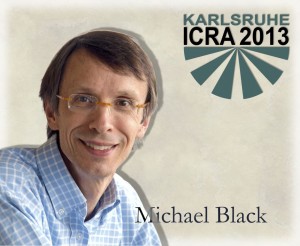
Michael Black is a leading researcher in computer vision and human body modeling. He is a founding director at the Max Planck Institute for Intelligent Systems in Tübingen, Germany, where he leads the Perceiving Systems department. He holds concurrent academic appointments as Honorarprofessor at the University of Tübingen, Adjunct Professor (Research) in Computer Science at Brown University, and Visiting Professor of Electrical Engineering at Stanford University. B.Sc., University of British Columbia (1985) M.S., Stanford University (1989) Ph.D., Yale University (1992) His research centers on the mathematical representation of human body shape, with applications in computer vision, graphics, and neuroscience. He has pioneered methods for analyzing body shape variation using statistical models derived from 3D body scans and has developed techniques for estimating body shape from commodity sensors. His work bridges geometry, perception, and machine learning to enable machines to understand human form and behavior. His publications and research have significantly influenced the field of computer vision, particularly in shape modeling and pose estimation, with long-standing contributions to both theoretical and applied aspects. His work integrates broad disciplines such as machine learning, imaging, and human-computer interaction. IEEE Computer Society Outstanding Paper Award (1991) Honorable Mention for the Marr Prize (1999) Honorable Mention for the Marr Prize (2005) 2010 Koenderink Prize for Fundamental Contributions in Computer Vision Michael Black has advised numerous students and researchers through his roles at Brown University and the Max Planck Institute, though specific names are not listed. He has led major research initiatives and secured significant funding through his leadership in the Perceiving Systems department. His work continues to drive innovation in intelligent systems that perceive and interpret human behavior. He leads the Perceiving Systems department at the Max Planck Institute for Intelligent Systems, a multidisciplinary team focused on vision, learning, and human-centered computing. The group integrates computer vision, machine learning, and 3D modeling to develop systems that understand human shape, motion, and behavior.
Ting-Chung Poon is a Professor in the Bradley Department of Electrical and Computer Engineering at Virginia Tech. His research focuses on optical scanning holography (OSH), digital holography, and 3D imaging applications. He leads the Optical Scanning-Holographic Imaging Group (OSIG), which explores OSH for 3D imaging, processing, and display, emphasizing 2D optical heterodyne scanning techniques. Education: Ph.D., University of Iowa, 1982 M.S.E.E., University of Iowa, 1979 B.A., University of Iowa, 1977 Research Interests: Optical Scanning Holography (OSH) and its applications in 3D imaging Computer-Generated Holography (CGH) Quantitative Phase Imaging Optical Cryptography Efficient Hologram Algorithms His work spans theoretical advancements and practical implementations, including encryption systems, noise reduction techniques, and high-resolution 3D reconstruction. Recent Research Trends: Focus on polygon-based CGH algorithms for faster rendering Integration of machine learning for speckle noise reduction and hologram classification Development of adaptive and compressive holography methods for industrial and biomedical applications Labs & Teams: Optical Scanning-Holographic Imaging Group (OSIG) at Virginia Tech Collaborations with institutions globally, including conferences on digital holography and photonics
Yannis Stylianou is Professor of Speech Processing at University of Crete and Senior Research Scientist at Apple. Former positions include AT&T Labs Research, Bell-Labs, and Toshiba Cambridge Research Lab. IEEE Fellow with PhD from ENST-Paris and over 200 publications. Research spans: Adaptive speech/audio modeling Neural speech synthesis/enhancement Biomedical signal processing Awards include: IEEE Fellowship French Ministry Research Fellowship ENST Graduate Scholarship Recent work focuses on neural TTS architectures, intelligibility enhancement, and multimodal synthesis. Organizes annual International Summer School on Speech Processing.
Alannah Oleson is an Assistant Professor in the Department of Computer Science at the University of Denver's Ritchie School of Engineering and Computer Science. Her work focuses on inclusive design, computing education, and addressing equity issues in technology. She is actively involved in the KIHA Innovation Labs, exploring human-centered approaches to computing education and HCI. Her research investigates how demographic factors influence learning outcomes in computing courses, develops pedagogical methods for teaching inclusive design (e.g., the CIDER framework), and examines the ethical implications of technology in K-12 and university settings. Notable areas include algorithmic fairness, gender bias in software systems, and culturally responsive computing education for underrepresented groups. Dr. Oleson's research emphasizes practical methods for integrating critical thinking into software design processes, with recent work exploring peer feedback systems for equity analysis in large courses and curriculum reforms to promote ethical awareness. Her contributions bridge theory and practice, aiming to make computing education more equitable and socially responsible.
William (Bill) Buxton, OC, is a renowned designer, researcher, and advocate for human-centered innovation. Currently an Adjunct Professor at the University of Toronto's Department of Computer Science, he previously held roles including Partner Researcher at Microsoft Research (2005-2022), Chief Scientist at Alias|Wavefront/SGI, and faculty at the Ontario College of Art and Design. His work bridges art, design, and technology, emphasizing the social and cultural impact of interactive systems. Education: B.Mus. (Queen's University, 1973), M.Sc. Computer Science (University of Toronto, 1978) Research focuses on human-computer interaction (HCI), design thinking, and the history of innovation. He pioneered concepts like 'sketching in hardware' and contributed to foundational work on multitouch interfaces and natural user interaction. Recent talks include keynotes on ethics in technology, ubiquitous computing, and design philosophy. His writings (e.g., Sketching User Experiences ) and collections (e.g., The Buxton Collection of interactive devices) highlight his commitment to documenting design history. Honors include ACM SIGCHI Lifetime Achievement Award, Fellow of ACM, and Officer of the Order of Canada. Active in academia and industry, he advises on innovation policy and serves on design and technology boards.
David Jensen is a Professor in the College of Information and Computer Sciences (CICS) at the University of Massachusetts Amherst. He directs the Knowledge Discovery Laboratory and the Computational Social Science Institute. His research focuses on machine learning, causal modeling, and analyzing large social, technological, and computational systems. Jensen's work is supported by organizations like the National Science Foundation and DARPA. Education: DSc in Engineering and Policy, Washington University in St. Louis (1992) MS in Engineering and Policy, Washington University in St. Louis (1988) BS in Mechanical Engineering, University of Nebraska (1986) Research Interests: Causal inference in relational and dynamic systems Machine learning applications in security and privacy Computational social science Large-scale network analysis Achievements: Recipient of teaching awards from UMass College of Natural Sciences (2011) and CICS (2022) 2017 IEEE INFOCOM Test of Time Paper Award Leadership roles in conferences and journals, including action editor for the Journal of Machine Learning Research Labs and Affiliations: Founder of the Knowledge Discovery Laboratory (2000) Director of the Computational Social Science Institute (2018-2022) Member of the Computing Community Consortium (CCC) Council
Chao Chen is an Associate Professor at the Department of Mechanical & Aerospace Engineering, Monash University, and Director of the Laboratory of Motion Generation and Analysis (LMGA). He holds an adjunct position as Associate Professor at the Chinese University of Hong Kong. His research focuses on medical, agricultural, and infrastructure robotics, emphasizing design, dynamics, control, and intelligence. Key innovations include the Robotic Transverse Profiler (delivered to the Australian Road Research Board in 2016), the 3D Printed Prosthetic Hand (2017 Award), and the Apple Harvesting Robot (2019 Global AI Expo). Dr. Chen has secured over $2M in lead research funding and contributed to $18M in collaborative projects, supported by ARC, Collier Charitable Fund, and International Science Linkages. His awards include the 2017 Innovation Award from the Australian Hand Therapy Association and scholarships from ASME and FQRNT. Education: PhD in Mechanical Engineering (details not explicitly stated in text) Research interests span medical robotics (surgery and rehabilitation), mobile robotics with advanced mobility, and reconfigurable mechatronic systems . LMGA’s mission is to address real-world challenges via robotic technologies, targeting healthcare, agriculture, and infrastructure sectors. Recent projects include fruit harvesting systems, drug delivery sensors, and embodied AI frameworks. Publications highlight advancements in robotic perception (e.g., LiDAR-camera fusion), control systems, and tactile-enabled grasping. His work aligns with UN Sustainable Development Goals, particularly in advancing industry innovation and infrastructure (SDG 9) and sustainable agriculture (SDG 2). Awards: 1996 Dean’s Honor List (Shanghai Jiao Tong University), 2004 ASME Scholarship, 2005 FQRNT Doctorate Scholarship Grants and collaborations include leading the ALF 1 Transverse Profiler and participating in the $18M ARC Smart Process Design Hub . Current projects address robotic fruit harvesting, hydrogel drug delivery systems, and AI-driven manipulation frameworks. Labs/Teams: Director of LMGA, collaborating internationally with institutions like IRCCyN (France), Shanghai Jiao Tong University, and Agriculture Victoria.
Srivatsa Srinivas is a mathematician affiliated with the University of California, San Diego (UCSD), where he completed his PhD under Professor Alireza Golsefidy. His research focuses on applications of harmonic analysis, group theory, information theory, and number theory to the study of random walks on profinite groups. He also actively explores interdisciplinary projects in formal verification (using tools like Lean and SMT solvers) and computer graphics, with a recent focus on generalizing Dijkstra's algorithm. Education: PhD in Mathematics, UCSD (Advisor: Alireza Golsefidy) Research Interests: His work bridges pure mathematics and computer science, emphasizing: Random walks on algebraic structures Applications of harmonic analysis in group theory Formal verification techniques for number-theoretic problems Algorithmic innovations in computer graphics Recent Talks: Presented on 'Random walks on SL₂(F_p) × SL₂(F_p)' at the UCSD CS Theory Seminar (Dec 2024) and shared thesis defense slides offering an introduction to his foundational research.
Jörg Müller is a Professor in the Department of Computer Science at the University of Bayreuth, Germany. His research focuses on Human-Computer Interaction (HCI), Virtual Reality (VR), and Augmented Reality (AR), with a strong emphasis on interaction techniques, public displays, and multimodal interfaces. He has held academic positions at multiple institutions including Aarhus University, HIIG, and RWTH Aachen University. His work spans technical contributions in haptic interfaces, biomechanical modeling, and user behavior analysis in VR environments. Notable projects include OptiTrap for acoustic levitation displays, SIM2VR for biomechanical testing in VR, and the boomRoom system for mid-air sound interaction. Müller collaborates extensively with industry partners like Telekom Laboratories and Siemens. Research interests include: interaction design for immersive environments, embodied interaction, and the social impact of extended reality technologies. His publications demonstrate leadership in CHI, UIST, and IEEE Visualization venues, with over 120 peer-reviewed articles since 2006. Current research priorities include optimizing VR workspace ergonomics, developing tactile feedback systems for mid-air interaction, and exploring public display networks for urban environments. Müller leads the Interactive Systems group at Bayreuth, supervising PhD students in VR engineering and spatial computing.
Dr. Jiju Poovvancheri is an Associate Professor in the Department of Math & Computing Science at Saint Mary’s University, Halifax, Canada. He holds affiliations with the Graphics & Spatial Computing Lab and previously held postdoctoral positions at the University of Victoria and University of Calgary. His research focuses on computer graphics, 3D vision, and machine learning, with applications in virtual/augmented reality, autonomous robotics, urban planning, and bio-mechanical studies. Key research areas include point cloud processing, semantic surface reconstruction, spatial data structures, and geometric deep learning. Education: PhD from Indian Institute of Technology Madras (2011–2014), supervised by Prof. Ramanathan Muthuganapathy. Postdoctoral work at University of Calgary (EYES-HIGH Fellowship, 2015–2017) and University of Victoria (MITACS Elevate Fellowship, 2018). Research & Awards: Winner of MITACS Elevate Fellowship (2018), EYES-HIGH Fellowship (2015–2017), and multiple grants including NSERC DG (2019–2026). His work has been supported by NVIDIA GPU hardware, NSERC, CFI, and industry partners like Modest Tree Media and Caterpillar. Professional Activities: Associate Editor for IEEE Access , Guest Editor for special issues in Remote Sensing and Sensors , and reviewer for top conferences like CVPR, ICCV, and ECCV. Member of ACM SIGGRAPH, Solid Modeling Association, and IEEE Geoscience & Remote Sensing Society. Lab & Collaborations: Leads the Graphics & Spatial Computing Lab, collaborating with institutions globally. Current projects include "Interaction and navigation in virtual spaces" and industry partnerships with Modest Tree Media for real-time object recognition. Advising: Supervised over 20 graduate and undergraduate students, with notable alumni advancing to roles at ReelData AI, Royal Canadian Air Force, and academic institutions like Dalhousie University.