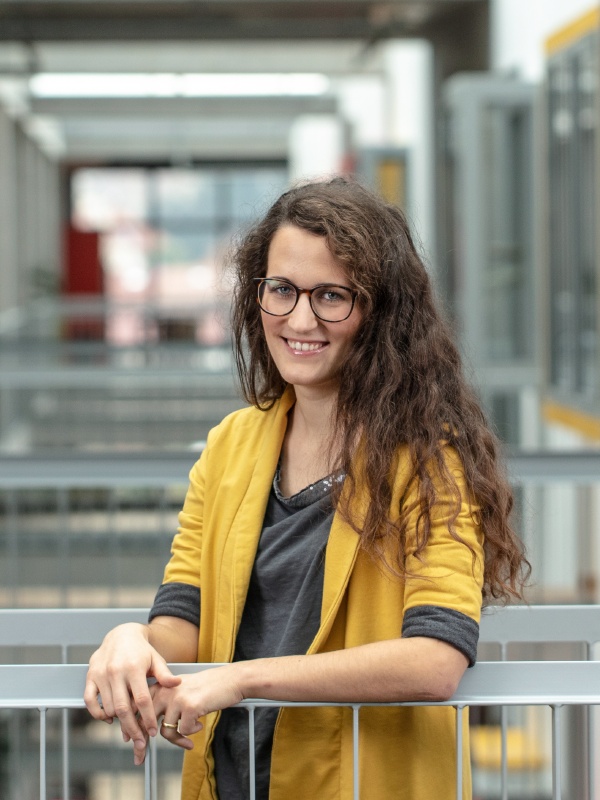
Manca Žerovnik Mekuč serves as an Assistant Professor teaching foundational Programming 1 and Programming 2 courses while actively contributing to the Laboratory of Computer Graphics and Multimedia (LGM) in room R2.29. Her dual role encompasses instructional responsibilities in computer science education and research engagement within visual computing disciplines. Her research expertise centers on: Computer Graphics Multimedia Computer Science Through her laboratory membership, she advances innovation in graphical systems and multimedia applications, integrating these specialized domains into pedagogical frameworks that enhance student learning experiences in computational fields.
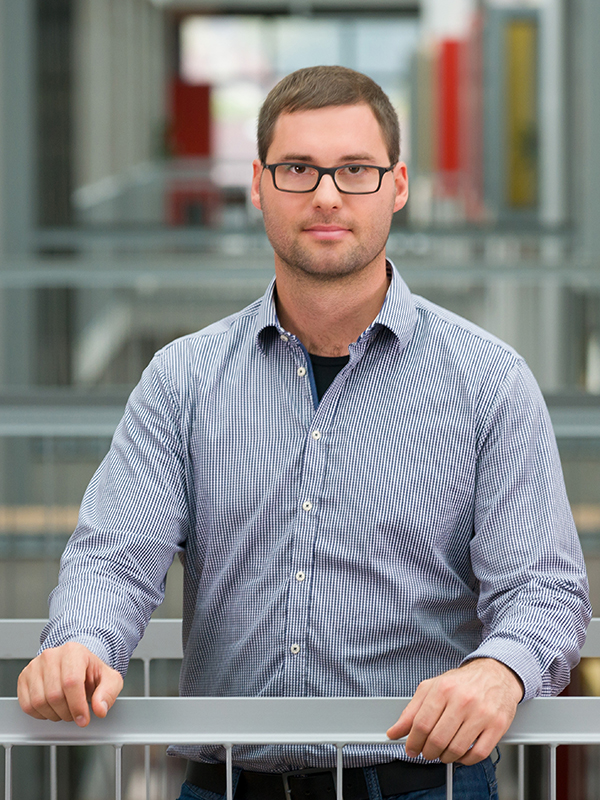
Ciril Bohak is an Assistant Professor at the Laboratory for Computer Graphics and Multimedia within the Faculty of Computer and Information Science, University of Ljubljana. He is currently on research leave at King Abdullah University of Science and Technology (KAUST) in Saudi Arabia until January 1, 2023, maintaining active academic status with the university. His research focuses on computer graphics, scientific visualization, and human-computer interaction, with significant contributions to interdisciplinary applications. Key areas include cell visualization for biological data, procedural generation of sub-cellular structures, and accessibility solutions for visually impaired users. His work bridges theoretical graphics research with practical implementations in cultural heritage preservation and educational technology. Dr. Bohak has secured competitive funding from multiple sources including the Slovenian Research Agency (ARRS), European Union programs, and Structural Funds. Current leadership includes the ARRS project J2-50221 on unified microscopic data visualization (2024-2027). Past projects span folk song retrieval systems (EtnoKatalog, 2008-2011), ICT-supported teaching frameworks (DIDIKTA, 2008-2010), and accessibility applications for visually impaired youth (ZaznajSpoznaj, 2014-2015). As a core member of the Laboratory of Computer Graphics and Multimedia (LGM), he contributes to advanced research in visual computing. His laboratory work supports both foundational graphics research and applied projects like augmented reality for archaeology (BI-IT-18-19-010, 2018-2021) and mathematical literacy initiatives (NA-MA POTI, 2016-2022), maintaining strong industry and international academic collaborations.
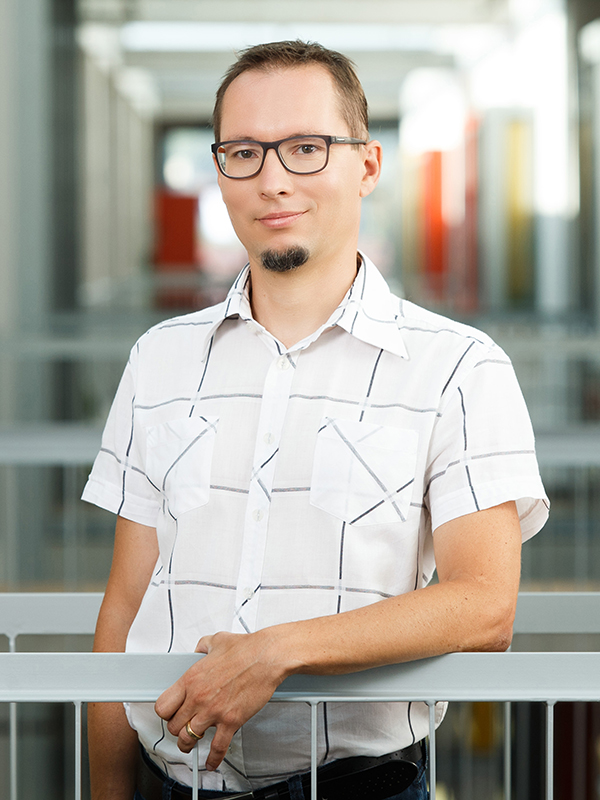
Matija Marolt is a Full Professor at the Faculty of Computer and Information Science, University of Ljubljana, and Head of the Laboratory for Computer Graphics and Multimedia. His research focuses on music/audio information retrieval, computer graphics, and visualization, tackling challenges in music transcription, audio segmentation/classification, and data organization. Laboratory Leadership: Head of Laboratory for Computer Graphics and Multimedia Research interests include: Audio processing and music information retrieval Interactive 3D visualization and games Vibrational communication monitoring (Vibroscape project) Medical imaging and VR/AR applications Projects led or participated in span national, EU, and industrial collaborations, including multimodal biodiversity monitoring, open data visualization, and folk music analysis. His lab develops software solutions for desktop, mobile, and cloud platforms.
Peter Peer is a Full Professor at the University of Ljubljana's Faculty of Computer and Information Science, where he leads the Computer Vision Laboratory. He serves as Executive Editor for ICT Express , Area Editor for IEEE Access and IET Biometrics , and coordinates dual-degree programs with Kyungpook National University. His administrative roles include membership in the Faculty Board of Directors (2018-present) and Senate (2021-present), and he previously served as Vice-Dean for Economic Affairs (2018-2022). His research spans computer vision and biometrics , with specialization in privacy-enhancing technologies, deep learning applications, and multimodal recognition systems. Key focus areas include: Face/sclera/ear biometric recognition and segmentation Deepfake detection and media forensics Generative models for data privacy Efficient model optimization techniques Publication analysis shows strong emphasis on biometric security (65% of recent works), privacy-preserving AI (25%), and generative modeling (10%), with applications spanning surveillance, forensics, and human-computer interaction. Awards highlight leadership in international biometric competitions and recognition for high-impact publications. Significant scientific honors include: NIST FATE evaluation winner (2025) Top 3 placements in ACM/IEEE biometric competitions (2023-2024) IEEE Transactions top-downloaded articles (2022-2024) European Association for Biometrics awards (2021-2024) He mentors 10+ PhD students working on biometric recognition, privacy preservation, and deep learning applications. Research is supported by national grants including DeepFake DAD (2023-2026) and MIXBAI (2023-2026), focusing on explainable AI and deepfake detection. Leads the Computer Vision Laboratory with international collaborations across Europe and Asia.