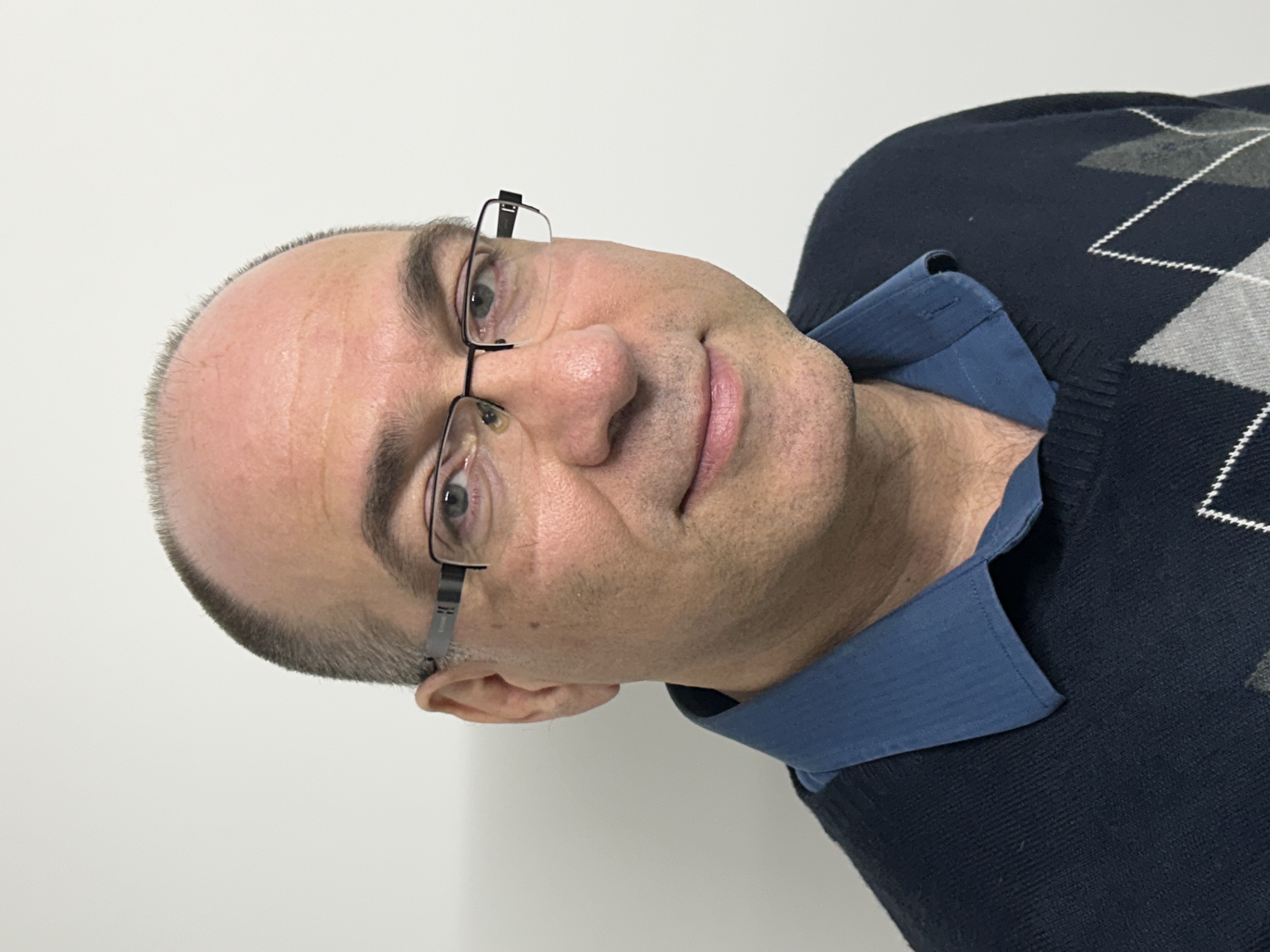
Kun Zhang is a Professor at Carnegie Mellon University's Department of Philosophy and an affiliate faculty member in the Machine Learning Department. His research bridges causal discovery, machine learning, and philosophical foundations of AI, with applications in neuroscience, computational finance, and climate analysis. His work focuses on: Automated causal discovery from heterogeneous data Causality-based learning for transfer and deep learning Philosophical principles of causation and machine learning Recent research trends emphasize causal representation learning, nonparametric modeling, and real-world applications across biomedical, financial, and Earth sciences. He leads the Causal Learning and Reasoning (CLeaR) group at CMU and collaborates with the Center for Integrative AI (CIAI) at MBZUAI.
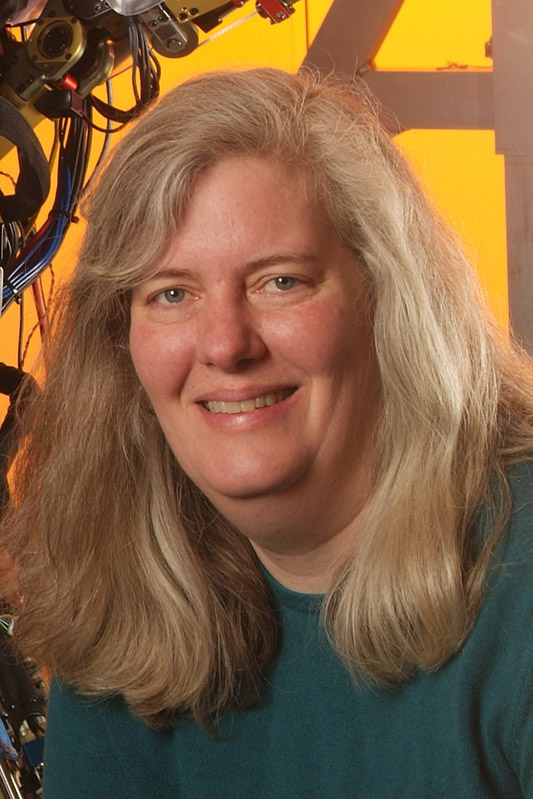
Geoffrey J. Gordon is a Professor in the Machine Learning Department at Carnegie Mellon University and affiliated with the Robotics Institute. His research spans multi-agent planning, reinforcement learning, decision-theoretic planning, statistical models of complex data, computational learning theory, and game theory. He leads the SELECT lab (SEnse, LEarn, and aCT), focusing on predictive state representations, spectral learning, and applications in robotics. His recent work integrates deep learning with controlled dynamical systems and optimization, as seen in publications at AAAI and AISTATS. Research Interests: Multi-agent systems and game theory Reinforcement learning and dynamical systems Statistical models for high-dimensional data Spectral learning and quantum Markov models Scientific Awards: Best paper award at ICML 2010 Teaching: 10-405/605: Machine Learning with Large Datasets (2023) 10-606/607: Mathematical/Computational Background for ML (2022, 2017) 10-701: Intro to Machine Learning (2021, 2014) Labs & Teams: SELECT Lab (SEnse, LEarn, and aCT) Collaborations with Stanford Robotics Lab, AUTON Lab, and others
Bryon Aragam is an Associate Professor and Topel Faculty Scholar at the Booth School of Business , University of Chicago . His work bridges causality , statistical machine learning , and probabilistic modeling , with applications in AI systems like ChatGPT and DALL-E. Key research themes include: Causal Structure Learning : Extracting latent causal graphs from multimodal data using nonparametric methods. Deep Generative Models : Analyzing overparametrization and variational inference for representation learning. Latent Variable Discovery : Using Markov boundaries and convex subset lattices to uncover hidden dependencies. Algorithm Design : Developing scalable methods like DAGMA for DAG learning and theoretical guarantees for GES/PC algorithms. His paper trends reveal a focus on nonparametric statistics , graphical models , and neural network theory , with recent work on transformer memory dynamics and identifiability in deep latent models . Papers frequently appear in top venues like NeurIPS , JMLR , and AOS , emphasizing theoretical rigor and practical validation.
Cosma Shalizi is an Associate Professor in the Statistics Department and Machine Learning Department at Carnegie Mellon University, and an External Professor at the Santa Fe Institute. His work bridges statistics, machine learning, and complex systems theory, with applications spanning neuroscience, statistical mechanics, and social networks. Shalizi's research focuses on nonparametric prediction of time series, learning theory, information theory, and causal inference. He has made significant contributions to computational mechanics, developing algorithms like CSSR (Causal State Splitting Reconstruction) for identifying optimal predictive states in complex systems. His work extends to heavy-tailed distributions, network analysis, and the statistical foundations of complex systems. He has pioneered methods for quantifying self-organization and developing nonparametric approaches to spatio-temporal prediction. His recent publications reveal a trend toward increasingly interdisciplinary work, connecting network science with causal inference, statistical learning theory with macroeconomic forecasting, and information theory with biomedical applications. His work consistently emphasizes rigorous statistical methodology applied to complex, dependent data structures across diverse scientific domains. Winner of the Best Student Paper and Best Poster awards Shalizi has advised students including Georg Goerg, who extended spatio-temporal prediction techniques to continuous-valued fields, and George Montañez, who developed fast approximate algorithms for prediction and explored information-theoretic explanations for machine learning. His collaborative network spans statistics, physics, neuroscience, and social sciences, reflecting his interdisciplinary approach to complex systems. His work with collaborators has led to significant contributions in network analysis, causal inference in social networks, and the development of nonparametric methods for complex data structures. He maintains active research programs in statistical network modeling, time series analysis, and the application of information-theoretic approaches to diverse scientific problems.
Duen Horng Chau is a Professor at Georgia Tech's School of Computational Science & Engineering and Associate Director of the MS in Analytics program. He holds an adjunct role in the School of Interactive Computing and leads industry relations for Georgia Tech's Institute for Data Engineering and Science and Center for Machine Learning . Director of Industry Relations (2019-2025) Associate Director of Corporate Relations for Machine Learning (2019-2025) Associate Professor (2018-2024) Machine Learning Area Leader (2018-2021) Assistant Professor (2012-2018) His research at the Polo Club of Data Science focuses on human-centered AI through visualization and graph mining , with applications in cybersecurity , social good , and scientific discovery . Key projects include: AI Education : CNN Explainer, Diffusion Explainer, GAN Lab Visual Interpretability : ActiVis (deployed at Meta), NeuroCartography, Summit Cybersecurity : ShapeShifter, SHIELD, Polonium Social Impact : Firebird (fire risk prediction), Chronodes (mobile health) His work has received 15+ best paper awards including CVPR'25 Workshop Best Paper , IEEE VIS Best Poster , and SIGGRAPH invitations . He has secured NSF , DARPA , and NIH grants, with industry partnerships including Google , Intel , and Microsoft . He has advised 30+ PhD/MSc students and developed open-source tools like Argo Lite and PEGASUS (used by Nvidia). His research has been featured in The Wall Street Journal , Wired , and other major media outlets.
Peter Manohar is a postdoctoral researcher in the Computer Science and Discrete Math group at the Institute for Advanced Study , focusing on Theoretical Computer Science with emphasis on algorithms, coding theory, and cryptography. His work explores spectral algorithms for semirandom and smoothed instances of NP-hard constraint satisfaction problems, linking these methods to coding theory, extremal combinatorics, and cryptography. Education: PhD in Computer Science from Carnegie Mellon University, advised by Venkatesan Guruswami and Pravesh K. Kothari B.S. in EECS from UC Berkeley, advised by Alessandro Chiesa and Ren Ng Research Trends: His recent publications highlight advancements in spectral refutation techniques, locally decodable/correctable codes, and connections between complexity theory and coding. Articles span venues like FOCS, STOC, APPROX, and arXiv, reflecting his interdisciplinary approach. Awards: He has received prestigious NSF and Cylab Presidential Fellowships, along with ARCS scholarships during his PhD. His work on quantum proofs (TCC 2019) and constraint satisfaction problems has been recognized in invited journal special issues. Teaching & Collaboration: Peter has taught courses at Carnegie Mellon, including Quantum Computing and Computer Graphics. He interned at TTIC in Summer 2023 and co-organized CMU's Theory Club, demonstrating active engagement in academic communities.
Srinivasa Narasimhan is the U.A. and Helen Whitaker Professor of Robotics at Carnegie Mellon University's Robotics Institute, part of the School of Computer Science. He directs the Illumination and Imaging Laboratory (ILIM), focusing on light transport, computational imaging, and novel illumination technologies with applications in computer vision, graphics, and robotics. His research spans autonomous systems, sensor development, and scene understanding. Research interests include: Computational imaging and light transport theory Robust perception for autonomous vehicles and robotics Novel sensor designs (e.g., MHz light steering, thermal imaging) Non-line-of-sight imaging and scattering media analysis Real-time vision systems for adverse conditions Award highlights include 14 best paper/demo awards from premier conferences including CVPR (5 awards), ICCP (3 awards), and ICCV (Marr Honorable Mention). Advising and grants: Currently mentoring 6 PhD students and 1 postdoc Advised over 70 students including 18 PhD graduates Secured $15M+ funding from NSF, DARPA, ONR, NASA, DoE, and industry partners (Adobe, Ford, Samsung, GM) Key grants: NSF EXPEDITIONS ($5M), DARPA REVEAL, ONR DURIP, and USDA-NIFA AI Institute Leads the ILIM lab with 8+ members, collaborating with imaging/vision groups at CMU. Recent projects include Aerial MegaDepth, roadwork detection systems, and skin imaging technologies.
Jim McCann is an Associate Professor at the Robotics Institute of Carnegie Mellon University. He holds a PhD from Carnegie Mellon University (2010), advised by Nancy Pollard, and has held positions at Adobe Research and Disney Research Pittsburgh. His academic journey includes postdoctoral work and industry experience in game development before joining CMU's faculty in 2017. His research focuses on creativity support tools spanning real-time systems, textiles fabrication, machine knitting, and interactive design. Key themes include: Developing compilers and interfaces for machine knitting (e.g., 3D shape knitting, knitout semantics) Building accessible fabrication tools for textiles and soft objects Creating parameterized design spaces enhanced with machine learning Advancing physics-based animation and simulation tuning His publications demonstrate strong interdisciplinarity, with recent work emphasizing textiles computing (knitting compilers, fabric 3D printing), human-AI collaboration (design adjectives), and novel interfaces (infinity mirrors, RFID systems). Earlier contributions established foundations in gradient-domain editing, fluid control, and motion synthesis. He leads the Carnegie Mellon Textiles Lab and has advised 9+ graduate students on topics ranging from knit microstructures to robot design. His teaching includes courses on Algorithmic Textiles Design, Real-Time Graphics, and Game Programming.
Fabio Cozman is a Full Professor at the School of Engineering, University of São Paulo (USP), and Director of the Center for Artificial Intelligence at USP. He holds a PhD from Carnegie Mellon University (1996) and completed his engineering degree at Poli-USP. His research spans artificial intelligence, machine learning, and probabilistic reasoning, with significant contributions to knowledge representation under uncertainty, credal networks, and physics-informed AI. Current research focuses on AI interpretability , AI and societal impact , and ocean hazard prediction . Key publications cover probabilistic logic programming , credal networks , and Bayesian network extensions . He is a founding member and former president of the Society for Imprecise Probability Theory and Applications (SIPTA) and has served as Associate Editor for multiple AI journals. His work integrates theoretical advancements in probabilistic modeling with practical applications in robotics, computer vision, and environmental systems, particularly focused on the Brazilian maritime territory through projects like the Blue Amazon Brain (BLAB) architecture.
Jessica K. Hodgins is the Allen Newell University Professor of Computer Science and Robotics at Carnegie Mellon University (CMU), affiliated with the Robotics Institute and Computer Science Department. She previously held leadership roles at Disney Research (2008–2016) as VP of Research and managed faculty affairs in the Robotics Institute (2005–2015). She earned her Ph.D. in Computer Science from CMU in 1989. Her research spans computer graphics , humanoid robotics , and human-robot interaction , with a focus on generating and analyzing human motion for animation and robotics. Key areas include motion capture, physics-based simulation, and assistive technologies for Parkinson’s disease using wearable sensors. Her work has been recognized through awards like the ACM SIGGRAPH Achievement Award (2010) and the Steven Anson Coons Award (2017). She has advised numerous students and contributed to initiatives like ACM SIGGRAPH editorial leadership and mentoring programs. Labs: Graphics Lab and Human Sensing Lab . Current advisees include Emily Kim, Yuyao Shi, and Jiashun Wang. Past students have contributed to projects in animation, robotics, and biomedical engineering.
Ruslan Salakhutdinov is a UPMC Professor of Computer Science in the Machine Learning Department at Carnegie Mellon University's School of Computer Science. His research focuses on Deep Learning, Probabilistic Graphical Models, and Large-scale Optimization, with applications spanning artificial intelligence, computer vision, and robotics. His recent publications demonstrate strong focus on multimodal systems, diffusion models, reinforcement learning, and self-supervised techniques. Research trends show consistent innovation in generative AI methods and their application to robotics and decision-making systems. Awards include Microsoft Faculty Fellow Sloan Fellowship Directs research group advising over 30 PhD/Master's students. Secured funding from NSF, Google, and SAP Labs. Leads the Machine Learning Department's research initiatives with international collaborations.
David Kosbie is a Teaching Professor in the School of Computer Science at Carnegie Mellon University (CMU), specializing in computer science education and software engineering. He serves as Director and Co-Founder of the CMU CS Academy, dedicated to expanding access to rigorous computer science education. His academic roles include teaching foundational courses like 15-112 (Fundamentals of Programming and Computer Science) and 15-113 (Special Topics in Applied Python Programming). He holds the Herbert A. Simon Award for Teaching Excellence (2012), recognizing his impactful pedagogical contributions. His research interests span software development methodologies, graphical toolkits (e.g., Garnet/Amulet), and user-centered design. He actively develops curricula and oversees large-scale course implementations, emphasizing programming best practices and computational problem-solving. Education details are not explicitly provided in the source texts. His professional activities include leading course design, mentoring students, and contributing to academic initiatives like the CMU CS Academy. He has published work on constraint-based programming systems, reusable software components, and interactive user interface frameworks. Collaborations include partnerships with researchers like Brad A. Myers and colleagues at CMU. His teaching philosophy emphasizes hands-on learning, rigorous code analysis, and fostering student engagement through structured problem-solving exercises.
Srinivasan Seshan is Joseph Traub Professor of Computer Science and Department Head of the Computer Science Department at Carnegie Mellon University's School of Computer Science. His research focuses on network protocols, distributed network applications, and next-generation network architectures. His primary research explores next-generation network architectures like the eXpressive Internet Architecture (XIA) for robust internet evolution and video content delivery optimization. A secondary focus examines systems challenges in mobile computing, including power-efficient data collection, scalable infrastructure design, and privacy management for smartphone-based environmental observations. As a prominent researcher in distributed systems, Seshan has made significant contributions to transport protocols, sensor networking, and firewall design. His publications demonstrate consistent focus on network architecture innovation and mobile systems optimization.
Jessica Hodgins is Allen Newell University Professor of Computer Science and Robotics at Carnegie Mellon University. Her research creates control algorithms for physically simulated characters and robots, including human motion synthesis for animation, robotic manipulation, and dynamic simulations of clothing/fluids. Recent publications focus on kinematic motion retargeting, volumetric hairstyle modeling, and translating facial expressions to robot gestures. Her lab integrates motion capture with reinforcement learning to develop robust controllers for humanoid robots performing complex tasks. Additional work explores physics-based simulation for virtual characters and computational fabrication methods.
Josue Orellana is a Research Professor in the Department of Statistics & Data Science at Carnegie Mellon University (CMU) and serves as Managing Editor of the Computational Neuroscience Navigator initiative. He holds a PhD in Machine Learning and Neural Computation from CMU (2019) and a B.S. in Electrical Engineering from Washington State University. Previously, he worked as a Research Scientist at the National University of Singapore and Johns Hopkins University. His research integrates Statistics , Machine Learning , and Computational Neuroscience to model brain network interactions during cognitive tasks. He also investigates statistics education methodologies through the CMU Teach Stat research group. His work emphasizes graphical network analysis, phase coupling in neural circuits, and educational cognitive science. Publications span neuroscience, machine learning, and statistics education, with recent articles exploring neural oscillations, educational assessment tools, and multivariate phase coupling. His scholarly output demonstrates consistent focus on statistical methodology in neural systems and innovations in STEM pedagogy . Awards & Grants: CMU Simon Seed Grant (2020) GuSH cross-walk statistics education grant (2019) CMU Presidential Fellowship (2016-2018) President’s Honor Roll, WSU (2008-2012) He leads the Computational Neuroscience Navigator project at CMU’s Open Learning Initiative, developing concept-driven video resources. No advising relationships or lab affiliations are detailed beyond his educational research group.