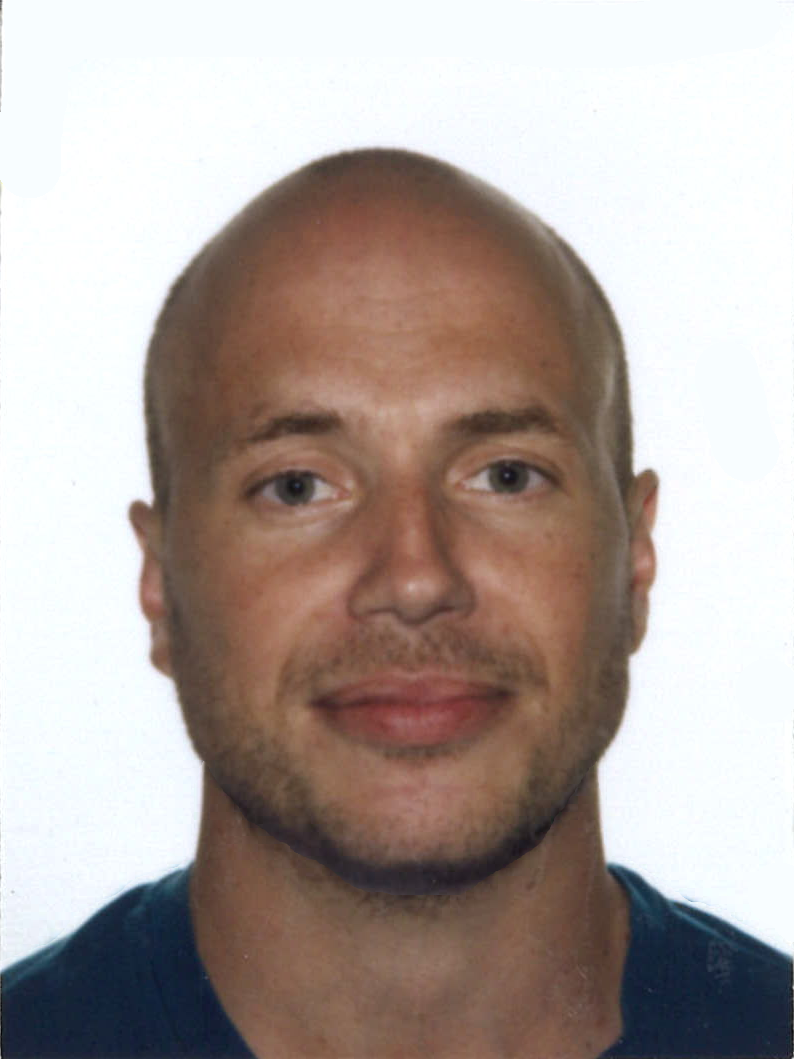
Jack Andrew Pocaluyko is a Doctoral Research Fellow at the Department of Media and Communication, University of Oslo. He holds a BFA in Film Studies from Toronto Metropolitan University and an MPhil in Screen Cultures from the University of Oslo. His research focuses on the aesthetics and ontology of moving images, particularly exploring how computer software and graphical user interfaces serve as artistic mediums in film and contemporary art. Academic Affiliations: Faculty of Humanities Key Research Themes: Interactivity in digital art, exhibition modes of digital media, algorithmic cameras, and spatial interfaces His Master's thesis Defining Desktop Films: From Spatial Interfaces to Algorithmic Cameras won the 2022 Best Master's Thesis Award. He has professional experience at institutions like the Museum of Contemporary Art Toronto and the Norwegian International Film Festival. His work interrogates how interactivity evolves when digital interfaces are exhibited across mediums, merging film theory with contemporary art criticism.
Lars Vidar Magnusson is an Associate Professor at the Department of Computer Science and Communication, Østfold University College. His research focuses on machine learning, image analysis, natural language processing, and explainable AI, with applications in healthcare decision support and computer graphics. He leads the Machine Learning research group and is affiliated with The Digital Society research priority area. Education: PhD from the University of Oslo, Master’s from Østfold University College. Research Interests: Includes evolutionary optimization for medical diagnosis (e.g., deep vein thrombosis), recurrent neural networks for industrial prediction, and AI-driven education tools (AI4AfL project). His recent work bridges machine learning with healthcare, emphasizing clinical decision support systems and interpretable AI models. Key Projects: AI4AfL (AI for Assessment for Learning) and Decision Support in Healthcare using AI. Active in conferences like IEEE Congress on Evolutionary Computation and Scandinavian Conference on Artificial Intelligence (SCAI).
Tore Brox-Larsen is an Associate Professor in the Department of Informatics at UiT The Arctic University of Norway. His work centers on distributed computing, high-performance systems, and large-scale visualization technologies. He is actively engaged in research involving sensor networks, Arctic observatories, and remote visualization of scientific data. His research interests span distributed shared memory systems, MPI performance, tiled display walls, and networked visualization. He has made significant contributions to improving communication efficiency in cluster computing and enabling scalable interactive visualization environments. His work bridges computer systems engineering with applications in genomics and environmental monitoring. The most recent publications reflect a strong trend toward real-world deployment of large-scale systems, particularly in Arctic observation and healthcare informatics. His work emphasizes practical system design, latency optimization, and cross-platform interoperability in distributed environments. Tore Brox-Larsen has collaborated extensively with researchers such as Otto Anshus, John Markus Bjørndalen, and Brian Vinter. While no formal advising or grant history is listed, his sustained publication record indicates active research leadership and team-based scientific inquiry. He has contributed to major projects including the development of a large-scale Arctic observatory sensor system and interactive tiled display walls. His work supports both academic research and societal applications in health and environmental science.
Aleksandr Malyshev is Professor of Mathematics at the University of Bergen. His research integrates numerical linear algebra, stability theory, optimisation-based control, and image-processing algorithms, yielding a portfolio of more than 60 peer-reviewed articles and conference contributions. Education & affiliations: Professor, Department of Mathematics, University of Bergen, Norway (present) Previous research and teaching engagements in informatics and applied mathematics at the same university Research interests: Malyshev’s core interest is the theoretical and algorithmic analysis of matrix problems arising in stability, control and imaging. He develops numerically reliable tools for assessing the distance to instability of dynamical systems, constructs preconditioners that accelerate optimisation solvers in real-time model predictive control, and designs variational models for 3-D reconstruction and image denoising. His work frequently combines spectral theory of matrix polynomials with practical issues such as high-performance implementation and medical-image quantification. Across the last decade his articles reveal three dominant strands: (i) stability and perturbation of time-delay and periodic systems, (ii) preconditioned iterative solvers for interior-point and MPC formulations, and (iii) variational and learning-based approaches to depth estimation, surface reconstruction and glenoid-bone assessment. These themes are unified by a common mathematical substrate—exploitation of matrix structure to obtain computationally efficient, numerically trustworthy solutions. Scientific awards & recognition: Regular invited speaker at international workshops on numerical linear algebra and control (e.g., SK Godunov conference 2009, IFAC 2018) Funded principal investigator / co-investigator on Research Council of Norway and EU Horizon Europe grants Advising & grants: Malyshev has supervised numerous MSc and PhD candidates in numerical analysis and scientific computing and currently advises graduate researchers on projects ranging from 3-D machine-vision algorithms to Krylov-subspace preconditioning. Recent grant participation includes EU project 101373 (3-D quantification of glenoid bone loss) and the Norwegian Research Council project 262203 on perfusion-flow simulation. Labs & collaboration: He collaborates closely with the Group for Numerical Methods and Applications at UiB, the Visual Computing cluster at the Department of Informatics, and maintains international partnerships with the Universities of Brest, Lübeck, and several US institutions. These joint efforts feed cross-disciplinary projects combining rigorous matrix analysis with real-world applications in biomechanics, process control, and computer vision.
Marco Molinari is a Postdoctoral Fellow in High-dimensional Statistics at the Department of Biostatistics , University of Oslo's Faculty of Medicine. His research focuses on advanced statistical modeling techniques with applications in biomedical data analysis. PhD in Statistics from University College London (2020) Specialized in Bayesian graphical models and metabolomics analysis Former Machine Learning Engineer in London (2020-2023) Research interests: Baysian Nonparametric Processes Dynamic Network Modeling Ethnic Metabolic Differences False Discovery Rate Control Publications highlight his contributions to: Statistical Methods in Medical Research Bayesian Dynamic Networks Ethnic Variation Analysis Insulin Resistance Modeling His methodological work spans computational efficiency, cross-population comparisons, and multi-omics data integration, primarily applied to cardiovascular and metabolic diseases.
Sanu Vamanchery Mana serves as an Associate Professor at the Department of Game Education within the Faculty of Film, TV and Games at the University of Inland Norway. Based at the Hamar campus in Room 2N3329 (Biohuset, Holsetgata 22, N-2317 Hamar), he contributes to the Game School's educational mission through his expertise in digital media production and 3D technologies. Dr. Mana's research focuses on practical applications of 3D modeling software, particularly Blender, with emphasis on making complex technical processes accessible to students and practitioners. His work bridges theoretical knowledge with industry-relevant skills in game development and digital content creation. The Game School where he teaches is recognized for its hands-on approach to game education within Norway's academic landscape. His scholarly publications demonstrate consistent focus on practical 3D content creation techniques, specifically through the Blender platform. Both publications address fundamental aspects of 3D production pipelines that are essential for modern game development education, with particular attention to material design, lighting techniques, and rendering workflows. As part of the University of Inland Norway's Faculty of Film, TV and Games, Dr. Mana contributes to a program structure designed to prepare students for careers in the rapidly evolving gaming industry through specialized technical training and creative development.
Morten Moen serves as Associate Professor in Visual Effects at Kristiania University College's Westerdal Institute for Film and Media within the School of Arts, Design and Media. He directs the BA program in Visual Effects and teaches compositing and production techniques. His academic foundation includes a Master's degree in Computer Science from the University of Oslo. Moen bridges technical expertise with creative application through his extensive industry experience spanning over two decades. His research focuses on Visual Effects, Computer Graphics, and Digital Animation, with emphasis on practical applications in film production. Moen has been instrumental in developing visual effects education in Norway while maintaining active industry connections. Amanda Award for Best Visual Effects (2015) Worked on over 60 feature films and TV series Contributed to hundreds of commercials Moen has collaborated with prominent directors including Aksel Hennie, Harald Zwart, and Joachim Rønning. His career demonstrates the successful integration of academic knowledge with professional film industry practice, having started with Norway's first full-length digitally animated film 'Release Jimmy Fri' and working at Storm Studios, one of Norway's largest VFX studios.