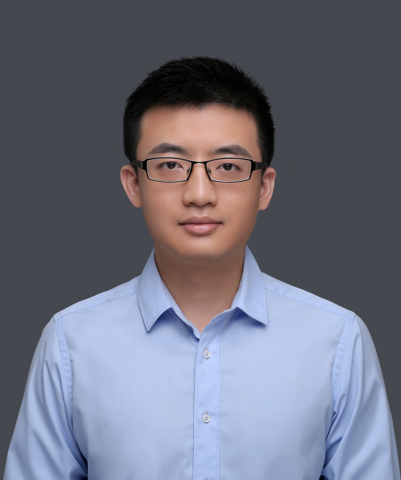
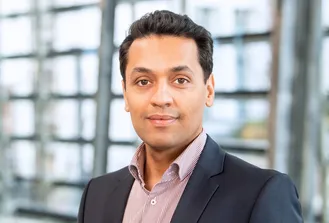
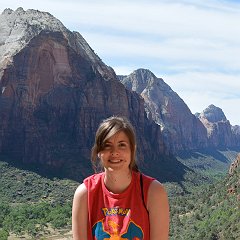
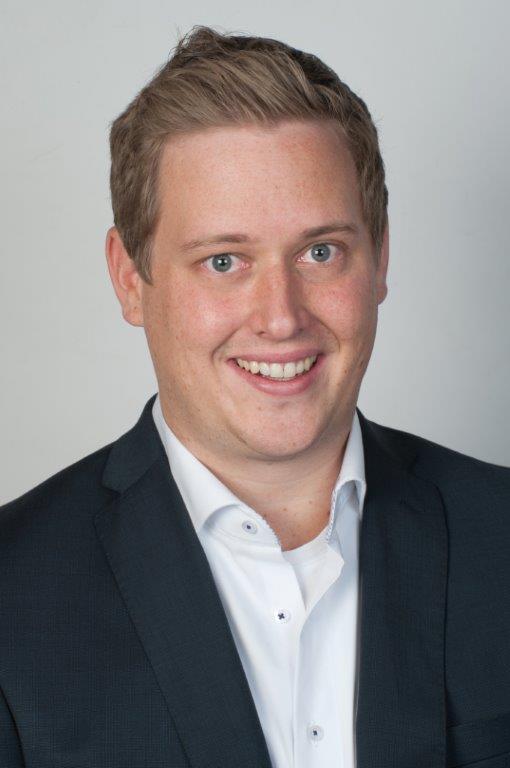
Zhen Liu is an Assistant Professor at the School of Data Science, CUHK-Shenzhen. His research focuses on generative models, 3D representations, and the synergy of spatial and semantic understanding in AI systems. With a PhD from Mila and Université de Montréal, he develops foundational methods for physics simulation, 3D assembly, and semantic reasoning in neural networks. His work bridges machine learning with applications in computer vision and graphics, emphasizing: Generative architectures for 3D content creation Diffusion model alignment techniques Efficient parameter finetuning strategies Dr. Liu mentors students in AI research and contributes to advancing 3D generative modeling paradigms.
Gerard Pons-Moll is an Affiliated Researcher with Perceiving Systems at the Max Planck Institute and Professor at the University of Tübingen. His research focuses on computer vision, particularly 3D human modeling and motion capture using machine learning approaches. He develops methods to perceive and model humans in 3D from images and video. His work bridges computer graphics and computer vision to create virtual humans that move and interact realistically. Current projects involve learning-based approaches for human pose estimation and developing datasets/simulators for human motion understanding.
Prof. Dr. Enkelejda Kasneci is a Distinguished Professor at the Technical University of Munich (TUM), leading the Chair of Human-Centered Technologies for Learning. She holds dual affiliations within TUM School of Social Sciences and Technology and TUM School of Computation, Information and Technology. Her research integrates AI, eye-tracking, and immersive technologies to advance educational paradigms. She directs the TUM Center for Educational Technologies and chairs the MSc program 'AI in Society.' Education: PhD in Computer Science from University of Tübingen (2013), M.Sc. from University of Stuttgart (2007). Earlier roles include Assistant Professor and Dean of Studies at University of Tübingen. Research Focus: Human-centered AI applications in education, multimodal interaction design, and privacy-preserving eye-tracking. Her work bridges technology and pedagogy through projects like AI tutor PEER, VR Classroom, and Privacy-Preserving Eye-tracking. Key Projects: Leads EU-funded projects VIVA (€1.125M), DigiProMIN (€163K), and SARA Kids (€244.8K). Active in policy initiatives like Europe’s AI Imperative. Awards: TUM Heinz Maier-Leibnitz Medal (2024), Liesel Beckmann Distinguished Professorship (2022), and Südwestmetall Research Prize (2014). Grants & Advising: Over €5M in secured funding across 12+ projects. Supervises 14+ PhD researchers and mentors postdocs in AI education and HCI. Labs & Teams: IT-Stiftung EdTech Lab houses advanced VR/eye-tracking setups. Research group includes 20+ members spanning AI, HCI, and educational technology.
Dr. Gaël Kermarrec is a researcher at the Boundary Layer Meteorology Group , part of the Institute of Meteorology and Climatology within the Faculty of Mathematics and Physics at Leibniz University Hannover . His work focuses on atmospheric turbulence, GNSS applications, and remote sensing for environmental monitoring. Boundary layer meteorology Turbulence theory GNSS signal processing Terrestrial laser scanning Climate change impacts Geodetic time series analysis His research integrates advanced mathematical models like LR B-splines and Matérn covariance with large eddy simulations to study: Atmospheric turbulence effects on optical/GNSS signals Hydrospheric mass loading Deformation analysis of terrain/port infrastructure Climatic sea-level changes Machine learning for remote sensing The 15 most recent articles (2025-2023) demonstrate his focus on: GNSS-based turbulence detection AI-enhanced climate mapping Advanced surface approximation techniques Multi-sensor data fusion Stochastic modeling of geodetic observations Environmental impacts on optical measurements He has developed tools like the Klimascanner QGIS plugin for urban climate resilience and contributes to: Understanding atmospheric scale lengths Improving TLS/GNSS deformation monitoring Analyzing hydrospheric changes Wavefront modeling Ionospheric corrections
Kede Ma is an Associate Professor in the Department of Computer Science at City University of Hong Kong (CityUHK). He received his B.E. from the University of Science and Technology of China (USTC) in 2012, and MASc and Ph.D. degrees from the University of Waterloo in 2014 and 2017, respectively. From 2018 to 2019, he was a Research Associate with the Howard Hughes Medical Institute and New York University. Prof. Ma has been named to the Highly Cited Researchers list by Clarivate Analytics in 2024 and currently serves on the editorial boards of IEEE Transactions on Image Processing, IEEE Transactions on Information Forensics and Security, and IEEE Signal Processing Letters. Prof. Ma leads the Multimedia Analytics (MA) Laboratory, an interdisciplinary research group focused on computational vision, computational modeling of human visual perception, perceptual multimedia signal processing, quality assessment, and multimedia forensics. His research spans computational photography, high dynamic range imaging and rendering, omnidirectional video analysis, camera processing pipeline design, and artificial intelligence safety in multimedia systems. His work integrates machine learning techniques including reinforcement learning, generative modeling, self-supervised learning, and continual learning for multimedia signal processing applications. His recent publications demonstrate a strong focus on image quality assessment, deep learning for multimedia processing, and multimedia forensics. His work bridges theoretical computer vision principles with practical applications in multimedia systems. The research trends show increasing integration of foundation models with specialized multimedia processing tasks, particularly in quality assessment and security applications. Highly Cited Researchers list by Clarivate Analytics (2024) Best Paper Award at IEEE International Conference on Virtual Reality and Visualization (2021) Best Paper Runner-Up at International Joint Conference on Artificial Intelligence Workshop (2021) Top 10% Award at IEEE International Conference on Image Processing (2015) Finalist for the Governor General's Gold Medal, University of Waterloo (2017) Spotlight presentation at NeurIPS (2022) Highlight paper at ICCV (2025) Oral presentation at ICLR (2025) Prof. Ma advises numerous PhD students and postdoctoral fellows in the MA Laboratory. His research is supported by various grants enabling work in multimedia analytics, image processing, and computer vision. The laboratory maintains active collaborations with researchers at institutions including SUSTech, ZJU, and HIT. Current projects focus on advancing image quality assessment methodologies, developing more robust deep learning techniques for multimedia forensics, and exploring new approaches to HDR imaging and omnidirectional video processing. The Multimedia Analytics Laboratory maintains a strong focus on both theoretical foundations and practical applications of multimedia processing. Current research directions include integrating large language models with image quality assessment, developing more robust deepfake detection methods, and advancing techniques for continual learning in multimedia applications. The lab emphasizes rigorous evaluation methodologies and maintains multiple datasets for multimedia quality assessment research.
Prof. Dr. sc. techn. ETH Oliver Staadt is Full Professor of Computer Science and Chair of Visual Computing at the University of Rostock , Germany. Since 2023 he also serves as Director of the Institute for Visual and Analytic Computing within the Faculty of Computer Science and Electrical Engineering . Previously he was Dean (2016–2018) and Vice Dean (2010–2016) of the same faculty. Education Ph.D. in Computer Science, ETH Zürich (2001) M.Sc. in Computer Science, TU Darmstadt (1994) Research Interests Prof. Staadt’s research spans virtual and augmented reality , computer graphics , visualization , telepresence , immersive analytics , and human–computer interaction . A particular focus lies on real-time rendering and display technologies for large high-resolution display systems, depth-image enhancement for RGB-D sensors, and interaction techniques that leverage spatial cognition and eye-tracking. His work is frequently applied to collaborative settings and microgravity environments, including experiments aboard parabolic flights and the International Space Station. Recent Publication Trends Between 2019 and 2021 his output centers on foveated rendering , AR viewpoint guidance , collaborative analytics on wall-sized displays , and embodied interaction metaphors . Earlier work addressed bandwidth-efficient telepresence, depth-image filtering, and physically-based animation. The corpus reveals a steady evolution from fundamental graphics algorithms toward applied immersive systems. Scientific Awards & Honors Fellow of the Eurographics Association Associate Editor, IEEE Transactions on Visualization and Computer Graphics (past) Associate Editor, Computers & Graphics (past) Associate Editor, Computer Animation and Virtual Worlds (past) Associate Editor, Frontiers in Virtual Reality (current) Chair, Expert Group on Virtual & Augmented Reality, German Informatics Society (2013–2020) Advising & Funding He has successfully supervised more than ten PhD graduates whose dissertations range from collision detection and physically-based animation to 3D interaction in microgravity and predictive user modeling. Current PhD researchers include Bipul Mohanto, Mana Takhsha, and Sven Kluge. His projects are supported by national and EU programs such as EVOCATION, SMOOTH, ARGuide, 3DPick, DIVA, and Telepresence. Labs & Teams Prof. Staadt leads the Visual Computing Group at Rostock, operating state-of-the-art facilities including large tiled display walls, VR/AR laboratories, and motion-capture systems. The institute hosts interdisciplinary collaborations with partners in visualization, computer vision, psychology, and aerospace engineering.
Radu Timofte is an academic researcher specializing in computer vision and image processing. He completed his PhD in 2013 at Katholieke Universiteit Leuven, Belgium, with a thesis on sparse and collaborative representations for computer vision. His work focuses on advancing techniques such as image super-resolution, denoising, object detection, and deep learning-based image restoration. He has collaborated extensively with institutions like ETH Zurich and co-authored seminal papers in top-tier journals and conferences. His research bridges theoretical advancements with practical applications in areas like medical imaging, aerial scene analysis, and real-time visual tracking. Timofte’s contributions include developing efficient deep learning architectures for tasks like lightweight object detection (e.g., CH-YOLO-Lite), diffusion models for image-to-image translation (DiffI2I), and calibration-free raw image denoising. He has also contributed to the development of video restoration transformers (VRT) and frameworks for unsupervised real-time video enhancement. His work often emphasizes practicality and efficiency, addressing challenges such as small object detection in aerial imagery and underwater image super-resolution. Timofte’s collaborations span academia and industry, with notable co-authors including Luc Van Gool (ETH Zurich) and Kai Zhang (Nanjing University of Science and Technology). His research has been published in venues like IEEE Transactions on Pattern Analysis and Machine Intelligence, CVPR, ECCV, and the International Journal of Computer Vision.
Prof. Jalal Etesami is an Assistant Professor in the Department of Computer Science at Technical University of Munich (TUM), leading the Decision Sciences & Systems group. He holds a Ph.D. in Industrial and Systems Engineering from the University of Illinois at Urbana-Champaign and was a Postdoctoral Fellow at EPFL in Switzerland. His research focuses on machine learning, causal inference, multi-agent systems, and game theory, with applications to systemic risk modeling and market design. He teaches advanced courses such as Causal Inference in Time Series , Algorithmic Game Theory , and Optimization, Learning, and Market Design . Notable contributions include work on causal structure learning, stochastic optimization, and non-Gaussian causal models. Recent research explores causal effect identification under confounding, neural networks for market analysis, and optimal experiment design. Prof. Etesami’s work appears in top venues like NeurIPS, AAAI, and IEEE journals. He actively contributes to the academic community, organizing seminars and workshops on topics ranging from causal reasoning to computational social choice.
Robert S. Laramee is a Professor at the University of Nottingham (previously at Swansea University), specializing in visualization research. His work focuses on data visualization, scientific visualization, and computational fluid dynamics. He has authored over 170 publications in top journals like IEEE Transactions on Visualization and Computer Graphics, Computer Graphics Forum, and IEEE Computer Graphics and Applications. Research Interests: His research spans information visualization, flow visualization, visual literacy, and educational aspects of visualization. He emphasizes practical applications in fields like healthcare, digital humanities, and computational science. Recent Trends: Recent work includes studies on treemap literacy, educational frameworks for visualization, and interactive systems for clinical data. He has also contributed to visualization resources and surveys, aiming to bridge academic and industry needs. Grants & Collaborations: Collaborations include projects on visualization for smart cities, protein-lipid interactions, and quantum chromodynamics data analysis. No specific grant details are provided in the text. Labs & Teams: Affiliated with visualization research groups at Nottingham and Swansea, though specific lab names are not mentioned.
Stephanie Käs is a Researcher at RWTH Aachen University specializing in Human Pose Estimation (HPE) and gesture recognition using CNN-based methods and Video Language Models applied to fisheye imagery. Her interdisciplinary background spans particle physics and railway engineering data science projects, with strong emphasis on science communication and agile project management. Her research focuses on overcoming challenges in 3D human pose estimation from distorted fisheye images, temporal consistency in motion recognition, and gesture-based human-robot interaction. She actively develops novel approaches for monocular 3D pose estimation and foundation model applications in robotics, with contributions to datasets like FISHnCHIPS for fisheye image analysis. Stephanie supervises multiple ongoing theses including motion recognition, visual anonymization, and anatomical realism evaluation in AI-generated imagery. She leads the Stratospheric Balloon Research Project (StratoGI) at JLU Gießen and has extensive teaching experience in machine learning, computer vision, and statistics at RWTH Aachen and JLU Gießen.
Eakta Jain is an Associate Professor in the Department of Computer & Information Science & Engineering at the University of Florida's College of Engineering. Her research centers on human-computer interaction with a specialized focus on eye-tracking technologies, virtual reality, and privacy-preserving techniques in immersive environments. With over 15 years of sustained academic contributions, she has established herself as a leading researcher in gaze analysis and its applications across multiple domains. Dr. Jain's research interests span eye-tracking, virtual reality, extended reality (XR), privacy in immersive technologies, human-computer interaction, computer vision, and animation. Her work demonstrates a consistent trajectory from fundamental gaze analysis techniques to practical applications addressing critical privacy concerns in emerging technologies. She has made significant contributions to understanding how gaze data can be used to enhance user experience while simultaneously developing methods to protect user privacy in these systems. Analysis of her recent publications reveals a strong focus on privacy challenges in XR environments, with particular attention to gaze data protection, face-swapping technologies, and the psychological impacts of continuous monitoring. Her research bridges theoretical insights with practical implementations, often resulting in novel algorithms and frameworks that address real-world problems in immersive technologies. The interdisciplinary nature of her work connects computer science with cognitive psychology and human factors research. Dr. Jain has received recognition through publications in top-tier venues including IEEE Transactions on Visualization and Computer Graphics, ACM Transactions on Applied Perception, and the Symposium on Eye Tracking Research and Applications. Her work has been influential in shaping the discourse around privacy in immersive environments and has practical implications for the development of ethical XR systems. She actively mentors students and collaborators, with several junior researchers appearing as co-authors on her publications. Her research group appears to focus on the intersection of computer vision, graphics, and human-centered computing, with projects spanning from fundamental gaze analysis to applied privacy-preserving techniques in commercial VR systems. Current projects suggest strong industry connections and potential grant funding supporting her privacy-focused XR research.
Prof. Dr. Jens Eisert is a Professor at the Free University of Berlin, where he leads the Quantum Many-Body Theory, Quantum Information Theory, and Quantum Optics research group (Eisert AG) within the Institute of Theoretical Physics at the Dahlem Center for Complex Quantum Systems. His office is located at Arnimallee 14, Room 1.3.06 in Berlin-Dahlem. His research focuses on the intersection of quantum information theory and condensed matter physics, specifically exploring what information processing tasks are possible using individual quantum systems as information carriers. His group develops mathematical-theoretical foundations of quantum information, particularly in entanglement theory and tomography, while also investigating quantum optical implementations using light modes or cold atoms in optical lattices. A major emphasis of their work is on quantum many-body systems, including static properties, efficient numerical simulation methods like tensor networks, and non-equilibrium quantum dynamics. Recent publications highlight significant contributions in thermalization of quantum systems (Communications Physics 2025), quantum thermodynamics (Nature Physics 2025), and quantum error correction (PRX Quantum 2025). The group's work is characterized by combining the rigor of mathematical physics with physically motivated applicability, frequently leading to direct collaborations with experimental groups. Quantum Information Theory Quantum Many-Body Theory Quantum Optics Entanglement Theory Tensor Networks Quantum Error Correction Prof. Eisert maintains active supervision of numerous PhD students and postdoctoral researchers, with research positions regularly available in areas including quantum error correction, quantum information theory, tensor networks, and quantum simulation. His group has published extensively in top journals including Nature Physics, PRX Quantum, and Physical Review series.
Allison Sullivan is an Assistant Professor of Computer Science at the University of Texas at Arlington (UTA), where she also serves as the Undergraduate Software Engineering Program Director. She is a member of the Software Engineering Research Center (SERC) at UTA and serves as faculty advisor for UTA's Society of Women Engineers (SWE) club. Dr. Sullivan received her PhD in Software Verification, Validation and Testing (SVVAT) from the University of Texas at Austin in 2017 under Sarfraz Khurshid. Her educational background includes: PhD in Software Verification, Validation and Testing, University of Texas at Austin (2017) M.S. in Software Engineering, University of Texas at Austin (2014) B.S. in Software Engineering, University of Texas at Dallas (2012) Dr. Sullivan's research focuses on two primary areas: Automated Software Engineering : Test/Oracle Generation, Automated Bug Localization and Repair, Mutation Testing, and Regression Testing Formal Methods and Programming Languages : Abstractions, Finite Model Finders, Program Synthesis, and SAT/SMT Solvers She leads the SCOPE lab which focuses on 'showing the correctness of all program executions' and has published extensively on Alloy modeling language applications. Her recent publications demonstrate a strong focus on applying formal methods to software engineering problems, with a growing emphasis on the intersection of large language models and software development practices. Her work spans theoretical foundations, tool development, and empirical studies of how developers use modeling languages. Her scientific achievements have been recognized with: NSF CAREER Award (2024) UTA CSE department Rising Star Research Award (2024) UTA College of Engineering Outstanding Early Career Faculty Award (2025) NSF grant for building an educational tool for software modeling ($400k) Dr. Sullivan has successfully advised two PhD students to completion: Dr. Ana Jovanovic (defended November 2024) and Dr. Anahita Samadi (defended February 2025). She actively mentors undergraduate researchers and has secured significant research funding including the NSF CAREER grant. Her service includes committee roles for major conferences including ASE, ISSRE, and FormaliSE. She leads the SCOPE lab at UTA, which brings together graduate and undergraduate researchers to develop techniques for improving software verification and validation, with particular emphasis on making formal methods more accessible to practitioners.
Dr. Michael Otto is affiliated with the University of Ulm, Department of Computer Science, within the Faculty of Engineering. His research focuses on virtual technologies for production planning, immersive virtual assembly assessments, and markerless motion capture systems. He has contributed to projects like ARVIDA (Cost-efficient motion capture systems) and INTERACT (Human-centered workplaces). His work bridges computer science, manufacturing systems, and human factors. Key contributions include developing frameworks for motion capture, virtual reality benchmarking, and augmented reality applications in industrial contexts. Notable achievements include receiving the Best Industrial Paper award (2015) for his work on ubiquitous tracking using depth cameras. His research addresses challenges in assembly planning, ergonomic assessments, and spatial interaction in manufacturing environments. Education/Background: Former External PhD Candidate at University of Ulm. Research Interests: Dr. Otto’s work emphasizes practical applications of virtual and augmented reality in manufacturing. He explores how technologies like markerless motion capture and immersive environments can optimize assembly processes, enhance worker ergonomics, and improve production verification workflows. His projects often involve interdisciplinary collaboration with industry partners. Articles Overview: His publications (2014–2025) span topics such as augmented reality visualization, motion tracking algorithms, and VR-based simulation tools. These contributions highlight advancements in scalable systems, sensor fusion, and human-motion analysis within industrial contexts.
Max Wardetzky is a Professor at the Institute for Numerical and Applied Mathematics within the Faculty of Mathematics and Computer Science at the University of Göttingen, Germany. His office is located at Lotzestraße 16-18, 37083 Göttingen, and he can be reached via email at wardetzky@math.uni-goettingen.de or by phone at +49 551 39 26778. Professor Wardetzky leads the Discrete Differential Geometry Lab at the University of Göttingen, where he conducts research at the intersection of mathematics, computer science, and geometry processing. His work bridges theoretical foundations with practical applications in computer graphics and scientific computing. His primary research interests include: Applied Geometry Discrete Differential Geometry Numerical Analysis Geometry Processing Physical Simulation Computer Graphics Professor Wardetzky's extensive publication record demonstrates significant contributions to the field of discrete differential geometry and its applications. His work shows a consistent focus on developing mathematically rigorous yet computationally efficient methods for geometric problems. Key trends in his research include the development of discrete analogues of smooth geometric objects, the study of convergence properties between discrete and continuous models, and the application of these methods to problems in computer graphics and physical simulation. Professor Wardetzky has made substantial contributions to the theoretical foundations of discrete differential geometry while maintaining strong connections to practical applications. His work on discrete Laplacians, curvature approximations, and geometric flows has influenced both theoretical mathematics and practical geometry processing algorithms.