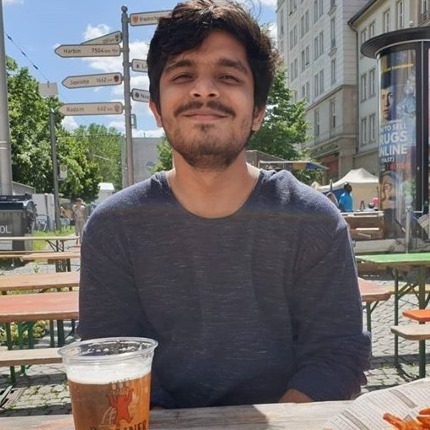
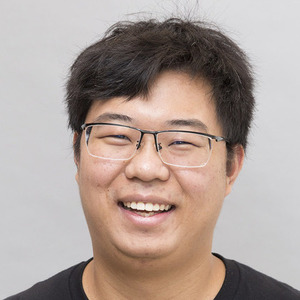
Yuanbo Xiangli is a postdoctoral researcher at Cornell University , advised by Prof. Noah Snavely. Previously, he obtained his Ph.D. from the Multimedia Lab in the Department of Information Engineering at the Chinese University of Hong Kong (CUHK) , supervised by Prof. Dahua Lin. His research focuses on 3D computer vision and deep generative modeling for urban scene reconstruction. 3D scene reconstruction from sparse images Neural rendering and Gaussian splatting Deep generative modeling for urban environments Multi-source geospatial data processing City-scale modeling and synthetic datasets His recent work includes advanced NeRF extensions (BungeeNeRF, GridNeRF), Gaussian splatting enhancements (GSDF, Scaffold-GS), and urban scene datasets (MatrixCity, OmniCity). A pioneer in combining classical vision techniques with modern deep learning approaches. ICLR 2020 Spotlight Award Collaborates with leading researchers in photorealistic rendering, including Noah Snavely and Dahua Lin. Develops systems enabling efficient 3D reconstruction from diverse data sources like satellite imagery and street-level panoramas.
Maks Ovsjanikov is a Professor in the Computer Science Department at École Polytechnique, France , and a Visiting Research Scientist at Google DeepMind. His research focuses on mathematically principled approaches for geometric data analysis and synthesis, including learning on surface meshes, 3D point clouds, and graphs. Key Collaborations: Google DeepMind, Sanofi, Dassault Systèmes Research Themes: Non-rigid shape matching, 3D reconstruction, transfer learning, learning on geometric data, functional maps, deep learning for scientific discovery Recent Article Trends emphasize geometric deep learning, with publications at top venues like SIGGRAPH Asia, ICCV, and CVPR. Topics include surface reconstruction, functional maps, 3D keypoint detection, and diffusion models for shape matching. Scientific Honors include: ERC Consolidator Grant (VEGA Project, 2023) ERC Starting Grant (2017) ACM SIGGRAPH 2023 Test-of-Time Award Best Paper Awards at 3DV 2021 and 3DV 2022 Student Advisees have received prestigious awards, such as the IP Paris Best PhD Thesis Award (Souhaib Attaiki, 2023) and GdR IG-RV Runner-Up (Nicolas Donati, 2024). The GeomeriX Team at École Polytechnique drives his group's research, supported by the VEGA and AIGRETTE projects.
Xiangyu Zhu is a faculty member at the University of Chinese Academy of Sciences (UCAS), School of Artificial Intelligence, and affiliated with the State Key Laboratory of Multimodal Artificial Intelligence Systems, Chinese Academy of Sciences, Beijing, China. His research focuses on Computer Science , Artificial Intelligence , and 3D Face Reconstruction . His work spans Face Recognition , Image Processing , and Computer Vision , with recent advancements in Masked Face Recognition , 3D Avatar Reconstruction , and Face Anti-Spoofing . He has contributed to Neural Network Architectures for High-Fidelity 3D Face Modeling and Image Fusion . Xiangyu Zhu has co-authored numerous high-impact publications in journals like IEEE Transactions on Image Processing and conferences such as CVPR and ICCV , including recent works on Diffusion Models , Mamba Networks , and Weakly Aligned Feature Fusion . His research emphasizes Deep Learning and Optimization Techniques for Computer Vision applications.
Ana Serrano is an Associate Professor at Universidad de Zaragoza, Spain, where she is affiliated with the Graphics & Imaging Lab in the EINA (Edificio Ada Byron) school. She earned her PhD at the same institution under the supervision of Prof. Diego Gutierrez and Prof. Belen Masia, and completed a postdoctoral fellowship at the Max-Planck-Institute for Informatics under Prof. Karol Myszkowski. Her research focuses on visual computing , particularly in computational imaging , material appearance perception and editing , and virtual reality . She is especially interested in developing perceptually-driven methods that leverage knowledge of the human perceptual system to enhance user experiences and assist content creation in immersive environments. Her recent publications (2023–2025) span top-tier venues such as SIGGRAPH, CVPR, IEEE TVCG, and Eurographics. These works explore topics like saliency prediction in 3D and 360° video, crossmodal perception in VR, gloss modeling, radiance fields, and perceptual evaluation of immersive content. The research demonstrates a strong integration of machine learning, human perception, and computer graphics to solve real-world problems in visual computing. She has received several prestigious awards, including: Eurographics 2023 Young Researcher Award VGTC VR 2024 Significant New Researcher Award Eurographics 2020 PhD Award Adobe Research Fellowship (honorable mention, 2017) NVIDIA Graduate Fellowship (2018) Ana Serrano actively supervises PhD and Master’s students and has taught courses such as Virtual Reality, Computational Imaging, and Deep Learning applications. She serves as an Associate Editor for Computer Graphics Forum , ACM Transactions on Applied Perception , and Computers and Graphics , and has held leadership roles in major conferences including Eurographics (Tutorials co-chair, 2023), ACM SAP (Program co-chair, 2022), and CEIG (Program co-chair, 2022). Her professional service includes extensive program committee and reviewer roles for SIGGRAPH, IEEE VR, ISMAR, and others. She leads a vibrant research group focused on human perception in virtual environments, with current projects on computational models of attention and perception, integrated with physiological signals. Her lab, the Graphics & Imaging Lab, fosters interdisciplinary collaboration and innovation in visual computing.
Professor Jürgen Richter-Gebert is a full professor of Geometry and Visualization at the Technical University of Munich (TUM), working within the TUM School of Computation, Information and Technology. Born in 1963, he has been at TUM since 2001, following positions at ETH Zurich (1997-2001) and TU Berlin (1994-1997). His educational background includes studies at TU Darmstadt (1983-1988) and dual PhDs from TU Darmstadt and KTH Stockholm (1991-1992). Richter-Gebert's research spans combinatorial and computer-oriented geometry, with particular expertise in polytope theory and mathematical visualization software. He develops processes for the automatic generation of geometric problem solutions and is actively involved in raising the public profile of mathematics. Richter-Gebert's publications and research focus on the intersection of mathematics and computer science, with particular emphasis on projective geometry, dynamic geometry, polytope theory, and combinatorial geometry. His work demonstrates how mathematical structures can be made accessible through computerized interactive visualizations. His most notable publications include "Perspectives on Projective Geometry" (2011) and "Geometriekalküle" (2009), along with numerous papers on dynamic geometry systems. Ars Legendi Prize for excellent university teaching (2011) Karl Max von Bauernfeind Medal of the TUM (2010) MedidaPrix - media didactic university prize (2008) EASA - European Academic Software Award (2000) Communicator Preis for science communication (2021) As founder and director of the ix-quadrat mathematics exhibition at the Garching Campus, Richter-Gebert has made significant contributions to mathematics education and outreach. He has developed influential mathematical visualization tools including Cinderella, CindyJS, and iOrnament, which have received multiple awards for educational software excellence. His research group focuses on mathematical foundations, authoring systems, and mathematical visualizations with applications in education and public scenarios.
Diogo Carbonera Luvizon is a Researcher at the Max-Planck-Institut für Informatik (MPI-INF) in Saarbrücken, Germany, and a member of the Visual Computing and Artificial Intelligence (VIA) Research Center. He holds a PhD in Computer Vision and Machine Learning from CY Cergy Paris University (2019), and Bachelor's and Master's degrees in Engineering and Applied Computing from UTFPR, Brazil. His research focuses on solving complex problems in Computer Vision, Computer Graphics, and Deep Learning, particularly in human modeling and real-time systems. Education: PhD (2019) - CY Cergy Paris University; M.Sc. (2015) - UTFPR; B.Sc. (2011) - UTFPR. Research interests include 3D human pose estimation, action recognition, multitask learning, and novel view synthesis. He has contributed to patents on multiplane image generation (Samsung) and vehicle speed measurement systems. His work has been recognized with awards like the Best Paper Honorable Mention at GCPR-VMV 2022 and Best Presentation Award at ETIS Lab (2018). He has developed open-source tools, including the deephar repository for human action recognition and pose estimation. His current affiliations include MPI-INF and the VIA Research Center, a partnership between MPI-INF and Google.
Dimitris N. Metaxas is a Professor in the Department of Computer Science within the School of Arts and Sciences at Rutgers University. His research spans computer vision, medical image analysis, and artificial intelligence, with a particular focus on medical applications including cardiac MRI analysis and foundation models for healthcare. Dr. Metaxas's research interests encompass medical image analysis, computer vision, deep learning, and artificial intelligence. His work demonstrates a strong emphasis on applying advanced machine learning techniques to medical imaging problems, particularly in cardiac analysis. He has made significant contributions to diffusion models, multimodal learning, and efficient AI techniques for medical applications. His research bridges the gap between theoretical computer vision and practical healthcare solutions, with numerous publications in top-tier conferences and journals. His recent publications show a clear trend toward foundation models for medical image analysis, with significant contributions to cardiac MRI segmentation, diffusion models, and multimodal learning. The research spans both theoretical advancements in AI techniques and practical applications in healthcare, particularly focused on improving medical diagnostics through computer vision. His work demonstrates expertise in adapting cutting-edge AI techniques like diffusion models and large language models for specialized medical applications. Dr. Metaxas has mentored numerous students and researchers, as evidenced by his extensive publication record with multiple co-authors across various institutions. His work has received significant attention in the research community, with numerous publications in top venues including CVPR, ICCV, MICCAI, and Medical Image Analysis. His research group focuses on medical image computing, computer vision, and machine learning applications in healthcare. The team works extensively with cardiac MRI data, developing advanced techniques for segmentation, reconstruction, and analysis of 4D cardiac imaging. They are particularly known for their contributions to foundation models in medical imaging and efficient adaptation techniques for specialized medical tasks.
John van de Wetering is an Assistant Professor at the Theoretical Computer Science group of the Informatics Institute, University of Amsterdam, working with the QuSoft research center. He co-authored the open-access book Picturing Quantum Software and developed the PyZX quantum compiler. His research spans quantum computation and quantum foundations, focusing on diagrammatic methods like the ZX-calculus and ZH-calculus. Quantum circuit optimization and verification Quantum foundations via algebraic/compositional methods Co-creator of PyZX His recent publications explore multi-qutrit systems, completeness of graphical calculi, and quantum state representations. Supervises students in quantum computing, including Lia Yeh and Sarah Li. Directs the new Master's program in Quantum Computer Science at UvA. Actively contributes to open-source projects and international conferences. Notable collaborations include Aleks Kissinger, Neil J. Ross, and QuSoft researchers. Uses GitHub for DiZX development (qudit extension of PyZX). No explicit scientific awards mentioned.
Ohad Fried is an Associate Professor of Computer Science at Reichman University. He was previously a postdoctoral research scholar at Stanford University under Prof. Maneesh Agrawala and completed his PhD with Prof. Adam Finkelstein as part of the Princeton Graphics group. He holds an M.Sc. in Computer Science and a B.Sc. in Computational Biology from The Hebrew University. His research lies at the intersection of computer graphics, computer vision, and Generative AI , focusing on tools, algorithms, and paradigms for photo and video editing and synthesis . His work has been widely recognized in top conferences including CVPR, SIGGRAPH, and ECCV, with recent contributions to tiled diffusion models, expressive 4D facial motion generation, and synthetic image detection. Ohad has received numerous awards, including the Israel Science Foundation personal research grant (2021) , the Outstanding faculty researcher at Reichman University (2022) , and the Siebel Scholar award (2017) . He has advised multiple students in research projects, and his work is covered by media outlets like Wired , The Washington Post , and CNN . Teaching roles include courses at Reichman University such as "GenAI for Games & Entertainment" and "Synthetic Media Detection", and at Stanford University "Computational Video Manipulation". Key Research Themes: Neural Rendering Diffusion Models 3D Facial Animation Image/Video Editing Media Forensics Scientific Awards: ISF Personal Grant (2021) Siebel Scholar (2017) Google PhD Fellowship (2014-2016) Gordon Y.S. Wu Fellowship (2012-2013) Excellence Scholarships
Gerard Pons-Moll is a Professor at the University of Tübingen, endowed by the Carl Zeiss Foundation, and heads the Emmy Noether independent research group 'Real Virtual Humans'. He is a core faculty member at the Tübingen AI Center, a senior researcher at the Max Planck Institute for Informatics (MPII), and faculty at the International Max Planck Research School for Intelligent Systems (IMPRS-IS) and the Saarland Informatics Campus. His research focuses on computer vision, graphics, and machine learning, particularly in creating virtual human models and analyzing human motion from video and sensor data. Education: PhD (with distinction) in 2014 from Leibniz University of Hannover, Master's in Telecommunications Engineering (Northeastern University, 2008), and B.S./M.Sc. in Telecommunications Engineering from the Technical University of Catalonia (2002–2008). Research Interests: 3D human modeling, pose estimation, human-object interaction, and applications in industry and research. His work emphasizes real-world applications like virtual avatars and motion capture systems. Awards: Emmy Noether Grant (2018), German Pattern Recognition Award (2019), Google Faculty Research Award (2019), and multiple best paper awards at top conferences (BMVC’13, Eurographics’17, 3DV'18, CVPR'20). Advising & Grants: Served as program chair of 3DV 2021, area chair for ECCV, CVPR, and IJCAI. Active in reviewing for DFG, ANR, and ISF. Supervises research in areas like neural rendering frameworks (Blendify) and synthetic data generation (STAGE). Labs/Teams: Leads the Emmy Noether group and collaborates with MPII, Tübingen AI Center, and IMPRS-IS on projects like XNect (real-time 3D motion capture) and Human 3Diffusion (avatar creation).
Prof. Daniel Große serves as Professor at the Institute for Complex Systems (ICS) within Johannes Kepler University Linz, Austria, while maintaining a dual affiliation with the German Research Center for Artificial Intelligence (DFKI) in Bremen. His research centers on Electronic Design Automation (EDA), specializing in verification, debugging, and synthesis of complex hardware/software systems through advanced virtual prototyping techniques. His primary research domains include Formal Verification , Hardware Verification , and Virtual Prototyping , with significant contributions to RISC-V architecture development and embedded systems validation. Current projects like PaSVer (automotive electronics), AUTOASSERT (analog-digital verification), and VerSys (RISC-V software platforms) demonstrate his focus on bridging simulation and formal methods for safety-critical applications. Recent publications reveal accelerating trends in metamorphic testing for embedded graphics libraries and RISC-V vector extensions, alongside innovations in waveform analysis tools like Surfer. His work increasingly integrates AI-assisted verification while maintaining rigorous formal methods foundations. Prof. Große actively supervises student research, having guided Lucas Klemmer's PhD thesis and nine Bachelor theses on topics ranging from RISC-V processor design to transaction visualization. His projects including SATiSFy (autonomous vehicle security) and CONVERS (complex system design automation) secure substantial research funding from academic and industry partners. He leads the Institute for Complex Systems' development of open-source tools such as RISC-V VP++ and contributes to international standards through program committee roles at DATE, ICCAD, and RISC-V Summit Europe.
Johannes Schöning is a Professor of Human-Computer Interaction (HCI) at the University of St. Gallen and leads the Ubiquitous Media Technology Lab . His research focuses on developing user interfaces that empower individuals and communities through data-driven decision-making, with interdisciplinary applications in geographic information science, public health, medical contexts, and extreme environments like space missions. He emphasizes methodological rigor from AI, computer graphics, and cognitive psychology. Organizes AlpCHI 2026 Chair of ACM Eugene Lawler Award Committee Editorial Board, AI Perspectives (Springer Nature) Research Trends : His publications from 2025–2024 reveal a focus on Mixed Reality (autoethnography, weight perception), Accessibility (visual impairment support), Environmental HCI (CO2 eco-feedback), and Geospatial Technologies (navigation externalities, map analytics). Interdisciplinary work appears in journals like Nature and PLOS ONE . Scientific Recognition : ACM Distinguished Member Best Paper & Accessibility Awards (Interact 2019, MobileHCI 2015) Junior Fellow, Gesellschaft für Informatik (2013) Academic Service : Active in conference leadership (SIGCHI Switzerland Chair 2021–2023, ISS 2016 Program Chair) and reviewing for top venues including ACM CHI , Ubicomp , and IEEE VR . Regular reviewer for European science foundations and DFG/BMBF proposals.
Prof. Dr.-Ing. Stefan Kopp is a faculty member at Bielefeld University's Faculty of Engineering and serves as Research Group Leader of the Cognitive Systems and Social Interaction Group . He also holds administrative roles as Vice Dean and Deputy CITEC Coordinator . His work focuses on Artificial Intelligence , Cognitive Systems , and Socio-Technical World research areas. Research Group Leader: Cognitive Systems and Social Interaction Group Vice Dean: Faculty of Engineering Deputy Coordinator: Center for Cognitive Interaction Technology (CITEC) Project Manager: TRR 318 "Constructing Explainability" subprojects His research explores human-agent interaction , multimodal conversational agents , and social AI through projects like 39-Inf-11 Human-Machine Interaction and 39-M-Inf-VKI Virtual Humans and Conversational Agents . Publications address topics including adaptive explanation generation , gesture synthesis , and social cognition in dynamic environments. Current research topics span cooperative AI , explainable decision-making , and sensorimotor grounding in artificial systems.
Mohit Mendiratta is a PhD student in Computer Science at the Universität des Saarlandes and a Researcher at the Max-Planck-Institut für Informatik, Germany. He is part of the Visual Computing and Artificial Intelligence department (Department 6) under the Graphics, Vision & Video group led by Prof. Dr. Christian Theobalt. His research focuses on advancing computer vision, machine learning, and computer graphics, particularly in areas like 3D human avatars, text-driven editing, and video semantic segmentation. Education includes a Master's in Visual Computing from Universität des Saarlandes (2018–2021) and an undergraduate degree in Electronics and Electrical Engineering from KIIT, Bhubaneswar, India (2013–2017). He has held roles such as Research Assistant at the Max Planck Institute and Fraunhofer Institute, and industry experience as an Associate Software Engineer at Zentron Labs. His research interests span developing novel techniques for photorealistic 3D avatars, text-based editing systems, and zero-shot semantic segmentation using diffusion models. He collaborates on projects like AvatarStudio and TEDRA, advancing applications in virtual reality and human-computer interaction. Mohit contributes to the Saarbrücken Research Center for Visual Computing and is affiliated with the International Max Planck Research School on Trustworthy Computing. His work bridges theory and practical applications in AI-driven visual computing.
Zhen Liu is an Assistant Professor at the School of Data Science, CUHK-Shenzhen. His research focuses on generative models, 3D representations, and the synergy of spatial and semantic understanding in AI systems. With a PhD from Mila and Université de Montréal, he develops foundational methods for physics simulation, 3D assembly, and semantic reasoning in neural networks. His work bridges machine learning with applications in computer vision and graphics, emphasizing: Generative architectures for 3D content creation Diffusion model alignment techniques Efficient parameter finetuning strategies Dr. Liu mentors students in AI research and contributes to advancing 3D generative modeling paradigms.