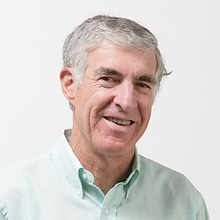
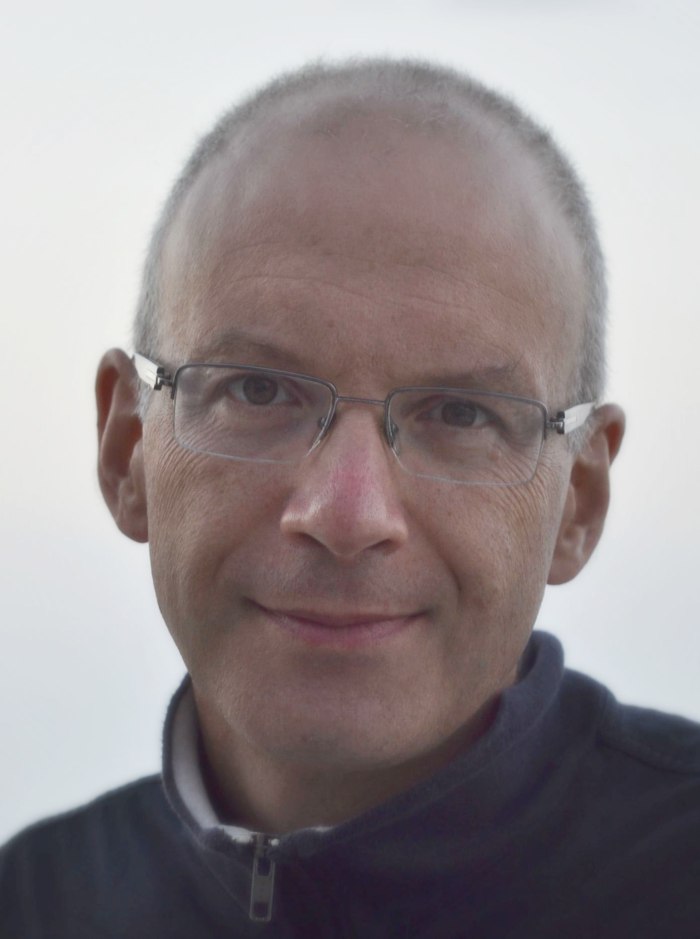
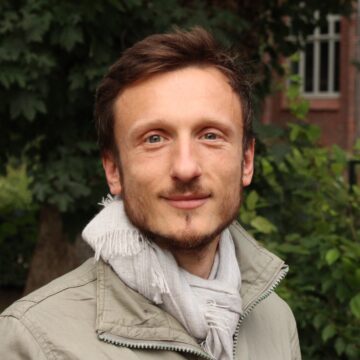
Liming Chen is a Full Professor and Director of the Department Mathématiques - Informatique at École Centrale de Lyon, Université de Lyon. As a member of the Laboratoire d'Informatique en Image et Systèmes d'Information (LIRIS, UMR 5205), his research spans computer vision, pattern recognition, and multimedia computing. His extensive research portfolio includes 3D face analysis, image/video categorization, affect analysis, and biometric systems. He has led significant projects such as ANR 3D Face Analyzer, ANR Videosense, ANR Omnia, and ANR FAR3D, focusing on advanced recognition systems and multimodal analysis. Professor Chen supervises multiple PhD students and has developed open-source tools for 3D model processing. His work has received recognition through best performance awards at international competitions including SHREC 2011 (3D face recognition) and ImageCLEF 2011 (photo annotation).
Dominique Bechmann is a **Professor of Computer Science** at the University of Strasbourg, affiliated with the **Department of Computer Science** within the **Sciences Collegium**. He is also a researcher at the **ICube Lab** (UMR 7357 CNRS-University of Strasbourg). His academic career spans over three decades, including roles as Head of the IGG Computer Graphics and Geometry research group (1997–2022) and Head of the National Research Group GdR IG-RV (2014–2021). He holds a Habilitation (1995) and PhD (1989) from the University of Strasbourg, with postdoctoral research at IBM's Thomas Watson Research Center (1989–1990). His research focuses on **Computer Graphics**, **Geometric Modeling**, and **Virtual Reality**, with key contributions in free-form deformation, 3D modeling of anatomical structures, and interaction techniques in immersive environments. He has led projects like the ICT-Asian initiative on Virtual Reality (2004–2007) and organized conferences such as AFRV 2012 and AFIG-EG France 2005. His teaching spans undergraduate and graduate levels in algorithms, computer graphics, and computational geometry. Bechmann has held numerous leadership roles, including Head of the Computer Science Department (1997–2000), Vice-Head of LSIIT Lab (2009–2012), and member of the National Commission of Universities (CNU) section 27 (2007–2011). His work bridges theoretical computer graphics with practical applications in medicine, architecture, and collaborative systems.
Simon Lacoste-Julien is an Associate Professor at Université de Montréal, affiliated with the Department of Computer Science and Operations Research (DIRO). He also serves as the Associate Scientific Director of Mila – Quebec Institute of Artificial Intelligence and holds the position of Vice President Lab Director at Samsung SAIT AI Lab Montreal (SAIL). His research focuses on machine learning, optimization, and their applications in areas like deep learning, generative models, causality, and computer vision. Lacoste-Julien has held academic positions at INRIA in Paris and has a PhD from UC Berkeley, with postdoctoral work at the University of Cambridge. He teaches advanced graduate courses on probabilistic graphical models and structured prediction. His work includes contributions to optimization algorithms (e.g., Frank-Wolfe methods), causal discovery, and generative models. Lacoste-Julien has supervised numerous students and postdocs, and his awards include being a CIFAR Fellow and Canada CIFAR AI Chair. His research spans theoretical foundations and practical applications, with a strong emphasis on scalable and efficient machine learning techniques.
Hanan Samet is a Distinguished University Professor in the Computer Science Department at the University of Maryland, College Park. He holds affiliations with the Center for Automation Research and the Institute for Advanced Computer Studies (UMIACS). His academic journey includes a PhD from Stanford University (1975) in Computer Science, following degrees in Engineering (UCLA) and Operations Research/Computer Science (Stanford). Affiliations: University of Maryland, College Park (since 1975) Roles: Professor, Founding Editor-in-Chief of ACM Transactions on Spatial Algorithms and Systems, Founder of ACM SIGSPATIAL Samet's research focuses on spatial data structures, spatial databases, GIS, computer vision, and information retrieval. His seminal work includes the Foundations of Multidimensional and Metric Data Structures , an award-winning book addressing spatial indexing and query optimization. He pioneered frameworks like NewsStand for map-based news exploration and Coronaviz for pandemic visualization. Key contributions span spatial synonyms for approximate search, SAND spatial browser for digital government, and trajectory analysis systems for aviation safety and urban mobility. His work bridges theory and practice, influencing databases, graphics, and geographic systems. Education: B.S. Engineering, UCLA M.S. Operations Research, Stanford M.S./Ph.D. Computer Science, Stanford Samet has advised numerous students and led NSF-funded projects on spatio-textual data, similarity search, and spreadsheet analysis. His honors include the ACM Paris Kanellakis Award (2011), IEEE Wallace McDowell Award (2014), and UCGIS Research Award (2009). His labs and teams focus on spatial algorithms, visualization, and GIS applications. Notable projects include VASCO (spatial index demo), MARCO (image databases), and CHOLERA (disease tracking).
National Institute of Applied Sciences of StrasbourgFrance
Tania Landes is a Professor at the University of Strasbourg (Unistra) affiliated with the ICube Laboratory UMR 7357 CNRS/Unistra and the PAGE Group (Architectural Photogrammetry and Geomatics). Her work focuses on integrating advanced 3D modeling and geomatics techniques for urban applications. Academic Rank: Professor Institution: University of Strasbourg Research Affiliation: ICube Laboratory UMR 7357 CNRS/Unistra Research Interests : Indoor and outdoor 3D modeling with RGB-D sensors and LiDAR Semantic segmentation of point clouds for BIM (Building Information Modeling) Thermal imaging integration for urban microclimate studies Historical and cultural heritage documentation via photogrammetry Urban tree modeling and vegetation impact on thermal comfort Scan-to-BIM workflows and automation Key Projects include the TIR4sTREEt thermal infrared studies of street trees in Strasbourg and COOLTREES for quantifying urban cooling benefits from vegetation. Her publications emphasize improving 3D reconstruction workflows and modeling accuracy across domains. Scientific Contributions span 15+ years with over 50 publications, covering: Urban heat island mapping (2022 onwards) Historical building modeling (2014-2017) Mobile laser scanning applications (2020 onwards) Kinect sensor calibration for 3D modeling (2015) Microclimate simulation via LASER/F (2016) Archaeological documentation (2011)
George Drettakis is a Senior Researcher at INRIA Sophia-Antipolis and leads the GRAPHDECO research group. He has held professorial roles at institutions including MIT, University of Reims, University of Toronto, and École Normale Supérieure. His research focuses on rendering for computer graphics and sound, with emphasis on image-based rendering, perceptual rendering, and audio-visual cross-modal effects. He has also explored interactive illumination, shadows, relighting, and generative models. Current Students: G. Kopanas (Neural Rendering), N. Violante (Generative Models), A. Petitjean (co-supervised), Y. Poirier-Ginter (co-supervised), P. Panantonakis (starting fall 2023). Postdoctoral Researchers: A. Gauthier at INRIA. His recent work includes 3D Gaussian Splatting , Diffusion-based Relighting , and Neural Radiance Fields . He has received the Eurographics Outstanding Technical Contributions Award (2007) and was named an Eurographics Fellow . He manages projects like ERC Advanced Grant FUNGRAPH and has participated in H2020 EMOTIVE , ANR SEMAPOLIS , and CROSSMOD . His group collaborates internationally and has hosted researchers from institutions such as UC Berkeley, Imperial College London, and TU Wien.
François Briatte is an Assistant Professor in Political Science at the Catholic University of Lille , affiliated with the European School of Political and Social Sciences (ESPOL). He serves as Co-Director of International Mobility and has previously taught at Sciences Po Paris, Grenoble, Reims, the University of Lille 2, and the University of Edinburgh. His research focuses on legislative networks in European parliaments and comparative health policies . He combines methodologies from network analysis, political sociology, and digital politics to study legislative collaboration patterns, electoral behavior, and healthcare system reforms. His work often addresses Political polarization Electoral turnout dynamics Open data governance Health policy analysis Recent publications include empirical studies on Voting indecision in the 2022 French presidential election Covid-19’s impact on 2020 French local elections Network visualization tools for political science Comparative analysis of legislative cosponsorship He has developed open-source software packages like GGally and ggnetwork for network analysis in R, and actively participates in academic conferences across Europe and North America.
Frédéric Dufaux is a CNRS Research Director at Université Paris-Saclay, affiliated with CentraleSupélec and the Laboratoire des Signaux et Systèmes (L2S), where he heads the Telecom and Networking hub. He holds an M.Sc. in Physics (1990) and a Ph.D. in Electrical Engineering (1994) from the Swiss Federal Institute of Technology (EPFL). With over 20 years of research experience, he previously worked at EPFL, MIT, and industry leaders including Compaq and Digital Equipment. His research spans: Fundamental video coding techniques and 3D video systems High dynamic range imaging and perceptual quality assessment Privacy-preserving video surveillance and multimedia content analysis Wireless video transmission and next-generation compression standards Recent publications focus on HDR compression optimization, semantic video coding using seam carving, distributed video coding with machine learning, and 3D video standardization, demonstrating consistent innovation in video processing architectures and perceptual quality enhancement. Awards & Honors: IEEE Fellow Two ISO Awards for contributions to JPEG 2000 wireless (JPWL) and JPSearch standards He leads multiple standardization initiatives in MPEG/JPEG committees and has held editorial leadership roles including Editor-in-Chief of Signal Processing: Image Communication (2010-2019). He chairs the EURASIP Technical Area Committee on Visual Information Processing and has organized major conferences including ICIP and MMSP.
Sam Goree is an assistant professor of computer science at Stonehill College, specializing in the intersection of computer vision, human-computer interaction, and digital humanities. His work critically examines how AI systems evaluate aesthetic quality and human-centered aspects of AI, with particular focus on subjectivity in machine learning models and evaluation methodologies. PhD in Informatics from Indiana University's Luddy School of Informatics, Computing and Engineering Goree's research explores aesthetic phenomenon problems in computer vision, particularly image aesthetic quality assessment. He investigates how subjective human perceptions of beauty and aesthetics can be modeled and evaluated in AI systems, challenging traditional approaches that assume a universal standard of beauty. His work draws from feminist theory, philosophy of science, and media archaeology to develop more human-centered evaluation methods for AI systems. Goree is particularly interested in how subjectivity manifests in both data and models, and how this affects algorithmic bias. His recent publications reveal a strong trend toward human-centered evaluation of AI systems, with increasing focus on subjectivity, personalization, and philosophical foundations of aesthetics in computer vision. Goree's work bridges technical computer vision research with critical humanities perspectives, examining how historical contexts shape current AI practices. He has developed novel evaluation frameworks that incorporate qualitative human feedback, moving beyond traditional quantitative metrics to better understand how AI systems interact with human perception and values. Goree actively engages with teaching challenges in the era of generative AI, developing pedagogical approaches that help students develop critical thinking skills while navigating new AI tools. His teaching philosophy emphasizes maintaining human-centered learning experiences even as AI transforms educational landscapes. He advocates for assignments that require contextual understanding and creativity, which are difficult for AI to replicate. His research is organized around understanding the "aesthetic gap" - the difference between information extractable from image pixels and the feelings images evoke in humans. Goree's lab explores how to build more transparent and accountable AI systems that acknowledge their subjective nature rather than claiming false objectivity.
Julien Perret is a senior researcher at the National Institute of Geographic and Forest Information (IGN) in France, affiliated with the LASTIG laboratory and STRUDEL research team. His work spans geographical information science, urban dynamics, and historical cartography. Current Affiliation: National Institute of Geographic and Forest Information (IGN) Research Team: LASTIG, STRUDEL Academic Rank: Senior Researcher (Directeur de Recherche) Education Habilitation (HDR) in Geographical Information Science, Université Paris-Est (2016) PhD in Computer Science, Université Rennes 1 (2006) Engineering Degree in Computer Science, INSA Rennes (2002) Research Interests Perret's research focuses on urban dynamics through computational approaches, including agent-based modeling and 3D urban simulation . He investigates historical cartographic data like the Napoleonic land registry and Cassini Carte de France to understand long-term urban evolution. His work integrates geospatial data with epidemiological modeling using digital twins, particularly for pandemic simulations. Scientific Contributions Key publications include: 2025: Building change models for urban densification studies 2024: Historical map vectorization benchmarks 2017: Scalable point cloud management systems 2015: 3D analysis of urban regulation impact 2005: Procedural geometry modeling with FL-systems Advising and Collaborations Perret has supervised multiple PhD students and collaborated on projects like SoDUCo (1789-1950 Paris urban dynamics) and iSpace&Time (4D GIS for city modeling). He contributes to open-source GIS tools like GeOxygene .
Kinan Abbas is a researcher at the University of Strasbourg's College of Science and Engineering, Department of Computer Science, specializing in hyperspectral imaging and machine learning. His work focuses on spectral image processing techniques including unmixing, demosaicing, and low-rank matrix approximation. His research interests center on hyperspectral imaging and machine learning applications, particularly developing novel methods for snapshot spectral image processing. Key contributions include locally-rank-one-based joint unmixing frameworks, diffusion models for texture synthesis, and entropy-weighted spectral deconvolution techniques. His work bridges theoretical signal processing with practical applications in remote sensing and computational photography. Analysis of his publication trend (2021-2025) shows evolution from foundational spectral unmixing techniques toward advanced generative models, with increasing focus on diffusion-based synthesis and multifractal analysis. His research consistently addresses computational challenges in spectral image reconstruction. Abbas actively collaborates with researchers from ICube laboratory (Strasbourg), including Matthieu Puigt, Gilles Delmaire, and Gilles Roussel, evidenced by consistent co-authorship across 14 publications. His work appears in IEEE Transactions, ICASSP, and French GRETSI conferences, indicating strong institutional support for his research program.
Nicolas Louveton is an Associate Professor at the University of Poitiers, affiliated with the Center for Research on Cognition and Learning (CeRCA) within the School of Humanities and Social Sciences. His work bridges cognitive science and practical interface design across automotive, cybersecurity, and industrial contexts. His research focuses on Human-Computer Interaction , Cognitive Ergonomics , and Virtual Reality , with specific expertise in visual attention, multitasking performance, and driver behavior. Current projects include the RESISTECC initiative for cyber crisis management training, industrial VR maintenance scenarios (INTEROPS project), and autonomous vehicle trust studies (CMI project). Louveton's recent publications reveal a strong trend toward applied VR solutions for high-stakes environments, particularly in cybersecurity training effectiveness and driver-AI interaction. His work consistently applies cognitive ergonomics principles to measure mental workload, situational awareness, and usability in complex systems. As an educator, he leads the UX/UI Ergonomics Master's program and teaches courses on interface usability, visual perception, and UX research methodology. He also serves as Carnot Cognition correspondent for CeRCA laboratory. Supervises PhD candidates Marine Desvergnes and Deslande Liboutchi Pepe Formerly co-supervised Clarisse Lawson-Guidigbe (now Head of Web Editorial) Member of CNU 16 (Psychology and Ergonomics) 2019-2023 Co-head of Digital Interactive Games and Media Master's program 2018-2022
Jonathan Sarton is a Lecturer in Computer Science at the University of Strasbourg and a Researcher at the ICube laboratory. He holds an affiliation with the Geometric and Graphics Computing (IGG) team within the UFR of Mathematics and Computer Science. His primary research focuses on scientific visualization, volume rendering, and GPU programming. Education includes a PhD (2018) from the University of Reims Champagne-Ardenne titled 'High-performance interactive visualizations of massive volumetric data: an out-of-core multiresolution approach based on GPUs' , and a Master's in Visualization, Imaging, and Performance (2014) from the University of Orléans. He has held roles including Temporary Teaching and Research Associate (ATER) at the University of Reims (2018-2019) and a doctoral researcher at CReSTIC (2015-2018). Current research emphasizes interactive visualization of large unstructured meshes from numerical simulations, supported by the ANR LUM-Vis project. His technical work includes GPU-based out-of-core architectures for handling AMR time series data and distributed visualization systems. Professional activities include teaching computer science courses at undergraduate and graduate levels, focusing on 3D graphics, parallel programming, and algorithms. Professional contact: Office C118 at ICube, sarton@unistra.fr .
Charles Bouveyron is a Full Professor of Statistics at Université Côte d'Azur , Nice, France, and holds a Chair in Artificial Intelligence. He serves as Director of the Institut 3IA Côte d’Azur and leads the Inria research team MAASAI on Statistical Learning and Artificial Intelligence. He is an associate editor for The Annals of Applied Statistics and founded the Statlearn workshops . Research Interests: Statistical learning in high dimensions Learning on networks and functional data Deep latent variable models Adaptive learning with uncertain labels Applications in Medicine, Image Analysis, Astrophysics, and Humanities Notable Contributions: Developed multiple R packages including HDclassif , FisherEM , and FunLBM . Created the Linkage.fr platform for network analysis with textual edges. PhD Students: Current: Seydina Niang (Deep Generative Models), Kilian Burgi (Marine Diversity Monitoring), Baptiste Pouthier (Multimodal Learning) Former: Giulia Marchello (Dynamic Networks), Rémi Boutin (Network Analysis), Dingge Liang (Recommender Systems), Nicolas Jouvin (Latent Variable Models), Alexandre Saint-Dizier (Image Aggregation), Warith Harchaoui (Optimal Transport), Pierre-Alexandre Mattei (Sparse Clustering), Rawya Zreik (Temporal Networks), Anastasios Bellas (Anomaly Detection), Camille Brunet (Sparse Clustering) Contact: Email: charles.bouveyron@univ-cotedazur.fr / charles.bouveyron@inria.fr Postal: Equipe Maasai, Inria Sophia Antipolis, 2004 route des Lucioles, 06902 France
Marc Donias is an Associate Professor at the University of Bordeaux, affiliated with the IMS (Laboratory of Integration, Material to System) which is part of the College of Engineering. He is a member of the Signal and Image Processing research group and works within the MOTIVE team, focusing on advanced image processing and computer vision applications. His research interests span across multiple domains including image processing, signal processing, computer vision, machine learning, and seismic data analysis. Dr. Donias has made significant contributions in texture analysis, image colorization algorithms, and geological data interpretation. His work often bridges theoretical advances with practical applications in agriculture, materials science, and geophysics. Analysis of his recent publications reveals a strong trend toward deep learning applications in image processing, particularly generative models for image colorization and object detection. His work demonstrates interdisciplinary reach, connecting computer vision with agricultural technology, materials science, and geophysical interpretation. The publications show consistent collaboration with researchers from the IMS laboratory, particularly with Yannick Berthoumieu and other members of the MOTIVE team. Dr. Donias has been actively involved in developing innovative approaches for seismic horizon reconstruction, texture analysis, and agricultural image processing. His work on SPD manifold learning for image colorization represents a sophisticated mathematical approach to a challenging computer vision problem. The practical applications of his research are evident in precision agriculture technologies and geological interpretation tools.