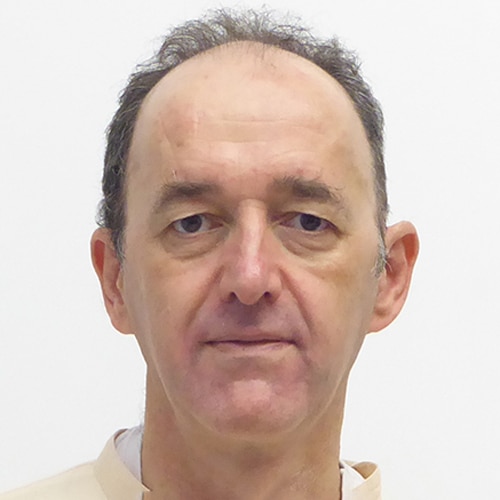
Frederik Ravn Klausen is a Guest Researcher at the Department of Mathematical Sciences, University of Copenhagen, and a postdoc in mathematical physics at Princeton University. His research focuses on mathematical physics, statistical mechanics, and quantum systems. His recent publications explore topics such as Anderson localization in open quantum systems, phase transitions in the Ising model, scalability challenges in analogue quantum simulators, and stochastic cellular automaton models of culture formation. Collaborative work spans interdisciplinary areas between physics, mathematics, and computational modeling.
Line Clemmensen serves as Associate Professor at DTU Compute (Department of Applied Mathematics and Computer Science), Technical University of Denmark, where she has held faculty positions since 2010. Her interdisciplinary work bridges statistical learning, machine learning, and real-world applications in mental healthcare, biotechnology, and agricultural informatics. Her academic credentials include: Ph.D. in Image Analysis and Computer Graphics from DTU (2010), thesis: "High-dimensional sparse data analysis" M.Sc. in Applied Mathematics from DTU (2006) Exchange studies at Universitat Politecnica de Catalunya, Barcelona (2004) Mathematical graduate from Falkonergården upper secondary school (2000) Clemmensen's research centers on machine learning and statistical learning with emphasis on low-resource modeling, representation learning, and AI evaluation methodologies. She applies these techniques to mental health (developing biosensor-based OCD monitoring systems), biotechnology (spectral data analysis for pharmaceutical quality control), and environmental science (crop health assessment via remote sensing). Her work consistently addresses challenges in data scarcity and model interpretability. Analysis of her recent publications reveals dominant trends in computational psychiatry (e.g., detecting OCD episodes through physiological signals and oxytocin biomarkers) and agricultural AI (linking soil microbiome composition to crop health via machine learning). Methodologically, she pioneers interpretable deep learning frameworks for low-resource settings and robust time-series analysis techniques for physiological data. She has supervised 10 PhD students to completion (including Jacob Søgaard Larsen on NIR management and Gudmundur Einarsson on psychiatric motion quantification) and mentored 13 Master's/Bachelor's students. Current funding includes the LundbeckFonden LF-Experiment grant for the FAST project (Fast Assessment of psychiatric Symptoms to Transform Mental Health Care). Within DTU Compute's Section for Statistics and Data Analysis, Clemmensen leads collaborations with Novo Nordisk (biostatistics), the Danish Meat Industry, and clinical psychiatry teams, focusing on real-world AI deployment in mental healthcare and industrial applications.
Benjamin Lipp serves as Assistant Professor at the Technical University of Denmark (DTU) within the Department of Technology, Management and Economics, specializing in Science and Technology Studies. He joined DTU in 2023 following a Marie Curie Postdoctoral Fellowship at Cornell University and the University of Hamburg. Dr. Lipp earned his PhD in Science and Technology Studies from the Technical University of Munich in 2019, with a dissertation examining assistive care robots in Europe, and holds a Diploma in Sociology from Ludwig Maximilian University of Munich (2013). His research program investigates the socio-material dimensions of human-machine interfaces in healthcare contexts through the lens of Science and Technology Studies and sociology. Key research themes include: Socio-technical aspects of care robotics implementation User experiences with digital pain management technologies Co-creation processes involving patients and healthcare professionals Policy implications of healthcare technology adoption Discursive effects of synthetic data in AI development Dr. Lipp's recent publications demonstrate a clear trajectory examining interface theory, digital health technologies, and the social implications of AI in healthcare settings. His work spans theoretical contributions to STS while maintaining strong empirical grounding in healthcare contexts, particularly chronic pain management and elderly care robotics. His scholarly achievements include publications in high-impact venues such as Nature, Social Studies of Science, and Science, Technology & Human Values, along with the prestigious Marie Curie Postdoctoral Fellowship recognition. Dr. Lipp actively supervises PhD research, notably as supervisor for the "Socially Sustainable Algorithms for Chronic Pain" project (2024-2027). He has organized significant public engagement initiatives including a 2017 care robots event at TUM and a 2023 Cornell workshop on digital pain technology, facilitating dialogue between researchers, industry, practitioners, patients, and citizens.
Gozde Unal is a Full Professor in the Department of Computer Engineering at Istanbul Technical University's Faculty of Computer and Informatics Engineering, where she also serves as director of the ITU Vision Lab and founding professor of the AI&Data Engineering Department. She previously held faculty positions at Sabancı University and conducted industry research at Siemens Corporate Research. Her educational background includes a PhD in Electrical and Computer Engineering with a Mathematics minor from North Carolina State University (2002), following postdoctoral work at Georgia Institute of Technology. Professor Unal's research pioneers intersections of Artificial Intelligence and Computer Vision, with significant contributions to medical imaging, 3D reconstruction, and architectural heritage preservation. Her work on diffusion models, adversarial point cloud attacks, and training-free segmentation demonstrates technical innovation while addressing real-world challenges in healthcare diagnostics and cultural conservation. The integration of multi-modal dynamics and evidential deep learning reflects her forward-looking approach to uncertainty quantification in AI systems. Analysis of her 2023-2025 publications reveals dominant trends in point cloud processing for historical reconstruction, medical image segmentation using Bayesian frameworks, and continual learning architectures. These works consistently bridge theoretical advances with applications in architectural heritage documentation and clinical diagnostics, particularly through novel diffusion model adaptations. Her scientific leadership has been recognized through prestigious awards: L’Oreal Turkey’s Female Scientist Award in Life Sciences (2010) Distinguished Young Scientist Award from TUBA (GEBIP) Marie Curie Alumni Association Career Award (2017) As technical program co-chair for MICCAI 2016 and MIDL 2019, she has shaped international discourse in medical image computing. Her lab direction indicates active graduate supervision, though specific student names aren't documented in the source material. The ITU Vision Lab under her leadership drives cutting-edge research in medical image analysis and 3D scene understanding, while her role in founding the ITU-AI Research Center establishes institutional frameworks for interdisciplinary AI innovation across the university.
Marleen de Bruijne is Professor of AI in Medical Image Analysis jointly appointed at the University of Copenhagen, Denmark and Erasmus MC – University Medical Center Rotterdam, The Netherlands. Within the Department of Computer Science at Copenhagen she belongs to the Image Analysis, Computational Modelling and Geometry section, where she leads research at the intersection of machine learning and medical imaging. Education MSc in Physics, Utrecht University, 1997 PhD in Medical Imaging, Utrecht University, 2003 Research Interests Her work centers on developing and validating machine-learning algorithms for quantitative analysis of medical images. Key themes include: Transfer learning and domain adaptation across imaging centers Deep learning architectures for segmentation and classification of pulmonary, cardiovascular and neuro images Probabilistic graphical models and Bayesian approaches for robust airway and vessel extraction Computer-aided diagnosis systems for emphysema, bronchiectasis, COPD and calcification Her group translates these techniques into clinical workflows to improve early diagnosis and patient management. Scientific Awards NWO-VENI (Netherlands Organisation for Scientific Research) NWO-VIDI NWO-VICI DFF-YDUN (Danish Council for Independent Research) Advising & Grants She has (co-)supervised 30 PhD students to completion and served as principal investigator on several large personal grants. Her funding record demonstrates sustained support from both Dutch and Danish national science foundations. Labs & Teams She is actively involved in the SCIENCE AI Centre at the University of Copenhagen and maintains strong collaborative links with Erasmus MC Radiology and Pulmonology departments, fostering cross-institutional datasets and multicenter clinical validation studies.
Thomas Wim Hamelryck is a Professor at the Department of Computer Science (Programming Languages and Theory of Computation) and the Department of Biology (Computational and RNA Biology) at the University of Copenhagen . With a PhD in Protein Crystallography from the Free University of Brussels (VUB), he specializes in Bayesian modeling , probabilistic machine learning , and statistical structural bioinformatics , focusing on protein structure prediction, evolution, and non-Euclidean data representation.
Difeng Yu is a Postdoc in the Human-Centred Computing section at the Department of Computer Science, University of Copenhagen. Located at Sigurdsgade 41, Copenhagen N, Yu contributes to advancing VR interaction techniques through empirical and theoretical research. His work spans multiple subfields of immersive technology, with a particular focus on selection methods and user embodiment. Research Interests: Virtual Reality interaction design Human-Computer Interaction (HCI) theory Movement mapping and motor learning 3D object selection techniques Haptic feedback in immersive environments Recent publications demonstrate a progression from foundational VR interaction challenges (2018-2019) to advanced applications in consumer VR (2022-2024) and cutting-edge research on perceptual illusions (2025). Key trends include the development of predictive models for selection tasks, exploration of multi-modal interaction techniques, and evaluation of user experience metrics like presence and engagement.
Torben Ægidius Mogensen is an Associate Professor at the Department of Computer Science, University of Copenhagen, where he leads research in the Programming Languages and Theory of Computation section. His office is located at Universitetsparken 5, Copenhagen. His primary research focuses on: Automatic program analysis and transformation (especially partial evaluation and semi-inversion) Compiler technology for functional languages Domain-specific language design Reversible computing systems and languages Algorithms, complexity theory, and automata theory Applications in graphics and fractal generation His recent publications demonstrate a strong focus on reversible computation systems, including specialized programming languages like Hermes for encryption, reversible processor architectures, and functional programming extensions. His textbook publications on compiler design (2024) and programming language implementation (2022) indicate significant contributions to computer science education and foundational knowledge. He teaches courses on compilers, programming language technology, and game development, and maintains active research collaborations internationally. He is fluent in Danish and English, with working knowledge of German and Romanian.
August Maigaard Rubin is an Instructor at the Department of Computer Science , Faculty of Science, University of Copenhagen, and holds a secondary affiliation with the Department of Communication (Faculty of Humanities). His research spans image analysis, computational modelling, geometry, machine learning, computer vision, and numerical optimization. Infrastructure and collaborations include the SCIENCE AI Centre, a GPU cluster, and physical/virtual research facilities like robot labs and toolshops. Education details were not explicitly provided. Research Focus : Image Analysis & Processing Mathematical Imaging & Applied Geometry Medical & Biological Imaging Computer Vision, Robotics, Graphics & Simulation Emails : auru@di.ku.dk zkb163@hum.ku.dk Collaborations : SCIENCE AI Centre Center for Quantification of Imaging Data from Max IV (QIM) Denmark’s participation in open-source projects like OpenTissue and PROX
Xiufeng Liu is a Senior Researcher at the Department of Technology, Management and Economics at the Technical University of Denmark (DTU). His research focuses on smart meter data analytics, big data, and energy systems, contributing to UN Sustainable Development Goals related to affordable and clean energy. He holds a PhD from Aalborg University (2012) and has held positions at IBM Canada, the University of Waterloo, and Åbo Akademi University. Dr. Liu’s expertise spans energy economics, climate policy modeling, and data-driven methodologies. His work integrates machine learning with energy systems, addressing challenges such as wind power forecasting, solar cell optimization, and heat load prediction. Key projects include OPTIX (optimizing positive-energy districts) and ANSWER (wind-solar energy prediction models). His research outputs emphasize sustainable energy solutions, including federated learning frameworks for privacy-preserving data sharing and anomaly detection in energy grids. Collaborations span global institutions, reflecting his commitment to interdisciplinary energy solutions. Dr. Liu has supervised numerous projects and contributed to 148 publications. His work bridges technical innovation with policy implications, aiming to advance climate-compatible energy strategies globally.
Paolo Burelli is a Lecturer and Head of the brAIn Lab at the IT University of Copenhagen. He also serves as a Senior Data Scientist at Tactile Entertainment A/S since 2016. His research focuses on Game AI, Player Experience, Machine Learning, and Neuroscientific approaches to gaming. Key affiliations include the Creative AI Lab and The Maritime Hub. Research interests span adaptive game systems, player modeling, and the intersection of neuroscience with game design. Notable projects include the Pioneer Centre for Artificial Intelligence (2021–2034), ALGO (2019–2022), and CREATE (2023–2025). Projects emphasize creative AI applications in education, difficulty modeling in games, and maritime safety through alarm-handling practices. Publications highlight work on LLM emotion generation, EEG-based neural decoding, and player frustration tolerance. Collaborations include institutions like Springer and the Danish National Research Foundation. His datasets, such as the Uncanny Valley Face Questionnaire, contribute to facial perception studies. Labs under his leadership include the brAIn Lab, exploring AI ethics, game analytics, and human-centered computing. Projects emphasize practical applications of AI in education and industry.
Niklas Elmqvist is a Professor in the Department of Computer Science at Aarhus University. His research focuses on immersive analytics, data visualization, and human-computer interaction, emphasizing user-centered design and interdisciplinary approaches. He leads projects on interactive visualization systems, collaborative platforms, and accessibility in data analysis. Key research areas include agentic visualization systems, attention-aware interfaces, and ubiquitous analytics environments. He explores novel interaction techniques, such as bimanual gestures and multimodal feedback, to enhance data exploration experiences. His work bridges computer science with domains like epidemiology, cybersecurity, and creative writing. Elmqvist has contributed to influential platforms like DashSpace (collaborative immersive analytics) and Datamancer (gesture-driven analytics). He investigates challenges in accessible visualization for visually impaired users and the use of large language models for automated design feedback. His recent work addresses human-centered AI integration in visualization tools and the ethics of automated decision-making systems. He collaborates internationally on projects such as Riverside (cybersecurity visualization) and Lodestar (data science workflow recommendations). His research has been published in top journals like IEEE Transactions on Visualization and Computer Graphics, emphasizing both theoretical advancements and practical system implementations.
Kristian Olesen is an Associate Professor in strategic spatial planning at the Department of Sustainability and Planning, Aalborg University, affiliated with The Technical Faculty of IT and Design. He is a member of the Planning for Urban Sustainability (PLUS) research group and serves as program coordinator for the Urban Planning and Management master’s program. His work focuses on linking spatial planning to politics, urban infrastructure investments, and neoliberalization trends in Denmark. Research Interests: Strategic spatial planning at multiple scales (transnational to neighborhood) Urban redevelopment of deprived neighborhoods via housing associations Integration of energy and urban planning for Positive Energy Districts Neoliberalization of Danish spatial planning systems Urban governance and public participation Projects: Lead investigator for PED-JUST (2025-2027): Energy transition strategies in disadvantaged neighborhoods FLEXPOSTS (2022-2025): Flexible positive energy district systems Fremtidens Boligorganisation (2021-2025): Housing associations as urban developers Teaching: 10+ years leading problem-based learning in urban planning aligned with UN SDGs Focus on sustainable development goals integration in curricula Collaborations: Active partnerships with Realdania, Landsbyggefonden, and Innovation Fund Denmark International collaborations on Nordic housing policy and urban development
Anders Læsø Madsen is a Professor at the Department of Computer Science , part of The Technical Faculty of IT and Design at Aalborg University . His research focuses on probabilistic graphical models, with a particular emphasis on Bayesian networks and their applications in industrial and environmental domains. Current affiliation: Aalborg University Research areas: Bayesian networks, probabilistic inference, decision support systems, data stream modeling His recent work spans control room engineering , where AI systems aid human operators, and environmental risk assessment using probabilistic models of pharmaceutical impacts. He also contributes to artificial intelligence in power grid monitoring , addressing anomaly detection through Bayesian reasoning. Publications from 2024-2025 demonstrate interdisciplinary applications, including electricity grid data validation , explainable AI frameworks , and pharmaceutical risk modeling . These works integrate probabilistic methods with domain-specific challenges in energy systems, industrial automation, and environmental science.
Matteo Marsili is a Senior Research Scientist at the Quantitative Life Sciences Section of the Abdus Salam International Centre for Theoretical Physics (ICTP) in Trieste, Italy. He holds a PhD from SISSA, Trieste (1994) and has held postdoctoral positions at Manchester University, Fribourg University (Switzerland), and SISSA. He joined ICTP in 2002, initially in the Condensed Matter and Statistical Physics (CMSP) Section before transitioning to the Quantitative Life Sciences Section. His research spans interdisciplinary domains, applying statistical physics to complex systems. Key areas include non-equilibrium statistical mechanics, critical phenomena, quantitative finance, statistical inference, machine learning, systems biology, and neuroscience. He investigates how collective behaviors emerge from interactions among simple units—such as particles, neurons, or financial traders—using tools from probability, information theory, and thermodynamics. His recent publications (2020–2025) show a strong focus on information-theoretic approaches to learning, relevance quantification, deep learning, and optimal inference. Themes include Bayesian modeling, minimal complexity, self-organized criticality in neural networks, and thermodynamics of information in financial markets. His work frequently appears in journals like Physical Review E , Journal of Statistical Mechanics , Physics Reports , and PLoS ONE . Matteo Marsili has collaborated extensively with researchers such as Y. Roudi, R.J. Cubero, J. Song, and R. Xie, suggesting active mentorship and team leadership. While no formal awards are listed, his sustained publication record in high-impact journals reflects significant scientific contributions. His lectures at institutions like the Kavli Institute and IHÉS further highlight his academic influence.