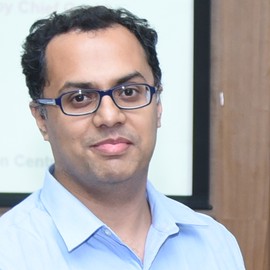
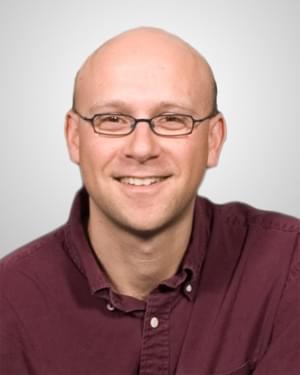
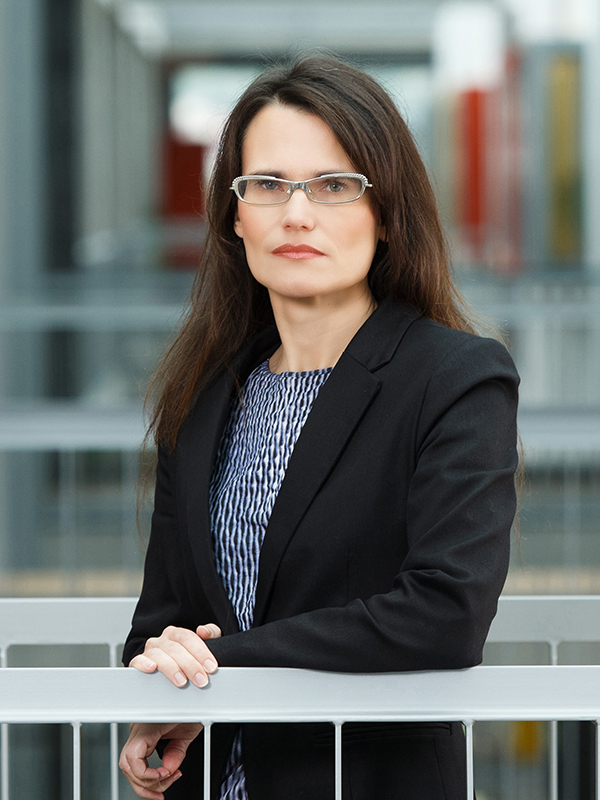
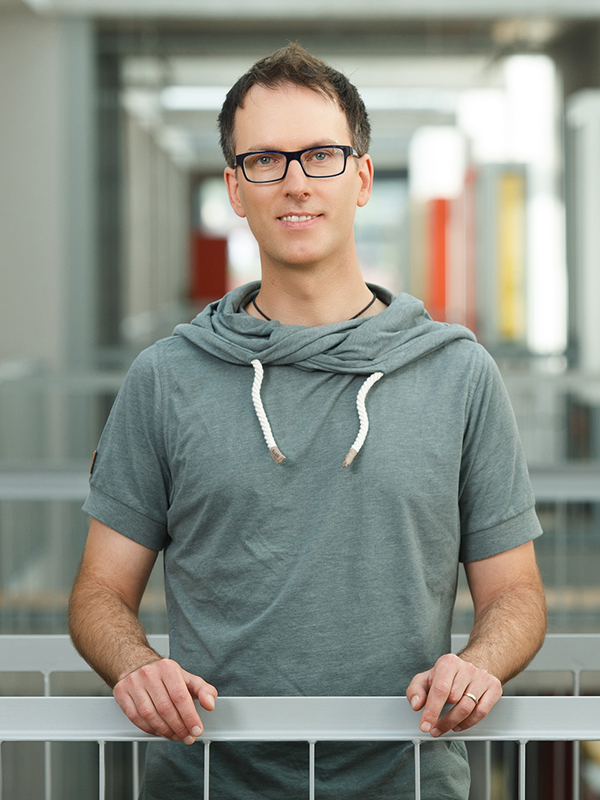
Jeremiah Ratican is an Assistant Professor in Game Design at Lindenwood University's College of Arts and Humanities. He teaches courses related to 3D graphics, game testing, level design, and animation through hybrid and online formats. His research interests align with his instructional areas, focusing on: 3D modeling and animation techniques Game design and development workflows Digital art applications in game environments Hybrid/online educational methodologies for creative technologies Contact: Office in McCluer Hall 215, telephone +1 636-627-4418
Dr. Rodrigo Labouriau is an Associate Professor at the Department of Mathematics, Aarhus University, within the Faculty of Natural Sciences. He leads the Applied Statistics Laboratory (aStatLab), focusing on statistical modeling and consultancy for natural and technological sciences, particularly biology, agriculture, and environmental sciences. Research Focus : Generalized linear mixed models (GLMMs), graphical models, and their multivariate/semiparametric extensions for complex data analysis. Teaching : Courses like 'Study Design and Analysis' for Master’s students, and PhD-level courses in R programming, generalized linear models, and mixed models. Consultancy : Provides free statistical support to Faculty of Natural Sciences members through ad hoc projects, thesis supervision, and daily consultations. Research Trends : His work bridges statistical theory with applied solutions for environmental monitoring (e.g., ammonia emissions), agricultural productivity (e.g., intercropping systems), and biomedical challenges (e.g., malaria detection via DNA sensors). Projects often involve interdisciplinary collaborations in agricultural, environmental, and health sciences. Key Projects : NATEF (2020–2023), MAG (2019–2025), and others tackling soil mechanics, aviation de-icing, and bull fertility.
Gabriel Taubin is a Professor of Engineering and Computer Science at Brown University. He holds a PhD in Electrical Engineering from Brown (1991) and a Licenciado en Ciencias Matemáticas from the University of Buenos Aires (1981). Previously, he worked at IBM Research (1990-2003) as a Research Staff Member and Manager. Education: PhD in Electrical Engineering, Brown University (1991); Licenciado en Ciencias Matemáticas, University of Buenos Aires (1981). His research spans Applied Computational Geometry, Computer Graphics, Geometric Modeling, 3D Photography, and Computer Vision , focusing on algorithms for 3D object representation, low-cost 3D scanning, and digital fabrication. Key contributions include 3D mesh processing, camera networks, and surface reconstruction techniques. Recent publications emphasize 3D scanning for printing , super-resolution imaging , and geometric optimization . His work has been cited in ACM Transactions on Graphics , IEEE Transactions on Pattern Analysis , and interdisciplinary journals. Scientific Awards: IEEE Fellow (2001), Fulbright Specialist (2014), IBM Master Inventor (2001), Eurographics Best Paper (2002), Best Poster (ICDP 2011).
Dragan Cvetković is a distinguished professor at Singidunum University's Faculty of Informatics and Computing, where he has made significant contributions to computer graphics, multimedia, virtual reality, and aviation engineering. Born on May 5, 1963, in Belgrade, Serbia, he completed all his academic studies at the Mechanical Engineering Faculty in Belgrade, specializing in Aviation (undergraduate 1982-1988, master's 1988-1992, and PhD 1992-1997). His career spans both academic research and practical applications in multiple technological domains. His research interests encompass a broad spectrum including Computer Graphics (2D and 3D), Multimedia Systems, Virtual and Augmented Reality, Web Design, CAD/CAM systems, Flight Dynamics, and Helicopter Design. Professor Cvetković has developed innovative approaches to collaborative virtual environments, web-based laboratories for engineering education, and sustainable aviation technologies. His recent work focuses on additive manufacturing applications for cultural heritage preservation and blockchain integration with digital learning systems. His scholarly output demonstrates consistent productivity with numerous publications spanning from the 1990s to 2025, showing evolution from traditional aerospace engineering topics to contemporary digital technologies. His work bridges the gap between theoretical engineering principles and practical multimedia applications, particularly in educational contexts. His research has appeared in prestigious journals covering aerospace engineering, computer science, and sustainable energy fields. Professor Cvetković has received recognition through his extensive publication record and has contributed significantly to both academic literature and practical technological development. His work on helicopter dynamics, virtual learning environments, and sustainable aviation reflects his ability to connect traditional engineering disciplines with emerging digital technologies.
Parag Chaudhuri is a Professor in the Department of Computer Science and Engineering at the Indian Institute of Technology Bombay. His research centers on computer graphics, animation, and virtual reality, developing computational models to replicate real-world phenomena for enriched virtual experiences. His educational background includes: Ph.D. from IIT Delhi under Prem Kalra and Subhashis Banerjee Postdoctoral research at MIRALab, University of Geneva with Nadia Magnenat Thalmann Bachelor's degree in Civil Engineering from Delhi College of Engineering Professor Chaudhuri's research spans Computer Graphics with core focus areas in character/natural phenomena animation, visual data understanding, and 2D/3D content generation. His work integrates computer vision, physics simulation, and machine learning to address challenges in virtual worlds. Specific interests include rendering, modeling, VR/AR systems, and vision-based graphics. Applications extend to medical simulation, entertainment, industrial processes, and digital heritage preservation through physics-driven approaches. Recent publications (2022-2025) reveal strong trends in document analysis for multilingual text recognition (especially Indic scripts), real-time hand/character animation in AR environments, and physics-based fracture/deformation systems. His work bridges graphics with machine learning for practical solutions in visual data processing. At IIT Bombay, he mentors graduate students requiring foundational courses CS675 and CS775. He accepts Ph.D./M.S. candidates through official CSE department procedures but does not offer internships to non-IITB students. He leads a research group advancing computational techniques for virtual world creation, focusing on interactive animation systems and visual data synthesis.
Dan B Goldman is an affiliate associate professor at the University of Washington's Computer Science and Engineering department, while serving as a Principal Engineer and AI/ML architect for Lucasfilm & ILM. His career bridges academia and industry, with prior roles at Adobe's Creative Technologies Lab (2007-2015) and Google (2015-2024), where he led computer vision R&D for Project Starline. He is a member of the Visual Effects Society and holds a PhD in Computer Science (2007) from the University of Washington. Research Focus: Computer graphics, computer vision, artificial intelligence, and human-computer interaction Notable Projects: Content-Aware Fill (Photoshop), Project Starline (Google), HyperNeRF (neural radiance fields), and Nerfies (deformable 3D modeling) Academic Legacy: Mentored by David Salesin, with an Erdős-Bacon number of 6 (via Rose Byrne and David Salesin's academic lineage). His work appears in top venues like SIGGRAPH, CVPR, and ECCV, covering topics from neural rendering to 3D reconstruction. Industry Impact: Pioneered technologies used in major films (Star Wars, Jurassic Park) and Adobe Photoshop features. His recent work at Google Labs (2022-2024) focused on generative media, reflecting his dual expertise in creative tools and computational methods.
Professor Martin Kraska is a faculty member at Brandenburg University of Technology in the Department of Technology within the College of Engineering. His office is located in the Engineering Science Center (IWZ), Room 401, at Magdeburger Straße 50, 14770 Brandenburg an der Havel. He teaches core engineering subjects including Technical Mechanics, Materials Science, Product Planning, and Finite Element Method, with specialized Master's level courses in Materials Selection and Component Optimization. His research spans computational mechanics with a strong focus on finite element analysis, particularly through his work with CalculiX, an open-source nonlinear finite element program. He has developed extensive parametric examples demonstrating various analysis types, which have gained significant recognition with over 350 GitHub stars. His research interests include structured materials properties, metal foams, 3D printed parts, and digital education tools for technical mechanics. Professor Kraska has made substantial contributions to the CalculiX ecosystem through his GitHub repository 'CalculiX-Examples,' which demonstrates parametrized geometry generation in CGX and meshing with GMSH. His work shows expertise in both theoretical mechanics and practical software implementation, with recent publications covering beam sections, modal analysis, plane stress/strain conditions, and Hertz contact problems. The repository serves as an excellent educational resource for mastering parametric modeling with CGX and CCX. His scientific activities include development of SMath Studio resources, including German-language documentation and bilingual interactive tutorials. He also serves as an advisor for the 'German Center for Digital Tasks' project, focusing on interactive graphical input tasks in Moodle using STACK-type questions. His work bridges theoretical mechanics with practical educational applications and software development.
Narvika Bovcon is a Full Professor at the Faculty of Computer and Information Science, specializing in video and new media art. Since 2016, she has served as editor-in-chief of the journal Art Words and has authored numerous new media art projects and exhibitions. Her academic activities include teaching courses such as Introduction to Graphics Design, Graphic Design, and Multimedia Content. Research Focus: Bovcon's work explores interdisciplinary intersections of technology and art, with emphasis on: Digital animation and mixed reality applications User interface design for cultural heritage Augmented reality in fine arts and literature Digital preservation methodologies Computational approaches to visual communications Publication Trends: Her recent scholarly output (2013-2021) demonstrates strong focus on digital heritage preservation, augmented reality implementations in cultural contexts, computational analysis of art, and educational applications of interactive media. Works frequently employ case studies and technical evaluations within Slovenian cultural frameworks. Research Projects: P2-0214 Computer Vision (ARRS, 2019-2024) - Core research programme J7-3158 Sustainable digital preservation of Slovenian new-media art (ARRS, 2021-2024) ŠIPK 2 Cultural Heritage documentation using new technologies (Structural Funds, 2018) PKP 1 Interactive computer installation integration (Structural Funds, 2014) Laboratory Affiliation: Active member of the Computer Vision Laboratory at the Faculty of Computer and Information Science, contributing to technical-artistic research initiatives.
Prof. Dr. Jan Bender holds a professorship in Computer Animation at RWTH Aachen University's College of Engineering. As a leading researcher in physics-based simulation methods, his work focuses on developing advanced numerical techniques for fluid dynamics, deformable solids, and multi-physics interactions through Smoothed Particle Hydrodynamics (SPH) and Finite Element Methods (FEM). Key Contributions: Invented PF-FLIP for two-phase flows, developed SymX symbolic framework for energy-based simulations, created STARK unified solver for robotics applications, and introduced implicit boundary handling for SPH Methodologies: Specializes in hybrid Eulerian/Lagrangian approaches, differentiable physics, adaptive discretization, and machine learning integration for simulation acceleration Research Impact: 2023 & 2024 Best Paper Awards in VMV and SCA conferences. His work enables billion-particle fluid simulations and realistic multi-body interactions for robotics, with applications in welding, thermal spraying, and soft robotics. Collaborations: Works extensively with robotics institutes (Gazebo Fluids extension) and materials science departments (TIG welding, thermal spray modeling). Maintains open-source code repositories for simulation frameworks.
Alexus D Aiken serves as a Visiting Instructor in the Department of Digital Media within the Antoinette Westphal College of Media Arts and Design at Drexel University, specializing in animation and real-time collaborative animation techniques. Her academic credentials include: B.S. in Animation and Visual Effects from Drexel University (2021) M.S. in Digital Media from Drexel University (2022) Her research focuses on advancing collaborative workflows in digital animation, particularly exploring real-time interaction systems that enable multiple creators to work simultaneously on animated projects. This work bridges technical innovation in computer graphics with practical applications for remote creative teams in the media industry. No scientific awards were documented in the source materials. Professional activities include curriculum development in digital animation with no verifiable information regarding graduate student supervision, research funding, or laboratory direction.
Chris Carter is a researcher and academic affiliated with Queensland University of Technology (QUT) , focusing on 3D computer animation , motion capture , and animation education . His work bridges technical innovation and pedagogical strategies, with a strong emphasis on virtual production, character animation, and cultural storytelling. PhD Thesis (2016) : "Animated Mise-en-scène and Aesthetic Harmony: An Expansion of Traditional Animation Principles to 3D Computer Animation." Research interests center on leveraging motion capture technology for stylized animation, enhancing animation pedagogy through experimental practices, and analyzing the intersection of visual effects and 3D animation in films like Hotel Transylvania and Adventures of Tintin . Recent publications explore hyper-realism , functional morphology in creature animation, and tools for entrepreneurship education, such as the Creative Business Model Canvas . His collaborative work with Michelle Carter and Joel Bennett examines virtual production integration, international student mobility programs, and the role of digital beings in Australian visual effects. While no formal awards are listed, his extensive conference contributions (e.g., ICERI2019 , FHAANZ Conference 2015 ) and journal publications (e.g., International Journal of Computer Graphics and Animation , Animation Practice, Process and Production ) reflect his active engagement in advancing animation research and education.
Iztok Lebar Bajec is an Associate Professor at the Faculty of Computer and Information Science, University of Ljubljana, where he has been actively engaged in research and teaching since completing his PhD in 2005. His academic journey began with a Computer Science Programme at the Technical School Centre in Nova Gorica (1994), followed by undergraduate, master's, and doctoral studies at the University of Ljubljana. His research spans multiple interdisciplinary fields including computer graphics, fuzzy logic applications, quantum-dot cellular automata, and artificial life modeling. Professor Lebar Bajec's work uniquely bridges computer science with biological modeling, particularly in simulating collective animal behavior. His PhD dissertation focused on fuzzy logic modeling of bird flocking behavior, which has evolved into a significant research trajectory examining organized group dynamics in both biological and artificial systems. His recent publications reveal a dual research focus: on one hand, the application of fuzzy logic to model collective behavior in biological systems (particularly bird flocking and predator-prey interactions), and on the other hand, pioneering work in quantum-dot cellular automata for ternary computing systems. This unusual combination of research areas demonstrates his innovative approach to computational modeling across vastly different scales - from biological collectives to nanoscale computing elements. 3rd place at the 10th student paper competition, ERK'2000, Portorose, Slovenia (2000) Best high school graduate of the Technical School Centre in Nova Gorica, Slovenia (1994) Runner-up at the 17th Young Innovator Competition, Nova Gorica, Slovenia (1993) Professor Lebar Bajec has advised multiple graduate students including Jure Demšar (PhD), Miha Moškon (BSc), Primož Pečar (MSc), and Tomaž Orač (BSc). His current research is supported by several active projects including P2-0359 - Ubiquitous computing (2023-2027), J7-4642 - Fundamental research for development of speech resources and technologies for Slovenian (2022-2025), and PoVeJMo - Adaptive Natural Language Processing with Large Language Models (2023-2026). He is a member of the Computer Structures and Systems Laboratory where he has been active since 2000.
Professor Park Woo-chan is affiliated with the Department of Computer Engineering at Sejong University. His research focuses on real-time ray tracing, GPU architecture for mobile devices, and FPGA implementations. He has a strong publication record in 3D graphics and AI semiconductors. 1989-1993: Bachelor's in Computer Science, Yonsei University 1993-1995: Master's in Computer Science, Yonsei University 1995-2000: Doctorate in Computer Science, Yonsei University He leads the Processor Lab, which specializes in media processors including high-performance mobile GPUs and AI semiconductors. The lab has extensive experience with industry projects for Samsung and LG, national initiatives, and industry-academia collaborations. Research interests span real-time ray tracing algorithms, GPU memory systems, lossless data compression, computer arithmetic, and hardware acceleration for 3D graphics and sound rendering. Recent publications show a strong focus on real-time sound propagation, multi-threaded algorithms, depth level control, and FPGA implementations for ray tracing. Keywords from his work include: Computer Science , Neural Networks , GPU Architecture , 3D Rendering , Mobile Graphics , and FPGA Acceleration . Contact: pwchan@sejong.ac.kr
Xavier Pueyo is a Professor at the Universitat de Girona (UdG) in the Department of Computer Science, Applied Mathematics and Statistics. He has held academic positions since 1980, including Associate Professor at Universitat Politècnica de Catalunya (1988-1993). His research focuses on Computer Graphics , particularly Visibility Algorithms , Realistic Rendering , Lighting Simulation , and Cultural Heritage applications. Enginyer Industrial (Universitat Politècnica de Catalunya, 1980) Docteur Ingénieur in Informatique (Université de Rennes I, 1984) Doctor Enginyer Industrial (Universitat Politècnica de Catalunya, 1986) His work includes advanced Radiosity algorithms , Monte Carlo methods for Global Illumination, and Weathering simulations for urban environments. He has supervised 11 PhD students and co-authored 15+ significant publications, emphasizing interactive rendering and parallel computing applications. Scientific awards : Fellow of the EUROGRAPHICS Association (2004) Active in grants : Design and Implementation of a Lighting Simulation System (1993-1995) Interactive graphic system for rendering complex images using supercomputers (1993-1994) Computer Graphics Network (1993-1997) Realistic Lighting Simulation (1996-1998) Virtual Reality for Cooperative Design (1999-2001) Lighting Simulation (2005-2007) Energy Efficient Lighting (2008-2010) Advanced Modeling (2014) 3D Geometric Models (2015-2017) Life Sciences Visualization (2018-2021) Digital Heritage Models (2020-2023) He leads the ViRVIG research group and collaborates with institutions across Europe, focusing on Geometry and Graphics Group (GGG) projects.
David C. Jeong serves as an Assistant Professor in the Department of Communication at Santa Clara University and Faculty Director of WAVE + Imaginarium, leading interdisciplinary research initiatives bridging communication theory with immersive technology development. His role emphasizes collaborative innovation between technical and social science domains within virtual and augmented reality applications. Research critically examines human-computer interaction in virtual environments, focusing on social presence dynamics, XR realism perception, and communication behavior in digital workplaces. Key investigations include avatar representation inclusivity, zoom fatigue mechanisms, and the psychological impact of virtual agent interactions, integrating technical innovation with communication theory to address real-world challenges in health, education, and disaster response. Analysis of recent publications (2021-2025) reveals a cohesive trajectory merging deep learning, physics-based modeling, and communication studies. Dominant themes include 3D human pose estimation for social robotics, acoustic holography applications in robotic manipulation, and parasocial relationship dynamics in virtual fandom, demonstrating consistent methodological rigor across computer vision, affective computing, and social simulation domains. As Faculty Director of WAVE + Imaginarium, Dr. Jeong oversees development of immersive solutions including hurricane response simulators using decision-theoretic agents, mental health interventions leveraging virtual prognostication, and educational tools applying representative environmental design principles to enhance learning outcomes through virtual ecosystems.