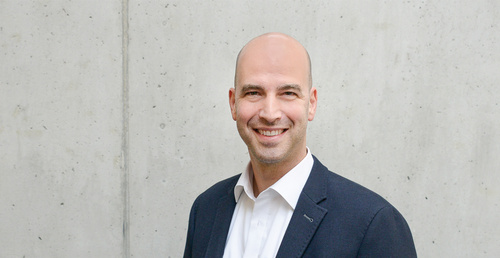
Michael J. Black is a Professor and Director at the Max Planck Institute for Intelligent Systems in Tübingen, Germany, where he leads the Perceiving Systems department and serves as Managing Director . He is also an Honorarprofessor at the University of Tübingen 's Faculty of Science . His career spans roles at Brown University (2000-2010), Xerox PARC, and academic-industry collaborations with Amazon and Meshcapade.
Manuel Kaufmann is a Lecturer in the Department of Computer Science at ETH Zürich. His work focuses on advanced 3D human motion capture, sensor-based systems, and computer vision applications. He is affiliated with the Institute of Informatics (inf.ethz.ch) and contributes to research in real-time motion tracking, dataset development, and machine learning integration for human-robot interaction. Research interests include holistic human-scene reconstruction from monocular videos, gaze estimation using EEG signals, and expressive avatar creation. His projects emphasize practical applications in robotics, sports analytics, and biomedical engineering, often leveraging electromagnetic and inertial sensors for high-precision data acquisition. His publications reflect a trend toward multi-modal data fusion, real-world dataset creation (e.g., WorldPose, ARCTIC), and addressing challenges in loose garment modeling (Reloo). These efforts aim to improve markerless motion capture, crowd analysis, and human-robot collaboration. No scientific awards or grants are explicitly listed. He has no documented advisees, though his research may involve collaborations with students or teams. His office is located at OAT X 23, Andreasstrasse 5, Zürich, Switzerland, and contact details include a phone number and professional email.
Hiroshi Ishikawa is a Professor in the Department of Computer Science and Engineering at Waseda University's Faculty of Science and Engineering. He also serves as a Visiting Professor at the National Institute of Informatics since 2016. Previously, he held positions at Nagoya City University from 2004-2010 as Assistant Professor, Associate Professor, and Professor. His academic journey includes being a JST PRESTO Researcher from 2009-2013 and an Associate Research Scientist at New York University's Courant Institute of Mathematical Sciences from 2000-2001. Ph.D. in Computer Science, New York University (2000) Master of Science, Kyoto University Bachelor's degree in Mathematics, Kyoto University Faculty of Science (1991) Hiroshi Ishikawa's research spans perceptual information processing, computer vision, artificial intelligence, deep learning, and discrete optimization. His work focuses on developing algorithms for image restoration, segmentation, and understanding, with significant contributions to energy minimization techniques in computer vision. He has pioneered approaches in sketch simplification, medical image segmentation, and higher-order graph cuts. His research bridges theoretical advances in mathematical optimization with practical applications in medical imaging, computer graphics, and consumer electronics. Ishikawa's recent publications demonstrate a strong focus on leveraging deep learning for image enhancement and understanding. His work spans super-resolution techniques, colorization methods, human avatar generation, and medical image analysis. A notable trend is the increasing integration of attention mechanisms and generative models to solve complex vision problems, with growing emphasis on real-world applications in medical imaging and computer graphics. His research group consistently produces high-impact work that appears in top-tier computer vision conferences. 75th Annual IEICE Best Paper Award (2019) Innovative Technologies 2016 Special Prize for Culture (Ministry of Economy, Trade and Industry) MIRU Nagao Award (Best Paper Award) (2009) Young Author Award (IEEE Computer Society Japan Chapter, 2006) MIRU2006 Excellent Paper Award (2006) Harold Grad Memorial Prize (Courant Institute of Mathematical Sciences, NYU, 2000) As a professor at Waseda University, Ishikawa has mentored numerous students who have become active researchers in computer vision, including Yuya Masuda, Edgar Simo-Serra, and Satoshi Iizuka. His research has been supported by various grants, including JST PRESTO funding from 2009-2013. He has served on editorial boards for prestigious journals including IEEE Transactions on Pattern Analysis and Machine Intelligence and has held leadership roles in major computer vision conferences such as ICCV, CVPR, and ACCV. Ishikawa leads a vibrant research group at Waseda University focused on computer vision and image processing. His laboratory collaborates extensively with researchers at Nagoya City University, National Institute of Informatics, and international institutions. The group maintains strong connections with industry partners, particularly in medical imaging and consumer electronics sectors, translating theoretical advances into practical applications.
Marc Erich Latoschik is a Professor in the Department of Human-Computer Interaction at the University of Würzburg, Germany. He previously held roles at Bayreuth University, Bielefeld University, and FHTW Berlin. His research focuses on virtual and augmented reality, embodiment, human-computer interaction, and applications in health, education, and social systems. Education: Completed his PhD in 2001 at Bielefeld University with a thesis on multimodal interaction in virtual reality. Research Interests: Embodied interaction, virtual embodiment, presence and plausibility in VR/AR, avatar design, social virtual reality, health applications (e.g., VR therapy for body image issues), and XR security/privacy. Active in developing frameworks like Reality Stack I/O and MAIL for VR/AR research. Key Projects: ViTraS study on body image exercises in VR, avatars for mass use via smartphone reconstruction, and motion-based biometrics in XR. Collaborates with medical teams on cybersickness detection and emergency training simulations. Labs/Teams: Leads research groups on immersive technologies and social VR applications. Involved in interdisciplinary projects combining HCI, AI, and healthcare.
Jiajun Wu is an Assistant Professor of Computer Science and, by courtesy, of Psychology at Stanford University. He holds multiple affiliations including membership in Bio-X, Faculty Affiliate status at the Institute for Human-Centered Artificial Intelligence (HAI), and membership in both the Wu Tsai Human Performance Alliance and Wu Tsai Neurosciences Institute. Dr. Wu earned his Ph.D. and S.M. in Electrical Engineering and Computer Science from the Massachusetts Institute of Technology before joining Stanford. Dr. Wu's research program focuses on creating AI systems that understand and interact with the physical world through the integration of computer vision, machine learning, robotics, and cognitive science. His work emphasizes physics-based modeling combined with deep learning to develop systems capable of perceiving, reasoning about, and predicting physical interactions. Key research areas include 3D scene understanding, neurosymbolic AI approaches, multimodal perception (combining vision, sound, and language), and embodied intelligence for robotics applications. His lab develops novel frameworks that bridge the gap between neural networks and symbolic reasoning to create more interpretable and robust AI systems. Analysis of Dr. Wu's recent publications reveals a strong trajectory toward integrated multimodal understanding for embodied AI. His work increasingly combines vision, sound, and language processing with physical reasoning to create systems that can interact meaningfully with the physical world. There's a clear progression from foundational computer vision research toward practical robotics applications, with significant emphasis on foundation models for robotics, sim2real transfer techniques, and creating comprehensive datasets for embodied AI research. Dr. Wu's exceptional contributions have been recognized with numerous prestigious awards including the NSF CAREER award (2024), Young Investigator Programs from ONR (2024) and AFOSR (2023), the Okawa research grant (2024), and being named to IEEE Intelligent Systems' 'AI's 10 to Watch' (2024). He has received multiple best paper awards at leading conferences including ICRA (2024), SIGGRAPH Asia (2023), and CoRL (2023). Dr. Wu actively mentors a large cohort of students across multiple levels, serving as primary advisor for doctoral candidates, master's students, and numerous independent researchers. His research is supported by substantial funding from major technology companies including Google, Meta, Amazon, Samsung, and J.P. Morgan, as well as government agencies like NSF, ONR, and AFOSR, reflecting the significance and impact of his work in physical AI and multimodal perception systems. Dr. Wu leads a dynamic research group at Stanford that collaborates extensively with the Wu Tsai Neurosciences Institute and Institute for Human-Centered AI. Current projects include developing neurosymbolic models for computer graphics, creating multisensory datasets like OBJECTFOLDER 2.0 for sim2real transfer in robotics, and building foundation models for embodied intelligence that can understand and manipulate objects with human-like physical intuition.
Devi Parikh is an Associate Professor at the School of Interactive Computing, Georgia Institute of Technology, and a Research Director at Meta’s FAIR lab. Her research focuses on generative models, AI for creativity, computer vision, and natural language processing. Education: B.S. in Electrical and Computer Engineering from Rowan University (2005), M.S. and Ph.D. in Electrical and Computer Engineering from Carnegie Mellon University (2007, 2009). Research interests include embodied AI, human-AI collaboration, and creative applications of AI. She has held visiting positions at Cornell, MIT, CMU, and others. Awards include NSF CAREER Award, IJCAI Computers and Thought Award, and multiple fellowships. Led development of Habitat , a platform for embodied AI research, and contributed to the Open Catalyst Project for renewable energy storage.
Nancy Pollard is a Professor at Carnegie Mellon University, affiliated with both the Robotics Institute and the Computer Science Department. Her research focuses on understanding physical interaction with the environment through robotics and computer graphics, particularly in areas like dexterous manipulation, human motion analysis, and soft robotics. She explores how human examples can inform robot control policies and create natural-looking animations. Her work bridges robotics and graphics to solve challenges such as optimizing motion for humanoid robots and improving the realism of animated hands. Key projects include developing fast physically plausible motion techniques, studying hand motion complexity, and creating intuitive tools for modeling hand-object interactions. She also investigates the physical correctness thresholds in graphics and the design of affordable soft robotic hands for real-world applications like agriculture. Recent publications highlight advancements in motion retargeting for anthropomorphic manipulations, co-optimization of soft robotic hand design and control, and frameworks for sensor placement in soft hands. Her research emphasizes human-inspired approaches to robotics and the application of biomechanical insights to improve robotic dexterity. Pollard advises students such as Arjun Lakshmipathy and collaborates on projects involving both academic and industrial applications. Her work has been supported by grants focused on robotics design and simulation-based manipulation capture.
Adam Finkelstein is a Professor in the Department of Computer Science at Princeton University, where he has been a faculty member since 1997. He holds a PhD and Master's in Computer Science from the University of Washington and a dual degree in Physics and Computer Science from Swarthmore College. Finkelstein is renowned for his interdisciplinary work at the intersection of computer graphics, audio processing, and machine learning, and he co-organized the Art of Science exhibition at Princeton. Education: PhD, Computer Science, University of Washington MS, Computer Science, University of Washington BA, Physics and Computer Science, Swarthmore College His research spans audio processing (e.g., speech enhancement, voice conversion, audio metrics), computer graphics (e.g., line drawing algorithms, stylized rendering, image manipulation), and machine learning (e.g., self-supervised learning, differentiable programming). His work often bridges technical and creative domains, exemplified by collaborations at Pixar and Adobe Creative Technologies Lab. Recent publications highlight advancements in audio super-resolution and voice conversion using deep learning frameworks, as well as stylized line rendering for animated 3D models. His contributions to perceptual audio metrics and shader optimization further underscore his impact on human-centric computational systems. Scientific Awards: NSF CAREER Award Alfred P. Sloan Fellowship Fellow of the Association for Computing Machinery (ACM) Finkelstein has secured foundational grants for his research and actively mentors students, though no specific advisees are listed. He also explores collaborative tools for internet music performance, reflecting his broader interest in distributed systems and user interfaces.
Franziska Mueller is a Research Scientist at Google Zurich , specializing in Augmented Perception . Prior to joining Google, she earned her Ph.D. in Computer Science at Saarland University under the supervision of Prof. Dr. Christian Theobalt, focusing on real-time hand reconstruction from RGB and depth images. Ph.D. in Computer Science (2016-2020) at Saarland University Master’s and Bachelor’s in Computer Science at Saarland University Research visits at Stanford University (2018) and Reality Labs Research (2019) Her research emphasizes the integration of model-based techniques and machine learning components for real-time 3D hand pose estimation, occlusion handling, and hand-object interaction tracking. Key contributions include methods for single-camera reconstruction and datasets like HandSeg. Scientific Awards : Dr. Eduard Martin Award (2021) Google PhD Fellowship (2017) Günter-Hotz-Medal (2016) Bachelor Award (2015) Völklinger Abiturpreis (2012)
Hanbyul Joo is an Assistant Professor in the Department of Computer Science and Engineering at Seoul National University (SNU). Prior to joining SNU, he was a Research Scientist at Facebook AI Research (FAIR) in Menlo Park. He completed his Ph.D. in the Robotics Institute at Carnegie Mellon University, working with Yaser Sheikh, and received his M.S. in Electrical Engineering and B.S. in Computer Science from KAIST, Korea. Dr. Joo's educational journey began at KAIST, where he earned both his Bachelor's and Master's degrees. He then pursued his Ph.D. at Carnegie Mellon University's Robotics Institute, completing his dissertation titled "Sensing, Measuring, and Modeling Social Signals in Nonverbal Communication." His doctoral work focused on developing the Panoptic Studio, a unique sensing system with over 500 synchronized cameras for capturing social interactions. Dr. Joo's research primarily focuses on endowing machines and robots with the ability to perceive and understand human behaviors in 3D . His goal is to build "social Artificial Intelligence" that can interact with humans using social signals (body languages). He pursues this direction using data-driven methods where data is collected by measuring the wide spectrum of social signals transmitted during interpersonal social interaction. His research spans computer vision, machine learning, computer graphics, and robotics , with particular emphasis on 3D human pose estimation, human-object interaction, and social signal processing. His recent publications demonstrate a clear trend toward leveraging diffusion models for 3D reconstruction and generation tasks, with a focus on human-centric applications. His work bridges the gap between 2D image understanding and 3D scene reconstruction, often utilizing pre-trained models to overcome data limitations. The research consistently addresses fundamental challenges in understanding human behavior, interaction with objects, and social dynamics in 3D space. Dr. Joo is a recipient of several prestigious awards including the Samsung Scholarship and the CVPR Best Student Paper Award in 2018 . His paper "Total Capture: A 3D Deformation Model for Tracking Faces, Hands, and Bodies" received this honor at CVPR 2018. His research has been widely recognized in top computer vision and AI conferences, with multiple oral presentations at venues like CVPR, ICCV, and ECCV. Dr. Joo actively mentors a large group of students, with approximately 15 current students working toward MS/PhD degrees under his supervision. His lab, the SNU VCLab, focuses on cutting-edge research in computer vision and graphics. He has secured significant research funding through his work, though specific grant details aren't provided on his website. Dr. Joo frequently serves as an area chair for major conferences including CVPR, ICCV, and NeurIPS, demonstrating his standing in the academic community. Dr. Joo leads the SNU VCLab, which has developed several notable datasets and tools including SNU ParaHome, FrankMocap, and the CMU Panoptic Studio Dataset. His lab maintains strong industry connections, with students interning at leading companies like Meta. The lab's research focuses on building the infrastructure and algorithms needed for social AI, with an emphasis on practical applications that can be deployed in real-world settings.
David Salesin is an Affiliate Professor in the Department of Computer Science & Engineering at the University of Washington and a Principal Scientist/Director at Google Research since 2019. He has held academic roles at Cornell University (Visiting Assistant Professor, 1991-92) and guest professorships at Zhejiang University. His career spans academia and industry, including leadership at Adobe's Creative Technologies Lab (2005-17) and Microsoft Research (1999-2005). PhD, Stanford University (1991) Sc.B., Brown University (1983) His research focuses on computer graphics, particularly non-photorealistic rendering, digital typography, color science, and adaptive document layout. He pioneered techniques in image-based rendering, pen-and-ink illustration, and facial animation, with applications in multimedia and user interface design. Article Trends : His work bridges procedural content generation, 3D visualization, and artistic computing, emphasizing user-driven tools for creative industries. Key subfields include texture advection, multiresolution modeling, and real-time camera control for virtual cinematography. Scientific Awards : ACM Fellow (2002) ACM SIGGRAPH Achievement Award (2000) Carnegie Foundation Professor of the Year (1998) NSF Presidential Faculty Fellow (1995-98) Alfred P. Sloan Research Fellowship (1995-97) Numerous industry grants and lab donations He has advised over 30 PhD and Master's students, including leaders at Microsoft, Pixar, and Google. His labs at UW and Adobe focused on graphics, imaging, and creativity tools.
Dr. Xiao Zhou is a Research Fellow affiliated with the Professorship for Consumer Behavior at ETH Zurich. His current position began in 2021. Prior to this, he conducted postdoctoral research at the University of Reading (2020-2021) and completed his PhD in Consumer Behavior at the University of Copenhagen (2015-2019). His research focuses on advancing consumer behavior studies through interdisciplinary approaches, combining insights from marketing, behavioral economics, and human motion analysis. Zhou’s work emphasizes understanding decision-making processes and their applications in real-world contexts. Education history includes a PhD in Consumer Behavior from the University of Copenhagen (2015-2019), followed by postdoctoral training at the University of Reading (2020-2021). His academic trajectory reflects a strong foundation in both theoretical and applied research. His research interests span consumer behavior, marketing research methodologies, and behavioral economics. Notably, his recent publications explore cutting-edge technologies in motion capture and computer vision, including real-time human motion tracking and generative models for 3D reconstruction. This reflects a unique intersection of consumer behavior studies with technical advancements in computational methods. Zhou’s research outputs demonstrate expertise in areas such as inertial sensor-based motion analysis, physics-aware tracking systems, and hierarchical modeling techniques. His contributions highlight innovative solutions for challenges in human pose estimation and 3D reconstruction. He is currently based at ETH Zurich’s Department of Consumer Behavior, contributing to both academic research and potential industrial applications of his work.
Peter Schroeder is the Shaler Arthur Hanisch Professor of Computer Science and Applied and Computational Mathematics at the California Institute of Technology (Caltech). He holds a B.S. from the Technical University of Berlin (1987), M.S. from MIT (1990), M.A. and Ph.D. from Princeton University (1992–1994). His academic roles at Caltech include Assistant Professor (1995–1998), Associate Professor (1998–2001), Professor (2001–2013), and Hanisch Professor since 2013. He served as Division Deputy Chair (2012–2015) and Acting Director of the Center for Advanced Computing Research (2013–2014). Schroeder’s research focuses on numerical algorithms for computer graphics, geometric modeling, and physical simulation. His work emphasizes Discrete Differential Geometry, rebuilding classical differential geometry for computational applications. Key areas include cloth deformation, fluid dynamics, and vortex simulations. Notable contributions include 'Schrödinger’s smoke' and fluid visualization techniques using Clebsch maps. His publications span ACM Transactions on Graphics and address topics like constrained Willmore surfaces, filament-based plasma models, and shape reconstruction from metrics. He has received the ACM Fellowship and Best Paper in Geometry Processing Award. His research often bridges computational mathematics with artistic and engineering challenges, such as simulating ink chandeliers and solar flares. Schroeder’s academic leadership includes co-founding the ACM SIGGRAPH Academy and mentoring students like James R. McLaughlin and Yanke Song, both recipients of the Henry Ford II Scholar Award.
Kayvon Fatahalian is an Associate Professor in the Department of Computer Science at Stanford University. His research focuses on real-time graphics, high-efficiency simulation engines for entertainment and AI, and large-scale image/video analysis platforms. He explores intersections of computer graphics, machine learning, and high-performance computing to advance systems for interactive applications and AI-driven tasks. His work includes innovations in rendering pipelines, embodied AI simulations, and generative models for 3D content creation. Recent projects address challenges in multi-agent systems, motion synthesis, and scalable rendering architectures. Fatahalian’s contributions span technical systems, algorithmic frameworks, and foundational research in graphics and AI. Notable areas of exploration include: Real-time rendering optimizations for complex scenes AI-driven motion and style generation from sparse inputs Efficient simulation frameworks for deep reinforcement learning Weak supervision techniques for rare category detection His publications emphasize practical systems with theoretical grounding, often bridging hardware/software co-design principles with modern AI methodologies. Current work includes developing agile hardware accelerators and scalable architectures for next-generation interactive systems.
Fernando De la Torre is a Courtesy Professor in the Department of Electrical and Computer Engineering at Carnegie Mellon University, with an affiliation to the Robotics Institute where he has been a research faculty member since 2005. He holds a Ph.D. in Electronic Engineering from Ramon Llull University (2002). His research focuses on machine learning and computer vision, with applications in human health, augmented/virtual reality, generative models, and data-centric methodologies. He directs the Human Sensing Laboratory, which explores technologies for human behavior analysis and health monitoring. Notable contributions include founding FacioMetrics LLC (acquired by Meta), advancing facial recognition and 3D human digitization, and developing frameworks for robust visual models. His work bridges theory and practice, with over 225 peer-reviewed publications and editorial roles, including Associate Editor for IEEE Transactions on Pattern Analysis and Machine Intelligence. Recent research trends emphasize generative AI applications in satellite imagery analysis, VR/AR rendering optimizations (e.g., Gaussian splatting), and clinical motion recognition for healthcare. His projects often intersect with industry, addressing challenges in wearable health monitoring and immersive technologies. His lab collaborations span academia and industry, focusing on scalable solutions for 3D human modeling, adversarial robustness, and multimodal data fusion. Key achievements include pioneering work on 3D face animation from speech and garment reconstruction from single images.