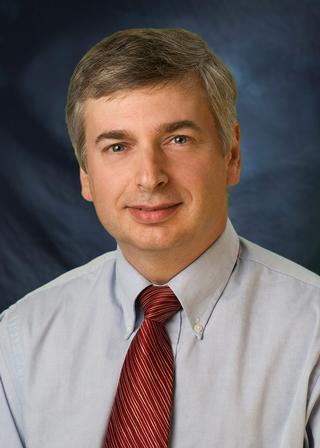
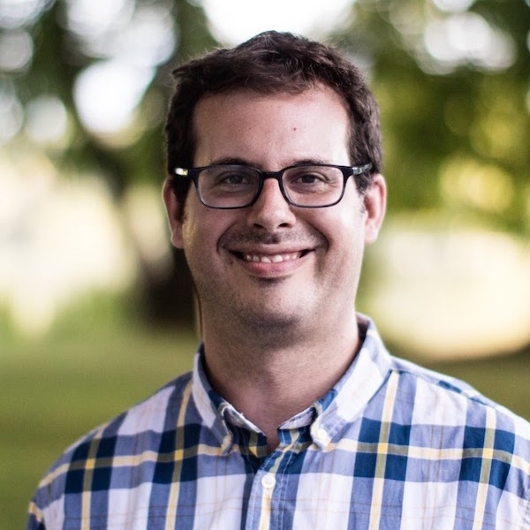
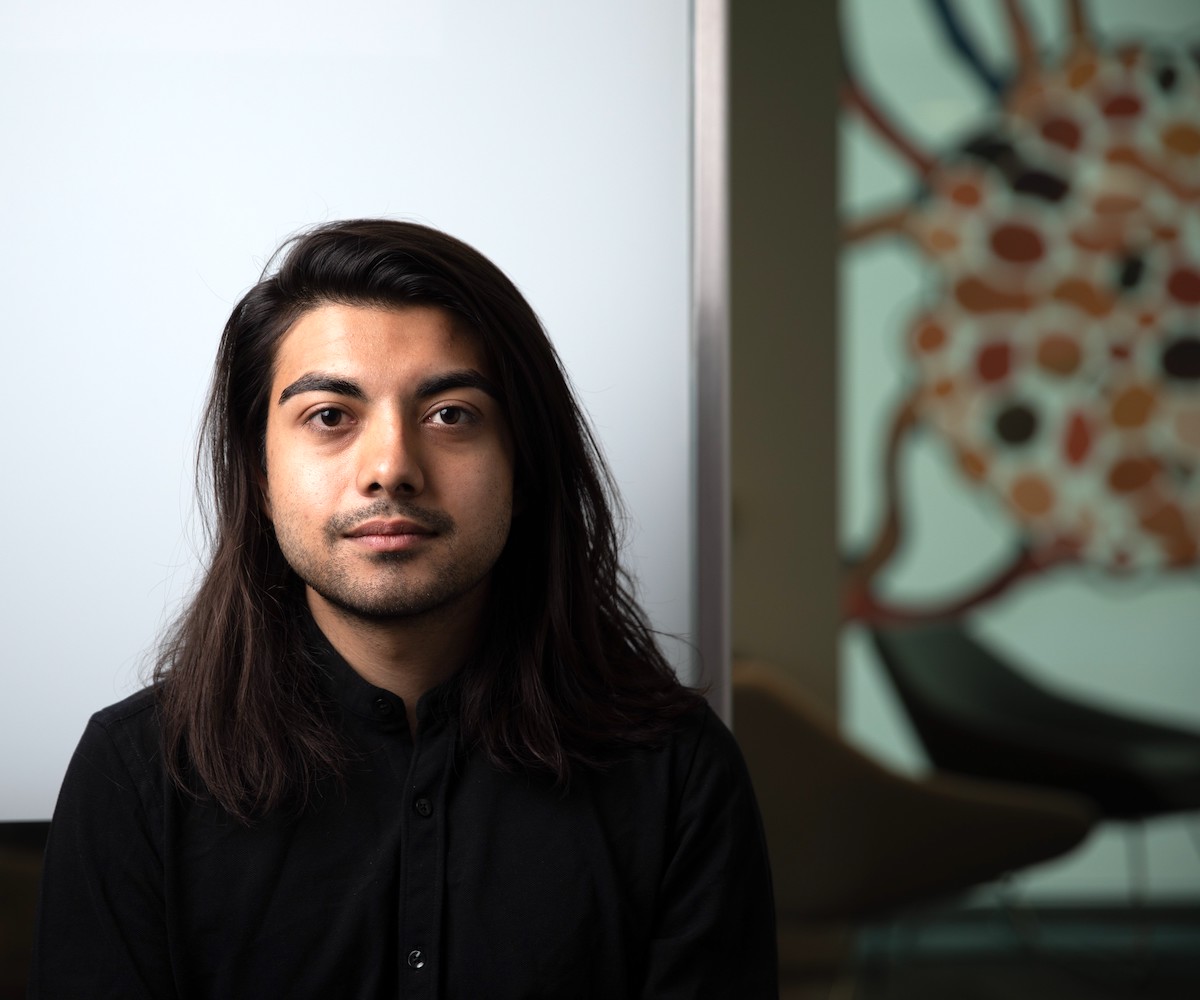
Laura M Shannon is an Associate Professor in the Department of Horticultural Science at the University of Minnesota (UMN). Her work focuses on potato breeding, genetics, and genomics, with emphasis on climate resilience and agricultural sustainability. She leads multiple research projects in collaboration with institutions like USDA, North Dakota State University, and Michigan State University. Key research areas: Potato Breeding Polyploid Genetics Genomic Tools Development Microbiome-Host Interactions Agricultural Technology Current projects include: Blackspot Bruise Resistance Breeding Rhizosphere Microbiome Dynamics Pangenome Development for Crop Plants Seed Tuber Physiological Age Studies Fresh Market Potato Variety Creation Her research aligns with UN Sustainable Development Goals for zero hunger and climate action through crop improvement initiatives.
Frederick Kingdom is a Senior Scientist at the McGill Vision Research unit within the Research Institute of the McGill University Health Centre (RI-MUHC), Montreal General Hospital site. He holds the academic rank of Professor in the Department of Ophthalmology and Visual Sciences at McGill University 's Faculty of Medicine and Health Sciences. His research focuses on bridging local feature detection (edges, bars, surface markings) with intermediate visual processing that forms contours, textures, and surfaces. Key domains include spatial vision , color vision , stereopsis , binocular vision , and transparency perception , combining psychophysical methods with natural scene image analysis and mathematical modeling . Recent publications explore stereoscopic depth adaptation , color-enhanced edge classification , co-circularity in texture , and binocular contrast adaptation . His work appears in journals like Vision Research and PLoS Computational Biology . Kingdom's lab maintains the Palamedes Toolbox for psychophysical data analysis. He investigates perceptual mechanisms in contexts ranging from 2D visual illusions to 3D environmental interpretation , with ongoing projects examining visual biases (e.g., falling objects) and contextual modulation in neural coding.
Anna-Kaisa Kaila is a Doctoral student and Researcher at KTH Royal Institute of Technology working within the Division of Media Technology and Interaction Design. She holds dual expertise as a musicologist (MA) and economist (M. Sc. Econ.), specializing in arts, communications, and intellectual property. Her interdisciplinary PhD project, part of the Wallenberg AI, Autonomous Systems and Software Program – Humanities and Society, examines artificial intelligence's social, ethical, and legal implications on artist communities. Dr. Kaila's research spans several interconnected domains: Socio-political effects of technology on creative and cultural sectors Ethics and aesthetics of creative-AI systems Copyright frameworks applied to AI-generated art Shifting narratives of creativity in the AI era Music semiotics and psychology regarding listeners' visual imagery She has developed innovative methodological tools including the Ethically Aligned Stakeholder Elicitation (EASE) framework for ethical analysis in music AI applications. Her work engages directly with artists using AI in creative work and provides critical analyses from humanist, social science, and legal perspectives. Her recent publications reveal significant tensions around environmental sustainability, data colonialism, and evolving notions of artistic authorship. Dr. Kaila actively contributes to academic discourse through: Teaching courses including Degree Project in Media Technology, Human Perception for Information Technology, and Machine Learning for Media Technology Supervising Bachelor and Master's thesis projects on creative-AI, AI-music, arts and media, and AI ethics Organizing influential workshops such as 'Fictional Abstracts: Ethics, Sustainability, and Creative-AI Futures' at ICCC '23 Moderating panel discussions on AI and Music at venues like the Museum of Artificial Intelligence in Stockholm Contributing to media discussions, including features in Opus Magasin, a prominent classical music magazine
Niels Pinkwart is a Professor at Humboldt University of Berlin within the Faculty of Mathematics and Natural Sciences and Institute of Computer Science, serving as Member of the Faculty Council. His research group focuses on Computer Science and Society and Computer Science Didactics, developing AI-driven educational solutions for diverse learning contexts including vocational training, language acquisition, and autism support. His research centers on human-centered AI in education, with emphasis on adaptive learning systems, creativity assessment in programming environments, and inclusive technologies. Recent work examines physical embodiment in educational robots, bias mitigation in assessment algorithms, and neural engagement patterns in VR learning for neurodiverse populations. He investigates how multimodal feedback systems and LLM integration can enhance language learning while maintaining pedagogical alignment. Current publications reveal a strong trend toward practical AI implementation in real-world educational settings, particularly in vocational contexts and global health education. His team develops deployable tools like the AI Campus 2.0 platform and Zirkus Empathico 2.0 game, with increasing focus on ethical AI deployment and cross-cultural applicability as evidenced by Nigeria-based healthcare studies. The research consistently bridges theoretical frameworks with classroom-ready applications. Professor Pinkwart supervises doctoral candidates including Heinrich Mellmann, Kerstin Wagner, Gregor Wrobel, and Michael Piechotta, with disputation dates scheduled through late 2025. His work receives funding through collaborative projects like the Verbundprojekt KI-Campus 2.0, where HU Berlin leads the platform development component. The research group maintains strong industry and international healthcare partnerships, particularly in digital transformation initiatives for resource-constrained environments. He directs development of specialized educational technologies including sound-driven robot quiz systems with fair responder detection and multimodal feedback, alongside serious games for social-emotional development in autism. Current lab activities focus on scaling bias-mitigated exam assembly tools for vocational education while expanding VR-based cognitive engagement metrics across neurodiverse populations.
David A. Shrier is a Clinical Professor at the University of Rochester School of Medicine and Dentistry , affiliated with the Department of Imaging Sciences . With a career spanning decades, he has contributed extensively to Medical Imaging , particularly in Neuroradiology and Diagnostic Radiology through research, teaching, and clinical practice. MD from Yale University School of Medicine (1984) Residency in Diagnostic Radiology (University of Rochester, 1985-1989) Fellowship in Neuroradiology (Brigham & Women's Hospital, 1989-1990) His research focuses on Central Nervous System Imaging , where he developed innovative techniques in Diffusion-Weighted MRI , Magnetic Resonance Angiography , and CT Angiography . His work explores vasculopathies , neurodegenerative patterns , and inflammatory CNS disorders , with recent applications to pandemic response radiology . His 45+ publications demonstrate a long-standing commitment to imaging technology validation and clinical translation , including methodological advances in ground-glass nodule tracking , vascular occlusion assessment , and pediatric airway imaging . Current research is centered on contrast-enhanced MRA techniques for improved vascular diagnostics. 1998: American Medical Association's Physician's Recognition Award 1981: Short Term Research Training Award 1981: UCLA Medical Center Auxiliary Scholarship 1980: Magna Cum Laude 1980: Sigma Xi Scientific Research Society 1979: Tau Beta Pi National Engineering Honor Society Dr. Shrier's expertise spans both clinical imaging and academic research , with board certifications in Diagnostic Radiology and Neuroradiology . His professional affiliations include the American Society of Spine Radiology , American College of Radiology , and Radiological Society of North America , reflecting his multidisciplinary contributions to medical imaging.
Anu Bourgeois is an Associate Professor in the Department of Computer Science at Georgia State University. She holds a Ph.D. in Electrical and Computer Engineering from Louisiana State University. Her research spans health informatics, security and privacy, wireless and sensor networks, and computer science education. Dr. Bourgeois has served as general co-chair for the IEEE International Parallel and Distributed Processing Symposium (2020, 2023) and program co-chair for the IEEE International Conference on Internet of Things (2019). Her technical contributions include developing energy-efficient MAC protocols for sensor networks, privacy protection frameworks for context-aware services, and mobile health interventions for opioid use disorder. In computer science education, she explores bridge programs for underrepresented groups, TA training methods, and visualization of career pathways. Current projects include cosmic ray detection systems, natural language-controlled UAVs, and animation workflow innovations.
Elena Bray Speth is a Professor in the Department of Biology at Saint Louis University's College of Arts and Sciences. She specializes in biology education research, focusing on active-learning pedagogical strategies in large-enrollment introductory courses. Education: Ph.D. from Michigan State University Her research explores systems thinking assessment through student-generated models, gene-to-phenotype relationships, and evolutionary reasoning integration. The Bray Speth group includes graduate and undergraduate researchers working on these pedagogical innovations. Recent publications highlight her work in systems thinking unification (2022), classroom modeling visibility (2020), and self-regulated learning strategies (2017). She also contributes to quantitative literacy integration in biology curricula. Contact: Macelwane Hall, 3507 Laclede Ave., St. Louis, MO 63103. Email: elena.brayspeth@slu.edu
Rhonda McEwen is a Professor at the University of Toronto Mississauga, holding roles as Vice-Principal Academic and Dean, and Director of the Institute of Communication, Culture, Information and Technology (ICCIT). She also serves as President and Vice-Chancellor of Victoria University. Her academic journey includes degrees from the University of Toronto (PhD, Information), University of Colorado (MSc, Telecommunications), and City University London (MBA, Information Technology Management). Her research focuses on Human-Machine Communication, cognitive effects of technology, and tactile interfaces. Notable projects include studies on eye-gaze technology for children with communication disorders, VR's impact on learning, and trust dynamics in human-robot interactions. Her work has been featured on CBS's 60 Minutes and in journals like Information, Communication & Society and New Media and Society . McEwen leads initiatives such as the Schwartz Reisman Institute and has secured grants totaling over $1.5 million. She advises students like Yaxi Zhao and Ethan Rong. Her awards include the Canada Research Chair Tier 2 and a Prime Minister’s Award for Excellence in Teaching (via the Touch Technologies project). Her research explores technology’s societal implications, bridging communication studies, behavioral sciences, and applied technology. She emphasizes ethical AI, inclusive design, and technology’s role in education and healthcare.
Michael Cowling is an Adjunct Professor in Education / ICT at Central Queensland University (CQU), having joined CQU in 2025 after moving from a previous institution. He currently serves as President (2024-2025) of the Australasian Society for Computers in Learning in Tertiary Education (ASCILITE) and Vice-President of the Open Access Publishing Association (OAPA), with over 20 years of leadership in educational technology. His research is anchored in the principle 'pedagogy before technology,' emphasizing thoughtful integration of digital tools to enhance learning outcomes. Key focus areas include: Mixed reality applications for experiential learning in health sciences and paramedic education Mobile learning technologies for distance education Digital literacy frameworks across K-12 and higher education contexts Generative AI implications for teaching, learning, and academic integrity Learning analytics for secure assessment environments Recent publications reveal a strategic pivot toward artificial intelligence in education, particularly examining generative AI's impact on stakeholder dynamics in higher education. His work consistently bridges theoretical frameworks with practical implementations, especially in visualization techniques for complex subjects through augmented reality and 3D printing. Dr. Cowling's contributions have been recognized through: Universities Australia 2020 AAUT Award for Teaching Excellence (Physical Sciences & Related Studies) Fellowship of the Australian Computer Society (ACS) Senior Fellowship of the Higher Education Academy (Advance HE UK) His leadership in ASCILITE and OAPA demonstrates active engagement in shaping educational technology policy and practice. Collaborative projects with international researchers like J Birt, Robert Vanderburg, and Thomas Cochrane highlight his commitment to cross-institutional knowledge exchange, though specific grant details and student advising records remain undocumented in available sources.
Jeffrey M. Zalc is an Adjunct Professor in the Department of Chemical and Biological Engineering at Illinois Institute of Technology (Illinois Tech), affiliated with the Armour College of Engineering. He has been teaching courses on chemical plant design, process simulation, and energy-economics interrelationships since 2015. Zalc holds a B.S. (1995, Magna Cum Laude), M.S. (1998), and Ph.D. (2000) in Chemical Engineering from Rutgers University, followed by postdoctoral research at the University of California, Berkeley (2003–2004). His research focuses on process modeling for refining operations, computational fluid dynamics (CFD) in mixing systems, catalysis for fuel processing, and advancing chemical engineering education. He is a licensed professional engineer in Illinois and a Principal Engineer at bp’s Solutions group, where he develops detailed refining process models for optimization and decision-making. Zalc has been recognized with the Hamid Arastoopour Excellence in Teaching Award (2021–2022 and 2024–2025) and was elected a Fellow of the American Institute of Chemical Engineers (2022). His work bridges academia and industry, emphasizing practical applications of fluid dynamics, catalysis, and sustainable energy systems.
Joseph Jewell is an Associate Professor of Aeronautics and Astronautics at Purdue University, courtesy-affiliated with the School of Mechanical Engineering. His research focuses on hypersonic aerodynamics, boundary-layer instabilities, and flow control in high-speed regimes. He leads experimental and computational studies utilizing advanced diagnostics such as focused laser differential interferometry and pressure-sensitive paint in facilities like the Boeing-AFOSR Mach-6 Quiet Tunnel. Key areas include separation bubbles, transition prediction, and hypersonic vehicle inlet design. His work addresses challenges in thermal protection systems, shock-wave interactions, and environmental impacts of hypersonic flight. Research interests span experimental and numerical analysis of hypersonic flows, with emphasis on quiet flow conditions to isolate fundamental instability mechanisms. He collaborates on projects related to HIFiRE flight experiments and advanced materials for hypersonic applications. His contributions bridge computational models with empirical data to advance understanding of hypersonic aerodynamics. Recent studies include investigations into ice crystal impacts on hypersonic vehicles, porous material effects on boundary-layer stability, and the dynamics of internal waverider inlets. His work has implications for next-generation hypersonic propulsion systems and reentry vehicles.
Dennis P.M. van Gils is an academic researcher at the University of Twente, affiliated with the Department of Physics. His work focuses on fluid dynamics, particularly in rotating turbulent convection, heat transfer in bubbly flows, and experimental fluid mechanics. He has collaborated extensively with researchers like Eberhard Bodenschatz and Detlef Lohse. His contributions include the development of the Twente mass and heat transfer water tunnel, enabling studies of multiphase flows. Van Gils has also authored the opensimplex-loops Python library for generating seamless noise patterns, used in animation and texture generation. His research spans experimental and computational studies, with notable publications in Journal of Fluid Mechanics and Physical Review Letters . Collaborations include investigations into Rayleigh-Bénard convection and pseudo-turbulence in bubbly flows. He holds an ORCID identifier (0000-0002-2956-6724) and has contributed to open-source software in computational physics.
Nicholas Diakopoulos is a Professor in Communication Studies and Computer Science (by courtesy) at Northwestern University. He directs the Computational Journalism Lab and serves as director of Graduate Studies for the Technology and Social Behavior PhD program. His research focuses on computational journalism, including algorithmic accountability, automation in news production, and social media's role in news dissemination. He authored the award-winning book Automating the News: How Algorithms are Rewriting the Media (Harvard UP, 2019). Education: PhD in Computer Science, Georgia Institute of Technology MS in Computer Science, Georgia Institute of Technology Sc.B. in Computer Engineering, Brown University Research Interests: Diakopoulos explores how algorithms shape news creation and consumption, emphasizing transparency and ethical AI integration. His work addresses challenges like algorithmic bias, generative AI in newsrooms, and regulatory frameworks for emerging technologies. He advocates for participatory approaches to mitigate AI risks and enhance societal impact assessments. Labs/Teams: Directs the Computational Journalism Lab and contributes to the Center for Human-Computer Interaction + Design . His interdisciplinary approach bridges computer science, media studies, and design. "My work seeks to empower journalists and audiences through critical engagement with algorithms while fostering responsible innovation in media technology."
Dr. Richard Ramsey is a Lecturer at the Department of Health Sciences and Technology at ETH Zürich. His research focuses on social cognition, cognitive control mechanisms, and the intersection of artificial intelligence with human behavior. He teaches courses like 'The Social Brain: Critical Perspectives on Science, Society and Neurodiversity.' Key research areas include neurophysiological correlates of imitation, AI ethics, loneliness in neurorehabilitation contexts, and methodological advancements in psychological data analysis. His work often employs computational models and neuroimaging techniques to explore decision-making processes and social perception. Developed Bayesian methods for analyzing time-to-event data in psychological studies Investigated anthropomorphic perceptions of humanoid robots Explored how art education impacts aesthetic and cognitive functions No scientific awards are explicitly listed in the provided materials. His academic contributions span experimental psychology, neuroscience, and interdisciplinary applications of cognitive science.
Advait Sarkar is an Affiliated Lecturer at the University of Cambridge's Department of Computer Science and Technology, and an Honorary Lecturer at University College London. He is also a researcher at Microsoft. His primary research focuses on human-AI interaction, spreadsheet systems design, and the societal impacts of generative AI. He has contributed to major software products including Excel's dynamic arrays and Copilot features. Research interests include: - End-user programming and spreadsheet innovation - Human-AI collaboration ethics - Generative AI's cognitive and organizational effects - Data visualization tools like fault pattern analyzers - Interaction design for intelligent systems His work combines academic rigor with industry application, including a landmark study on remote work during the pandemic influencing Microsoft Teams development. He has advised governments on tech policy and has published extensively on spreadsheet error mitigation, AI explainability, and creativity in distributed work environments.