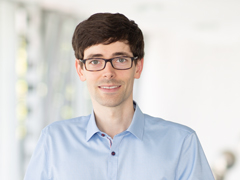
Shuangyou Zhang is a Senior Scientist at the Max Planck Institute for the Science of Light, specializing in optical frequency combs, integrated photonics, and quantum optics. His work focuses on chip-scale atomic clocks, two-photon transitions for optical frequency standards, and dispersion engineering in microresonators. Education Bachelors in Electronics, Jilin University PhD in Electronics, Peking University Research Trends Analysis of his publications reveals expertise in soliton microcombs, Kerr symmetry breaking, Brillouin scattering, and silicon nitride-based photonic devices. His work spans nonlinear optics, photonic integrated circuits (PICs), and applications in sensing and optical computing. Labs & Collaborations He is affiliated with the Max Planck Institute for the Science of Light, which explores quantum optics, nanophotonics, and light-matter interaction.
C. Garcia Sanchez is a researcher at Delft University of Technology within the Architecture and the Built Environment school, specializing in Urban Data Science. Their work bridges computational fluid dynamics, urban microclimate modeling, and building energy systems through advanced data-driven approaches. Education includes a PhD in Physics from von Karman Institute for Fluid Dynamics and Antwerp University (2017), a Research Master in Fluid Dynamics from von Karman Institute (2012), and an Aerospace Engineering degree from Universitat Politécnica de Valencia (2011). Postdoctoral research was conducted at Carnegie Institution for Science. Research focuses on urban data science with emphasis on High-fidelity computational fluid dynamics for urban environments Synthetic data generation for turbulence modeling Integration of building energy models with urban canopy systems Automated 3D building reconstruction for microscale simulations Recent publications demonstrate expertise in creating efficient simulation workflows that address urban ventilation, climate resilience, and energy efficiency challenges. Awarded the Outstanding Paper Award for 3D Processing & Visualization (2021) for contributions to urban simulation techniques. Research outputs include 19 publications, 3 datasets, and media coverage of digital twin applications for heatwave response. Active in supervising research projects and developing computational tools for urban science, with recent work featured in Computers and Fluids, SoftwareX, and Building and Environment. Current projects involve creating high-resolution urban models that integrate meteorological data with human behavior simulations during extreme weather events.
Adrian Staub is a Professor in the Department of Psychological and Brain Sciences at the University of Massachusetts Amherst. He directs the UMass Eyetracking Laboratory and focuses on psycholinguistics, particularly the cognitive processes underlying language comprehension and production. His work frequently employs eye-tracking methodologies to investigate syntactic parsing, word recognition, and predictability effects in reading. PhD in Psychological and Brain Sciences (2008), University of Massachusetts Amherst Research Interests Staub's research spans psycholinguistic theory, eye movement analysis during reading, and methodological issues in psychological science. He studies how readers process syntactic structures, recognize words, and integrate predictability information. His recent work includes investigations of function word errors in reading, statistical power in language research, and the theoretical foundations of the replication crisis in psychology. Recent Publications His publications examine phenomena such as the 'Sentence Superiority Effect,' the effects of predictability on lexical processing, and methodological challenges in eye-tracking research. These studies span diverse topics including cross-linguistic comparisons (e.g., Italian, French, Chinese), computational modeling of reading processes, and theoretical debates in psycholinguistics. Academic Roles Since January 2023, Staub has served as Editor-in-Chief of the Journal of Memory and Language . He has also acted as guest editor for a special issue on eye movements in reading at 50. His teaching includes graduate seminars on the replication crisis and undergraduate courses on the psychology of reading. International Collaborations Staub has held visiting appointments at institutions including the Labex EFL Project in Paris, the University of Salzburg, and the University of Milan-Bicocca. These roles reflect his engagement in international research networks focused on reading cognition and eye-tracking methodologies.
Alexei (Alyosha) Efros is a Professor in the Department of Electrical Engineering and Computer Sciences at the University of California, Berkeley, where he holds the Howard Friesen Professorship and is a core member of the Berkeley Artificial Intelligence Research Lab (BAIR). Prior to joining UC Berkeley in 2013, he spent a decade as faculty at Carnegie Mellon University and maintained affiliations with École Normale Supérieure/INRIA and the University of Oxford. His educational background includes: PhD in Computer Science, University of California, Berkeley (2003) BS in Computer Science, University of Utah (1997) Efros's research fundamentally explores how machines can understand and recreate the visual world using vast unlabeled data, with pioneering contributions at the intersection of computer vision and computer graphics. He champions data-driven and self-supervised learning approaches, emphasizing slow science principles while advancing applications in computational photography, visual data mining, robotics, and interdisciplinary humanities projects. His work consistently bridges theoretical innovation with practical impact, as evidenced by his prolific publication record and industry collaborations. Analysis of his 2024-2025 publications reveals three dominant trajectories: 1) Generative model interpretability (CLIP analysis, diffusion model auditing), 2) 3D scene understanding through novel representations (Gaussian splatting, persistent state modeling), and 3) Self-supervised techniques for video and multiview consistency. These threads demonstrate his lab's strategic focus on making generative systems more controllable, interpretable, and spatially coherent while maintaining strong connections to human vision principles. His exceptional contributions have been recognized with: ACM Prize in Computing (2016) Five ICCV Helmholtz Test-of-Time Prizes (1999-2017) SIGGRAPH Significant New Researcher Award (2010) NSF CAREER Awards (2006, 2010) Multiple teaching honors including the Jim and Donna Gray Award (2023) As a dedicated mentor, Efros has advised 19 PhD students to completion (including current faculty at CMU, TTIC, and Stanford) and numerous MS/BS researchers, with his trainees consistently securing prestigious fellowships and industry positions. His research has been supported by sustained NSF funding, industry partnerships with Adobe and NVIDIA, and collaborative grants through BAIR's multi-institutional initiatives. The lab maintains active international collaborations with Oxford, École Normale Supérieure, and leading AI institutes worldwide. His research group operates within BAIR's collaborative ecosystem, featuring dedicated computational resources for vision and graphics research. The lab emphasizes interdisciplinary teamwork, regularly partnering with robotics and cognitive science researchers to explore human-AI visual interaction. Current projects focus on foundational challenges in visual representation learning, with increasing emphasis on ethical AI development and societal impact through initiatives like visual data attribution frameworks.
Dominik Daube is a postdoctoral researcher at the University of Erfurt within the Institute for Planetary Health Behavior (IPB) . He serves as a research assistant in the HEATCOM project funded by Germany's Federal Ministry of Health, investigating heat-related citizen behavior and planetary health. As a Researcher , he contributes to the Health Communication Section of the German Society for Journalism and Communication Studies (DGPuK) as First Mid-Level Speaker, and participates in the Erfurt Open Science Initiative (EFOSI) . Education: 2024 Dr. of Health Communication, Friedrich Schiller University Jena 2019 MA in Health Communication, University of Erfurt 2017 BA in Communication Studies (major) with Political Science and Law (minor), University of Erfurt His research focuses on health-related behavioral research with planetary health applications. Recent publications examine dementia care decision-making , shared responsibility attribution , and digital nudge interventions for healthier choices. Professional experience includes roles at: Friedrich Schiller University Jena (2019-2023) as Research Associate Institute of General Medicine, Jena University Hospital (2023) Teaching positions in eHealth & Communication programs Scientific awards include the 2022 German Congress of Healthcare Research Scholarship . He has presented at international conferences including ICA, ECREA, and European Conference on Health Communication.
Tristan B. Taylor is a Lecturer in the Department of English at the University of Saskatchewan, specializing in Medieval Literature , Digital Humanities , and Book History . He holds a PhD in English (2023) from the University of Saskatchewan, with a thesis focused on Thomas Becket in the South English Legendaries, and an MA in Medieval and Early Modern Studies (2015) from the University of Kent. PhD, English, University of Saskatchewan (2023) MA, Medieval and Early Modern Studies, University of Kent (2015) BA, English, University of Calgary (2014) Taylor’s research bridges medieval manuscript studies with digital textual analysis , emphasizing reader engagement and materiality. His recent publications explore computational methods in editing religious texts, AI applications in poetry analysis, and collaborative digital transcription projects during the pandemic. He teaches undergraduate courses in literature and composition, including ENG 111: Reading Poetry and RCM 200: Effective Professional Communication . Taylor has contributed to open-access datasets and digital tools like Adnoto for text annotation, though no formal scientific awards or advisees are currently documented.
Dr. John W. Schwieter is Professor of Psychology, Linguistics, and Spanish at Wilfrid Laurier University in Waterloo, Ontario, Canada. He holds cross-appointments across multiple departments and serves as Director of the Language Acquisition, Multilingualism, and Cognition Laboratory and Bilingualism Matters @ Laurier. Additionally, he maintains an adjunct position as Professor of Linguistics at McMaster University in Hamilton, Ontario. Dr. Schwieter earned his PhD from Florida State University, an MBA from the University of Wisconsin MBA Consortium, and both his MSEd and BA from Western Illinois University. His academic background reflects a distinctive interdisciplinary approach that bridges psychology, linguistics, and business perspectives to examine language cognition. His research program investigates how humans learn and process multiple languages and the resulting effects on general cognition and executive functioning. Key areas include bi-/multilingualism, language acquisition, neurolinguistics, psycholinguistics, and translation/interpreting cognition. His laboratory conducts psychological and behavioral experiments to understand how multiple language systems interact within a single mind, employing methodologies including EEG, fMRI, and computational modeling. Dr. Schwieter's recent publications demonstrate a sophisticated integration of theoretical frameworks across disciplines, with particular emphasis on bilingual language control mechanisms, cross-language activation phenomena, virtual reality applications in language learning, and the cultural dimensions of language acquisition. His work consistently advances methodological approaches in the field while addressing practical implications for language education. Significant research funding includes: Principal Investigator of Bilingualism Matters in the Waterloo Region and Canada (SSHRC Partnership Development Grant, 2019-2022, $199,678) Co-Principal Investigator of Language experience and linguistic skills among multilinguals in higher education (SSHRC Insight Development Grant, 2018-2020, $74,990) Collaborator on Words in the World (SSHRC Partnership Grant, 2016-2022, $2,499,832) Dr. Schwieter serves in prominent editorial roles as Executive Editor of Bilingual Processing and Acquisition (John Benjamins), Editor-in-Chief of Ampersand (Elsevier), and Co-Editor of Cambridge Elements in Second Language Acquisition (Cambridge University Press), significantly shaping scholarly discourse in the field. Through Bilingualism Matters @ Laurier, he actively engages with the community to translate research findings into practical applications that promote understanding of bilingualism and multilingualism across the lifespan.
Kenichi Asai is a Professor in the Department of Information Science, Faculty of Science at Ochanomizu University . His research focuses on functional programming languages, type systems, and program analysis tools. Research Interests: Partial evaluation, continuations, reflection, type debugging, and algebraic effects. Projects: Developed the OCaml Type Debugger to improve error messages through interactive debugging. Conference Involvement: Active in PEPM, ICFP, and ML workshops as author, session chair, and committee member. The articles analyzed show expertise in type theory , continuation handling , and functional language design across OCaml and its extensions. Keywords include type debugging , metaOCaml , and algebraic effects . Scientific Awards: Peter Landin Prize (2013) for "An Embedded Type Debugger" Students: Collaborated with Yuki Ishii and Kanae Tsushima on type systems and functional programming education.
Michael Madary is an Associate Professor and Department Chair in the Department of Philosophy at the University of the Pacific. He holds a PhD in Philosophy from Tulane University (2007), an MA in Philosophy/Cognitive Science from the University of Houston (2003), and a BA in Philosophy from the University of Dallas (1999). Education PhD, Philosophy, Tulane University, 2007 MA, Philosophy / Cognitive Science, University of Houston, 2003 BA, Philosophy, University of Dallas, 1999 Research Interests Madary's research spans the philosophy of mind, ethics of emerging technology, and philosophy of perception using an interdisciplinary approach integrating psychology, neuroscience, and history of philosophy. He co-authored the pioneering Code of Ethics for Virtual Reality (2016), covered by major media including The New Yorker and The Guardian, and authored Visual Phenomenology (MIT Press, 2017). Current work explores technology's impact on human cognition and agency through experiential learning frameworks. Publication Trends His recent publications (2023-2016) reveal sustained focus on virtual reality ethics, illusion of agency in human-computer interaction, and Husserlian phenomenology applied to technology. Key themes include mediated reality, cognitive technology ethics, and perceptual abnormalities, consistently bridging theoretical philosophy with practical technological concerns. Professional Impact Madary co-founded the first VR ethics code with Thomas Metzinger, influencing industry standards and generating international media discourse. His public engagement includes CBC Radio interviews and podcasts like Overthink and 88 Names, addressing virtual reality's societal implications and therapeutic potential.
Drew Margolin is an Associate Professor in the Department of Communication at Cornell University. His research investigates the dynamics of collective communication behavior through quantitative analysis of digital discourse, focusing on accountability, credibility, and legitimacy in social networks. Doctorate from University of Southern California (2012) Bachelor of Arts from Yale University (1996) Appointed at Cornell University, NY Contact: 472 Mann Library Building, Ithaca, NY 14853 Email: dm658@cornell.edu His work explores: Social structural conditions for reason-based responses to facts Semantic signatures of coordinated misinformation campaigns Evolution of communication during unpredictable events Integration of computational methods into communication research Temporal analysis of information production dynamics Visual analytics of health-related discourse Recent research trends show growing focus on: Algorithmic impacts on health communication Political polarization in scientific discourse Temporal patterns in misinformation spread Visual analysis of social media content Equity implications of digital platforms Normative communication in networked environments
Sun-Jeong Kim is a Professor at the Department of Computer Science within the School of Computer Science at Korea University . Her research focuses on real-time rendering techniques, GPU programming, and game engine optimization. Specializes in procedural modeling and interactive visualization Develops efficient rendering algorithms for virtual reality Active in graphics hardware acceleration and collision detection Her research has produced 15+ publications on topics including tessellation strategies, skeletal animation systems, and particle effect optimizations. While specific awards and students aren't detailed in the current text, her work demonstrates consistent contributions to real-time graphics and game development.
John Culling is Professor at Cardiff University's School of Psychology, specializing in psychoacoustics, binaural hearing, and speech perception in noise. His research investigates perceptual mechanisms enabling speech understanding in challenging auditory environments like reverberant rooms, with applications in hearing aid design and cochlear implant technology. Research focuses on: Cocktail-party problem solutions Binaural unmasking mechanisms Effects of reverberation on speech segregation Fundamental frequency differences in voice separation Hearing impairment compensation strategies Publication analysis reveals consistent focus on auditory perception in complex soundscapes, with recent work emphasizing computational modeling, assistive device optimization, and neurophysiological underpinnings of hearing. Scientific honors include: Fellow of the Hanse Wissenschaftskolleg Fellow of the Acoustical Society of America Current PhD supervision includes Ryab Barnsley's work on bone-conduction hearing aids. Major grants secured: EPSRC: 'Physiologically inspired hearing loss simulation' (£366K, PI) Leverhulme Trust: 'Active audiovisual perception' (£239K, Co-I) Oticon Foundation: 'Bilateral cochlear implants' (£139K, PI) Collaborates internationally with researchers in auditory science including Dr Mathieu Lavandier (Lyon) and Prof. Jon Barker (Sheffield).
Dr. Simon Mages serves as Group Leader at the Gene Center and Department of Biochemistry, Ludwig Maximilians University Munich (LMU), within the Faculty of Medicine. His research bridges bioinformatics, high-performance computing, and theoretical physics to develop computational frameworks for spatial omics data analysis. Previously, he held positions as Scientist at LMU (2021-2022), Visiting Scientist at the Broad Institute of MIT and Harvard (2020-present), and Research Scientist at Siemens Corporation (2019). His research focuses on the physics of high-dimensional biological data , specifically developing methods to analyze cellular dynamics in joint position-internal state spaces using spatial omics. Key areas include spatial transcriptomics, single-cell data integration, and physics-inspired algorithm development. The Mages Lab collaborates extensively with clinical researchers to translate computational insights into biological understanding, particularly in cancer progression and tissue organization. Analysis of his publication record reveals a strong trajectory from theoretical physics ( 2015-2017 lattice QCD work ) to computational biology ( 2022-present spatial omics leadership ). His recent work demonstrates expertise in algorithm development (TACCO, SlideCNA), multi-omics integration, and clinical applications in oncology. The publications consistently emphasize scalable computational frameworks and physical modeling approaches. Selected scientific awards: German Research Foundation (DFG) Research Fellowship (2020-2022) Studienstiftung des Deutschen Volkes PhD Fellowship (2012-2015) Studienstiftung des Deutschen Volkes Scholarship (2008-2011) Mages advises doctoral researchers including Antonia Eicher and collaborates with major institutions like the Broad Institute. His lab develops open-source tools (BoReMi) and participates in high-impact consortia such as the Regev Lab collaborations. Current research integrates physics-based modeling with cutting-edge spatial technologies to decode multicellular functional units in cancer and tissue organization. The Mages Lab operates within LMU's BioSysM infrastructure at Butenandtstraße 1, leveraging high-performance computing resources for large-scale biological data analysis. The group maintains strong ties with both computational physics (through prior Jülich Supercomputing Centre work) and clinical research communities.
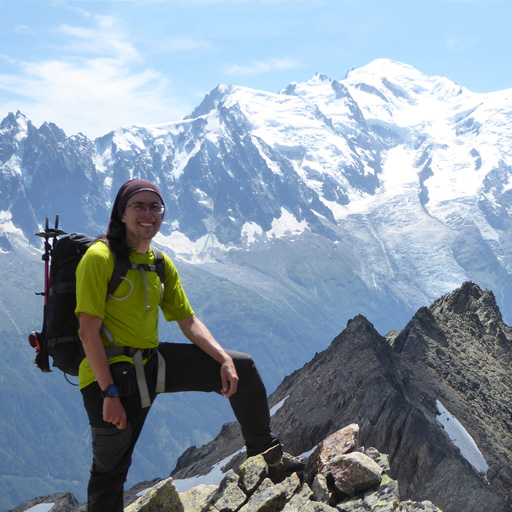
Oscar Argudo serves as Assistant Professor in the Department of Computer Science at the Barcelona School of Informatics, Universitat Politecnica de Catalunya (UPC), focusing on computer graphics and virtual reality applications for environmental simulation. His expertise bridges computational techniques with real-world ecological concerns, particularly human impact on natural landscapes through recreational activities like hiking. Education: PhD in Computer Science, Universitat Politecnica de Catalunya (2018). Thesis: "Realistic reconstruction and rendering of detailed 3D scenarios from multiple data sources". Advisors: Carlos Andujar and Antoni Chica. His research pioneers terrain modeling methodologies that simulate erosion, vegetation decay, and trail formation through procedural algorithms and crowd behavior modeling. Current work integrates pathfinding optimization for uneven terrains with anthropogenic degradation effects, creating immersive VR experiences that visualize environmental consequences of human activity. This approach uniquely combines his mountaineering passion with computational rigor to address ecological awareness through technology. Recent publications demonstrate consistent innovation in terrain analysis, digital nature rendering, and environmental simulation across top venues like SIGGRAPH and Eurographics, with emerging focus on open-sourcing tools for broader scientific impact. Scientific Awards: Maria Zambrano research fellowship (2022) R3 accreditation by Agencia Estatal de Investigación (2025) Accreditation of research by AQU (2025) He actively supervises students evidenced by the 2025 Eurographics Spanish Chapter Best BSc Thesis award for "Interactive viewer of natural scenes with hiking trails in Unity" and multiple master's theses converted to conference papers. As co-Principal Investigator of the SENDA project (funded by Ministerio de Ciencia e Innovación), he leads a team developing novel algorithms for virtual human simulation and terrain degradation modeling, with two postdoc positions recently advertised to expand this research. His work operates within UPC's Barcelona School of Informatics research ecosystem and the SENDA project team, which develops both VR applications for immersive environmental education and web-based tools for public engagement with terrain degradation phenomena.
Dr. Arne Bewersdorff is a Researcher at the Professorship for Life Sciences Didactics within the TUM School of Social Sciences and Technology at the Technical University of Munich. Since 2021, he has coordinated the TUM DigiLLab , a digital teaching and learning laboratory for secondary and vocational teacher training. His career includes prior roles as a Research Assistant at Heidelberg University of Education (2017-2021) and a doctoral researcher in the project Exploratory Experimentation: Effectiveness of Teacher Training in the School Workshop Format , culminating in his dissertation on May 10, 2022. PhD in Science Education from Heidelberg University of Education (2022) Teaching Degree in Physics, Mathematics, and Computer Science from Schwäbisch Gmünd University of Education (2017) Degree in Information Systems Technology from University of Ulm (2014) Dr. Bewersdorff's research focuses on AI literacy in higher education , digital learning technologies , and inquiry-based science pedagogy . He investigates how AI systems like EPIC AI can analyze student experiment protocols and generate adaptive feedback, as well as the role of multimodal large language models in transforming science education. His work bridges artificial intelligence , digital competency frameworks , and teacher training methodologies . Recent publications highlight trends in AI-driven educational assessment and digital tool adoption , including studies on AI literacy tests, generative AI's impact on higher-order thinking, and comparative analyses of AI vs. human feedback quality. His 15 most recent works span topics like AI self-efficacy , multinational AI literacy disparities , and smartphone-integrated physics experiments . Fellow of the TUM Center for Educational Technologies ESERA Travel Award recipient HOLA Innovation Pitch winner (Baden-Württemberg Media and Film Society) As a doctoral researcher, he developed frameworks for evaluating teacher training effectiveness in open experimentation, showing shifts toward minds-on pedagogy. His current projects include the Junior Fellowship Artificial Intelligence (Joachim Herz Foundation) and the Knowledge Hub OER initiative on AI, AR, and 3D printing. He collaborates with institutions like the University of Heidelberg and has presented at conferences including NARST, ESERA, and GDCP.