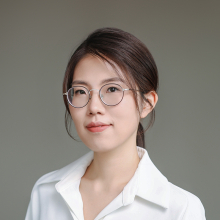
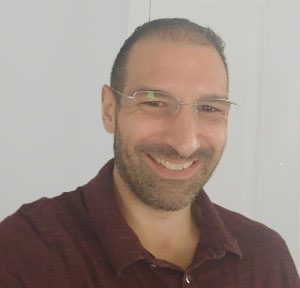
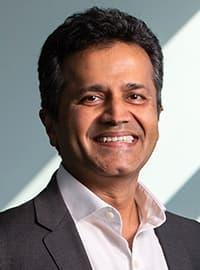
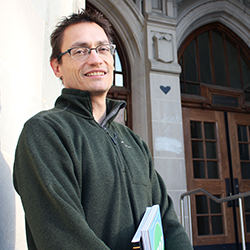
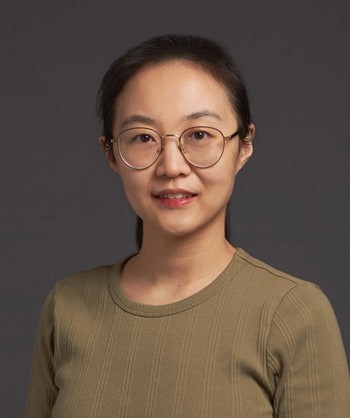
Fumeng Yang is an Assistant Professor in the Department of Computer Science at the University of Maryland, College Park. Previously, they were a postdoctoral fellow at Northwestern University under the CCC/CRA's CIFellows program, collaborating with Matthew Kay. They hold a Ph.D. from Brown University (advised by David Laidlaw), an M.Sc. from Tufts University (advised by Remco Chang), and a B.Eng. from Shandong University, China. Yang leads the FIGX Lab, focusing on computational models, AI literacy, and uncertainty communication. Research interests include human-AI interaction, explainable AI, and visualization techniques for decision-making. Their work bridges HCI, information visualization, and AI/ML, with applications in public policy and education. Yang’s publications emphasize user trust in forecasts, election visualization impacts, and large language models’ role in design. Awards: CHI 2024 Best Paper (top 1%), VIS 2023 Best Paper (top 1%), multiple Honorable Mentions. Teaching: CMSC471 (Spring 2025), CMSC839E (Fall 2024). Labs/Teams: FIGX Lab explores computational models’ societal impacts and user-centric design.
Joseph Schmidt is an Associate Professor of Psychology at the University of Central Florida, where he directs the Attention and Memory Laboratory. His research integrates eye-tracking and EEG/ERP methodologies to study attention-memory interactions. Key focus areas include: Neural and behavioral correlates of visual working memory Attention guidance in real-world contexts Visual search errors in medical imaging Oculomotor patterns in neurological disorders His work bridges cognitive psychology and neuroscience, examining how memory representations shape attentional selection. Current projects investigate cognitive expectations in visual search, EEG classification methods, and attentional deficits in clinical populations.
Dr Mahdi Erfanian Nakhchi Toosi has served as a Lecturer in Mechanical Engineering at Northumbria University since 2022. Recognised as a Fellow of the Higher Education Academy (FHEA), he combines robust academic credentials with a prolific research portfolio focused on thermal science and renewable energy systems. Education & Qualifications PhD in Mechanical Engineering – 30 September 2018 Fellow of the Higher Education Academy (FHEA) Research Interests Dr Erfanian’s research spans experimental and computational investigations into heat-transfer augmentation , exergy analysis , and entropy generation minimisation . His work addresses critical challenges in designing high-efficiency heat exchangers for renewable-energy applications, employing innovative geometries such as louver-punched baffles, delta winglets, and V-type inserts. Recent studies integrate advanced CFD techniques to optimise thermal–hydraulic performance and to quantify second-law efficiency in solar air heaters and tubular heat exchangers. Research Output & Trends Across more than ten high-impact publications since 2024, Dr Erfanian has consistently advanced the field of thermal engineering . His papers illuminate the synergistic effects of geometric modifications—flapped baffles, trapezoidal louvered winglets, staggered V-baffles—on heat-transfer coefficients, pressure losses, and exergy destruction. The trajectory of his work signals a commitment to bridging fundamental thermal science with practical energy-system design, directly supporting the global transition toward more efficient renewable-energy technologies. Scientific Awards & Recognition Fellow of the Higher Education Academy (FHEA) Postgraduate Supervision & Grants Dr Erfanian currently supervises: Kiran Perkins – PhD project: “Wake and power prediction of onshore horizontal-axis wind farms under atmospheric flow using machine learning” (commenced 1 October 2024) Laboratories & Collaborative Networks Operating within Northumbria University’s vibrant Mechanical Engineering research environment, Dr Erfanian leverages state-of-the-art computational laboratories and collaborative links with international partners to deliver cutting-edge research. His affiliations support interdisciplinary projects that integrate fluid dynamics, renewable-energy engineering, and machine-learning-driven optimisation.
Jordan Suchow is an Assistant Professor in the School of Business at Stevens Institute of Technology, specializing in cognitive science, artificial intelligence, and behavioral experiments. He holds a PhD in Psychology from Harvard University (2014) and a postdoctoral fellowship in computational cognitive science at UC Berkeley. His research focuses on visual perception, memory, cultural evolution, and the design of digital platforms. He is known for pioneering work on 'motion silencing' and developing tools like Dallinger for crowdsourced experiments. Suchow's research spans computational models of human cognition, including studies on visual working memory, face perception, and cultural transmission. He has led projects funded by DARPA and the NSF, totaling over $3.8 million. His work has been featured in Nature , Proceedings of the National Academy of Sciences , and Trends in Cognitive Sciences . He has received awards including the Neural Correlate Society's Best Visual Illusion of the Year (2011) and a U.S. patent for data-driven face-trait encoding (2022). His software contributions include Dallinger, MemToolbox, and nbgrader. Suchow advises on digital platforms, cultural consensus theory, and ethical AI governance.
Dr. Mitchell Longstaff is a Lecturer in the Faculty of Health at Southern Cross University with international teaching and research experience at institutions including Arizona State University and University of Greenwich. His research in cognitive psychology examines fundamental and applied cognition including working memory, eyewitness memory, motor control, and psychomotor skills. Key research areas: Dual-task performance and attentional mechanisms Evolutionary perspectives on cognitive sex differences Forensic applications including eyewitness testimony reliability Neurological influences on motor skills like handwriting and drawing His work has practical implications in education, forensics, ergonomics, and neurological assessment. He teaches Psychology Seminars, Learning and Memory, and Introduction to Psychology units, and supervises multiple Honours, Masters, and PhD students annually.
Farrukh Alvi is the Sr. Associate Provost for Strategic Initiatives and Innovation, Don Fuqua Eminent Scholar & Professor of Mechanical Engineering at the Florida A&M University-Florida State University (FAMU-FSU) College of Engineering. He serves as Director of the Institute for Strategic Partnerships, Innovation, Research, & Education (InSPIRE) and leads the FCAAP ME - Mechanical Engineering program in Aero-Propulsion, Mechatronics, and Energy. His roles include overseeing research and graduate studies, as well as directing major initiatives like the Florida Center for Advanced Aero-Propulsion (FCAAP) and the FAA Center of Excellence in Commercial Space Transportation (FAA COE CST). Dr. Alvi holds a Ph.D. in Mechanical Engineering from Pennsylvania State University (1992) and a B.S. in Nuclear Engineering from UC Berkeley (1987). His research focuses on active-adaptive flow control, experimental fluid-gas dynamics, and optical diagnostics. Notable achievements include developing microfluidic actuators (with ten patents) and securing over $25 million in external funding for research and STEM education. His work addresses noise reduction, flow efficiency in high-speed systems, and control technologies for aircraft, automobiles, and turbomachinery. Over 50 PhD/MS students, postdoctoral researchers, and scientists have been mentored under his supervision, resulting in over 200 publications. He is a Fellow of ASME and an Associate Fellow of AIAA. Key grants and partnerships include support from AFOSR, NASA, NSF, ONR, DARPA, and industry collaborators like Boeing and Northrop Grumman. His leadership extends to founding interdisciplinary research centers and advancing STEM education through collaborative initiatives.
Prof. Dr. Ivo Blohm is an Associate Professor of Information Management with a focus on Business Analytics at the Hasso Plattner Institute of Management and Digitization (HPI-St. Gallen), University of St. Gallen. His work bridges academic research and practical applications in digital transformation, with expertise spanning AI-driven decision support systems, crowdsourcing governance, and agile work practices. He holds a leadership role in advancing data science methodologies and their integration into organizational frameworks. His research interests emphasize leveraging AI and data analytics to enhance business processes, particularly through generative AI architectures, decision-making interfaces, and platform-driven innovation. Notable contributions include frameworks for conversational AI implementation, governance mechanisms for crowdfunding platforms, and strategies for internal crowd work empowerment. He has collaborated with organizations like Lufthansa to design leadership development programs for data-driven transformation. Blohm's publications (2014-2025) explore topics such as AI accountability in workplaces, hybrid human-AI creativity systems, and the socio-technical dynamics of digital work. His work often addresses ethical dimensions of emerging technologies and their implications for organizational structures. Despite his prolific output, no scientific awards are explicitly listed in the provided materials. His advising and grant activities are not detailed here, though his research collaborations indicate engagement with industry partners. He is actively involved in designing frameworks for data products (e.g., data mesh) and refining agile practices in large-scale organizations. No specific lab affiliations are mentioned, though his work often involves cross-disciplinary teams focusing on digital innovation challenges.
Carl Gutwin is a Professor and Graduate Chair in the Department of Computer Science at the University of Saskatchewan. He holds a Ph.D. from the University of Calgary and has expertise in Human-Computer Interaction (HCI), Computer Supported Cooperative Work (CSCW), and game-related research. His work focuses on digital games, affective computing, and next-generation interfaces. Education: Ph.D. Computer Science, University of Calgary (1997) M.Sc. Computer Science, University of Saskatchewan (1991) B.Sc. (Honours) in English Literature and Computer Science, University of Saskatchewan (1988) Research Interests: Gutwin leads the Interaction Lab, exploring innovative interfaces, game design, and systems that interact with user emotions. Key areas include spatial memory interfaces, interaction techniques in virtual environments, and evaluating user experience through implicit tests. Notable Contributions: His 2019 CHCCS Achievement Award recognizes his impact on empirical HCI research. Recent work addresses automated system pacing, speech-rate preferences, and navigation assistance effects in VR. Labs/Teams: The Interaction Lab develops tools like WAMS (multisurface workspace API) and explores visualization techniques for genomic conservation. Media inquiries can be directed to communications@usask.ca.
Senthil K. Nachimuthu serves as Research Assistant Professor of Epidemiology in the Department of Internal Medicine and Adjunct Assistant Professor of Biomedical Informatics at the University of Utah School of Medicine. His work bridges academic research and 15+ years of industry experience in healthcare AI, focusing on implementable machine learning solutions for clinical settings. His educational background includes: PhD in Biomedical Informatics, University of Utah School of Medicine MBBS, Stanley Medical College, Chennai, India Dr. Nachimuthu specializes in multimodal and responsible machine learning for infectious disease epidemiology, with deep expertise in biomedical terminologies (SNOMED CT), interoperability standards, and clinical decision support systems. His industry background informs his commitment to evidence-based bedside implementations, particularly in sepsis management and vaccine effectiveness research. His 15 most recent publications reveal a consistent trajectory: foundational work in terminology systems (2005-2015) evolved into advanced machine learning applications for critical care (sepsis, diabetes) and infectious diseases (notably COVID-19), predominantly using dynamic Bayesian networks for temporal clinical reasoning. He has received the following scientific recognition: Fellow of the American Medical Informatics Association (FAMIA) Dr. Nachimuthu leverages extensive industry leadership—including advising U.S. Congressional committees on VA-DoD medical records interoperability and serving as elected U.S. representative on the SNOMED Technical Committee—to drive translational research. His current projects at the Salt Lake City VA Medical Center focus on operationalizing AI for real-world clinical decision support. He actively collaborates with the University of Utah's biomedical informatics and epidemiology teams, emphasizing practical AI deployment in healthcare systems through his dual appointments in Internal Medicine and Biomedical Informatics.
Dr. Alice O'Toole is the Aage and Margareta Møller Professor and Endowed Chair in the School of Behavioral and Brain Sciences at The University of Texas at Dallas. Her research focuses on face recognition in humans and machines, neural processing of faces and bodies, and computational models of perception. She holds a PhD in Experimental Psychology from Brown University (1988) and has held tenure since 1999. Her work bridges cognitive neuroscience with AI, emphasizing algorithmic comparisons to human performance. Dr. O'Toole's research interests include: Face recognition mechanisms in humans and deep learning systems Neural correlates of high-level visual processing Forensic facial identification expertise Bias mitigation in face recognition algorithms Body shape perception and social trait inferences Notable achievements include: Alexander von Humboldt Research Fellowship (1994–1996) French Embassy Postdoctoral Fellowship (1988–1989) Over $2.5M in federal research funding (NIH, DoD, NIST) Editorial roles at British Journal of Psychology and IEEE Transactions on Biometrics Her lab, the Face Perception Research Lab, collaborates internationally and has produced influential work on cross-race effects, algorithmic bias, and forensic facial analysis. Current projects include comparing human/expert performance to state-of-the-art AI systems in face recognition tasks.
Huiqing (Jane) Zhou is an Assistant Professor of Chemistry at Boston College, affiliated with the Morrissey College of Arts and Sciences and the Chemistry Department. Her research focuses on developing technologies to map and modulate RNA chemical modifications (epitranscriptome) in mammalian systems. She employs interdisciplinary approaches including directed evolution, biochemistry, mass spectrometry, and structural biology to study the regulatory mechanisms of these modifications in gene expression and disease. Education: B.S., Nankai University Ph.D., Duke University Research Interests: Her lab explores how RNA modifications influence transcript stability, interactions, and expression, with applications in disease modeling and gene therapy. Key areas include base-resolution mapping of modifications, engineering tools for modification manipulation, and understanding dysregulated epitranscriptomes in diseases like Alzheimer’s. Publications: Her work spans publications in Nature Methods , Biochemistry , and Nucleic Acids Research , focusing on reverse transcriptase evolution, Hoogsteen base pairing dynamics, and RNA modification detection technologies. Awards: 2017 Chicago Fellows Fellowship. Lab & Funding: Supported by Boston College and grants from the National Institutes of Health (NIGMS, NCI). Her lab develops cutting-edge tools to visualize and modulate RNA modifications, aiming to identify novel drug targets and advance gene therapy strategies.
Rebecca Allen is a Research Professor at UCLA's Department of Design Media Arts, part of the School of the Arts and Architecture. She is a pioneering artist and researcher in digital media, exploring intersections between art, technology, and neuroscience. Her work spans five decades, blending virtual reality, AI, and interactive systems to interrogate human identity and perception. Education: B.F.A. from Rhode Island School of Design, further studies at MIT. Research interests include virtual reality aesthetics, artificial life systems, and the philosophical implications of digital environments. Notable collaborations include projects with Kraftwerk, MIT Media Lab, and neuroscience labs at UCLA/UCSF. Her work is in permanent collections at institutions like the Whitney Museum and Centre Georges Pompidou. Awards include an Emmy Award and recognition in Fast Company's 'Most Creative People.' Her research roles include founding directorships at Nokia Research Center Hollywood and OLPC's XO Laptop design team. Labs/Initiatives: Emergence research group (UCLA), Intel-funded projects, and collaborations with Counterforce Lab and UCLA Game Lab.
Qi Fang is a Senior Research Fellow at the University of Western Australia (UWA), affiliated with the School of Engineering and the Department of Electrical, Electronic and Computer Engineering. Their work bridges medical physics and engineering, focusing on developing innovative imaging technologies for cancer detection. Notably, they contributed to the LIGO Scientific Collaboration, which received the 2016 Special Breakthrough Prize in Fundamental Physics. Since completing their PhD in 2017, Fang has specialized in creating cost-effective imaging tools for surgical cancer detection, particularly in breast and prostate cancer. They hold patents for next-generation devices and collaborate with OncoRes Medical to commercialize these technologies, aiming to improve healthcare equity in rural regions. Education: PhD in Physics (2011–2016) from UWA, with a thesis on 'High optical power experiments and parametric instability in 80 m Fabry-Perot cavities'. This foundational work in gravitational wave physics remains part of their expertise. Research Interests: Medical imaging techniques including optical palpation, elastography, and optical coherence tomography (OCT). These methods are applied to enhance surgical precision in cancer removal, assess tumour margins, and visualize tissue mechanics. Recent projects emphasize low-cost, wireless solutions for rural healthcare access and interdisciplinary collaboration with engineering and medical teams. Scientific Contributions: Fang's articles highlight advancements in stereoscopic optical palpation, friction analysis in micro-elastography, and 3D OCT imaging of prostate microarchitecture. These studies underscore the potential of their work to revolutionize real-time surgical diagnostics and improve patient outcomes. 2022 Vice-Chancellor's Early-Career Research Award 2022 Harry Perkins Institute Aspire Award 2022 Premier's Science Award: Woodside Early Career Scientist of the Year 2021 Investigator Initiated Research Scheme Grant (National Breast Cancer Foundation) 2021 Raine Priming Grant (Raine Medical Research Foundation) Grants & Collaboration: Lead Investigator in five active research grants, including projects funded by the Raine Foundation, National Breast Cancer Foundation, and Cancer Council WA. Their collaborations span academic institutions and industry partners like OncoRes Medical. Advising roles are not explicitly stated, but Fang actively mentors teams in interdisciplinary research initiatives. Labs & Teams: Core member of UWA's biomedical imaging research group. Collaborates with OncoRes Medical on medical device commercialization and maintains ties to the LIGO Scientific Collaboration through prior gravitational wave research. Engaged in cross-disciplinary projects with engineers, physicists, and medical professionals to advance surgical oncology and telehealth technologies.
Balbir Singh is a Research Assistant Professor of Biomedical Engineering at Vanderbilt University, affiliated with the School of Engineering. His research focuses on neural signal processing, brain-computer interfaces, and cognitive neuroscience, with an emphasis on understanding neural mechanisms underlying memory, decision-making, and motor control. His work integrates electrophysiological techniques, advanced signal processing algorithms, and computational models to decode brain activity patterns. Key research areas include analyzing local field potentials (LFPs), studying oscillatory brain activity during cognitive tasks, and developing methods to enhance signal quality in biomedical recordings. He has contributed to advancements in EEG/EOG artifact removal, BCI system design, and neuroplasticity studies. His recent work explores how prefrontal cortex activity relates to working memory performance and decision-making processes in both human and primate models. Dr. Singh’s publications highlight interdisciplinary approaches, combining experimental neuroscience with engineering solutions to address challenges in neural decoding and clinical applications. His studies often involve collaborations to translate findings into practical tools for monitoring cognitive states and improving neuroprosthetic systems.
Cuihua (Cindy) Shen is a Professor of Communication at the University of California, Davis, and co-founder of the Computational Communication Research lab. She is affiliated with the Computational Social Science Designated Emphasis and the East Asian Studies program. Her research focuses on computational social science, online social networks, and AI-mediated misinformation. Dr. Shen holds a Ph.D. from the Annenberg School for Communication & Journalism at the University of Southern California, an M.A. from the National University of Singapore, and a B.A. from Zhejiang University. Her work combines big data analysis with surveys and experiments to study phenomena such as social network structures, misinformation diffusion, and user behavior in platforms like Facebook, WeChat, and MMORPGs. Her research has been funded by the NSF, Facebook, and Google Cloud, and has appeared in top journals including Journal of Computer-Mediated Communication and New Media & Society . Education: Ph.D., USC Annenberg (2010); M.A., National University of Singapore (2005); B.A., Zhejiang University (2003) Dr. Shen’s research interests span two core areas: (1) social network dynamics in online platforms, and (2) multimodal misinformation in AI-driven ecosystems. She has received multiple top paper awards, including the Fulbright U.S. Scholar Award. She serves as an Associate Editor at Journal of Computer-Mediated Communication and led the Computational Methods Division at the International Communication Association (2017–2022). Her recent work examines strategies to combat misinformation through digital literacy interventions and explores how exogenous events shape public discourse on social media. Key publications include studies on Twitch.tv well-being dynamics, context collapse management on WeChat, and fact-checking mechanisms in Chinese TikTok. Awards: Fulbright U.S. Scholar Award, Top Paper Awards (ICA 2015–2023), Carolyn Dexter Award Nominee Editorial Roles: Founding Associate Editor at Computational Communication Research , Past Chair of ICA’s Computational Methods Division Dr. Shen advises on computational communication methods and leads interdisciplinary teams in studying online behavior. Her lab collaborates on projects funded by major institutions, focusing on both theoretical advancements and practical solutions to digital misinformation challenges.