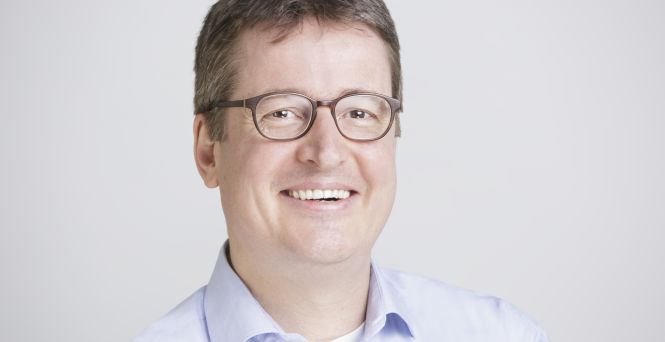
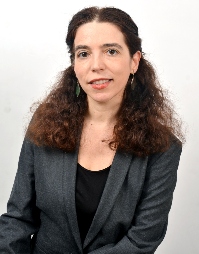
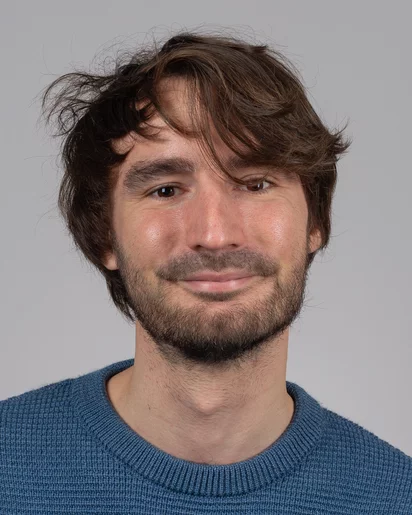
Patrick Hayden is a Professor of Physics at Stanford University, holding prestigious roles such as the Simons Investigator, Distinguished Research Chair at the Perimeter Institute for Theoretical Physics, and Senior Fellow at the Canadian Institute for Advanced Research. His research explores quantum information theory’s limits and its applications to black hole physics and quantum gravity. Previously, he was Canada Research Chair in the Physics of Information at McGill University. Hayden’s academic journey includes prior positions at McGill University and affiliations with the Perimeter Institute and CIFAR. His work bridges quantum computing, communication, and foundational physics, with recent focus on holography and quantum gravity. His research has advanced understanding of entanglement, quantum error correction, and information processing in extreme physical systems. Scientific Achievements: Simons Investigator (2020–present) Canada Research Chair in the Physics of Information (2015–2020) Senior Fellow, CIFAR Quantum Information Research Themes: His studies on quantum information’s interplay with spacetime geometry, including black hole entropy and holographic principles, have redefined theoretical frameworks. Recent work addresses quantum communication protocols, fault-tolerant computing, and quantum gravity’s information-theoretic foundations.
Gurprit Singh is a Researcher at the Max Planck Institute for Informatics, Saarbrücken, Germany. His work focuses on advancing Monte Carlo integration techniques and their applications in generative AI, physically based rendering, and optimization. He has contributed to conferences such as SIGGRAPH, Eurographics (EG), and Pacific Graphics (PG), serving in roles like Technical Program Committee member and co-chair for Doctoral Consortium programs. Roles: Associate Senior Researcher, Conference Co-chair (EGSR 2021), and active in academic service. Research Interests: Monte Carlo methods, MCMC sampling, gradient-based optimization, and generative models. His research bridges rendering, optimization, and AI, with notable work on noise optimization in diffusion models and perceptual error minimization. He has received the Best Student Paper Award at ICPRAM 2025.
Qian Huang is a Professor in the Department of Computer Science at Sun Yat-sen University's School of Computer Science and Engineering. With over 350 publications spanning from 1992 to 2025, Dr. Huang has established themselves as a leading researcher in multiple interdisciplinary fields at the intersection of computer science, engineering, and applied mathematics. Dr. Huang's research spans several critical domains in modern computing. Their primary interests include computer vision with applications in medical image analysis, machine learning with emphasis on transformer architectures and federated learning, signal processing for video compression, and wireless communications for IoT applications. Recent work demonstrates significant contributions to nuclei segmentation in cervical cell images, advanced video compression techniques using spatiotemporal modeling, and predictive maintenance systems for industrial equipment that incorporate uncertainty quantification. An analysis of Dr. Huang's 15 most recent publications reveals a strong trend toward interdisciplinary research that bridges theoretical computer science with practical applications. Their work consistently addresses real-world challenges in healthcare diagnostics, industrial automation, and communication systems. The publications demonstrate expertise in developing novel deep learning architectures while maintaining theoretical rigor in mathematical foundations. Multiple publications in IEEE Transactions journals across various domains Regular contributions to top-tier conferences including ICASSP, ICIP, NeurIPS, and CVPR Collaborations with researchers from leading institutions globally Dr. Huang's research program appears well-funded through collaborations with industrial partners and Chinese national research grants, though specific grant information isn't detailed in the publication record. Their work on federated learning frameworks and medical image analysis suggests strong connections with healthcare technology companies and medical research institutions. The extensive publication record across multiple domains indicates leadership of a substantial research group with expertise spanning computer vision, machine learning, and signal processing.
Chen Shen is Assistant Professor in the Mechanical Engineering Department at Rowan University's Henry M. Rowan College of Engineering. His research focuses on functional materials and structures for controlling wave propagation, with particular emphasis on acoustic metamaterials, phononic crystals, and acoustofluidics. His work develops novel structures for applications in sensing, acoustics, and healthcare. Shen's research explores wave manipulation through metamaterials and metasurfaces, acoustofluidic particle control, and mechanical design optimization. His lab employs inverse design strategies including machine learning and topology optimization to enhance functional materials. Recent publications demonstrate consistent innovation in acoustic wave control, metamaterial design, and practical applications. These works advance capabilities in sound manipulation, structural health monitoring, and microfluidic technologies. Shen has received the NSF CAREER Award, PIERS Young Scientist Award, and EPL Distinguished Referee recognition. He leads multiple funded projects including NSF-supported research on tunable surface acoustic wave devices. The Functional Materials and Structures Laboratory develops acoustofluidic technologies for biomedical applications and structural monitoring systems for renewable energy infrastructure.
Yuri Kivshar is a Distinguished Professor in the Department of Materials Physics at The Australian National University (ANU) in Canberra, Australia, where he leads the Nonlinear Physics Centre (NLPC). Recognized as one of the world's leading experts in nonlinear physics and nanophotonics, he has established himself as a pioneer in metamaterials research and all-dielectric metaphotonics. Professor Kivshar's research spans multiple cutting-edge areas in modern photonics, with particular emphasis on nonlinear optical phenomena, bound states in the continuum, topological photonics, and chiral light-matter interactions. His work bridges fundamental physics with practical applications, developing novel optical devices for imaging, sensing, and quantum technologies. The NLPC under his leadership maintains both theoretical and experimental programs that are internationally recognized for their innovation and impact. His research portfolio demonstrates a clear evolution from fundamental nonlinear optics toward advanced nanophotonic structures and metamaterials, with recent work focusing on bound states in the continuum, topological photonics, and nonlinear effects at the nanoscale. This progression reflects both the maturation of the field and Kivshar's ability to identify and develop emerging research directions. Humboldt Research Award (2017) Two consecutive Federation Fellowships from the Australian Research Council Listed as one of the 'Most Cited Scientists in Physics' (ISI: h-index 91 with over 35,000 citations) Author of 5 influential books and over 80 papers in Physical Review Letters and 15 in Nature-family journals Through his leadership and research funding, including ARC Discovery and Linkage grants, Professor Kivshar established world-leading theoretical and experimental capabilities at the NLPC. His team has developed major experimental infrastructure including ultrafast laser systems, scanning near-field optical microscopes with sub-100nm resolution, and specialized facilities for nanofabrication. The NLPC actively collaborates with numerous international research groups and hosts visiting researchers from around the world, fostering a dynamic research environment that bridges theory and experiment. The Nonlinear Physics Centre operates as a comprehensive research hub with strong theoretical foundations complemented by cutting-edge experimental capabilities. The center maintains specialized laboratories for nonlinear optics, nanophotonics, and metamaterials research, featuring state-of-the-art equipment for fabrication, characterization, and theoretical modeling. This integrated approach has enabled groundbreaking discoveries including the first generation of Airy plasmons, observation of vortices in liquid crystals, and development of novel out-of-plane metamaterials.
John Preskill is the Richard P. Feynman Professor of Theoretical Physics at the California Institute of Technology (Caltech). He is a leading figure in quantum information science, focusing on quantum computing, quantum error correction, and the theoretical foundations of quantum mechanics. His work bridges fundamental research and practical quantum technologies, including contributions to the NISQ (Noisy Intermediate-Scale Quantum) era framework and quantum machine learning. In 2024, he was awarded the prestigious John Stewart Bell Prize for his advancements in quantum information processing and machine learning applications in quantum experiments. Preskill's research emphasizes leveraging quantum principles for novel computational paradigms, such as quantum advantage in learning from experimental data and scalable quantum error correction. His articles explore topics like quantum field theory simulations, entanglement dynamics, and fault-tolerant quantum architectures. He collaborates across disciplines, contributing to both theoretical breakthroughs and experimental implementations of quantum technologies. Notably, his 2018 paper Quantum Computing in the NISQ era and beyond outlines near-term quantum computing challenges and opportunities. His work on Bell Prize-winning research highlights foundational links between quantum learning and efficient information processing. Preskill is affiliated with Caltech's Institute for Quantum Information and Matter, driving interdisciplinary quantum science initiatives.
Christian Schroer is a Professor at the University of Hamburg and Leading Scientist at DESY, where he directs the scientific program of the PETRA III synchrotron radiation source. His research focuses on X-ray microscopy, X-ray optics, and their applications in materials science, nanotechnology, and condensed matter physics. He has contributed to the strategic development of PETRA IV, an ultra-low emittance synchrotron source, and co-founded the Helmholtz Imaging platform for data-driven imaging science. His career includes roles as a professor at TU Dresden (2006–2014), a scientist at DESY, and postdoctoral research at institutions like the University of Maryland and RWTH Aachen University. Schroer’s group develops advanced X-ray microscopy techniques and collaborates on projects ranging from solar cell analysis to catalyst dynamics. Education: PhD in Mathematical Physics, University of Cologne (1995) Studies in Physics at RWTH Aachen University (1986–1992) Habilitation in Physics, RWTH Aachen (2004) Research Interests: X-ray nanoscience and optics Aberration-corrected lenses and focusing techniques In situ and operando characterization of materials 3D tomography and multimodal imaging Synchrotron and free-electron laser applications Grants & Collaboration: Lead scientist for PETRA III and PETRA IV projects Member of Helmholtz Imaging initiative Active in international collaborations on X-ray microscopy and photon science Labs & Teams: X-ray microscopy group at DESY PtyNAMi (Ptychographic Nano-Analytical Microscope) facility
Anna Luiza Barszczak Sardinha Letournel is a Researcher at the University of Lisbon's Institute of Biophysics and Biomedical Engineering and an Invited Assistant Professor at the Polytechnic Institute of Setúbal. She holds a PhD in Fundamental Physics (Lasers and Optics) from the Polytechnic School of France and an Integrated Master's in Biomedical Engineering from NOVA University of Lisbon. Her research focuses on neuroadaptive systems, biomedical engineering, and medical imaging, with recent work on virtual reality-based therapies and wearable sensor applications in biomechanics. She leads the 'Digital Health and Technological Innovation' Research Group at CIIAS and contributes to projects like Neuroadaptive Systems for Brain Restoration (NEURO-CONNECT STIM). She has authored over 20 publications, including high-impact studies on femtosecond spectroscopy, neuroimaging, and post-stroke recovery. Her teaching roles include courses on Biomechanics, Medical Imaging, and Nanotechnologies in Biomedicine at the Polytechnic Institute of Setúbal. Proficient in multiple languages (Portuguese, French, English, Polish, Italian), she actively participates in academic committees, thesis evaluations, and international conferences.
Xie Chen is the Eddleman Professor of Theoretical Physics at the California Institute of Technology (Caltech), affiliated with the Department of Physics. His research focuses on quantum condensed matter systems, particularly topological order, fracton models, and tensor networks. He holds a Ph.D. in Theoretical Physics from MIT (2012) and a B.Sc. in Physics from Tsinghua University (2006). Key research interests include symmetry-protected topological phases, quantum information applications, and the dynamics of many-body systems. Notable awards include the Simons Investigator (2021), New Horizons in Physics Prize (2020), and Sloan Research Fellowship (2017). Teaching responsibilities include courses such as Physics 12a (Waves), Physics 129b (Group Theory), and advanced condensed matter physics. His research group includes postdoctoral scholars (e.g., Nathanan Tantivasadakarn) and graduate students (e.g., Zongyuan Wang). Former members hold positions at institutions like Harvard, Virginia Tech, and Rice University. Recent work explores fracton phases via sequential quantum circuits, foliated fracton order, and tensor network representations. His contributions bridge quantum information and condensed matter physics, with applications to topological materials and quantum computing.
David Waldman is a Research Professor in the Department of Polymer Science and Engineering at the University of Massachusetts Amherst, where he also serves as Director of the Center for Ultrafast Microscopy and Imaging Research (CUMIRP). He holds a PhD in Polymer Science & Engineering from the same institution (1990). His research focuses on advanced materials science, particularly in holographic storage systems, photopolymer materials, and optical engineering. Key contributions include the development of high-density holographic data storage media, phase-encoded data recovery systems, and novel applications of nanotechnology in manufacturing. Waldman’s work integrates interdisciplinary approaches to solve challenges in data storage, medical imaging, and renewable energy systems. Education: PhD in Polymer Science & Engineering, University of Massachusetts Amherst (1990). Research interests span holographic data storage systems, photopolymer chemistry, and the application of holography in medical imaging (e.g., lymphatic system analysis). He has pioneered materials like CROP photopolymers for optical data storage exceeding 100 bits/μm². His recent work explores solar energy systems using volume holograms and nanoimprint lithography for precision manufacturing. Publications highlight advancements in holographic media design, biometric imaging systems, and security device technologies. Waldman collaborates with the Sylvio O. Conte National Center for Polymer Research, contributing to cutting-edge polymer science initiatives.
Dr. Karen Eguiazarian is a Professor of Signal Processing at the Department of Computing Sciences , Tampere University . He leads the Computational Imaging research group and has served as head of the Signal Processing Research Community (SPRC) at Tampere University of Technology (2016-2018). Education: M.Sc. in Mathematics, Yerevan State University, Armenia (1981) Ph.D. in Physics and Mathematics, Moscow State University, Russia (1986) Doctor of Technology in Signal Processing, Tampere University of Technology, Finland (1994) His research focuses on Computational Imaging , Compressed Sensing , and Efficient Signal Processing Algorithms , with significant contributions to Image/Video Restoration and Compression . Recent work includes AI-driven phase imaging, hyperspectral reconstruction, and noise-robust algorithms for remote sensing and biomedical applications. Scientific Awards: Service Award from the Society for Imaging Science and Technology (IS&T) (2014) Honorary Doctoral Degree from Don State-Technical University, Russia (2015) Dr. Eguiazarian has supervised 25 doctoral theses and published over 650 papers. He serves as Editor-in-Chief of the Journal of Electronic Imaging and associate editor of the IEEE Transactions on Image Processing , while co-founding Noiseless Imaging Oy , a Tampere University spin-off.
Paul Van Opdenbosch is a Lecturer in Animation at QUT's School of Creative Arts, specializing in Virtual Production and Motion Capture. He leads the development of virtual production capabilities within QUT, integrating emerging technologies like real-time animation and in-camera visual effects into teaching and research. His work bridges experimental practices with traditional animation methods, emphasizing cross-disciplinary collaboration. Paul holds a Master's of Fine Arts by Research (MFA) and a Bachelor of Fine Arts (Animation) from QUT, alongside a Certificate IV in Training and Assessment. His teaching spans undergraduate and postgraduate levels, focusing on Animation, 3D Computer Graphics, and Virtual Environments. He has coordinated courses such as KNB112 Drawing for Animation 1 and KIB203 Introduction to 3D Computer Graphics. Paul's research explores the intersection of technology and creative practice, including abstract animation derived from motion capture data, virtual production logistics, and real-time filmmaking. His projects often involve industry partnerships, such as Brisbane City's Christmas Carols and collaborations with healthcare institutions via Health Translation Queensland. He is a member of the TEQSA External Experts Register, the Society of Animation Studies, and ACM SIGGRAPH. His recent work includes developing hybrid virtual production techniques and exploring AI applications in live performance, as seen in Alex: A play with holograms (2023) and 2025's analysis of AI-driven creative outcomes.
Professor Ginestra Bianconi holds the position of Professor of Applied Mathematics at Queen Mary University of London (QMUL) within the School of Mathematical Sciences. She is also an Alan Turing Fellow at the Alan Turing Institute. Her research focuses on statistical mechanics, network theory, and their applications to complex systems. Notably, she formulated the Bianconi-Barabási model describing Bose-Einstein condensation in networks and pioneered studies on higher-order networks, including simplicial complexes and multilayer networks. Her work bridges statistical mechanics with topology, geometry, and dynamical systems. Education and Career: Ginestra Bianconi earned her PhD in Physics from the University of Notre Dame under Albert-László Barabási. She has held postdoctoral positions at the International Center for Theoretical Physics (ICTP) and the University of Fribourg. She joined QMUL in 2013, progressing from Lecturer to Reader before becoming a full Professor in 2019. Research Interests: Her research spans statistical mechanics of networks, higher-order networks (simplicial complexes), multilayer networks, topological signals, and quantum phenomena on networks. She explores applications in biological networks, neuroscience, and condensed matter systems. Awards and Recognition: Awards include the APS Fellow distinction, Network Science Society Fellowship, and the 2023 Franqui Chair. She is Chief Editor of JPhys Complexity and serves on editorial boards of Scientific Reports and PLOS ONE . Grants and Funding: She has secured funding from EPSRC, the Royal Society, the Simons Foundation, and the Alan Turing Institute for projects on network science applications and theoretical challenges in complex systems. Group and Alumni: Her research group includes current PhD students and alumni who have contributed to fields like simplicial synchronization, network geometry, and multilayer dynamics. Notable alumni include Dr. Arda Halu (Harvard Medical School) and Dr. Jacopo Iacovacci (Imperial College). Labs and Collaborations: She leads research at QMUL’s School of Mathematical Sciences and collaborates with institutions like the Alan Turing Institute and the Francis Crick Institute on interdisciplinary projects.
Professor Andreas Brandhuber is a Professor of Theoretical Physics and Head of the Centre for Theoretical Physics at Queen Mary University of London's School of Physical and Chemical Sciences. He has held postdoctoral fellowships at Tel Aviv University, CERN, and Caltech before joining Queen Mary in 2003. He received his PhD jointly from CERN and Technical University Vienna. His research focuses on modern methods for computing scattering amplitudes with the goal of revealing novel symmetries and mathematical structures while developing efficient computational tools. His work bridges theoretical physics, particle physics, and gravitational physics, with particular emphasis on applications to gravitational wave physics and particle collisions. Professor Brandhuber's recent publications demonstrate a clear trend toward applying scattering amplitude techniques to gravitational physics, particularly in the context of binary black hole systems and gravitational wave radiation. His work increasingly connects quantum field theory methods with general relativity through approaches like the double copy formalism and effective field theories of gravity, showing how insights from particle physics can solve problems in gravitational physics. His scientific achievements have been recognized through several prestigious awards: Ludwig Boltzmann Prize of the Austrian Physical Society (2005) Nuclear Physics B Most Cited Article 2006-2010 Award for the paper 'MHV Amplitudes in N=4 super Yang-Mills and Wilson Loops' Feinberg Foundation Visiting Faculty Program Fellowship at the Weizmann Institute, Israel (2011-2012) Professor Brandhuber actively supervises PhD students, with current research focusing on scattering amplitudes and their applications to gravitational physics. He leads the Centre for Theoretical Physics research group, which includes several postdoctoral researchers and PhD students working on related topics. His grant portfolio includes significant funding from the Science & Technology Facilities Council (STFC) and the European Commission, including a £1.47 million STFC grant for 'Amplitudes, Strings and Duality' running from 2023-2026. He has organized numerous international conferences and workshops on scattering amplitudes, including the SAGEX Closing Meeting at QMUL in 2022 and the Amplitudes 2010 workshop. His research group is actively engaged in the SAGEX (Scattering Amplitudes: from Gauge theory EXperiments) network, which connects theoretical physics with experimental gravitational wave observations.
Dr. Arthur Léon Baroni is a Postdoctoral Researcher at the Paul Scherrer Institute (PSI) in Switzerland, working in the Structure and Mechanics of Advanced Materials (SMAM) Group within the Liebi Research Group at the Swiss Light Source. His research develops advanced optical microscopy techniques for biomineral and biological sample analysis in the visible spectrum. His educational background includes: M. Sc. in Physics from Telecom SudParis (France), 2016 Double diploma in Photonics & Nanotechnology from Dublin City University (Ireland), 2016 PhD from Institut Fresnel (France), CNRS, Aix Marseille Universite, in the COMiX group, 2020 Dr. Baroni's research spans Computational Imaging , Optical Microscopy , and Biophotonics , specializing in polarization-sensitive quantitative imaging. His work integrates inverse problem algorithms with experimental setups to advance vectorial ptychography and Fourier Ptychography, enabling high-resolution analysis of anisotropic biological materials. Key innovations include deep learning-enhanced polarization microscopy and reference-free vectorial light beam characterization. His publication trends reveal a concentrated focus on computational polarization microscopy since 2020, with increasing emphasis on biomedical applications. The research consistently bridges optical physics, algorithm development, and biological imaging, particularly targeting biomineral structures through novel tomography techniques. No scientific awards were documented in the source material. Dr. Baroni's career trajectory shows progression from research engineering at Telecom SudParis' Laboratoire Samovar to postdoctoral roles developing Fourier Ptychography for medical diagnosis. His current PSI work on optical birefringence tensor tomography represents an evolution toward structural analysis of advanced materials, though no student advising or grant details were specified. He operates within PSI's Structure and Mechanics of Advanced Materials Group, collaborating with the Liebi Research Group at the Swiss Light Source facility to develop next-generation microscopy instrumentation.