Zaid Harchaoui is an Adjunct Professor in the Department of Statistics at the University of Washington. His research focuses on machine learning, generative AI, and algorithmic optimization, with applications spanning ecology, neuroscience, and artificial intelligence. He explores learning under distributional shifts and develops tools for scalable generative models in language and vision domains. University: University of Washington Department: Statistics Research Focus: Learning from data with computational, inferential, and mathematical rigor; distributional shift adaptation; generative model scaling Email: zaid@uw.edu His recent work emphasizes generative AI applications in ecology and neuroscience, stochastic optimization for robustness, and algorithmic efficiency in large-scale learning. Key contributions include techniques for distributionally robust optimization, interpretable authorship obfuscation, and uncertainty quantification in behavior classification. Scientific awards and honors are not explicitly mentioned in the provided text. Collaborative efforts often intersect with nonlinear control algorithms, spectral analysis, and privacy-preserving machine learning frameworks.
Ian Goldberg is a Professor at the Cheriton School of Computer Science , University of Waterloo, Canada. He holds the Canada Research Chair in Privacy Enhancing Technologies and leads the Cryptography, Security, and Privacy (CrySP) group . He is affiliated with the Cybersecurity and Privacy Institute and the Institute for Quantum Computing . Research Focus: Security, privacy, and privacy-enhancing technologies (PETs) for the Internet, including Off-the-Record (OTR) Messaging , censorship resistance , private information retrieval , and zero-knowledge proofs . Recent Publications: His work addresses metadata protection , deniable authentication , and secure multi-party computation , with applications to anonymous communication and censorship resistance. Scientific Awards: Canada Research Chair in Privacy Enhancing Technologies Students: He advises current and former PhD/Master’s students in projects like Lox , PRSONA , Walkie-Talkie , and SkypeMorph . Notable advisees include Sajin Sasy (Privacy-Preserving Communications), Justin Tracey (PETs Development), and Tao Wang (Website Fingerprinting Defenses). Labs & Teams: Goldberg is a core member of the CrySP group and contributes to the Tor Project and Off-the-Record Messaging open-source initiatives. His research bridges theoretical and applied cryptography, with deployments in real-world systems like Tor and PIR protocols.
Sarah Dean is an Assistant Professor in the Computer Science Department at Cornell University, affiliated with the College of Engineering. Her research focuses on the interplay of machine learning, optimization, and dynamics in real-world systems, particularly in control theory, recommendation systems, and ethical AI. Education: PhD in EECS, University of California, Berkeley (2021) Postdoctoral Research, University of Washington (2021-2022) Research Interests: Data-driven control systems, reinforcement learning, recommendation systems, user dynamics, algorithmic fairness, and the societal impacts of AI. She emphasizes foundational understanding of how learning systems interact with human and social processes. Recent Work Trends: Her articles explore topics like bilinear system identification, user participation dynamics in recommendation platforms, and ethical considerations in AI development. Recent work includes harm mitigation strategies and mathematical modeling of AI-human feedback loops. Awards: AI2050 Early Career Fellow (2024) Best Paper at ICML 2018 (Delayed Impact of Fair Machine Learning) Best Student Paper in Imaging Systems (OSA Congress 2018) Advising & Labs: Advises over 15 graduate and undergraduate students. Leads research on interactive ML systems, with contributions to projects like the 'MSGD' repository for streaming data learning. Active in the GEESE group, promoting socially responsible computing.
Noah D. Goodman is Associate Professor of Psychology and Computer Science, and Linguistics (by courtesy) at Stanford University. He directs the Computation & Cognition Lab (CoCoLab) at Stanford, where he leads research on computational models of cognition, integrating logic and probability. His work spans cognitive psychology, linguistics, and computer science. Primary Appointment: Psychology Department By Courtesy: Computer Science Department and Linguistics Department Director: Computation & Cognition Lab (CoCoLab) Goodman's research focuses on computational models of cognition, with particular interest in probabilistic approaches to understanding human thought. His work integrates logic and probability to model concepts, categorization, intuitive theories, causal learning and reasoning, social cognition (including reasoning about others' goals, beliefs, and actions), cognitive development (especially acquisition of abstract knowledge), and natural language semantics and pragmatics. He has made significant contributions to the development of probabilistic programming languages as tools for cognitive modeling. His recent publications demonstrate a strong trend toward integrating probabilistic modeling with linguistic theory and social cognition. The articles span computational cognitive science, natural language processing, and artificial intelligence, with a consistent theme of using probabilistic frameworks to understand complex cognitive phenomena. Many papers explore how humans make inferences under uncertainty across different domains. Goodman teaches several courses at Stanford including Language and Thought (Psych 132), Computation and Cognition: the Probabilistic Approach (Psych 204/CS 428), Foundations of Cognition (Psych 205), and Introduction to Cognitive Science. He has also led seminars on topics ranging from natural and artificial intelligence to the science of meditation.
Eytan Adar is a Professor of Information and Computer Science at the University of Michigan, holding dual appointments in the School of Information and the College of Engineering's Electrical Engineering and Computer Science department. His work sits at the intersection of human-computer interaction and artificial intelligence, focusing on large-scale systems analysis and novel interface design. Adar's research spans multiple domains including social media analysis (Twitter, Reddit), academic citation networks, meme propagation, information extraction, and political networks. His methodological expertise includes data mining, data visualization, and graph-based network analysis. His work often operates at internet scale, examining language, creativity, social network dynamics, and text production. His recent publications reveal a strong focus on AI-human collaboration, with particular attention to generative AI interfaces, visualization techniques for complex data, and ethical considerations in AI systems. His work shows a consistent pattern of bridging theoretical insights with practical system implementations. Best Paper Award at ProtoAI: Model-Informed Prototyping for AI-Powered Interfaces, IUI'21 Honorable Mention Award at CHI'24 for feminist interaction techniques research Best Paper Award at ICWSM'18 for Wikipedia language edition analysis Best Paper Award at ICML 2016 Workshop for neural language model visualization Best Student Paper at WSDM'09 for web dynamics research Best of CHI at CHI 2008 for web revisitation patterns analysis Adar has advised numerous PhD students who have gone on to prominent positions at organizations including Google, Apple, RAND, Northwestern University, and Stanford. His research is generously supported by the NSF, IARPA, NIH, the Education Department, and major technology companies including Adobe, Microsoft, Facebook, Google, and Yahoo. He is also a founder of the International Conference on Web and Social Media (ICWSM) and has served as Co-General Chair for WSDM and Co-Program Chair for UIST.
Fei Fang is an Associate Professor in the Software and Societal Systems Department at Carnegie Mellon University (CMU) , where she explores the intersection of artificial intelligence and multi-agent systems . Her work integrates machine learning with game theory to address challenges in security , sustainability , and mobility , aligning with the AI for Social Good mission. Ph.D. in Computer Science, University of Southern California (2016) B.Eng. in Electronic Engineering, Tsinghua University (2011) Recent research focuses on reinforcement learning , large language models (LLMs) , and human-AI collaboration . Her team’s work has been recognized with 15+ awards across prestigious venues like IAAI, AAAI, and IJCAI. Notable accolades include the 2023 Allen Newell Award , 2022 Sloan Fellowship , and NSF CAREER Award (2021) . She actively contributes to educational initiatives , including teaching "Demystifying AI for Everyone" at CMU, and has sought part-time teaching assistants for course development. Her research spans 15+ domains , including AI ethics , cyber defense , traffic optimization , and public health .
Andrés Buxó-Lugo serves as an Assistant Professor of Psychology at the University at Buffalo, where he directs the Language Processing and Computation Lab. His research investigates the cognitive mechanisms underlying language production, comprehension, and acquisition with a specialized focus on speech prosody—the rhythm, intonation, and intensity patterns in speech—and their role in human communication. His primary research interests include psycholinguistics, cognitive psychology, speech prosody, language production, language comprehension, language acquisition, and computational linguistics. He examines how listeners integrate diverse linguistic cues during speech processing, how individuals learn unfamiliar constructions like non-native pronunciations or novel prosodic patterns, and the cognitive basis of durational changes in speech. His work also explores how communicative context shapes prosodic production and how higher-level linguistic information aids prosodic structure parsing. Analysis of his 15 most recent publications (2019-2025) reveals consistent interdisciplinary work bridging cognitive science, linguistics, and computational modeling. Key trends include phonological representation studies, speech planning mechanisms, intonation adaptation across talkers, lexical representation structures, and the integration of input expectations in syntactic parsing. His research demonstrates significant methodological diversity, incorporating experimental paradigms, computational modeling, and acoustic analysis to unravel language processing complexities. As director of the Language Processing and Computation Lab at the University at Buffalo, Buxó-Lugo leads research initiatives focused on developing computational models of language processing while investigating the cognitive foundations of speech and prosody through empirical experimentation and theoretical innovation.
Antonio Rangel is the Bing Professor of Neuroscience, Behavioral Biology, and Economics at the California Institute of Technology (Caltech), where he also serves as Head Faculty in Residence. He is a faculty member in the Division of Humanities and Social Sciences (HSS) with research focusing on the computational and neurobiological basis of value-based decision-making. Dr. Rangel received his educational training at prestigious institutions: B.Sc. from Caltech in 1993 M.S. from Harvard University in 1996 Ph.D. in 1998 Professor Rangel's research lies at the intersection of neuroscience, economics, and psychology, with a focus on understanding how the brain makes decisions. His work investigates the neural mechanisms underlying value computation, choice processes, self-control, and social decision-making. Using a multidisciplinary approach that combines functional magnetic resonance imaging (fMRI), eye-tracking, computational modeling, and behavioral experiments, his lab has made significant contributions to the field of neuroeconomics. His research has revealed how value signals are represented in the brain, how attention influences choice, and the neural basis of self-control failures. Professor Rangel has pioneered methods for studying decision processes with high temporal resolution using eye-tracking data, demonstrating how fixation patterns relate to value computations and choice outcomes. His work spans from theoretical frameworks of value-based decision-making to practical applications in behavioral public economics. Professor Rangel's work has been recognized with prestigious awards: 2019 NOMIS Distinguished Scientist Award 2018 Fellow of the Association for Psychological Science As an academic leader, Professor Rangel has mentored numerous students and researchers who have gone on to make their own contributions to neuroscience and economics. His lab, the Rangel Neuroeconomics Laboratory at Caltech, serves as a hub for interdisciplinary research, bringing together students and scholars from neuroscience, economics, psychology, and computer science. The lab has received significant funding to support its research on the neural basis of decision-making, including support from the NOMIS Foundation. The Rangel Neuroeconomics Laboratory is equipped with state-of-the-art facilities including fMRI analysis capabilities, eye-tracking systems, and computational resources for modeling decision processes. The lab fosters a collaborative environment where researchers apply methods from experimental economics and cognitive neuroscience to unravel the complexities of human decision-making.
Adriana Tapus is a Full Professor at ENSTA Paris, affiliated with Institut Polytechnique de Paris, leading the Autonomous Systems and Robotics Laboratory (SAR) within the Computer Science and Systems Engineering Unit (U2IS). She holds an HDR (Habilitation) and a PhD from EPFL, Switzerland, with postdoctoral experience at USC. Her research focuses on socially assistive robotics, human-robot interaction (HRI), and personalized therapy for individuals with physical/cognitive impairments. She directs the IP Paris Doctoral School and coordinates national/international projects like the EU-funded ENRICHME and SWEET. Education: PhD in Mobile Robotics, EPFL (2005) Habilitation (HDR), ENSTA Paris (2011) M.S. Computer Science, University Joseph Fourier Engineer, Politehnica University of Bucharest Research Interests: Tapus pioneers socially assistive robotics, integrating machine learning, human modeling, and multimodal communication (verbal/non-verbal/para-verbal). Her work addresses adaptive therapies for vulnerable populations using robotics, physiological data interpretation, and context-aware interaction. Key themes include: Human-robot cooperation and trust Emotion recognition and expression Personalized rehabilitation systems AI ethics and human-centered design Publications: Over 150 articles, with recent work exploring humor in HRI, teleoperation trust models, and cross-cultural intelligent vehicles. Notable 2025 contributions include studies on robot laughter efficacy and multimodal facial expression frameworks. Awards: 2025: 4 IROS papers accepted 2016: 25 Women in Robotics recognition 2010: Romanian Academy Award Multiple conference best paper awards (RO-MAN, ICRA, etc.) Advising & Grants: Supervised over 20 PhD students and led projects like EU Horizon 2020 ENRICHME. Current students focus on teleoperation dynamics, robot humor, and haptic interfaces. Active in editorial roles (IJSR, THRI) and conference organization (HRI General Chair 2019). Labs/Teams: Founder of RoboticsByDesign lab and co-initiator of the Hi! Paris interdisciplinary AI center. The SAR lab develops systems for healthcare, education, and human-robot collaboration.
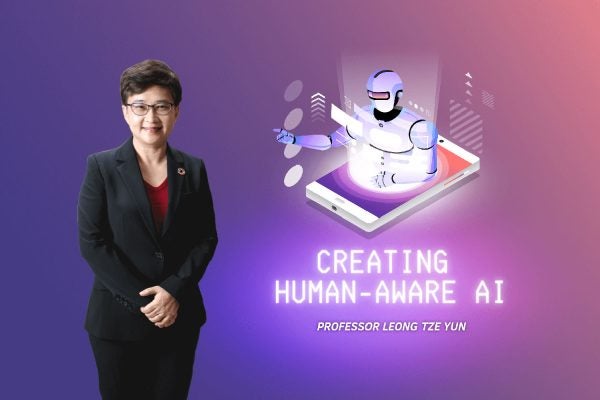
LEONG Tze Yun is a Professor in the Department of Computer Science at the School of Computing, National University of Singapore (NUS). She holds S.B., S.M., and Ph.D. degrees in Computer Science from the Massachusetts Institute of Technology (MIT). Her academic career spans both research and industry experience, with significant contributions to the fields of artificial intelligence and health informatics. Dr. Leong's educational background includes: Ph.D. in Electrical Engineering & Computer Science, Massachusetts Institute of Technology S.M. in Electrical Engineering & Computer Science, Massachusetts Institute of Technology S.B. in Computer Science & Engineering, Massachusetts Institute of Technology Her primary research interests focus on responsible AI, dynamic decision-making, neurocognitive modeling, reinforcement learning, artificial general intelligence, and biomedical and health informatics. Her work bridges the gap between theoretical AI development and practical healthcare applications, with an emphasis on ethical considerations and human-centered design. She directs the Medical Computing Laboratory at NUS, a multidisciplinary research program exploring human-aware decision modeling in complex environments. Analysis of her recent publications reveals a strong trend toward responsible AI development, with significant contributions to reinforcement learning techniques, causal inference methods, and applications of AI in healthcare. Her work increasingly integrates ethical considerations with technical AI development, particularly evident in her 2024 publications on medical AI and human values. Her scientific recognition includes: Fellow of the American College of Medical Informatics (ACMI) Founding Fellow of the International Academy of Health Sciences Informatics (IAHSI) Member of Eta Kappa Nu (Honor Society for Electrical Engineers) Dr. Leong has supervised numerous doctoral and master's students throughout her career, many of whom have gone on to prominent positions at institutions like Google, Netflix, Mayo Clinic, and academic institutions worldwide. Her advisory work extends to significant policy development, including contributions to WHO guidance on ethics and governance of AI for health. She currently serves on the World Health Organization (WHO) Expert Group on Ethics and Governance of AI for Health, the World Economic Forum (WEF) AI Governance Alliance, and the Advisory Council on AI in Uzbekistan. Her laboratory work focuses on developing adaptive systems that evolve with changing technical functionalities, system infrastructures, usage patterns, and operational contexts, with applications spanning prediction and decision analytics, human-aware robotics, game artificial intelligence, personalized education, and assistive care for elderly with neurocognitive disorders.
Fabian Fagerholm is an Assistant Professor in the Department of Computer Science at Aalto University. His work bridges software engineering, human-computer interaction, and empirical research methodologies. He actively participates in research groups such as Software and Service Engineering (SSE) and Human-Computer Interaction and Design (HCID). Fagerholm's research explores: Continuous experimentation in software development Developer cognition and mental models Agile methodologies and team dynamics Low-code platforms and end-user programming Software engineering education and pedagogy His publications reflect a strong empirical focus, with recurring themes of human factors in technical systems and educational innovation. He has received notable awards including: Journal of Systems and Software Best Paper Award (2018) EUROMICRO SEAA Distinguished Paper Award (2017) Teacher of the Year (2013) Nokia Foundation Scholarship (2013) Fagerholm contributes to software engineering infrastructure through tools for experimentation and boundary artifacts, enhancing collaboration in distributed teams.
Martin T. Wells is the Charles A. Alexander Professor of Statistical Sciences at Cornell University, with joint appointments in the Department of Statistical Science, Department of Biological Statistics and Computational Biology, Department of Social Statistics, and as Professor of Clinical Epidemiology and Health Services Research at Weill Medical School. He serves as Editor-in-Chief of the ASA-SIAM Book Series and Co-Editor of the Journal of Empirical Legal Studies. Cornell University, Ithaca, NY Weill Cornell Medical College Research Interests span applied and theoretical statistics, Bayesian methods, biostatistics, clinical epidemiology, and computational biology. His work bridges disciplines like finance, legal studies, and health services research. Article Trends highlight advancements in Bayesian modeling, quantum cognition machine learning, tensor analysis, and misclassification correction, with applications in genomics, finance, and public health. Fellow of the American Statistical Association Fellow of the Royal Statistical Society Contributions include developing statistical software (e.g., rTensor), methodological innovations in clinical trials, and empirical legal studies on civil rights and the death penalty.
Sheila McIlraith is a Professor in the Department of Computer Science at the University of Toronto, holding the Canada CIFAR AI Chair at the Vector Institute and serving as Associate Director and Research Lead at the Schwartz Reisman Institute for Technology and Society. Her research spans AI safety, ethics, reinforcement learning, and knowledge representation, with a focus on human-compatible AI and long-term societal impacts. Her career includes six years as a Research Scientist at Stanford University and a year at Xerox PARC. McIlraith’s work has been recognized through ACM and AAAI fellowships, as well as prestigious awards like the SWSA 10-Year Award (2011) and the CAIAC Lifetime Achievement Award (2024). Research Interests: AI Safety and Alignment Human-Compatible AI Reinforcement Learning with Ethical Constraints Semantic Web Services Cognitive Robotics and Diagnostic Systems Probabilistic and Logical Reasoning Recent Contributions: Her work emphasizes ethical AI integration, such as the Embedded Ethics Education Initiative (E3I), and addresses challenges in long-term AI risks, multi-agent systems, and interpretable decision-making frameworks. Awards and Honors: ACM Fellow AAAI Fellow 2023 IJCAI-JAIR Best Paper Prize 2024 CAIAC Lifetime Achievement Award Labs and Teams: McIlraith leads initiatives at the Schwartz Reisman Institute and contributes to the Vector Institute, focusing on societal and ethical dimensions of AI technology.
Professor Carlo Harvey is a creative technologist at the School of Digital Arts (SODA), Manchester Metropolitan University. His interdisciplinary research merges games , machine learning , virtual production , and cultural heritage reinterpretation . He leads industry collaborations with entities like Jaguar Land Rover and Epic Games, focusing on AI-driven interactive audio, real-time visualization, and accessibility solutions. Award-winning projects : TIGA, Innovate UK, and Epic Games MegaGrant for Accession Industry partnerships : Automotive sector, cultural institutions His research spans human-computer interaction , multisensory virtual environments , and acoustic-visual cross-modal perception . Recent publications address robotic simulations, motion alignment, and haptic feedback systems. Scientific recognition : TIGA Award, Innovate UK Funding, Epic Games MegaGrant Advocacy : Digital inclusion, creative collaboration, social impact of technology
Alexandre Jacquillat is the Maurice F. Strong Career Development Associate Professor and Associate Professor of Operations Research and Statistics at MIT Sloan School of Management. His research focuses on data-driven decision-making with applications in air traffic management, urban mobility, and decarbonization. He holds a PhD in Engineering and MS degrees from MIT and École Polytechnique. Education PhD in Engineering, MIT MS in Technology and Policy, MIT MS in Applied Mathematics, École Polytechnique Research Interests His work develops scalable optimization models for efficient, equitable, and sustainable operations. Key areas include stochastic optimization, large-scale systems design, and machine learning applications in transportation and public policy. Recent projects explore vertiport planning for urban aerial mobility and prescriptive analytics for pandemic response. Awards Harold W. Kuhn Award (2024) INFORMS Harvey Greenberg Research Award (2023) MIT Jamieson Prize for Excellence in Teaching (2023) Multiple INFORMS Best Paper Awards (2015-2023) Named Leading Academic Data Leader by Chief Data Officer Magazine (2021-2022) Teaching & Grants Teaches courses in optimization (15.093, 15.083) and analytics (15.072). His grants support work in robotic warehousing, air traffic scheduling, and disaster response logistics. Advises on transportation analytics for industry and government. Labs/Teams Leads MIT Sloan's operations research group, collaborating with industry partners like McKinsey & Co. and Booz Allen Hamilton on transportation analytics and optimization projects.