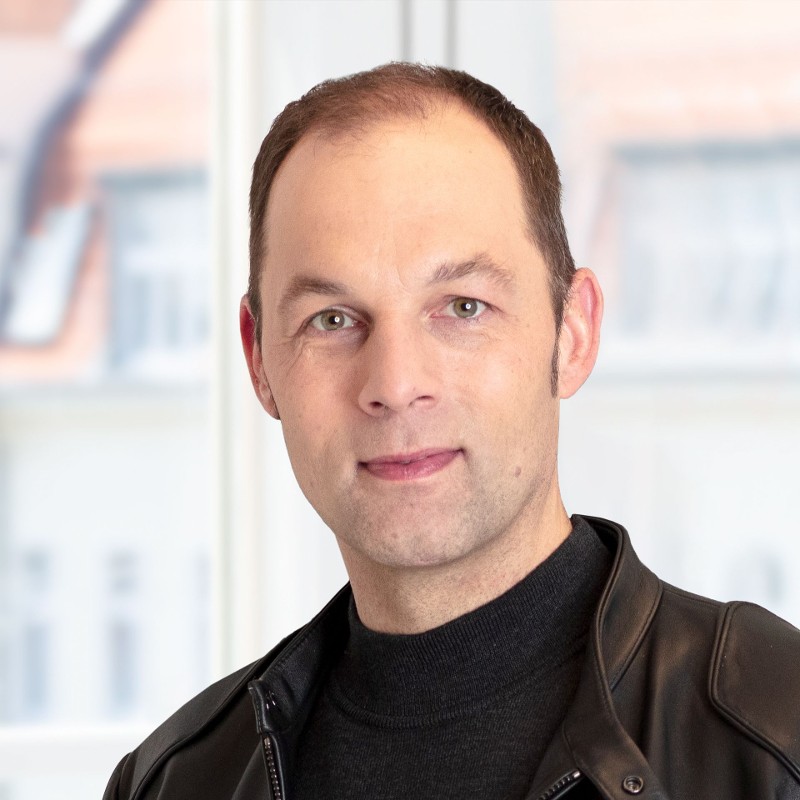
Antti Pirinen is a Senior Lecturer in the Department of Architecture at Aalto University. His work bridges spatial design and service design, focusing on human-centered, participatory, and collaborative approaches in the built environment. Key research areas include resident-driven housing development, critical analysis of dwellings, and the integration of service design in spatial contexts. Honors : Nominated for the 2023 History Book of the Year award for 'Perkeleitä ja enkeleitä – Ahlqvistien maailmat'. Antti's research explores emerging design practices in public sector governance, smart home technologies in cohousing, and the role of design in urban administration. His publications highlight interdisciplinary intersections between spatial efficiency, shared resources, and technological integration. He has contributed to collaborative housing models through tools like the 'SmartUp Fact Sheet' and design games for shared space development. His work emphasizes inclusivity, with studies on universal design for elderly and disabled populations.
David Siegel is a Professor of Political Science and Public Policy at Duke University , with joint appointments in the Sanford School of Public Policy and Trinity College of Arts & Sciences . His research focuses on collective action in contexts like political violence , terrorism , and electoral behavior , while integrating game theory and social network analysis into political science. Education : Ph.D. in Political Science from Stanford University (2006) Key Institutions : Duke University (2019–present), Florida State University (prior to Duke) His scientific awards include the Political Ties Award (2012) and an honorable mention for the William F. Riker Prize (2012). He has secured major grants from the National Science Foundation for projects exploring theory-based measurement of power and second-order impacts of PRC aggression toward Taiwan . Recent publications analyze measurement theory in political science, strategic terrorism in civil wars, and collective action costs . These align with his broader interests in political networks , security studies , and behavioral electoral theory . Siegel also co-authored influential books like A Behavioral Theory of Elections and A Mathematics Course for Political and Social Research . He teaches advanced courses in game theory , social networks , political methodology , and terrorism , emphasizing analytical rigor and empirical-theoretical integration.
Dr. Luciana Basualdo Bonatto is a researcher at the Mathematical Institute , University of Oxford , specializing in topology and its intersections with algebraic structures. She contributes to the Topology research group and has published extensively on configuration spaces, operad theory, and manifold topology. Her research interests include: Configuration Spaces Diffeomorphism Groups Homological Stability Embedding Calculus Knot Theory Operad Theory Her recent publications span mathematical topology and computational applications, including a 2023 study on moduli spaces and a 2021 work on multi-agent consensus algorithms. She collaborates internationally with researchers like Nathalie Wahl and Safia Chettih. She is affiliated with Oxford's Topology research group and works from the Andrew Wiles Building, Radcliffe Observatory Quarter.
Dr. Susan M. Sereika is a Professor in the Department of Health and Community Systems at the University of Pittsburgh School of Nursing . She holds secondary appointments in the Department of Biostatistics and Health Data Science and the Department of Epidemiology in the School of Public Health, as well as affiliations with the Clinical and Translational Science Institute and UPMC Hillman Cancer Center's Biostatistical Facility. Associate Dean for Computing and Information Technology (School of Nursing) Faculty Statistician (Office of Research Scholarship) Active in Senate Computing & IT Committee (Pitt, 1992-present) Her statistical expertise focuses on: Longitudinal data analysis for intensive monitoring (Aardex MEMS, Fitbit, actigraphy) Latent variable methods (group-based trajectory, dual/multi-trajectory analyses) Dyadic analysis Model assessment She collaborates on weight loss, lifestyle self-management, symptom management, and regimen adherence research. Academic Contributions include: PhD-level courses: Advanced Quantitative Methods Seminar (NUR 3290) Independent study supervision (NUR 3060) Statistical mentorship for honors/masters/doctoral committees Consulting for NIH reviews and journal editorial boards
Ralf Herbrich serves as Professor of Computer Science at the University of Potsdam and Hasso Plattner Institute (HPI) since 2022, chairing the Artificial Intelligence and Sustainability research group. With 25 years of combined industry and academic experience, he previously held research leadership roles at Microsoft, Facebook, Amazon, and Zalando. His educational foundation includes a Diploma in Computer Science (1997) and PhD in Theoretical Statistics (2000), both from Technical University of Berlin. Herbrich's research spans 17 interconnected AI domains: Approximate Computing Bayesian Inference and Decision Making Game Theory Information Retrieval Natural Language Processing Computer Vision Distributed Systems Learning Theory Knowledge Representation and Reasoning Computer Gaming Computational Advertising Recommender Systems Network Science Battery Management Kernel Methods Knowledge Bases Machine Learning Theory He champions a people-first methodology emphasizing real-world problem solving through 'working backwards' and 'customer-obsession', with over 80 peer-reviewed publications across these fields. His leadership prioritizes researcher development over project outcomes and favors scientific dialogue over solitary study. Herbrich actively mentors researchers within his AI and Sustainability group but specific advisee names aren't documented in source materials. His team focuses on applying rigorous research to large-scale sustainability challenges through principled engineering approaches.
Danyal Farsani is an Associate Professor at the Department of Teacher Education , Norwegian University of Science and Technology (NTNU), specializing in mathematics education through the lens of embodied cognition and cultural responsiveness . His work bridges teacher training , gesture-based learning , and cross-linguistic analysis in educational contexts. Key Research Themes: Embodied mathematical concepts, cognitive load in arithmetic, cultural/ethnomathematical practices, and multimodal communication in classrooms. Recent Collaborations: Focus on global North-South educational dynamics, robotics integration in teacher training, and metaphorical processing in language learning. Methodological Focus: Empirical studies using mental arithmetic tasks, gesture analysis, and cross-cultural curriculum evaluations. Publication Trends (2022–2025): Analysis of 15 recent articles reveals recurring emphasis on embodied cognition , mathematical metaphors , visual attention mechanisms , and culturally adaptive teaching tools like the Ethiopian Gebeta game. Subfields span gesture studies , cross-linguistic pedagogy , and innovative teacher education frameworks . No scientific awards or student advisories are explicitly mentioned in the provided data.
Anita Maria Tabacco is a Full Professor at the Department of Mathematical Sciences (DISMA) of Politecnico di Torino, with a focus on Engineering Education and Harmonic Analysis. She holds multiple administrative roles, including Rector's Delegate for Transparency and Internal Communication, Director of the University Observatory for academic dynamics, and Head of the INDAM local unit. Education: PhD in Mathematics, Washington University in St. Louis (1986) Research: Harmonic and Functional Analysis, Applications to PDEs, Gender Equality in STEM Her recent publications highlight intersections of mathematical analysis, educational technology, and gender diversity initiatives. She has led Erasmus+ projects like HerTechVenture and W-STEM to empower women in tech. Tabacco supervises PhD students including Maria Giulia Ballatore and contributes to textbooks such as Palestra di Analisi Matematica I . She co-leads the TEACH research group at DISMA, integrating pedagogical innovation with advanced mathematics.
Dr. Megan Kasten serves as a Research Affiliate in the Department of Archaeology and holds an affiliate position in Celtic & Gaelic at the University of Glasgow. Her institutional affiliation is evidenced through her university email address and ORCID profile linked to glasgow.ac.uk. Her research focuses on the intersection of digital methodologies and early medieval archaeology, particularly specializing in Ogham inscriptions, Scottish carved stones, and digital imaging techniques. Key areas include 3D modeling, Reflectance Transformation Imaging (RTI), and the application of computational methods to archaeological documentation. She investigates how digital media represents archaeological subjects, notably through analyses of Ogham in video games and tabletop RPGs. Dr. Kasten's publication trends reveal a strong emphasis on methodological innovation in archaeology, with recurring themes in Scottish early medieval heritage, Celtic studies, and pandemic-era adaptations of spatial archaeometry. Her work bridges technical digital humanities approaches with traditional archaeological interpretation of Pictish and early medieval material culture. She has contributed to collaborative research through the CAST and SPARC programs, as documented in her 2021 co-authored work on spatial archaeometry during the COVID-19 pandemic. Her editorial work on student symposium proceedings demonstrates active engagement with emerging scholars in early medieval archaeology, though no formal advisees are listed in available records. Dr. Kasten maintains research datasets through collaborations like the York Archaeological Trust project (2020), focusing on 3D use-wear analysis of artifacts. Her professional activities center on digital archaeological methods, Celtic epigraphy, and the preservation of Scotland's medieval heritage through technological innovation.
Olle Häggström is a Professor of Mathematical Statistics at Chalmers University of Technology, specifically in the Department of Applied Mathematics and Statistics. His academic career spans several decades with a significant shift in research focus over time. Häggström's research interests have evolved from traditional probability theory to encompass broader future-oriented topics. Initially focused on mathematical statistics and probability theory, including percolation theory and stochastic processes, he has increasingly turned his attention to futurology, existential risk, and AI safety in recent years. His work demonstrates a unique interdisciplinary approach, bridging rigorous mathematical analysis with philosophical considerations about humanity's technological trajectory. The trends in Häggström's publications reveal a clear evolution from purely mathematical research toward interdisciplinary studies examining the societal implications of emerging technologies. His recent work focuses heavily on AI safety, existential risk assessment, and long-term futures thinking, while still maintaining connections to his mathematical foundations. This shift is evident in publications ranging from technical mathematical papers to broader philosophical discussions about technology's impact on civilization. Häggström has received research funding from notable sources including the FTX Foundation Future Fund for his project "Topics in the theory of xrisk and longtermism" (2022-2025), indicating recognition of the importance of his work in the existential risk community. His book "Here Be Dragons: Science, Technology and the Future of Humanity" (2016) represents a significant synthesis of his thinking on these topics. While specific details about his advising activities are not provided in the source material, his research projects suggest engagement with interdisciplinary teams working at the intersection of mathematics, computer science, and future studies. His work appears to influence both academic and policy discussions regarding technological risk and long-term planning.
Dr. Anna Cai is a Lecturer in the Department of Applied Mathematics within the School of Mathematics & Statistics at the University of New South Wales (UNSW), a position she has held since 2011. Prior to this, she served as a postdoctoral researcher and lecturer at the University of California, Irvine from 2007 to 2011. Her educational background: Ph.D., The University of Melbourne, 2008 B.Sc. (First Class Honours), The University of Melbourne, 2004 Dr. Cai's research centers on Mathematical Biology , with specialization in cell migration dynamics , developmental pattern formation , and robustness in biological systems . She employs multi-scale mathematical modeling and stochastic analysis to investigate phenomena ranging from wound healing to zebrafish hindbrain development. Her work bridges theoretical mathematics with experimental biology to decode fundamental mechanisms governing cellular behavior and morphogenesis. Analysis of her 11 publications (2006-2015) reveals an evolutionary trajectory from foundational work on cell migration mechanics to sophisticated studies of developmental robustness. Early research established mathematical frameworks for wound-healing assays and immune cell dynamics, while later work pioneered noise-driven pattern formation models in zebrafish. A unifying thread is her focus on how biological systems maintain precision despite environmental fluctuations. Administrative responsibilities include: Applied representative on the postgraduate review committee UNSW study abroad and exchange course authority Current teaching assignments: MATH2121: Theory and Applications of Differential Equations MATH2018: Engineering Mathematics 2D Prior courses taught: MATH3041: Mathematical Modeling for Real World Systems MATH6781: Biomathematics
Professor Xuan-Thao Nguyen is the Pendleton Miller Chair in Law and Director of the Asian Law Center at the University of Washington School of Law. She specializes in Intellectual Property , Corporate Governance , Technology Law , and Banking , with a focus on Cryptocurrency , Law and Technology , and E-Commerce . Her work bridges legal frameworks with innovation economics. Her research explores IP Taxation as a tool for economic growth, Blockchain applications in corporate law, and Global Tech Competition between China and the U.S. She has advised on high-profile cases involving Trademark Disputes (e.g., Starbucks vs. Starbucks Workers United) and Trade Secrets (Group14 litigation). Recent publications analyze AI Copyright Class Actions (2025), Crypto Losses (2024), and Tech Bankruptcy trends. Her book Silicon Valley Bank: The Rise and Fall of a Community Bank for Tech (2024) provides a critical case study of tech finance. She actively engages in international policy discussions, including Vietnam Data Protection (2024), U.S.-Vietnam Economic Ties (2024), and Metaverse Regulation . She leads UW's Entrepreneurship and Law Speaker Series and collaborates with institutions across Southeast Asia and the U.S.
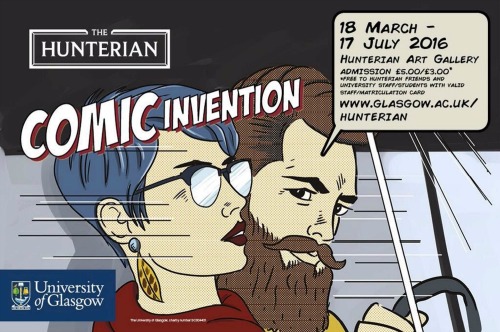
Laurence F Grove is Professor of French and Text/Image Studies at the University of Glasgow, where he serves as Director of the Stirling Maxwell Centre for the Study of Text/Image Cultures. He holds significant leadership roles as President of the International Bande Dessinée Society and Vice-Président of Les Amis de Tristan L'Hermite. Grove also serves as general editor of Glasgow Emblem Studies and co-editor of European Comic Art, establishing himself as a leading figure in interdisciplinary text/image scholarship. Professor Grove's research focuses on word/image interaction spanning from early printing to contemporary visual culture. His work bridges historical and modern approaches, specializing in emblem books from the pre-industrial period and bande dessinée (comics) in the present day. His scholarship explores how visual and textual elements interact across different historical periods and cultural contexts, with particular interest in the evolution of visual storytelling forms. Grove has made significant contributions to understanding comics as a legitimate art form and cultural phenomenon, challenging traditional literary hierarchies. His extensive publication record reveals consistent engagement with transnational comics studies, emblem research, and text/image theory. Grove's work demonstrates a clear trajectory from historical emblem studies to contemporary comics analysis, highlighting the continuity of visual-verbal communication across centuries. His research often examines national identity through visual culture, with particular attention to French and Scottish comics traditions. GUSRC Student Teaching Award nomination for Most Organised Course GUSRC Student Teaching Award nomination for Most Innovative Teaching University of Glasgow's Most Innovative Teaching recognition Professor Grove actively supervises PhD and MPhil students from around the world (including USA, France, Scotland, Brazil and England) working on various aspects of comics studies and text/image culture. His supervision covers diverse topics from emblem vogue and stereotypes to superhero narratives and video game studies. Grove has organized ten international conferences and co-curated major exhibitions including 'Breaking the Renaissance Code,' 'Comic Invention,' and 'Frank Quitely: The Art of Comics,' demonstrating his commitment to bridging academic research with public engagement. As Director of the Stirling Maxwell Centre, Grove oversees one of the world's premier collections for text/image culture research, leveraging the extensive holdings of Glasgow University Library and the Hunterian Museum and Art Gallery. His current projects include developing the Comic Invention exhibition for worldwide venues, working toward establishing a National Comics Centre for Scotland, and creating 'The Collapse of the Canon,' a multimedia project examining the evolution of cultural canons since the advent of personal computing.
Anis Matoussi is a Professor of Applied Mathematics at Le Mans University and serves as the Director of the Institut du Risque et de l'Assurance du Mans. He coordinates the master's program in Actuarial Science and leads multiple research initiatives, including ANR DREAMeS (2021-2025) and ITCA (Groupama, Fondation du Risque). Role: Professor, Applied Mathematics Institution: Le Mans University Research Leadership: Director of Institut du Risque et de l'Assurance, Head of Master Actuarial Science His research focuses on stochastic control, backward stochastic differential equations (BSDEs), and their applications in finance, insurance, and energy systems. He has developed numerical methods for second-order BSDEs and studied stochastic nonlinear PDEs, maximum principles for SPDEs, and extended mean field control models. Recent projects include the application of deep learning to forward utilities via ergodic BSDEs and multivariate risk measures. Matoussi has supervised numerous PhD students, including current advisees Zakaria Bensa (industrial thesis with Natixis) and Lucas Da Silva (co-supervised with Caroline Hillairet). Former students like Achraf Tamtalini (Bank of America) and Jing Zhang (Fudan University) hold prominent positions globally. His work includes collaborations on smart grids, control of electrical systems, and robust utility maximization under uncertainty. Publications span journals in applied mathematics, optimization, probability, and financial mathematics, with recent emphasis on numerical schemes and probabilistic representations.
Kvetoslava Matlovičová is an Associate Professor in the Department of Tourism at Bratislava University of Economics and Business. Her work bridges Tourism Geography , Territorial Marketing , and Sustainable Development with a focus on Roma communities , cultural heritage , and urban resilience . Her research explores the intersection of semiotic place branding , Anthropocene challenges , and postdisciplinary geographical frameworks . She pioneered studies on medical tourism in Hungary and pro-poor tourism in marginalized Roma settlements, emphasizing community-based solutions. Key projects include the 15-minute city sustainable urban model and metamodern shifts in geographical epistemology. Her 2025 article on AI adoption in EU tourism highlights data-driven spatial analysis. Scientific Awards: Rector's Award 2015 (Social Sciences and Humanities) Rector's Award 2016 She has led grants like Game-based learning innovation (KEGA 020EU-4/2024) and Sociological dialogue support (project 312031V749). Her advisory roles focus on territorial development and geographic education reform .
Darlene C. Chisholm is a Professor of Economics at Suffolk University in Boston, MA, holding this position since 2006. She has previously served as Associate Professor (2001-2006) and Assistant Professor (1991-1997) at Suffolk University, and has held academic positions at Tufts University, Lehigh University, and the Massachusetts Institute of Technology. University of Washington - Ph.D. Economics (1991) University of Massachusetts - B.A. Economics (1987) Princeton University - Electrical Engineering and Computer Science (1982-1984) Her research focuses on Industrial Organization, Applied Microeconomic Theory, and Spatial Competition within the U.S. Motion-Picture Industry. Her work examines product differentiation, contract structures, and strategic timing in entertainment markets, with over 20 years of publications in leading journals like the American Economic Review and Journal of Law, Economics, & Organization. Key publication themes include: Contract theory in motion pictures Spatial competition models Product line dynamics Game theory applications Technological change in cinema Asset specificity in long-term contracts Scientific awards: Visiting Yip Fellow at Magdalene College, University of Cambridge (2022) She has served as a reviewer for the National Science Foundation and as a referee for journals including the RAND Journal of Economics and Review of Economics and Statistics. Her work involves empirical analysis of movie markets, contract design, and strategic competition among theaters.