Umang Bhatt is an Assistant Professor & Faculty Fellow at New York University's Center for Data Science and a Senior Research Associate at the Alan Turing Institute. His research focuses on trustworthy machine learning, responsible AI, and human-AI collaboration. He holds a PhD from the University of Cambridge's Machine Learning Group, advised by Adrian Weller, and has held fellowships at Harvard's Center for Research on Computation and Society, Mozilla, and the Partnership on AI. Education: MS/BS in Electrical and Computer Engineering from Carnegie Mellon University. Research interests include algorithmic transparency, human decision support systems, and governance mechanisms for AI. Notable contributions include work on 'algorithmic resignation' for responsible AI use and frameworks for stakeholder feedback integration. Awards: JP Morgan PhD Fellowship, Mozilla Fellowship, Harvard SEAS Research Fellowship. Supervision: Leads a team including postdocs, MS/BS students, and Cambridge graduates. Active in academic service as ICML/FAccT program chair and CDT Non-Resident Fellow. Labs/Teams: Works across multi-institutional collaborations including Turing Institute's Safe and Ethical AI group and NYU's Data Science initiatives.
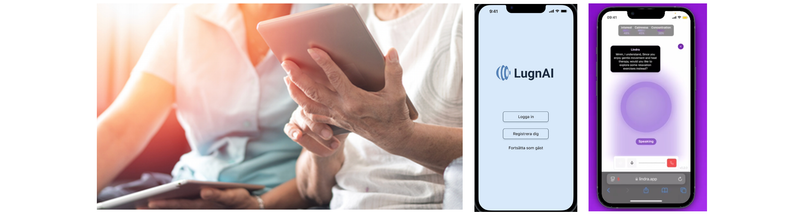
Sanna Kuoppamäki is an Assistant Professor in Technology in Health Care at KTH Royal Institute of Technology, working within the Department of Health Informatics and Logistics in the School of Engineering Sciences in Chemistry, Biotechnology and Health. Holding a PhD in Sociology, she conducts interdisciplinary research focused on user-centric digital technologies for health and well-being, with particular emphasis on healthy ageing applications. Her research program investigates the use and design of interactive technologies for healthy ageing through social robotics, wearable technologies, and mobile health applications. Dr. Kuoppamäki develops innovative methodologies that involve users throughout the design process, particularly focusing on older adults and children. Her work is theoretically grounded in social practice theory, media and communication studies, and participatory design methodologies, with a strong emphasis on understanding how technologies shape and are shaped by everyday life to create more inclusive solutions. Current research themes include conversational AI for mindfulness coaching, social robotics for elderly care, wearable technologies for physical activity monitoring, and AI-driven platform care systems. Analysis of Dr. Kuoppamäki's recent publications reveals a clear evolution toward increasingly sophisticated AI applications in elderly care contexts. Her work consistently bridges computer science, sociology, healthcare, and design disciplines, with growing emphasis on large language models, multi-modal interaction, and ethical considerations in technology deployment. The research demonstrates strong methodological rigor, with frequent use of participatory design approaches and qualitative user studies to ensure technologies meet the specific needs of older adult populations. Dr. Kuoppamäki currently leads or co-leads multiple significant research projects including 'Robots as Welfare Technologies and Actors for Elderly Care' (NORDFORSK, 2025-2029), 'AI-driven platform care (CareQuAI)' (FORTE/MYBL, 2025-2027), 'Adaptive Intelligent Homes' (Digital Futures, 2024-2025), 'Conversational AI for digital mindfulness with older adults (LugnAI)' (2023-2025), and 'Enhancing older adults' physical activity through inclusive design of interactive wearable sensor devices (Age-Wear)' (Kamprad Family Foundation, 2024-2026). As an educator, Dr. Kuoppamäki serves as course responsible and examiner for 'Entrepreneurship in Technology and Health' and 'Sociocultural Perspectives to Innovative Technologies,' while also teaching 'Industrial Marketing.' She has supervised numerous PhD and Master's students working on projects related to conversational AI applications, social robotics, and wearable technologies for elderly care, with several students completing theses on topics including age-inclusive mindfulness apps, conversational agents for cognitive assistance, and interactive wearable technologies for physical activity monitoring.
Francisco Pena Escobar is an Assistant Professor at the School of Chemistry, Biotechnology and Health at KTH Royal Institute of Technology, affiliated with the Division of Health Informatics and Logistics. His educational background includes: PhD in Computer Science from University College Cork MSc in Artificial Intelligence from the Technical University of Madrid Software Engineering Degree from Universidad del Valle His research focuses on Computer Vision and Unsupervised Learning applied to Digital Pathology and Remote Sensing . As head of the Learning Beyond Supervision Lab, he enforces four core principles: Unlabeled Data Only : Exclusive training on unlabeled datasets Real-World Focus : Prioritizing practical challenges over artificial benchmarks Collaborative Research : Mandatory external partnerships for real-world impact Domain-Driven Design : Creating purpose-built methods integrating domain knowledge He serves as examiner for Degree Project in Computer Engineering (HI111X) and assistant for Software Engineering, Project Course (HI1036), while maintaining active industry collaborations through his lab.
Leif Hammarström is Professor of Chemical Physics at Uppsala University's Department of Chemistry - Ångström Laboratory, specializing in Physical Chemistry. He has been a leading figure in artificial photosynthesis research since completing his PhD at Uppsala University in 1995, followed by post-doctoral work at the University of Bologna. His research focuses on artificial photosynthesis , electron transfer , proton-coupled electron transfer , and ultrafast laser spectroscopy . Hammarström's laboratory develops molecular systems for direct solar fuel production, with particular emphasis on mechanistic studies of the processes involved. His group employs advanced techniques including time-resolved laser spectroscopy, fluorescence spectroscopy, photochemistry, and electrochemistry to investigate these phenomena. Hammarström is recognized as one of the world leaders in mechanistic studies of artificial photosynthesis, proton-coupled electron transfer, and Ru(II)-polypyridine photosensitizers. His recent publications demonstrate continued excellence in understanding proton-coupled energy transfer, solar fuel production mechanisms, and catalytic systems for CO2 reduction and hydrogen evolution. Elected Member of the Royal Society of Sciences Founding member and chairperson of the Swedish Consortium for Artificial Photosynthesis (1994-present) Chairman of the Solar Energy Platform Sweden Core member of the international Solar Fuels Institute As former Head of Department of Photochemistry and Molecular Science, Hammarström led the formation in 2006 of what was then the world's largest center for cross-disciplinary research on Solar Fuels by artificial photosynthesis. His leadership has been instrumental in establishing Uppsala University as a global hub for solar energy research, with his group continuing to make significant contributions to sustainable energy solutions through fundamental chemical research.
Yuriy Serdyuk is an Assistant Professor at the Department of Electrical Engineering at Chalmers University of Technology. His academic position focuses on research in electrical insulation phenomena and teaching within the Master of Science in Electrical Power Engineering program. Dr. Serdyuk's research primarily centers on phenomena in electrical insulating materials exposed to strong electric fields. His work investigates processes associated with charge transport in gaseous, liquid and solid insulating materials, including their compositions and interfaces. His research aims to develop modern electrical insulation for components of future sustainable high-voltage electric power systems. His expertise spans across dielectric materials, high-voltage engineering, transformer technology, and cable insulation systems. Analysis of Dr. Serdyuk's recent publications reveals a strong focus on practical applications of electrical insulation research. His work demonstrates increasing integration of computational methods including physics-informed neural networks for studying charge dynamics. Key research trends include sustainable insulation solutions for electric vehicles, improved testing methodologies for insulation systems under power electronics-induced stresses, and investigation of material properties under various environmental conditions. His research increasingly addresses challenges in HVDC systems, subsea cable applications, and the interface between power electronics and traditional power systems. Dr. Serdyuk is actively involved in teaching two courses in the Master of Science in Electrical Power Engineering program at Chalmers. His extensive publication record spanning from 2003 to 2025 (with 155 publications documented) indicates sustained research productivity and relevance in the field of electrical insulation and high-voltage engineering. His collaborative work involves numerous research projects addressing contemporary challenges in electrical power systems.
Kristoffer N T Månsson serves as Associate Professor and Principal Investigator at Karolinska Institutet's Department of Clinical Neuroscience, leading the Månsson Lab with active collaborations across Stockholm University, Uppsala University, Dartmouth College, and Babeș-Bolyai University. His research program integrates neuroimaging, computational psychiatry, and clinical interventions to identify neural biomarkers for psychiatric treatment response. Research focuses on neural variability as a predictor of treatment outcomes in anxiety and depression, with particular emphasis on rapid brain plasticity during cognitive behavioral therapy. His team employs multimodal approaches including fMRI, structural MRI, and peripheral biomarker analysis to investigate moment-to-moment neural dynamics in psychiatric disorders. Key projects include the TREVAR study on neural variability in anxiety/depression and EU-funded research on adolescent mental health in Romania. Current funding sources include the Swedish Research Council (6 MSEK for placebo responsiveness studies), European Union (€1.3M for child/adolescent anxiety research), CIMED, and the Swedish Brain Foundation. His work demonstrates consistent translational impact, with multiple publications in Biological Psychiatry and Cerebral Cortex receiving significant media coverage in Scientific American and Swedish outlets. Somerfeld-Ziskind Research Award Honorable Mention (2023) StratNeuro Retreat Best Clinical/Translational Poster (2022) Lab members include postdocs specializing in computational neuroscience (Tsikonofilos, Zika), research engineers (Manzouri), and PhD students from international institutions. The team actively collaborates with leading researchers including Tor Wager (Dartmouth), Tomas Furmark (Uppsala), and Mats Lekander (Stockholm University) on projects spanning neural plasticity, biomarker validation, and treatment optimization.
Masood Fathi is an Associate Professor of Production Engineering at the University of Skövde, Sweden. He holds a position within the School of Engineering Science and Department of Engineering. As an academic, he focuses on advanced manufacturing systems, Industry 4.0/5.0 technologies, and optimization methodologies. His research integrates AI applications, sustainability, and human-robot collaboration in production environments. Education: Formal academic qualifications (specific details not explicitly provided in text). Research Interests: Professor Fathi's work centers on optimizing production systems through advanced algorithms and technologies. Key areas include assembly line balancing, energy-efficient manufacturing, supply chain optimization, and the application of generative AI in industrial processes. He also explores resilience in production systems and sustainable practices such as healthcare waste management and remanufacturing. Recent Trends in Publications: Recent work emphasizes Industry 5.0 sustainability goals, human-robot collaboration, and AI-driven quality inspection. Articles highlight multi-objective optimization challenges, resilient worker performance under disturbances, and the integration of simulation-based decision support systems. Grants & Projects: Lead researcher on projects like 'Enhancing Hospital Services Under Resource Constraints' (2025) and 'Virtual Engineering Agile Manufacturing in Industry 4.0' (2021–2025). Focus areas include smart manufacturing, digital twins, and resilient production systems. Labs/Teams: Collaborates with interdisciplinary teams on projects involving augmented reality for quality inspection, blockchain in supply chains, and lean-green manufacturing integration.
Martin Skoglund is an Adjunct Associate Professor at Linköping University, affiliated with the Department of Electrical Engineering and the Automatic Control (RT) research group. His work bridges engineering and neuroscience, focusing on advanced signal processing for hearing-impaired listeners. Institution: Linköping University Department: Department of Electrical Engineering (ISY) Research Group: Automatic Control (RT) Email: martin.skoglund@liu.se His research interests lie at the intersection of biomedical signal processing and cognitive neuroscience, particularly in decoding auditory attention using EEG signals. He specializes in enhancing speech tracking for hearing aid users through deep learning, contrastive learning, and nonlinear signal compensation techniques. His work addresses real-world challenges such as noise interference and hardware-induced nonlinearities in neural recordings. The recent publications highlight a strong trend in developing machine learning models that improve brain-computer interfaces for hearing assistance. These studies predominantly apply deep learning and statistical methods to EEG data, aiming to decode which speaker a listener is focusing on in complex acoustic environments. The research is highly interdisciplinary, combining elements of electrical engineering, neuroscience, and clinical audiology. Martin Skoglund actively collaborates with experts in auditory neuroscience and control systems. While no formal awards or students are listed in the provided texts, his contributions appear in high-impact journals such as Journal of Neural Engineering and eNeuro , as well as top-tier conferences like ICASSP. He is involved in research projects related to auditory attention decoding, EEG-based speech tracking, and signal enhancement for hearing-impaired individuals. These efforts are likely part of broader initiatives in assistive neurotechnology and intelligent hearing systems at Linköping University.
Lukas Splitthoff is a postdoctoral researcher at the Department of Microtechnology and Nanoscience (MC2) at Chalmers University of Technology, Sweden. He is part of the 202q-lab led by Simone Gasparinetti, focusing on advancing bosonic quantum computing architectures using superconducting circuits. His work integrates topological systems, quantum coherence, and hybrid qubit designs. Education: PhD in Physics, Technical University of Delft, The Netherlands (2024) – Thesis: 'Gate-tunable kinetic inductances for superconducting circuits' MSc in Physics, University of Münster, Germany (Exchange at Université Paris-Sud, France) – Thesis: 'Tantalum pentoxide nanophotonic circuits for integrated photonics' Research Interests: Lukas explores superconducting circuits for quantum computing, topological phases in condensed matter systems, and nanophotonic integration. His projects emphasize gate-tunable devices, topological protection of qubit states, and scalable quantum architectures. He also investigates quasiparticle loss mitigation and hybrid spin-transmon systems for enhanced coherence. Labs & Affiliations: Core member of the 202q-lab at MC2, collaborating with leading groups in superconducting qubit research. His work bridges theoretical models with experimental implementations in cryogenic environments.
Magnus Karlsson is a Senior Associate Professor at Linköping University's Department of Science and Technology (ITN), within the Physics, Electronics and Mathematics division. He holds a Master of Science (2002) and a PhD (2008) in Communication Electronics from Linköping University's Norrköping campus. His research focuses on communication electronics, microwave technology for industrial heating, IoT-driven building energy optimization, and electromagnetic compatibility (EMC). He leads projects involving digital twins for historic building preservation, energy forecasting, and cloud-based environmental monitoring systems. Teaching includes four master's courses in Electronics and Systems Design: circuit board design, RF electronics, antenna theory, and EMC. He chairs the master's program planning group and serves on the Program Board for Electrical Engineering, Physics, and Mathematics. His electromagnetic compatibility laboratory at Norrköping campus supports research on antenna experimentation and EMC standards compliance. Recent work emphasizes IoT integration with historic structures and AI-enhanced energy efficiency systems.
Sandra Di Rocco is a Professor of Mathematics and Dean of the Faculty of Engineering Sciences at KTH Royal Institute of Technology. Her research focuses on Algebraic Geometry, particularly its applications to complex data analysis and geometric problems. She leads the Applied Algebraic Geometry research group, which includes postdocs and PhD students working on topics like toric varieties, geometric feature sizes, and numerical algebraic geometry. Her research interests span algebraic geometry's theoretical foundations and computational aspects, including toric varieties, discriminant theory, and geometric optimization. Notable contributions include work on Gaussian likelihood geometry and computational methods for algebraic manifolds. Current research group members include postdocs like Kemal Rose and Yueqi Cao, as well as PhD student Giacomo Maletto. Past collaborators include Luca Sodomaco and Oliver Gäfvert. The group is affiliated with the AlToGeLiS initiative. Her articles emphasize interdisciplinary approaches, blending algebraic geometry with data science, optimization, and topology. Recent work addresses geometric feature computation, discriminant analysis, and topological sampling techniques. Di Rocco has supervised multiple PhD students and contributes to academic leadership roles at KTH. She is actively engaged in international collaborations and conferences to advance the field of applied algebraic geometry.
Elena Dubrova is a Professor at the Division of Electronics and Embedded Systems, KTH Royal Institute of Technology. She specializes in hardware security, cryptography, and embedded systems security. Her roles include examiner and course responsible for advanced degree projects in Computer Engineering, Communication Systems, Embedded Systems, and Machine Learning. She also teaches courses such as Design of Fault-Tolerant Systems, Hardware Security, and Internet Security and Privacy. Her research focuses on side-channel attacks, cryptographic algorithm vulnerabilities, and FPGA security. Notable work includes analyzing hardware security flaws in cryptographic implementations (e.g., CRYSTALS-Kyber, AES), RF signal leakage in chips, and mitigating threats in FPGA-based systems. Her contributions span both theoretical advancements and practical countermeasure development. Dr. Dubrova’s articles highlight trends in post-quantum cryptography vulnerabilities, machine learning-assisted security analysis, and the integration of physical unclonable functions (PUFs) for secure authentication. She emphasizes hardware-software co-design for robust security solutions. No scientific awards are explicitly listed in the provided information. Her work involves collaborative projects on cryptographic protocol design and secure embedded system architecture, though specific grants or lab affiliations are not detailed here.
Gunnar Tibert is an Associate Professor at KTH Royal Institute of Technology's School of Aerospace, Moveability, and Naval Architecture. He specializes in deployable structures for aerospace applications, with a focus on bistable composites, tensegrity systems, and space deployment mechanisms. His roles include examiner and course responsible for courses like Spacecraft Dynamics and Project in Aerospace Engineering . Education: Ph.D. in Deployable Tensegrity Structures for Space Applications (KTH, 2002), Licentiate in Numerical Analyses of Cable Roof Structures (KTH, 1999). Research Interests: Structural dynamics, composite materials, space system design, and vibration suppression in deployable systems. His work spans both peer-reviewed articles and experimental studies, including sounding rocket experiments for space web deployment. Recent publications focus on planetary sunshade systems for climate engineering, metamaterials for vibration control, and additive manufacturing in satellite components. He collaborates on projects like the Suaineadh space web experiment and B2D2 composite boom deployment. Notable contributions include form-finding methods for tensegrity structures and material characterization for bistable tape springs. His research combines experimental testing, numerical simulations, and aerospace engineering principles to advance deployable space technologies.
Romain Rumpler is an Associate Professor at the Department of Vehicle Engineering and Technical Acoustics, KTH Royal Institute of Technology. His research focuses on numerical methods and modeling for coupled acoustics and vibration applications, including finite element modeling, design optimization, and acoustic metamaterials. He leads initiatives in transportation noise, such as noise impact assessment and traffic strategies. He is affiliated with the Centre for Eco2 Vehicle Design and has been funded by the Swedish Research Council, FORMAS, VINNOVA, and European programs like Shift2Rail and CIVITAS. His teaching includes courses like Building Acoustics and Community Noise and Noise and Vibration Control . Education: PhD in Vehicle Engineering and Technical Acoustics, KTH Royal Institute of Technology (2012) Research Interests: His work spans efficient finite element methods, acoustic material design, and urban noise mitigation. He develops experimental-numerical approaches for noise assessment and contributes to eco-friendly vehicle design through projects like the EU VAMOR initiative. Recent efforts include metamaterials for sound insulation and real-time noise mapping techniques. Articles Trends: Romain's publications emphasize transportation noise analysis, structural acoustics, and computational methods. Key themes include noise detection algorithms, parametric model reduction, and material characterization for vibration suppression. His work bridges theoretical models with practical applications in urban planning and vehicle engineering. Awards: 2022 Supervisor of the Year Award (Centre for Eco2 Vehicle Design) Grants & Advising: Funded projects include VR, FORMAS, and EU grants. He advises students on acoustic metamaterials and noise control, with a focus on sustainable transportation solutions. His team collaborates on agent-based noise impact models and low-frequency vibration mitigation. Labs & Projects: Associated with Digital Futures initiatives (DIRAC, GEOMETRIC, SENZ-Lab) and the Centre for Eco2 Vehicle Design. His work supports eco-efficient vehicle design and smart traffic strategies to reduce environmental impact.
Martin Blom is an Associate Professor at the Department of Computer Science, Karlstad University since 1996. His research focuses on software architecture, software testing, agile methodologies (Scrum/XP), code metrics, and semantic programming. He has authored/co-authored over 25 journal/conference papers and three book chapters. Education: Licentiate in Computer Science (Karlstad University, 2002) PhD in Computer Science (Karlstad University, 2006) Research Interests: Architectural degradation detection using code metrics Testability and software performance analysis Agile methodologies in complex system development Documentation methods and reusability in software maintenance Semantic aspects in component-based systems Key Article Trends: Recent work emphasizes empirical studies on software architecture recovery, code smell detection's applicability to architectural degradation, and systematic mapping studies on testability. Earlier contributions focused on contract-based programming and design contracts' role in error management. Labs/Teams: Currently collaborates with multiple local businesses on applied research projects. Active in software engineering education integrating empirical research into teaching.