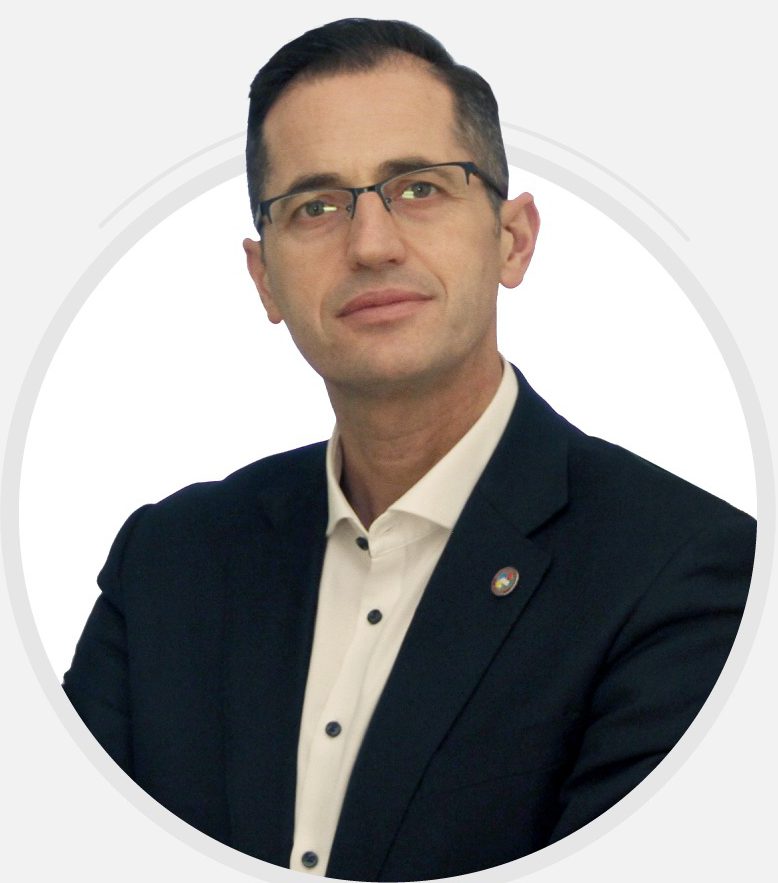
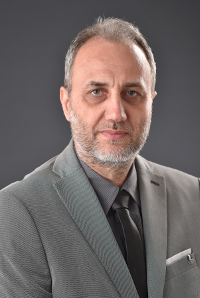
Dalibor Radovanović is a researcher at Singidunum University , affiliated with the Faculty of Business Informatics . His work spans cybersecurity, blockchain technologies, and their applications in business and IoT systems. Education: Doctoral Dissertation (2016, Singidunum University) Master's & Basic Studies (Faculty of Business Informatics) Secondary Education: ETŠ Nikola Tesla Research Interests include: Security frameworks for IoT and blockchain integration Smart card and wireless network vulnerabilities E-governance and corporate IT audit methodologies Machine learning applications in cybersecurity Environmental performance optimization in agribusiness Publication Trends reveal a focus on blockchain (2022), cybersecurity (2009-2022), and IT governance (2010-2017). His work bridges theoretical analysis with practical implementations in Serbia's digital economy. Collaborations with scholars like Marko Šarac and Saša Adamović highlight interdisciplinary approaches to securing financial systems, educational institutions, and industrial IoT applications.
Nebojša Bačanin Džakula is an academic affiliated with Singidunum University's Faculty of Mathematics, specializing in Computer Science. He earned his PhD in 2015 with a thesis on improving swarm intelligence metaheuristics for global optimization. His research focuses on AI-driven solutions for cybersecurity, energy forecasting, and optimization algorithms. He has authored/co-authored books on cloud computing and web programming. His work bridges metaheuristics with machine learning, addressing challenges in IoT security, renewable energy prediction, and healthcare diagnostics. He actively contributes to conferences like Sinteza and IEEE events, emphasizing practical applications of AI and optimization in real-world scenarios. Education: Completed doctoral studies at the Faculty of Mathematics (2009–2015). Extensive industry certifications include Microsoft, CompTIA, and Oracle credentials, enhancing his technical expertise. Research Interests: Develops hybrid models combining metaheuristics (e.g., PSO, GA) with deep learning for tasks like intrusion detection, price forecasting, and medical diagnostics. Specializes in optimizing neural networks and feature selection using advanced algorithms. His work often addresses societal challenges in sustainability, cybersecurity, and healthcare. Recent Publications: Focus on AI-driven solutions for IoT security, renewable energy prediction, and medical diagnostics (e.g., Parkinson’s detection via LSTM networks). His articles appear in prestigious journals like Engineering Applications of Artificial Intelligence and Applied Soft Computing.
Akanksha Agrawal is an Assistant Professor and Veena and Induprakas Keri Faculty Fellow at the Department of Computer Science and Engineering, Indian Institute of Technology Madras. Her research focuses on Parameterized Complexity & Algorithms, Graph Algorithms, Computational Geometry, Exact Algorithms, and Fine Grained Algorithms & Complexity. She has held postdoctoral positions at Ben-Gurion University of the Negev (Israel) and the Hungarian Academy of Sciences, funded by a PBC Fellowship. She earned her Ph.D. from the University of Bergen under Professors Saket Saurabh and Daniel Lokshtanov. Education: Ph.D., University of Bergen, Norway (2017-2021) Postdoctoral Researcher, Ben-Gurion University of the Negev, Israel (2021-2022) Postdoctoral Researcher, Hungarian Academy of Sciences, Hungary (2022-2023) Research Interests: Her work emphasizes parameterized complexity, graph algorithms, and computational geometry. She explores exact algorithms, fine-grained complexity, and algorithmic approaches to NP-hard problems. Her research bridges theoretical insights with practical algorithmic solutions. Recent Activities & Awards: ACM-India Eminent Speaker (2024-2026) Invited Talks: COMSNETS 2025, IISc Bengaluru (2024), Bali Parameterized Graph Algorithms (2024) Program Committee Roles: IPEC 2025 (Co-Chair), WG 2025, CALDAM 2025 Grants & Academic Services: Organizing Dagstuhl Seminar (Jan. 2025) with Maria Chudnovsky, Daniel Paulusma, and Oliver Schaudt Contributions to international conferences and workshops Teaching: Courses include Combinatorial Objects, Parameterized Algorithms, Design & Analysis of Algorithms, Approximation Algorithms, and Advanced Data Structures.
Prof. Blerim Rexha is a full professor at the University of Prishtina's Faculty of Electrical and Computer Engineering, Kosovo. With a Ph.D. in Computer Engineering from Vienna University of Technology (2004), he has led research in cybersecurity, blockchain, machine learning, and electronic voting systems. His teaching portfolio includes data, computer, and internet security courses. Education : Ph.D. in Computer Engineering (Vienna), Electrical Engineer MSc (Prishtina), specialized certifications in software engineering, biometrics, and .NET programming. His research spans cybersecurity (DDoS mitigation, face authentication attacks), blockchain applications (electronic voting bridges, transaction privacy), and machine learning integration (boosted trees for intrusion detection, LSTM for vulnerability scanning). He has contributed to cloud security through novel encryption methods and AI-driven attack detection. Recent publications focus on energy efficiency in cloud vs on-premises systems, XGBoost/CatBoost/LightGBM comparisons for network security, and blockchain bridges for e-voting. His work has addressed privacy preservation in video data, SMS encryption, and eID card pseudo-profiles. Awards include the 2024 Marin Barleti Prize for academic contributions and Best Paper Awards in election security (2015) and Kosovo website vulnerabilities (2013). Honors : Marin Barleti Prize (2024) Cyber Security Ambassador (2018) ICT Academician of the Year (2016) Best Paper Awards (2015, 2013) As academic advisor to the KosovaCyberTeam , he mentors students like Korab Keqekolla and Abian Morina. His leadership extends to Kosovo's Cyber Security State Training Center curriculum development and jury roles in Albanian ICT Awards .
Zoran J. Stankovic is a Full Professor at the Faculty of Electronics, University of Niš, Serbia, in the Department of Telecommunications. He has been an integral part of the institution since earning his PhD in 2007, progressing from Assistant to Associate Professor (2020) and Full Professor (2024). He is actively involved in research, education, and academic leadership. Education: PhD in Telecommunications, Faculty of Electronics, University of Niš (2007) Master's in Telecommunications, Faculty of Electronics, University of Niš (2002) Bachelor's in Electronics and Telecommunications, Faculty of Electronics, University of Niš (1994) His research focuses on applying artificial neural networks to solve complex problems in electromagnetics and wireless systems. Key areas include antenna design optimization , direction-of-arrival (DoA) estimation , microwave cavity modeling , and smart textile antennas . His work bridges machine learning with electromagnetic theory, enabling efficient and adaptive RF system design. The analysis of his recent publications reveals a strong trend in using deep and hybrid neural networks for electromagnetic modeling and signal processing. His research emphasizes real-world applications such as wearable antennas, mobile source tracking, and intelligent antenna systems, often published in high-impact IEEE and Wiley journals. Scientific Awards: Commemorative Plaque from the Yugoslav Society for Microwave Techniques and Technologies (2005) for outstanding scientific results in microwave engineering Advising and Grants: While specific students are not listed, he has supervised numerous academic works. He has participated in 17 research projects (13 national, 4 international including DAAD, NATO, COST) and 8 educational development projects (including ERASMUS+, TEMPUS, WUS). These reflect sustained funding and academic collaboration. Labs and Teams: He is the founder and head of the Laboratory for Antennas and Propagation at the Faculty of Electronics, Niš. He is actively involved in organizing and leading the international conferences TELSIKS and ICEST , serving on their program and organizational committees, demonstrating strong leadership in the academic community.
Yannic Maus is a University Professor at the Faculty of Computer Science and Biomedical Engineering at Graz University of Technology (TU Graz), Austria, where he heads the newly founded Institute of Algorithms and Theory (established in 2025). He also serves as co-leader of one of the five fields of expertise at TU Graz (FoE Information, Communication & Computation). His academic journey includes: PhD in Computer Science from University of Freiburg, Germany (2014-2018) MSc in Mathematics from RWTH Aachen, Germany BSc in Mathematics and Computer Science from RWTH Aachen, Germany (with a year at National University of Singapore) Professor Maus specializes in theoretical computer science and algorithm design, with a particular focus on distributed computing. His research spans distributed graph algorithms, efficient algorithms, data structures, complexity theory, and geometric algorithms. He approaches problems with both theoretical rigor and practical applications in mind, seeking clean mathematical solutions to questions motivated by real-world systems. His recent publications show a strong focus on distributed and parallel algorithms, particularly in graph theory. The research trends include distributed graph coloring, symmetry breaking, vertex cover problems, and massively parallel computing models. His work often bridges theoretical computer science with practical distributed systems considerations, with applications to large-scale networks and highly parallel systems. Professor Maus has received numerous accolades for his research: 2020 Principles of Distributed Computing Doctoral Dissertation Award Wolfgang-Gentner-Nachwuchsförderpreis 2019 GI Dissertationspreis 2018 Best Paper Awards at SIROCCO 2016, DISC 2016, and DISC 2017 Professor Maus actively mentors PhD students and has secured significant research funding, including FWF grants P36280-N (2023-2027), DOC 183 (2024-2028), I6915 (2024-2028), and FFG grant No. 59263962. His research group maintains strong international collaborations with institutions across Germany, Finland, Iceland, Israel, and beyond, providing students with opportunities for international research visits. He leads the Algorithms & Complexity research group at TU Graz, which includes PhD students Manuel Jakob, Florian Schager, Malte Baumecker, and Kritika Kashyap, as well as postdoc Tijn de Vos. The group is actively involved in theoretical computer science research with a focus on distributed and parallel algorithms, particularly for large-scale networks and highly parallel systems.
Marina Milovanović is a Professor at the University of Singidunum, Faculty of Informatics and Computing, Department of Mathematics. She holds dual doctoral degrees from the Faculty of Science, University of Kragujevac (Department of Mathematics, 2014) and Faculty of Entrepreneurial Business, Union University (2008), along with Master's and Bachelor's degrees from the Faculty of Mathematics, University of Belgrade (2000-2005 and 1995-2000 respectively). Faculty of Science, University of Kragujevac, Department of Mathematics (PhD, 2014) Faculty of Entrepreneurial Business, Union University (PhD, 2008) Faculty of Mathematics, University of Belgrade (Master's, 2000-2005) Faculty of Mathematics, University of Belgrade (Bachelor's, 1995-2000) Svetozar Marković High School, science and mathematics major (1991-1995) Professor Milovanović specializes in Mathematics Education and Educational Technology, with particular expertise in interactive multimedia applications for teaching mathematics. Her research consistently bridges theoretical mathematics with practical educational technology solutions, evolving from traditional multimedia approaches to incorporating cutting-edge AI and machine learning techniques. She has authored multiple books including 'Interactive multimedia in mathematics teaching' (2015) and collections of solved mathematics problems for entrance exams. Her recent publication record through 2025 demonstrates active engagement in interdisciplinary research, particularly at the intersection of educational technology, artificial intelligence, and practical applications in fields ranging from software engineering to medical diagnostics. Her work shows a clear trajectory from foundational educational technology research toward more sophisticated AI-enhanced learning systems. Professor Milovanović has made significant contributions to semantic web applications in education, particularly through Moodle LMS enhancements, and has explored SCADA applications in industrial contexts. Her collaborative research spans multiple countries and institutions, reflecting an international scholarly network. She has extensive experience developing computer tools for engineering education and has published on diverse topics including petroleum industry processes, environmental management, and financial mathematics. Her work demonstrates consistent application of computational approaches to solve domain-specific problems across multiple disciplines.
Miloš Racković serves as a full Professor in the Department of Mathematics and Informatics at the University of Novi Sad, Serbia. He maintains active academic engagement through the Laboratory for the development of information systems, with his office located in the Information technologies and systems office (DMI&DF) on the second floor, room 49. Contact is available via telephone (485)-2868 or email rackovic@dmi.uns.ac.rs, and his personal website (http://www.is.pmf.uns.ac.rs/rackovicm/) provides additional resources. His research spans foundational and applied computer science, with seminal contributions in fuzzy database systems including PFSQL query language development and prioritized fuzzy logic for relational databases and XML. He has pioneered deep learning methodologies through innovative classification techniques using negative and missing features in convolutional neural networks. Additional expertise includes high-performance computing implementations of Lattice Boltzmann methods using OpenCL, robotics (symbolic modeling and trajectory planning), and blockchain applications for Industry 4.0 production processes. His sports analytics work applies neural networks to basketball player and referee movement analysis. Analysis of his 2012-2025 publications reveals a strategic evolution toward interdisciplinary applications, particularly in industrial transformation (blockchain-enabled traceability) and sports analytics. His work consistently bridges theoretical computer science with practical implementations, demonstrating increasing focus on real-world problem solving while maintaining strong foundations in database theory and computational methods. Professor Racković leads the Laboratory for the development of information systems, which focuses on advancing information system methodologies through formal modeling extensions (including Petri net innovations) and practical implementations for uncertainty management. The laboratory's work spans from foundational research in fuzzy logic systems to applied projects in high-performance computing and blockchain integration, fostering innovation in information technology development.
Marko Tanasković is a researcher at Singidunum University's Faculty of Informatics and Computing, specializing in control systems, robotics, and electrical engineering. He holds a PhD from ETH Zurich (2015) in Information Technology and Electrical Engineering, following degrees from University of Belgrade (BEng, 2009) and ETH Zurich (MEng, 2011). His research focuses on adaptive control systems, machine learning applications in engineering, and sensorless motor control. Key contributions include: Development of predictive algorithms for traffic systems and industrial automation Innovations in rotor orientation determination for PMSM motors Integration of AI in fraud detection and building climate control Recent work includes a 2024 study on wearable health monitoring devices and a 2022 paper on drone forensics. He has authored/co-authored over 15 peer-reviewed articles and holds patents in motor control technologies. Current affiliations include Singidunum University's Department of Electrical Engineering and Collaboration with ETH Zurich alumni networks. Active in international conferences such as Sinteza and IEEE events.
Sandra M. Đosić is an Associate Professor at the Faculty of Electronics in Niš, University of Niš, Serbia, specializing in Electronics and Embedded Systems. She has been actively contributing to research in real-time systems, fault tolerance, wireless sensor networks, and indoor localization technologies. Research Interests: Her work spans fault-tolerant real-time systems, energy-efficient computing, UWB-based indoor localization, and communication protocols for wireless sensor networks. She explores techniques such as dynamic voltage and frequency scaling (DVFS), tone-based contention resolution, and deflection routing in networks-on-chip to enhance system reliability and efficiency. Publication Trends: Her recent publications (2009–2022) demonstrate a strong focus on improving robustness and performance in embedded and distributed systems. The research integrates signal processing, network optimization, and energy-aware design, primarily applied in industrial and indoor environments. Scientific Awards: No awards are mentioned in the provided text. Advising and Grants: While no specific students are listed, she is currently participating in two national research projects, indicating active involvement in funded research. Her collaborations with researchers such as Igor Stojanovic and Milica Jovanovic suggest a strong team-based research approach. Labs and Research Teams: Although no formal lab or team name is specified, her repeated co-authorship with colleagues from the Faculty of Electronics implies active participation in a research group focused on electronics, communications, and real-time systems.
Prof. Dr. Aleksandra Perić-Grujić is a Full Professor at the Department of Analytical Chemistry and Quality Control within the Faculty of Technology and Metallurgy at the University of Belgrade . She has been active in academia since 2013, with a focus on quality control systems and environmental chemistry. Her work spans pharmaceutical industry standards, instrumental analytical methods, and laboratory accreditation. Email: alexp@tmf.bg.ac.rs Office: TMF building, room 252b Research Interests include: Environmental Chemistry: Monitoring heavy metals in water, soil, and sediments Analytical Chemistry: Development of instrumental methods and chemometric models Quality Control: Pharmaceutical industry standards, accreditation of laboratories Adsorption Materials: Chitosan-based hydrogels for pollutant removal Chemometrics: Data analysis techniques for metal alloys and environmental studies Food Industry Applications: Quality management in food production and distribution Recent Publications address topics like metal alloy similarity modeling, heavy metal adsorption by hydrogels, and chemometrics in environmental analysis. Her work demonstrates interdisciplinary applications of analytical chemistry in pollution control and industrial quality assurance. Mentoring involves guiding students in doctoral and master's theses on themes such as: Heavy metal removal using waste materials Quality management in pharmaceutical and polymer industries Chemical analysis of consumer products and environmental samples Standardization of laboratory practices and industrial processes
Professor Ivan Z. Milentijevic is a full professor at the Faculty of Electronics in Niš, University of Niš, within the Department of Electrical Engineering and Computer Science. He earned his PhD in Computer Science from the same institution in 1998, following a Master's (1994) and undergraduate degree (1989) in the same field. His research focuses on systolic arrays, digital signal processing architectures, and project-based learning methodologies. He has published 8 papers in journals with impact factor and is currently involved in 1 domestic and 1 international research project. Research interests include: Optimal design of systolic arrays for matrix operations FIR filter architectures and error-tolerant systems Reconfigurable hardware and parallel processing Educational technologies in project-based learning His recent work (2002–2008) emphasizes configurable architectures for signal processing and collaborative learning systems. Earlier contributions (1996–1998) focused on systolic array optimization for linear algebra operations. Advising/grants: No explicit student/advisor relationships listed. Current projects involve 1 domestic and 1 international collaboration. Grants and funding details not specified. Labs/teams: Affiliated with the Faculty of Electronics' research groups in computer engineering and signal processing, though specific lab names are not mentioned.
Prof. Dr. Saša Adamović is a faculty member at Singidunum University in Belgrade, Serbia, affiliated with the Faculty of Informatics and Computer Science . His academic career spans over 15 years with a focus on Cryptography, Biometrics, and IoT Security . Born October 15, 1985, in Drvar, Bosnia and Herzegovina PhD in Advanced Security Systems (2013), Master’s in Contemporary Information Technologies (2008), and Bachelor’s in Business Informatics (all from Singidunum University) His research interests include: Biometric Cryptography Blockchain for IoT Security Catalan Number Applications in Cryptography Machine Learning in Security Systems Virtualization and Energy Efficiency Steganography and Forensics Recent publications highlight trends in: IoT Healthcare Security (2022) Biometric Authentication (2021) Combinatorial Cryptography (2021) Machine Learning for Diabetes Prediction (2021) Distance Learning Security (2023) He served as one of five Serbian representatives in the Open World program (USA) for expert exchange in technology development.
Aleksandar Jevremović is a Full Professor at the Faculty of Informatics and Computing, Singidunum University (Belgrade, Serbia), and holds multiple academic and professional roles. He is the Serbian representative at the UNESCO IFIP Technical Committee on Human-Computer Interaction since 2018. He has served as Vice-Dean of his faculty (2015–2018) and held visiting professorships at institutions like Ss. Cyril and Methodius University (North Macedonia) and Tallinn University (Estonia). His research focuses on cybersecurity, IoT, AI, and e-learning innovation. Education and Affiliations: External Researcher at the Mathematical Institute of the Serbian Academy of Sciences and Arts Visiting Scholar at Cyprus Interaction Lab (Cyprus University of Technology) Alumni/Postdoc Researcher at Tallinn University's HCI Group Member of IEEE and the Informatics Association of Serbia Research Interests: Jevremović’s work spans cybersecurity (e.g., intrusion detection, secure IoT protocols), human-computer interaction (HCI), AI-driven education tools, and neurotechnological applications like EEG-based assessment systems. He emphasizes practical solutions for digital safety, such as children’s online protection and cryptographic key generation from biometric data. Grants and Projects: Member of the External Advisory Committee for the EU-funded ONTOCHAIN project (2022–2023) Mentor for training schools like AAPELE Training School and NET4Age-Friendly initiatives Trainer in IoT, cybersecurity, and health promotion programs across Europe Labs and Teams: He collaborates with interdisciplinary teams on projects like CASPER (Children Agents for Secure and Privacy Enhanced Reaction) and led the development of WIDE, a collaborative web development education platform.
Aleksandar R. Popović is a Full Professor at the University of Belgrade's Faculty of Chemistry, Department of Applied Chemistry. He holds a PhD from the same institution and has held academic positions since 1997, progressing from Teaching Assistant to Full Professor by 2013. His research focuses on environmental pollutants, waste material reuse, and atmospheric deposition, leveraging biomonitoring techniques. He has led or participated in multiple national and international research projects, including studies on soil contamination, airborne pollutants, and environmental risk assessment. Beyond academia, he served as Serbia's Minister of Science and Environmental Protection (2004–2007) and Minister of Mining and Energy (2007–2008). Education: Bachelor's in Chemistry, Faculty of Chemistry, University of Belgrade (1988–1993) Master's in Chemistry, Florida State University (1994–1996) PhD in Chemistry, Faculty of Chemistry, University of Belgrade (1996–2002) Research Projects: Active: International Cooperation - COST Actions project (2022–2026) Completed: National Fundamental Research Projects on pollutant dynamics and soil contamination Committee Roles: Chairman of the Committee for Recognition of Foreign Higher Education Documents (2021–2024) Member of the Committee for Education Strategy His research interests emphasize chemical transformations of pollutants, waste material repurposing, and environmental chemistry. Notable work includes studies on PAHs in food products, trace metal speciation in sediments, and bioindicator applications using moss. His recent publications (2021–2025) address environmental pollution impacts on ecosystems, human health risks, and innovative remediation techniques. Grants and collaborations include funding from the European Commission and Serbian and Slovak governmental bodies. His interdisciplinary approach bridges analytical chemistry, environmental science, and policy, reflecting his dual academic and governmental experience.