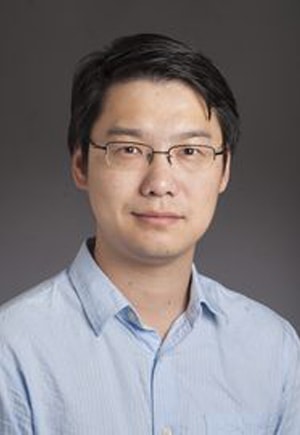
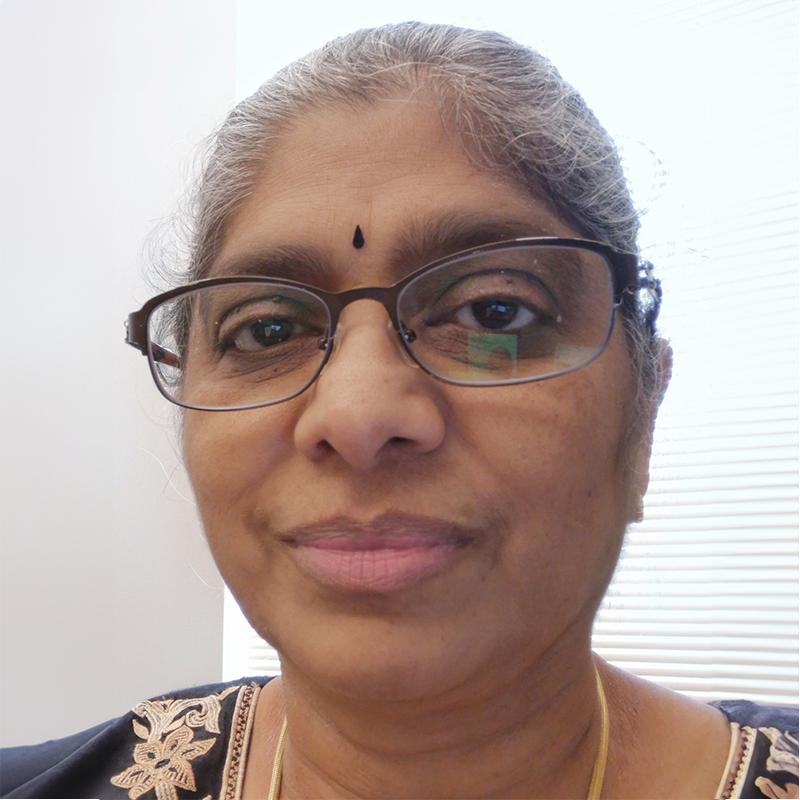
Mathias Lösche is a Professor of Physics at Carnegie Mellon University (CMU) and holds a courtesy appointment as Professor of Biomedical Engineering. He also previously served as a Professor at Leipzig University, Germany. His research focuses on membrane biophysics, using techniques like neutron scattering to study protein-membrane interactions. He leads the Biological Physics Supramolecular Structures Lab and collaborates with institutions like NIST and Johns Hopkins University. Lösche's work spans over 35 years, with contributions to understanding membrane-associated proteins in diseases like cancer and neurodegeneration. His recent studies include KRAS membrane configurations, HIV-1 matrix protein interactions, and amyloid oligomer toxicity. Education: M.S. in Physics from Ulm University (1983), Ph.D. in Biophysics from TU Munich (1986), and Habilitation in Physical Chemistry from Mainz University (1994). Research interests include lipid bilayer structure, protein-membrane binding kinetics, and engineered membrane systems. His lab develops neutron reflectometry methods to probe molecular-scale structures at interfaces.
Di Xiao is a Professor in the Department of Physics at Carnegie Mellon University , affiliated with the Mellon College of Science . His research focuses on quantum condensed matter theory , particularly topological phenomena arising from spin-orbit coupling and many-body interactions. Ph.D. from the University of Texas (2007) B.S. from Peking University (2001) His work explores material properties such as transport, magnetic, and optical behaviors through the lens of Berry phase and topology. He has contributed to understanding electromagnetic responses in quantum systems for applications in quantum electronics and quantum computing . Notable publications include studies on valley Hall conductivity in graphene systems, voltage-controlled spin-filter magnetic tunnel junctions, and spin-Nernst effects in antiferromagnetic insulators. These works span subfields like topological materials , spintronics , and 2D materials . Scientific Awards : Simons Fellowship in Theoretical Physics (2019) Cottrell Scholar (2016) Di Xiao's career includes academic roles at Carnegie Mellon University and research positions at Oak Ridge National Laboratory. He has published extensively in leading journals such as Phys. Rev. Lett. , Nature Nanotechnology , and Science .
Swarnalatha Ashok is an Associate Teaching Professor at the Software and Societal Systems Department within Carnegie Mellon University's School of Computer Science. She is a member of the core faculty for the Master of Software Engineering (MSE) professional programs and serves as the Associate Director of MSE for Executive Education and Corporate Engagement. Previously, she held faculty and leadership roles at Singapore Management University (SMU) and the Institute of Systems Science (ISS) at National University of Singapore (NUS), where she directed and shaped software engineering and technology programs for industry professionals. Prior to her academic career, she worked in software engineering and project management roles at corporations like Tata Consultancy Services (TCS) and Motorola. Educational background includes an MSc(Tech) in Computer Science from BITS Pilani, India, and a PGDip in Business Administration from Annamalai University, India. Her research and teaching interests focus on practical software engineering topics such as API design, cloud computing, platform engineering, and agile methodologies. She emphasizes industry-relevant curriculum development and has supervised numerous industry projects, particularly in networking and systems software.
Nick Frollini serves as a Communications Instructor in the Software and Societal Systems Department at Carnegie Mellon University's School of Computer Science, where he directs communications and leadership education for the Master of Software Engineering programs as core faculty. His academic foundation includes a degree in Industrial Management from Carnegie Mellon’s Tepper School of Business. With over 14 years as Deputy Director of CMU's Institute for Software Research managing departmental business operations, and prior executive roles at Case Western Reserve University in technology transfer and venture capital, Nick integrates cross-sector expertise into pedagogy. His career began in technology consulting, investment banking, and private equity before entering academia in 2001. Professional interests emphasize: Software Engineering Education Technical Communication Leadership Training in Technology Contexts Technology Commercialization Negotiation Skills Development He actively leverages his passion for communication and presentation skills within MSE curriculum design. Outside academia, Nick serves on his community planning commission, is a dog dad, and has film production experience including a Netflix thumbnail appearance.
Michael Skirpan is an Assistant Professor at Carnegie Mellon University's School of Computer Science, Software and Societal Systems Department, with additional roles as executive director of Community Forge and co-founder of Probable Models . His work bridges technology, ethics, and education through innovative pedagogy and public engagement. PhD in Computer Science (socio-technical narratives) – University of Colorado Boulder His research focuses on ethics in computing , particularly in AI and machine learning, with interests spanning: Ethics of AI and data systems Design fiction for technology speculation Risk analysis frameworks Immersive education techniques Public engagement with algorithms Equity in classroom technology The 15 most recent publications reveal trends in machine learning ethics , design fiction , and public technology education , with a strong emphasis on contextualizing fairness in algorithms, participatory approaches to AI, and using creative methods like immersive theater for ethical discussions. Notable scientific achievement: Produced award-winning immersive play Project Amelia (2019-present), which explores AI ethics through interactive theater He advises initiatives around public use of algorithms and provides training to private/public sector entities. His community work includes rehabilitating an abandoned elementary school into a community center focused on education, arts, and local economy development.
Josh Sunshine is an Associate Professor in the Software and Societal Systems Department (S3D) at Carnegie Mellon University's School of Computer Science, with a courtesy appointment in the Human-Computer Interaction Institute. He directs the NSF-funded REUSE program (Research Experiences for Undergraduates in interdisciplinary Software Engineering), providing summer research opportunities for diverse undergraduates across computer science domains including human-computer interaction, programming languages, and software security. His educational background includes a PhD in Software Engineering from Carnegie Mellon University (2013) under Jonathan Aldrich, and a BS from Brandeis University (2004) followed by four years as a software engineer. Prior academic training informs his industry-relevant research approach. Professor Sunshine's research spans programming languages, software engineering, and human-computer interaction with concentrated focus on usability of reusable software components. He investigates how developers interact with libraries, APIs, and testing tools, seeking to bridge formal methods with practical usability through human-centered design. Recent work develops tools that make verification and testing more accessible without sacrificing rigor. Analysis of his 15 most recent publications reveals strong emphasis on human-in-the-loop systems: 60% address software testing/tooling (e.g., TerzoN, Nanofuzz), 25% focus on visualization/education (e.g., Edgeworth), and 15% explore programming language safety (e.g., Rust studies). The work consistently combines empirical user studies with technical innovation, targeting real-world developer pain points. Scientific recognition includes: NSF CAREER Award (2024) for "Scientist-in-the-loop software testing" Best Paper Nominee at ACM Conference on Learning @ Scale (2024) for Edgeworth research Through the REUSE program, Professor Sunshine mentors 15-20 undergraduates annually in collaborative research with faculty including Charlie Garrod and Claire Le Goues. His grant portfolio centers on two major NSF awards: the REUSE site ($1.2M) and CAREER grant ($500k), supporting both research and educational outreach. Current projects integrate testing automation with human judgment and develop scalable tools for visual thinking in STEM education. As a core S3D faculty member, he contributes to CMU's interdisciplinary mission through the Human-Computer Interaction Institute collaboration. His REUSE program specifically builds inclusive research pathways, with 40% participation from underrepresented groups in computing. Future work focuses on expanding the "scientist-in-the-loop" paradigm across software engineering tasks.
Josh Bloch is a Professor at Carnegie Mellon University's School of Computer Science within the Software and Societal Systems Department (S3D). He holds a B.S. in computer science from Columbia University and a Ph.D. in computer science from Carnegie Mellon University. Prior to his current academic role, Bloch held significant industry positions: Senior Systems Designer at Transarc (CMU spinoff) Distinguished Engineer at Sun Microsystems, where he authored the Java Collections library Chief Java Architect at Google His research focuses on Software Engineering, Programming Languages, and Java ecosystem development. Bloch led the design and implementation of foundational Java platform features including the Collections Framework, java.math package, enums, annotations, for-each loop, try-with-resources, and assert statement. He is the author of the seminal book 'Effective Java', recipient of the 2001 Jolt Award. No information regarding student advising, research grants, or laboratory teams is provided in the source material.
Dr. Jürgen Pfeffer is an Adjunct Professor at the Software and Societal Systems Department within the School of Computer Science at Carnegie Mellon University. His work bridges software engineering and societal systems, focusing on areas like privacy engineering and information security. Research Interests: His fields of interest align with the department's technical focus, including software engineering, societal computing, privacy engineering, information security, policy, and computer science. These areas reflect interdisciplinary approaches to technology and its societal impact. Education: The department offers PhD programs in Software Engineering and Societal Computing, as well as Master of Software Engineering and Master of Privacy Engineering programs, though no personal educational qualifications for Dr. Pfeffer are explicitly stated in this text.
Nandini Sharma is a Post-Doctoral Associate at the Software and Societal Systems Department under Carnegie Mellon University's School of Computer Science. Her work bridges software development with societal impact and policy considerations. Research interests include areas such as Software Engineering , Societal Computing , Privacy Engineering , and Information Security .
Takeo Kanade is the U.A. and Helen Whitaker University Professor of Robotics and Computer Science at Carnegie Mellon University (CMU). He serves as director of the Quality of Life Technology Engineering Research Center and previously led the Robotics Institute (1992-2001). His work spans computer vision, robotics, and multimedia technology, emphasizing mathematical modeling of vision processes and system development. Education: Doctoral degree in Electrical Engineering from Kyoto University (1974) Kanade's research focuses on foundational computer vision (factorization methods, multi-baseline stereo, facial recognition), virtualized reality systems for immersive media applications, and robotics innovations in medical surgery (HipNav) and autonomous helicopters. He pioneered computational sensors integrating VLSI technology. Recent publications emphasize 3D vision, pose estimation, and real-time facial alignment, reflecting his work in social motion capture and scene-specific object recognition. His projects include Informedia (NSF/ARPA/NASA-funded digital video libraries) and EyeVision for immersive sports broadcasting. Scientific Awards: Kyoto Prize (2016), Benjamin Franklin Medal, Bower Prize, IEEE Pioneer Award, ACM/AAAI Allen Newell Award, Joseph Engelberger Award He advises past PhD and Master's students like Omead Amidi, Vladimir Brajovic, and Richard LaBarca. He founded the Digital Human Research Center and leads the Human Sensing Lab at CMU.
Weina Wang is an Assistant Professor in the Computer Science Department at Carnegie Mellon University, joining in Fall 2018. Her research lies at the intersection of applied probability , stochastic systems , and reinforcement learning , focusing on decision-making in large-scale systems with applications to computing resource orchestration, data privacy, and graph statistics. She has received prestigious awards including the NSF CAREER Award (2022) , ACM MobiHoc Best Paper (2022) , and ACM SIGMETRICS Rising Star Research Award (2023) . PhD in Electrical Engineering, Arizona State University (2016) Bachelor’s in Electronic Engineering, Tsinghua University (2009) Her recent publications span restless bandits , queueing theory , and attributed graph alignment , reflecting her dual focus on fundamental limits and algorithmic solutions. Notable collaborations include work on privacy-preserving data routing , phase-aware scheduling , and erasure-coded servers for heterogeneous traffic. She has advised PhD students Jalani Williams , Tuhinangshu Choudhury , and Yige Hong . Her research has been recognized with best paper awards and grants like the NSF CAREER . She also contributes to professional societies, recently joining the INFORMS Applied Probability Society council . Her teaching includes courses like Probability and Computing and Fundamentals of MDPs and Reinforcement Learning .
Ipek Ozkaya serves as a Principal Researcher and Technical Director of the Engineering Intelligent Software Systems group at the Software Engineering Institute (SEI), Carnegie Mellon University, advancing software development efficiency and system evolution through cutting-edge research. She holds doctoral and master’s degrees in computational design from Carnegie Mellon University, establishing her expertise in computational methods applied to software engineering challenges. Her research spans critical areas including: Software Architecture Practices Technical Debt Management in complex systems Agile Development Methodologies Software Economics Engineering of AI-enabled Systems Software Evolution Techniques Current work focuses on building theoretical and empirical foundations for managing technical debt in large-scale software-intensive systems and AI engineering. Ozkaya contributes significantly as editor-in-chief of IEEE Software magazine and coauthor of the practitioner book Managing Technical Debt, Reducing Friction in Software Development . No information regarding student advising or research grants appears in the source material. She leads the Engineering Intelligent Software Systems group at SEI, driving innovation in software engineering for national security applications through theoretical research and practical implementation.