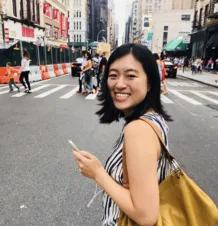
Tina Kuo is a doctoral candidate at the Technical University of Munich (TUM) , affiliated with the Chair of Cyber Trust under the School of Computation, Information and Technology. Her work bridges interdisciplinary research in human-computer interaction, artificial intelligence, and online community governance. Education: Master of Science in Human Factors Engineering & Ergonomics (2019, TUM), Bachelor of Arts in Architecture (2014, Columbia University) Tina’s research investigates how AI-driven interventions can shape ethical online behaviors, mitigate cyberbullying, and combat misinformation. She focuses on moderation tools, community dynamics, and user experience in social platforms. Her publications highlight strategies for personalized AI moderation, including case studies on Facebook Groups (2023) and cyber harassment mitigation on Naver (2022). While no specific scientific awards are mentioned, her work is supported by collaborations with the TUM Institute for Ethics in Artificial Intelligence (IEAI) and the Max-Planck-Institute for Research on Collective Goods (MPG). She has prior experience in UX research, strategy consulting, and financial services across New York, Munich, and London.
Aman Saxena is a researcher at the Department of Computer Science in the TUM School of Computation, Information and Technology at Technical University of Munich. His work focuses on geometric/categorical deep learning, robust machine learning, and quantum machine learning. Education: M.Sc. Computational Sciences and Engineering (2019-2023) Location: Boltzmannstr. 3, 85748 Garching b. Munich, Germany (Room 00.11.062) Research Interests: Geometric/Categorical Deep Learning Robust Machine Learning Quantum Machine Learning Bayesian Learning Efficient Machine Learning Code Analysis Recent Publications: Certifiably Robust Encoding Schemes (IEEE International Conference on Quantum Computing and Engineering - QCE 2024) Discrete Randomized Smoothing Meets Quantum Computing (IEEE International Conference on Quantum Computing and Engineering - QCE 2024)
Dr. Thomas Combrink serves as a Research Fellow in the Department of Linguistics, Clinical Linguistics, Text Technology and Computational Linguistics at the Faculty of Linguistics and Literary Studies, University of Bielefeld. His research focuses on the intersection of linguistics and computer science, particularly in computational approaches to language analysis and processing. His work contributes to Bielefeld University's strategic research area of the Socio-Technical World, which examines capabilities and mechanisms enabling agents like humans, robots, and AI systems to act and communicate in complex environments. This research aligns with the Center for Cognitive Interaction Technology (CITEC), where linguists collaborate with computer scientists, psychologists, and engineers. Dr. Combrink's expertise in text technology and computational linguistics supports interdisciplinary projects that bridge theoretical linguistics with practical applications in natural language processing and human-computer interaction systems.
Dr. Fariba Mostajeran is a Researcher at the Human-Computer Interaction research group within the Department of Informatics at the University of Hamburg. Her interdisciplinary work bridges computer science, psychology, and environmental science to investigate the psycho- and physiological effects of immersive media on users across different age groups, with particular focus on therapeutic applications of virtual and augmented realities. Her educational background includes: B.Sc. in Computer Engineering-Software from the University of Isfahan (Iran) M.Sc. in Digital Media from the Universität Bremen Ph.D. in Human-Computer Interaction at the Universität Hamburg Dr. Mostajeran's research centers on Medical Mixed Reality , Digital Health , and Human-Computer Interaction , with emphasis on how virtual environments can enhance cognitive performance, psychological well-being, and therapeutic outcomes. She systematically investigates the impact of virtual nature exposure on memory, attention, and mood, developing applications for mental health treatment, rehabilitation, and workplace design. Her methodological approach combines controlled experiments with user-centered design to create effective immersive interventions. Analysis of her recent publications reveals three major research thrusts: (1) the therapeutic applications of virtual nature for mental health and cognitive enhancement, (2) the development and evaluation of intelligent virtual agents for healthcare applications, and (3) understanding the cognitive and physiological mechanisms underlying user responses to immersive environments. Her work increasingly focuses on multimodal interaction with virtual agents and their implementation in clinical settings. Her scholarly contributions have been recognized through: Ideas and Venture Fund (IVF), Universität Hamburg, 2024-2025 EXIST-Gründerstipendium (EXIST Founder Scholarship), 2014-2015 Deutschlandstipendium (German Scholarship), 2012-2013 Dr. Mostajeran has supervised over 30 master's and bachelor's theses focusing on virtual reality applications across diverse domains including mental health interventions, cognitive training, and therapeutic environments. Her research has received support from university innovation funds and national scholarship programs. She serves on multiple academic committees including professorship selection committees and examination boards, contributing significantly to institutional governance. Her active participation in major conferences as program committee member and reviewer demonstrates her standing in the HCI and VR research communities. She works within the Human-Computer Interaction research group at the University of Hamburg led by Prof. Dr. Steinicke, which maintains strong connections with clinical partners and industry collaborators to translate research findings into practical healthcare applications. The group's facilities include state-of-the-art VR laboratories equipped for comprehensive user studies measuring both behavioral and physiological responses.
Dr. Aydan Bulut-Karslıoğlu is a Research Group Leader at the Max Planck Institute for Molecular Genetics in Berlin, where she leads the Bulut-Karslıoğlu Lab focused on gene-environment interactions in stem cells and development. Her work has significantly advanced our understanding of embryonic diapause and stem cell state transitions. Dr. Bulut-Karslıoğlu's educational background includes: B.Sc. in Chemical Engineering (major) and Biology (minor) from Middle East Technical University, Ankara, Turkey (2006) M.Sc. in Molecular Biology and Genetics from Bilkent University, Ankara, Turkey (2008) Ph.D. from Max Planck Institute of Immunobiology and Epigenetics, Freiburg, Germany (2013) Her research focuses on mechanisms regulating stem cell state transitions and fate commitment, particularly how cells communicate signals from their surroundings to the gene expression machinery. She has pioneered work on mammalian embryonic diapause - a reversible dormant state that gives embryos extra time to develop. Her lab uses a combination of functional perturbation methods in stem cells and early mouse embryos with omics, imaging, and biochemistry to reveal how genetic networks adjust to the status of the embryo. Analysis of her recent publications reveals a strong focus on the epigenetic and metabolic regulation of embryonic diapause, with particular emphasis on mTOR signaling, lipid metabolism, and DNA methylation dynamics. Her work bridges developmental biology, stem cell research, and metabolism, demonstrating how environmental cues like oxygen levels and nutrient availability influence developmental timing and cell fate decisions. Her notable scientific achievements include: Sofja Kovalevskaja Award (2018) ERC Starting Grant (2023) ERC Proof of Concept Grant (2025) GSCN Young Investigator Award (2025) Dr. Bulut-Karslıoğlu actively mentors the next generation of scientists, currently supervising multiple PhD students including Persia Akbari-Omgba, Anastasios Balaskas, Heleen Mallie, and Gunwant Patil. Her lab has received substantial funding through prestigious grants, including the Sofja Kovalevskaja Award, ERC Starting Grant, and ERC Proof of Concept Grant, enabling her team to pursue innovative research at the intersection of developmental biology and metabolism. The Bulut-Karslıoğlu Lab maintains a vibrant research environment with both computational and experimental scientists working together to unravel the mysteries of embryonic diapause and stem cell regulation. The lab actively participates in the International Max Planck Research School for Biology And Computation (IMPRS-BAC), contributing to the training of doctoral candidates at the interface of molecular life sciences and computational sciences.
Dr. Wanli Wang is a researcher at the Department of Aerodynamics and Fluid Mechanics at the Technical University of Munich . His work focuses on computational mechanics, fluid-structure interaction, and numerical modeling of multi-material systems. Education: PhD in Computational Mechanics, supervised by PD Dr. Stefan Adami. His research explores advanced numerical methods for hyperelastic materials and shock-driven phenomena, with applications in aerospace and biomedical engineering. Recent publications highlight his contributions to Eulerian framework modeling and bubble collapse dynamics for drug delivery systems. Dr. Wang collaborates with the NFDI4ING , GENUFASD , and Numerische Modellierung teams. He is affiliated with the Chair of Aerodynamics and Fluid Mechanics at TUM.
Constantin Grigo is a PhD researcher at the Technical University of Munich (TU Munich), actively engaged in the Continuum Mechanics group. His work focuses on Uncertainty Quantification (UQ) and Machine Learning (ML), particularly for applications in maritime safety, bicycle traffic modeling, and stochastic systems. He has presented his research at major conferences like SIAM UQ and WCCM, and has been recognized with Student Travel Awards from SIAM UQ 2018 and SIAM CSE 2019. Education: Master of Science in Physics, LMU Munich (2015) Bachelor of Science in Physics, LMU Munich (2012) Year abroad at Grenoble INP (2010-2011) Research Interests: Probabilistic machine learning for coarse-graining high-dimensional systems Bayesian model and dimension reduction Stochastic differential equations in heterogeneous media Microscopic traffic simulation for bicycles and autonomous vehicles Digital twin applications for maritime and urban mobility Reduced-order modeling of random materials Selected Awards: SIAM UQ 2018: Student Travel Award Winner SIAM CSE 2019: Student Travel Award Winner His publications span topics such as data-driven scenario specification for autonomous vehicles, bicycle maneuver prediction using neural networks, and physics-constrained surrogates for UQ. He also contributes to open-source simulation tools like SUMO for traffic modeling.
Professor Björn Kiefer, Ph.D. serves as Professor of Engineering Mechanics – Solid Mechanics at the Institute of Mechanics and Fluid Dynamics, Freiberg University of Mining and Technology, Germany. His academic career spans prestigious institutions including TU Dortmund University and the University of Stuttgart in Germany, and Texas A&M University in the USA. His educational background includes: PhD in Aerospace Engineering from Texas A&M University (2006), with doctoral thesis "A Phenomenological Constitutive Model for Magnetic Shape Memory Alloys" under Dr. Dimitris C. Lagoudas Diploma in Mechanical Engineering/Applied Mechanics from Ruhr University Bochum (2001), with diploma thesis "Revisit and Characterization of a Thermomechanically Coupled Constitutive for the Description of Polycrystalline Shape Memory Alloys" under Prof. Dr.-Ing. Otto T. Bruhns Professor Kiefer's research expertise centers on continuum mechanics with geometric and physical nonlinearities, constitutive modeling of active materials, and electromagnetic-mechanical coupling phenomena. His work integrates computational mechanics, micromechanics, and multiscale modeling approaches to address complex problems in phase transformations, plasticity, damage mechanics, and fracture analysis. His research has significant applications in developing advanced multifunctional materials for engineering systems. His scientific recognition includes: Elected Fellow of ASME (2021) Multiple invited professorships in France Prestigious early-career recognition programs Graduate student awards including best paper presentation Professor Kiefer actively contributes to the academic community as Treasurer (and former Secretary 2020-2021) of the ASME Aerospace Division's Adaptive Structures and Material Systems Branch since 2011. He serves on technical committees for active materials and adaptive systems, and reviews for numerous top-tier mechanics journals. He has organized multiple international conferences including symposia at ASME events and GAMM meetings, demonstrating leadership in his field. His teaching portfolio includes Continuum Mechanics, Higher Strength Theory, Plasticity, and core Technical Mechanics courses covering statics and strength of materials.
Timo Metzler is a doctoral researcher at the Karlsruhe Institute of Technology (KIT) , affiliated with the Institute of Applied Materials - Institute of Materials and Interface Mechanics (IAM-MMI) . His work focuses on fracture mechanical characterization of nuclear materials, particularly reactor pressure vessel steels, using computational modeling and experimental analysis. Education : Master's and Bachelor's in Mechanical Engineering from KIT, specializing in Theoretical Mechanical Engineering and Energy Technology. Current Role : Ph.D. student investigating fracture toughness prediction for nuclear safety applications. Past Roles : Scientific staff member at KIT's Institute of Engineering Mechanics (ITM) and Institute of Thermal Turbomachinery (ITS), with industry experience in fuel cell development. His research leverages the cohesive zone model for simulating fracture processes and involves fractography to analyze material failure mechanisms. Publications highlight his contributions to nuclear materials safety through numerical modeling and small-specimen testing. Timo's scientific awards include the 2020 SEW-EURODRIVE Foundation Study Award for his outstanding Master's thesis on labyrinth seal simulations. His software expertise spans ABAQUS, MATLAB, Python, and C++, with CAD and IT skills supporting his computational work.
Philipp Weiss is a Researcher at the Technical University of Munich (TUM), affiliated with the Department of Electrical and Computer Engineering and the Chair of Embedded Systems and Internet of Things. Holding an M.Sc. degree, he actively contributes to research and teaching in embedded systems and IoT with a strong focus on automotive applications. His research spans Automotive Systems , Internet of Things (IoT) , Fail-Operational Systems , Reliability Analysis , Agent-Based Systems , and Distributed Systems . Weiss specializes in fail-operational automotive software design, dynamic agent-based mapping methods, and run-time reliability analysis, addressing critical challenges in autonomous vehicle safety and resilience through publications in DATE and DSD conferences. Analysis of his 2020-2021 publications reveals consistent focus on fail-operational architectures for automotive systems, with recurring themes in distributed agent-based modeling, timing analysis, and energy optimization within hybrid cloud environments. His work bridges theoretical reliability frameworks with practical automotive implementations. Weiss has supervised multiple Master's theses and final projects from 2019-2021 on topics including dynamic agent-based reliability analysis and fail-over timing for neural networks. As an educator, he serves as tutor for System Design for the Internet of Things and seminar manager for Advanced Seminar Embedded Systems and Internet of Things . Embedded within Prof. Sebastian Steinhorst's research team, Weiss contributes to major initiatives including Security for IoT and Autonomous Systems , Time-Sensitive Networking , and 6G Research Hub "6G-Life" , operating within TUM's IoT Remote Lab infrastructure for hands-on experimentation with industrial IoT systems.
PD Dr. habil. Thomas Wöhling serves as a Senior Research Scientist and Team Leader for Stochastic Modelling of Hydrosystems at the Chair of Hydrology, Dresden University of Technology's Faculty of Environmental Sciences. His research spans integrated environmental systems modeling with particular expertise in surface water-groundwater interactions, braided river systems, and vadose zone processes. Previously, he held research positions at Water and Earth System Sciences Competence Cluster in Tübingen (2010-2015) and Lincoln Environmental Research in New Zealand (2006-2010). Dr. Wöhling completed his Dipl.-Hydrol. (1999) and PhD in Hydrology (2005) at Dresden University of Technology, followed by habilitation in Stochastic Hydrology (2021). His educational background includes extensive research at the Institute of Hydrology and Meteorology at TU Dresden (1999-2005) where he developed foundational expertise in hydrological modeling. Wöhling's research focuses on integrated modeling of coupled environmental systems , particularly flow and contaminant transport in surface water-groundwater systems, nutrient and energy fluxes in soil-plant-atmosphere systems, and distributed hydrological modeling. His work emphasizes stochastic modeling and uncertainty analysis , with significant contributions to inverse modeling, model calibration, multiobjective optimization, and Bayesian model averaging techniques. He has pioneered methods for evaluating monitoring network worth and data utility for environmental models. His publication record demonstrates consistent contributions to hydrological science, with recent work (2023-2025) focusing on machine learning applications in hydrology, advanced statistical inversion techniques, and complex karst system modeling. Key trends include integration of physics-based and data-driven approaches, improved uncertainty quantification methods, and applications to climate change impacts on water resources. His work bridges theoretical advances with practical applications in New Zealand's braided rivers and European hydrological systems. STAHY Best Paper Award (2018) ASCE Journal of Irrigation and Drainage Engineering Best Reviewer Awards (2008, 2010, 2011, 2015, 2018) ASCE Journal of Irrigation and Drainage Engineering Best Paper Awards (2008, 2009) Dr. Wöhling leads the Stochastic Modelling of Hydrosystems team and has secured funding for numerous projects including Klimakonform, ISOSIM, VAMOS II, and the International Research Training Group 'Integrated Hydrosystem Modelling.' His work combines novel monitoring techniques with modeling and optimal sensor placement to improve prediction reliability for river-groundwater exchange fluxes. He collaborates extensively with international partners, particularly in New Zealand through the Lincoln Agritech's Braided Rivers program. His laboratory work focuses on combining traditional hydrological measurements with advanced computational techniques, including deep learning applications for soil surface hydrology and time-windowed Bayesian analysis for predictive modeling. The team maintains strong connections with field sites in Germany's Saxon region and New Zealand's Canterbury Plains, facilitating integrated theoretical and empirical research approaches.
Fabiola Pineda serves as an Assistant Professor at the Faculty of Sciences, Universidad Mayor, and is a Principal Investigator at the Center for Applied Nanotechnology (CNAP). She also holds an Associate Researcher position at the Solar Energy Research Center (SERC-Chile). Bachelor of Chemistry, University of Santiago de Chile (2008) Chemist, University of Santiago de Chile (2008) Doctor of Engineering Sciences (Materials Science), University of Santiago de Chile (2013) Postdoctoral Research in Corrosion, Pontifical Catholic University of Chile (2018) Her research centers on three interconnected lines: (1) Design of nanomaterials for solar thermal energy storage, (2) Materials degradation in extreme environments including molten salts and high temperatures, and (3) Development of nanomaterial-based coatings for corrosion mitigation. She employs experimental and theoretical approaches to address corrosion in concentrated solar power systems and thermal energy storage. Analysis of her recent publications reveals a strong focus on MXene-enhanced nanofluids, molten salt corrosion mechanisms, and advanced coatings. Her work bridges fundamental materials science with renewable energy applications, particularly targeting efficiency improvements in solar thermal plants through novel nanomaterials. Pineda actively secures competitive research funding as Principal Investigator for FONDECYT REGULAR project 1241151 and EXPLORATION project 13240066, plus ANILLO project ATE240004. She previously led FONDECYT INICIACIÓN project 11200388 on in-situ corrosion monitoring. She directs the Center for Applied Nanotechnology (CNAP), where her team investigates material degradation and develops nanomaterial solutions for extreme-condition applications in energy systems.
Zhang Yang is an Associate Professor at the School of Medical Engineering, Harbin Institute of Technology (Shenzhen), with a joint appointment as Visiting Professor at the University of Tokyo starting in July 2024. He holds a PhD from the University of Cambridge's Department of Pathology and an M.Phil. from the University of Hong Kong's HKU-Pasteur Research Center. Previously, he served as an Assistant Professor at Harbin Institute of Technology (Shenzhen) from September 2015 to December 2020. His research integrates computational and experimental approaches to address challenges in pathogen and cancer research. On the computational side, his work focuses on developing AI-powered microscopic imaging systems, applying deep learning to analyze multi-omics data (including proteins, DNA, miRNAs, LncRNAs, and mRNAs), and utilizing deep learning in cheminformatics for drug discovery. On the experimental side, his laboratory combines imaging, high-throughput sequencing, mass spectrometry, and chemical biology to understand disease mechanisms at the molecular level. His publication record demonstrates significant impact, with over 50 SCI-indexed papers in high-impact journals including Nature Communications, Briefings in Bioinformatics, Bioinformatics, Analytical Chemistry, and Trends in Biotechnology. His work has been cited by prestigious journals such as Nature Reviews Methods Primers and Nature Communications, with three ESI highly cited papers. His research spans multiple interdisciplinary fields, combining artificial intelligence with biomedical applications to advance diagnostic and therapeutic approaches. World's Top 2% Scientists 2021 Fellow of the Royal Society of Biology Three ESI Highly Cited Papers Five authorized national invention patents As an academic leader, he serves as Associate Editor for BMC Biology and Frontiers in Microbiology, Academic Editor for PLOS Genetics, Editorial Board Member for Communications Biology, and Guest Editor for a Special Issue on AI in analytical chemistry in Trends in Analytical Chemistry. His laboratory actively collaborates with international institutions, with graduates pursuing further studies at Hong Kong Chinese University, Hong Kong University of Science and Technology, Hong Kong Polytechnic University, Macau University, and the University of New South Wales. He teaches Introduction to Modern Biology for undergraduates and Bioanalytical Chemistry for graduate students.
Heiner Giefers is a Professor for Cloud Computing at the Department of Computer Science and Natural Sciences at Southwestphalia University of Applied Sciences since 2018. Prior to this position, he worked as a Research Staff Member at IBM Research - Zürich (2013-2018), focusing on hardware acceleration in cloud environments, implementation of big data algorithms on FPGAs, and development of hardware platforms for approximate and in-memory computing. Dr. Giefers received his doctorate (Dr. rer. nat.) from Universität Paderborn in 2012 with a dissertation titled "Design and Programming of Reconfigurable Mesh based Many-Cores." His academic journey at Universität Paderborn includes serving as an Academic Council Member (Akademischer Rat a.Z.) from 2008-2013 and as a Scientific Staff Member from 2006-2012, where he taught digital technology and computer architecture. Professor Giefers' research focuses on energy-efficient computing, particularly through hardware acceleration using FPGAs for cloud and AI workloads. His work spans cloud computing infrastructure, hardware-software co-design, approximate computing, in-memory computing, and energy-efficient implementations of machine learning algorithms. He has made significant contributions to the field of reconfigurable hardware for high-performance computing applications. His recent publications show a strong trend toward applying hardware acceleration techniques to artificial intelligence and machine learning workloads, with a particular focus on energy efficiency. His work bridges the gap between theoretical computer science and practical hardware implementation, often resulting in patented technologies that address real-world computing challenges in cloud environments. Best Paper Award for "Stochastic Matrix-Function Estimators: Scalable Big-Data Kernels with High Performance" (2016) Best Paper Award Nomination for "Energy-Efficient Stochastic Matrix Function Estimator for Graph Analytics on FPGA" (2016) Best Paper Award Nomination for "Analyzing the energy-efficiency of dense linear algebra kernels by power-profiling a hybrid CPU/FPGA system" (2014) Best Paper Award Nomination for "A Triple Hybrid Interconnect for Many-Cores: Reconfigurable Mesh, NoC and Barrier" (2010) Professor Giefers actively supervises numerous Bachelor's and Master's students, with over 50 completed theses covering topics from machine learning and cloud computing to IoT systems and hardware acceleration. He leads the "Energy-efficient AI" project (eki), which aims to increase the energy efficiency of AI systems through approximation techniques for FPGA implementation. Additionally, he collaborates with Prof. Dr. Christian Plessl on the "Digital teaching materials with Jupyter Notebooks" project, creating interactive learning materials that integrate teaching content, program code, and results into a single document. His work extends to practical applications through multiple patents related to FPGA implementations, neural networks, and memory systems, demonstrating his commitment to translating research into real-world solutions.
Prof. Dr. Andreas Herkersdorf is a Full Professor and Chair of Integrated Systems at the Technical University of Munich (TUM) School of Computation, Information and Technology. His research focuses on application-specific multicore processors (MPSoC), FPGA-based prototyping, fault-tolerant systems, and energy-efficient architectures, with applications in IP packet processing, automotive systems, and visual computing. He has received multiple IBM innovation awards and serves on editorial boards including the DFG Review Board for computer architecture. Education: Dipl.-Ing. Electrical Engineering (TUM, 1987), Dr. techn. Electrical Engineering (ETH Zurich, 1991) Research: MPSoC architectures, autonomic computing, NoC resilience, FPGA acceleration, and self-optimizing systems. Awards: IBM Master Inventor (1998), IBM Outstanding Technical Achievement Award (2001), multiple IBM Innovation Achievement Awards (1996-2003) His recent publications emphasize hardware/software co-design, machine learning integration for runtime optimization, and network-on-chip innovations. He collaborates on projects involving 6G systems, smartNICs, and automotive communication protocols.