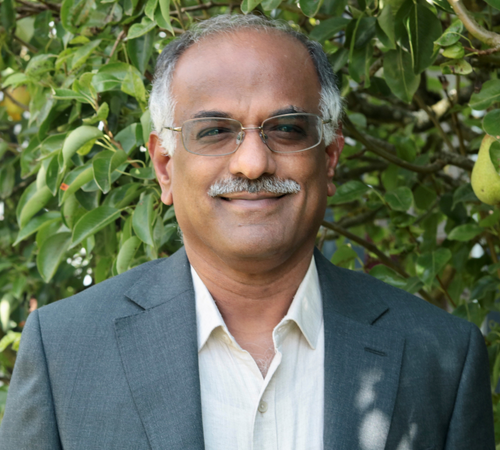
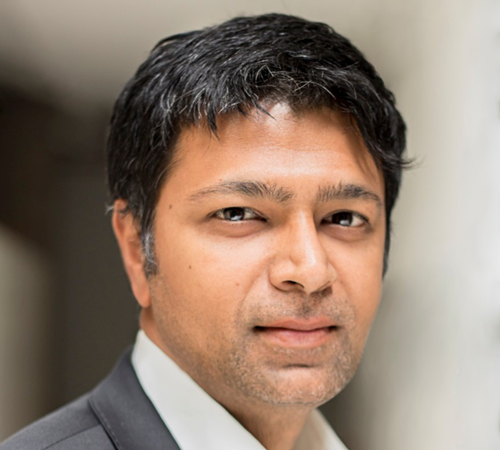
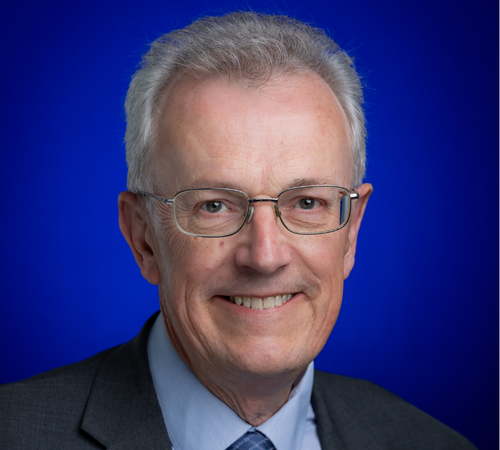
Robert Spicer is the Chief Commercial Officer & Law Lecturer at the Luxembourg School of Business (LSB), bringing over two decades of cross-disciplinary expertise in engineering, legal frameworks, and executive leadership. His career spans pioneering defense and healthcare computing technologies, legal practice in the U.S. and U.K., and driving global strategic transformations for startups, Fortune 500 companies, and European incubators. Academic Role: Lecturer in law and business strategy. Industry Experience: Led Silicon Valley startup to NASDAQ IPO; expanded European incubator internationally; shaped telecom strategy at a Fortune 500 firm. Research Interests: Focused on globalization, technology commercialization, and corporate governance. His work bridges legal frameworks with scalable business models, particularly in tech-driven industries.
Professor Cecilia Mattevi serves as Professor of Materials Science and Research Area Lead for 2D Materials in the Department of Materials at Imperial College London. Her academic career spans positions as Junior Research Fellow and Lecturer with Royal Society University Research Fellowship at Imperial, following a postdoctoral appointment at Rutgers University's Materials Science Department. Educational Background: She completed her PhD in Materials Science in 2008, conducting doctoral research at the European Synchrotron Facility (Elettra), a major international research infrastructure. Research Focus: Professor Mattevi's work centers on the precise synthesis of atomically thin 2D materials, targeting revolutionary advances in computing devices and critical contributions to carbon neutrality initiatives. Her research program integrates nanoscale materials engineering with sustainable technology development, positioning her at the forefront of next-generation materials science for global challenges. Scientific Recognition: Royal Society University Research Fellow Funding and Supervision: Her Royal Society Fellowship indicates substantial early-career research funding. As a full Professor and Research Area Lead, she maintains an active research group with likely supervision of doctoral students and postdoctoral researchers, though specific current grant details and student counts are not provided in available sources. Her leadership role suggests strong institutional support for her 2D materials research program.
Dr. Gabriella Pizzuto is a Lecturer in Robotics and Chemistry Automation with a joint appointment in the Department of Computer Science and Department of Chemistry at the University of Liverpool. She serves as Research Area Lead for the Royce Digital Chemical Materials Design Research Area, holds a Royal Academy of Engineering Research Fellowship, and acts as ECR Co-Chair for the EPSRC AI Hub in Chemistry (AIChemy). Her educational background includes a Ph.D. in Computer Science (2020) from the University of Manchester, where she was a Marie-Sklodowska Curie Early Stage Researcher. During her doctoral studies, she held visiting scholar positions at the University of Edinburgh and the Italian Institute of Technology, followed by a postdoctoral research associate position at the Edinburgh Centre for Robotics. Dr. Pizzuto's research sits at the critical intersection of robotics and applied machine learning for scientific discovery. Her work specifically targets: Multimodal robot skill learning in unstructured environments Failure recovery systems for chemistry laboratory automation Safe human-robot collaboration frameworks Accelerated materials discovery through autonomous experimentation Her research group develops learning-based methods to enable robotic scientists to operate with increasing autonomy in complex experimental settings. Dr. Pizzuto's scientific recognition includes: Royal Academy of Engineering Research Fellowship Marie Skłodowska-Curie Early Stage Researcher Fellowship Her research trajectory demonstrates strong grant leadership, having served as Lead Research Associate on the ERC Synergy Grant 'Autonomous Discovery of Advanced Materials' (ADAM) before establishing her independent research program. Current funding is supported through her Royal Academy Fellowship and leadership roles in national research hubs. Dr. Pizzuto leads a dynamic research group focused on developing intelligent robotic systems for chemistry laboratories, with particular emphasis on creating adaptive platforms that can learn from experimental failures and collaborate effectively with human researchers to accelerate scientific discovery.
Damir Karabaić is an Assistant Professor at the Faculty of Engineering in Pula, University of Pula. His academic work spans renewable energy systems, fluid dynamics, and computational methods, with teaching responsibilities across undergraduate, graduate, and lifelong learning programs. He coordinates thesis projects and professional practices while serving on the faculty's web editorial board. Research Focus: His expertise includes hydraulic machinery, wind energy technology, numerical simulation techniques, and thermodynamics. These areas align with Croatia's focus on sustainable energy solutions. Administrative Roles: As a member of TFPU's web editorial board, he supports academic communication infrastructure development.
Dr. Mario Lovrić is a Researcher at the Institute of Anthropology (Zagreb, Croatia), with a scientific focus on chemometrics, machine learning, bioinformatics, and computational toxicology. He holds a PhD in Chemistry (2021, University of Zagreb) and an MSc in Applied Chemistry (2012, University of Zagreb). Doctoral Degree: Chemistry, University of Zagreb (2021) Master's Degree: Applied Chemistry, University of Zagreb (2012) His interdisciplinary research bridges computational methods with toxicology and biomedical applications, supported by participation in EU-funded projects like HIDALGO and KNOWSKITE-X. He has led research teams in Austria and Croatia, focusing on AI-driven solutions for healthcare and environmental challenges. Evidence-driven indoor air quality improvement (HORIZON Europe, 2022–2026) KnowsKITE-X (HORIZON.2.4, 2023–2027) AI in Nursing (FFG Basisprogramm, 2021–2023) Dr. Lovrić has earned international research scholarships (EEACI, French government, Erasmus+, IAESTE) and actively contributes to professional societies such as the Croatian Toxicological Society, Croatian Chemical Society, and Croatian Society of Chemical Engineers.
Professor Quoc Chi Nguyen serves as Vice Dean of the Faculty of Mechanical Engineering at Ho Chi Minh City University of Technology, Vietnam. He also holds the position of Head of the Department of Mechatronics since 2018. With a strong academic background including a Ph.D. from Pusan National University, Korea, and a Marie Curie FP7 postdoctoral fellowship at Tel Aviv University, Professor Nguyen has established himself as a leading researcher in control engineering and robotics. Professor Nguyen's educational journey began with a B.S. in Mechanical Engineering from Ho Chi Minh City University of Technology in 2002, followed by an M.S. in Cybernetics from the same institution in 2006. He completed his Ph.D. in Mechanical Engineering at Pusan National University, Korea, in 2012, and then pursued postdoctoral research at Tel Aviv University from 2013-2014. His research expertise spans Robotics , Crane Control , Vibration Control , Nonlinear Analysis , Dynamic Analysis , and Advanced Control Theory . Professor Nguyen's work focuses on developing innovative control algorithms for flexible structures, industrial automation systems, and mechatronic applications. His recent publications demonstrate a strong emphasis on practical industrial applications of control theory, including robotics integration, computer vision systems, and energy-efficient pneumatic systems. With 58 publications that have accumulated 32,041 reads and 782 citations, Professor Nguyen has established a significant research impact. His publication trend shows consistent productivity with recent work extending to projected 2025 publications, indicating an active and ongoing research program. The breadth of his work spans from fundamental control theory to practical industrial applications across multiple sectors including manufacturing, agriculture, and logistics. Marie Curie FP7 Postdoctoral Fellowship Professor Nguyen currently leads research activities through his lab at Ho Chi Minh City University of Technology. His leadership roles as Vice Dean and Department Head provide substantial resources and opportunities for research collaboration. With numerous co-authors and international connections, particularly stemming from his time at Tel Aviv University, he maintains an active global research network that benefits his students and colleagues.
Dr. Jelena Parlov Vuković is a Research Associate at the NMR Center of the Ruđer Bošković Institute in Zagreb, Croatia. She holds a PhD in Natural Sciences (Chemistry) from the University of Zagreb (2011) and a Bachelor's degree in Chemical Engineering from the Faculty of Science, University of Zagreb (1997). Her research focuses on NMR spectroscopy applications in petroleum analysis, biofuels research, and biomass characterization. Ruđer Bošković Institute, NMR Center (current primary affiliation) Faculty of Science, University of Zagreb (teaching appointment) University of Hohenheim (GRACE Horizon Project collaboration) INA d.d. (Biorefinery Project collaboration) Dr. Parlov Vuković's research expertise centers on NMR spectroscopy applications for characterizing complex chemical systems. Her work spans petroleum analysis (particularly crude oil stability and asphaltene aggregation), biofuels research (including biodiesel purification and characterization), and biomass valorization. She has developed innovative NMR-based methods for fuel analysis, for which she received the INOVA 2006 Gold medal. Her recent work increasingly focuses on sustainable applications of NMR in biorefinery processes and waste valorization. Analysis of her recent publications (2022-2025) reveals a strong research trajectory with consistent output in high-impact journals. Her work demonstrates expertise in applying NMR spectroscopy to solve practical problems in petroleum chemistry, biofuels development, and biomass characterization. The publications show a clear progression from fundamental NMR methodology development to applied research in sustainable energy and waste valorization. INOVA 2006 Gold medal for development of method for determining benzene content using NMR spectroscopy Dr. Parlov Vuković has supervised 2 doctoral dissertations and 7 master's theses, demonstrating her commitment to academic mentoring. She is actively involved in multiple research projects including the current IPS-2023-02 project on valorization of vegetable oil industry residues. Her work is supported by Croatian Science Foundation grants, Horizon 2020 funding, and industry partnerships with INA d.d. As a core member of the NMR Center at Ruđer Bošković Institute, Dr. Parlov Vuković contributes to one of Croatia's leading NMR research facilities. She plays a key role in organizing the Adriatic NMR Conference series and serves as an editor for conference proceedings, helping to establish Croatia as a regional hub for NMR research.
Filip Marinović serves as an Assistant Professor at Algebra Bernays University, a Croatian institution specializing in digital education and technology programs across undergraduate, graduate, and professional domains. His research spans critical computing disciplines with emphasis on: Computer Science Artificial Intelligence Software Engineering Cybersecurity These interests align with the university's program portfolio including Data Science and Artificial Intelligence, Software Engineering, and Cybersecurity specializations. His work supports the institution's focus on digital business transformation and technological innovation in applied academic contexts.
Denis Kotarski, Ph.D., serves as a Senior Lecturer in the Department of Mechanical Engineering at the Polytechnic of Koprivnica, where he delivers specialized instruction in mechanical and mechatronic engineering disciplines. His comprehensive teaching portfolio spans undergraduate and graduate levels with courses including 3D Computer-Aided Design I/II, Fundamentals of Robotics, Pneumatics and Hydraulics, Actuators and Grippers, and Design and Construction of Mechatronic Systems. As course holder for Applied Design and Pneumatics and Hydraulics, he oversees curriculum development and assessment. Research interests derived from instructional focus encompass Mechanical Engineering, Mechatronics, and Control Systems, with emphasis on robotics integration and computer-aided design methodologies. He actively supervises graduation theses for Mechanical Engineering and Mechatronics students, facilitating practical application of theoretical concepts through design projects and technological process development.
Professor Swami Swaminathan serves as Professor of Mechanical Engineering at the University of Cambridge and was elected a Fellow of the Royal Academy of Engineering (FREng) in 2025. His work establishes him among the nation's leading engineering innovators and researchers. His research specializes in the physics and chemistry of turbulent reacting flows, developing robust modeling frameworks that quantitatively predict temperature distribution, emissions, combustion noise, and instabilities in combustors through single-simulation approaches. This foundational work enables practical engineering solutions for green combustion systems using low- and zero-carbon fuels in power generation. His expertise spans Combustion Engineering, Turbulent Reacting Flows, Computational Fluid Dynamics, Sustainable Energy Systems, Emissions Control, and Combustion Instabilities. Primary recognition: Fellow of the Royal Academy of Engineering (2025) Professor Swaminathan's contributions bridge complex fundamental phenomena with real-world applications, providing simplified models that accelerate the design of sustainable combustion technologies while addressing critical challenges in emissions and system stability.
Professor Sriram Subramanian serves as Professor of Computer Science at University College London and was elected Fellow of the Royal Academy of Engineering (FREng) in 2025 for transformative contributions to engineering innovation. His research pioneers acoustic manipulation through ultrasound technologies, enabling mid-air touch sensations, levitation, and contactless control systems. Early breakthroughs led to Ultrahaptics (now Ultraleap), while subsequent work on reconfigurable acoustic metamaterials founded Metasonixx. Current efforts focus on sound-field manipulation of physical matter—including liquids, powders, and biological samples—culminating in AcoustoFab for acoustic robotic systems in laboratory automation and digital manufacturing. A passionate science communicator, he engages public audiences through levitation and holography demonstrations, inspiring STEM interest among youth. His work receives prominent coverage in The Guardian, The Times, and CNN. Scientific awards: Fellow of the Royal Academy of Engineering (FREng), 2025
Professor Nick Ridler is a Fellow and Head of Science in the Department of Electromagnetic and Electrochemical Technologies at the National Physical Laboratory (NPL). He holds honorary or visiting professorships at the University of Glasgow, University of Kent, University of Leeds, University of Liverpool, and University of Strathclyde. Additionally, he serves as Director of the European Microwave Association and Non-Executive Director of LA Techniques Ltd. His research specializes in radio frequency (RF) electrical metrology – the science of precision measurement. This work enables advancements in telecommunications, aerospace and defence systems, security technologies, and quantum computing applications. His expertise spans electromagnetic and electrochemical measurement methodologies with industry-wide impact. Scientific Awards & Honors: Fellow of the Royal Academy of Engineering (FREng) NPL Fellowship recognizing distinguished contributions to metrology With over 35 years at NPL, he leads research developing foundational measurement capabilities that support technological innovation across multiple sectors.